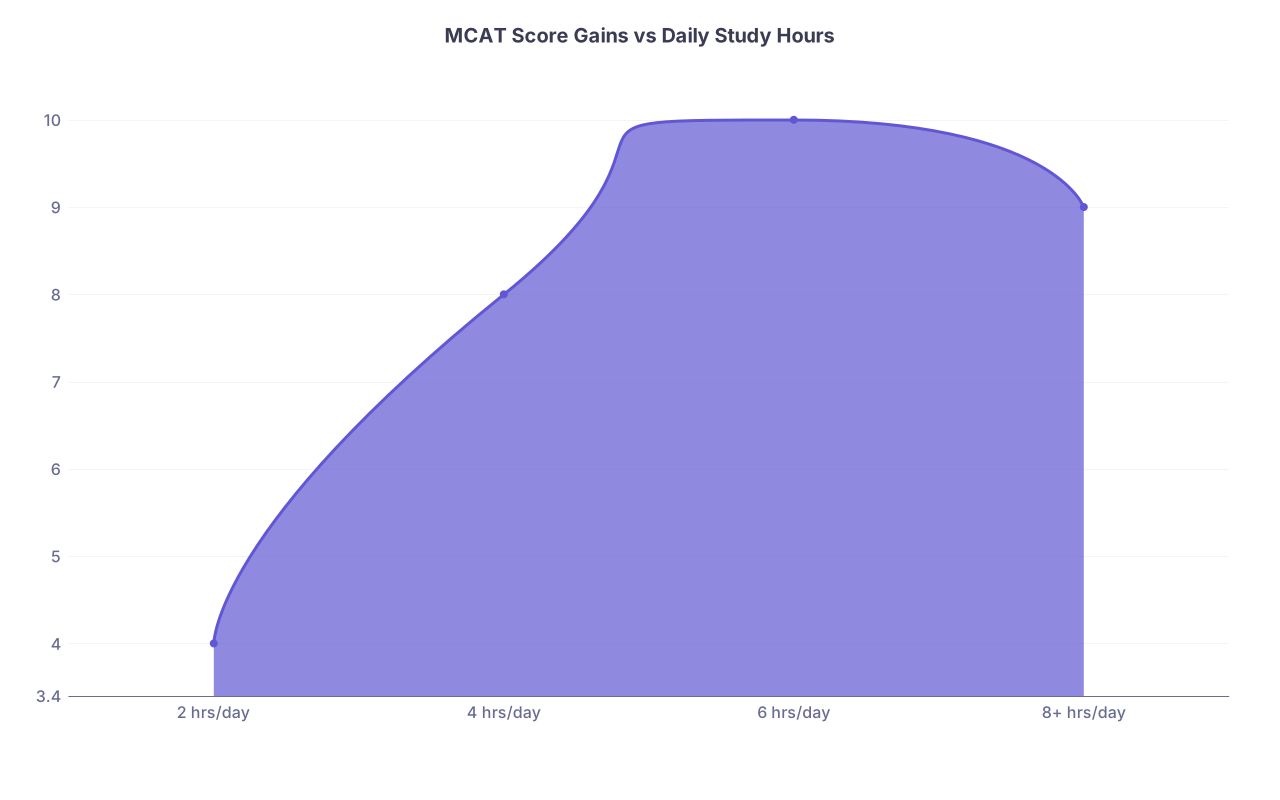
What if that awful practice score you just got 24–48 hours before your MCAT is actually telling you, “You are absolutely not ready,” and you’re about to walk into a disaster?
That’s the fear, right? Not just “I did badly,” but, “Did I just get clear proof I’m going to tank the real thing and ruin my chances at med school?”
Let’s walk straight into that anxiety instead of around it. Because this moment—when a practice test blows up right before exam day—is where a lot of people either:
- Panic-postpone when they actually shouldn’t
or - Stubbornly test when they really should’ve pulled the plug.
Both can hurt you.
I’m going to be blunt about when you should seriously consider postponing, when you probably shouldn’t, and what to do tonight and tomorrow so you’re not spinning out for the next 36 hours.
First: How Bad Was This Practice Test Really?
You’re probably thinking, “Bad. That’s how bad.”
But let’s be specific, because that’s the only way this decision isn’t emotional chaos.
Here’s what matters most:
Which exam was it?
AAMC full-length or third-party (Kaplan, Blueprint, Princeton, etc.)?How does it compare to your last 3–4 practice scores?
Outlier or pattern?How close is it to your realistic target score?
“Realistic target” = what you actually need for the schools you’re aiming at, not your fantasy 520 if you’d be fine with a 510.How close are you to test day?
24 hours? 48–72 hours? A week?What went wrong?
Content gaps? Timing meltdown? Mental freak-out? Physical exhaustion?
Quick reality check: third-party vs. AAMC
Third-party scores can be wildly off. I’ve seen people score:
- 501–504 on Kaplan/Princeton/Blueprint
- Then 508–512 on AAMC
- And then 510–515 on the real exam
And I’ve also seen the reverse: crushing third-party, then getting smacked by AAMC.
If you “bombed” a third-party test 2–3 days before but your AAMC full-lengths have been stable and higher, your panic may be louder than the data.
If you “bombed” an AAMC full-length right before test day, that’s more concerning. But even then, one data point ≠ prophecy.
The Cold Question: Should You Postpone?
You want a simple yes/no. Unfortunately, it’s more like a brutal decision tree. Let me lay it out in the way I’d tell a friend who texted me at 11:47 PM in full meltdown.

| Step | Description |
|---|---|
| Step 1 | Bad Practice Test |
| Step 2 | Consider postponing |
| Step 3 | Do NOT postpone for this alone |
| Step 4 | AAMC or Third-Party? |
| Step 5 | Way below target? |
| Step 6 | AAMC scores OK? |
Let’s go case by case.
Case 1: AAMC practice just tanked, and it’s way below target
Example:
- Previous AAMC FLs: 509, 510, 511
- Today’s AAMC FL (2–4 days before exam): 502
Or:
- You need ~510 for your school list
- You just scored 500–502 on your latest AAMC
- And this isn’t wildly different from earlier AAMC scores
Here’s where I lean pretty strongly:
You seriously consider postponing if:
- This score is 5+ points below your realistic target and
- It’s not clearly an outlier explained by extreme conditions (3 hours sleep, doing it after an 8-hour shift, distractions, didn’t time it properly, etc.) and
- You honestly don’t see a huge obvious fix you can implement in the next couple of weeks
Because if your best, most recent AAMC data says, “We’re not there,” the real exam is usually not where magic happens. It’s where fatigue + anxiety = lower end of your range.
The cost of going in undercooked:
- A score that’s hard to “explain away” later
- Retake pressure
- Burnout from doing this whole circus again
If you’re in this bucket and you have the option to move your date a month or two, postponing is not cowardice. It’s strategy.
Case 2: AAMC practice dipped a little, but not catastrophic
Example:
- AAMC FLs: 507, 509, 511
- Last one (right before test): 506
Annoying? Yes. Disaster? No.
You do not blow up your plans over a 1–3 point fluctuation. The MCAT is noisy. Scores move. One bad section, one timing slip, one mental spiral during CARS—it happens.
People who cancel over a 2-point drop usually regret it when their reattempt gets the same or lower score because the real problem was anxiety, not knowledge.
Here, I’d say:
Do not postpone just because this one test wasn’t your personal best.
You fix what you can (review errors, calm your brain, rest) and you walk in.
Case 3: Third-party exam explosion, AAMC fine
Example:
- Third-party full-length tonight: 498
- AAMC FL1–4: 507, 509, 508, 510
Ignore the noise. Pay attention to the AAMC signal.
Third-party tests can be harder, weirdly styled, overly punitive on curves, or just not aligned with how AAMC scores. I’ve seen people get wrecked by a Blueprint 499 and then walk out with a 510+ real score.
If AAMC has been consistently within your goal range, I would not postpone because of a bad third-party score.
Use it for:
- Spotting recurring content weakness
- Fixing timing issues
- Practicing stamina
But don’t let that specific number dictate whether you show up.
The Ugly Middle: When You’re On the Fence
This is where it really sucks: you’re not clearly “take it” or “postpone.” You’re sitting in the gray zone.
Let’s sketch the gray-zone profile:
- Target score: 510
- AAMC FLs: 503, 505, 506, 507
- Latest one you just did: 505
- Exam in 1–3 days
- You’re exhausted and hate everything
You’re not miles away, but you’re not there either. So, what now?
Here’s the question no one likes to ask:
If you took the exam tomorrow and scored exactly your average AAMC score, would that score still keep you in the running for some of the schools you’d be okay attending?
Not dream schools. Not “Harvard or bust.”
Schools you’d actually attend and be fine with.
If the answer is “yes,” then dragging this test out for another 1–2 months might just increase your anxiety, not your score.
If the answer is “no” (like you’re a heavy ORM applicant aiming for MD with a 3.4 GPA and you need 513+ realistically), then yeah, taking the exam now with a 505–507 average is risking a score that doesn’t move the needle.
In that situation, postponing can be smart—if you actually have the time, mental energy, and plan to study differently and better, not just longer.
Before You Decide: Look At Patterns, Not Just Panic
I know your brain is screaming, “I BOMBED IT, THAT’S IT, I’M SCREWED.”
Step back and actually look at the last month:

1. Your AAMC score trend (last 3–4 exams)
If your last few AAMC scores look like this:
- 504 → 506 → 507 → 509
And today you randomly got a 504 on a third-party test? That’s not a true trend reversal. That’s just an annoying blip.
If they look like:
- 507 → 506 → 504 → 502
That’s a downward trend. That might be fatigue, burnout, or actual weakness. That deserves a harder look at postponing.
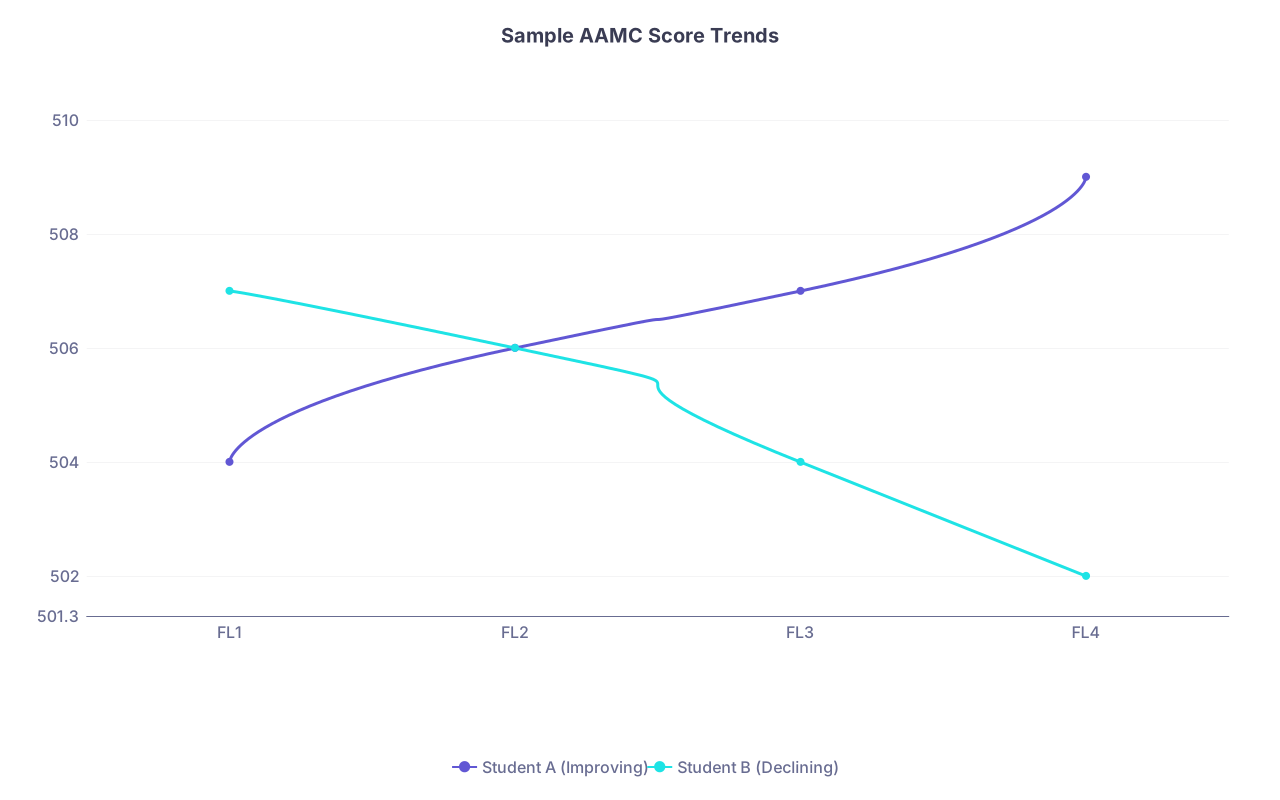
| Category | Student A (Improving) | Student B (Declining) |
|---|---|---|
| FL1 | 504 | 507 |
| FL2 | 506 | 506 |
| FL3 | 507 | 504 |
| FL4 | 509 | 502 |
2. Section-by-section breakdown
It matters where you fell apart.
- If all four sections dropped equally, that often screams fatigue, sleep, stress
- If one section tanked (usually CARS), that’s fixable with strategy and practice
- If CP and BB are consistently low across all tests, that’s deeper content gaps
Knowing this tells you whether more time will help, or whether you’ve just hit a plateau and need to accept the score range you’re in.
The Real-Life Stuff: Logistics, Money, and Your Sanity
Everyone talks about scores. No one talks about the other constraints that secretly decide for you.
| Factor | Take Now | Postpone 1–2 Months |
|---|---|---|
| Cost | No extra registration fee | Possible reschedule fee, more prep costs |
| Application Cycle | Stay on current cycle | Might push you to later or next cycle |
| Mental Health | Intense stress now, then done | Longer stress, but more prep time |
| [Burnout Risk](https://residencyadvisor.com/resources/mcat-prep/scared-of-burnout-before-the-mcat-early-warning-signs-to-watch) | High short-term | High if you keep overstudying |
| Score Potential | Based on current plateau | Higher only if plan changes, not just time |
Ask yourself honestly:
- Do you actually have 4–8 more weeks to study intensely?
- Or are you already cooked and just planning to torture yourself longer?
If your life circumstances (school, job, family, visa, finances) make postponing borderline impossible without wrecking your timeline, then you might have to accept slightly more risk and take the exam.
That’s not “settling.” That’s being a human with constraints.
If You’re Taking It: What To Do After Bombing a Practice Test
So let’s say you decide, “I’m not postponing.” You’re still terrified. Fair.
Here’s what you do between now and test day. Not vague “study harder” nonsense. Actual steps.
1. Do not do another full-length
No more. You’re past the point of gaining from another simulated 7.5-hour beating.
Use the one you just took as your last data point.
2. Autopsy the practice test—fast, not perfect
You do targeted review:
- Skim every question you got wrong or guessed
- For each, write down:
- What type of mistake: content, reading, rushing, second-guessing
- What you should have done differently
Patterns will punch you in the face:
- “I keep misreading graphs”
- “I bail too early on CARS passages”
- “I run out of time in CP”
You can fix process. You can’t magically absorb biochem textbooks in 36 hours.
3. Light content touches, not marathons
This close to the exam:
- Quick formula reviews
- High-yield sheets (amino acids, hormones, physics formulas)
- Flashcards / Anki, but not 1,000+ cards in a panic binge
Your brain is already tired. Don’t drown it.
4. Guard your sleep like it’s part of the exam
There’s a point where more studying gives you a worse score because your brain is mush.
If you’re 24–48 hours out, the best “prep” is:
- Sleep
- Eat real food
- Move your body a bit
- Plan logistics (route, snacks, ID, confirmation, what to wear)
Your anxiety will tell you to cram until 2 a.m. That’s how people sabotage a score they were already capable of achieving.
If You Postpone: How To Make It Actually Worth It
Postponing without changing your study approach is just paying extra money to feel bad for longer.
So if you decide to delay:
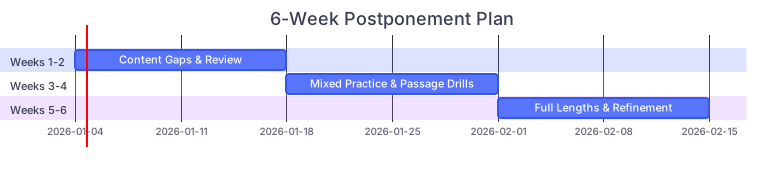
| Task | Details |
|---|---|
| Weeks 1-2: Content Gaps & Review | a1, 2024-01-01, 14d |
| Weeks 3-4: Mixed Practice & Passage Drills | a2, after a1, 14d |
| Weeks 5-6: Full Lengths & Refinement | a3, after a2, 14d |
You must change at least one of these:
- How you review practice tests (detailed, error-logged, pattern-focused)
- What you prioritize (weak sections, not what feels comfortable)
- How you handle test anxiety (timed sections, meditation, therapy, breathing strategies, whatever actually works for you)
And you absolutely set limits. No more “study 10 hours every day for 2 more months.” That’s how you show up more burnt out and still stuck at the same score.
Quick Reality Shot: People Bomb Practice Tests All The Time
Let me say the thing you probably don’t believe but need to hear:
Plenty of people absolutely wreck a practice test the week before and still score at or above their practice average on the real thing.
Because that “bomb” is often:
- The low end of their natural scoring range
- A result of bad sleep or distractions
- A reflection of spiraling anxiety, not actual ability
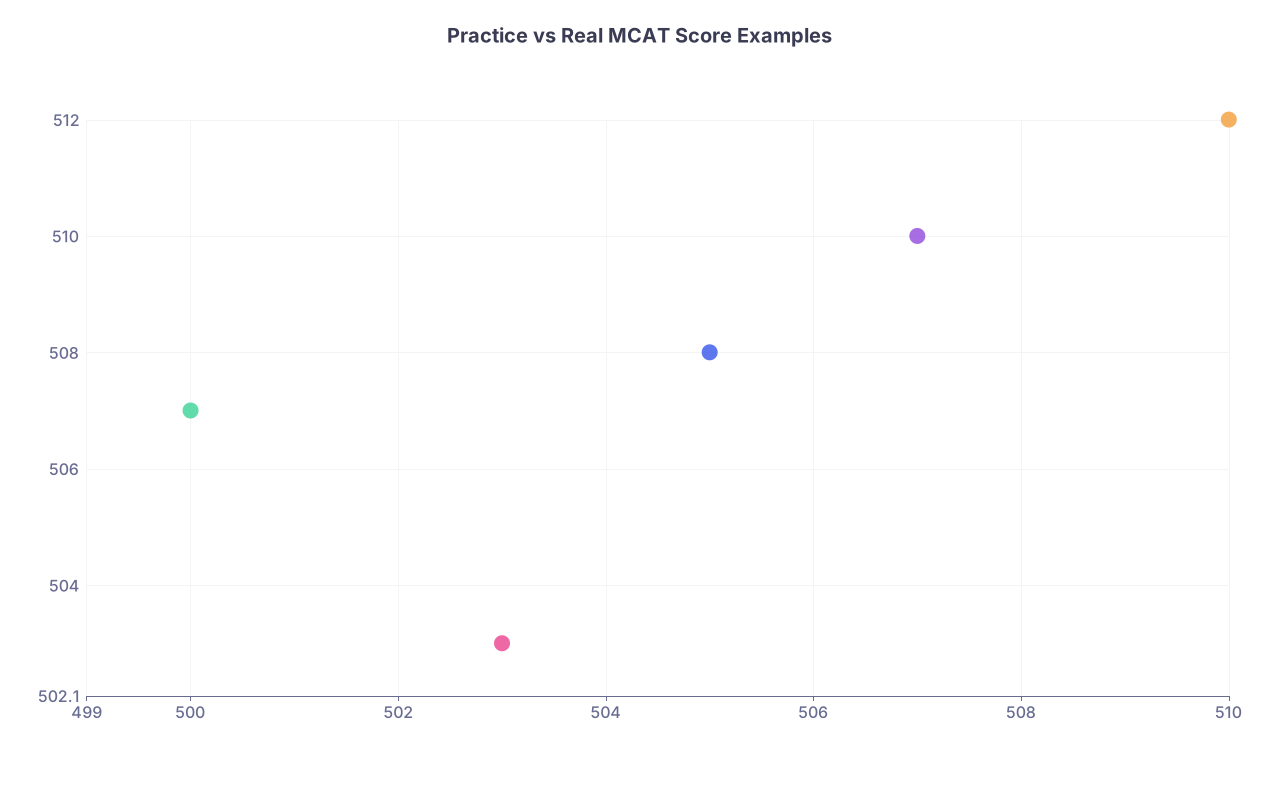
| Category | Value |
|---|---|
| Student 1 | 505,508 |
| Student 2 | 507,510 |
| Student 3 | 500,507 |
| Student 4 | 510,512 |
| Student 5 | 503,503 |
Look at Student 3 in that fake dataset: 500 practice → 507 real. That happens. Not always. But enough that one bad test doesn’t decide your future.
The only people who truly get wrecked are usually:
- Chronically underprepared on content
- Ignoring AAMC data
- Or sleep-deprived and panicking into self-destruction
You can at least avoid the last one.
FAQs
1. My last practice test was 8–10 points below my dream score. Should I automatically postpone?
Not automatically. Ask: what’s your realistic target? If your dream is 520 but you only need ~510 for your school list and you’re scoring 506–508 on AAMC, I wouldn’t call that automatic postponement territory. If you’re 8–10 below even your realistic floor (e.g., need 510, scoring 500–502 on AAMC), postponing is very reasonable if you have time and a plan to improve.
2. How close to the test date is “too late” to postpone?
Logistically, AAMC has their own reschedule rules and fees, so you’ll have to check your registration. Strategically, making the call 5–7 days before is ideal. Cancelling 24–48 hours before because you panicked over one weird score is usually more emotional than rational. Not always—but usually.
3. What if all my AAMC scores are in the same range, and I keep hoping the real thing will be way higher?
That’s fantasy thinking, and admissions doesn’t work on fantasy. Your real score is usually within a few points of your AAMC average, not your highest outlier. If your whole AAMC range is lower than what you need for your school list, that’s when postponing or rethinking your timeline is smarter than just “manifesting” a miracle on test day.
4. I panic during full-lengths and underperform. Won’t that happen on test day too?
It might—unless you treat anxiety management as seriously as content studying. That means: repeated timed sections, practice under real conditions, and actual anxiety tools (breathing techniques, grounding, maybe therapy). If you’ve never practiced calming yourself under timed pressure, then yeah, it’ll probably repeat. If you actively work on it, the real test can be better than practice simply because you’re more focused.
5. Is it better to take the MCAT and risk a low score or to delay and possibly push applications back a year?
Brutally: A low MCAT can drag your entire cycle down and force you into a retake anyway. If your stats, timeline, and life situation mean that a delay by a year is possible—even if annoying—it’s often better than rushing into a score that closes doors. But if delaying a year isn’t realistically possible and your scores are borderline but not catastrophic, taking it now and applying smartly can still work.
6. What if I take it, hate my score, and have to retake—does that ruin my chances?
Not automatically. Plenty of people retake and get in. Schools usually see all your scores, but they also look at improvement, pattern, and the full application. A modest first score, followed by a well-planned, significantly higher second score is not a death sentence. What hurts more is multiple low attempts that look like you just kept throwing yourself at the test without changing anything.
Bottom line:
- One bad practice test—especially a third-party one—doesn’t automatically mean you should postpone. Look at your AAMC trend, not just tonight’s disaster.
- If your recent AAMC scores are consistently well below what you realistically need, postponing with a real plan is smarter than gambling on a miracle.
- Whether you go or postpone, change something: your strategy, your review, your anxiety plan. Don’t just suffer longer in the same way and expect a different score.