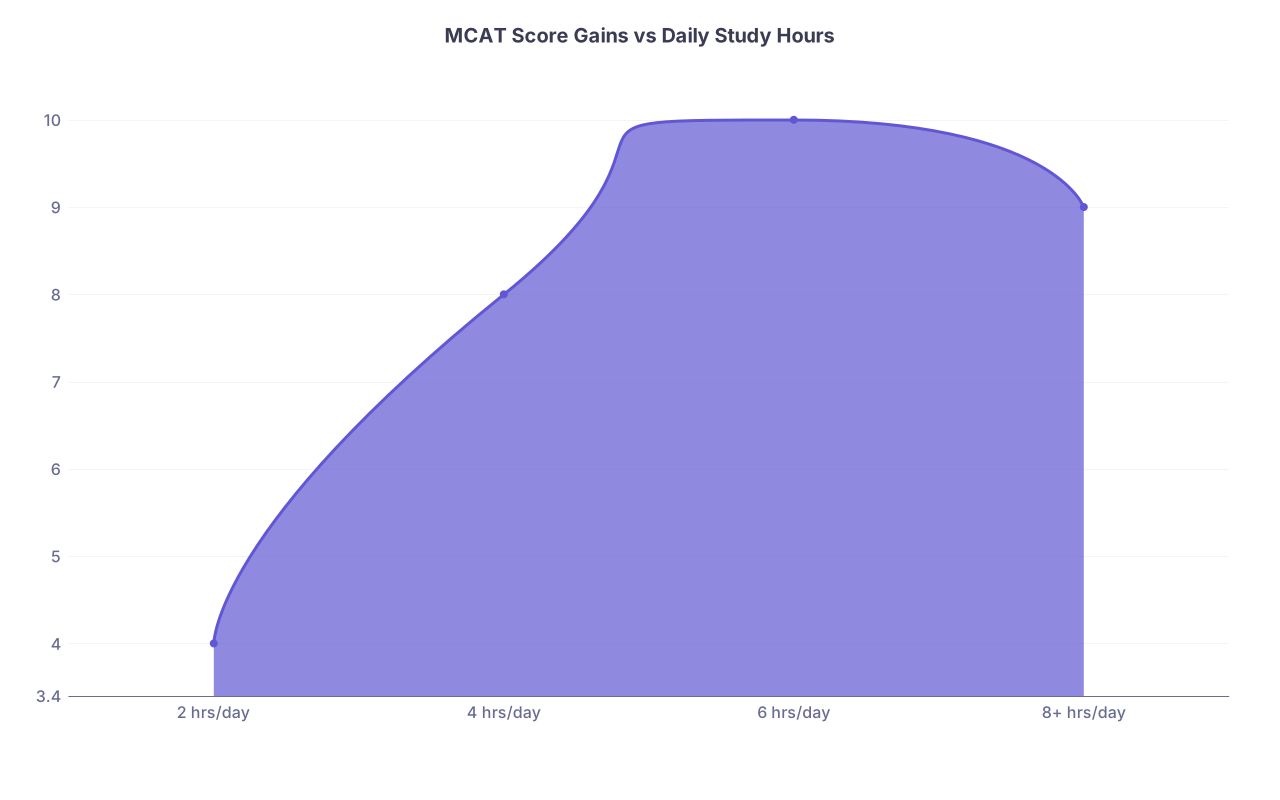
The standard “just do more passages” advice for CARS is lazy—and it is why most students never see a 10‑point jump.
You need a training plan, not random practice. Week by week. With specific drills, targets, and rules for what you do after every single passage.
This is that plan.
Assumptions:
- Starting score: ~123–125 CARS
- Target: ~133–135 CARS (10‑point jump)
- Timeframe: 8 weeks, about 8–10 hours per week
- Materials: AAMC CARS, at least one third‑party CARS resource (e.g., Jack Westin, UWorld, Examkrackers), and a timer
I will walk you through exactly what to do each week, then what to do each day inside those weeks.
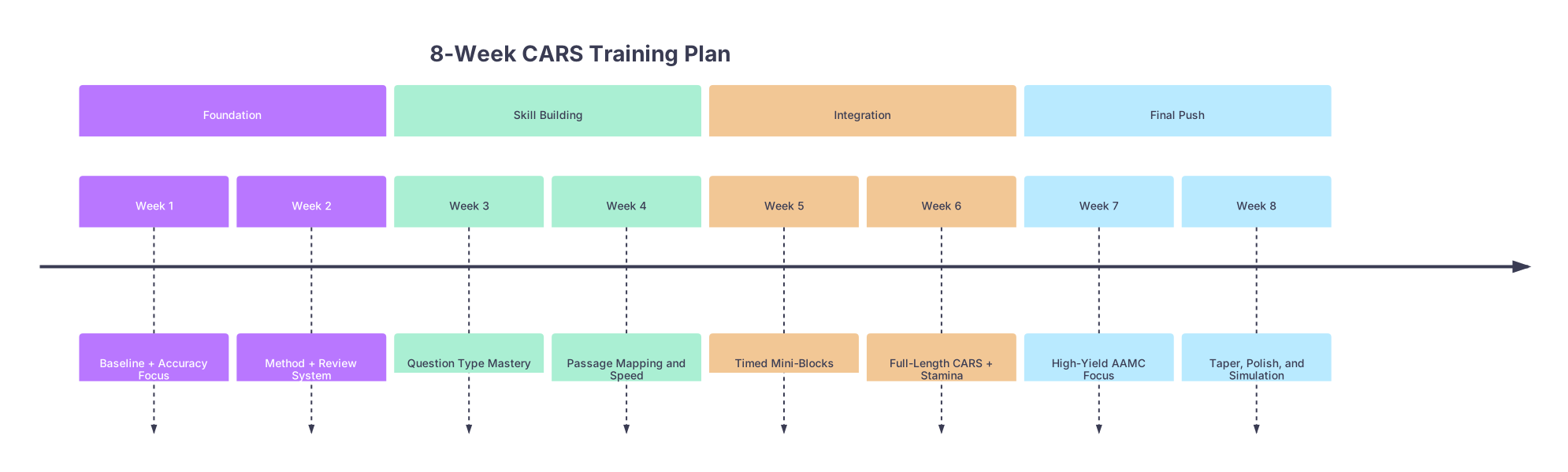
Overview: 8‑Week CARS Training Timeline
At this point you should understand the structure before you start grinding passages.
| Period | Event |
|---|---|
| Foundation - Week 1 | Baseline + Accuracy Focus |
| Foundation - Week 2 | Method + Review System |
| Skill Building - Week 3 | Question Type Mastery |
| Skill Building - Week 4 | Passage Mapping and Speed |
| Integration - Week 5 | Timed Mini-Blocks |
| Integration - Week 6 | Full-Length CARS + Stamina |
| Final Push - Week 7 | High-Yield AAMC Focus |
| Final Push - Week 8 | Taper, Polish, and Simulation |
Basic weekly goals:
| Week | Primary Focus | Daily Passage Count (typical) |
|---|---|---|
| 1 | Baseline + accuracy | 2–3 |
| 2 | Method + review system | 3–4 |
| 3 | Question type mastery | 3–4 |
| 4 | Passage mapping + speed | 4–5 |
| 5 | Timed mini-blocks | 5–6 |
| 6 | Full CARS sections | 1 section / 2–3 days |
| 7 | AAMC tightening | Variable |
| 8 | Taper + simulation | 1–2 passages or sections |
If your real test is further away, you can stretch this to 10–12 weeks by adding rest/low‑volume weeks.
Week 1: Baseline, Brutal Honesty, and Accuracy
At this point you should stop guessing what your CARS level is and measure it.
Goal of Week 1:
- Establish baseline score and accuracy profile
- Slow, methodical reading; no rushing
- Build a daily CARS habit
Day 1: True Baseline
- Do one full CARS section (9 passages, 53 questions) from a non‑AAMC source
- Time yourself with standard 90‑minute limit
- Do not pause, do not look at explanations mid‑test
Afterward:
- Record:
- Raw score
- Percent correct by passage (e.g., P1: 4/6, P2: 2/5, etc.)
- Which questions you missed: detail, main idea, inference, function, tone, etc.
You are not trying to “do well.” You are mapping the problem.
Days 2–7: Slow, High‑Quality Reps
Daily routine (about 60–75 minutes):
Warm‑up (5–10 minutes)
- Read 1–2 paragraphs of dense material (The Atlantic, Harper’s, philosophy blogs, law review notes).
- Summarize each paragraph in one short sentence out loud or in writing.
Practice (2–3 untimed passages)
- Read untimed, but aim for:
- ~4 minutes reading
- ~1 minute per question
- After each passage:
- Predict main idea in one sentence
- Describe author’s tone in 3–5 words (e.g., “skeptical, mildly pessimistic”).
- Read untimed, but aim for:
Review (longer than the passage itself)
For every missed or guessed question:- Write:
- Why your answer felt right
- Why it was actually wrong (locate the exact phrase or logic fail)
- Why the correct answer is better (quote or paraphrase supporting lines)
- Write:
If your review takes less time than your practice, you are doing it wrong. Week 1 is about accuracy and clarity, not speed.
Week 2: Build Your Method and Review System
At this point you should stop “winging it” on each passage.
Goal of Week 2:
- Lock in a consistent passage process
- Create a repeatable review template
- Increase volume slightly while staying accurate
Your Passage Method (use this every time)
First 30 seconds
- Glance at first and last paragraph quickly.
- Ask: “What is this probably about? Argument or description?”
Read for structure, not facts
As you read each paragraph, mentally tag it:- P1: introduces topic / question
- P2: criticizes prior view
- P3: author’s proposal / alternative
- P4: implications / limitations / future
End‑of‑passage summary (10–20 seconds)
- One sentence: “The author argues that…”
- One clause: “Because…” (their main support)
Questions
- Answer from memory first, then check passage if needed.
- If you are re‑reading entire paragraphs for every question, your reading is too shallow.
Daily Plan (Week 2)
- 4 days: 3–4 passages/day (60–75 minutes)
- 2 days: 2 passages + extended review (45–60 minutes)
- 1 day: light or off
For every passage, you fill out something like this (in your notes or spreadsheet):
- Passage topic:
- Main idea (1 sentence):
- Author attitude:
- Questions missed: Q#, type, reason for error
By the end of Week 2 you should have:
- A written, stepwise method you can describe in under 60 seconds
- A consistent way of labeling why you miss questions
Week 3: Question Type Mastery and Pattern Hunting
Here is where you stop treating every question like a snowflake.
Goal of Week 3:
- Recognize question types on sight
- Develop specific tactics for each type
- Attack your personal weak spots
Core CARS Question Types
You should be able to label each question as you read it:
- Main idea / primary purpose
- Detail / “According to the passage”
- Inference / implied by
- Function / why the author included X
- Tone / attitude / perspective
- Application / analogy / new situation
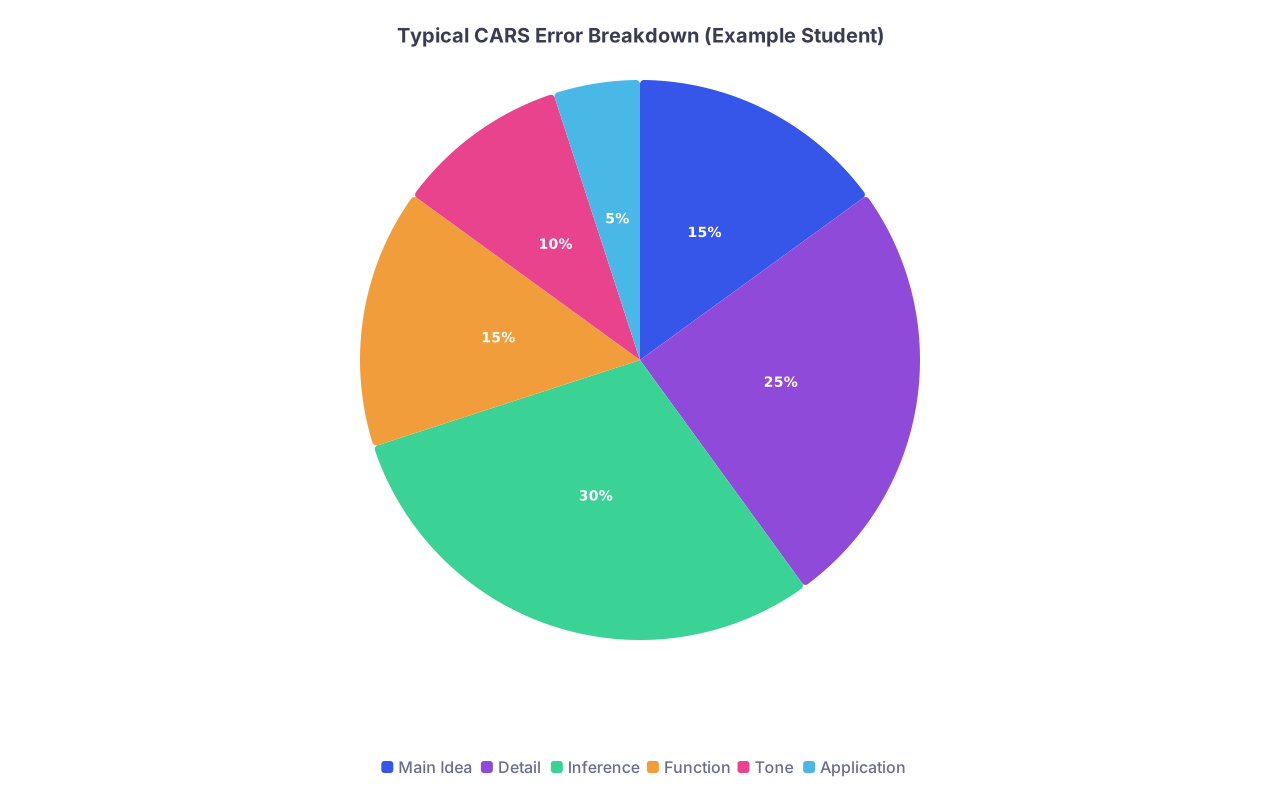
| Category | Value |
|---|---|
| Main Idea | 15 |
| Detail | 25 |
| Inference | 30 |
| Function | 15 |
| Tone | 10 |
| Application | 5 |
If your own error breakdown looks similar, you know exactly where to attack.
Week 3 Daily Structure
- Total: 3–4 passages/day, 5–6 days/week
On 3 of those days:
- Do 2 normal passages (timed loosely, ~10 minutes each)
- Then 2 targeted passages:
- For example: choose passages and focus only on inference and application questions
- Label each question type BEFORE answering
- Afterward, review only those question types in depth
Your aim by the end of Week 3:
- When you see an inference question, you already know:
- You must anchor your answer in textual evidence plus a tiny logical step, not personal knowledge.
- When you see a main idea question:
- You are checking: Does this match the overall passage, not just one paragraph?
Week 4: Passage Mapping and Controlled Speed
At this point your accuracy should be creeping up, but your timing may still be too slow. Time to push.
Goal of Week 4:
- Maintain accuracy while shrinking passage time
- Build a mental map of each passage
- Start simulating test‑like pressure in small bursts
Your Timing Targets
By the end of Week 4:
- Average 9–10 minutes per passage total
- 3.5–4.5 minutes reading
- 4.5–5.5 minutes questions
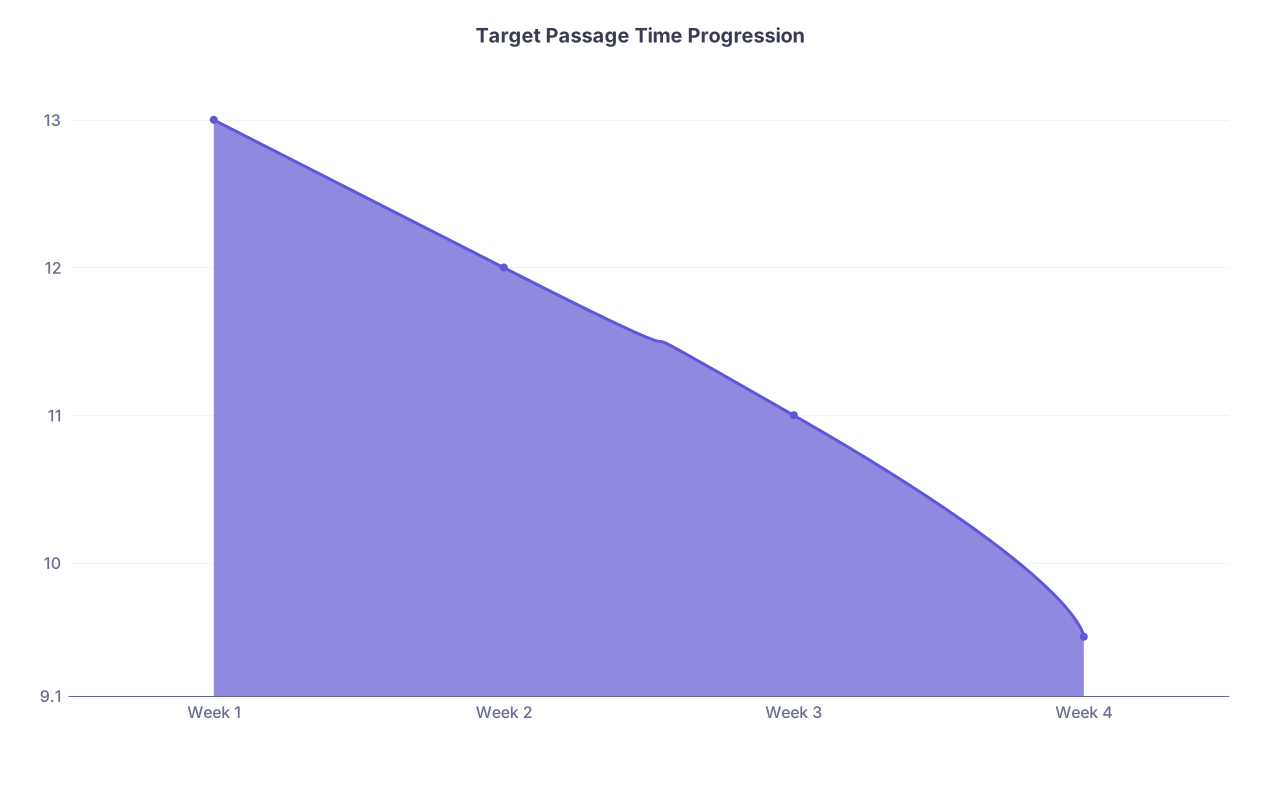
| Category | Value |
|---|---|
| Week 1 | 13 |
| Week 2 | 12 |
| Week 3 | 11 |
| Week 4 | 9.5 |
Week 4 Daily Plan
5–6 days/week:
- 1 day: 4 passages back‑to‑back (40–45 minutes)
- 2–3 days: 3 passages, but strictly timed
- 1–2 days: 2 passages + deep review
Specific drill for this week:
- Set timer to 10 minutes per passage
- At 6 minutes:
- You must be finished reading and have at least started questions
- Mark where you are when time hits:
- Still reading P3?
- On Q1? Q4?
- In review, ask:
- Did reading faster actually hurt comprehension? Or was it fine and you were just afraid to move on?
If your accuracy drops more than ~10–15% when timed, your reading strategy is shaky. Re‑check your paragraph tagging and main idea summaries.
Week 5: Timed Mini‑Blocks and Stamina
At this point isolated passages are not enough. CARS fatigue is real.
Goal of Week 5:
- Build stamina for 3–5 passages in a row
- Keep mental energy and consistency across multiple passages
- Start mixing in AAMC CARS if you have not already
Week 5 Structure
Aim for 8–10 passages per week in timed sets, not solo:
- 2 days:
- 5‑passage block (about 50 minutes)
- Short break
- 30–40 minutes of review of the worst 2 passages
- 2 days:
- 3‑passage block (30 minutes) + focused review
- 1 day:
- 2 untimed “slow‑work” passages (rebuild confidence on tough content)
You are training your brain to reset after a bad passage. No spiraling. Finish a bad one, quick note, move on.
Week 6: Full CARS Sections and Realistic Simulation
Now you start treating CARS like its own full exam.
Goal of Week 6:
- Comfortably handle full 9‑passage, 90‑minute sections
- Diagnose performance across beginning, middle, and end of section
- Fine‑tune break strategy, pacing adjustments
Frequency
- 2 full CARS sections this week (use one AAMC if possible)
- 2 additional days: 3–4 passage blocks
On full‑section days:
Run the section under strict test conditions
- No phone
- No pausing
- Use the same scratch paper style you will on test day
After each section, log:
- Total score
- Performance by thirds:
- Passages 1–3
- Passages 4–6
- Passages 7–9
You will often see:
- Strong first third
- Sloppy middle third
- Crash at the end
Now you have something to fix.
Week 7: AAMC Tightening and Surgical Fixes
At this point you should be hitting close to your goal range, at least occasionally, on practice.
Goal of Week 7:
- Focus heavily on AAMC‑style logic
- Eliminate recurring error patterns
- Polish pacing decisions (when to skip, when to fight through)
What You Do This Week
- Use mostly or only AAMC CARS now, if you still have unused passages
- 1–2 full sections, plus several 3–4 passage blocks
For each missed AAMC question, you capture:
- Error type:
- Misread passage
- Chose extreme answer
- Overthought and talked yourself out of correct choice
- Misidentified main idea or author attitude
You should now have a personal “top 3 mistake types” list. That becomes your micro‑checklist during questions.
Example checklist mid‑question:
- Does this answer match the author’s tone?
- Is this answer too extreme compared to the passage?
- Am I adding outside knowledge?
If you do not have that checklist written and used, you are leaving easy points on the table.
Week 8: Taper, Simulate, Do Not Panic‑Grind
The last week is where a lot of students sabotage themselves by cramming until they are numb.
Do not do that.
Goal of Week 8:
- Maintain sharpness, avoid burnout
- Get 2–3 near‑test‑day simulations
- Light review of patterns, not heavy new practice
Week 8 Structure
Day 1–2:
- 1 full CARS section (if you still have an unused AAMC, use it)
- Deep review same day or next day
Day 3–5:
- 2–3 passages/day, mostly for rhythm
- Quick review; no marathon write‑ups
Day 6–7:
- 1–2 very light passages total or none
- Skim your error log, your method, and your micro‑checklist
- Focus on sleep and routine
You want to enter test day thinking:
“I know exactly what I do on every passage. I have done this dozens of times.”
Weekly Progress Checkpoints
At the end of each week, you should have data. Not vibes.
| Week | Target Accuracy | Main Focus Check |
|---|---|---|
| 1 | ≥ 60% untimed | Clear baselines + error log started |
| 2 | ≥ 65% mostly untimed | Stable, written method |
| 3 | ≥ 70% mixed timing | Labeled question types, spotted patterns |
| 4 | ≥ 70% at ~10 min/passage | Timing under control |
| 5 | ≥ 72% in 3–5 passage blocks | Stamina improving |
| 6 | ≥ 75% in full sections | Section-level pacing working |
| 7 | ≥ 77–80% on AAMC | Errors more subtle, fewer “dumb” misses |
| 8 | Stable or slightly better | No big swings, consistent performance |
If you are noticeably below these by Week 4–5, you either:
- Are not reviewing deeply enough, or
- Are rushing reads and relying on “feel”
Fix that first before adding more volume.
Daily CARS Session Template (Reusable)
Here is the skeleton you can plug into any week:
- 5–10 min – Reading warm‑up
- 30–45 min – Timed passages (or block)
- 20–40 min – Focused review of:
- All misses
- All guesses
- Any question you got right for the wrong reason
If you spend less than a third of your time on review, your growth will stall. I see it constantly.
Extra Drills For Stubborn Problems
Use these only if you see these specific issues.
If you keep misreading main ideas
- Take one passage. Read it.
- Close your eyes. Say the main idea out loud in one clear sentence.
- Then check the passage to see if you overweighted one paragraph.
Do this for 3–4 passages in a row, without doing questions. It forces you to practice “reading for the point.”
If you keep falling for extreme answers
For one full block:
- Before checking answers, label each option:
- E = extreme
- M = moderate
- V = vague
- O = off‑topic
You will notice a pattern: extreme and off‑topic answers are frequently wrong. Train your brain to see that instantly.
If your stamina crashes after passage 5–6
During Week 5–6:
- Do 6‑passage blocks with a 30‑second “reset” between passages:
- Small stretch
- One deep breath
- Mentally say: “New passage, clean slate”
Sounds trivial. It is not. It is exactly what strong test‑takers do unconsciously.
Quick Visual: How Your Time Shifts Across the Plan
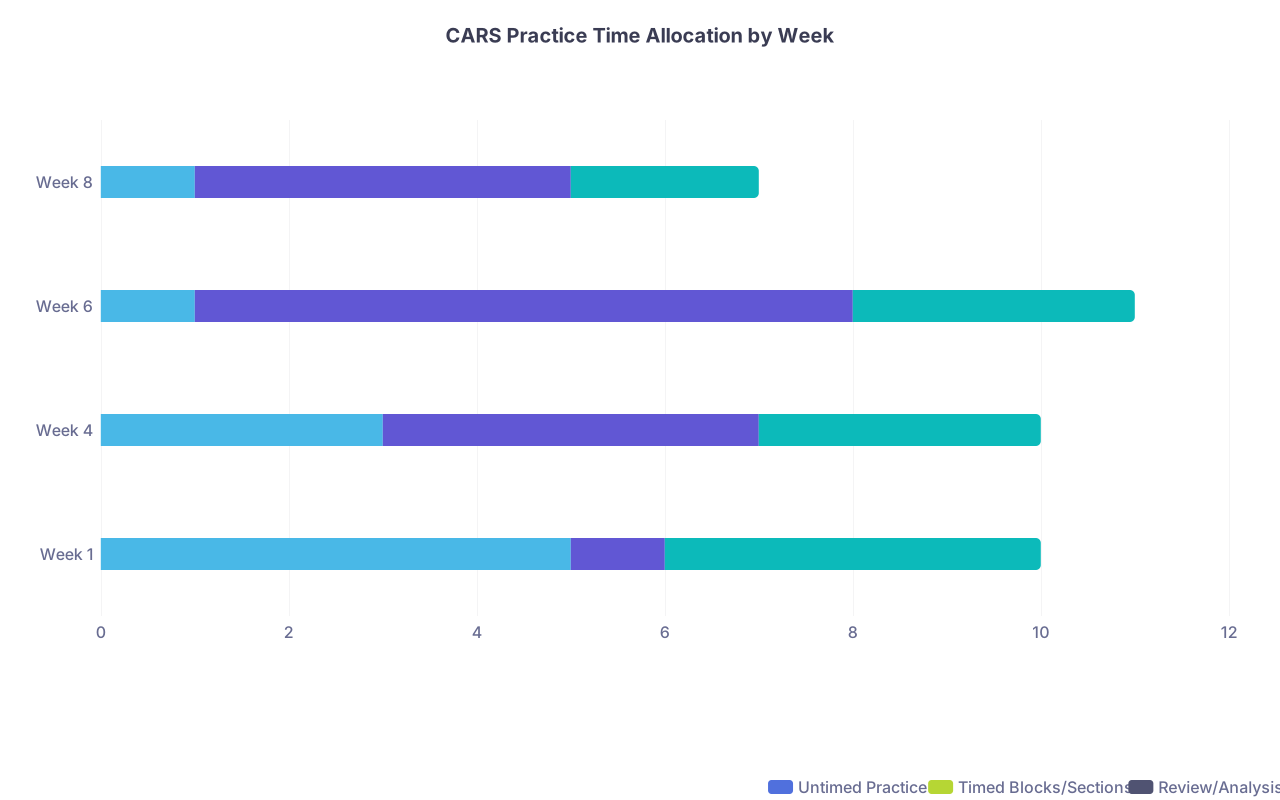
| Category | Untimed Practice | Timed Blocks/Sections | Review/Analysis |
|---|---|---|---|
| Week 1 | 5 | 1 | 4 |
| Week 4 | 3 | 4 | 3 |
| Week 6 | 1 | 7 | 3 |
| Week 8 | 1 | 4 | 2 |
You start heavy on slow untimed and review, shift into mostly timed blocks and sections, and taper.
Final Words: What Actually Gets You the 10-Point Jump
A 10‑point CARS jump is not magic. It is:
- A fixed method you use on every passage
- Brutally honest review of why you miss what you miss
- Consistent, timed practice that simulates the real test
You build those three pieces, week by week, and your CARS score has very little choice but to rise.