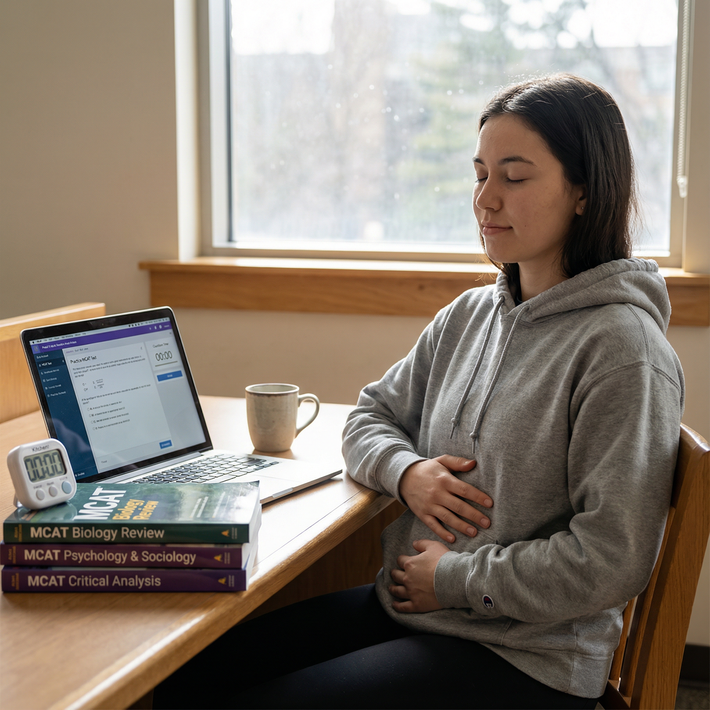
The way most premeds use their summer to study for the MCAT is broken—and they only realize it in August.
You’re not just “at risk” of wasting your summer. If you follow the default path everyone talks about on Reddit and in group chats—grinding 8–10 hours a day, buying three different course packages, and “taking it once just to see how it goes”—you’re basically scheduling regret.
Let me walk you through the mistakes students always realize too late—after their score comes back, after they’ve burned their best application cycle, after they’ve lost their only true open block of time before med school.
You’re not going to be one of them.
1. Treating Summer as “Infinite Time” Instead of a Finite, Brutal Countdown
The biggest lie students tell themselves in May: “It’s summer, I’ll finally have time.”
No. You’ll have unstructured time. That’s different. And way more dangerous.
What I see every year:
- May: “I’m building my Anki decks and reviewing content.”
- June: “I’ll start full lengths next week.”
- July: “I’m not ready; I’ll push my exam to August.”
- Late August: “I should’ve started earlier, I ran out of time to practice.”
Here’s how the damage usually plays out.
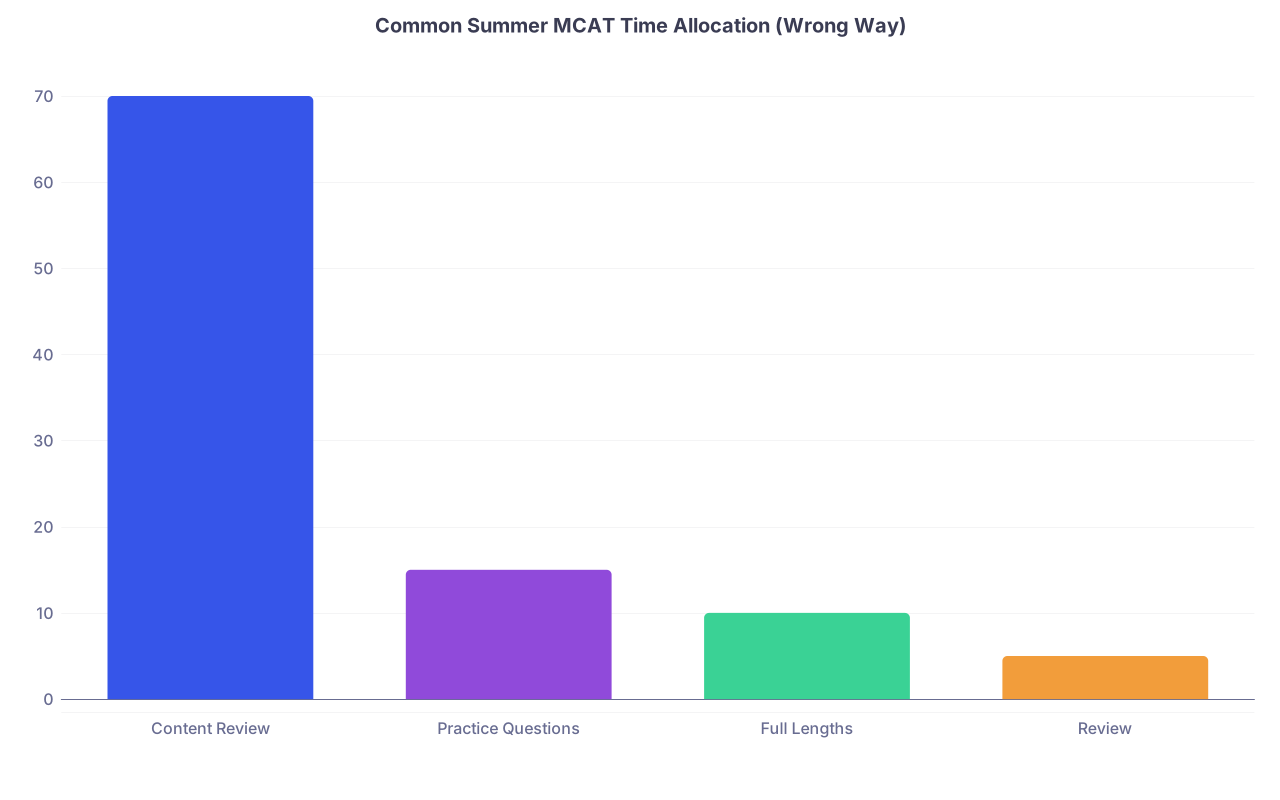
| Category | Value |
|---|---|
| Content Review | 70 |
| Practice Questions | 15 |
| Full Lengths | 10 |
| Review | 5 |
This is the classic disaster pattern: all content, almost no testing, zero deep review.
The mistake: Assuming summer = automatic productivity, instead of realizing your brain doesn’t suddenly upgrade because school ended. You carry the same procrastination and distraction into June, just without structure to contain it.
Red flags you’re falling into this:
- You say “I’ll study all day” but can’t show a written plan.
- You’re “busy” 8 hours but can’t point to what you mastered that day.
- It’s been 2–3 weeks and you haven’t taken a single full-length exam.
What to do instead:
- Cap planned study to 5–7 focused hours/day. The rest of your “time” is fake anyway.
- Block your weeks around practice exams first, then fit content around them.
- Write a real schedule on a calendar, not “bio this week, physics next week.”
If your summer plan doesn’t specify which days you’re taking full lengths and which days you’re reviewing them, you don’t have a plan. You have a fantasy.
2. Starting with Content Review… and Never Leaving It
MCAT summer trap #2: “I’ll just spend the first month reviewing content before I touch questions.”
This sounds logical. It’s also how people tank their score.
The MCAT is not a high school biology test. It’s not asking, “Do you remember glycolysis?” It’s asking, “Can you reason with glycolysis in a weird, 2-page passage you’ve never seen before while the clock suffocates you?”
That skill doesn’t come from re-reading Kaplan.
I’ve watched students:
- Spend 6–8 weeks “finishing all the books”
- Feel weirdly empty when they’re done, because they still feel unprepared
- Realize they don’t know how to use that info inside questions
- Cram 3–4 full lengths at the end with no time to learn from them
→ Score stagnates. Panic. Postponement. Or a bad score.
Better rule: You should be doing some MCAT-style questions from week one of summer. Not 200/day. But enough that your brain practices in the right environment.
Here’s the smarter balance.
| Phase (Summer) | Content Focus | Practice Focus | Full-Length Exams |
|---|---|---|---|
| Weeks 1–2 | 60% | 40% | 0 |
| Weeks 3–4 | 50% | 50% | 1 |
| Weeks 5–6 | 40% | 60% | 1–2 |
| Final 3–4 weeks | 20–30% | 70–80% | 3–5 total |
Do not make this mistake: waiting to feel “ready” before doing practice. That day never comes. You become ready by doing practice.
3. Abusing Full-Length Exams: Either Ignoring Them or Hammering Them
Full lengths are where students either sabotage themselves or save themselves.
Two bad extremes:
- The Avoider: “I’ll do more when I’m less rusty.”
- The Binger: “I’m doing 8 full lengths in 3 weeks, I just need exposure.”
Both are wrong.
The Avoider Problem
If you’re deep into July and your AAMC account still says 0 practice exams taken, you’re in trouble. You have no idea:
- How long the test actually feels
- Which sections drain you
- Whether timing is a 10% or 90% problem
- How far you are from your target
Students in this camp often end up with a score 7–10 points below what they “felt” they should get. Because feelings don’t take the exam.
The Binger Problem
The other side: students who love taking full lengths but hate reviewing them. They flex the “I’ve done 10 exams” stat but can’t explain:
- Their 2–3 weakest sub-topics in each section
- The patterns behind their CARS misses
- Why their chemistry score hasn’t moved in 4 tests
They’re practicing failure. Faster and louder.
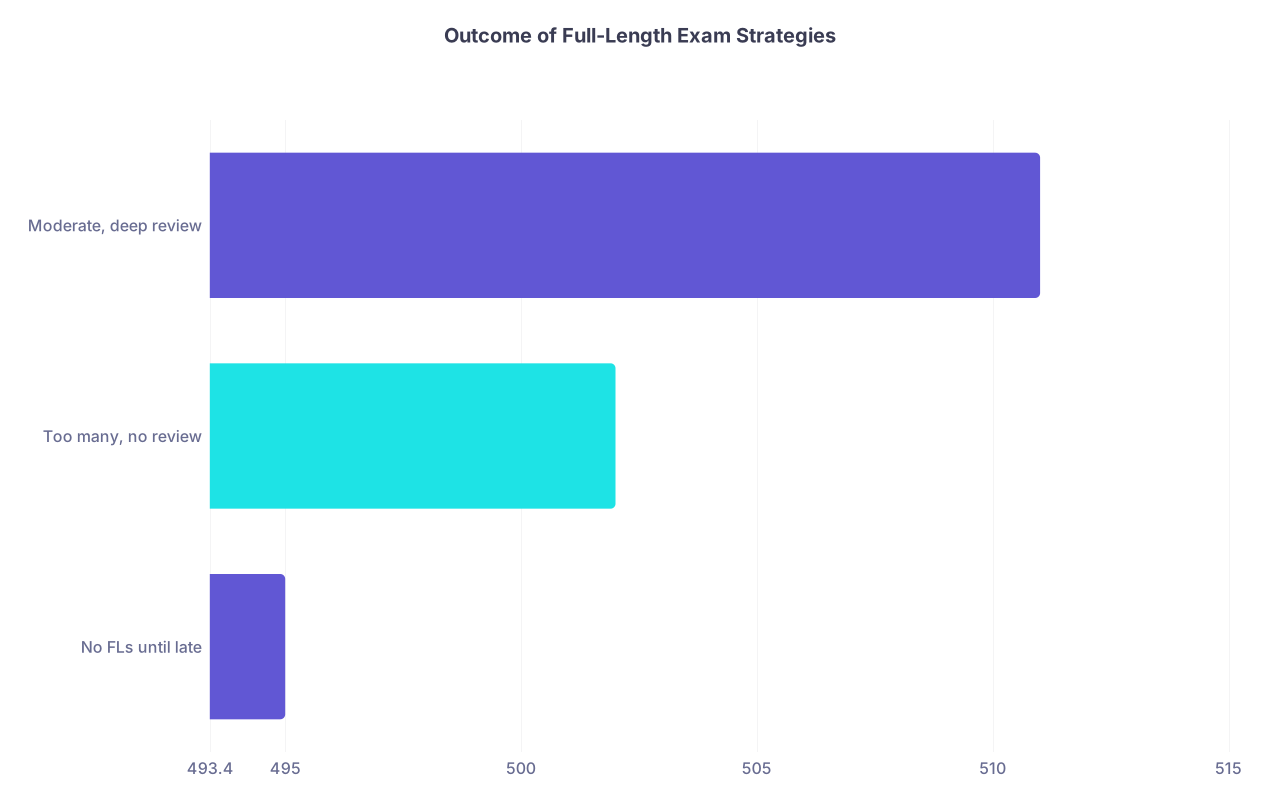
| Category | Value |
|---|---|
| No FLs until late | 495 |
| Too many, no review | 502 |
| Moderate, deep review | 511 |
(The numbers are illustrative, but the pattern is real: proper review > sheer volume.)
Correct approach:
- Aim for 5–7 full lengths total across the summer if you’re testing late July/August.
- Space them 5–10 days apart.
- Spend at least as long reviewing each exam as you did taking it.
And if you’re not brutally honest during review—“Why did I think this wrong answer was right?”—you’re just rewatching your own car crash in slow motion.
4. Treating CARS as an Afterthought Because “You Can’t Study for It”
Yes, you can absolutely improve CARS. And yes, people still blow it off every summer like it’s a personality trait instead of a skill.
Here’s the trap:
- “I’ll focus on the sciences; CARS is just reading.”
- “If I do a few passages here and there, it’ll be fine.”
- “AAMC CARS feels so different; I don’t know why I’m not improving.”
By mid-summer, they’re sitting on a 125–126 CARS while the rest of their sections creep upwards. Then the exam comes. And that 125 CARS is exactly what drags the total score below where competitive schools want them.
The mistake: treating CARS like background noise.
If you want to avoid being that person in August saying “Everything was fine except CARS,” then don’t treat it like an optional warm-up.
Bare minimum CARS discipline for summer:
- 3–5 CARS passages every study day, under timed conditions.
- Review every single question, not just “what did I get wrong,” but:
- Why was the right answer right in their logic?
- What word or phrase in the passage justified it?
- What trap did the wrong answers set?
You don’t “fix” CARS in the last 10 days. If you’re not doing consistent work on it from the first week of summer, you’re choosing to gamble a quarter of your score.
5. Ignoring Burnout Until It Hits You the Week Before Your Exam
Summer MCAT burnout is real, and it’s uglier than during the semester. During school, you at least get some mental variety. In summer? Same chair. Same desk. Same passages. Every. Single. Day.
Here’s the pattern I’ve seen too many times:
- June: “I’m grinding 8–10 hours a day. This is my full-time job.”
- Early July: “I’m tired, but this is temporary.”
- Two weeks before test day: “I can’t look at another passage. My scores are dropping. Maybe I’m just not cut out for this.”
This is preventable, and yet people choose to run themselves into the ground.

Signs you’re burning out instead of building up:
- Your practice scores are dropping despite the same or more hours.
- You’re “studying” but re-reading the same sentence three times.
- You start catastrophizing: “If I don’t do well, my whole future is over.”
Mistakes that drive burnout:
- Zero scheduled rest days (“I’ll rest when it’s over.” No, you’ll crash.)
- Treating every topic as equally urgent, never prioritizing.
- Nightly doom-scrolling through MCAT forums full of panic posts.
Protect your brain like it’s exam equipment—because it is.
Non-negotiables to avoid the crash:
- 1 full day off per week. No “just a few Anki.” A real day off.
- Strict cutoff time each night—e.g., no studying after 9:00 PM.
- One unplugged half-day every two weeks where you leave the house, touch grass, be a human.
If that sounds “soft” to you, watch what happens to your score when your attention collapses halfway through C/P and B/B on test day.
6. Copy-Pasting Someone Else’s Study Plan Because It Worked on Reddit
Another classic summer mistake: adopting a stranger’s “515+ study schedule” as gospel.
Here’s the problem. You’re not:
- The same baseline in every subject
- The same reader, test-taker, or language background
- Working with the same summer commitments (research, job, shadowing)
But you’re tempted because it’s easy. Some random person posts:
- “I studied 10 hours/day for 2 months, did all UWorld, Anki 2k/day, 7 full lengths, scored 520.”
You copy their schedule. Then:
- You can’t sustain it past week 2.
- You fall behind and feel like a failure.
- You start skipping the exact parts that would’ve helped you.
That plan wasn’t your plan. It was their highlight reel.

| Step | Description |
|---|---|
| Step 1 | See 520+ Study Schedule Online |
| Step 2 | Use it only as reference |
| Step 3 | Adapt, dont copy |
| Step 4 | Build custom plan around your weaknesses |
| Step 5 | Same baseline, time, and goals? |
What you actually need:
- A brutally honest assessment of:
- Which section is lagging?
- Which sub-topics repeatedly show up in your mistakes?
- How fast you realistically process dense passages.
- A schedule that reflects reality:
- Are you working 20 hours/week? Caring for family? Doing research?
Build your plan around your constraints and your starting point. Copying someone who started at 510 when you’re testing at 495 is self-sabotage.
7. Underestimating How Late Summer Test Dates Affect Your Application Cycle
Here’s a mistake people don’t feel until it’s way too late: testing late summer and expecting a smooth application cycle.
If you’re planning to apply the same year you’re taking a late July or August MCAT, there’s risk baked in that most premeds conveniently ignore.
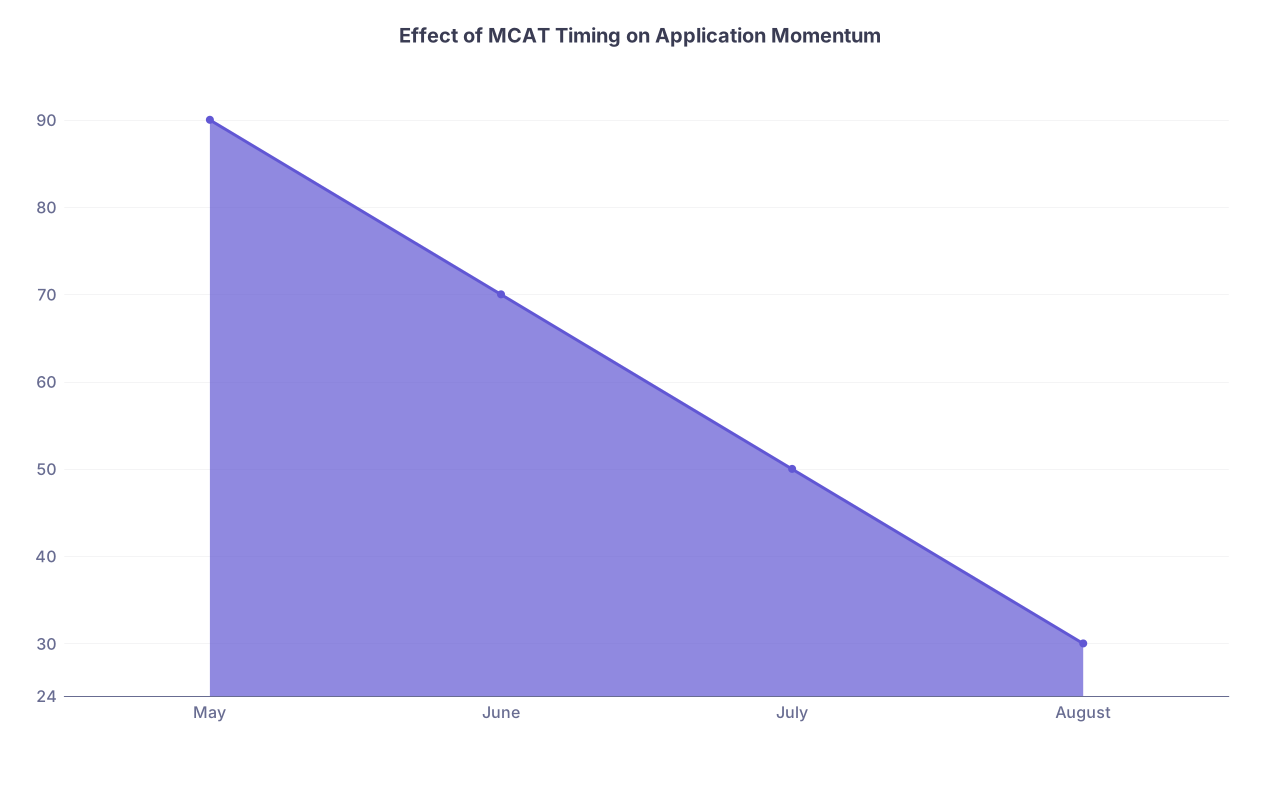
| Category | Value |
|---|---|
| May | 90 |
| June | 70 |
| July | 50 |
| August | 30 |
As you push your MCAT later:
- Secondaries get delayed.
- Interview invites get fewer.
- Your application is competing with people whose files have been complete for months.
Big mistakes here:
- Taking a late August exam for the first time in an already-open cycle.
- Assuming “they’ll just wait to review my app once my score is in.”
- Not having a backup plan if your score isn’t competitive.
You can still take a summer exam and apply, but if your only test date is very late and this is your first MCAT, you’re stacking variables against yourself.
Plan like this:
- If your first MCAT is after mid-July and you’re not consistently scoring near your goal on practice tests, strongly consider:
- Testing then applying next cycle, or
- Testing earlier in the summer with the option of a later retake.
- Don’t let pride force you into a weak first application. That “just see what happens” cycle follows you.
8. Wasting the First 2–3 Weeks on “Prep for Prep”
One last summer killer: spinning your wheels on everything around studying while not actually studying.
I’ve seen this more times than I can count:
- Whole days spent organizing Anki decks.
- Hours comparing course companies and reading reviews.
- Color-coding calendars, making binders, resetting your desk for the 4th time.
- “I’m just getting ready so I can maximize the rest of the summer.”
It feels productive. It’s not.

Harsh truth: The MCAT doesn’t care how pretty your system is. It cares how well you think under pressure about content you’ve actually worked with.
If you’ve been “prepping to prep” for more than 3–4 days, you’re procrastinating. Call it what it is.
Fix this with one rule:
Every single day of summer MCAT prep must include:
- Some timed questions
- Some form of review (watching yourself think, finding patterns)
- A small, clear win you can point to (“I now understand X I didn’t yesterday.”)
If your day was all setup and no questions, you’re not studying. You’re stalling.
FAQs
1. How many hours per day should I actually study for the MCAT over the summer?
Most students lie to themselves here. The truth: 5–7 focused hours is usually the upper limit of effective studying. Not 10. Not 12. Past that, your retention and reasoning fall off a cliff, and you start confusing “time spent” with progress.
Break it into chunks:
- 2–3 hours in the morning (when your brain is sharpest)
- 2–3 hours later in the day
- Plus review of mistakes/checking Anki if you use it
If you’re working a job or doing research, scale the total down but increase the quality—fewer hours, more questions, tighter review.
2. When should I start taking full-length exams during my summer prep?
Too many students wait until they’ve finished all content review. Don’t. For most summer timelines:
- Start with your first full length around 2–4 weeks into content review.
- After that, aim for one full length every 1–2 weeks.
- In the last month before your exam, you should hit 1 per week on average, with full review the next day.
If that sounds like “too soon,” that’s usually fear talking. The first score is diagnostic, not a verdict.
3. What if my practice scores are way below my goal halfway through summer?
Halfway through summer, if your score is still far from your target (e.g., you’re at 500 and need a 512+), don’t just hope it will magically jump. You need to change something.
Ask:
- Have I actually been deeply reviewing full lengths and question blocks?
- Is CARS dragging everything down?
- Am I weak in a few specific science areas, or everything?
Then decide:
- If your exam is 4–6 weeks away and you’re still >8–10 points from your goal with flat practice scores, strongly consider postponing if your application timeline allows.
- If your scores are trending upward, even slowly, tighten your schedule around:
- More targeted practice in your worst section
- Fewer random resources, deeper use of AAMC materials
Don’t keep repeating the same routine expecting a different result.
4. I’m working/researching full-time this summer. Is a summer MCAT still realistic?
It can be, but only if you’re honest. If you’re doing 40 hours/week of work or research, you do not have 7–8 solid study hours left in the day. If you pretend you do, you’ll burn out and learn very little.
What usually works better:
- Plan for 3–4 high-quality hours on weekdays.
- Longer blocks on weekends for full lengths and deep review.
- A slightly longer runway overall—maybe 3–4 months instead of a 2-month sprint.
And if your job is mentally heavy and you find you’re staring at passages like they’re in another language at 9 PM every night, listen to that. You might be better off scheduling your exam after your heaviest summer commitment ends.
Open your calendar for June, July, and August right now. Block the exact days you’ll take full-lengths and the days you’ll fully review them. If you can’t do that in 10 minutes, your plan isn’t real yet—fix that today, before summer quietly eats your MCAT score.