
It’s Monday of Match Week. 10:59 a.m. You’re watching the NRMP login screen like it’s a cardiac monitor. At 11:00 a.m., your entire nervous system flips: “Congratulations, you have matched” or “We are sorry, you did not match to any position.”
That one line detonates your emotional life for the next three months.
From there to graduation, everything is compressed and chaotic: SOAP (or not), class events, family expectations, last exams, logistics, nostalgia, and dread. You’re supposed to be savoring “the best part of med school.” Instead, your mood curve looks like V-tach.
Let’s walk this chronologically—from Match Monday through graduation day—so you know what to expect emotionally, and what to actually do at each step.
Match Week: Day-by-Day Emotional Triage
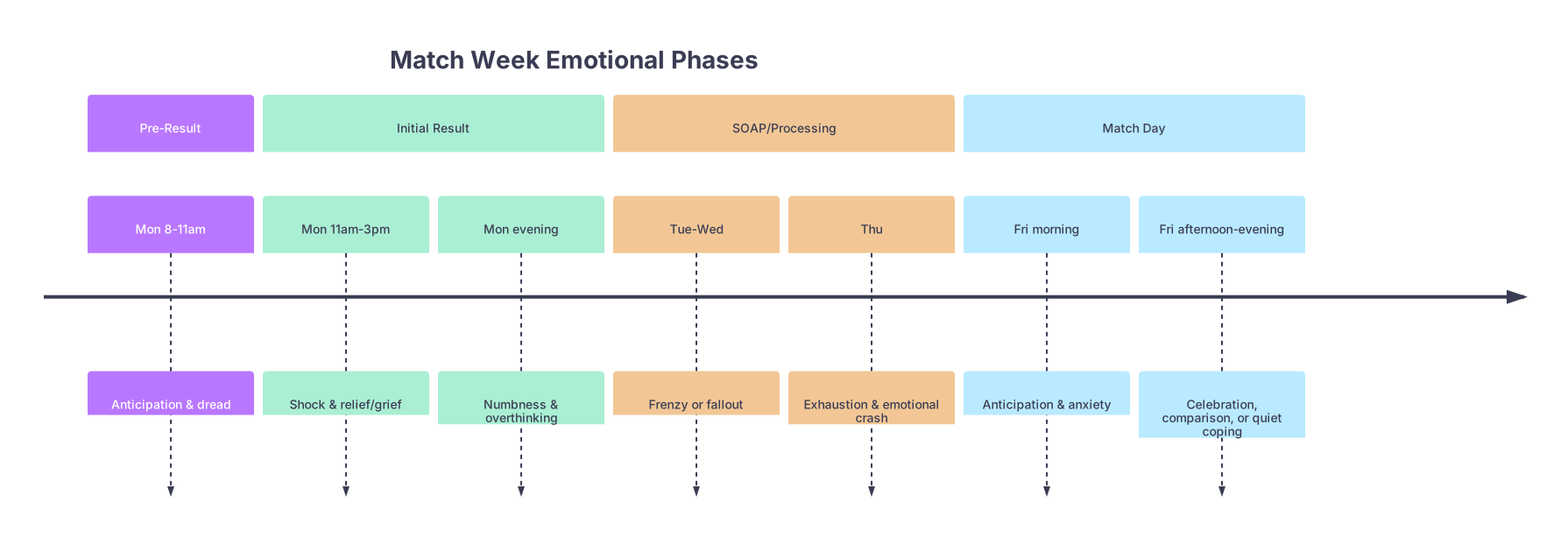
| Period | Event |
|---|---|
| Pre-Result - Mon 8-11am | Anticipation & dread |
| Initial Result - Mon 11am-3pm | Shock & relief/grief |
| Initial Result - Mon evening | Numbness & overthinking |
| SOAP/Processing - Tue-Wed | Frenzy or fallout |
| SOAP/Processing - Thu | Exhaustion & emotional crash |
| Match Day - Fri morning | Anticipation & anxiety |
| Match Day - Fri afternoon-evening | Celebration, comparison, or quiet coping |
Monday: The Email and the Split
At 11:00 a.m. you’re in one of two groups. They are not emotionally comparable, so I’ll separate them.
If you matched
11:00–11:30 a.m. – Acute adrenaline.
Racing heart. Shaky hands. Your brain is screaming: “Matched… but where?” You’ll see:
- People bursting into tears of relief
- One or two classmates already talking about “top 10 program” status
- A couple of stunned, quiet people who matched but don’t look happy. That’s real too.
What you should do in the first 2–3 hours:
Step away from the crowd for 5 minutes.
- Bathroom, stairwell, outside. Anywhere.
- Take 10 slow breaths. Name three specific feelings (not just “happy”): relieved, terrified, uncertain, proud, disappointed, whatever.
Set a temporary communication rule.
- Decide: “I’m telling close family only today” or “I’ll reply to everyone tonight.”
- Text your parents/partner one sentence:
“I matched. I’ll call later with details, just processing right now.”
Avoid immediately doom-spiraling on “but what if I got my last choice.”
- You do not know your program yet.
- You do not need to jump to “my career is ruined” fantasies.
Monday afternoon & evening:
This is a weird emotional limbo. You “should” be happy, but you might feel:
- Numb
- Suspicious of your own relief
- Guilty that you’re happy when friends didn’t match
- Afraid that you matched somewhere “bad” or far away
At this point, focus on:
- Regulating your body: eat a real meal, drink water, move your legs.
- Limiting social media: group chats will be chaos. You don’t need everyone’s theories about which specialties are “collapsing.”
- Sleep: set a hard time to be in bed, even if you just lie there.
If you did not match
Your emotional experience is a completely different planet. Let’s call it what it is: it feels like a public failure.
11:00 a.m.–1:00 p.m. – Shock + survival mode.
You might:
- Feel like your chest is collapsing
- Think, “I can’t walk out into that hallway”
- Want to disappear
Immediate steps (first 2 hours):
Get physically to a safe, semi-private space.
- Office, call room, your car, an empty classroom.
- You’re not weak for needing to leave.
Contact one anchor person.
- A mentor, your advisor, or your most grounded friend.
- Text: “I didn’t match. Can you talk for 10 minutes?”
You don’t need a script beyond that.
Avoid making big statements about your future.
- “I’m quitting medicine.” “I’ll never match.”
Your brain is not reliable right now.
- “I’m quitting medicine.” “I’ll never match.”
Let yourself cry or go numb.
- Both are normal. I’ve watched people sob for 10 minutes, then start making SOAP decisions. I’ve watched others stay stone-faced then completely break down three days later. There’s no correct timeline for the grief.
Monday afternoon–evening:
If you’re entering SOAP:
- You’ll get hit with logistics meetings, lists of unfilled programs, and talk about “strategy.”
- You’ll be expected to pivot from grief to sales mode in hours. It’s brutal.
At this point, emotionally, your goals are:
- Do not isolate completely.
- Do not let shame drive your decisions.
Pick one person (advisor, faculty, resident friend) whose judgment you trust and commit to looping them into SOAP choices rather than doom-Googling alone at 1 a.m.
SOAP Week (Tuesday–Thursday): Controlled Chaos

If you matched, SOAP week is background noise—you’ll be dragged into classmates’ drama, but your own emotional arc is quieter. If you didn’t match, SOAP is its own psychological gauntlet.
If you matched: What this week is actually for emotionally
Tuesday–Thursday
You don’t know where you matched yet, so your brain will try to:
- Re-run every interview
- Rank programs over and over again
- Pre-emptively regret choices
At this point you should:
Cap your mental replays.
- Give yourself 10–15 minutes once a day to obsess about “where I might end up.”
- When the same thoughts come back (they will), say: “I already spent time on that. I’ll revisit at [tomorrow’s time].”
Start a “Residency Brain Dump” note.
- Title: “Residency prep – future me”
- Dump everything that’s spinning in your head: “Need new scrubs,” “What if they’re malignant,” “Call schedule??”
- This tricks your brain into feeling like you’re not ignoring it, just shelving it.
Support without self-destruction.
- If friends didn’t match, you will feel survivor’s guilt.
- Your job: Be present, listen, avoid platitudes like “Everything happens for a reason.”
- Also your job: Step away when you’re overwhelmed. You are not their only support line.
If you didn’t match: Day-by-day emotional management during SOAP
| Day | Emotional Load (0–10) | Task Load (0–10) |
|---|---|---|
| Monday PM | 10 | 4 |
| Tuesday | 9 | 9 |
| Wednesday | 8 | 10 |
| Thursday | 7 | 6 |
| Friday | 6 | 3 |
Tuesday – Applications
- You’re revising your personal statement overnight.
- You’re being told to apply to specialties you barely considered.
At this point you should:
Separate self-worth from specialty.
- Not matching into Derm doesn’t make you less of a physician than landing a SOAP FM spot. That hierarchy is med-student nonsense, not reality.
Create a 3-line self-compassion script.
- Example: “I’m in a crisis but not a failure. I’m making the best decisions I can with the options I have. My worth isn’t defined by this week.”
Protect your bandwidth.
- Let non-essential people know you’re not available:
“I’m going through a time-sensitive process this week. I’ll update you when I can.”
- Let non-essential people know you’re not available:
Wednesday – Interviews
You will:
- Be selling yourself while internally feeling humiliated.
- Hear phrases like “Why do you want our program?” from a place of scarcity, not genuine curiosity.
At this point you should:
Do a 2-minute reset before each interview.
- Stand up, roll your shoulders, 10 deep breaths.
- Say, out loud if possible: “I am more than this score, this week, this match.”
Allow yourself guarded hope without anchoring your identity to any one outcome.
- “This might work out, but if it doesn’t, I’ll still have options” is the stance you want. Hard, but crucial.
Thursday – Results + Crash
- You’ll find out if you SOAPed into a spot.
- Whether yes or no, expect an emotional collapse as the adrenaline drops.
If you SOAP into a spot:
- You may feel relief mixed with grief for “the path you wanted.”
- You might feel ashamed to “admit” the specialty or program to classmates. That shame is learned; it’s also toxic.
If you don’t land a SOAP spot:
- The ground drops out again.
- People will start throwing around “research year,” “reapply,” “alternative careers.”
At this point you should, either way:
Schedule one debrief meeting with a trusted faculty member within 7 days.
- Not a life-planning summit. Just: “Here’s what happened. What are my realistic next steps?”
Explicitly name the grief.
- Say it to someone: “I’m grieving the version of my career I’d imagined.” That’s not dramatic. It’s accurate.
Match Day (Friday): The Reveal and the Comparison Trap
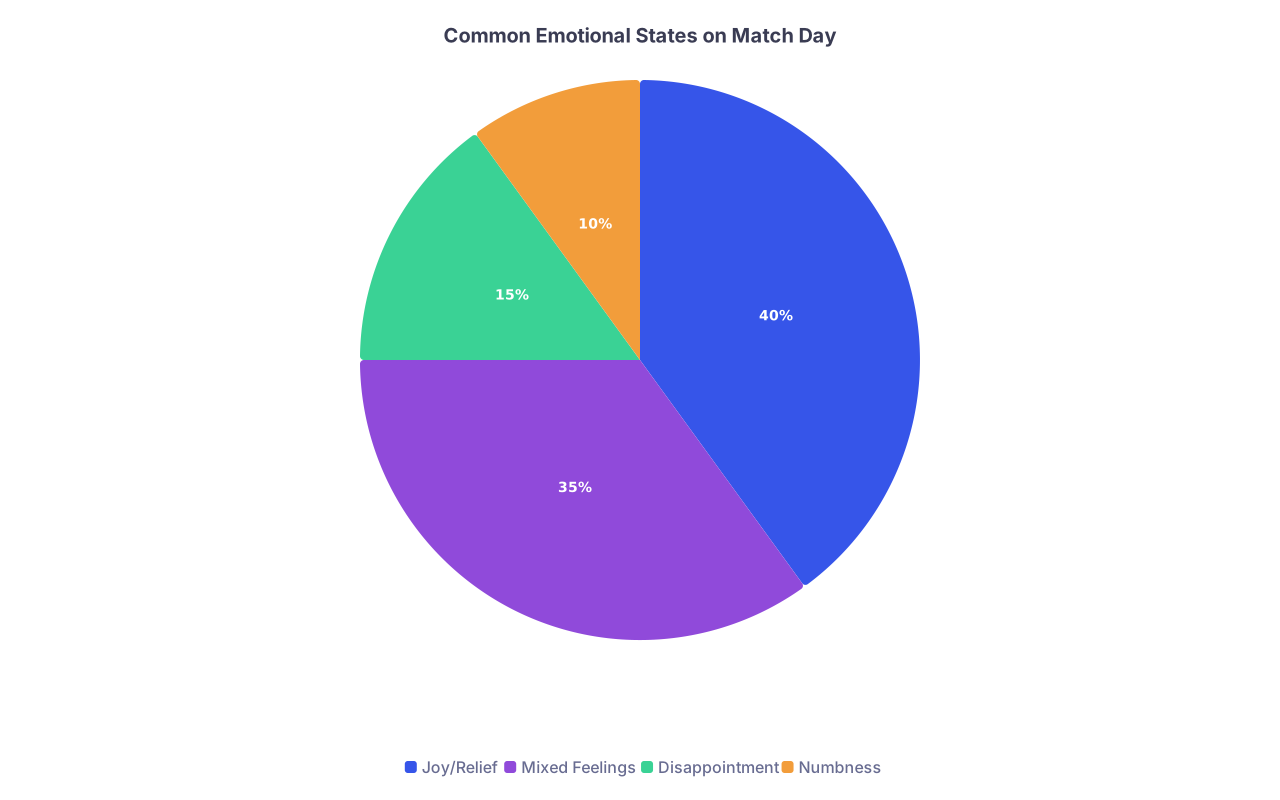
| Category | Value |
|---|---|
| Joy/Relief | 40 |
| Mixed Feelings | 35 |
| Disappointment | 15 |
| Numbness | 10 |
Friday you actually find out where you’re going or you’re standing in a room where everyone else does.
If you matched (or SOAPed) into a spot
Morning – Anticipation
You might barely sleep. Your mind will cycle:
- “What if it’s my last choice?”
- “What if I move across the country?”
- “What if my partner and I end up long-distance?”
At this point you should:
Set your “radius of disclosure” ahead of time.
- Decide who you want physically present at the ceremony. You are allowed to say no to extended family. Yes, really.
Plan one grounding action for right after you open the envelope/email.
- Step outside for 3 minutes.
- Text one person: “Here’s where I’m going. I have mixed feelings, will call later.”
During the ceremony
You’ll see:
- Screaming joy
- Performative happiness
- One or two people trying not to cry
Remember:
- You are not obligated to feel pure joy about your match.
- “Mixed” is the most common real emotion: happy you matched + worried about location/program fit + sad about leaving your support system.
Afternoon–Evening:
You’ll probably be flooded with:
- Messages: “So proud of you!!!”
- Social media posts: perfect photos, filters, and carefully curated captions
At this point you should:
Do one low-key, non-medical activity that night.
- Walk with a friend. Watch something stupid. Anything that signals to your nervous system: “Storm over, for now.”
Make a “Residency Reality” list.
- Two columns:
“What I’m excited about” / “What I’m anxious about.” - This pulls vague dread out of the shadows and into something you can actually address later.
- Two columns:
If you didn’t match and are not celebrating
You might skip the ceremony. That’s fine. I’ve seen students sit in the balcony, sit in their car in the parking garage, or text friends from home instead of going.
Your job today is not to “be happy for others.” It’s to not let shame swallow you whole.
At this point you should:
Protect your environment.
- If you know the ceremony will break you, don’t go. You can be supportive later in one-on-one conversations.
Plan a very small, non-career-related win for the day.
- Cook something you like. Go to the gym. Clean your room. Something tangible you can finish.
Set a time boundary for social media.
- 10–15 minutes max to scroll Match posts if you want, then log out. Don’t marinate in comparison for hours.
Post-Match to Graduation: Week-by-Week Emotional Shifts
You’ve got 6–12 weeks between Match and graduation, depending on your school calendar. The emotional arc is roughly:
- Week 1–2: High reactivity, constant rehashing
- Week 3–6: Logistics + identity shift
- Last 2–3 weeks pre-grad: Nostalgia, anticipatory anxiety for residency
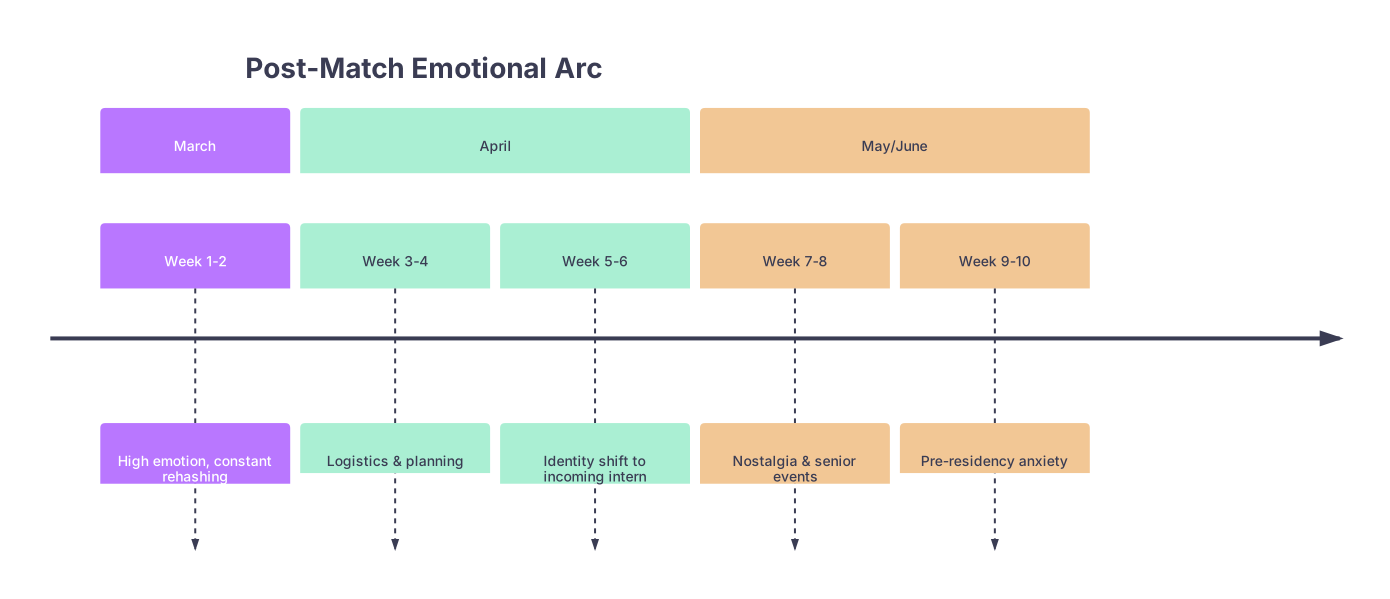
| Period | Event |
|---|---|
| March - Week 1-2 | High emotion, constant rehashing |
| April - Week 3-4 | Logistics & planning |
| April - Week 5-6 | Identity shift to incoming intern |
| May/June - Week 7-8 | Nostalgia & senior events |
| May/June - Week 9-10 | Pre-residency anxiety |
Weeks 1–2 After Match: The Debrief Phase
What’s happening:
- Telling family/friends your outcome—on repeat.
- Fielding insensitive questions:
“Oh, is that a good program?” “Why that specialty?”
Or “So what happens now?” if you didn’t match.
At this point you should:
Standardize your “match story” into 2–3 versions.
- Short: 1 sentence for acquaintances.
“I matched into internal medicine at X hospital.” - Medium: for extended family.
“I’m going into X. It’s a strong program for Y, and I’ll start in July.” - If you didn’t match:
“I didn’t match this year. I’m working with my school on next steps and likely doing [research year, reapplying, etc.]. I’ll share more once things are set.”
- Short: 1 sentence for acquaintances.
Do one honest debrief with yourself.
- Take 30 minutes, write down:
- Three things that were out of your control
- Three things you’d do differently if you could
- Three strengths you brought to the process that are still true, regardless of the outcome
- Take 30 minutes, write down:
Re-establish non-medical identity pieces.
- At least once per week, do something that has nothing to do with medicine. Club, hobby, church, sports. You are about to lose a lot of free time; start rebuilding this now.
Weeks 3–6 After Match: Logistics and Identity Shift

This is the “I’m an almost-doctor” phase. Emotions are muddled:
- Excitement about being done with exams
- Panic about being responsible for actual patients
- Grief about leaving classmates, partners, or your city
Practical chaos you’ll be dealing with:
- Licensure paperwork
- Credentialing
- Moving plans
- Housing searches
- Maybe a Step 3 plan
At this point you should:
- Create a simple “Residency Prep” timeline.
Break it down by week, not by vague “sometime before July.” Example:
- Week 1: Confirm start date, sign contract.
- Week 2: Start housing search, make budget.
- Week 3: Complete occupational health / immunizations.
- Week 4: Finalize move dates, book movers/truck.
- Week 5: Review core intern topics 3–4x/week (don’t overdo it).
- Week 6: Focus on sleep, exercise, and saying goodbye.
Draw a clear line on studying.
- You do not need to “pre-study all of medicine” before day 1.
- Pick 2–3 concrete resources (e.g., “Surgical intern guide,” “MKSAP questions,” “Uptodate topic list”) and cap yourself at 3–4 hours per week. Any more is usually anxiety, not preparation.
Schedule “goodbye” rituals early.
- Group dinner with your med school crew.
- One last visit to your favorite coffee shop.
- Closure helps your brain transition instead of feeling yanked into residency.
Last 2–3 Weeks Before Graduation: Sentimental Whiplash
You’ll be drowning in:
- Award ceremonies
- Senior banquets
- Cap and gown fittings
- Endless variations of “You must be so excited!”
Yet internally, many students feel:
- Strangely detached
- Terrified of “intern year horror stories”
- Guilty that they’re not purely happy
At this point you should:
- Name your main residency fear explicitly.
- “I’m afraid I’ll kill someone.”
- “I’m afraid I’m not smart enough.”
- “I’m afraid I’ll burn out and hate medicine.”
Then ask yourself:
- What’s one small skill or habit I can build now that would make that slightly less likely?
Examples:
- Fear: Missing something critical.
Habit: Start using checklists even on med school rotations now. - Fear: Burnout.
Habit: Define “non-negotiable” weekly self-care (therapy, exercise, one evening off-screen).
- Decide how you want to emotionally show up on graduation day.
- Not how you should feel—how you want to behave.
- Example goals:
- “I want to be present with my family and not on my phone.”
- “I want to allow myself to feel proud, even if I’m scared about residency.”
- “I want to take at least three mental snapshots during the ceremony.”
Graduation Week: Crossing the Threshold

Graduation doesn’t magically fix the emotional whiplash. It just changes the label on your ID badge.
The 24–48 hours around graduation usually include:
- Intense family energy (pride, expectations, money talk)
- Old wounds resurfacing (“We sacrificed so much for you”)
- Lots of “Dr. [Your Name]!” that might feel like costume play
At this point you should:
Use micro-breaks during the day.
- Between photos, bathroom breaks, walking from auditorium to reception—take 60 seconds just for yourself.
- Ask: “Where am I holding tension?” and consciously release your jaw, shoulders, or hands.
Give yourself permission for messy feelings.
- Tears, blankness, relief, dread—it all fits. You don’t have to match the Hallmark version.
Plant one mental flag: you survived something big.
- Medical school is grueling. Matching (or surviving not matching and figuring out a path) is grueling.
- Even if your path is not what you planned, you’ve crossed a line. Acknowledge it.
Your Next Concrete Step
Do one small, specific thing today to get ahead of the emotional chaos:
Write a 5–6 line “Match-to-Graduation Emotional Game Plan” in your notes app. Include:
- One person you’ll talk to if you don’t match or are disappointed with where you matched.
- One boundary you’ll set around social media during Match Week.
- One grounding ritual you’ll use on Match Day (before or after the reveal).
- One thing you’ll do each week between Match and graduation that isn’t about medicine.
- One fear about residency you’re willing to write down.
- One concrete habit you’ll start this month to address that fear.
Open your notes app now and write those six lines. Do not overthink it. This is your anchor for the emotional whiplash that’s coming—and you’ll be very glad you set it before the storm hits.