
The standard “grind harder” study advice will break you during high‑stress weeks.
You do not need more discipline. You need a low‑energy study system that still moves you forward when you are exhausted, anxious, and running on call-room coffee.
This is how you build it.
1. The Core Idea: Stop Planning for Your Best Days
High‑energy study plans are built for fantasy you.
Low‑energy plans are built for the version of you who:
- Just finished a 14‑hour clinical day
- Has a pounding tension headache
- Is behind on Anki, lectures, and sleep
- Still has an exam in 5–10 days
You cannot fix that week with motivation. You fix it by lowering the energy cost of starting and continuing to study.
Here is the mindset shift:
- Old model: “How much can I get done if I’m focused and motivated?”
- New model: “What can I get done if I feel like garbage but show up anyway?”
So the plan we are going to build:
- Assumes you are tired.
- Minimizes decisions.
- Uses very small, very concrete tasks.
- Has built‑in brakes so you do not burn out more.
2. The Three‑Tier System: High, Medium, and Low Energy Modes
You need modes, not a single rigid schedule. On high‑stress weeks, your energy will swing wildly day to day (sometimes hour to hour).
So you create three preset study modes:
- Tier 1 – High Energy: For rare good days.
- Tier 2 – Medium Energy: Your default on busy weeks.
- Tier 3 – Low Energy: The “bare minimum but still useful” mode.
On a high‑stress week, you mostly live in Tier 2 and Tier 3.
Step 1: Choose Your Core Tools
Stop trying to use everything. During stress weeks, pick 2–3 primary tools only:
- A Qbank (UWorld, AMBOSS, Rosh, etc.)
- Anki or some flashcard system
- One reference source (Boards & Beyond, OnlineMedEd, or your school’s lectures)
That is it. If you are using more than three regularly, you are wasting cognitive bandwidth switching.
Step 2: Define Each Tier in Concrete Terms
Here is a sample you can adapt immediately.
| Tier | Time | Focus | Example Tasks |
|---|---|---|---|
| High | 3–4 hrs | New learning + Qbank | 40 Qs + 1 lecture + Anki |
| Medium | 1.5–2 hrs | Mostly questions | 20–25 Qs + 15–20 min Anki |
| Low | 20–45 min | Micro-tasks | 10 Qs OR 15 min Anki OR 1 short video |
You will refine these to your own realistic numbers, but the structure stays:
- High = aggressive progress
- Medium = steady progress
- Low = damage control + retention
Step 3: Morning Check-In: Pick Your Tier
You do this in under 2 minutes.
Ask yourself after waking up and getting ready:
- Did I sleep at least 6 hours?
- Do I have a full call / night shift / brutal day?
- How anxious / physically drained do I feel (0–10)?
Then choose:
- If sleep ≥7h, no call, stress <5 → Tier 1 or 2
- If sleep 5–6h, busy day, stress 5–7 → Tier 2
- If sleep <5h, post‑call, stress >7 → Tier 3
You commit to that tier for the day. No guilt. No fantasy that “after this coffee I’ll do 100 questions.” You are making a rational call.
3. Build Your Low‑Energy Toolkit
Tier 3 is the hero here. This is what keeps you from falling behind completely.
A. Define “Micro‑Wins”
A micro‑win is something you can accomplish in 5–20 minutes with:
- Minimal setup
- No switching between apps or resources
- A clear end point
Examples:
- 10 Anki cards (no new, review only)
- 5–10 Qbank questions in tutor mode
- 1 short (≤10 min) explainer video
- Skim 2 pages of a high-yield summary (e.g., First Aid section)
Pick 3–5 micro‑wins total that you will use repeatedly.
B. Create a Prewritten Low‑Energy Menu
Do not rely on your brain to decide “what should I study?” when you are wiped. Pre‑decide.
Write something like this (digital note or index card):
Low‑Energy Study Menu (Pick 1–2):
- 10–15 Anki reviews only (no new cards)
- 5 Qbank questions in tutor mode, untimed
- 1 short video for my weakest topic (max 10–12 minutes)
- 10 minutes reviewing missed questions from yesterday
- 5 minutes skimming high‑yield summary of today’s clinical topic
When your brain is cooked, you just pick from the menu. No planning, no guilt negotiations.
4. Time Blocking for High‑Stress Weeks (Realistic Version)
You cannot control your schedule, but you can control anchors.
Anchors = small, predictable slots you defend aggressively.
Typical high‑stress week anchors:
- Pre‑day: 20–30 minutes (6:30–7:00 am) – often Tier 3 work
- Post‑day: 45–60 minutes after food and shower – Tier 2 or Tier 3
- Commute / dead time: Audio review, Anki on phone, quick notes
Here is a realistic pattern:
On clinic days:
- Morning: 20 minutes Anki (phone or laptop)
- Evening: 45 minutes Qbank (10–15 questions + review)
On lighter days / weekends:
- Two 60–90 minute blocks (Tier 1 or 2)
- Between: actual rest, not fake rest (doomscrolling is not rest)
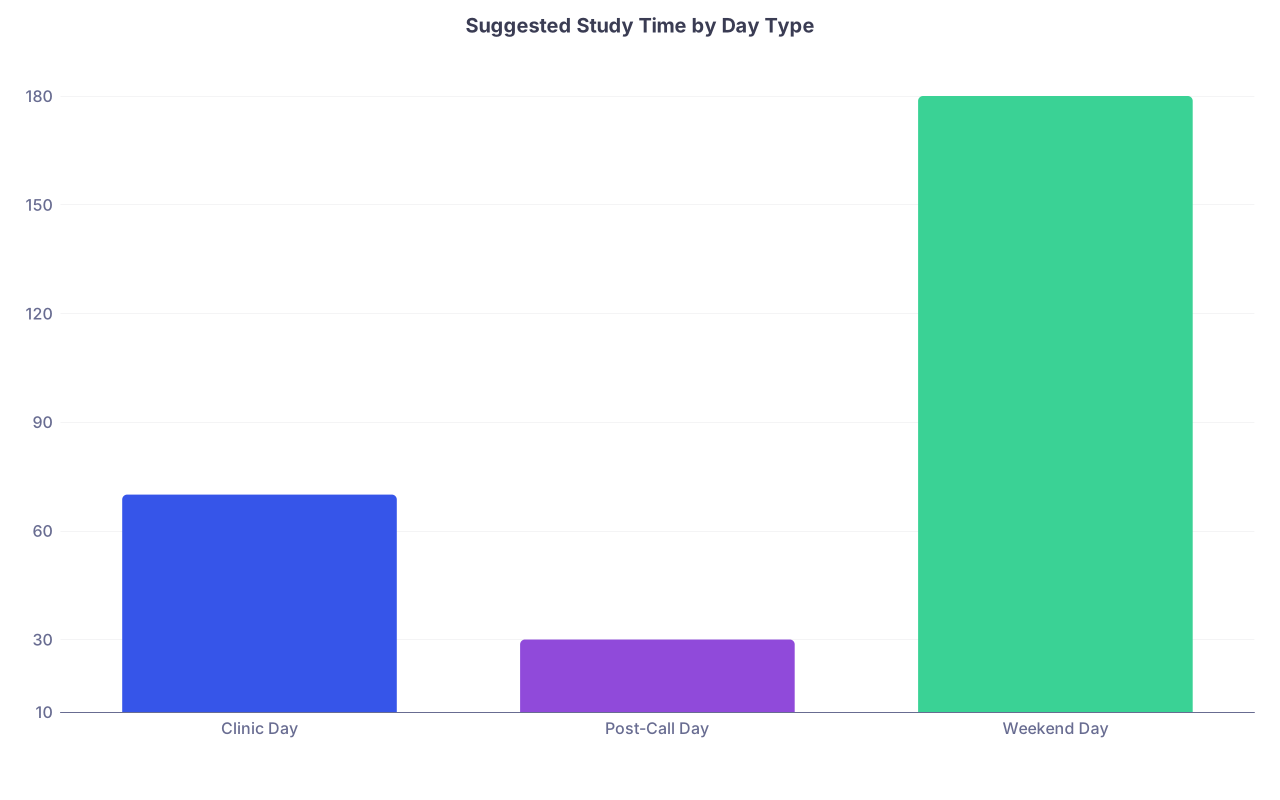
| Category | Value |
|---|---|
| Clinic Day | 70 |
| Post-Call Day | 30 |
| Weekend Day | 180 |
The point is not perfection. The point is consistency with lower expectations.
5. Decision-Free Daily Template
High‑stress weeks punish people who improvise.
You will build a template that stays basically the same every day of that week.
Example Template (Adjust to Fit Your Life)
Morning (Anchor #1 – 15–25 minutes)
- Always: Anki review only
- Rule: No new cards during high‑stress weeks unless exam <5 days away and you feel strong
During the day
- If 5–10 minutes free: 5 Anki cards or one micro‑win
- If brain is fried: Do nothing. Stare at the wall. That is allowed.
Evening (Anchor #2 – 45–90 minutes depending on tier)
- 20–40 minutes: Qbank (5–20 questions depending on tier)
- 10–20 minutes: Review / annotate key points to your single reference (optional if very low energy)
- Hard cutoff: Time where you stop no matter what (e.g., 10:30 pm)
What matters: You are not inventing a new plan every night. You are either doing the full template (Tier 2) or a compressed version (Tier 3).
6. How to Handle Qbank and Anki When You’re Behind
Everyone hits this point:
- 1,000+ Anki reviews due
- Hundreds of unused Qbank questions
- Exam in 2–3 weeks
- You feel completely underwater
Here is the protocol. It is not pretty, but it works.
Step 1: Triage Anki
If your reviews are exploding, doing them all is impossible and useless. You will click through without learning.
Do this:
- Turn off or suspend lower‑yield decks for the immediate exam period.
- Cap daily reviews to a number you can realistically do in 2 short blocks (e.g., 150 reviews total).
- If you are more than 3x your daily cap in “due” cards, mass-reschedule older ones into the future after the exam or selectively suspend them.
Harsh truth: Anki used badly becomes a guilt machine. For high‑stress weeks, it must be slim and targeted.
Step 2: Reprioritize Qbank
Near an exam, new questions matter more than re‑reviewing lecture slides.
Use this order:
- Qbank on your upcoming exam’s highest-yield systems/topics
- Anki for missed concepts from those questions
- Only then, if time, lectures and “nice to know” content
On low‑energy days, you are not doing 40 questions. You might do 5–10 in tutor mode. That is still progress.
7. Protecting Mental Health Without Pretending You’re on Vacation
You are not going to “self-care” your way through exams by taking bubble baths and pretending school does not exist.
But you can reduce psychological load and burnout while still studying.
A. Three Non-Negotiables During High‑Stress Weeks
Sleep floor: 5.5–6 hours minimum
- If you are consistently below this, your priority is more sleep, not more questions. I have watched students burn two extra hours at night and get worse scores because their brain was half‑offline the next day.
Food that is actually fuel
- You are not optimizing your macros. You are avoiding the triple hit of caffeine + sugar + no real meals that guarantees anxiety spikes and crashes.
- Basic rule: One real meal every 6–8 hours, some protein each time.
Zero‑content rest
- Social media, YouTube, and Netflix are not rest during these weeks. They are numbing.
- Real rest is: 10 minutes lying down with eyes closed, short walk, shower, talk to a real person.
B. The 10‑Minute Decompression Rule
Before you study after a brutal day:
- Drop your bag.
- Set a 10‑minute timer.
- No phone. No laptop.
- Sit, lie down, shower, or stretch in silence.
You are signaling to your brain: “We are off the ward now.”
You will think you do not have time. You do. You will gain it back in focus.
8. Weekly “Reset” for When Everything Feels Messy
During a high‑stress exam block, you should do a 15–20 minute weekly reset, ideally on a lighter evening or day.
Your agenda:
Look at the next 7 days
- Identify the worst days (call, long OR, double clinic, exam).
- Pre‑label them as Tier 3 or Tier 2.
Pick 1–2 priority topics for the week
- Example: Acid‑base and arrhythmias for an internal medicine shelf.
- Your micro‑wins and Qbank choices should be biased toward these.
Clean your digital/physical clutter for 5–10 minutes
- Close 20 random tabs.
- Put away papers.
- Organize your “Study” folder on your laptop for 5 minutes.
Chaos in your environment = extra friction to start studying. You do not have energy for that.
9. Concrete Example: A High-Stress Medicine Shelf Week
Let me put this into a real scenario.
You are:
- On inpatient medicine
- Post‑call every 3rd day
- Shelf in 9 days
- Already behind on UWorld
Day Types
- Post‑call days → Tier 3
- Heavy admit days → Tier 3 or low Tier 2
- Lighter days → Tier 2
- Weekend pre‑shelf day → One Tier 1 block, one Tier 2 block
Sample Schedule
- Morning: Sleep. No studying.
- Afternoon: 10–15 minutes Anki review.
- Evening: 5 UWorld questions (cardio only) in tutor mode + brief explanation read. Done.
Heavy Admit Day (Tier 2 or 3)
- Morning: 15 minutes Anki.
- Midday: If 10 min free, do 5 Anki cards.
- Evening:
- If Tier 2: 15 UWorld questions + 15 min review
- If Tier 3: 5–10 Qs only or 1 short video on your weakest topic
Lighter Day (Tier 2)
- Morning: 20 min Anki
- Evening:
- 20–25 questions timed (block)
- 20–30 min reviewing explanations
- 10 min skimming key weaknesses (using one reference)
Weekend Pre‑Shelf (Tier 1 + Tier 2)
- Morning (Tier 1):
- 40 Qbank questions + full review (2–2.5 hours)
- Afternoon:
- Actual rest, non-medical
- Evening (Tier 2):
- 20 questions from weak area or Anki focused on misses
The exact numbers can change. What does not change: you pick a tier and stay honest about your capacity.
10. Simple Flowchart: What Should I Do Right Now?
Screenshot this in your head.

| Step | Description |
|---|---|
| Step 1 | Do I have at least 20 min? |
| Step 2 | Do 1 micro-win or rest |
| Step 3 | How is my energy? |
| Step 4 | Tier 1 block: Qbank + review |
| Step 5 | Tier 2 block: fewer Qs + Anki |
| Step 6 | Tier 3: Anki only or 5-10 Qs tutor mode |
| Step 7 | Hard stop after 30-45 min |
If your energy is low and you still try to act like it is high, you will fail, feel guilty, and then avoid studying altogether. This kills more students than “laziness.”
11. Track Only What Actually Matters
During low‑energy weeks, complicated tracking systems are useless. You need 1–2 signals:
- Questions completed this week
- Total study minutes this day
That is it. A simple tally in your notes app works.
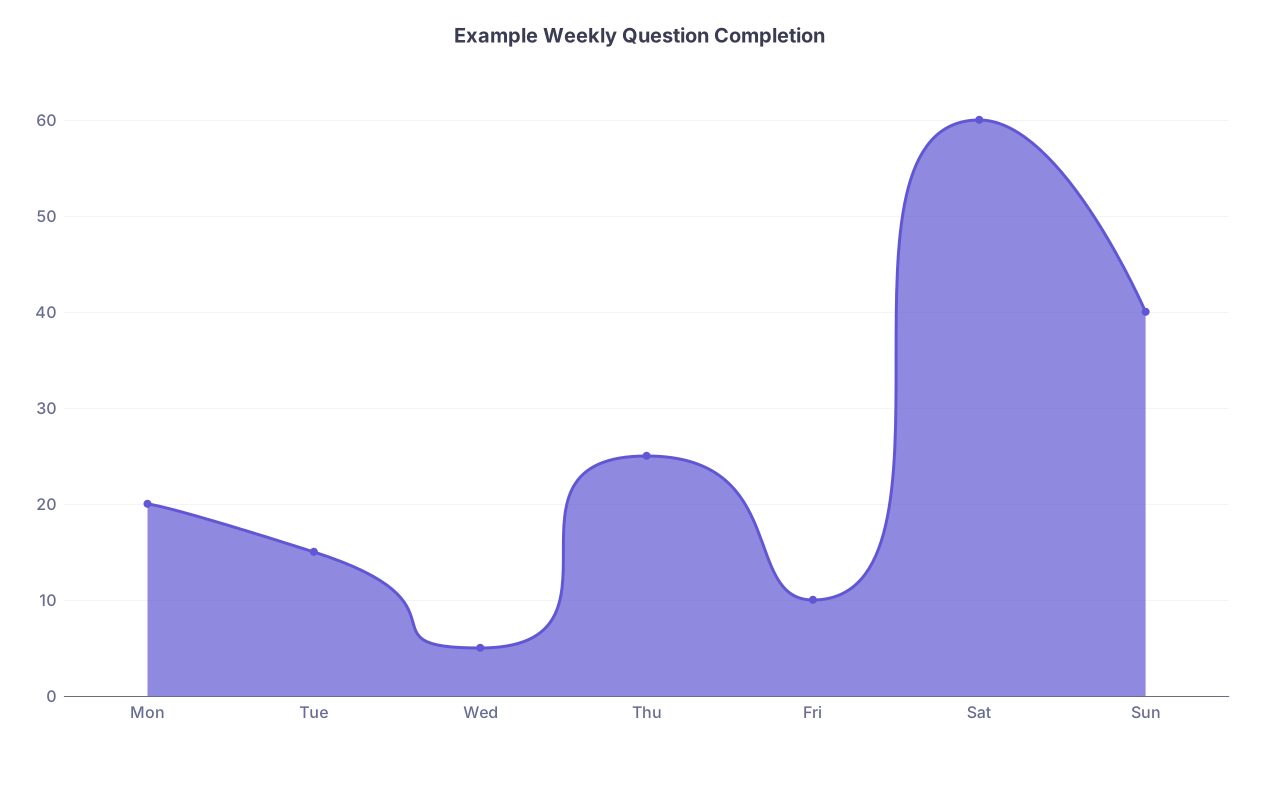
| Category | Value |
|---|---|
| Mon | 20 |
| Tue | 15 |
| Wed | 5 |
| Thu | 25 |
| Fri | 10 |
| Sat | 60 |
| Sun | 40 |
You want to see:
- No zero‑days if possible (except truly post‑call or mental health emergency days)
- Some questions done on at least 4–5 days of the week
- One bigger push day if your schedule allows
The goal is minimum effective consistency, not perfection.
12. Dealing with Guilt and Panic
The psychological part is usually worse than the workload.
Here is how to contain it.
A. Pre‑write Your “Crisis Script”
You will have nights where you think: “I am going to fail. I am too far behind.”
Write a short script now that you can read in those moments. Something like:
“This week is not about perfect prep. It is about not making things worse.
I will pick the lowest energy tier and complete one block.
After that, I am allowed to stop.
Future me benefits more from me sleeping than from doom-scrolling Reddit.”
Have it as a pinned note. Read it before you open Instagram.
B. Set a Panic Cutoff Time
Past a certain hour (say 10:30 pm), you are not allowed to make big decisions about your future, your career, or your exam outcome. You are exhausted and irrational.
Past that time you can:
- Review a few flashcards at most
- Do breathing exercise / stretch
- Go to bed
That one rule alone has saved a lot of students from spirals.
13. Example Low-Energy Study Menu (Copy-Paste Ready)
Here is a ready‑to‑use menu you can adapt.
Low‑Energy Study Plan:
If I have 10 minutes:
- 10 Anki reviews or
- 3–5 Qbank questions in tutor mode or
- 5-minute skim of key summary for tomorrow’s topic
If I have 20–30 minutes:
- 10–15 Qbank questions in tutor mode or
- 20 minutes of Anki (review only) or
- 1 short video on a weak topic + 3 flashcards created from it
If I have 45–60 minutes:
- 15–20 Qbank questions + very brief review of wrongs
- No second block unless I clearly feel Tier 2 or 1
Print it, tape it above your desk, or put it as your phone wallpaper.
14. Common Mistakes That Wreck High-Stress Weeks
You might recognize some of these:
- Trying to completely catch up on Anki after 10 days of neglect.
- Doing three different Qbanks “for completeness.”
- Staying up until 2–3 am multiple days in a row “for one more block.”
- Switching resources every 2–3 days searching for the “perfect” one.
- Telling yourself you will “just rest today” and then doom‑scrolling for 4 hours, feeling worse and doing no real recovery.
Each of these is fixable:
- Cap Anki and triage aggressively.
- Commit to one main Qbank.
- Set a hard bedtime alarm and respect it like a page from your attending.
- Commit to one primary content source per exam period.
- Replace empty scrolling with conscious rest or a defined micro‑win, then stop.
15. What You Can Do Tonight
Do not try to rebuild your life. Do three things:
Write down your three tiers (High / Medium / Low) with:
- Approximate time
- Approximate questions
- Whether Anki is included
Create your Low‑Energy Menu with 3–5 micro‑wins.
- Keep it extremely easy to execute.
Pick tomorrow’s tier right now.
- Based on your schedule and how you realistically expect to feel.
Then tomorrow, your only job is to follow the tier you picked, not to “be productive.”

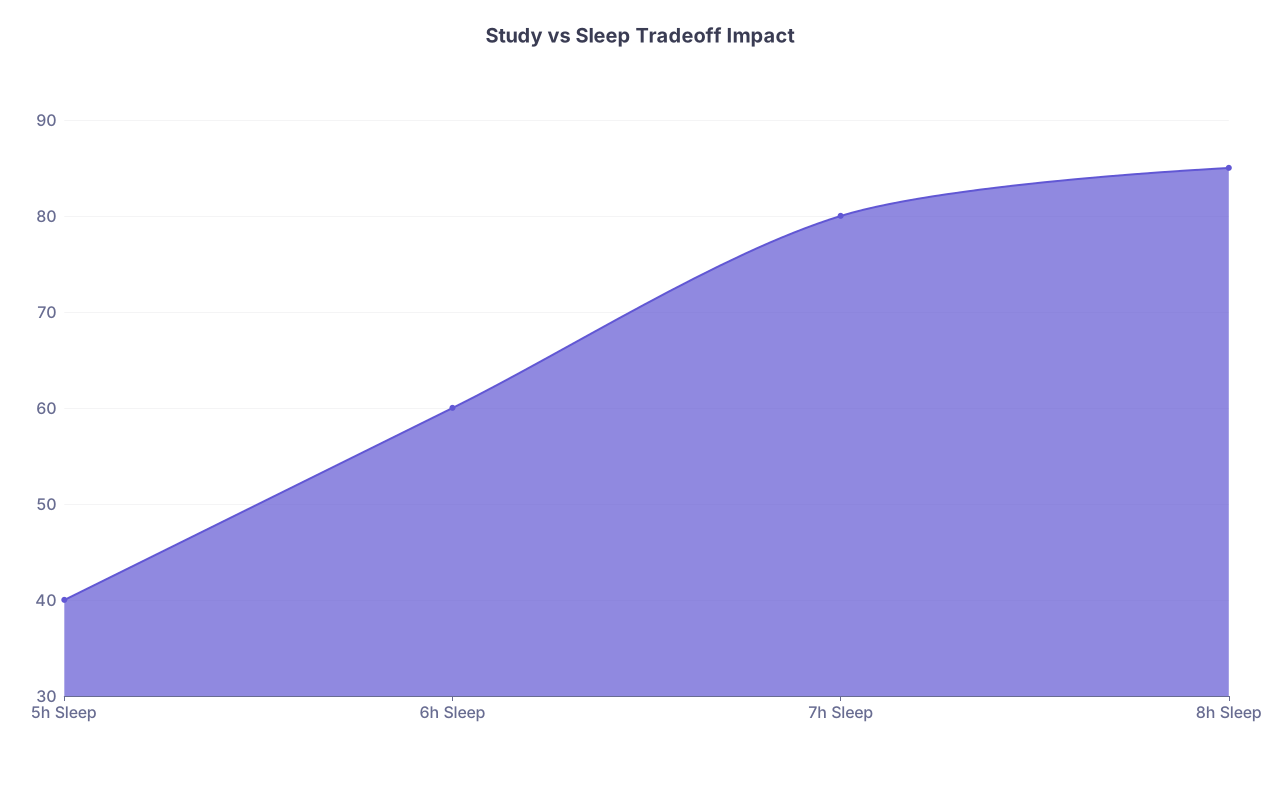
| Category | Value |
|---|---|
| 5h Sleep | 40 |
| 6h Sleep | 60 |
| 7h Sleep | 80 |
| 8h Sleep | 85 |

| Step | Description |
|---|---|
| Step 1 | Start Weekly Reset |
| Step 2 | Review next 7 days schedule |
| Step 3 | Mark high-stress days |
| Step 4 | Assign Tier 2 or 3 to each day |
| Step 5 | Choose 1-2 priority topics |
| Step 6 | Clean workspace/files 5-10 min |
| Step 7 | Update Low-Energy Menu if needed |