

A Structured Approach to Handling Suspected Intimate Partner Violence
Most clinicians mishandle suspected intimate partner violence because they rely on “gut feeling” instead of a clear protocol. That is not just unsafe. It is ethically lazy and legally risky.
You need a structure. Something you can run in your head at 2 a.m. on a busy call night. Something that works whether you are a medical student in an OSCE, a resident in ED triage, or an attending in clinic with six patients still waiting.
Here is the structure I teach and actually use:
- Recognize – Know the red flags and trust them.
- Secure – Make the room safe before you ask anything serious.
- Screen – Ask clear, direct, non-judgmental questions.
- Assess risk – Specifically for lethality and immediate danger.
- Document – As if your notes will be read aloud in court. Because they might.
- Plan – Safety, referrals, and follow-up.
- Respect autonomy – Within the limits of mandatory reporting.
You run that loop, consistently, and you stop improvising under pressure.
1. Recognize: Stop Ignoring the Obvious
Most missed cases of intimate partner violence (IPV) are not subtle. They are ignored.
Common patterns I see:
- The patient flinches when their partner makes a small gesture.
- The story changes every time you ask.
- The injuries do not match the mechanism. “I ran into a door” somehow equals bilateral arm bruises and old rib fractures.
You cannot screen everyone perfectly, but you must train your brain to notice patterns. Think in buckets:
Red flags in presentation
- Recurrent ED visits: "falls", "accidents," vague pain
- Frequent missed appointments, especially when the partner controls scheduling
- Delays in seeking care for serious injuries
- Injuries at different stages of healing
- Central pattern injuries: face, neck, trunk, breasts, genitals
Behavioral / social clues
- Partner insists on staying in the room and answering all questions
- Patient looks to partner before speaking or seems anxious when contradicting them
- Patient is unusually withdrawn, guarded, or overly apologetic
- New, sudden anxiety or depression; worsening chronic conditions
- Reports of "strict" partner, financial control, or isolation from family and friends
Clinical history clues
- Recurrent sexually transmitted infections
- Multiple unintended pregnancies or requests for emergency contraception
- Non-adherence explained by partner behavior: “He says I do not need these pills”
You do not need certainty to move to the next step. Suspicion is enough.
2. Secure: Privacy Before Questions
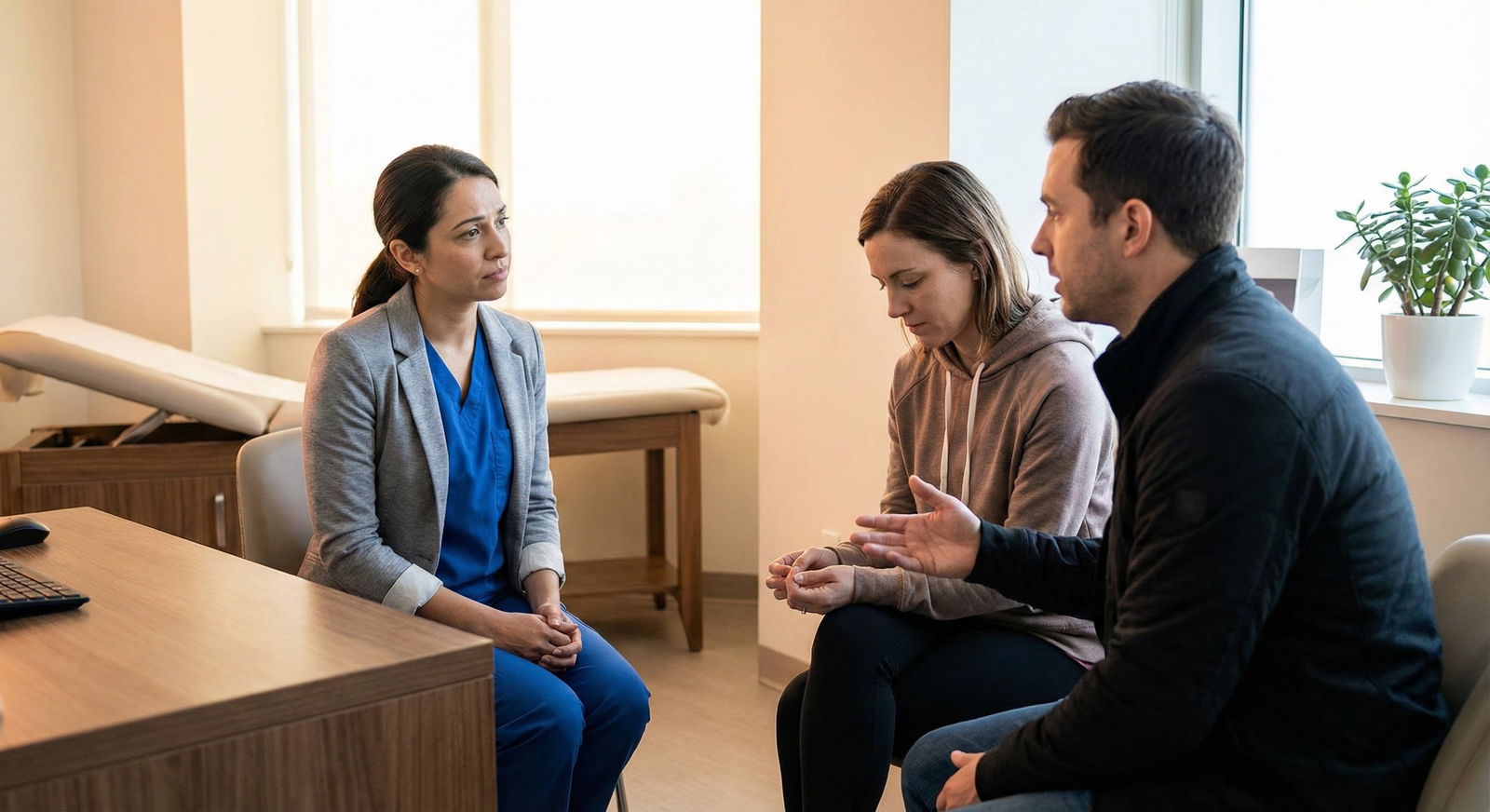
The biggest mistake: trying to screen for IPV while the suspected abuser is sitting three feet away.
If you suspect IPV, your first operational move is simple:
Get the patient alone. Non-negotiable.
Here is the practical script I have used dozens of times:
- “For this next part of the exam, I need to speak with patients alone. We do this with everyone. You are welcome to come back in after.”
- If they resist: “This is our clinic policy for all adult patients. It helps us provide safe care.”
If your hospital or clinic does not have such a “policy,” act like it does. Then push your department to create it in writing, because it protects you and your patients.
Once you are alone with the patient:
- Sit down. At their eye level.
- Make sure the door is closed.
- Check: “Is it safe for you to talk right now?”
- Silence your pager or at least do not look at it. They will notice.
If the partner absolutely refuses to leave and you truly cannot separate them (it happens):
- Focus on obvious medical stabilization.
- Do minimal documentation of your concerns without alerting the partner in the note.
- Try to arrange follow-up in a setting where you can insist on privacy.
- In acute danger, involve security or law enforcement per institutional protocol.
Safety before everything else. Including your perfect history and physical.
3. Screen: Concrete Questions, Not Vague Hints
If you tiptoe around the issue, most patients will deny everything. Not because they want to. Because you made it awkward and unclear.
Use clear, direct language. Normalize the topic first:
Normalize
- “Because violence at home affects health, I ask all my patients these questions.”
- “You are not being singled out. I ask everyone.”
Ask specific questions (pick a simple, validated style and memorize it)
Examples you can use tomorrow:
- “Has anyone at home ever hit, slapped, pushed, or otherwise physically hurt you?”
- “Has a partner ever forced you to have sex or do sexual things when you did not want to?”
- “Does your partner ever threaten you, insult you, or control where you go, who you see, or how you spend money?”
- “Do you ever feel afraid of your partner?”
If they say “yes” to anything:
- Do not freak out. No visible panic, no wide-eyed sympathy show.
- Say something simple and strong:
- “Thank you for telling me.”
- “What you are describing is abuse. It is not your fault.”
- “You deserve to be safe.”
Then keep going. You are not finished just because they admitted it.

| Step | Description |
|---|---|
| Step 1 | Suspect IPV |
| Step 2 | Ensure privacy |
| Step 3 | Screen directly |
| Step 4 | Document screening |
| Step 5 | Assess risk |
| Step 6 | Safety measures and emergency services |
| Step 7 | Provide resources and plan follow up |
| Step 8 | Document thoroughly |
| Step 9 | Disclosure? |
| Step 10 | Immediate danger? |
4. Assess Risk: Are They in Immediate Danger?
A vague “yes, there is abuse” is not enough. You need to know: how bad, how often, and how close to lethal.
You are not doing a full social work evaluation. You are doing a targeted risk assessment to guide what happens in the next hours.
Ask focused questions:
Nature and frequency
- “How often does this happen?”
- “Has it been getting worse over time?”
- “What is the worst it has ever gotten?”
Specific violent behaviors
- “Has your partner ever strangled or choked you?”
- “Has your partner ever used or threatened to use a weapon?”
- “Has your partner ever threatened to kill you, the children, or themselves?”
Strangulation, weapon use, and explicit death threats are massive red flags. Take them seriously.
Control and isolation
- “Does your partner control your access to money, phone, car, or medications?”
- “Does your partner stop you from seeing family or friends?”
Children and others at risk
- “Are there children at home?”
- “Have the children ever seen or been hurt during these incidents?”
- “Does your partner hurt pets or threaten to?”
Current safety
- “Do you feel safe going home today?”
- “Do you think your partner could seriously hurt or kill you?”
- “What do you think will happen if you go home tonight?”
If at any point you hear “I do not feel safe going home” or anything close, you escalate. Full stop.
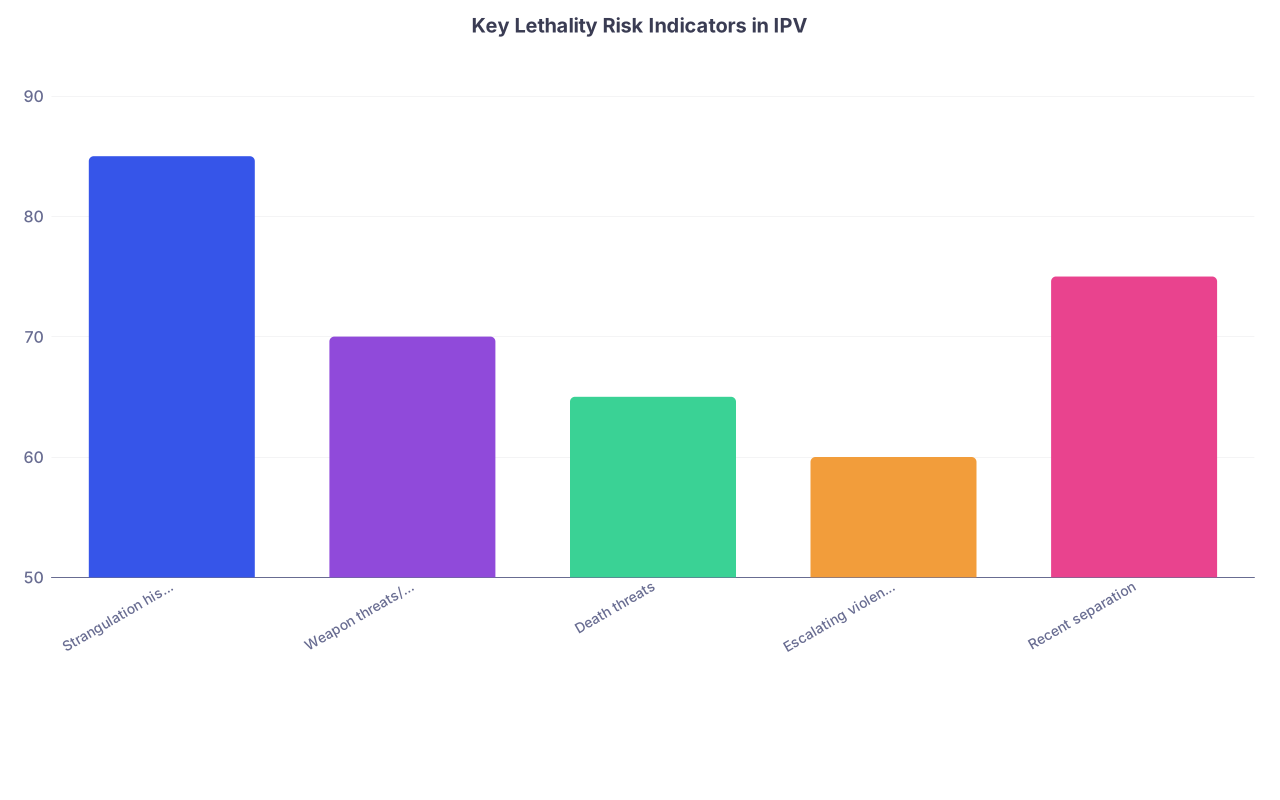
| Category | Value |
|---|---|
| Strangulation history | 85 |
| Weapon threats/use | 70 |
| Death threats | 65 |
| Escalating violence | 60 |
| Recent separation | 75 |
(Values here represent relative risk emphasis, not precise percentages. The point: all of these are big red flags.)
5. Document: Write Like a Future Lawyer Is Reading
Half of what clinicians chart about IPV is useless. Vague, judgmental, or flat-out dangerous.
You document IPV as if:
- The patient may later seek a restraining order.
- The abuser’s lawyer may subpoena your note.
- A child protection team may rely on your details.
- Your own care may be scrutinized in a complaint.
So you document cleanly, factually, and specifically.
What to include
Screening process
- That the patient was interviewed alone.
- The specific questions you asked (at least summarized).
- The patient’s answers, in their own words when impactful.
- Example:
- Screening questions asked about physical, sexual, and emotional abuse while patient alone in room.
- Patient states: “He grabbed my neck and squeezed until I could not breathe.”
Injury description
Use objective, descriptive language:
- Location: “2 cm linear laceration on left cheek, ~3 cm below lateral canthus”
- Color and age estimates: “Diffuse purple-green ecchymosis ~5 x 3 cm on right upper arm”
- Document any old scars or prior injuries mentioned.
Avoid assumptions. Do not write “defensive wounds” unless a forensic examiner confirms. Instead: “Multiple small abrasions on dorsal surfaces of both forearms, patient reports occurred when blocking punches.”
- Attribution
Write what the patient says, not your interpretation:
- “Patient reports injury caused by partner hitting her with closed fist.”
- Use quotes for exact phrases:
- Patient: “He told me if I leave, he will kill me.”
- Risk assessment findings
Brief but clear:
- “Patient reports escalating frequency of physical assaults over past 6 months, including recent strangulation and threats with a knife.”
- “Patient reports not feeling safe to return home today.”
- Actions taken
This is where many people get vague. Do not.
Document:
- Referrals made (social work, advocacy service, law enforcement if appropriate).
- Safety planning discussion.
- Mandatory reports filed (to law enforcement, child protective services, adult protective services), including date, time, and reference or case number if given.
- Patient’s decisions:
- “Patient declined to contact police at this time but accepted information on local shelter and hotline.”
- “Patient agreed to speak with hospital social worker prior to discharge.”
| Situation | Weak Documentation | Strong Documentation |
|---|---|---|
| Injury description | Bruise on arm | 5 x 3 cm purple ecchymosis on right upper arm, tender to palpation |
| Cause of injury | Possible domestic abuse | Patient states partner hit her on right arm with closed fist |
| Threats | Patient feels unsafe | Patient states: "He said if I leave he will kill me" |
| Risk assessment | High risk situation | Reports strangulation episode last week, increasing frequency of assaults |
| Follow-up | Resources provided | Provided contact cards for local IPV shelter and hotline; social work consulted; CPS report filed |
If your EHR has specific IPV templates or smart phrases, use them. They exist to help you be thorough and consistent.
6. Plan: Safety First, Then Resources, Then Follow-Up
The point of all this is not just “identification.” It is intervention that respects autonomy and legal boundaries.
Think in three tiers:
- Immediate safety
- Connection to support
- Longer-term medical and ethical responsibilities
6.1 Immediate safety
If there is any indication of acute danger (recent strangulation, weapon use, credible death threats, patient does not feel safe going home):
- Do not discharge them alone to the lobby.
- Involve:
- Social work
- Security (quietly, not theatrically)
- On-site IPV advocate if your hospital has one
- Law enforcement, if:
- Required by local law (e.g., certain injuries, weapons)
- Patient requests it
- You assess immediate risk that justifies emergency involvement per policy
Sometimes the safest interim plan is:
- Admission for medical or psychiatric reasons.
- Transfer to a shelter directly from the hospital.
- Leaving with a trusted friend/family member instead of returning to the abuser the same day.
Clarify with the patient:
- “What would happen if you did not go home tonight?”
- “Is there anywhere you feel safer staying?”
6.2 Safety planning basics
You are not a full-time IPV advocate, but you can do a mini version:
- Help them identify:
- Safe places to go in the house (rooms with exits, without weapons).
- A code word with a trusted person for emergencies.
- Where to keep important documents (ID, insurance card, key documents) and medications.
- A small “go bag” stored somewhere hidden or with a friend.
Critical detail: Never put “domestic violence shelter” or similar in discharge instructions that the abuser will see. Use neutral wording if needed: “community social service agency,” “local crisis support,” or provide the information orally and on discreet cards that can be hidden.

6.3 Connection to support
Bare minimum:
- Provide local and national hotline numbers on something that can be hidden or memorized.
- Offer to let them call from the clinic phone, before they leave.
- Involve social work if available; they usually know shelter availability and legal aid resources.
If they decline everything:
- Document that they declined.
- Still give them the information:
- “If you change your mind later, these are people who can help.”
You are planting a seed. Many patients disclose several times before they act.
6.4 Follow-up care
You are not done when they leave the building.
Good practice:
- Schedule a follow-up visit yourself (or make sure it is scheduled).
- Put a discreet flag in your mind (and, if appropriate and safe, in the chart) to reassess IPV.
- Coordinate with primary care or relevant specialties, with the patient’s consent, using general language if they fear chart access by the abuser.
You can say:
- “I would like to check in with you again in a week or two. How can we do that in a way that feels safe for you?”
7. Respect Autonomy vs Mandatory Reporting: The Ethical Tightrope
Here is where most clinicians either freeze or overreact, especially trainees.
You are balancing:
- Respect for patient autonomy and confidentiality, especially in adult, competent patients.
- Legal duties to report specific forms of violence or risk to others.
- Ethical duty of beneficence and nonmaleficence – not making things worse.
The details vary by jurisdiction. But the structure of your thinking should be consistent.
7.1 Common mandatory reporting triggers
You must know the laws where you practice. At a minimum, look up:
- Are healthcare workers mandated reporters for:
- Child abuse and neglect? (Almost always yes.)
- Abuse of vulnerable adults / elders?
- Injuries from weapons (gunshot, stab wounds, sometimes other criminal injuries)?
- IPV itself in adults? (In many places: no, unless another category is triggered.)
So you mentally run this checklist:
Are there children in the home exposed to violence?
- If yes: You probably must report to child protective services, regardless of whether the child was physically hit. Exposure alone often qualifies.
Is the patient a vulnerable adult?
- Cognitive impairment, severe disability, elderly dependent. Many regions require reporting for abuse in these groups.
Is there a weapon injury or severe bodily injury that triggers automatic reporting?
If any “yes,” then you:
- Tell the patient clearly and calmly before you report.
- Example script:
- “Based on what you have told me, I am legally required to make a report to child protective services because your children are exposed to this violence. I cannot keep that part confidential. I want to involve you in this process as much as possible.”
You do not say “I have to call the police on your partner.” You name the agency and the legal duty, not your personal judgment.
7.2 When you are not required to report IPV in adults
This is where ethics matter.
Many clinicians think, “I will just call the police anyway; it is safer.” Often that is wrong.
Unwanted police involvement can:
- Escalate violence at home.
- Destroy trust with the patient.
- Remove their sense of control when control has already been stripped from them.
If you are not legally required to report and the patient is a competent adult:
- Respect their decision not to report.
- Support them with safety planning, medical care, and resources.
- Document that you discussed options and they declined.
You can say:
- “You are not required to report this unless you choose to. I can support you whether you decide to involve law enforcement or not.”
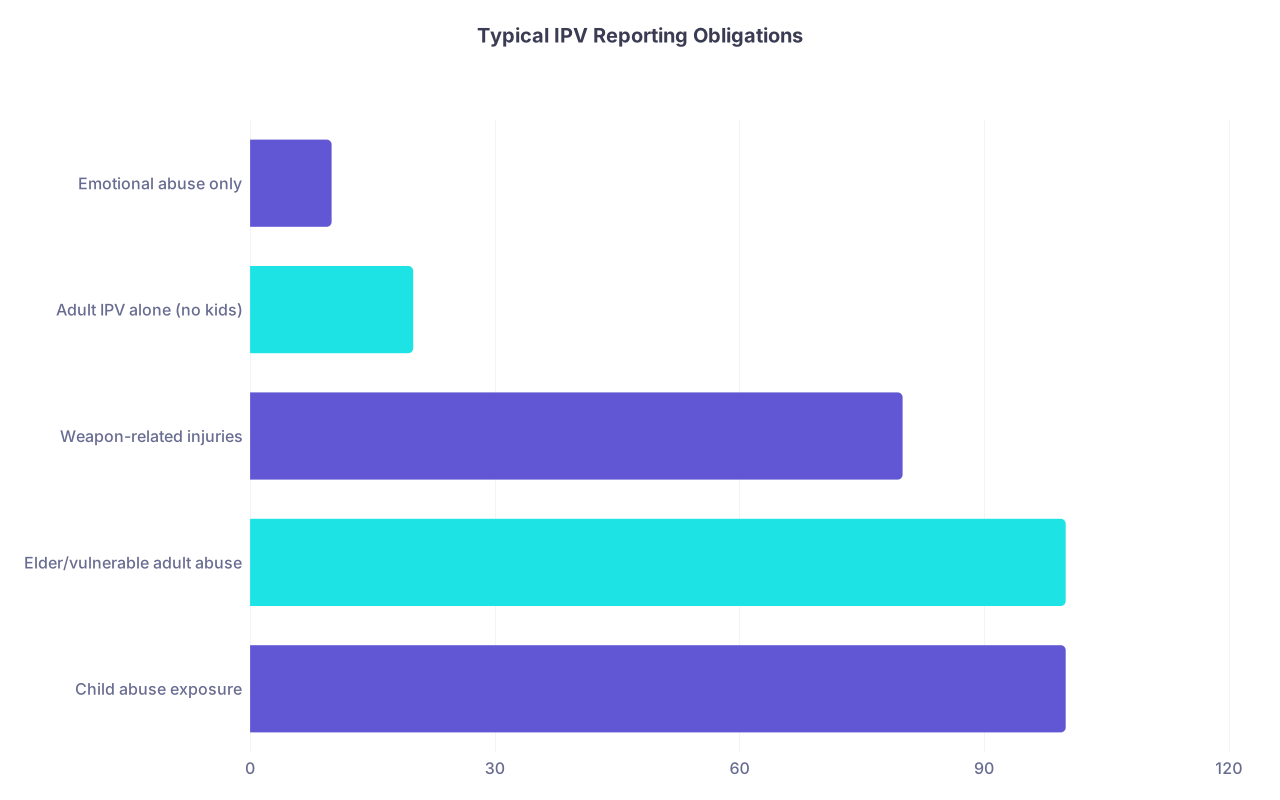
| Category | Value |
|---|---|
| Child abuse exposure | 100 |
| Elder/vulnerable adult abuse | 100 |
| Weapon-related injuries | 80 |
| Adult IPV alone (no kids) | 20 |
| Emotional abuse only | 10 |
(Illustrative: high likelihood of mandated reporting for the first three; much lower for adult IPV alone or purely emotional abuse, depending on jurisdiction.)
8. Training Yourself: Turn This Into Muscle Memory
You will not execute any of this well if you only “sort of remember” it from a lecture three years ago.
You need to drill it until it is boring.
Here is how to do that in plain terms.
Step 1: Memorize a 30‑second core script
Write down and actually practice out loud:
Normalize + ask
- “Because violence at home affects health, I ask all my patients these questions. Has anyone at home ever hit, slapped, pushed, or otherwise physically hurt you?”
If yes
- “Thank you for telling me. What you are describing is abuse. It is not your fault. You deserve to be safe.”
Risk probe
- “Has your partner ever strangled you, used a weapon, or threatened to kill you?”
Danger check
- “Do you feel safe going home today?”
You can refine and personalize. But hit those elements.
Step 2: Learn your local laws once, properly
Stop relying on vague “I think we have to report.” That is how you both under- and over-report.
- Find your hospital’s IPV or safeguarding policy.
- If it is terrible or nonexistent, talk to your chief, program director, or risk management.
- Ask social work or legal: “Can you walk me through our obligations in adult IPV cases? Child exposure? Vulnerable adults?”
Take 30 minutes, one time. Make yourself a simple note (paper, phone, whatever) with the key triggers.
Step 3: Use simulation deliberately
If you are in training, push for this:
- OSCE or SIM sessions with IPV scenarios.
- Ask your attending on clinic days: “If I suspect IPV today, can we walk through it together so I get comfortable with the steps?”
Even as an attending, you can do small drills in teaching sessions. Force yourself and your team to say the words aloud. Awkward once, easier forever.

Step 4: Build a personal mini-checklist
You do not need a full protocol every time. Just a mental or physical checklist to run when the red flags show up:
- Privacy secured?
- Screened directly?
- Risk assessed (strangulation, weapons, death threats, children)?
- Immediate safety addressed?
- Mandatory reporting triggers checked?
- Resources offered?
- Documentation complete?
That is your “IPV reflex.” Use it consistently.
9. The Ethical Bottom Line
Handling suspected intimate partner violence is not about being a hero or “saving” someone. That savior mentality usually backfires.
Your real job:
- Create a safe moment in a very unsafe life.
- Provide clear information and realistic options.
- Respect that leaving is not a simple on/off switch; it is a process.
- Fulfill your legal duties without hiding behind them or weaponizing them.
If you remember nothing else, remember this sequence:
- Make the room safe.
- Ask straight questions.
- Believe what you hear.
- Check for lethal risk and kids.
- Document like it will matter later.
- Support their choices, within legal limits.
If you do those things consistently, you are doing more than most. And you are actually protecting patients, not just “checking the box” for a policy.
Key points to carry forward:
- Do not improvise IPV care. Use a repeatable structure: Recognize → Secure privacy → Screen → Assess risk → Document → Plan → Respect autonomy within the law.
- Document and act like it will matter later. Because for many patients, your note and your calm, structured response are the only solid ground they have in the middle of chaos.


