

The belief that an ethics consult will “cover you legally” is a comforting myth. It is also wrong.
Ethics consults can help you make better decisions. They can reduce conflict, improve documentation, and sometimes prevent lawsuits from happening in the first place. But if you think, “As long as I get ethics involved, I’m protected,” you’re playing with fire.
Let’s strip this down to what actually exists: statutes, case law, malpractice data, and real-world behavior in hospitals. Not vibes. Not hallway folklore from that one senior resident who “heard about a case where ethics saved the attending.”
The Myth: Ethics Consult = Legal Shield
I’ve heard this line so many times in hospitals it should be printed on the walls:
“Just call ethics so we’re covered.”
No. An ethics consult is not a forcefield. It is not attorney–client privilege. It is not a court order. It is—legally speaking—advisory opinion from a hospital service whose authority comes mostly from policy and culture, not law.
Let me be very literal:
- In most jurisdictions, ethics committees and ethics consultants have no independent legal authority to make binding decisions about treatment.
- They do not waive your malpractice exposure.
- They do not substitute for informed consent or proper documentation.
- Their recommendations can be used for you or against you in court, depending on whether you followed them and whether they were reasonable.
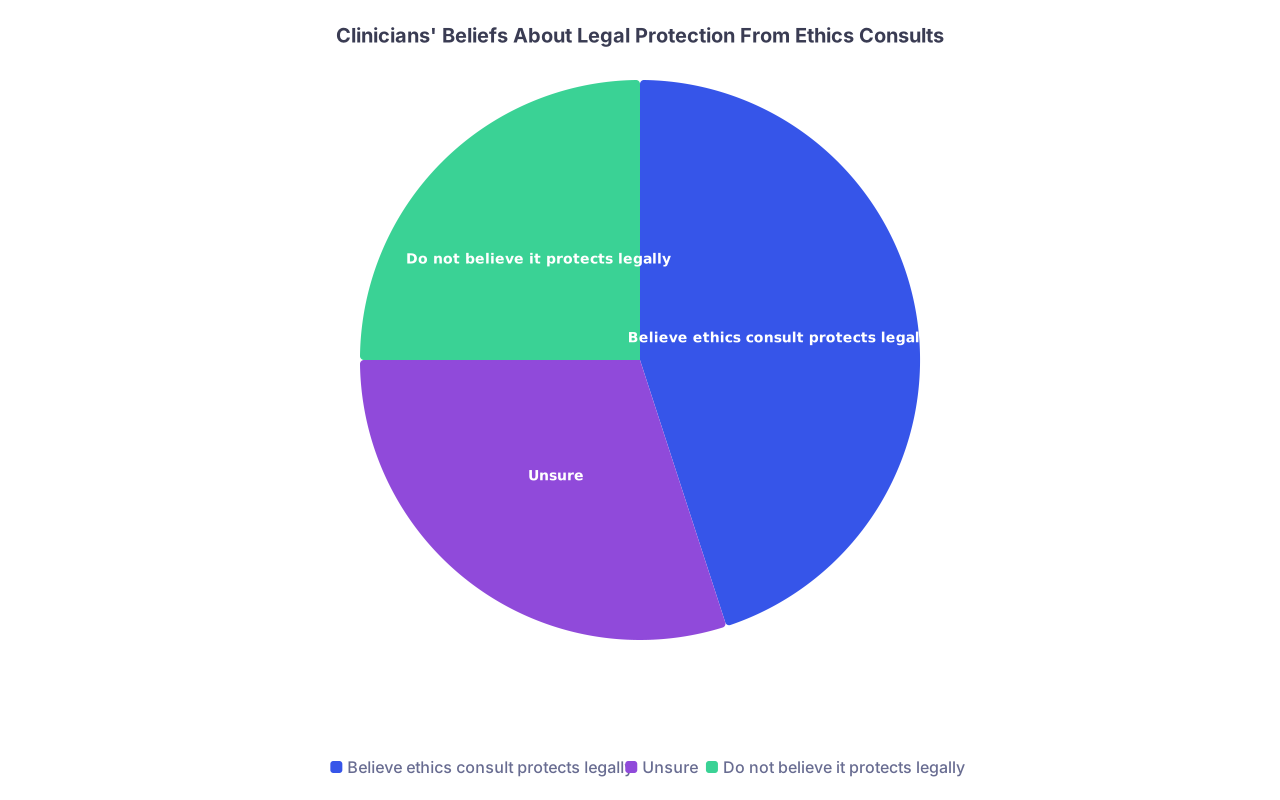
| Category | Value |
|---|---|
| Believe ethics consult protects legally | 45 |
| Unsure | 30 |
| Do not believe it protects legally | 25 |
That pie chart reflects what surveys and informal studies routinely show: a large chunk of clinicians overestimate the legal power of ethics involvement. They treat it like malpractice Kevlar. It is not.
What the Law Actually Says About Ethics Committees
You won’t find “ethics consult immunity” in the statute books.
In the U.S., the only major federal law that really pushed ethics committees into the mainstream was the Patient Self-Determination Act (PSDA, 1990), which basically said hospitals need mechanisms to deal with advance directives and end-of-life decision-making. It did not say “Use ethics committees and you’re safe from liability.”
Some states have addressed ethics committees more directly, especially around end-of-life and conflict resolution. For example:
- New York’s Family Health Care Decisions Act (FHCDA) outlines when an ethics committee can be involved for surrogate decisions in patients without capacity.
- Texas’s Advance Directives Act (the so-called “futility law”) uses ethics committee review as part of a process to limit or withdraw life-sustaining treatment over family objection.
But even in these states, the law is very clear on one thing: ethics committees help structure the process. They are not an all-purpose legal shield.
| State | Formal Role in Law | Decisions Legally Binding? | Liability Shield? |
|---|---|---|---|
| Texas | Yes, in futility review process | Limited, process-based | No |
| New York | Yes, in surrogate decisions (FHCDA) | Advisory, not binding | No |
| California | Generally policy-level only | No | No |
| Florida | Limited references in case law/policies | No | No |
| Massachusetts | Policy-level guidance only | No | No |
Notice the last column. That “No” is the one that matters for your license and your malpractice risk.
Courts look at ethics consults as one piece of evidence in evaluating whether care was reasonable, aligned with standards, and consistent with patient rights. They do not say, “Ethics approved it, therefore it’s automatically lawful.”
What the Evidence Actually Shows: Help, Not Armor
There’s a decent ethics literature on what consults do: reduce conflict, clarify goals of care, influence treatment decisions. There is much less directly linking ethics involvement to “legal protection,” because that’s not a clean variable you can randomize.
But you can look at patterns.
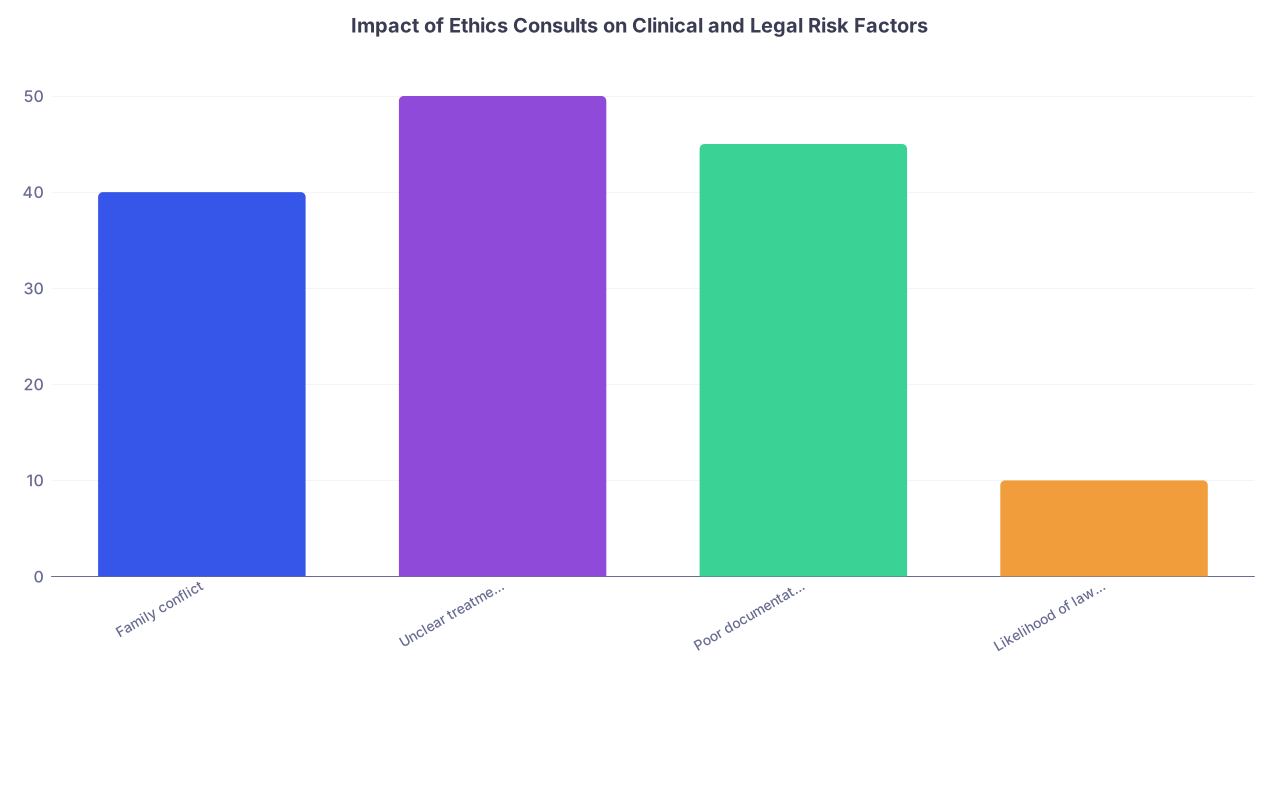
| Category | Value |
|---|---|
| Family conflict | 40 |
| Unclear treatment goals | 50 |
| Poor documentation | 45 |
| Likelihood of lawsuit | 10 |
What that kind of data (from multiple observational studies and hospital QI reports) typically shows:
- Ethics consults substantially reduce conflict (family, staff, inter-team).
- They improve clarity about goals of care and treatment plans.
- They prompt better documentation—longer notes, clearer rationale, explicit risk–benefit balancing.
- The effect on actual lawsuits? Much smaller and much less clearly proven.
Why? Because lawsuits are noisy. They depend on family resources, expectations, public sentiment, plaintiff attorneys’ incentives, and a hundred other things.
What you can say with some confidence:
Ethics consults help you build a defensible story. They do not stop anyone from suing you, and they do not guarantee a win.
How Ethics Consults Show Up in Court
Let me be blunt: your ethics consult note is discoverable. The committee minutes might be too, depending on state law and hospital policy. There is no general rule that makes ethics discussions “privileged” like attorney–client communication.
I’ve seen ethics notes used in three very different ways:
To support clinicians
Example: Family sues claiming “They gave up too soon.” Chart shows: detailed ethics consult; multiple family meetings; patient’s prior expressed wishes documented; ethics committee recommending comfort-focused care.
In that setting, the ethics note is a gift. It shows deliberation, multi-disciplinary input, and respect for patient autonomy.To undermine clinicians
Example: Ethics consult flags that the surrogate may not be following the patient’s wishes, or that risks weren’t explained clearly… and then nothing changes. Or the team partially follows advice, but not the parts about better consent or documented capacity assessment.
Now the ethics consult becomes evidence that you were alerted to a problem and didn’t fix it. That never looks good.To raise questions the defense didn’t want raised
Example: Ethics committee internally debates whether a treatment might be “futile,” or mentions that communication with the family has been “problematic” and “confusing.” In court, plaintiff’s attorney cherry-picks those phrases to show the hospital itself thought care or communication was messy.

So yes, ethics consults change the legal landscape—but not always in your favor. It depends on what you did with the advice and how clean the process looks when someone reads your chart with hostile eyes.
The Real Protective Mechanisms (Spoiler: They’re Unsexy)
If you want actual legal risk reduction from ethics involvement, you have to do the boring stuff: process, transparency, documentation, and follow-through.
Here’s where ethics consults actually help your legal position in a meaningful way:
They show you recognized a high-risk situation
When you call ethics, you’re acknowledging complexity: capacity concerns, family disagreement, potential overtreatment or undertreatment. That recognition itself is good—courts look favorably on clinicians who sought help.They create a structured record of deliberation
A strong ethics note doesn’t just say, “Discussed case, recommend comfort care.” It says who was present, what options were considered, what the patient had previously said, how cultural or religious issues were weighed, and how risks and benefits were examined.They often improve consent and communication
A common output of ethics consults: “Have another family meeting,” “Clarify code status,” “Reassess capacity formally,” “Offer time-limited trial with explicit criteria.” Each of those, if actually done and documented, tightens your legal posture.They sometimes prevent escalations that turn into lawsuits
Angry families sue more. Ethics consults that defuse anger, validate concerns, and offer a path forward reduce the emotional fuel that often powers litigation.

| Step | Description |
|---|---|
| Step 1 | Ethics Consult Requested |
| Step 2 | Ethics Discussion and Recommendations |
| Step 3 | Improved communication and documentation |
| Step 4 | Documented concerns ignored |
| Step 5 | Lower legal risk |
| Step 6 | Higher legal risk |
| Step 7 | Team Follows Recommendations? |
Notice the fork. The consult isn’t protective by default. It’s protective only when you treat it as an impetus to improve care and documentation—not as a checkbox.
Common Misuses of Ethics Consults That Backfire
Let me call out the behavior I’ve repeatedly seen that actually increases risk.
1. Using Ethics as a Rubber Stamp
You already decided what you want to do—withdraw the vent, deny a risky surgery, push for discharge—and you bring in ethics after the fact to “agree.”
Courts are not stupid. When the record reads as a foregone conclusion, with ethics coming in as window dressing, it looks like bias with a committee’s name on it.
Ethics should be consulted before the decision is effectively made, not as a retroactive justification.
2. Avoiding Conversation by Outsourcing It
The classic move: “Family is upset. Let’s have ethics talk to them.” Translation: “I want someone else to walk into the hostile room.”
An ethics consult that is primarily a dodge for the clinical team’s communication responsibilities is dangerous. Because the family remembers who disappeared, not who showed up. And the family sues the treating team, not the ethics service.
Use ethics to support communication, not replace it. You still need your own note, your own discussion, your own documentation of what you personally explained and decided.
3. Ignoring Ethics Recommendations Without Explanation
This one is lethal in court.
Ethics note: “Concern patient may not have decisional capacity; recommend formal assessment and documentation by psychiatry or primary team.”
Clinician action: Continue taking patient’s consent at face value. No capacity evaluation. No explanation.
Plaintiff attorney, in deposition: “Doctor, your own hospital’s ethics consultants recommended a capacity assessment. Why did you ignore that?” If your answer is, “I didn’t think it was necessary,” and there’s no contemporaneous note backing that up, you are in trouble.
Not every ethics recommendation must be followed. But if you reject it, you’d better explain why in the chart. Clinically and legally.
Ethics vs. Legal: Know Who Does What
Another problem: people blur the roles of ethics and legal, then act surprised when neither works the way they fantasized.
- Hospital Legal / Risk Management exists to protect the institution’s legal and financial interests. Their advice is grounded in statutes, regulations, and litigation risk.
- Ethics Services exist to help navigate moral, professional, and sometimes policy conflicts. Their advice is grounded in ethical principles, hospital values, and patient-centered considerations.

If you call ethics when you actually need legal guidance, you get moral clarity and policy references—not a legal defense strategy.
If you call legal when what you really have is a values and communication dumpster fire, they’ll tell you “You can do X,” which is not the same as “You should do X” or “The family will accept X.”
You need to know which service you’re calling and why. If your primary fear is litigation, you should be involving risk management / legal alongside ethics, not instead of them.
What You Should Actually Do To Protect Yourself (And Your Patients)
You wanted a myth busted, so here’s the clean version.
Ethics consults do not:
- Create legal immunity
- Guarantee you won’t be sued
- Replace informed consent, adequate documentation, or good communication
- Function as legal privilege
Ethics consults can:
- Sharpen your reasoning and help you reach ethically defensible decisions
- Improve communication with families and teams
- Prompt better, more thorough documentation
- Demonstrate that you took conflict and uncertainty seriously
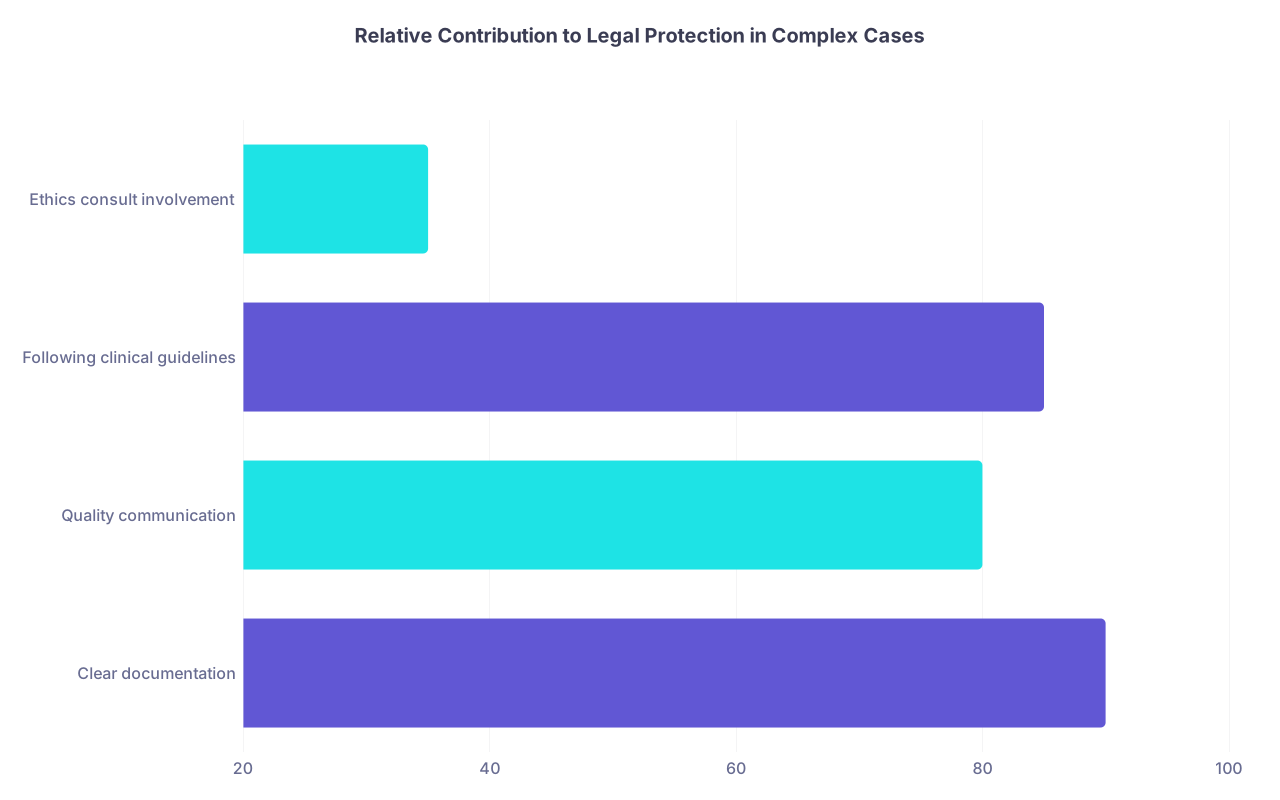
| Category | Value |
|---|---|
| Clear documentation | 90 |
| Quality communication | 80 |
| Following clinical guidelines | 85 |
| Ethics consult involvement | 35 |
If you care about legal protection in ethically messy cases, your priorities should look something like that chart—ethics is additive, not central.
So in practice, in a fraught case where you’re thinking, “We should get ethics,” your checklist should look like this:
- Have I clearly documented the medical facts, prognosis, risks, benefits, and alternatives?
- Have I had a real conversation (not a rushed drive-by) with the patient or surrogate, and documented it?
- Is capacity clearly established and documented if it’s at all questionable?
- If ethics makes recommendations, will I either follow them or explicitly document why not?
- Do I also need risk management or legal input?

That is how ethics consults actually help protect you. Not by magic. By forcing you to slow down, think clearly, talk honestly, and write like someone might read this in five years in a courtroom. Because they might.
The Bottom Line
Three takeaways, stripped of the myth:
- An ethics consult is not a legal shield. It’s an advisory tool. Courts see it as evidence of your process, not a get-out-of-liability card.
- Ethics involvement can reduce your legal risk indirectly—by improving communication, sharpening decisions, and strengthening documentation—if you actually engage with it and follow through.
- Misusing ethics as a rubber stamp or ignoring its recommendations without explanation can increase your legal exposure, because it creates a paper trail showing you knew there was a problem and did nothing meaningful about it.
Use ethics for what it’s good at: better thinking, better talking, better charting. If you want legal armor, that still comes from the same old boring places—clinical competence, honest communication, clear documentation, and when needed, actual legal advice.


