

The most dangerous patient in your ED at 2 a.m. might be the drunk one you let walk out “because they seemed fine.”
Let me be blunt: handling the intoxicated, “competent”-seeming patient who wants to leave is where medicine, law, and your personal risk all collide. If you wing it, you’re begging for a bad outcome, a complaint, or a lawsuit.
Here’s how to handle it like a professional who’s been burned before and learned.
1. First rule: safety and clarity, not vibes
You do not decide capacity based on vibes. “He was talking in full sentences” is not a capacity evaluation. Neither is “she knew her name and the date.”
When an intoxicated patient wants to leave, you’re juggling three separate questions:
- Are they medically stable enough that leaving isn’t obviously dangerous?
- Do they have decision-making capacity right now?
- If they don’t, do you have legal authority to hold them?
Those are three different things. Do not blur them.
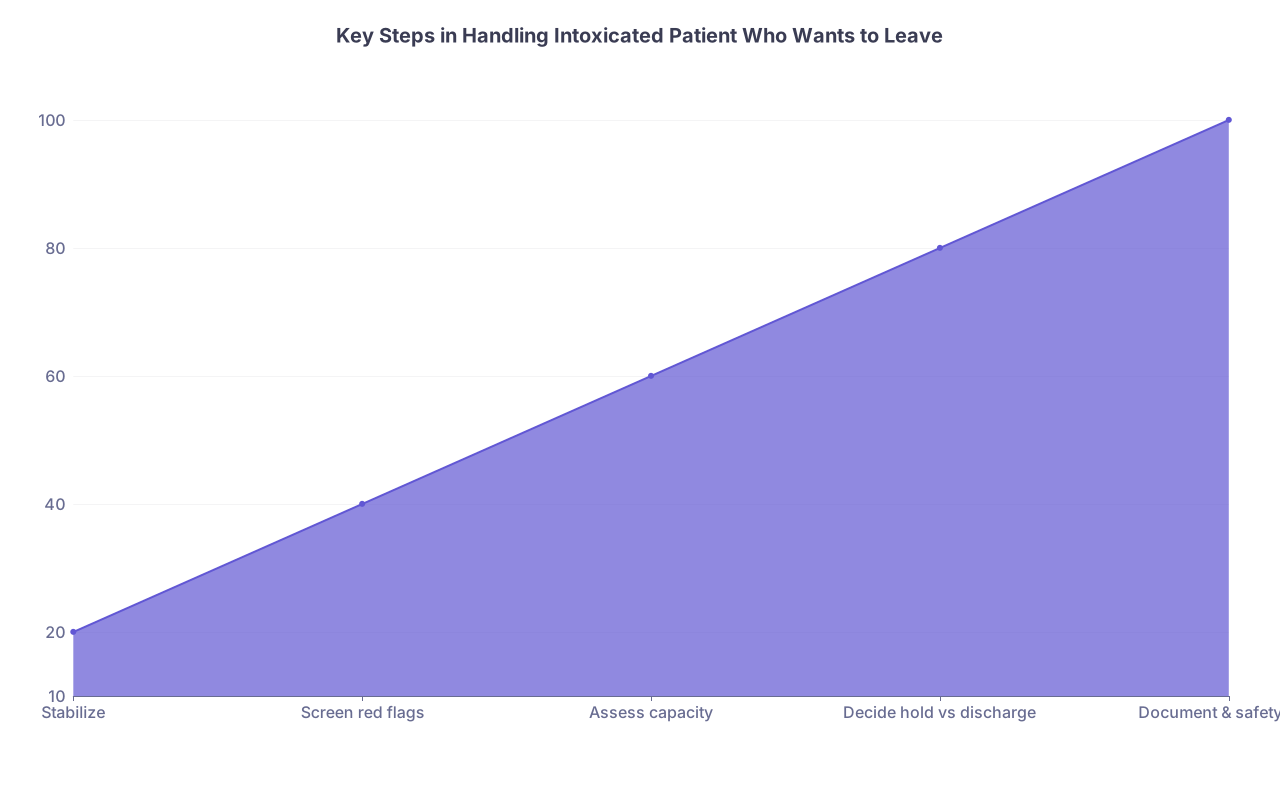
At the bedside, think in this order:
Stabilize obvious danger first
ABCs, glucose, trauma check, obvious head injury, vital signs that make you uneasy. If they’re hypotensive, tachycardic 150, GCS 10, or actively vomiting, this is not a capacity conversation yet. This is resuscitation.Screen for the big, “you’ll hate yourself if you miss this” issues
- Possible head trauma? (Especially if they “fell” or you see bruises)
- Suicidal or homicidal statements?
- Domestic violence or assault?
- Intent to drive while drunk?
- Co-ingestions (pills, other drugs)?
If any of those are yes or even “hmm, I’m not sure” – your threshold to hold them goes way down.
- Only then do you seriously assess capacity around their decision to leave.
2. What decision-making capacity actually is (for this situation)
Decision-making capacity is task-specific, time-specific, and decision-specific. You’re not deciding if they’re generally competent as a human being. You’re deciding if they can make this decision right now.
I use a simple four-part test at the bedside:
Can they communicate a clear choice?
Not just “I wanna go.” Can they say: “I understand you think I should stay, but I still want to leave.”Do they understand the information?
They should be able to tell you, in their own words, what’s going on. Example prompts:
“Tell me what you think is going on with your health right now.”
“What have I told you I’m worried about?”Can they appreciate the consequences for themselves?
This is where intoxication often burns capacity. They must be able to connect: “If I leave, X bad thing might actually happen to me.” So ask:
“What could happen if you leave right now instead of staying for tests/treatment?”
Lousy answer: “Nothing, I’m fine, you all just want my money.”
Good answer: “I get that I might have a bleed in my head / alcohol poisoning / infection and could get worse or even die, but I still don’t want to stay.”Can they reason about options?
They don’t have to pass an ethics exam. But they should show some coherent thought: “I need to pick up my kid, I don’t have anyone else, and I’d rather take the risk and follow up tomorrow.”
If they fail any of those, you have a strong argument they lack capacity to refuse care. Especially when intoxication is involved.
3. Stop asking “what’s the legal BAC?” – that’s the wrong question
There is no magic number where capacity suddenly disappears. A BAL of 200 mg/dL in a chronic drinker who’s walking, talking, and engaging may be less impaired than a BAL of 80 in a teenager.
But let’s be honest: the more intoxicated, the harder you’ll have to work to justify that they had capacity.
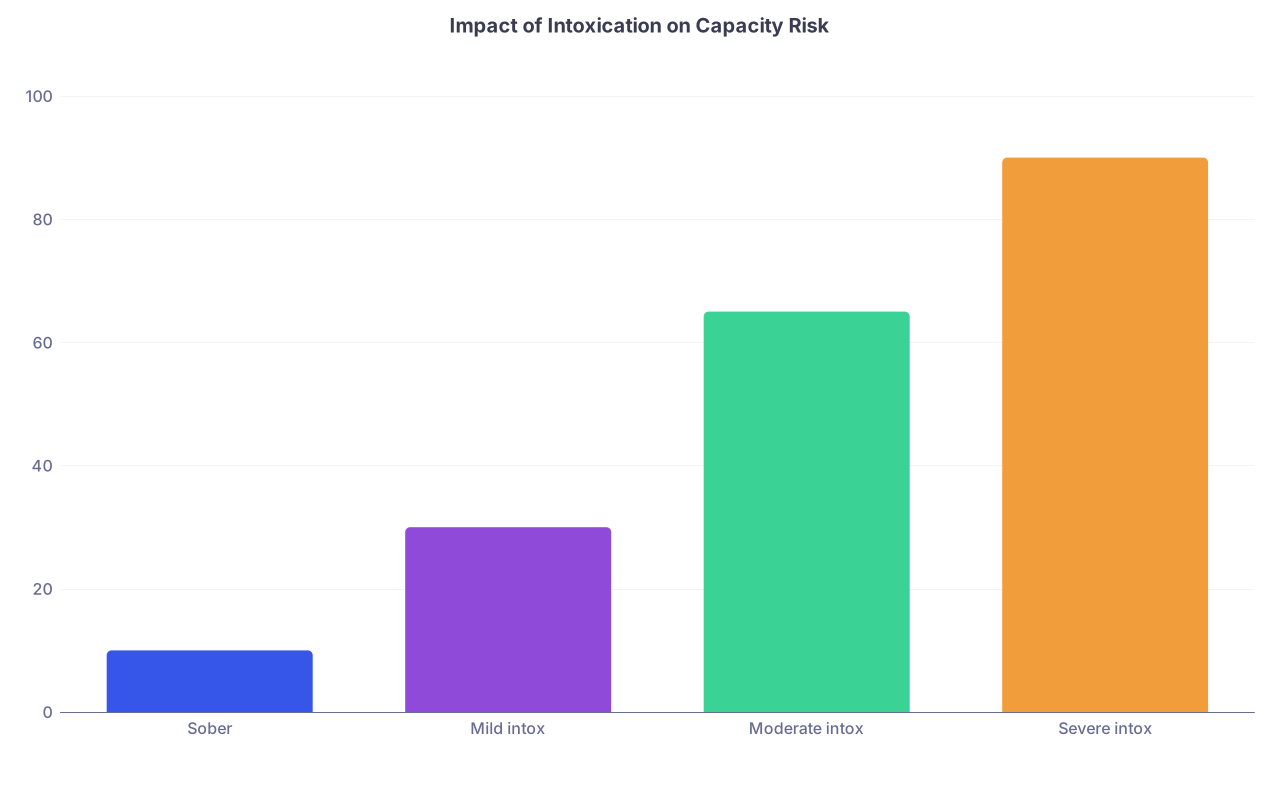
Think about it like this:
| Category | Value |
|---|---|
| Sober | 10 |
| Mild intox | 30 |
| Moderate intox | 65 |
| Severe intox | 90 |
Those percentages aren’t literal. They’re how likely you are to get in trouble if something bad happens and your only documentation says “patient intoxicated but wants to leave, AMA.”
If they’re slurring, can’t walk straight, repeating themselves, or can’t track the conversation, you’re going to have a very hard time defending that they had capacity – no matter what the BAL reads.
So you don’t document: “Pt intoxicated but seems oriented.”
You document:
- Their speech
- Their gait
- Whether they track questions
- Their actual quotes about risks and choices
Or you document that they cannot do those things.
4. A simple flow you can actually use at 3 a.m.
Here’s the real-world sequence I’d follow.

| Step | Description |
|---|---|
| Step 1 | Patient intoxicated wants to leave |
| Step 2 | Check ABCs and vitals |
| Step 3 | Treat as emergency hold |
| Step 4 | Screen for red flags |
| Step 5 | Formal capacity assessment |
| Step 6 | Discuss risks and alternatives |
| Step 7 | Admit or observe |
| Step 8 | Allow to leave with documentation and plan |
| Step 9 | Unstable or critical? |
| Step 10 | Head injury, SI, HI, plan to drive, high risk? |
| Step 11 | Pass 4 elements of capacity? |
| Step 12 | Still wants to leave? |
Let’s unpack a few points.
If they’re unstable or clearly unsafe
You don’t need a signed form to do the right thing. In an emergency where delay risks serious harm or death, most jurisdictions allow treatment under implied consent.
If:
- They’re hypotensive, hypoxic, significantly altered, or
- You strongly suspect head bleed, serious ingestion, sepsis, etc.
You treat. If they fight you, you use the minimum necessary restraints/meds and you document:
“Patient lacks decision-making capacity due to intoxication and acute medical condition. Emergency evaluation and treatment required to prevent serious harm. Treated under implied consent / emergency exception.”
If they’re a risk to others (like planning to drive)
If they say, “I’m driving home” and they’re unsafe, you now have a duty to third parties in many places. That changes the calculation.
Options:
- Try to negotiate: call a ride, taxi, friend, rideshare.
- If they insist on driving, you’re in “duty to warn/protect” territory. That may include:
- Involving security or law enforcement.
- In some regions, directly informing police that a drunk driver is about to leave.
You do not get to shrug and say, “Well, can’t keep them here.” If they kill someone 10 minutes later, that conversation will be reviewed.
5. The capacity conversation: what to actually say
Here’s the rough script I’ve seen work well.
First, slow down. Sit at eye level. No standing over them with your arms crossed announcing they’re AMA.
Say something like:
“Okay, I hear that you really want to leave. Before you decide, let me explain what I’m worried about, and then I’m going to ask you to tell it back to me in your own words so I know I was clear. Fair?”
You’re not “testing” them. You’re making sure your documentation will withstand a lawyer.
Then:
Explain the situation in plain language.
“You came in because you were found on the sidewalk after falling and you’ve been drinking. With that kind of fall and alcohol on board, I’m worried you could have bleeding in your head or other injuries we can’t see yet.”Explain the recommended plan.
“I’m recommending that you stay so we can get a CT scan of your head and watch you for a few hours. If there’s a bleed and we don’t catch it, you could get worse fast, even die.”Ask them to repeat it back.
“Can you tell me, in your own words, what I’m worried about and what I’m recommending?”Probe appreciation and reasoning.
- “What do you think could happen if you leave before we do that?”
- “Why do you want to leave now instead of staying?”
If their answers are superficial, nonsensical, or totally detached from reality (“Nothing will happen, I never get hurt, I’m invincible”), you have justification to say they lack capacity.
If they give you a coherent summary with real appreciation of risk — even if you disagree with their choice — then they likely have capacity.
And that’s when you let them leave. With protection for you and a real plan for them.
6. Documentation that actually protects you
The worst documentation: “Pt intoxicated, wants to go home, AMA.”
The best documentation looks like a mini-narrative. Not an essay, but enough detail that a reviewer can see the thinking.
Include:
Mental status and intoxication description
“Awake, conversant, oriented to person, place, time, and situation. Mild slurring of speech, ambulates with steady gait with supervision. Answers questions appropriately.”Your capacity assessment
“Discussed risks/benefits of staying vs leaving. Patient able to communicate choice, understood information, and appreciated consequences. Stated: ‘I understand you’re worried I might have a bleed in my head and could get worse or die if I leave, but I have no one to watch my kids and I am willing to take that risk.’ Demonstrated reasoning about options.”Risks and recommendations explicitly outlined
“Explained risk of intracranial bleed, deterioration, death. Recommended CT scan and observation. Patient declined despite understanding risks.”Alternatives and safety net offered
“Offered to call family/friend/taxi. Offered observation until more sober. Offered written instructions and return precautions.”Their decision and your final impression
“Patient elects to leave against medical advice. In my judgment at this time, patient has capacity to make this decision. Will discharge with instructions and follow-up recommendations.”
If they lack capacity and you hold them, document that just as clearly:
“Patient unable to explain risks and consequences of leaving. When asked what could happen if he left, replied, ‘Nothing, I am Superman.’ Unable to engage in rational discussion of options. In my judgment, intoxication and possible head trauma significantly impair decision-making capacity. Emergency evaluation needed to prevent serious harm; patient to be held for imaging and observation under emergency exception. Security at bedside for safety.”
That is the difference between “they seemed okay” and “here’s why I made this decision.”
7. Know your local law and your hospital’s spine
Here’s the uncomfortable truth: different states and countries give you very different tools.
Some key distinctions:
| Tool / Concept | Typical Use Case |
|---|---|
| Emergency exception | Immediate life/limb threat |
| Implied consent | Unconscious or severely altered |
| Medical incapacity hold | Medically impaired judgment |
| Psychiatric hold (e.g. 5150) | Danger to self/others, grave disability |
| Protective custody (police) | Unsafe intoxication, public danger |
Many hospitals are good at psych holds but fuzzy on medical incapacity holds. You should know:
- Does your hospital recognize a medical hold separate from a psych hold?
- What’s the policy language?
- Do you involve risk management early when this gets messy?
- How does your local law view intoxicated patients wandering into traffic an hour after leaving your ED?
If your institution has no clear policy, you’re flying solo. Push your leadership to define one. Because these cases aren’t rare.
8. Personal risk vs doing the right thing
Here’s the internal conflict you won’t see in textbooks:
- If you hold someone without capacity, they may get angry, complain, or even file a grievance.
- If you let someone go and they die, you will replay that conversation in your head for years — and possibly replay it in deposition.
So how do you think about risk?
- If risk of serious harm is high and capacity is doubtful, err on holding. Take the complaint.
- If risk of serious harm is low-moderate and capacity is clearly intact, let them go — with tight documentation and safety planning.
- If risk and capacity are both murky, get help:
- Call a senior, attending, psychiatry, or another colleague.
- Call hospital legal or risk management if available.
- Document the shared decision and consultant opinions.
You’re allowed to ask for backup. The dumb move is pretending you’re 100% certain when you’re not, and then leaving no trail in the chart.
9. Practical tricks that make these encounters smoother
A few small things I’ve seen defuse situations:
- Do not argue drunk. You won’t “logic” someone out of leaving. Be calm, repetitive, and clear. “My job is to tell you the risks and do my best to keep you safe. I’m not here to fight you.”
- Use the ally in the room. If a sober friend or family member is present and you’re comfortable with their judgment, enlist them: “Can you help me explain why I’m worried?”
- Offer time. Sometimes: “Let’s just give it an hour, let you sober a bit, and then we can talk again” works better than a hard yes/no right now.
- Separate medical and security roles. You’re the clinician, not the bouncer. If they’re escalating, step out and let security do security work. You document, you don’t wrestle.
And one more thing: never threaten. “If you leave I’ll call the police” should not be your first move out of frustration. If you involve law enforcement, it’s because there’s a real public safety issue. Not because you’re annoyed.

10. Case examples you’re likely to see
Case 1: The fall and the bleed risk
45-year-old male, BAL unknown, clearly intoxicated, found after a fall down two steps, hit his head, brief loss of consciousness per EMS. CT head recommended. He wants to leave.
He says: “I get you’re worried I might have a brain bleed and could die. I just don’t think that’s likely. I’ve got to be at work in 4 hours or I’ll be fired. I’d rather take the risk and go home.”
He walks steadily, answers questions appropriately, and repeats your concerns back accurately. Vitals normal. Neuro exam normal. No anticoagulants.
You may not like his choice, but that’s capacity. You:
- Document the capacity assessment.
- Document the risk explanation.
- Give written return precautions and make sure he knows them.
- Offer a ride, not his own car, if still obviously intoxicated.
If he insists on driving and is clearly impaired? That’s a separate problem — and you involve security / law enforcement.
Case 2: The clearly unsafe refusal
22-year-old female, BAL 280, smelling strongly of alcohol, vomited twice, slurring heavily, can’t stand without swaying. She says: “I’m good, I’m leaving, can’t stay here!”
You try your script. She cannot explain what you’re worried about. When asked what could happen if she leaves, she shrugs and laughs. Vitals worrisome: tachy 130, borderline BP.
This is not a capacity debate. You:
- Hold her for medical stabilization under emergency exception.
- Use restraints/meds only as necessary if she’s dangerous.
- Document explicitly: impaired capacity due to intoxication, risk of aspiration, arrhythmia, trauma, etc.
| Category | Value |
|---|---|
| Stabilize | 20 |
| Screen red flags | 40 |
| Assess capacity | 60 |
| Decide hold vs discharge | 80 |
| Document & safety plan | 100 |

FAQs
1. Do I need a psych hold to keep an intoxicated patient who wants to leave?
Not necessarily. A psychiatric hold is for danger to self/others or grave disability due to mental illness. A medical incapacity hold is for patients who lack decision-making capacity due to a medical condition (like intoxication, head injury, sepsis). Many jurisdictions and hospital policies recognize this distinction. You can hold a medically incapacitated patient for emergency evaluation and treatment under implied consent or medical hold, even if they’re not suicidal or psychotic.
2. What if my attending and I disagree about capacity?
Document both perspectives. You can write: “Discussed with attending Dr. X; attending feels patient lacks capacity and should be held. I have concerns about capacity but feel patient demonstrates understanding and appreciation of risk.” In reality, hierarchy usually wins in the moment, so follow the attending’s plan while documenting the shared reasoning. And learn from the discussion — ask specifically which part of capacity they think the patient is failing.
3. Should I get a BAL (blood alcohol level) on every intoxicated patient who wants to leave?
No. A BAL is a data point, not a capacity test. You don’t need a number to know someone is drunk and incapable. That said, if you’re going to hold someone and anticipate legal scrutiny, a BAL can help support your assessment when it’s significantly elevated. The decision to test should be based on clinical need and institutional norms, not purely “for legal” reasons.
4. Can I sign AMA for the patient if they refuse to sign?
No. You don’t “sign them out AMA.” The patient refuses to sign; you document that refusal. Your signature is about your documentation, not their consent. Write: “Patient declined to sign AMA form; risks, benefits, and alternatives explained as above. Patient verbalizes decision to leave.” The form is secondary. The note is primary.
5. What if they keep leaving triage before I can fully evaluate them?
Document every interaction, even brief ones: “Patient presented to triage with apparent intoxication, advised to stay for full evaluation due to potential risk of injury/intoxication. Patient left the department before full evaluation could be completed, against recommendation.” Try to give at least minimal verbal warning: “You could have a serious injury; if you feel worse, come back immediately or call 911.” Then write that down. Triage departures are still your encounters.
Key points to remember:
- Capacity is specific, structured, and sometimes absent in intoxicated patients — do not wing it.
- Serious risk + doubtful capacity = you hold them, document hard, and accept the complaint over the catastrophe.
- Your documentation is your shield: describe the conversation, their words, your judgment, and the plan like someone is going to read it later — because someone will.


