

Last month, a third-year med student messaged me at 1:30 a.m. from a telemetry floor. Her senior resident had just said, “Put in 10 of IV hydromorphone now; do not page the attending, just get it done.” The patient was hypotensive, frail, and DNR. She knew it was wrong. She also knew this same senior had tanked another student’s evaluation for “not being a team player.”
If you’re reading this, you’re probably in some version of that spot: a senior telling you to do something unsafe or unethical, your gut screaming no, your brain whispering, “But evaluations… letters… reputation…” Let’s walk through what to do, step by step, without sugarcoating the power dynamics.
1. Spotting the Red Flags in Real Time
Most people don’t get pressured with cartoon-villain orders. It’s more subtle. It sounds like:
- “Just sign the note, I already examined him.”
- “Order the potassium now, we don’t have time for labs.”
- “Do not call the attending, they’ll just yell. Put the consent in and we’ll talk to the patient later.”
- “It’s fine, everyone does it this way. You’re overthinking it.”
Your job in the moment: quickly classify what kind of “unsafe” you’re dealing with.
| Type of Risk | Examples |
|---|---|
| Immediate harm | Overdose, wrong-site procedure |
| Delayed/hidden harm | Skipping labs, ignoring critical labs |
| Ethical-legal breach | Forged notes, fake consent, falsifying |
| Scope-of-practice | Doing procedures you’re not cleared for |
The higher and more immediate the potential for serious patient harm or legal fallout, the less you compromise and the more assertive you must be. That’s not negotiable.
Ask yourself three fast questions:
- Could this reasonably cause serious harm or death?
- Does this clearly break hospital policy or the law (fraud, assault, falsification)?
- Am I being asked to do something beyond my training or privileges?
If you hit “yes” on any of those, you’re not in “gray zone education style differences.” You’re in “I must not comply” territory.
2. What to Say in the Moment (Without Getting Steamrolled)
You need scripts. Under stress, your brain will blank, and you’ll default to silence or compliance. Let’s arm you with phrases that:
- Signal concern clearly
- Show you’re focused on patient safety
- Avoid gratuitously provoking someone who has power over you
Think of it as three escalating levels.
Level 1: Clarify and Nudge
Use when you’re not 100% sure or want to give them a chance to rethink.
- “I just want to make sure I understand — you’re asking me to order X for Y, even though their creatinine is 3.2?”
- “I’m a bit concerned about the safety of doing this without labs/consent/attending input — can we quickly re-look at the chart together?”
- “Can we sanity-check this? I was taught we need consent documented before we proceed.”
Tone: genuinely curious, not accusatory. Sometimes they will correct themselves. Sometimes they’re just moving fast and appreciate the catch.
Level 2: Clear Objection + Safer Alternative
Use when you’re fairly sure it’s unsafe or unethical.
- “I’m not comfortable putting in that order myself, but I’m happy to help gather data, page pharmacy, or call the attending with you.”
- “Given the hypotension and renal function, I’m worried this could really harm them. Could we start with a smaller dose or talk with the attending?”
- “I’ve never been signed off to do that procedure on my own. I’m willing to assist, but I’m not safe to do it independently.”
Pro tip: Offer alternatives. You’re not just “saying no;” you’re re-directing towards safer options.
Level 3: Firm Line + Escalation
Use when you’ve hit hard stop territory (dangerous, illegal, or profoundly unethical).
- “I’m not able to do that; I believe it’s unsafe and outside my role. I need to involve the attending/charge nurse.”
- “I’m really concerned this is not allowed and could seriously harm the patient. I can’t sign that, but I can help get the right person involved.”
- “I understand you’re in a tough spot, but I can’t falsify documentation. I’m going to step out and talk to [attending/charge/residency office].”
Yes, this can cause friction. Yes, it may annoy someone. But this is where you draw your professional identity line. You’re not a scribe for bad decisions.
3. When It’s Directly About Patient Harm
If what you’re being asked to do could reasonably kill or seriously injure someone soon, your priorities are:
- Stop or delay the unsafe action.
- Get more qualified eyes on the situation.
- Document enough to protect the patient and yourself.
Immediate steps you can take
Use “time-buying” language
- “Let me double-check that dose in the chart/pharmacy guidelines.”
- “I’ll pull up their labs and vitals now, one sec.”
This gives you 1–3 minutes to think, page someone else, or check the EMR.
Involve nursing early
Nurses are often your best allies in unsafe situations.- “Can I show you this order they want me to place? I’m worried about their BP and respiratory status.”
- “I’m a student/intern, and I’m feeling this order may be unsafe — what do you think?”
Many institutions empower nurses to question or override unsafe orders. They’ve also usually seen all versions of this movie.
Call the attending or covering senior (even if your senior said “don’t”)
You are allowed to go up the chain if someone is in danger. Full stop.Script:
“Hi Dr. X, I’m [name], the [MS3/intern] on your team. I was asked to place [order/do X] on [patient] but I’m concerned because [vitals, labs, comorbidities]. I want to make sure we’re doing something safe.”Stick to facts. Do not go on a rant about your senior. Just the clinical issue and your concern.
If time-critical: call a rapid response/code
There are moments when you don’t ask permission; you call the rapid response.If patient is crashing, altered, severely hypotensive, seizing — do not waste time arguing with a senior who’s minimizing it. Hit the button, pull the cord, whatever your hospital uses.
4. When It’s Documentation, Consent, or Legal-Ethical Stuff
This is where it gets legally radioactive. Things like:
- Signing as if you performed an exam you did not
- Backdating or altering notes to hide mistakes
- Documenting consent that never happened
- “Editing” the chart to erase concerning vital signs or labs
- Billing-related fraud (coding visits you didn’t do)
Here the rule is simple: do not participate. Your license (present or future) is on the line, and boards have zero sense of humor about this.
Concrete responses:
- “I can’t attest to an exam I didn’t perform, but I can document that I reviewed your note.”
- “I’m happy to help complete the note, but I can’t change the time or date to something that didn’t happen.”
- “I’m not comfortable signing the consent until I know the patient was actually consented; could we do that together now?”
If they insist?
- Save the message or write down the exact verbal instruction (date/time, what was said, who was present).
- Do not sign/submit anything false.
- Within 24 hours, talk to someone up the chain (attending, clerkship director, GME, or institutional compliance office).
Hospitals and med schools usually take falsification far more seriously than “the senior was mean to me.” This is the stuff that triggers real investigations.
5. Protecting Yourself While You Protect Patients
You’re right to be worried about retaliation, evaluations, and reputation. I’ve seen petty seniors sabotage evals because someone dared to question them. So you need to be deliberate.
Document, document, document (privately, not in the chart)
After the situation, write down:
- Date and time
- Who was involved (full names and roles)
- Exact words used as best you remember
- What you did and who you contacted
- Names of any witnesses (nurse, RT, another student)
Keep this in a secure, private file (not hospital systems, not your school’s email). You’re building a factual record in case things escalate.
Use institutional structures
You have more options than you think:
- Clerkship director / site director (for med students)
- Program director / associate PD (for residents)
- GME office
- Hospital ethics committee
- Compliance hotline (often anonymous)
- Ombuds office / student affairs
For serious safety or legal/ethical violations, the safest path is usually:
- Try immediate, local resolution (attending, charge nurse).
- Notify your educational supervisor (clerkship director/PD).
- If that fails or the issue is severe, go to GME/ethics/compliance.

| Step | Description |
|---|---|
| Step 1 | Senior gives unsafe instruction |
| Step 2 | Call attending or rapid response |
| Step 3 | Clarify and refuse unsafe part |
| Step 4 | Document privately |
| Step 5 | Report to clerkship or PD |
| Step 6 | If not addressed - GME or ethics |
| Step 7 | Monitor, seek mentorship |
| Step 8 | Immediate risk of serious harm |
| Step 9 | Pattern or serious violation |
Be strategic with language when reporting
You’re not venting; you’re presenting a safety and ethics case.
Instead of:
“She’s abusive and doesn’t care about patients.”
Use:
“On [date], I was instructed to [unsafe action]. I expressed concern that this could harm the patient because [specific reasons]. I refused to carry it out and instead [what you did]. I’m worried this represents a pattern and could harm future patients.”
Facts. Timelines. Concrete behavior. That’s what gets taken seriously.
6. Building Your Backbone: Who You Want to Be as a Physician
Personal development and medical ethics aren’t theoretical once you’re on the floor. This is where you decide what kind of doctor you’ll be under pressure.
A few realities:
- You will not always be popular if you prioritize safety and ethics.
- Some seniors will quietly respect you more for it. Some won’t. That’s fine.
- One angry senior’s eval matters less to your long-term career than a reputation for being honest, reliable, and safe.
I’ve sat in on residency selection meetings. Programs absolutely look for red flags like “documented concerns about professionalism or truthfulness.” They also perk up when an attending writes, “This trainee spoke up appropriately when they felt something was unsafe.”
You’re not being “difficult.” You’re doing your job.

7. Training for This Before It Happens
You will handle this better if you rehearse before you’re on the spot at 3 a.m.
Here’s how to prepare:
Pick 3 scenarios and write scripts
- Unsafe med order (dose/contraindication)
- Being asked to falsify documentation
- Being asked to exceed your scope (solo procedure, giving orders as MS)
For each: draft 2–3 sentences you’d actually say. Say them out loud until they feel natural.
Ask senior residents you trust: “What have you seen?”
Not the toxic ones. The ones who clearly care about patients. They’ll often share how they’ve handled bad attending or fellow orders, and what flies in your institution.Know your institutional policies
Skim:- Duty to report unsafe care
- Chain of command in clinical emergencies
- Policies on documentation and consent
- How to reach ethics/compliance after hours
Build a small “ethics squad”
Two or three classmates/co-residents you can text:
“Senior just told me to X. Am I crazy or is this unsafe?”
That sanity check matters at 1 a.m. when you’re exhausted and doubting yourself.
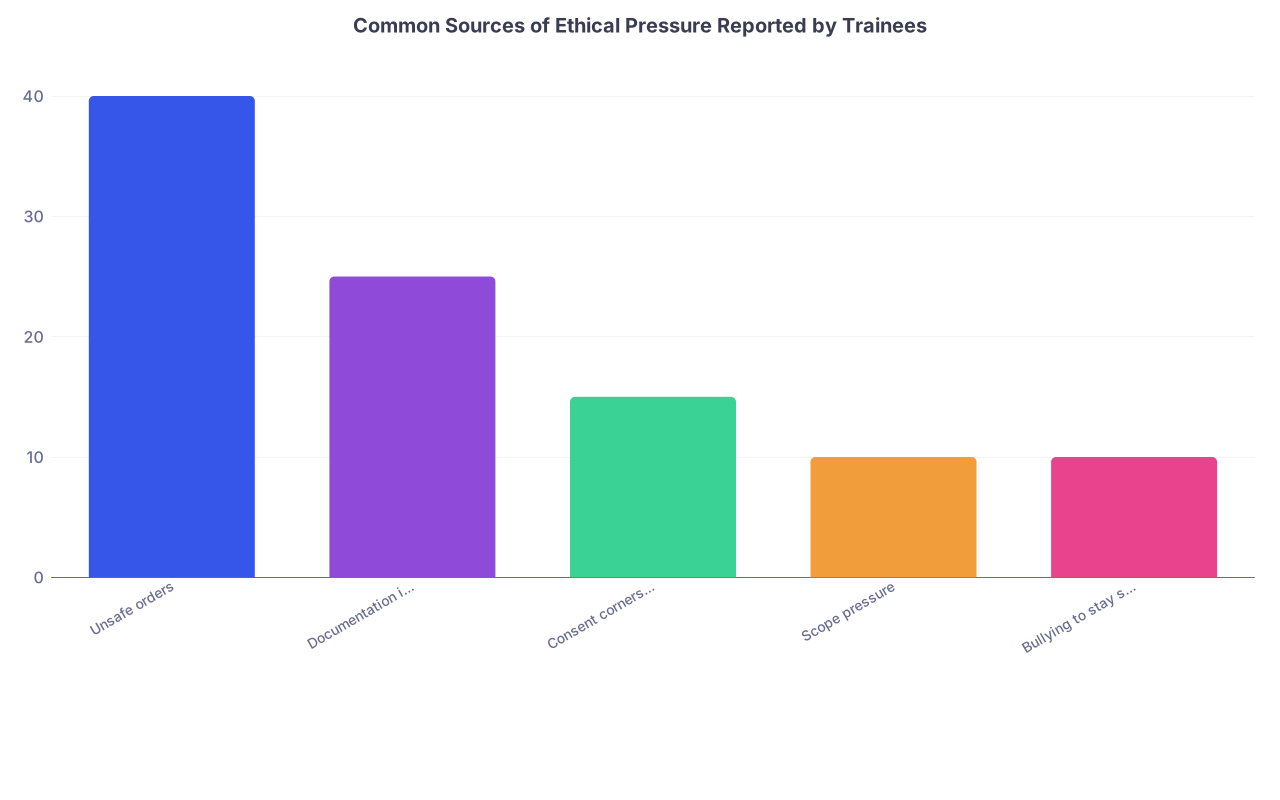
| Category | Value |
|---|---|
| Unsafe orders | 40 |
| Documentation issues | 25 |
| Consent corners cut | 15 |
| Scope pressure | 10 |
| Bullying to stay silent | 10 |
8. What If You Already Complied With Something Unsafe?
This is the part nobody wants to talk about. But I’ve had plenty of students and residents admit: “I did what they said. I knew it wasn’t right.”
Do not crawl into a hole and hope it disappears. There are still constructive moves you can make.
If the patient could still be at risk, act
- Inform someone more senior you trust: “Earlier I placed X order under direction, but I’m now worried it was unsafe.”
- Ask for the patient to be reassessed, vitals checked, labs repeated.
Own your part without self-immolating
To a supervisor you trust:
“I followed an instruction from my senior that I now realize was unsafe and inconsistent with what I’ve been taught. I didn’t feel I could say no in the moment, but I want to make sure we prevent this from happening again.”Learn the pattern: where did your line wobble?
Was it fear of evaluation? Confusion about what’s allowed? Deference to authority? You’re not the first. Use this as data to build stronger responses next time.
And do not forget: the system that put you under that pressure is at fault too. You’re responsible for learning from it, not for carrying all the blame.

9. When the Senior Retaliates
Sometimes you do everything right and they still hit back: bad eval, cold shoulder, snide comments, exclusion from cases.
Do three things:
Save evidence
- Screenshots of inappropriate messages
- Notes about retaliatory comments (“Since you like calling attendings, why don’t you call them for every little thing now?”)
- Dates and context of any out-of-line behavior
Get ahead of evals
Before the rotation ends, meet with the attending/clerkship director:“I want to share my perspective on a situation that may affect my evaluation. I raised a safety concern about X, and since then I’ve noticed tension with [senior]. I’ve continued to work hard and care for patients, but I’m worried this may show up in feedback.”
Calm, factual, not whiny. You’re flagging bias.
Use formal protections if needed
Many institutions explicitly prohibit retaliation for safety reporting. That gives you leverage with GME or the dean’s office if things get truly ugly.
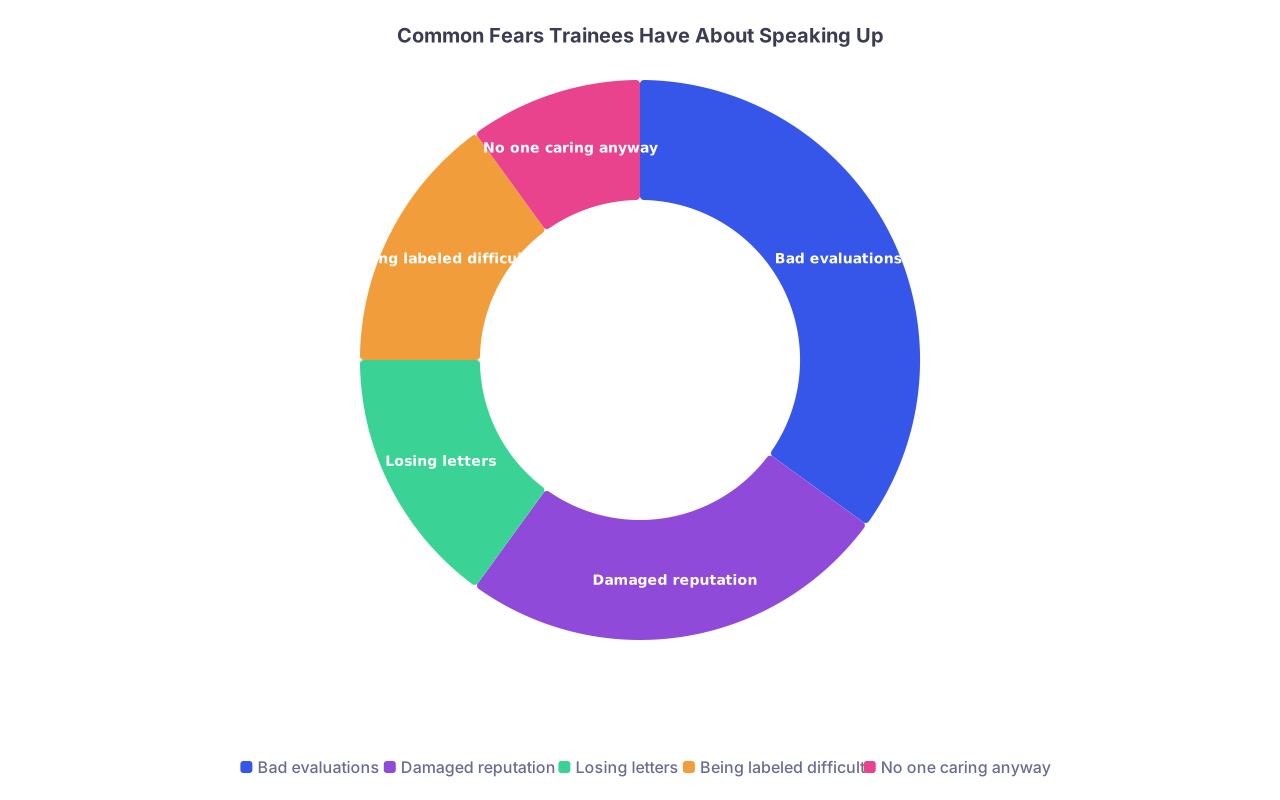
| Category | Value |
|---|---|
| Bad evaluations | 35 |
| Damaged reputation | 25 |
| Losing letters | 15 |
| Being labeled difficult | 15 |
| No one caring anyway | 10 |
FAQ (Exactly 5 Questions)
1. What if I’m just a medical student — do I really have the right to refuse?
Yes. You are not licensed to practice independently, and you absolutely have the right (and obligation) to refuse orders or tasks that are unsafe, illegal, or outside your role. Frame it as: “I’m not qualified/comfortable doing this, but I’m happy to help in other ways.” Nobody can legitimately require you to falsify documentation or perform independent clinical actions beyond your scope.
2. What if the attending is the one giving the unsafe instruction?
Same principles, higher stakes. Start with respectful, fact-based concern: “I’m worried about X because their Y is Z; could we consider…?” If it’s still clearly unsafe/illegal and your objection is dismissed, you may need to involve another attending, the department chief, or the hospital’s safety/ethics/compliance channels after the fact. You are not obligated to sign, attest, or personally perform something that violates policy or law, even if an attending says so.
3. Won’t reporting make me “that student/resident” nobody wants to work with?
Some people might label you that. Those are not people you want shaping your career. The colleagues and mentors who matter long-term are the ones who value integrity and safety. Also, if you present your concerns clearly, factually, and without drama, most reasonable attendings see you as conscientious, not difficult.
4. How do I know if the situation is serious enough to report formally?
General rule: if there was clear potential for patient harm, actual harm, or clear violation of law/policy (fraud, falsification, consent issues, discrimination, abuse), it’s reportable. If it’s more about tone, rudeness, or borderline judgment calls, you might start with informal mentorship and feedback rather than formal reporting. When in doubt, ask a trusted attending or advisor confidentially: “Is this something that should go to GME/compliance?”
5. What if my entire team culture normalizes unsafe shortcuts?
Then you’ve stumbled into a bad culture, not a “difference of opinion.” You won’t fix it alone, but you’re not powerless. Protect yourself and your patients: quietly refuse to cross hard lines, involve allies (nursing, pharmacists, other attendings), and document patterns. Use rotation evals, clerkship feedback forms, or confidential reporting channels to describe the systemic problem. And for your own sanity, prioritize finding rotations, mentors, and future jobs in places that do not treat safety and ethics as optional.
Today, do one concrete thing: write down three sentences you would use if a senior told you to do something unsafe tomorrow. Literally type them out, say them out loud, and stick them in your notes app. When the moment comes — and it will — you will not be inventing courage from scratch; you’ll be pressing play on a script you’ve already chosen as the kind of physician you want to be.


