

Only 12–15% of physicians say it’s always wrong to lie to a patient—yet almost every ethics lecture you’ve ever heard pretends the rule is absolute.
So let’s stop pretending.
“Never lie to a patient” is one of those slogans that sounds noble, fits nicely on a PowerPoint slide, and is routinely violated in actual practice. Often by very good clinicians. Sometimes for bad reasons. Sometimes for defensible ones.
You’re not going to practice in a world of abstract absolutes. You’re going to practice in a world of confused families, half-conscious patients, language barriers, cultural conflicts, and legal risk. You need more than a slogan. You need a framework.
The Myth: “It’s Always Unethical to Lie to a Patient”
Here’s the clean classroom version you probably heard:
- Autonomy requires truth.
- Deception violates trust.
- Therefore, you must always fully disclose and never lie.
That’s the theory. Now let’s compare it with what clinicians actually do and what patients actually say they want.
What doctors actually report doing
Survey data from various specialties (oncology, internal medicine, surgery) shows:
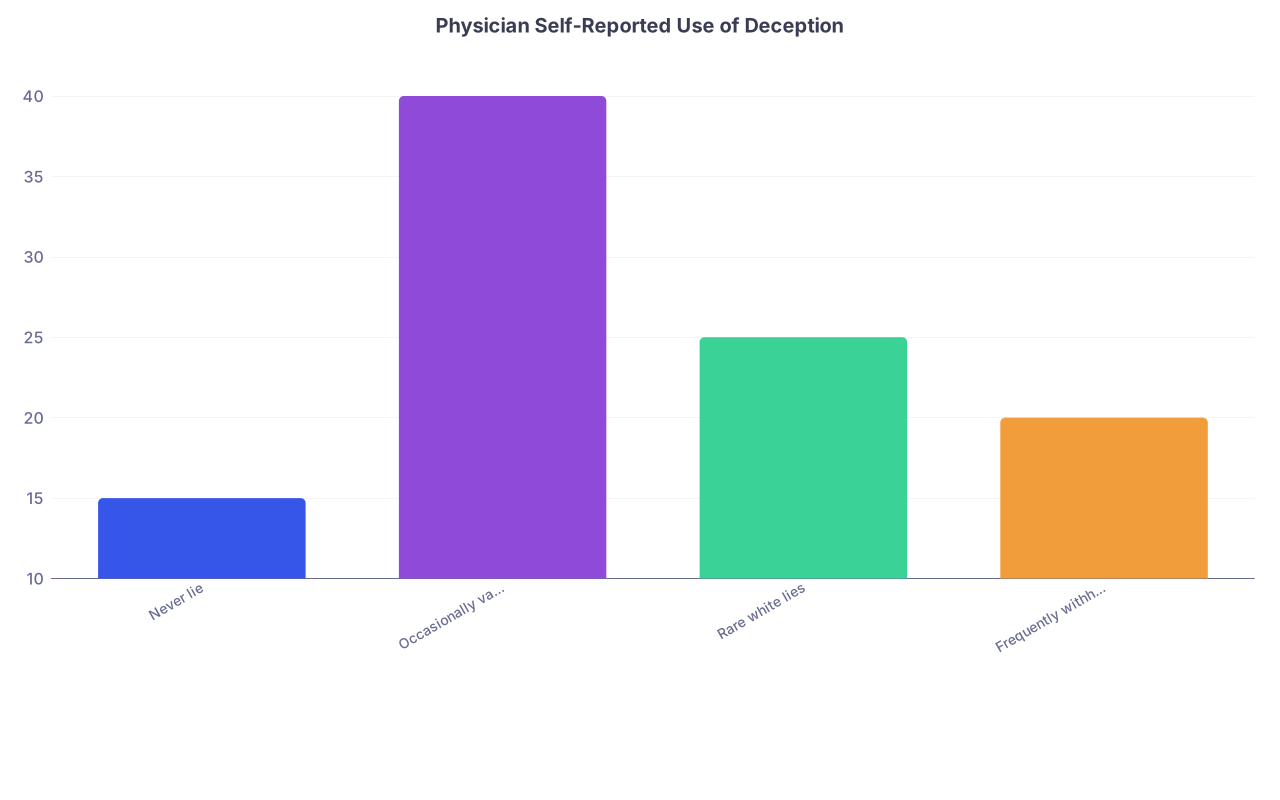
| Category | Value |
|---|---|
| Never lie | 15 |
| Occasionally vague | 40 |
| Rare white lies | 25 |
| Frequently withhold/soften | 20 |
Those “rare white lies” and “vague” disclosures include:
- “The procedure will just feel like a pinch.” (When it will feel significantly worse.)
- “We’re doing everything we can.” (When the team knows continued treatment is medically futile.)
- “The lab lost the test” as a cover for a clinician error or scheduling failure.
- Reassuring language that downplays risk to keep an anxious patient compliant.
Not anecdotes. Patterns. Repeated across studies.
What patients actually want
Here’s the other uncomfortable truth: many patients do not want the blunt, maximal truth, all the time, in every detail.
NCCN, ESMO, and other oncology guidelines summarize data like this: a non-trivial subset of patients explicitly prefer limited or filtered disclosure, especially with terminal illness or in some cultures where families mediate information.
In some studies of seriously ill patients:
- A majority wanted truthful information.
- But a meaningful minority wanted the physician to “talk with my family and decide what I should know.”
- Some explicitly said they did not want to hear prognosis numbers at all.
So the simple “always tell the whole truth, to the patient directly, no matter what” story? That’s not what patients consistently ask for.
What Guidelines Actually Say (Not the Sanitized Version)
Contrary to what gets quoted in ethics small groups, major guidelines are not absolutist about veracity. They take a much more nuanced, sometimes uncomfortable position.
Let’s look at the big players.
| Body / Document | Position on Lying / Withholding Truth |
|---|---|
| AMA Code of Medical Ethics | Promote honesty; therapeutic exception allowed but very limited |
| WMA (Declaration of Lisbon, etc.) | Right to information and right *not* to know; respects cultural variation |
| GMC (UK) - Consent / Candour Guidance | Strong presumption of openness; narrow allowance when disclosure causes serious harm |
| ACP Ethics Manual | Truth-telling is the norm; acknowledges rare exceptions and patient preferences |
AMA Code: not as absolutist as you were taught
The AMA Code of Medical Ethics Opinion 2.1.3 (Withholding Information from Patients) is routinely mis-taught as “never withhold.” That’s not what it actually says.
The Code:
- States physicians should “presume” that patients want full information.
- Allows withholding information only when disclosing would “pose a serious psychological threat, so serious that it is medically contraindicated.”
- Explicitly says: “This exception does not apply to respect for a patient’s preference not to receive certain medical information.”
Translation in plain language:
- You start with full disclosure as your default.
- You may withhold temporarily and narrowly if immediate disclosure would cause serious harm (not just distress).
- If the patient says “I don’t want to know this,” you respect that.
Does the AMA endorse outright fabrication? No. But it does envision cases where the actual truth is deliberately withheld or softened. Ethically sanctioned partial disclosure is, functionally, a form of deception.
GMC (UK): harm requirement, not discomfort
The UK General Medical Council says something similar. You must be honest and open, but you’re allowed not to disclose specific information if:
- You reasonably believe that giving it would cause the patient “serious harm.”
- And “serious harm” is not the same as “upset” or “anxious.”
Clinician discomfort doesn’t count. Family discomfort doesn’t count. Only significant harm to the patient.
Again: strong presumption for truth. Narrow but real space for withholding.
WMA: the right not to know
The World Medical Association goes further into what everyday clinicians actually see:
- Patients have a right to know their diagnosis and prognosis.
- Patients also have a right not to know, and can delegate information to surrogates/family.
So if a competent adult in, say, a traditional family structure in India says, “Tell my son, not me,” and explicitly asks not to hear certain details—ethically and legally, you can honor that. Full direct disclosure, in that case, may be a violation of that patient’s autonomy, not a defense of it.
Lying vs Withholding vs Framing: These Are Not the Same Thing
Lumping all this into “lying” muddies the water. Ethically, there are at least three very different behaviors:
- Active lying – saying something you know is false.
- Withholding information – not sharing something relevant you know.
- Framing/spinning – presenting true information in a way that shapes perception.
People love to collapse them together. That’s sloppy thinking.
1. Active lying: almost always wrong, occasionally defensible
Classic examples:
- “The scan was normal” when you know it shows a new metastasis.
- “You don’t have cancer” when pathology already confirmed malignancy.
Ethically: this is the most serious breach of trust and autonomy. Guidelines and law are fairly unified: don’t do this as a routine strategy. It undermines consent, it’s paternalistic, and it usually backfires.
But is it never ethically defensible? Here’s where the myth cracks.
The literature and major guidelines quietly acknowledge “therapeutic privilege” scenarios:
- Patient is acutely suicidal, barely stabilized.
- You have new catastrophic information (e.g., terminal prognosis).
- Immediate blunt disclosure carries a very high risk of pushing them back into self-harm before you can stabilize or support them.
If you tell them, “We’ll talk more about test results after you’ve rested,” knowing you’re not disclosing the worst part yet—are you lying? Yes, in a sense. Is it automatically unethical? Not so clear.
Most ethicists would say: temporary, protective, very narrowly tailored, with a plan to disclose once risk is controlled—this may be acceptable. But note what makes it defensible:
- Serious, immediate risk of major harm.
- Time-limited withholding.
- Commitment to eventual honest disclosure.
Not your comfort. Not “I don’t want them to cry.”
2. Withholding: common, often legal, sometimes still wrong
This is where a lot of unethical behavior hides, under softer language.
- Not mentioning a serious alternative diagnosis because it’s unlikely.
- Leaving out side effects that are “rare” but serious.
- Avoiding prognosis numbers because “they’ll lose hope.”
Some of this is justified by time constraints or judgment calls. Some of it is just lazy, or self-protective, or economic (e.g., nudging toward a more profitable procedure).
Ethically, the test is pretty simple:
- Is the information material to the patient’s decision?
If yes, and the patient has not explicitly waived knowing it, you’re obligated to disclose.
If you deliberately hide a 5–10% risk of infertility from a young patient before a procedure, that’s deceptive. Legally risky. Ethically weak.
But if your palliative patient says, “I don’t want to hear numbers, just tell me if there’s anything important I need to do,” and you make a judgment to spare them precise survival stats—this can be perfectly within ethical and guideline boundaries.
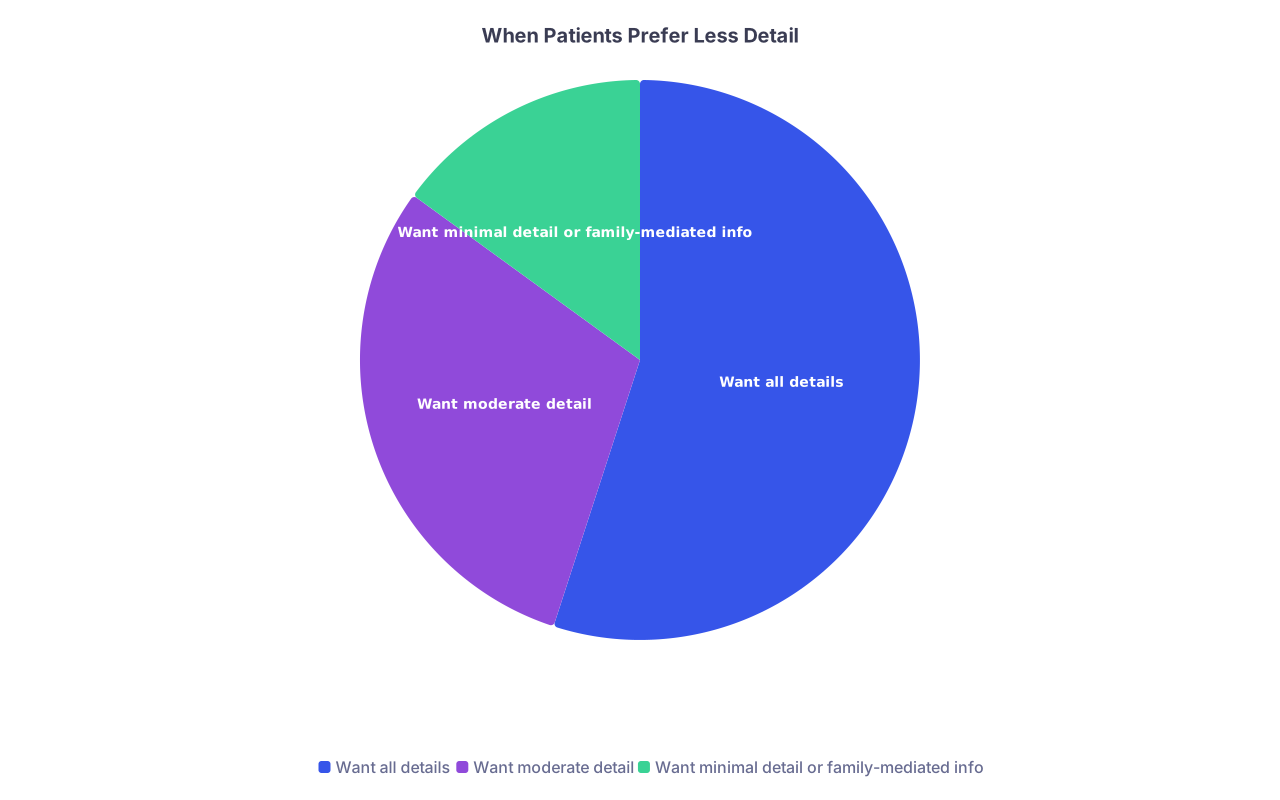
| Category | Value |
|---|---|
| Want all details | 55 |
| Want moderate detail | 30 |
| Want minimal detail or family-mediated info | 15 |
Data in serious illness shows a consistent minority in that last slice.
3. Framing: the invisible manipulator
The dirty secret: you can tell “the truth” and still manipulate a patient heavily just by how you say it.
“You have a 90% chance of surviving this surgery” vs. “There’s a 1 in 10 chance you’ll die from this operation.”
Same numbers. Very different feelings.
Guidelines rarely spell this out, but if we’re honest, framing is where a lot of subtle paternalism lives. You can nudge patients toward what you want by picking which true facts to emphasize and how scary or reassuring your tone is.
Ethically, responsible framing means:
- You still present the core risks/benefits fairly.
- You avoid selectively highlighting just what supports the option you prefer.
- You align with the patient’s values, not your convenience.
If you cherry-pick truths to steer a hesitant patient into the OR because it fits your schedule or fee structure, you are functionally lying—even if every sentence is technically correct.
Edge Cases: When “Never Lie” Collides with Reality
Let’s walk through a few of the classic uncomfortable scenarios I’ve seen argued in ethics rounds and in real chart notes.
Scenario 1: The family that begs you to lie
Common pattern:
- Elderly patient, serious cancer.
- Family meets you in the hallway: “Doctor, in our culture we don’t tell the patient. It will destroy them. Please tell them it’s something minor.”
Here’s the actual ethical and legal framework in most Western jurisdictions:
- Your duty is to the patient, not the family.
- If the patient is competent, you must at least offer information.
- But you can also ask the patient, “Do you want me to talk directly with you about everything, or would you prefer I speak more with your family about details?”
If the patient clearly says, “Talk to my son, I don’t like to hear bad news,” then respecting that choice is respecting autonomy. You’re not lying to them; you’re honoring their stated preference not to know.
If the patient asks you directly, “Doctor, do I have cancer?” and you say, “No,” to please the family—you’ve crossed into clear ethical violation. Guidelines do not support that.
The right move is often uncomfortable: negotiate with the family, explain your obligations, and then structure disclosure in a sensitive but honest way. Use graduated language. Sit down. Bring support. But do not flatly lie.
Scenario 2: The “softened” prognosis
Resident tells the attending: “I didn’t give them the six-month prognosis; I just said ‘time is limited.’ They seemed too fragile.”
This is partial disclosure, not outright fabrication. Is it defensible?
It depends:
- Did the patient ask explicitly, “How long do I have?”
- If yes, and you dodge repeatedly, you’re not respecting their autonomy.
- Did you explain uncertainty and ranges rather than a single number?
- That’s actually more accurate. Good.
- Are you planning to revisit the conversation as they adjust?
- Then staged disclosure may be ethically solid.
The AMA’s “serious psychological threat” threshold is quite high. Mere sadness or distress doesn’t qualify. “They might cry” is not an ethical justification. “They are acutely psychotic and might decompensate into violence or self-harm” might be.
Scenario 3: The benign “white lie” for comfort
“The needle will just be a quick pinch.”
“It’ll be over before you know it.”
“This won’t hurt much.”
These are lies. Small ones. Universally used.
Are they ethical? Honestly: often yes, sometimes no.
If the main effect is:
- Reducing anticipatory anxiety.
- Not meaningfully distorting risk/benefit decisions.
- Not undermining long-term trust.
Then this is low-level, context-dependent deception. Many ethicists view it as justifiable under a beneficence lens, especially with children or very anxious adults. Others would push you to use more neutral but still calming language (“It will be uncomfortable, but we’ll help you through it”).
The line you cannot cross: repeating these minimizations when the procedure is substantially more painful or risky than you imply. If your “white lie” leads a patient to accept something they otherwise wouldn’t, that’s a consent violation, not kindness.
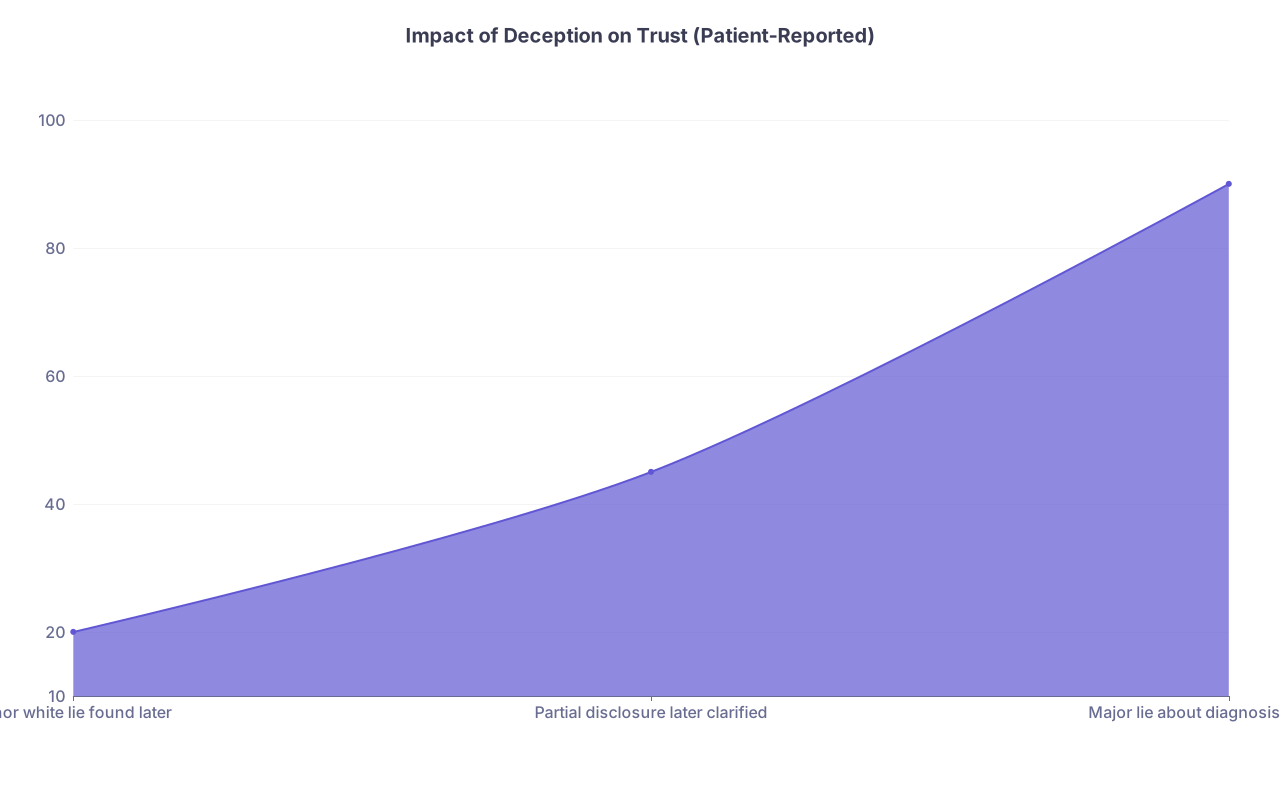
| Category | Value |
|---|---|
| Minor white lie found later | 20 |
| Partial disclosure later clarified | 45 |
| Major lie about diagnosis discovered | 90 |
Patients forgive small comfort-focused exaggerations far more easily than major concealment about diagnosis or prognosis.
A Practical Framework: When Is Deception Ever Defensible?
Let me be blunt: most lying in medicine is lazy, self-protective, or culturally inherited. Not ethically sophisticated.
But there is a narrow slice where limited, temporary, or partial truth-telling can be morally defensible. You need a filter.
Here’s a concrete, grown-up framework:
Default setting: maximum honest disclosure.
That’s your baseline. That’s what guidelines presume.Check patient preference.
Ask: “Some people want every detail, others prefer a big-picture summary or want me to talk more with a family member. Where are you on that spectrum?”
This one sentence prevents a huge amount of later ethical mess.Test of materiality.
If the information could reasonably change the patient’s decision, and they haven’t waived their right to know it, you disclose. Even if it’s uncomfortable. Even if they might cry.Therapeutic privilege: razor-thin exception.
Only consider delaying or modifying disclosure when:- There is immediate, serious risk of major harm (e.g., suicide, catastrophic decompensation).
- You have a clear plan to disclose fully once risk is controlled.
- You document your reasoning.
Never lie to cover your own mistake.
Ethically bankrupt and legally explosive. Duty of candour, open disclosure policies, malpractice law—they all land hard here.Be honest about uncertainty.
“I don’t know” and “I might be wrong” are legally safe and ethically strong. Patients don’t need omniscience; they need transparency.Evaluate the motive.
Ask yourself:
“If I strip away my discomfort and fear of conflict, is this still for the patient’s good or just for mine?”
If the answer is “mine,” stop.

| Step | Description |
|---|---|
| Step 1 | Need to share info |
| Step 2 | May summarize or omit |
| Step 3 | Disclose fully and honestly |
| Step 4 | Align with stated preference |
| Step 5 | Respect preference, document |
| Step 6 | Delay or stage disclosure, plan follow up |
| Step 7 | Material to decision |
| Step 8 | Patient prefers full detail |
| Step 9 | Serious imminent harm if told now |
So, Is It Ever Ethical to Lie to a Patient?
Here’s the straight answer.
Routine, convenience-based lying is unethical.
“It’s easier for me.” “The family wants me to.” “I don’t like these conversations.” None of that passes ethical or guideline scrutiny.Narrow, temporary, harm-preventing deception can be defensible.
What guidelines actually say is not “never,” but “rarely, with extreme caution, and only to prevent serious harm—and even then, usually as delay or partial disclosure, not outright fabrication.”Autonomy includes the right not to know.
If a competent adult clearly says “don’t tell me” or “tell my family instead,” honoring that is not lying. It’s respect.
That’s the real landscape. Not the slogan, not the hallway myths, but what evidence, guidelines, and real practice actually support.


