
The biggest ethical mistakes in your first month on rotations won’t look like “scandals.” They’ll look like habits. Tiny, repeated shortcuts in how you talk, listen, and decide at the bedside.
Let’s build the right ones—on a clock.
You’re starting clinical rotations. You’re overloaded, scared of looking stupid, trying to survive notes and pre-rounds. Ethics feels abstract. But it is not abstract to the patient whose code status you “assumed,” or the family you ignored because you were rushing to present.
This month-by-month, week-by-week, and day-by-day guide will walk you through specific bedside ethics habits to build in your first month. Think of it as ethics muscle memory.
Before Day 1: 3–5 Days Out – Set Your Ground Rules
At this point, you’re not on the floor yet. Good. You need some pre-game rules.
Do this in the 3–5 days before starting:
Pick your three non‑negotiables.
Write these in your notes app and actually look at them each morning the first week. For example:- I will introduce myself clearly as a student every time.
- I will not discuss sensitive information in hallways, elevators, or cafeterias.
- I will ask before touching any patient, every single time.
Clarify your role and supervision.
Email or ask:- Who is my immediate supervisor (intern, resident, PA)?
- What can I never do without direct permission (consents, orders, announcing plans to families)?
Quick review of core bedside ethics pillars (one page each):
- Informed consent
- Capacity vs competence
- Confidentiality and privacy (HIPAA basics)
- Professional boundaries (social media, gifts, self-disclosure)
Print or save a 1‑page cheat sheet. You’ll forget details when you’re tired.
- Decide your “stop phrases.”
You need words ready when something feels off. Pick 1–2 default lines:- “Just to clarify, have we explained that to the patient yet?”
- “I’m not comfortable doing that without supervision—can you walk me through it?”
Week 1: Survival Mode With Ethics Intact
You’re overwhelmed. Perfect environment to form shortcuts. Don’t.
Your Week 1 goal: Build ethical reflexes into your basic bedside routine. Nothing fancy yet—just the fundamentals.
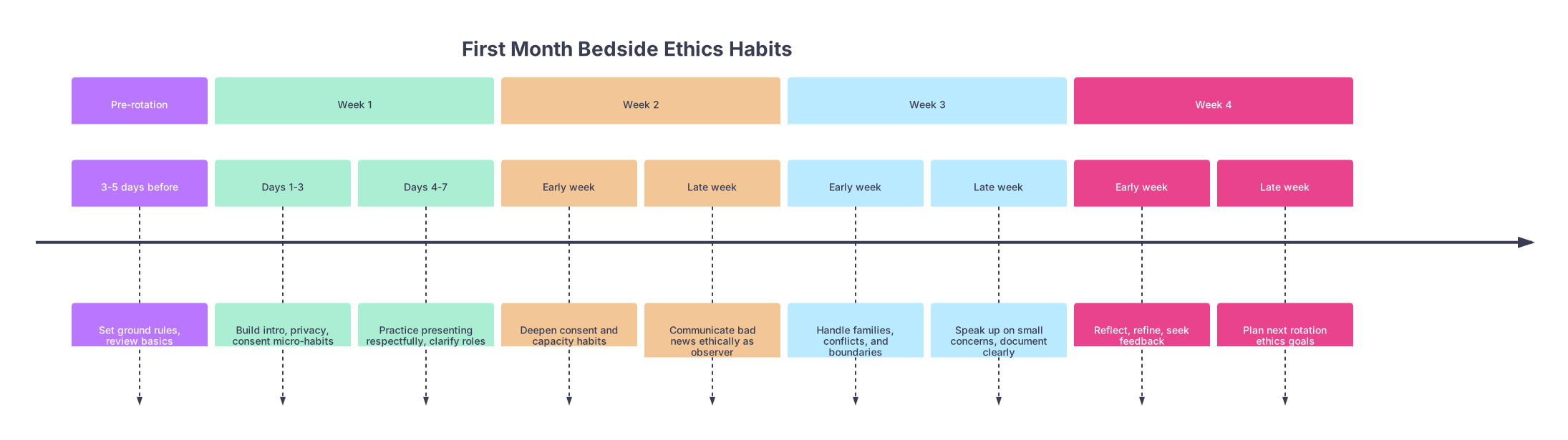
| Period | Event |
|---|---|
| Pre-rotation - 3-5 days before | Set ground rules, review basics |
| Week 1 - Days 1-3 | Build intro, privacy, consent micro-habits |
| Week 1 - Days 4-7 | Practice presenting respectfully, clarify roles |
| Week 2 - Early week | Deepen consent and capacity habits |
| Week 2 - Late week | Communicate bad news ethically as observer |
| Week 3 - Early week | Handle families, conflicts, and boundaries |
| Week 3 - Late week | Speak up on small concerns, document clearly |
| Week 4 - Early week | Reflect, refine, seek feedback |
| Week 4 - Late week | Plan next rotation ethics goals |
Days 1–3: Bedside Basics You Hardwire Now
Every single patient encounter, do this sequence:
Knock. Pause. Ask.
- Light knock, brief pause.
- “Hi, is it okay if I come in?”
Habit: You don’t assume access. You ask.
Introduce yourself accurately. This is where students regularly mess up—overstating their role.
- “Good morning, I’m [Name]. I’m a medical student working with Dr. [X] on your team.”
Not “I’m from the medical team” mumbled while already examining them.
- “Good morning, I’m [Name]. I’m a medical student working with Dr. [X] on your team.”
Ask permission before anything.
- “Would it be alright if I ask you some questions about your health?”
- “Is it okay if I examine your abdomen? I’ll need to press in different areas.”
If they look unsure or hesitate, you slow down or back off. That hesitation is data.
Micro‑privacy checks.
- Pull the curtain fully around.
- Check who else is in the room: “Is it okay if we talk about your health with [this person] here?”
- Lower your voice for sensitive topics—sexual history, mental health, substance use.
Language you start avoiding immediately:
- “Do you understand?” → switch to “How does that sound to you?” or “What questions does that bring up?”
- “We’re going to do…” → switch to “We’re recommending…” or “The team is thinking about…”
At this point, your only job is repetition. You’re wiring in respectful patterns.
Days 4–7: Ethics in Rounds and Presentations
Now you’re starting to function on the team. This is when you can accidentally dehumanize patients—through how you talk about them.
On rounds:
- Lead with the patient, not the disease.
- “Ms. Lopez is a 54‑year‑old teacher with…” beats “This is a 54‑year‑old CHF exacerbation.”
- Strip the judgment from social history.
- Cut “noncompliant,” “difficult,” “drug seeker.” Use specifics:
- “He’s missed 3 dialysis sessions this month because of transportation problems.”
- Cut “noncompliant,” “difficult,” “drug seeker.” Use specifics:
- Never joke about patients.
Not at the bedside, not at the desk, not anywhere in the hospital. The “code brown” joke that made your classmate laugh in lecture feels disgusting outside a real patient room.
When discussing sensitive information:
You will be tempted to do “hallway HIPAA violations” because everyone else seems to.
- Don’t say patient names in elevators, cafeterias, bathrooms.
- Don’t show your friends “wild labs” or photos.
- Don’t write about cases on social media, even in vague terms. People think “no identifiers” keeps them safe. It doesn’t.
Week 2: Deepen Your Consent, Capacity, and Truth-Telling Habits
By now, you’re less lost. Good. Time to raise the bar.
Your Week 2 goal: Understand and practice the ethics behind what you say, not just how you say it.

Early Week 2: Informed Consent and Capacity – Your Role
Students often either:
- Avoid patients during consent because they “aren’t the one doing it,” or
- Overstep and start “consenting” without supervision.
Both are wrong.
Your rules this week:
You explain. You never obtain.
You can:- Clarify what the team already explained.
- Translate jargon into simple language. You do not:
- Ask for signatures.
- Present yourself as the final authority.
Use the four‑step consent check when you explain anything significant:
- What is it? (plain language)
- Why are we recommending it?
- What are the main risks and alternatives?
- What happens if we do nothing?
Start checking capacity in your own head.
You’re not declaring it formally. You’re practicing the thought process:- Can they understand the information in simple terms?
- Can they appreciate how it applies to them?
- Can they reason through options? (“If I do X, then Y happens.”)
- Can they express a choice consistently?
If you’re unsure, you tell your resident:
“I tried to explain the plan, but I’m not confident she really understood; she kept asking if this was a blood transfusion.”
That’s ethical. And clinically helpful.
Late Week 2: Bad News, Prognosis, and Honesty
You probably won’t be leading bad news discussions. But you’ll be there. Watching. Learning.
Here’s what you do this week:
Position yourself deliberately.
- Sit or stand where the patient can see your face.
- Don’t hover near the door like you’re already leaving.
Watch for these specific moves the attending or resident uses:
- Pausing after saying “cancer,” “ICU,” “surgery,” “unlikely to recover.”
- Asking, “What’s your understanding of what’s going on so far?”
- Checking, “Is this a good time to talk about this, or would you like someone else here?”
Right after the room, do a 30‑second self‑debrief:
- What exact words did they use that felt respectful?
- What felt rushed or confusing?
- If you had to summarize the news in one sentence for the patient, what would you say?
Do not, under any circumstances, “soften” or contradict the team’s message after you leave the room.
If the patient asks you directly: “Am I dying?” you say:
“That’s an important question. I want to make sure you get the most accurate answer, so I’d like to bring your doctor back to talk about that together.”
Then you actually do it. Immediately.
Week 3: Families, Boundaries, and Small‑Scale Moral Courage
By Week 3, you’re starting to feel like part of the team. This is when you’re most at risk of absorbing bad habits.
Your Week 3 goal: Handle conflicts and boundaries without becoming cynical—or paralyzed.
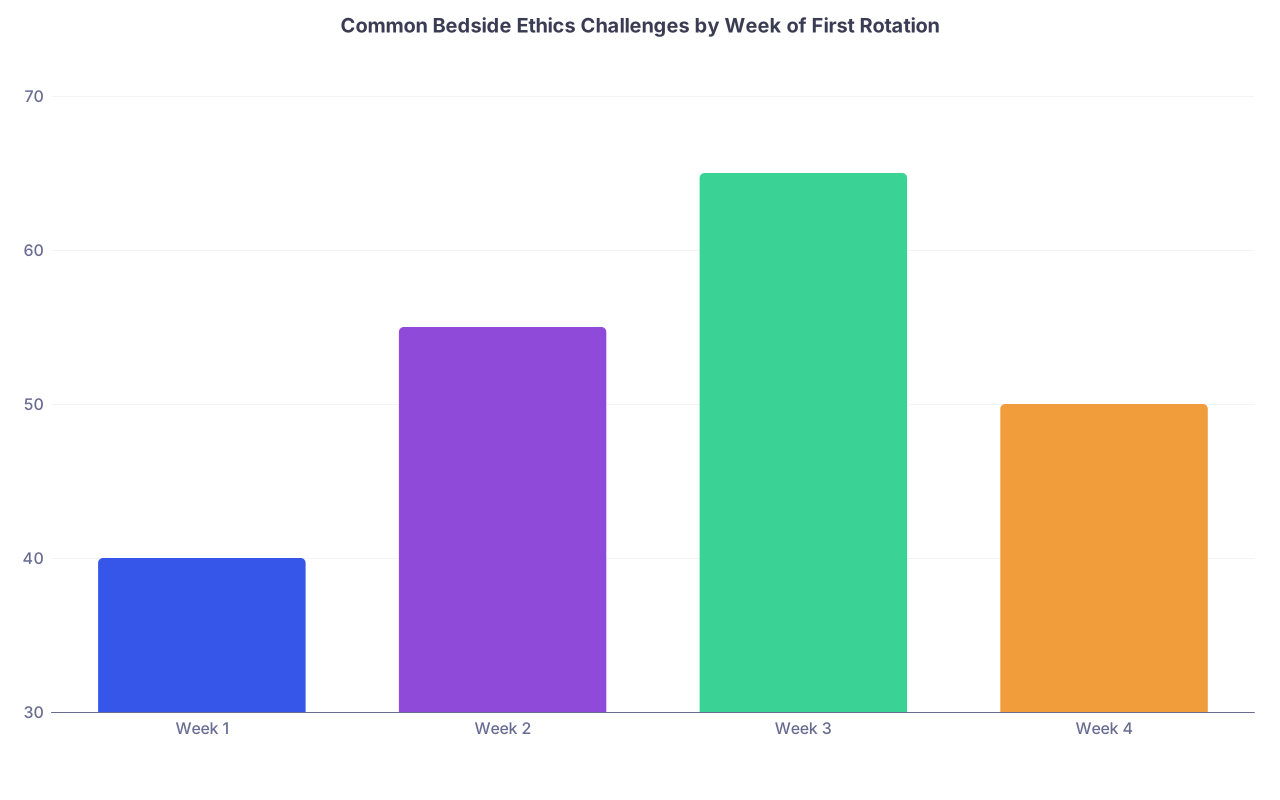
| Category | Value |
|---|---|
| Week 1 | 40 |
| Week 2 | 55 |
| Week 3 | 65 |
| Week 4 | 50 |
(Values represent a rough “frequency of ethics dilemmas noticed” as students become more aware—expect more, not fewer.)
Early Week 3: Managing Family Dynamics and Disagreements
You’ll see this scenario soon if you haven’t already:
- Patient: says one thing
- Family: wants something else
- Team: is rushed and annoyed
Your tasks in that triangle:
Honor the patient’s voice first.
Your default loyalty is to the patient’s stated preferences, if they have capacity.Do not promise outcomes to families.
Avoid:- “We’ll do everything.”
- “He’s going to be okay.” Instead:
- “The team is watching him closely and will update you with any changes.”
- “I can’t speak for long‑term outcomes, but I can ask the team to talk with you.”
If the family pulls you aside for a “secret talk”:
- Listen briefly.
- Say: “I appreciate you telling me this. I’m going to share this with the team so we can talk together.”
Then you actually relay it. You are not a pipeline for hidden instructions like “Don’t tell my mother she has cancer.”
Late Week 3: Boundaries and Speaking Up, Even a Little
This is when you need to decide who you’re going to be long term.
Professional boundaries to reinforce daily:
- Physical: Always say what you’re about to do, especially with sensitive exams.
“I’m going to lift your gown now to examine your abdomen. If anything feels uncomfortable, let me know and I’ll stop.” - Emotional: You can care deeply and still not be the patient’s therapist or savior.
- Digital: No photos. No DMs. No “I saw your GoFundMe, I’m your student on the team.”
Tiny acts of moral courage this week:
You’re not going to halt the whole system. But you can do this:
- When someone uses dismissive language:
“Just to document clearly, are we saying he refused, or he wasn’t offered?” - When signatures feel rushed:
“Has someone already gone over the risks and alternatives with you, or would it help to review them together?”
You are not accusing. You’re clarifying. Out loud. That matters.
Week 4: Reflection, Documentation Habits, and Setting Up Your Next Rotation
By Week 4, you’ve seen enough to know: ethics is not a lecture topic; it’s buried in every note and every conversation.
Your Week 4 goal: Lock in habits and build an ongoing reflection and feedback loop.

Early Week 4: Documentation That Respects Patients
Your note-writing is an ethical document, not just billing fodder.
This week, audit your own notes:
- Replace labels with descriptions:
- “Noncompliant” → “Has not taken insulin for 3 days due to cost and confusion with instructions.”
- “Poor historian” → “Unable to recall details of last seizure; appears anxious and tearful.”
- Make sure you’re not documenting private information unrelated to care:
- Partner’s affairs? Gossip from a nurse? Filter ruthlessly.
- Document consent conversations (that you witnessed) clearly:
- “Risks, benefits, and alternatives to [procedure] discussed by Dr. X with patient; patient verbalized understanding and agreed.”
| Problematic Phrase | Better Alternative |
|---|---|
| Noncompliant | Missed meds due to X reason |
| Difficult patient | Expressed frustration about Y |
| Drug seeker | Requested specific medication; history of chronic pain |
| Poor historian | Limited recall; collateral information from family used |
| Denies everything | Reports no history of X, Y, Z |
Late Week 4: Build Your Ethics Feedback Loop
You’re about to roll into another rotation and start this all over again. This is the moment you decide whether ethics stays vague—or becomes your thing.
In the last 3–4 days:
Do a 10‑minute written reflection on three cases:
- One where you felt proud of how you handled a patient.
- One where you felt uneasy or regretful.
- One where you watched someone else handle a hard conversation well.
For each, write:
- What exactly happened (2–3 sentences).
- What ethical issue was at stake (consent, truth-telling, privacy, fairness, boundaries).
- What you’d like to do the same or differently next time.
Ask one trusted resident or attending:
- “Can I get your quick thoughts on how I am with patients? Anything you’d want me to work on ethically or communication-wise?”
Don’t argue. Just listen.
- “Can I get your quick thoughts on how I am with patients? Anything you’d want me to work on ethically or communication-wise?”
Set explicit ethics goals for the next rotation. Three examples:
- On surgery: “I will make sure every patient I preround on understands what operation they had and why.”
- On psych: “I will get comfortable explaining voluntary vs involuntary admission in plain language.”
- On OB: “I will practice asking permission before every exam and explaining exactly what I’m doing.”
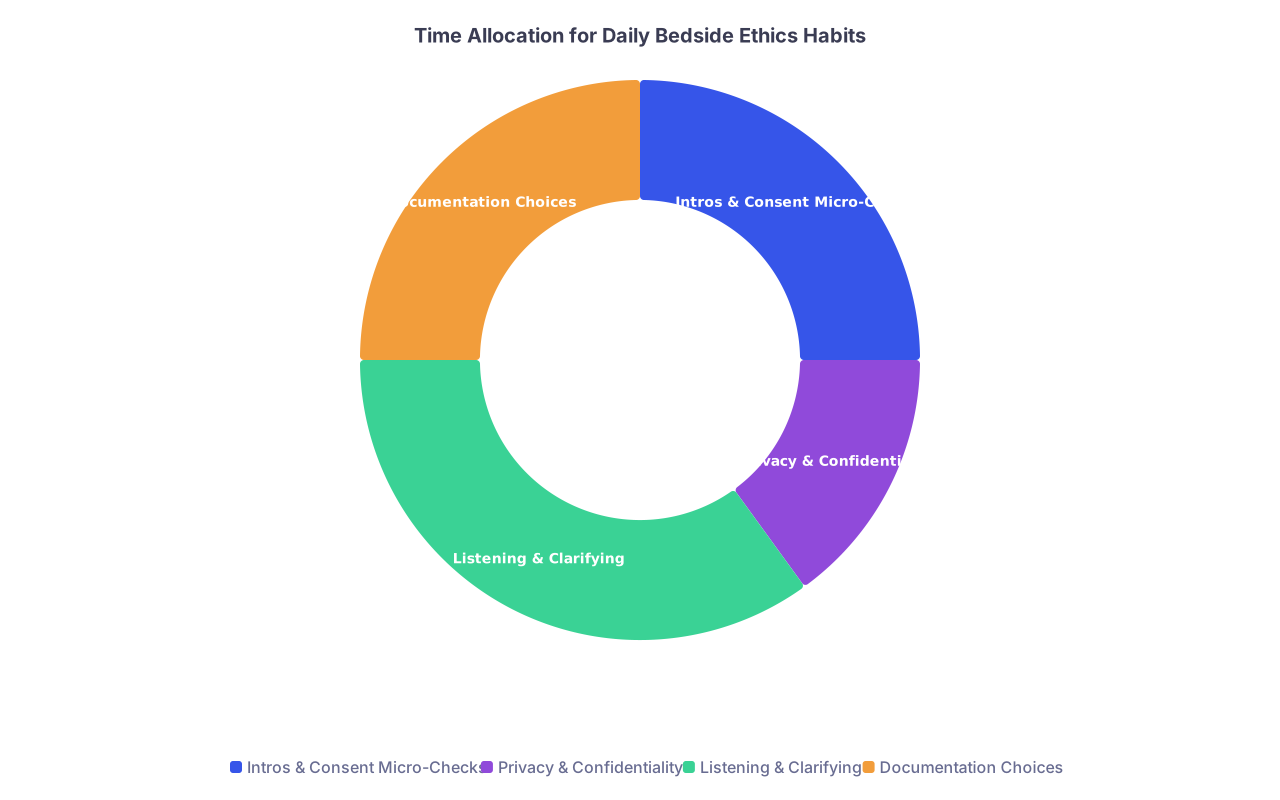
| Category | Value |
|---|---|
| Intros & Consent Micro-Checks | 5 |
| Privacy & Confidentiality | 3 |
| Listening & Clarifying | 7 |
| Documentation Choices | 5 |
(Minutes per patient encounter—these are small time investments that radically change trust.)
Daily Micro-Routine: The 5-Minute Bedside Ethics Checklist
You will be tired. You will forget big frameworks. So end with something you can actually use tomorrow.
Before entering any patient room:
- Knock, pause, ask to enter.
- Confirm it’s a good time to talk or examine.
At the bedside:
3. Introduce yourself as a student + your team.
4. Ask permission for conversation and exam.
5. Check who’s in the room and whether the patient wants them there.
During the encounter:
6. Use plain language; avoid promises you can’t keep.
7. Ask, “What questions do you have?” not “Do you have any questions?”
After the encounter:
8. Ask yourself: Did I respect their privacy, choices, and dignity?
9. Adjust your note language to be descriptive, not judgmental.

Your Next Step Today
Don’t just “think about” bedside ethics. Hardwire it.
Right now, open the notes app on your phone and write three bedside ethics non‑negotiables you will follow on your first month of rotations. Tomorrow morning, read them before you scrub in, pre-round, or see your first patient.
Then test yourself: by noon, have you actually lived them?