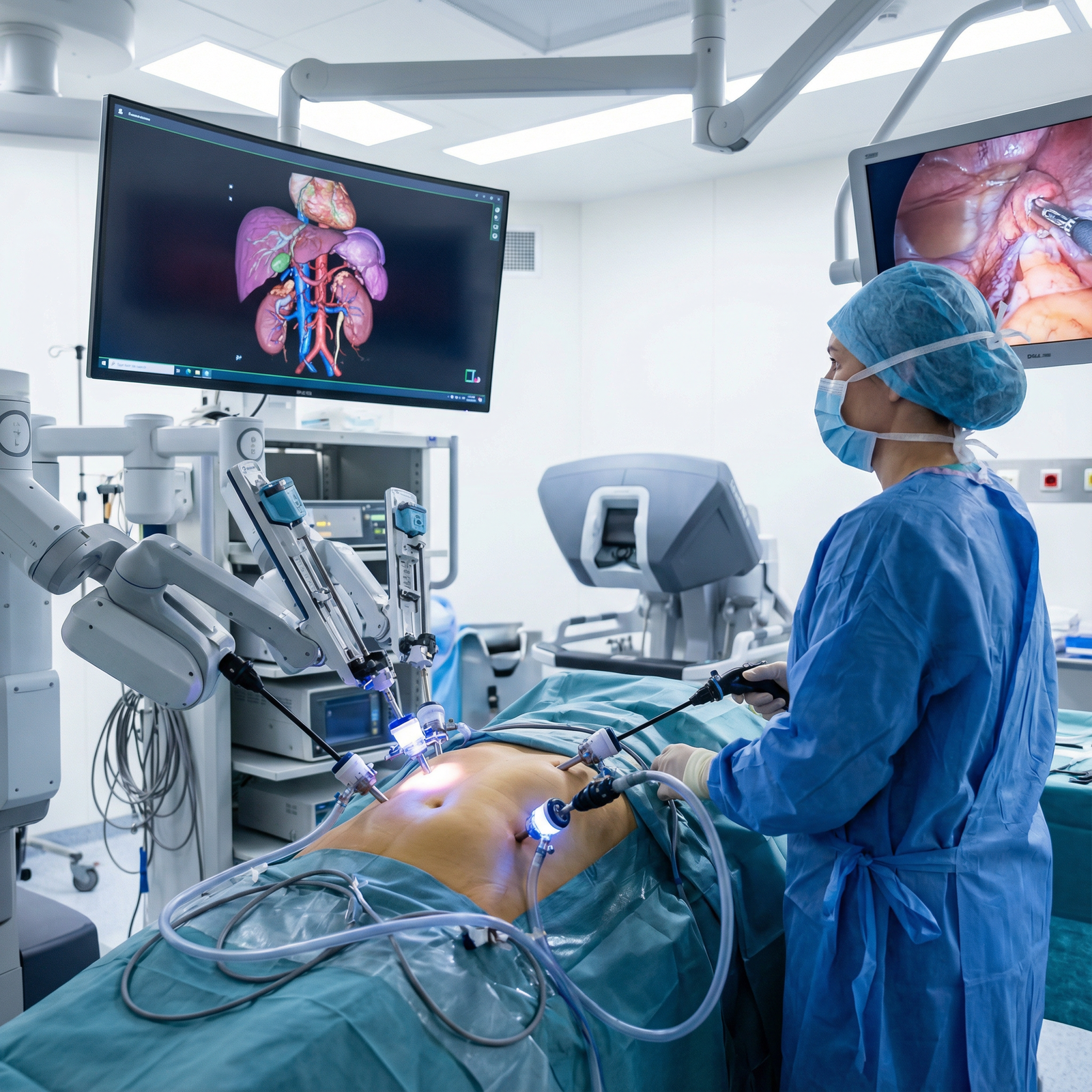
What if the most expensive, high-tech robot in your hospital cannot reliably beat a skilled surgeon with a scalpel and a good headlamp?
Let me be blunt: the idea that “robotic surgery = better outcomes” is one of the most persistent, industry-fueled myths in modern medicine. It is not what the data consistently show.
Robots can help. Sometimes a lot. Sometimes a little. Sometimes…not at all. And occasionally, they make things worse during the learning curve. But that nuanced reality is boring, so it gets buried under glossy marketing videos and administrators bragging about “cutting-edge” capability on billboards.
You want the real story? Let’s go through what’s actually been studied, where the evidence is solid, where it’s shaky, and what this means for you as a trainee and as an ethical physician.
The Myth: “Robotic = Better Surgery”
The sales pitch is aggressively simple: more precision, smaller incisions, shorter stays, fewer complications. I have literally heard attendings tell patients, “The robot is more accurate than the human hand,” as if that sentence alone settled the discussion.
Reality is uglier.
For many common procedures, randomized trials and large observational studies show:
- Similar complication rates
- Similar or slightly longer operative times
- Higher costs
- Sometimes modest benefits in specific, narrow outcomes
And that’s before you account for surgeon experience and hospital case volume, which often matter more than whether a robot is in the room.
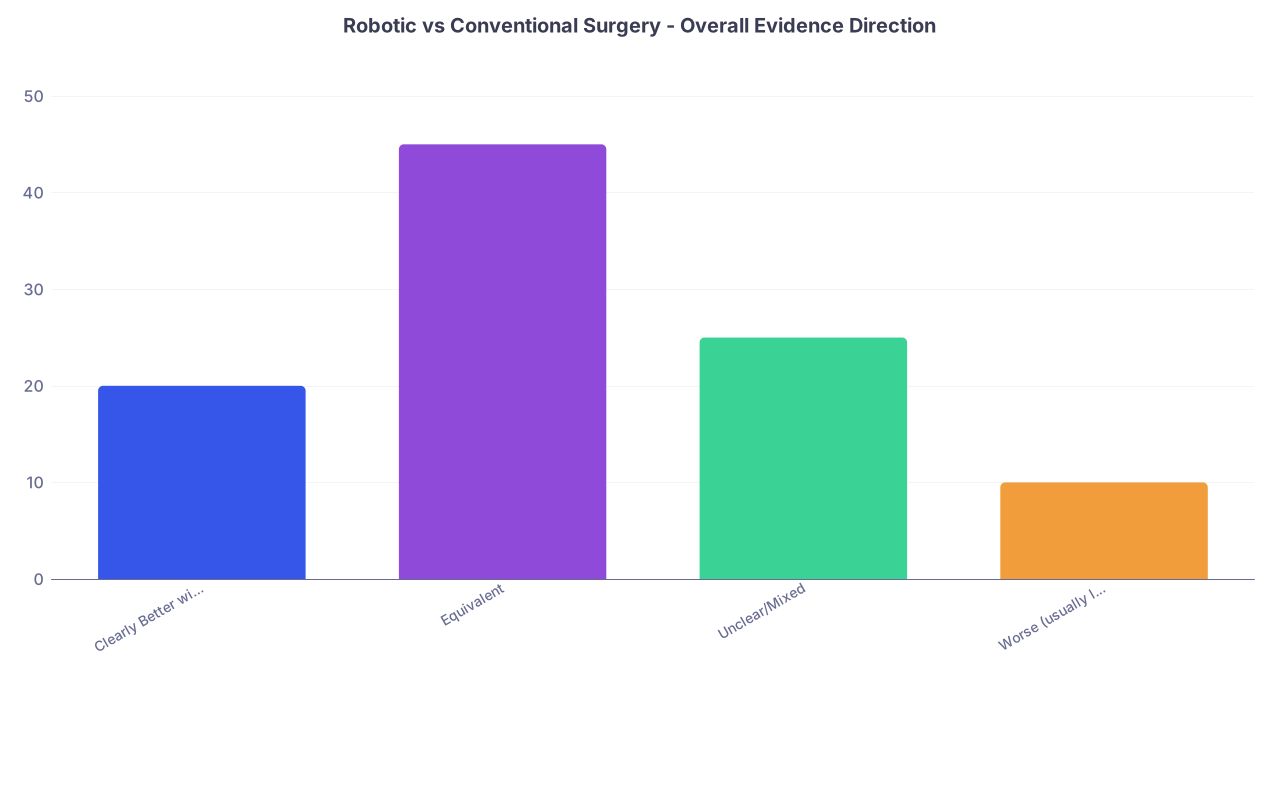
| Category | Value |
|---|---|
| Clearly Better with Robot | 20 |
| Equivalent | 45 |
| Unclear/Mixed | 25 |
| Worse (usually learning phase) | 10 |
The problem is not that robotic surgery is bad. The problem is that it’s oversold, overgeneralized, and often deployed as a marketing tool rather than a carefully targeted clinical instrument.
What the Data Actually Show – Procedure by Procedure
If you want to cut through the hype, you stop listening to slogans and start looking at specific operations.
Prostatectomy – The Poster Child of Robotics
Radical prostatectomy is where robotics really took off. Da Vinci systems spread like wildfire on the back of marketing campaigns and urologists trying to stay competitive.
So, does it help?
Multiple large observational studies and several randomized trials have shown:
- Oncologic outcomes (margin status, biochemical recurrence): broadly similar between open, laparoscopic, and robotic approaches.
- Blood loss: consistently lower with robotic compared to open.
- Length of stay: generally shorter with robotic.
- Continence and erectile function: mixed; some studies show slightly faster early recovery with robotics, others show no significant difference once you control for surgeon experience.
The key detail that people gloss over: when you compare a high-volume open surgeon to a low-volume robotic surgeon, the “magic” of robotics disappears. Volume and skill beat the tool.
If you’re a patient, you should care less about “robotic vs open” and more about: “How many of these have you personally done, and what are your outcomes?”
Hysterectomy – A Lesson in Overuse
Gynecology is where you see the darker side of robotic enthusiasm.
For straightforward benign hysterectomies, the American College of Obstetricians and Gynecologists has been very clear: robotic assistance adds cost without clear benefit over conventional laparoscopy for most patients.
Studies have found:
- Similar complication rates between robotic and laparoscopic hysterectomy.
- Similar length of stay.
- Significantly higher costs with robotics.
- Longer operating times in many centers, especially early in adoption.
Yet hospitals still advertise “robotic hysterectomy” like it’s inherently superior. Why? Because it sounds premium. Not because level-one evidence says every fibroid uterus needs a six-figure robot.

Colorectal and General Surgery – Mostly Nuance, Little Drama
For colorectal procedures (like low anterior resections), the evidence is ambiguous:
- Conversion to open surgery may be slightly lower in some robotic series.
- Short-term outcomes (complications, length of stay) usually comparable to standard laparoscopy.
- Operative times often longer; costs definitely higher.
Same story with cholecystectomy and inguinal hernia repairs: conventional laparoscopy is already minimally invasive and highly optimized. Adding a robot yields marginal or no clear clinical improvement at a significant price tag.
Thoracic and Cardiac – Some Real Wins, but Not Universal
In thoracic surgery, especially complex mediastinal work or certain lung resections, robotics can improve visualization and instrument maneuverability in tight spaces. Some series show:
- Lower conversion rates.
- Good lymph node harvest.
- Potentially less postoperative pain compared to thoracotomy.
But again, these are highly selected cases from high-volume centers. And non-robotic VATS (video-assisted thoracoscopic surgery) already offers many of the minimally invasive benefits without the same cost.
Cardiac surgery? Similar story. Robotic mitral valve repair can be excellent in expert hands, but it is not necessary for good outcomes. A skilled minimally invasive or sternotomy approach can achieve equally outstanding results.
The Elephant in the OR: Cost and Incentives
Here’s the part that rarely gets discussed honestly with trainees: the financial ecosystem around robots is massive, and it drives behavior.
| Item | Conventional Laparoscopy | Robotic Surgery |
|---|---|---|
| Capital cost per case* | Low | High |
| Disposable instruments | Moderate | High |
| OR time (often) | Lower | Higher |
| Maintenance/service | Minimal per case | Significant |
*Capital cost per case = robot purchase cost amortized over number of cases.
Hospitals do not buy multi-million-dollar robots to let them sit idle. Once the sunk cost exists, there’s pressure:
- to route borderline or simple cases to the robot to justify its presence
- to advertise robotic capability to “stay competitive”
- to push surgeons and trainees toward robotic platforms regardless of marginal benefit
This is where ethics comes in. If you’re recommending a robotic approach, are you doing it because the evidence suggests a clinically meaningful benefit for this patient? Or because the institution needs to feed the machine?
Learning Curve: The Hidden Risk No Brochure Mentions
Robotics is not plug-and-play. The learning curve is real, and patients pay the price when that’s ignored.
For many robotic procedures, studies estimate:
- 20–50 cases to achieve basic proficiency
- 100+ cases to hit consistently optimal outcomes for complex operations
During that early learning phase you see:
- Longer operative times
- Higher complication and conversion rates
- More cost with no added value
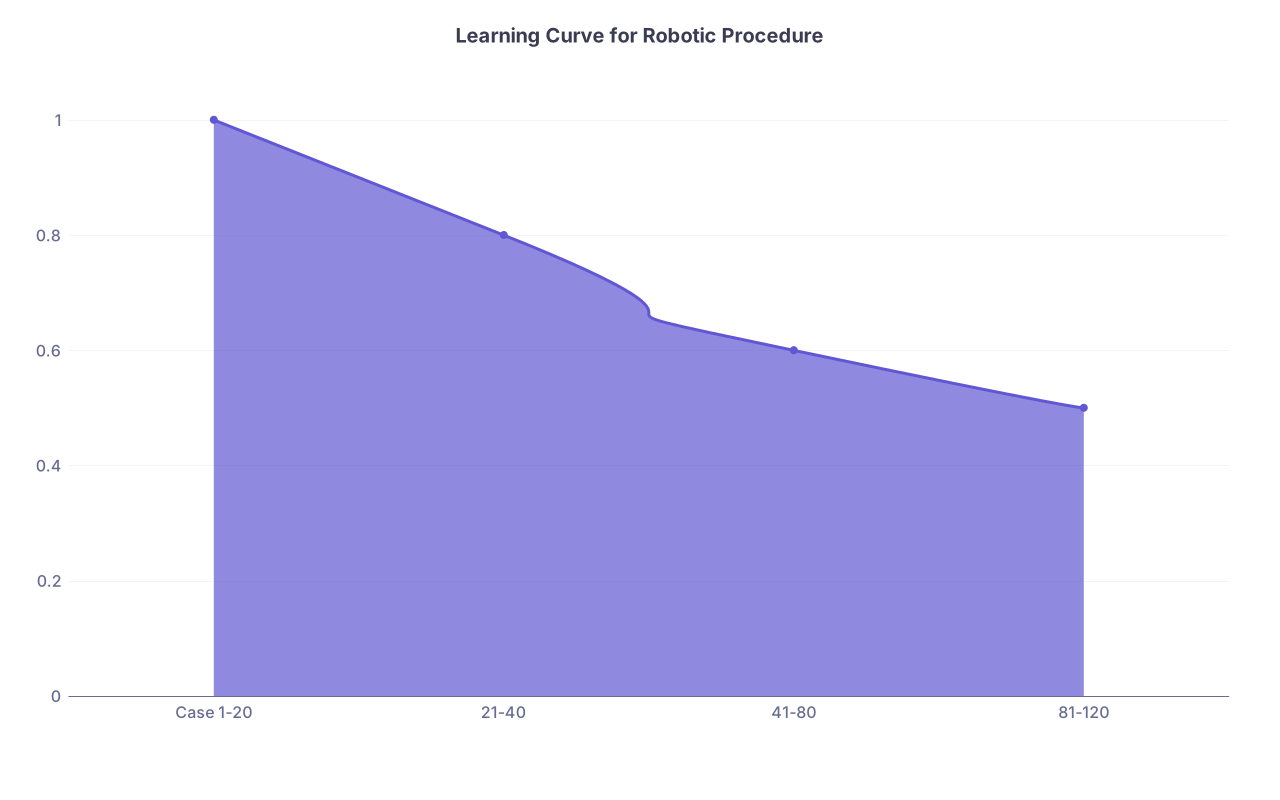
| Category | Value |
|---|---|
| Case 1-20 | 1 |
| 21-40 | 0.8 |
| 41-80 | 0.6 |
| 81-120 | 0.5 |
(In that chart, 1.0 is baseline complication rate; you only start getting real gains after dozens of cases.)
But here’s the ethical twist: patients are seldom told “You’re my 7th robotic case.” They hear “We’ll use the robot” and assume that means enhanced safety and precision, not that they’re part of someone’s personal training curve.
If you care about informed consent, that should bother you.
Patient-Centered Outcomes vs Marketing Metrics
What matters to patients is not whether a robot touched their organs. They care about:
- Long-term function
- Oncologic control
- Pain
- Time to return to work
- Complication and reoperation rates
The literature, when it is honest and well-designed, shows:
- Modest but real benefits in some domains (e.g., less blood loss, slightly shorter stay).
- Often little or no difference in long-term functional outcomes.
- No consistent malignant superiority in cancer control purely from robotics vs laparoscopy or open surgery.
Yet the public message is often binary: “robotic is better.” That’s lazy, and it’s wrong.
Training, Skill, and the Future Surgeon’s Dilemma
Here’s what medical students and residents keep asking: “Do I need to become a robotic surgeon to be relevant?”
Wrong question.
The right question is: “How do I become an excellent surgeon who can select and execute the right approach for each patient?”
Robotics is a tool. A powerful one, yes, but still just a tool. If you:
- cannot handle open conversions
- have weak fundamentals in anatomy and tissue handling
- only know how to operate through a console
…then you’re not a versatile surgeon. You’re a technician tied to a proprietary platform.

| Step | Description |
|---|---|
| Step 1 | Evaluate Patient |
| Step 2 | High volume center |
| Step 3 | Standard approach |
| Step 4 | Consider robotic or lap |
| Step 5 | Open surgery |
| Step 6 | Lap or vaginal first |
| Step 7 | Check surgeon volume and skill |
| Step 8 | Oncologic or Anatomic Complexity |
| Step 9 | Minimally invasive feasible |
As a trainee, you should absolutely get exposure to robotics. You should also get comfortable asking blunt questions:
- “What specific advantage does the robot give us in this case?”
- “What is our complication rate for this procedure by approach?”
- “How many of these have we done robotically vs open vs laparoscopic?”
If an attending cannot answer that without hand-waving, that tells you something.
Ethics: Selling a Brand vs Serving a Patient
Robotic surgery lives at the intersection of innovation, ego, and economics. That’s a dangerous place.
There are several ethical fault lines:
Informed consent
Are patients told that long-term outcomes may be similar to cheaper, conventional approaches? Or are they hearing “less invasive, faster recovery” without nuance?Conflict of interest
Do surgeons receive perks (training junkets, speaking gigs, institutional pressure) that bias them toward robotics? Many do. Even subtle incentives change behavior.Resource allocation
In systems with finite budgets, pouring millions into robots and disposable instruments means those resources aren’t going to nursing ratios, ICU beds, or primary care. Are we sure that’s the best trade for population health?Equity
Robotics tends to concentrate at large, wealthy centers serving insured populations. Meanwhile, safety-net hospitals struggle to maintain basic infrastructure. The tech gap widens.
This is not an argument to kill robotic surgery. It’s an argument to stop pretending that “more robot” automatically means “more ethical” or “more advanced” care.

Where Robots Probably Do Help (And Where They Really Don’t)
Nuance time. There are areas where robotics is genuinely promising, and others where it’s mostly theater.
Robotics tends to make the most sense when:
- the anatomy is deep, narrow, and hard to access (e.g., pelvis, mediastinum)
- fine wristed movement and 3D visualization clearly outperform straight-stick laparoscopy
- the center has high volume and proven outcomes
- you’re comparing against old-school large incisions, not modern minimally invasive techniques
It makes far less sense when:
- conventional laparoscopy already works extremely well (basic cholecystectomy, simple hernia, straightforward benign hysterectomy)
- the only major difference is cost and OR time
- the surgeon’s robotic case volume is low and they’re still on the steep part of the learning curve
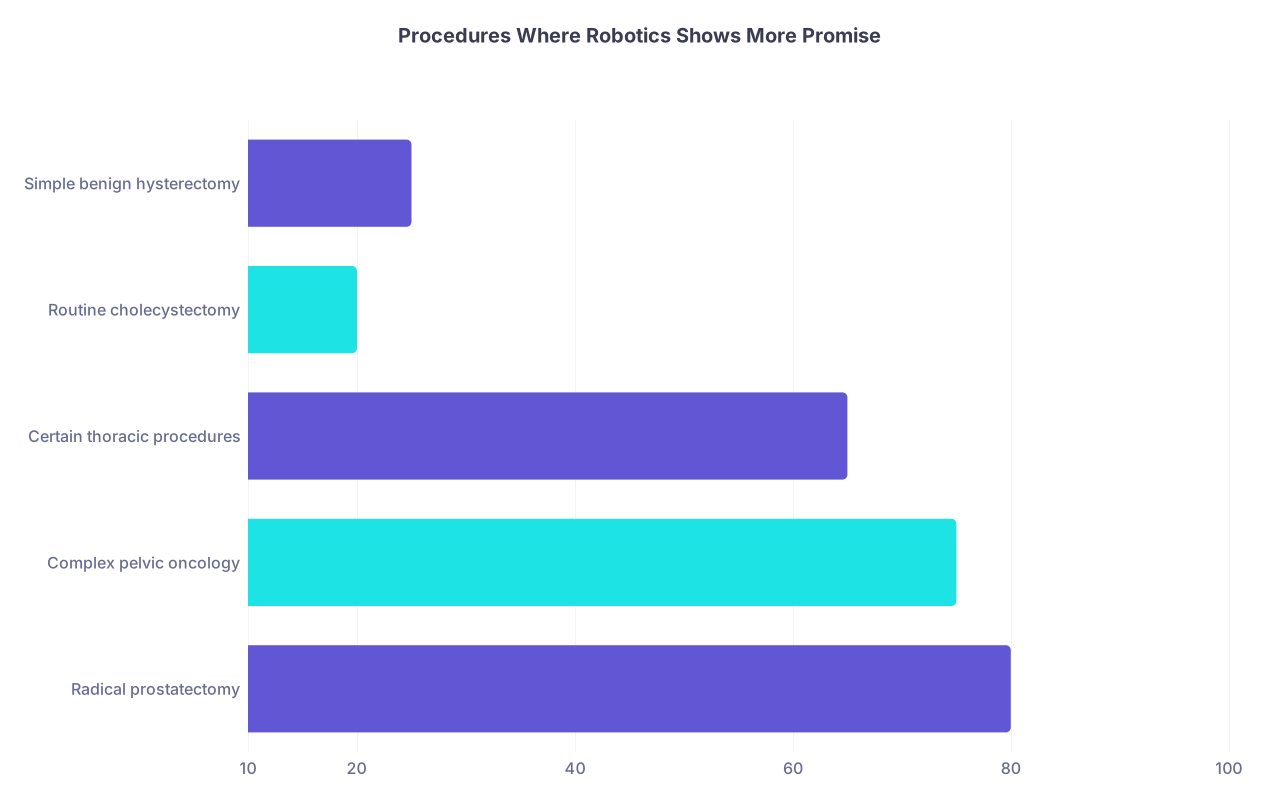
| Category | Value |
|---|---|
| Radical prostatectomy | 80 |
| Complex pelvic oncology | 75 |
| Certain thoracic procedures | 65 |
| Routine cholecystectomy | 20 |
| Simple benign hysterectomy | 25 |
(Think of those numbers as “relative justification strength,” not formal effect sizes.)
So, What Should an Ethical, Evidence-Minded Physician Do?
A few principles that actually hold up:
- Treat “robotic vs not” as a clinical choice, not a branding decision.
- Anchor your recommendation on procedure-specific data, not institutional marketing.
- Be honest about your own experience and learning curve when it matters for risk.
- Explain trade-offs to patients in plain language: cost, recovery, uncertainty in long-term differences.
- Keep your identity tied to judgment and skill, not to a specific device or vendor.
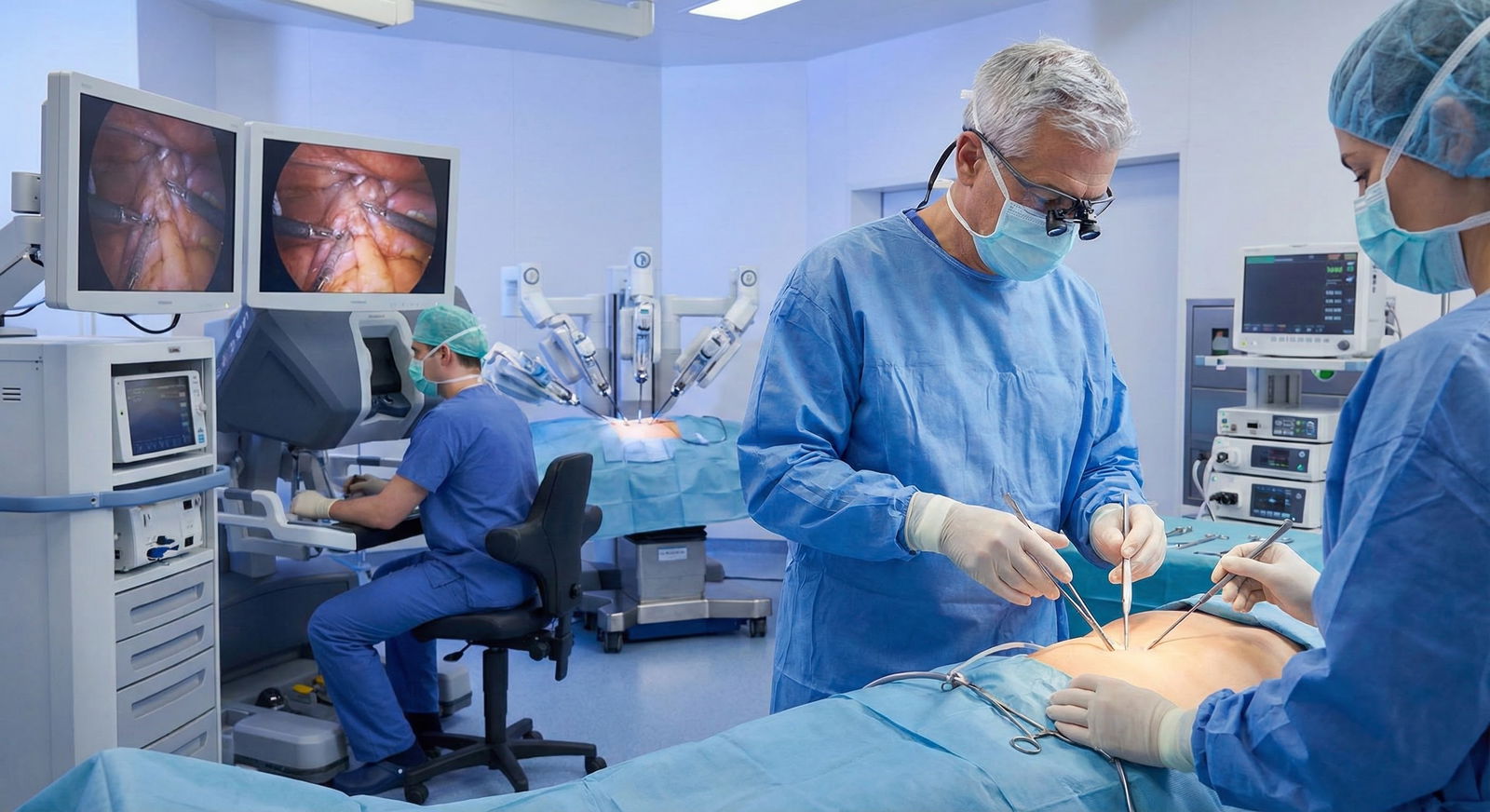
If you remember nothing else, remember this: the robot is not the hero of the story. The patient is. The surgeon is. The judgment is.
The machine is just gear.