
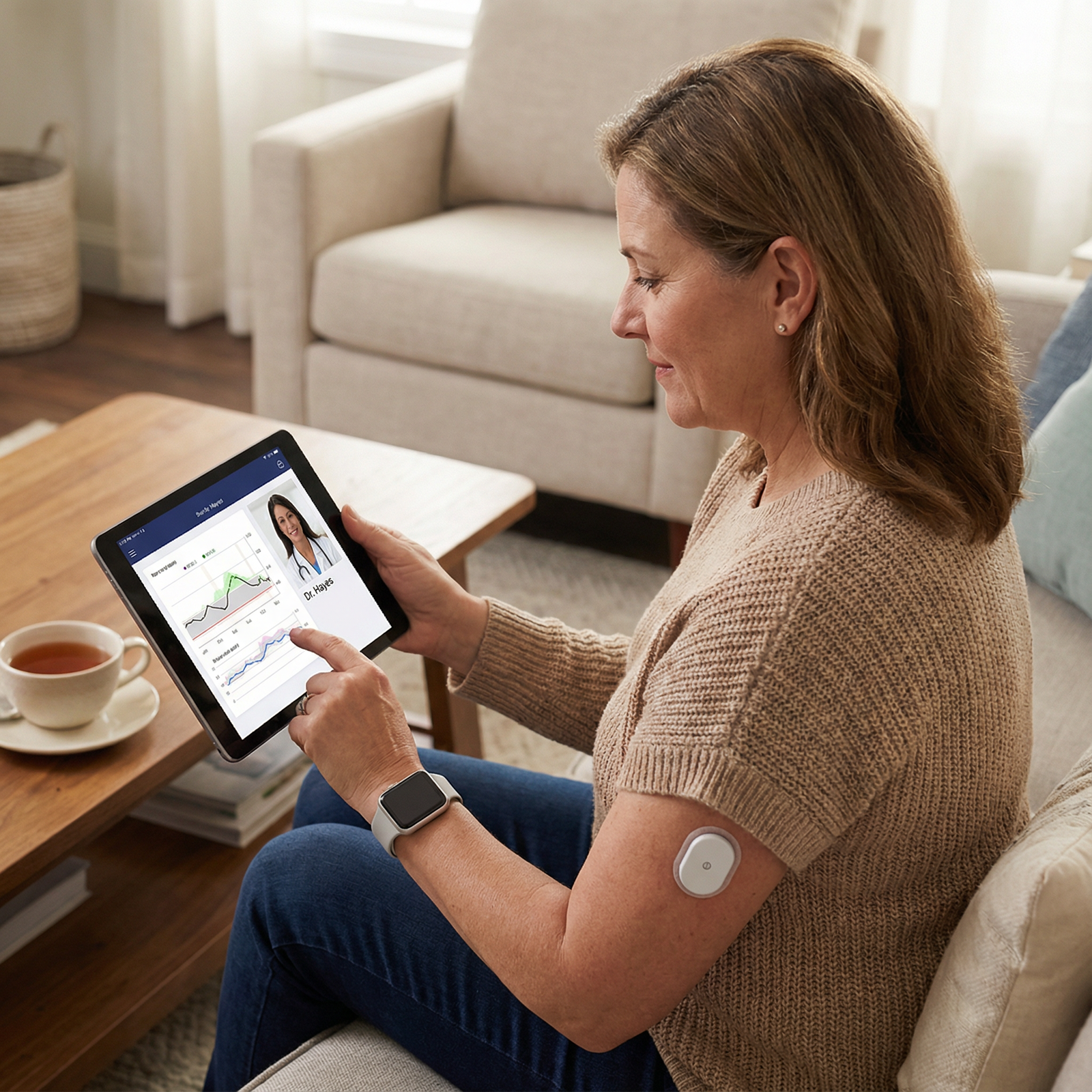
The blunt truth: it’s not “safe” or “unsafe” to rely on wearable data for arrhythmia management — it’s safe only when you know exactly what wearables can and cannot do, and you practice with that discipline every time.
Most people get this wrong in both directions. Some clinicians dismiss wearables completely (“It’s just a watch”), and they miss diagnoses. Others treat wearable alerts like gospel and end up chasing noise, overtesting, and scaring patients. Both extremes are bad medicine.
Let’s walk through what’s actually reasonable, where the data are strong, where they’re weak, and what this means for your clinical decisions and your ethics.
1. What Wearables Are Actually Good At (And Where They Fail)
Start with the core: wearables are screening tools, not diagnostic tools — with a few narrow exceptions.
Strengths
Most major devices (Apple Watch, Fitbit, Garmin, KardiaMobile, etc.) do a few things well:
- Detect irregular pulse patterns that might be atrial fibrillation (AF)
- Track sustained heart rate trends (resting HR, exertional HR)
- Capture short single‑lead ECG strips on demand (for some devices)
- Provide continuous or semi‑continuous rhythm flags over long periods
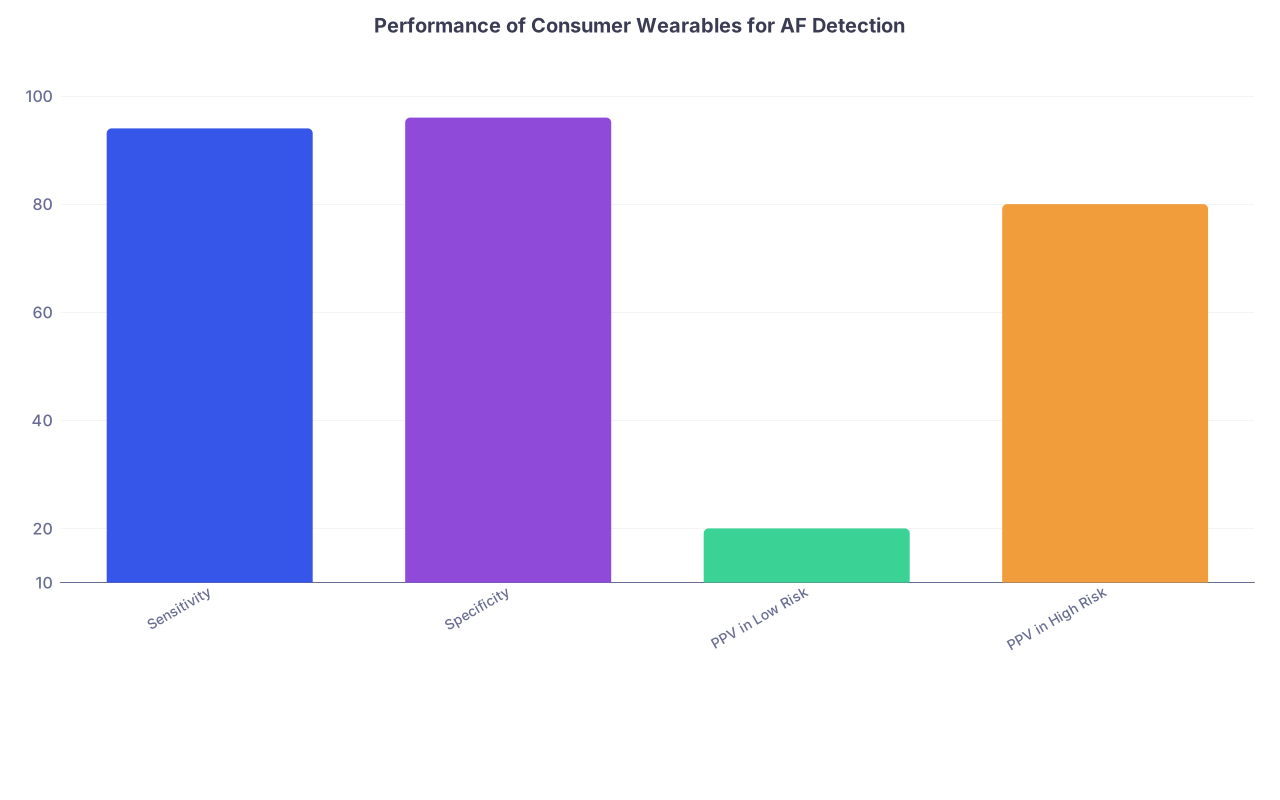
Here’s what the better data show, particularly for AF:
| Category | Value |
|---|---|
| Sensitivity | 94 |
| Specificity | 96 |
| PPV in Low Risk | 20 |
| PPV in High Risk | 80 |
Interpretation (rough, literature-based examples; numbers vary by study):
- Sensitivity ~90–98% for AF when the device actually analyzes rhythm
- Specificity ~90–99% in many validation studies
- Positive predictive value (PPV) tanks in low-risk, young, low-prevalence populations
- PPV improves in older, higher-risk populations where baseline AF prevalence is higher
So: wearables are pretty good at saying “this rhythm looks like AF” in a population where AF is actually common. In healthy 28-year-olds? They generate a lot of false positives.
Core limitations
Where they fail — and this is what gets people in trouble:
- They miss short, intermittent arrhythmias (limited sampling or motion artifact)
- They often can’t classify more complex arrhythmias (atrial flutter with variable block, SVT subtypes, VT vs SVT with aberrancy)
- PPG-based devices (optical sensors) infer rhythm from pulse, not direct electrical activity
- Detection algorithms are proprietary black boxes
- They’re not validated for:
- Risk stratification for sudden cardiac death
- Deciding on ablation vs. no ablation
- Stopping anticoagulation based on “no AF detected”
So no, you don’t “rule out AF” or “rule out VT” because the watch didn’t alert. And you definitely don’t clear someone from anticoagulation because their wearable has been “quiet for a year.”
2. When Is It Reasonable to Rely on Wearable Data?
Key phrase: rely for what decision? The answer changes depending on the decision you’re making.

Here’s a practical framework.
Reasonable uses (green zone)
You can largely trust and operationalize wearable data for:
Symptom–rhythm correlation prompts
“I get palpitations twice a week” plus watch tracings showing narrow complex tachycardia ~170 bpm at those times?
Reasonable to say: there’s probably a paroxysmal SVT here → refer to cardiology, consider longer-term monitoring or EP evaluation.AF screening / early flagging in at‑risk populations
- Age >65, hypertension, OSA, structural heart disease: an AF flag on the watch is worth real attention.
- You can use this as a triage tool: move up formal ECG, 24–48h Holter, patch monitor, or longer-term recorder.
Monitoring AF burden after diagnosis (with guardrails)
- For a patient already known to have AF, watch data can:
- Help estimate frequency of episodes
- Provide patient feedback after ablation or new meds
- As long as you document clearly: this isn’t a validated replacement for medical-grade monitoring. It’s supportive, not decisive.
- For a patient already known to have AF, watch data can:
Heart rate response patterns
- Inappropriate sinus tachycardia, POTS, deconditioning
- Guiding exercise prescriptions in lower-risk patients
- Rough assessment of rate control in stable AF (“Most days my resting HR is still 100–110 on the watch” → adjust meds, but confirm with proper vitals)
Cautious or limited uses (yellow zone)
Here, wearable data is a hint, not a verdict:
Guiding therapy intensity in AF
“The watch shows less AF, so we’re probably doing better.” Fine as a general statement, but you don’t escalate or deescalate anticoagulation based purely on that number.Evaluating palpitations in low‑risk young adults
Tons of false positives. Useful if they can capture ECG during symptoms, but you can’t just chase every irregular pulse notification with full EP workups.Follow-up in known benign ectopy
PVCs or PACs in structurally normal hearts — wearables can help reassure symmetry between symptoms and events, but you still need to anchor decisions in baseline imaging and earlier monitoring.
Never appropriate to rely on (red zone)
If you do these, you’re asking for trouble:
- Stopping anticoagulation in high‑risk AF based solely on “no AF seen” on a wearable
- Overriding a 12‑lead ECG, patch, or Holter interpretation because “the watch says something else”
- Ignoring red flag symptoms (syncope, chest pain, presyncope) because the watch “looked normal”
- Using wearable PVC/SVT/AF counts as the only reason for invasive EP procedures
- Declaring someone “arrhythmia-free” for high-stakes clearance (e.g., pilot, commercial driver) without medical‑grade monitoring
3. Safety, Risk, and Over‑Reliance: What Can Go Wrong?
Let’s be concrete. I’ve seen all of these in some form.
Scenario 1: Syncope, “normal” watch
Patient passes out while standing in line, falls, hits head. Tells ED: “My watch didn’t show anything; HR looked normal.”
Wrong response: “Watch was normal, so this is probably just vasovagal, go home.”
Correct response: treat like any syncope with injury and unclear cause. ECG. Orthostatics. Maybe telemetry, echo, further workup depending on story.
Ethical twist: Offloading your diagnostic responsibility onto a consumer device is lazy and unsafe. The watch is an adjunct, not your scapegoat.
Scenario 2: AF, anticoagulation, “no episodes lately”
Elderly patient with CHA₂DS₂‑VASc of 4, clear prior AF, asks: “My Apple Watch hasn’t shown AF for 8 months — can we stop blood thinners?”
If you say yes because the watch is quiet, you’re outside current evidence. Stroke risk is based on risk profile, not recent AF “burden” from a wearable. There are trials working on this, but they’re not ready for prime time as standard of care.
Scenario 3: Young anxious patient and false positives
28‑year‑old, no structural heart disease, repeatedly alarmed by irregular rhythm notifications. Every time: ED visit, ECG normal or benign PACs. Anxiety through the roof. Bank account drained.
Here the harm is overdiagnosis, medicalization, and financial toxicity — all based on false positives in a low‑prevalence population. You need to step in and set strict thresholds for when to act on alerts and when not to.
4. Ethical Responsibilities: You, the Patient, and the Data
This is where “personal development and medical ethics” actually hits the ground.

Your duties as a clinician
Three big ethical pillars here:
Beneficence and non‑maleficence
- Use wearables when they allow earlier detection and better monitoring.
- Don’t let unvalidated data push you into overtreatment, overtesting, or delayed care.
Respect for patient autonomy — with real informed consent
- Patients now walk in with data. Lots of it. Your job isn’t to shrug or sneer.
- You explain:
- What the device is validated for
- What decisions you won’t base on it
- What thresholds will trigger action or further testing
That’s autonomy with context, not “do whatever the watch says.”
Justice and resource stewardship
You can’t order Holters, echoes, and EP consults for every minor blip generated by a smartwatch in a 24‑year‑old. You also can’t ignore high-risk alerts in vulnerable groups.
Triaging based on risk, symptoms, and patterns is both medically sound and ethically obligatory.
5. A Simple Decision Framework for Wearable Arrhythmia Data
Here’s a lightweight structure to use in clinic. Five questions.

| Step | Description |
|---|---|
| Step 1 | Wearable alert or rhythm concern |
| Step 2 | Urgent evaluation and ECG |
| Step 3 | Formal monitoring and cardiology referral |
| Step 4 | Compare with 12 lead or Holter |
| Step 5 | Educate, set alert thresholds, follow up |
| Step 6 | Decide on meds or further testing |
| Step 7 | Red flag symptoms? |
| Step 8 | High stroke or cardiac risk? |
| Step 9 | Documented wearable ECG of arrhythmia? |
Ask yourself:
What’s the patient’s risk profile?
Age, CHA₂DS₂‑VASc, structural disease, prior arrhythmia.What are the symptoms?
- Red flags: syncope, near‑syncope, chest pain, severe dyspnea → treat like high‑risk regardless of wearable.
- Mild palpitations without risk factors → much lower threshold for conservative approach.
What exactly does the wearable show?
- Just HR spikes? Or actual ECG tracings?
- Labeled “possible AF”? Or just “irregular rhythm”?
- How often? How long?
Do I have any corroborating medical‑grade data?
- ECG done? Holter/patch? Echo?
- Wearable should push you toward appropriate monitoring, not substitute for it.
What’s the consequence of being wrong if I believe the device?
- If consequence is “unnecessary patch monitor” — tolerable.
- If consequence is “stopping anticoagulation in CHA₂DS₂‑VASc 5” — absolutely not.
6. Comparing Common Tools: Wearable vs Clinical Monitors
| Tool | Duration | Typical Use | Strength | Major Limitation |
|---|---|---|---|---|
| 12-lead ECG | Seconds | Baseline diagnosis | High detail | Snapshot only |
| Holter (24–48h) | 1–2 days | Frequent symptoms | Continuous | May miss rare events |
| Patch monitor | 7–14 days | Intermittent arrhythmia | Comfort + duration | Cost, artifact |
| Implantable loop | Months–years | Rare, high-risk events | Long-term capture | Invasive, cost |
| Consumer wearable | Months–years | Screening, triage | Ubiquitous, easy | Limited validation, noise |
Wearables aren’t competing with these. They’re the front door that tells you which of these to use and when.
7. How to Talk to Patients About Their Wearables (Without Being a Jerk)
This is where a lot of otherwise good clinicians mess up. They either:
- Roll their eyes at the watch and dismiss it
- Or obey the watch reflexively to avoid conflict
Both undermine trust.
Here’s a cleaner approach:
Acknowledge the tool
“Your watch can be helpful for spotting patterns, especially AF. Let’s look at what it’s showing.”Clarify its role
“It’s good for raising suspicion, but it doesn’t replace our ECG or longer-term monitors. We’ll use it as one piece of the puzzle, not the whole thing.”Set explicit rules
- “If you get an alert plus dizziness, chest pain, or fainting, you go to urgent care/ED.”
- “If you see occasional irregular heartbeat but no symptoms, take a recording and bring it to your next visit — no need for ER.”
- “We’re not going to change your blood thinner solely based on what the watch shows.”
Address anxiety head‑on
“These devices generate more alerts than actual dangerous rhythms. We’re going to focus on patterns and risks, not every single blip.”
8. For Trainees: Building Your Own Personal Standard
If you’re a med student, resident, or early cardiology fellow, you need a personal practice philosophy about wearables, because attendings themselves are all over the map.
Set three non‑negotiables:
I will never use a wearable result to downgrade a high‑risk situation.
(Syncope, stroke risk, chest pain, high‑risk history.)I will use wearable data aggressively to upgrade evaluation when it fits the clinical story.
(Older patient, AF alert, palpitations → expedite real monitoring.)I will always explain to patients what I’m doing with their data and why.
If you’re making a big decision, you say explicitly:
“We’re basing this on your ECG/echo/labs, not just what your watch shows.”
That’s you practicing both safer medicine and better ethics.
9. So, Is It Safe to Rely on Wearable Data in Arrhythmia Management?
Here’s the clean answer:
- It’s safe to rely on wearables as an early warning system and a symptom–rhythm capture tool, especially for AF in higher-risk patients.
- It’s unsafe to rely on them as the sole basis for high‑stakes decisions — stroke prevention, syncope clearance, invasive procedures, or clearance for high‑risk occupations.
- Ethically, you’re responsible for:
- Knowing what your patient’s device can actually do
- Using it to improve care, not replace your judgment
- Being honest with patients about uncertainty and limitations
Wearables are here. They’re not going away. Your job is to be smarter than the algorithm — and more honest than the marketing.
FAQ: Wearables and Arrhythmia Management
1. Can I diagnose atrial fibrillation based on an Apple Watch or similar device alone?
You can suspect AF and use that suspicion to trigger proper testing, but you shouldn’t label a patient with a formal AF diagnosis without at least one medical‑grade tracing (12‑lead ECG, or a clinician‑reviewed rhythm strip from a validated source). For charts, you document: “wearable‑detected irregular rhythm, suspicious for AF — confirm with ECG/Holter/patch.”
2. Is it ever appropriate to stop anticoagulation because a wearable shows no AF for months?
Not with current evidence for most patients. Stroke risk in AF is primarily driven by the CHA₂DS₂‑VASc score, not just recent AF burden on a wearable. There are ongoing trials looking at AF burden‑guided anticoagulation, but this is not standard of care and shouldn’t be done casually in clinic. If you’re considering it at all, it should be in a highly selected context, usually with specialist input and ideally medical‑grade long‑term monitoring.
3. Are wearables useful for patients with palpitations but low cardiovascular risk?
They can be, but they also generate a lot of noise. For a healthy, low‑risk 25‑year‑old with benign palpitations, a wearable might help capture an on‑demand ECG during symptoms. But you need to set rules: don’t chase every irregular rhythm alert with ER visits. Consider a one‑time workup (ECG ± Holter) to rule out big problems, then pivot to reassurance and education if everything looks benign.
4. How do I handle a patient constantly anxious about watch alerts?
You treat the anxiety as part of the clinical problem. Explain the false positive issue, set specific criteria for when to seek care, and sometimes suggest turning off certain types of alerts. If it’s dominating their life, discuss this explicitly: “This device is causing you more harm than good right now. Let’s adjust how you use it.” Document that counseling. If anxiety is severe, consider involving primary care or mental health.
5. Are single‑lead ECG devices (like KardiaMobile) more reliable than optical watch sensors?
For rhythm characterization, yes. Single‑lead ECGs record actual electrical activity, whereas PPG watches infer rhythm from pulse waveforms. A clean single‑lead strip interpreted by a clinician is much more informative than a generic “irregular rhythm” from an optical sensor. But again, they’re adjuncts; for complex rhythms you still want full 12‑lead ECG and sometimes longer‑term monitors.
6. What’s one practical rule to apply immediately in clinic with wearable data?
Use this: “Wearables can escalate care, but they can’t downgrade it.” If a wearable raises suspicion for AF or abnormal tachycardia in a patient whose story fits, escalate to proper monitoring and evaluation. But never dismiss serious symptoms, high stroke risk, or abnormal ECG findings just because the wearable “looked okay” or “has been quiet lately.”
Open your last clinic note (or your upcoming patient list) and flag one patient with a wearable. Before you see them next, write down — in one sentence — what you will and will not use their device data for. That single line will force you to practice deliberately instead of defaulting to whatever the watch says.


