

You land Sunday night. Jet-lagged, carrying a duffel full of supplies, and a head full of “I want to help” plus a vague schedule someone emailed two weeks ago.
This is your mission week.
Here is how to structure it. Day by day, hour by hour, so you actually contribute something useful, do not burn out, and do not trample ethics in the name of “service.”
Big Picture: The Week At a Glance
Before we drill into each day, you need a mental map. A good mission week abroad is not seven identical clinic days. It has phases.
- Day 0–1: Arrival + Orientation
- Day 2–4: Core clinical days
- Day 5: Consolidation + handover
- Day 6: Debrief + departure
Here is the rough time allocation that tends to work best over the week:
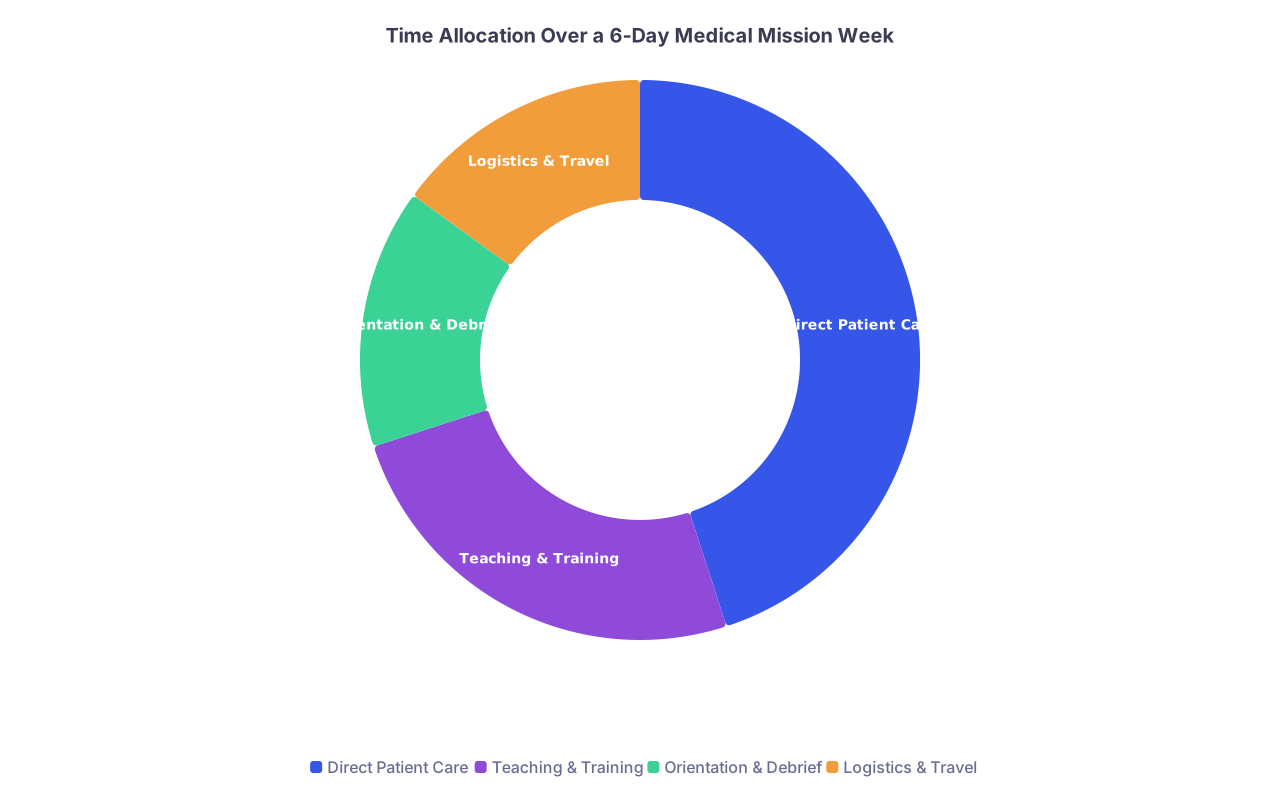
| Category | Value |
|---|---|
| Direct Patient Care | 45 |
| Teaching & Training | 25 |
| Orientation & Debrief | 15 |
| Logistics & Travel | 15 |
If your schedule is wall‑to‑wall “seeing as many patients as possible,” it is badly designed. At that point you are running a pop‑up clinic, not building anything sustainable.
Day 0–1: Arrival, Context, and Guardrails
You are tired, excited, and tempted to start “helping” immediately. Slow down. At this point you should be getting oriented, not treating.
First 12–18 hours: Land → Listen → Learn
Your priorities:
Understand the ecosystem
- Who are the local partners? Ministry of Health, NGO clinic, church, university?
- What services already exist? (Primary care only? HIV clinic next door? District hospital 20 km away?)
- What is your scope? Be very clear whether you are:
- Observer
- Assistant under direct supervision
- Fully licensed, independent clinician in that country
Review safety and escalation plans
- Where is the nearest hospital capable of:
- C‑section
- Blood transfusion
- Basic surgery
- Who decides when to transfer?
- How will you transport? (Ambulance that never comes, or actual functioning system?)
- Where is the nearest hospital capable of:
Clarify ethical boundaries early
- No procedures you are not trained for. New country ≠ new scope of practice.
- No prescribing of meds you do not understand in that context (e.g., giving 30 days of antihypertensives with no follow‑up plan is not “care,” it is a problem deferred).
At this stage, you should be in a structured orientation session with local staff, not wandering the wards trying to be helpful.
Day 1 Evening: Plan the Week with the Local Team
Before your first full clinical day, sit down and design the week. Not on your own. With the people who will still be here after you leave.

| Step | Description |
|---|---|
| Step 1 | Meet Local Lead |
| Step 2 | Review Needs |
| Step 3 | Define Roles |
| Step 4 | Set Daily Schedule |
| Step 5 | Agree Handover Plan |
By the end of this meeting, you should have:
- Daily start/stop times
- Clear role for each team member (you, local clinicians, translators, students)
- Triage system for clinic or ward
- A defined plan for:
- Follow‑up of chronic patients
- Management of labs/imaging that return after you leave
- Referral of complex cases
If the week can’t be written on one page, it is too complicated.
Day 2: First Full Clinical Day – Slow and Deliberate
It is tempting to “see as many patients as possible” on day one. That is how people make mistakes and miss context.
At this point you should prioritize learning the system over speed.
Morning (7:30–12:00) – Shadow, then share
First hour: Observe only
- Sit with a local clinician and watch 3–5 typical encounters.
- Pay attention to:
- What patients expect (time, testing, meds)
- What the “standard” work‑up looks like with limited resources
- How bad news is delivered locally
Later morning: Shared visits
- You see patients with a local clinician in the room.
- They lead on cultural decisions; you can add:
- Differential diagnosis
- Point‑of‑care skills (focused lung exam, basic ultrasound if you are truly competent)
- Ask before changing anything in established treatment patterns.
Afternoon (13:00–16:30) – Short, focused clinic blocks
Structure your time in 90‑minute blocks:
- Block 1: General clinic / ward rounds with local lead
- Block 2: Teaching micro‑session with local staff or students (20–30 minutes) on a requested topic:
- e.g., “Approach to chest pain without troponins”
- Keep it practical, context‑adapted.
- Block 3: One more shared clinical block
Do not chase volume. On day 2, if you are doing more than ~60–70% of your usual patient throughput at home, you are rushing.
Day 3: Settling In – Build a Daily Structure
Day 3 is where good teams separate from chaotic ones. By now you should know names, workflow, and recurring problems.
Your clinical day should follow a consistent backbone:
| Time | Focus |
|---|---|
| 07:30–08:00 | Handover + plan |
| 08:00–10:00 | High-acuity / complex patients |
| 10:00–10:15 | Break + brief debrief |
| 10:15–12:00 | Routine clinic / ward rounds |
| 12:00–13:00 | Lunch + case discussion |
| 13:00–14:30 | Teaching or skills session |
| 14:30–16:30 | Follow-ups, documentation, admin |
Morning: High‑impact work first
At this point you should:
- Identify high‑yield patients
- Pregnant women with red flag symptoms
- Children with respiratory distress, malnutrition, febrile infants
- Uncontrolled chronic disease (BP > 180/110, A1c wildly high, etc.)
- Tackle these early, when your brain is sharp and resources (transport, labs, senior staff) are available.
Ethics check here: do not create a second‑tier system where “mission doctors” see “interesting” or “foreign‑worthy” cases, and local clinicians see everyone else. Rotate roles intentionally.
Midday: Teaching anchored to real cases
You are not there to give a conference talk. Use patients you just saw.
Example 30‑minute structure:
- 5 min: Case summary by local clinician
- 15 min: Focused discussion on 1–2 decision points (e.g., “When do we escalate to hospital for pneumonia here?”)
- 10 min: Q&A, adapt proposed guideline to local constraints
Record the agreed‑upon approach in a one‑page handout or whiteboard photo. Leave it with them.
Afternoon: Documentation and continuity
By day 3, you should start seeing the future:
- Who will need follow‑up after you leave?
- Which meds are you initiating that require monitoring?
- Which chronic patients have no realistic long‑term plan?
Create a running “continuity list”:
- Patient name / ID
- Diagnosis
- What you started/changed
- Who on the local team owns the follow‑up
This list becomes crucial on day 5.
Day 4: Peak Productivity with Guardrails
This is your most efficient clinical day. You know the system. You are less jet‑lagged. You are still not exhausted.
It is also the day where ethical corners start to get cut because “we are leaving soon” and everyone pushes for volume. Do not fall for that.
Morning: Structured Triage and Role Clarity
By day 4, clinic intake should be organized, not random. At this point you should have:
- Clear triage levels, for example:
- Red: Immediate / send to hospital
- Orange: Same‑day doctor visit
- Yellow: Nurse‑managed with doctor oversight
- Green: Education, refills, non‑urgent issues
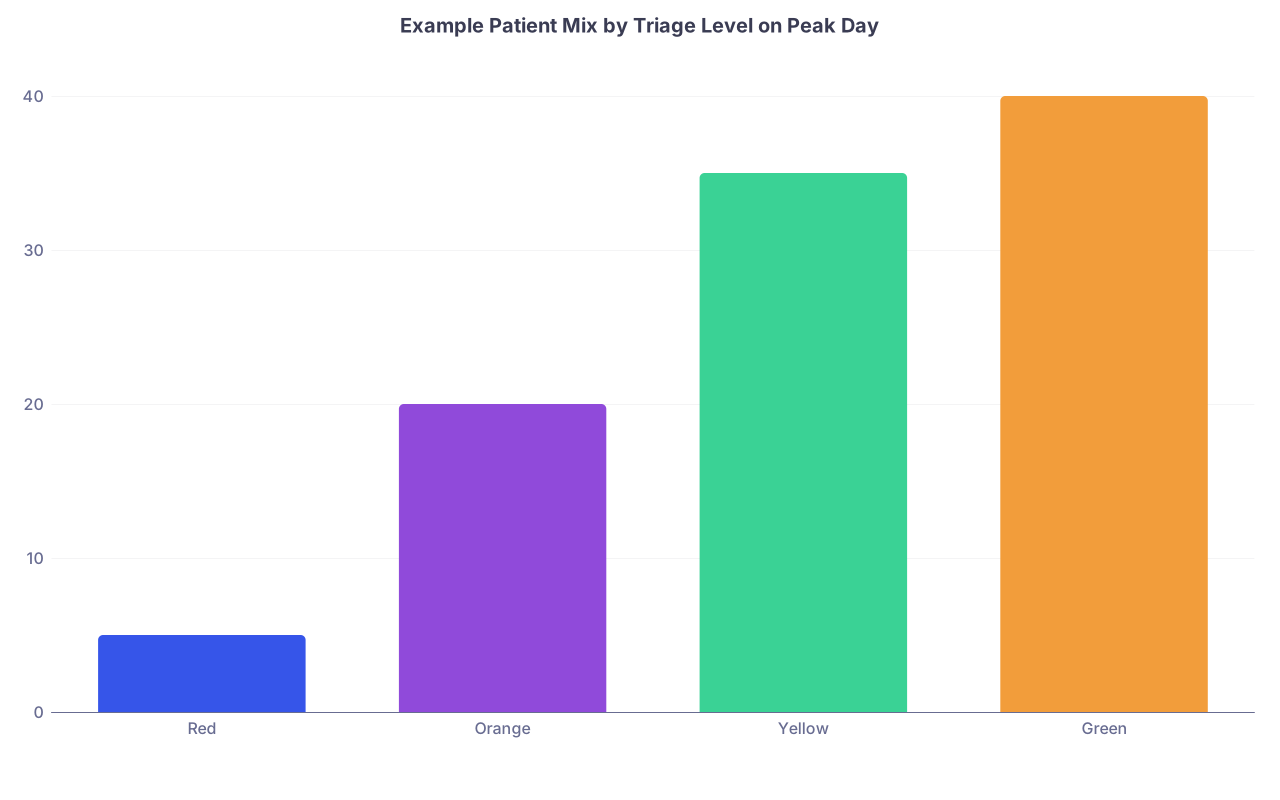
| Category | Value |
|---|---|
| Red | 5 |
| Orange | 20 |
| Yellow | 35 |
| Green | 40 |
You are most useful handling:
- Complex orange cases
- Supporting nurses with yellow cases
- Missed diagnoses in chronic green patients
Let local clinicians tell you where they want you. That is not optional; it is respect.
Midday: Skill Transfer, Not Heroics
Allocate a solid 60–90 minutes to hands‑on skill transfer, for example:
- Joint injection techniques with improvised equipment
- Focused ultrasound protocols that make sense with their devices
- Newborn resuscitation drills using what they actually have
If your team is just doing impressive procedures for people instead of teaching and practicing with them, that is mission tourism.
Late Afternoon: Reality Check Rounds
End day 4 with a short “reality check” round:
- Which of today’s patients will come back?
- Which of today’s plans rely on meds that might stock out in 2 weeks?
- Who did we treat differently than local practice, and why?
Invite a local clinician to challenge your decisions. This is where you correct course before your last full day.
Day 5: Consolidation, Handover, and Saying “No”
This is the day that separates ethical missions from chaos. It is very tempting to let the final full day become “open season” where everyone shows up, and you see 100 patients with no follow‑up. Do not.
At this point you should shift focus from new patients to consolidation.
Morning: Finish What You Started
Prioritize:
- Patients you saw earlier in the week who need short‑term reassessment
- Chronic patients whose regimens you changed
- Any unstable or borderline patients from previous days
Goal: reduce the number of “open loops” you leave behind. Every new patient you accept today is one more loop.
If your team insists on taking massive new volume on day 5, push back. Ethically, clearing follow‑up is higher priority than front‑loading new, unsustainable care.
Midday: Formal Handover
This should look like a mini‑M&M + sign‑out.

| Step | Description |
|---|---|
| Step 1 | Review Continuity List |
| Step 2 | Discuss Top Risk Patients |
| Step 3 | Agree Follow Up Plan |
| Step 4 | Document Next Steps |
| Step 5 | Share Contact if Appropriate |
Run through:
- Continuity list patients one by one:
- “Ms A – uncontrolled diabetes, we changed meds, follow‑up booked with Dr X in 2 weeks.”
- Cases that worried you, even if stable:
- “This child may decompensate; family lives far; plan if they do not return?”
- New protocols or changes you suggested:
- Make sure local clinicians genuinely agree, and they own these changes. If they do not, drop them.
Document somewhere that will actually be used:
- Clinic ledger
- Simple spreadsheet on a local computer
- Shared WhatsApp group run by them, not you
Afternoon: Debrief with Local Partners, Not Just Your Team
You need two separate debriefs:
With local clinicians/admin
- What helped this week?
- What was disruptive?
- What would they change if you return next year?
- Are there cases where you overstepped?
With your own team
- Ethical discomforts: procedures pushed on students, boundaries crossed, cultural conflicts
- Emotional load: child deaths, visible poverty, moral distress
- Concrete fixes for “next time,” not just venting
Do not rush this to squeeze in more clinic time. Reflection is part of the work.
Day 6: Exit, Accountability, and Processing
You might not have a full day before you fly out, but do not treat departure morning as dead time.
At this point you should be closing loops, not opening new ones.
Morning: Final Walkthrough and Micro‑Handovers
Spend an hour physically walking:
- The clinic / wards
- The pharmacy
- Any community partners (health posts, CHWs, etc.)
Micro‑handover examples:
- Clarify which prescriptions you wrote that break usual patterns (e.g., new insulin starts, unfamiliar antibiotics).
- Confirm that critical follow‑ups are actually scheduled, not just “noted.”
- Communicate where your documentation lives and how to interpret it.
Leave behind:
- A one‑page summary:
- Dates you were there
- Team roles
- What changed (protocols, new clinics, equipment used)
- Contact for the sending organization (not your personal WhatsApp as the main channel).
Travel Time: Personal Debrief, Not Just Sleep
On the plane or bus, do a structured self‑review. This is part of your development as an ethical clinician in global health.
Questions worth answering honestly:
- Where did I practice above my usual scope just because I was abroad?
- Where did I ignore my discomfort because “everyone else was fine with it”?
- Which moments felt most like genuine partnership rather than charity?
- What would I refuse to do next time, even if the team lead pushed for it?
Write it down. If you do not, you will repeat the same patterns on your next trip.
Within Each Day: The Micro‑Timeline That Keeps You Ethical
Regardless of which day it is, every mission‑clinic day abroad benefits from the same internal rhythm:
Start‑of‑day huddle (10–15 minutes)
- Review:
- Today’s constraints (short staff, missing meds, broken equipment)
- Patient flow plan and any outreach plans
- Safety issues (security, weather, transport)
- Review:
Midday checkpoint (5–10 minutes)
- Ask explicitly:
- Are we going too fast?
- Are we bypassing local clinicians in the name of efficiency?
- Any case today we are ethically uneasy about?
- Ask explicitly:
End‑of‑day mini‑debrief (15–20 minutes)
- One “win,” one “worry” from each person.
- Identify 1–2 specific changes for tomorrow. Not ten.
This daily micro‑timeline protects against the slow slide from “partnership” into “savior project.”
Daily Ethical Red Flags Checklist
Sprinkled through the week, certain patterns tell you your time is being structured badly. If you see these on any day, pause.
- You, as a visitor, are consistently doing procedures alone while local clinicians watch.
- Nobody can say clearly what will happen to the sickest patient you saw once you leave.
- Student or resident scope of practice is wildly expanded compared to home.
- Translators are improvising medical advice you did not give, because explanations are too rushed.
- There is no written record of what you changed in chronic disease management.
When one of these shows up, structure the next day to repair it:
- Add teaching blocks.
- Shrink clinic volume.
- Dedicate time to documentation and handover.
If the team lead resists all of that, you are not in a serious partnership. You are in a photo‑op.
Example: Putting It All Together in One Week
Here is how a moderately well‑run week might actually look in practice for a small internal medicine/peds team.
| Day | Morning Focus | Afternoon Focus |
|---|---|---|
| 1 | Orientation, shadowing | Shared clinic, context learning |
| 2 | High-acuity with supervision | Clinic + first teaching session |
| 3 | Structured triage clinic | Skills teaching + follow-ups |
| 4 | Complex cases, protocols | Skill transfer + debrief |
| 5 | Follow-ups, consolidation | Formal handover + partner review |
| 6 | Micro-handover, walk-through | Travel + personal reflection |
This is not glamorous. It is not 500 patients in five days. It is adult, ethical medicine.
Visual: Mission Week Timeline
One last snapshot for your head:
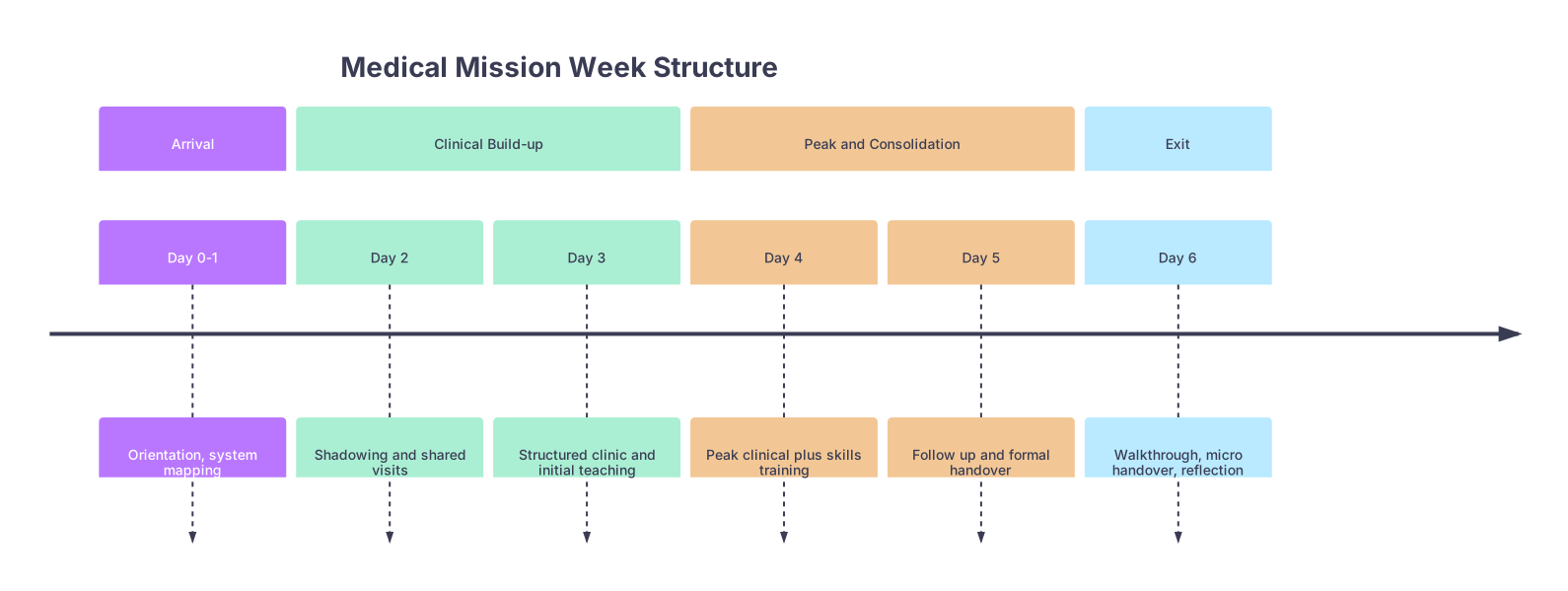
| Period | Event |
|---|---|
| Arrival - Day 0-1 | Orientation, system mapping |
| Clinical Build-up - Day 2 | Shadowing and shared visits |
| Clinical Build-up - Day 3 | Structured clinic and initial teaching |
| Peak and Consolidation - Day 4 | Peak clinical plus skills training |
| Peak and Consolidation - Day 5 | Follow up and formal handover |
| Exit - Day 6 | Walkthrough, micro handover, reflection |

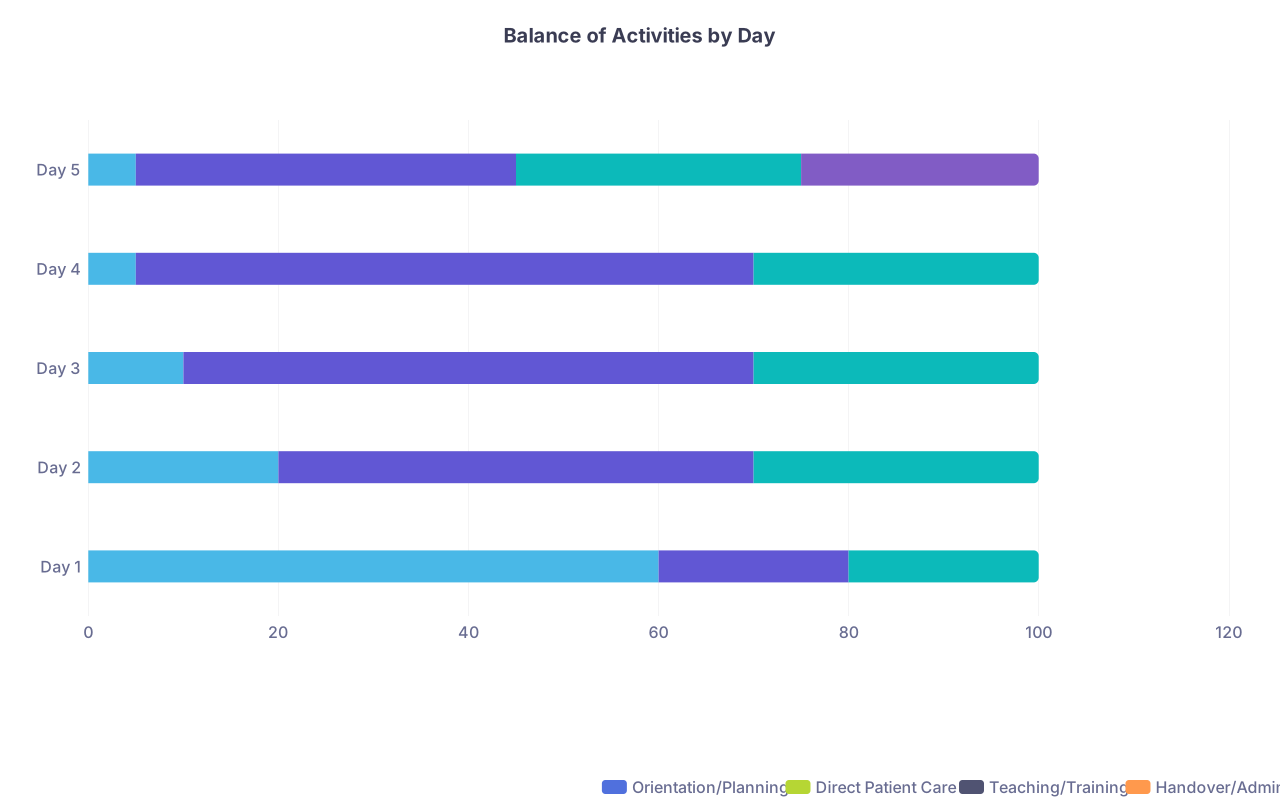
| Category | Orientation/Planning | Direct Patient Care | Teaching/Training | Handover/Admin |
|---|---|---|---|---|
| Day 1 | 60 | 20 | 20 | 0 |
| Day 2 | 20 | 50 | 30 | 0 |
| Day 3 | 10 | 60 | 30 | 0 |
| Day 4 | 5 | 65 | 30 | 0 |
| Day 5 | 5 | 40 | 30 | 25 |
Key Takeaways
- Structure each day with a clear backbone: morning high‑impact cases, midday teaching, afternoon consolidation and documentation.
- Treat days 4–5 as the ethical center of the week: prioritize skills transfer, follow‑up, and handover over raw patient volume.
- Build every schedule with local partners, not for them—your mission week should leave continuity, not chaos, behind you.


