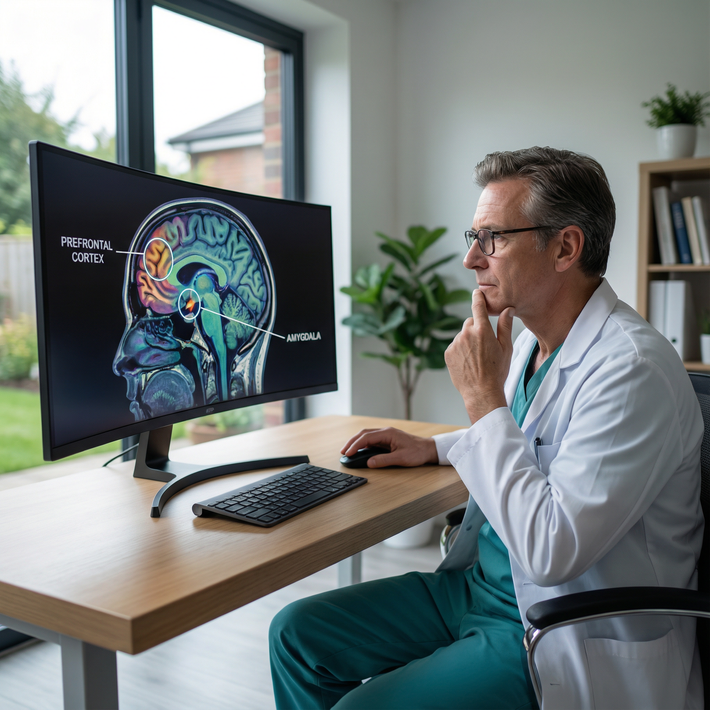
It’s 4:32 p.m. You’re post-call-stupid, half-running on bad coffee, sitting in a windowless conference room while your faculty evaluator stares at your milestone sheet. You’re waiting to hear the words: “You’re doing fine” or “We’re concerned.”
You keep thinking: I should have read more, I should have answered that pimp question, I should have been calmer when that family was yelling.
Here’s the part nobody spells out for you: what your faculty are actually watching in those moments, and what they talk about behind closed doors, is mindfulness. Not the app-on-your-phone, guided-breathing nonsense. The real, gritty version: awareness under stress, emotional self-regulation when the service is burning down, and honest reflection when you screw up.
Let me tell you how that really shows up in your evaluation meetings.
What Faculty Really Mean When They Say “Professionalism,” “Insight,” and “Maturity”
Most programs will not have a checkbox that says “Mindfulness.” They hide it under other words: professionalism, insight, self-awareness, receptivity to feedback, emotional intelligence, resilience. Those vague, annoying boxes? That’s where mindfulness lives.
Here’s what your attendings and CCC (Clinical Competency Committee) are actually asking when they score those domains:
- Does this person recognize their own limits in real time or only after a disaster?
- Do they escalate appropriately or stubbornly push through until something breaks?
- When they’re overwhelmed, do they get sloppy, defensive, or checked out?
- Can they talk about a bad outcome without blaming everyone else?
- Do they stay present with patients when they’re tired and annoyed?
We have to rate these behaviors somehow. We end up using “Professionalism” and “Practice-Based Learning and Improvement” as cover language. But what we’re grading is: are you mindful enough to be safe and to grow?
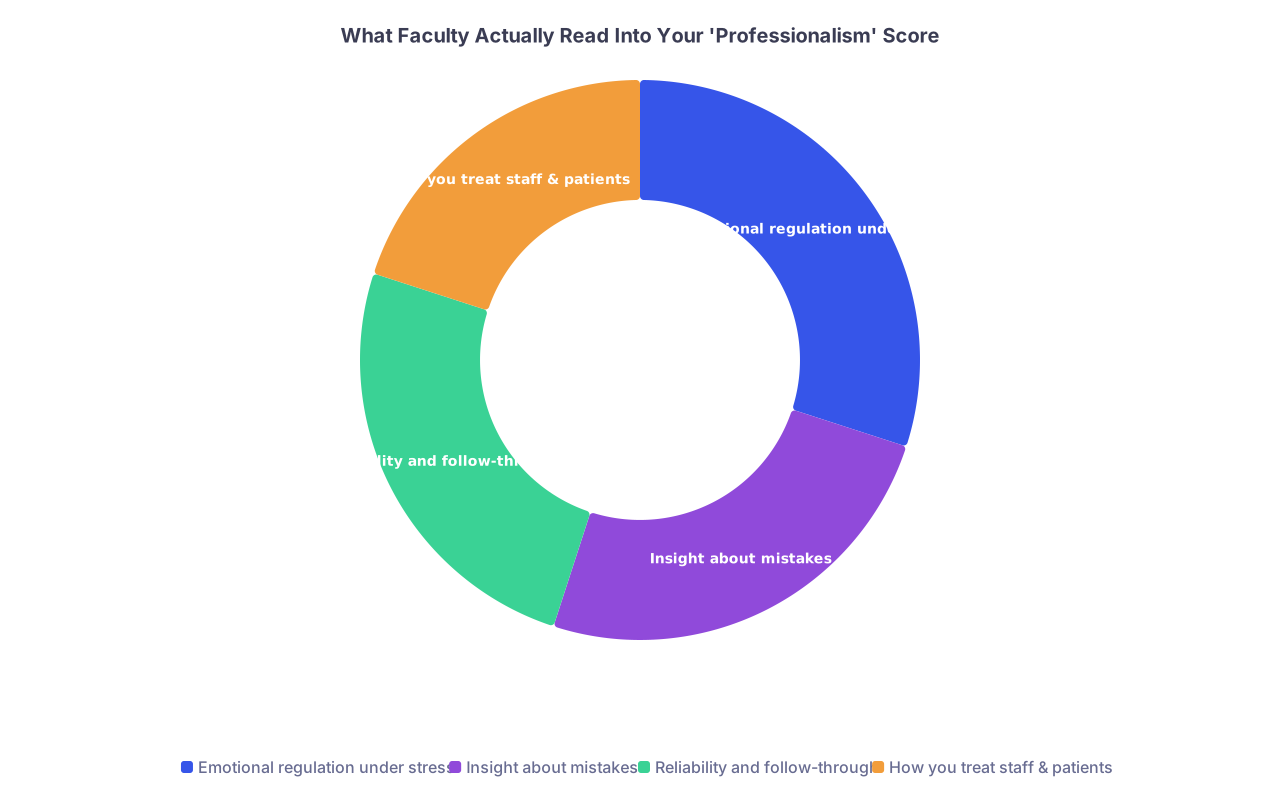
| Category | Value |
|---|---|
| Emotional regulation under stress | 30 |
| Insight about mistakes | 25 |
| Reliability and follow-through | 25 |
| How you treat staff & patients | 20 |
When you walk into an evaluation meeting, your faculty already have impressions like:
- “She knows when she’s out of her depth and calls early.”
- “He’s always in a rush, misses details, and gets defensive when corrected.”
- “She handled that bad code and the angry family without melting down.”
None of that is about raw knowledge. It’s about moment-to-moment awareness and response. That’s mindfulness in the only language that matters to program leadership: risk, reliability, and trajectory.
How Mindfulness (or the Lack of It) Shows Up in Your Behavior
Mindfulness is not sitting cross-legged in call rooms. It’s micro-behaviors. We see them, your nurses see them, your co-residents absolutely see them—and those stories make it into your file.
Let me walk you through the things attendings actually talk about when they close the door.
1. The “Pause Before Responding” Test
I’ve sat in evaluation meetings where an attending says: “When I ask him a question and he doesn’t know, he panics and starts talking fast instead of stopping to think.”
That little gap—do you pause, breathe for half a second, and then answer?—is pure mindfulness. Faculty read that as:
- Emotional regulation versus reactivity
- Thoughtfulness versus impulsivity
- Safety versus risk
Residents who are even minimally mindful will often:
- Say, “Let me think for a second,” instead of blurting.
- Ask, “Can I look something up and get back to you?” instead of faking it.
- Take a breath before answering an upset nurse or family member.
When you don’t do this, your charting, your orders, and your relationships all show micro-fractures. And then your evaluation narrative says: “At times, appears rushed and reactive; would benefit from slowing down and reflecting before acting.”
That’s faculty-speak for “mindfulness lacking.”
2. The “How You Recover From a Bad Day” Pattern
Everyone has bad call nights. Faculty know this. The question is: what do you look like on post-call day plus one? Or after a near-miss?
Residents who are grounded—even a little—do something like:
- Tell the attending the truth: “Yesterday was rough. I missed X and learned I need a better system for Y.”
- Ask for targeted help: “Can we run through how you prioritize on a 20-patient service?”
- Own their contribution without collapsing into shame.
Non-mindful pattern? It’s always chaos + blame:
- “The ED sign-out was terrible.”
- “Nursing didn’t tell me.”
- “The system is broken.”
Now, yes, the system is broken. Many times. But when all we hear is external blame with no internal reflection, that’s a red flag.
Behind closed doors I’ve heard: “He is not processing these events at all. Just complaining. I’m worried he’s either going to burn out or make a big mistake.”
That comment alone can move someone from “solid” to “watch closely” on the CCC spreadsheet.
The Exact Moments Mindfulness Gets You Better (or Worse) Comments
Let’s get surgical. Here are very specific situations where your faculty are quietly assessing your mindfulness, whether they use that word or not.
Family Meetings and Emotional Situations
You run a family meeting for a patient who is declining. The family is upset, confused, maybe hostile. Here’s what your attending is watching:
- Do you actually listen, or are you just waiting for your turn to talk?
- Can you tolerate silence, or do you nervously fill it with jargon?
- Do you notice your own discomfort—tight chest, urge to escape—and still stay present?
Residents who have even basic mindfulness skills tend to:
- Sit down. Literally. That micro-act of presence gets noticed.
- Name the emotion: “I can see that this is incredibly frustrating and scary.”
- Pause for a breath when the family escalates instead of raising their own voice or shutting down.
Later, in evaluations, those become phrases like: “Demonstrates poise under emotional pressure,” or “Maintains compassion even in challenging interactions.”
Lack of mindfulness? We write: “At times seems disengaged” or “Has difficulty maintaining composure in emotionally charged conversations.”
Same event. Different internal stance. Huge difference in how you’re described for the rest of the year.
When You’re Criticized. Especially Unfairly.
Faculty pay very close attention to how you handle feedback, especially blunt or clumsy feedback. Not because we enjoy watching you squirm, but because that’s your stress-test.
The mindful version in the room:
- You actually listen to the whole comment.
- You resist the urge to immediately explain or justify.
- You ask one reflective question: “Can you give me an example of when that happened so I can work on it?”
When I see that, I walk out of the meeting thinking: safe, coachable, growth trajectory good. Maybe your fund of knowledge is behind, maybe your notes are sloppy, but I know we can work with you.
The non-mindful version of the same interaction:
- You interrupt repeatedly to defend yourself.
- Your jaw clenches, you cross your arms, your tone gets sharp.
- You nod on the surface but walk out telling everyone, “They’re being unfair,” with zero self-examination.
That gets remembered. Faculty tell the CCC: “Responds defensively to feedback, limited insight.” That exact phrase is poison if it shows up repeatedly.
When You Make a Mistake
Every resident makes real mistakes. Wrong dose. Missed lab. Delayed recognition. What we care about is:
Can you look at it clearly, with enough emotional steadiness to learn something, without crumbling or dissociating?
A mindful response looks like:
- “Here’s exactly what I missed. I was tired and rushing. Next time I’ll…”
- “I’ve started using a checklist so I don’t skip that step again.”
- “I realized I tend to rush sign-outs when I’m embarrassed about not finishing notes. I need to prioritize differently.”
That kind of debrief tells me your internal observer is online. You can watch your own mind and change your process.
If instead you shut down, tearfully collapse without moving toward repair, or aggressively project blame outward, that all goes in our mental file under “risk factor.”
And yes, it affects promotion decisions when the stakes are high.
How Mindfulness Gets Translated into Actual Evaluation Text
Let me decode some common phrases from evaluation forms. This is the stuff your faculty type into MedHub or New Innovations at midnight.

| Evaluation Phrase | What Faculty Really Observed |
|---|---|
| "Accepts feedback and integrates it over time." | Pauses, listens, and actually changes behavior. |
| "Demonstrates insight into limitations." | Admits when stuck, calls early, doesn’t fake it. |
| "Maintains composure under stress." | Regulates emotions during codes, chaos, or conflict. |
| "At times appears defensive with feedback." | Argues, justifies, low self-awareness in the moment. |
| "Would benefit from slowing down to reflect." | Acts impulsively, rushes, misses obvious patterns. |
When the CCC sits down, they’re not just reading your scores. They’re reading these phrases out loud and then discussing: “Is this someone we worry about at 2 a.m. with three crashing patients and no backup?”
That question is answered less by your fund of knowledge and more by your capacity to stay aware, grounded, and honest under pressure. Again: mindfulness.
What You Can Do During the Evaluation Meeting Itself
Let me give you the playbook for how mindfulness can literally upgrade the evaluation you’re receiving, in real time, in that little office.
Before You Walk In
Two minutes. That’s all you need.
- Sit outside the office door.
- Put your phone away.
- Notice your body: tension in chest, gut, jaw. No need to fix it. Just notice.
- Take 5 slow, deliberate breaths. Slightly longer exhale than inhale.
You’re not trying to become Zen. You’re flipping your nervous system from full sympathetic panic into something closer to “I can think.”
If I see you walk in a little more calm, able to look me in the eye, not vibrating with anxiety, I’m already leaning toward, “This person is steady.”
When Feedback Starts Hitting
Here’s the internal script I’ve seen mindful residents use effectively:
- “I’m going to let them finish.”
- “I’m going to listen for the one or two concrete things I can change.”
- “I don’t have to defend every detail right now.”
Out loud, you say:
- “I wasn’t aware I came across that way. Can you tell me about a specific time you saw that?”
- “I’m glad you’re telling me this now instead of discovering it later in fellowship.”
That isn’t fake humility. It’s using your awareness to choose a skillful response instead of a reflexive one.
What faculty remember from that meeting is not just what they told you. It’s how you held yourself while hearing it.
Owning Your Narrative Without Spinning
There’s a sweet spot in evaluation meetings: the place where you’re honest about struggles without turning it into a dramatic monologue.
Mindful residents will say:
- “This month I realized I tend to rush when I feel behind on notes, and that’s when I make small mistakes. I’m working on triggering myself to slow down when I feel that pressure.”
- “The volume on nights overwhelmed me at first. I’ve started grouping tasks and using checklists so I’m not constantly context-switching.”
This tells us: you’re paying attention to your own mind and behavior with enough distance to modulate it. That’s the essence of mindfulness. And it buys you a huge amount of goodwill even if your raw performance isn’t stellar yet.
The Quiet Power of Mindfulness in How Others Talk About You
Here’s the dirty secret: a lot of your evaluation isn’t what you say or do in front of attendings. It’s what other people say about you when you’re not in the room.
Program coordinators. Nurses. Social workers. Co-residents. The random scrub tech who email-complained that one time.
Mindfulness shapes those stories more than you realize.
- When you pause before snapping at a nurse at 3 a.m., you prevent a complaint email that would haunt your file.
- When you take 15 seconds to center yourself before walking into a room with a furious family, you shift the entire interaction.
- When you notice that you’re emotionally flooded and ask a co-resident, “Can you help me debrief this after?” you build a reputation as self-aware instead of “emotionally unstable.”
I’ve sat through CCC meetings where two residents had similar exam scores, similar procedure numbers, similar writeups. The tie-breaker? Comments like:
- “Always calm and respectful, even on the busiest days.”
versus - “Can be reactive and brusque under stress.”
Guess which one we pick for chief. Guess which one no one worries about endorsing for a competitive fellowship.
You do not need a 30-minute daily meditation practice to change this. You need 5–30 second habits of noticing and choosing your response. That’s it.
Bringing It Back to Ethics: Why Mindfulness Matters Beyond Your Score
This isn’t just career optimization. There’s an ethical core here.
Unmindful medicine is dangerous. That’s how you get:
- Orders placed in anger or exhaustion.
- Informed consent that’s basically a script, not a conversation.
- ICU decisions made from avoidance of discomfort rather than clinical judgment.
- Burned-out physicians who depersonalize everyone—patients, staff, themselves.
Mindfulness in a clinical environment means you actually see the person in front of you, and you also see your own reactions, biases, and impulses. That double-awareness is what keeps you from:
- Punishing “difficult” patients by minimizing their pain meds.
- Avoiding family meetings because they make you feel inadequate.
- Ignoring subtle changes in a patient because you’re in a rush to “clear the list.”
From the faculty side, when we see a trainee start to build that kind of awareness, we relax. We know you’re going to make mistakes—we all do—but we trust that you’ll catch, own, and learn from them faster.
That’s not a soft skill. That’s a patient safety skill. And a professional ethics skill.

| Step | Description |
|---|---|
| Step 1 | Moment of Stress |
| Step 2 | Regulated Response |
| Step 3 | Reactive Response |
| Step 4 | Better Team Interactions |
| Step 5 | Positive Narrative Comments |
| Step 6 | Stronger Evaluations |
| Step 7 | Conflict or Error |
| Step 8 | Negative Narrative Comments |
| Step 9 | Heightened Faculty Concern |
| Step 10 | Mindful Pause |
FAQs
1. Do faculty actually care if I “do mindfulness,” or is it just about my performance?
They don’t care if you use an app, sit on a cushion, or journal. They care about what shows up on rounds, on nights, and in family meetings. If your behavior looks grounded, present, and reflective, they’ll call you “mature” and “professional” whether or not you ever say the word mindfulness.
2. Can being too “vulnerable” or reflective in evaluations backfire?
It can if you do it without balance. A tearful 20-minute monologue that never gets to “here’s what I’m doing differently” will worry people. The sweet spot is brief honesty about your struggles plus a concrete description of what you’re changing. That reads as insight, not instability.
3. I’m not naturally calm. Am I doomed to bad evaluations?
No. Some of the best clinicians I know are anxious by temperament. What matters is your ability to notice your anxiety and still choose your responses. Faculty don’t need you to be chill. They need you to be aware and not ruled by your worst impulses when stressed.
4. How do I practice this without a huge daily meditation routine?
Start tiny. Three places: before you log into the EMR, before you enter a patient room, and before you respond to criticism. In each spot, take one breath, notice how you feel, and then decide how you want to act. That’s the core skill. Formal practice just makes it more available.
5. Will programs ever explicitly rate “mindfulness” on evaluations?
Probably not. The word is too fuzzy and too easy to fake. But they will keep rating professionalism, insight, communication, teamwork, and resilience—all of which are built on mindfulness. You don’t need the checkbox. You need the underlying capacity.
In the end, your faculty evaluation meetings are not just about whether you know enough or work hard enough. They’re about whether you are aware enough—of yourself, your patients, and the moment you’re in—to be trusted with more responsibility.
Two takeaways: first, those tiny pauses and honest reflections you think no one sees are exactly what shape your narrative. Second, you do not need to become a monk; you just need to be awake enough, often enough, that your attendings walk out of rooms saying: “She’ll be safe. He’ll grow. We can trust them.”