
You’re on call. It’s 10:45 p.m. A patient you’ve seen a few times breaks down and says, “Honestly, the only thing keeping me from falling apart is this meditation app and my yoga teacher. I had some really dark thoughts last month.”
You do the right thing: you listen, you explore, you talk about coping skills, you weave in mindfulness, you safety‑plan. It’s actually a good, human, therapeutic conversation.
Then you turn back to the chart.
And this is exactly where people quietly destroy themselves.
Not with what they say to the patient. With what they type into the EMR.
Let me walk you through how not to chart yourself into an ethics complaint, a lawsuit, or an unnecessary psychiatry consult when you’re just trying to practice mindful, humane medicine.
The Biggest Mistake: Treating the EMR Like Your Therapy Journal
Mindfulness‑related conversations feel personal. You’re talking about suffering, shame, trauma, sometimes spirituality. It can feel natural to “capture the moment” in detail.
Do not do that in the chart.
I’ve seen notes like:
“Patient cried for 15 minutes while processing childhood trauma; we discussed her guilt about being a bad mother and her Buddhist practice.”
or
“We did a brief breathing meditation together; patient said he felt ‘closer to God’ and that this was more helpful than medications.”
This reads beautifully to you. To a plaintiff attorney, risk management, or a future clinician unfamiliar with you or mindfulness, it reads like:
- Boundary blur
- Unclear role (are you their doctor or their therapist? their spiritual advisor?)
- Possible minimization of medical treatment (“more helpful than medications”)
- A huge well of discoverable emotional content
The EMR is not:
- Your reflective practice notebook
- Your mindfulness supervision log
- A narrative medicine piece
It is a medical‑legal document. Assume:
- The patient might read every word tomorrow on the portal.
- An opposing attorney might read every word three years from now.
- A colleague who’s never heard of mindfulness might base critical decisions on what you wrote in 15 seconds at 10:45 p.m.
Do not chart like you’re writing for someone who already understands your intentions. Chart like you’re writing for someone who doesn’t trust you and is looking for ambiguity.
Where People Get Burned: Over‑Detailing Sensitive Mindfulness Content
The most common documentation sins around mindfulness‑related conversations fall into a few repeating patterns. They’re avoidable if you recognize them.
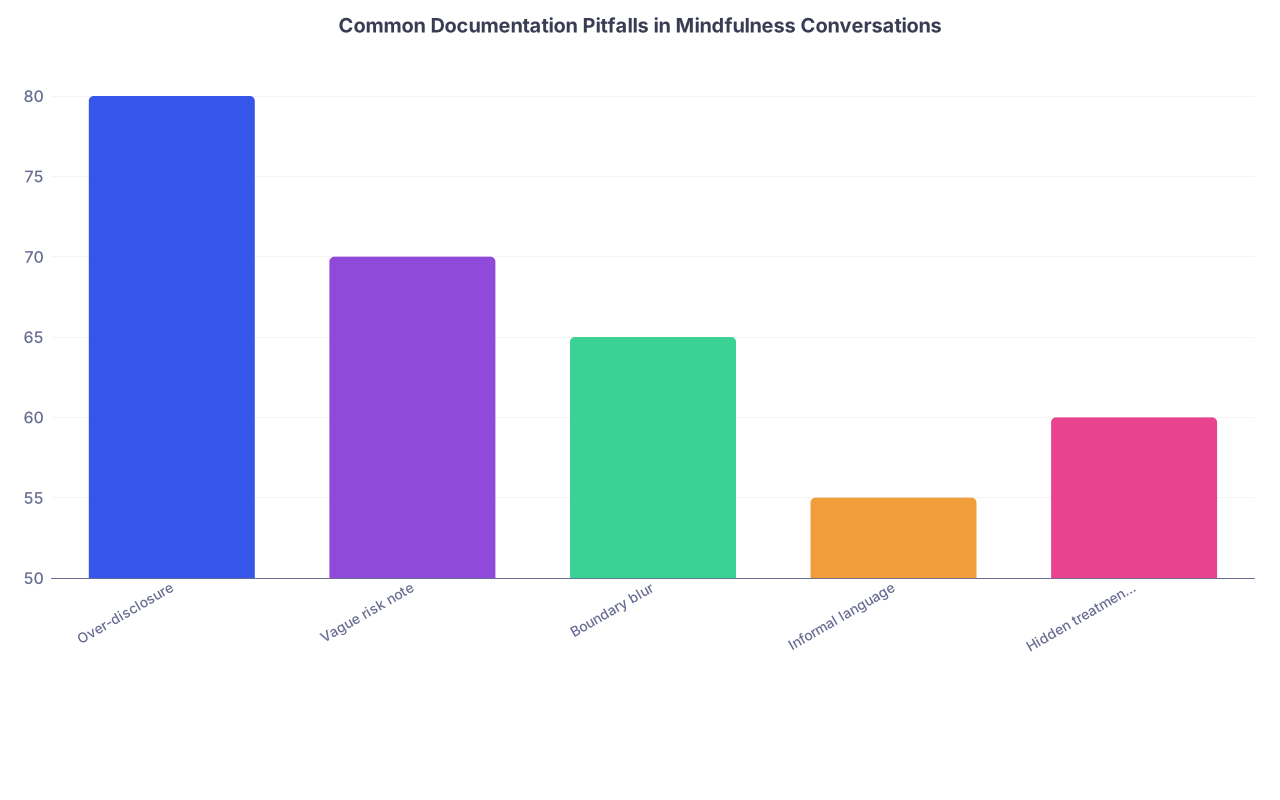
| Category | Value |
|---|---|
| Over-disclosure | 80 |
| Vague risk note | 70 |
| Boundary blur | 65 |
| Informal language | 55 |
| Hidden treatment changes | 60 |
1. Writing raw, unfiltered patient disclosures
Examples I’ve actually seen versions of:
- “Patient describes sexual abuse by her father, detailed graphic description…”
- “Patient said she thought of jumping off the bridge by the hospital last week but did not want to be a burden to fishers.”
- “Patient experienced terrifying visions during meditation, seeing demons in the room.”
That kind of detail has three problems:
- It re‑traumatizes when patients read it later.
- It invites misinterpretation by non‑clinicians.
- It locks you into language you cannot easily defend.
Better: summarize clinically, not narratively.
Don’t write:
“Patient sobbed as she relived the moment her husband died and said she can’t go on.”
Do write:
“Patient became tearful discussing loss of husband; reports ongoing significant grief, occasional passive thoughts that life is not worth living, denies plan or intent; we explored coping skills including brief mindful breathing and grounding exercises.”
You still honor the content. You skip the emotional voyeurism.
2. Being vague around risk while sounding reassuring
A mindfulness‑type conversation often surfaces distress and sometimes suicidal ideation. The rookie mistake is trying to sound comforting in your note.
Do not write:
- “Patient feels much better after our talk and says mindfulness will keep her safe.”
- “Patient is unlikely to hurt herself now that she has meditation strategies.”
That’s not documentation; that’s wishful thinking in text form.
Instead, if risk came up, you document like a clinician, not a cheerleader:
- What was said (in clinical terms, not quotes of every dramatic line)
- Your assessment of risk
- Your safety planning and follow‑up
- That mindfulness is a tool, not the sole safety net
Confidentiality Traps: Mindfulness, Spirituality, and Family
Mindfulness conversations often bleed into spirituality, family secrets, and stuff patients explicitly do not want widely shared. And then people put it… in a shared record.
That’s the trap.
The “hidden audience” you’re writing for
You’re not just charting for:
- You
- The team
- Billing
You are also charting for:
- Future clinicians outside your specialty
- Insurers
- Lawyers
- The patient’s future self
- Sometimes family members who gain access with consent
This is why “honesty” in documentation doesn’t mean “write every spiritual confession word‑for‑word.”

Don’t write their spiritual autobiography
Wrong example:
“Patient states she abandoned Catholicism, now follows a specific guru from India whom she sees as more important than medical care; she believes medications interfere with her spiritual energy.”
Better:
“Patient reports spiritual beliefs that influence views on medication and prefers to prioritize non‑pharmacologic approaches including meditation; shared decision‑making regarding treatment plan documented below.”
You capture what affects care. You do not editorialize their worldview.
Don’t throw family members under the legal bus in detail
Wrong:
“Patient’s husband ridicules her mindfulness practice and calls it ‘stupid’; patient feels he is emotionally abusive and controlling with finances.”
That might be true. But it might also end up in a divorce file or be quoted in court.
Better:
“Patient reports limited support at home for coping strategies, including mindfulness; describes feeling criticized by spouse and stressed by financial dynamics. Screening for safety performed; patient denies physical harm or current fear for personal safety. Resources and referrals offered.”
Clinically relevant. Less inflammatory. Still honest.
Boundary Problems: When Your Documentation Makes You Look Like the Guru
This is where mindfulness in medicine goes off the ethical rails: when the chart reads like the physician is the spiritual teacher.
I’ve seen notes that could be pasted directly into a yoga studio website.
Examples you should not document:
- “We explored the patient’s connection to the universe and I guided them in realizing that suffering is an illusion.”
- “I advised the patient to trust the process and release attachment to outcomes regarding their cancer.”
- “We discussed how medication is sometimes a barrier to awakening.”
You may think you “never” write like this. Check your old notes. I’ve seen smart, grounded clinicians drift there, especially after a retreat or new training.
You are not documenting your personal spiritual beliefs. You are documenting medical care.
So do not:
- Elevate mindfulness as a replacement for evidence‑based treatment
- Attach your personal practice or lineage to the visit
- Make yourself the central “guide” in the language you use
Do:
- Describe mindfulness as one of several coping tools
- Anchor everything to function, distress, and safety
- Tie it back to diagnosis, symptoms, and plan
| Situation | Boundary-Respecting Documentation | Boundary-Blurring Documentation |
|---|---|---|
| Introducing mindfulness | "Introduced brief mindfulness breathing as coping tool for anxiety." | "I taught the patient one of my personal meditation practices." |
| Patient spiritual content | "Patient reports spiritual beliefs that provide comfort; no evidence of psychosis." | "Patient had a beautiful spiritual opening during our session." |
| Treatment framing | "Mindfulness offered as adjunct to existing treatment plan." | "Mindfulness is likely more important than medications for this patient." |
The Content You Should Never Leave Out
There’s another side to this: under‑documenting. People get anxious about writing anything “mindfulness‑ish” and then omit critical safety and consent content.
That’s also a mistake.
Here’s what must make it in when you’ve had a mindfulness‑related therapeutic discussion.
1. Clinical context and purpose
Why did this conversation happen?
Wrong (too vague):
“Long conversation about coping and mindfulness.”
Better:
“Discussed coping with chronic pain and associated anxiety; introduced brief mindful breathing and body awareness as adjunctive strategies to reduce distress and improve function.”
You are making it clear: this was clinically targeted, not just spiritual bonding time.
2. What you actually did (in clinical language)
If you did a practice together, say so plainly, without theatrics.
Wrong:
“Guided patient in deep meditation and energy work.”
Better:
“Spent ~3 minutes guiding patient in simple mindful breathing exercise (focus on breath, nonjudgmental awareness of thoughts); patient reported mild reduction in perceived anxiety afterward.”
That’s defendable. That sounds like a clinician.
3. Limits and boundaries
If you set boundaries verbally, document the key ones.
Examples worth charting:
- “Clarified that mindfulness is a coping tool and not a replacement for recommended medications or psychotherapy.”
- “Reviewed that I am not providing long‑term psychotherapy or spiritual counseling; encouraged patient to consider formal therapy/teacher for ongoing support.”
- “Discussed appropriate use of patient portal; mindfulness questions to be addressed during visits, urgent safety concerns to ED or crisis line.”
These short lines will save you later if a relationship drifts into “my doctor is my meditation teacher” territory.
The Mindful Documentation Formula (That Won’t Get You in Trouble)
Let me give you a simple structure you can reuse. It keeps you safe but doesn’t erase the fact that you’re doing meaningful work.
Think in this sequence:
- Clinical reason for visit / problem.
- Patient’s distress / symptoms.
- Brief mention of relevant personal/spiritual context (if it clearly affects care).
- What you did: education / skills / brief practice.
- Patient response.
- Clear risk assessment if suicidality or severe distress came up.
- Concrete plan (including whether mindfulness is adjunctive).

| Step | Description |
|---|---|
| Step 1 | Patient expresses distress |
| Step 2 | Assess symptoms and risk |
| Step 3 | Discuss coping options |
| Step 4 | Introduce mindfulness as tool |
| Step 5 | Brief practice or explanation |
| Step 6 | Document patient response |
| Step 7 | Record risk assessment and safety plan |
| Step 8 | Clarify role and follow up plan |
Example of a safe, solid paragraph style note:
“Patient reports increased anxiety related to work stress and difficulty sleeping; denies suicidal ideation, homicidal ideation, or psychotic symptoms. Identifies prior benefit from mindfulness app; reports 10–15 minutes nightly practice. Reviewed role of mindfulness as coping tool alongside medications and CBT. Spent several minutes reinforcing basic mindful breathing (attention to breath, gentle refocus when distracted), emphasizing nonjudgmental awareness. Patient reported modest reduction in tension after brief exercise in office and expressed interest in continuing practice at home. Advised that formal psychotherapy recommended for deeper work; provided referral. Plan: continue current SSRI, initiate CBT referral, encourage daily mindfulness practice as tolerated, follow up in 4 weeks or sooner if symptoms worsen.”
That’s what you’re aiming for. Boring. Defensible. Respectful.
Specific Red Flags: Phrases That Should Make You Stop and Edit
When you see any of these phrases in your draft note, pause. You’re probably wandering into risky territory.
- “patient broke down for X minutes”
- “we did a deep/transformative meditation”
- “patient said I am the only one who understands”
- “patient experienced awakening / spiritual opening”
- “this was more healing than any medication”
- “we shared a moment of…”
- “I reassured the patient that everything would be okay”
- “patient promised me she would not…”
Replace with:
- “patient became tearful / visibly distressed”
- “brief mindfulness exercise”
- “patient reports feeling understood in visit”
- “patient describes finding spiritual meaning, no evidence psychosis”
- “patient reported perceived benefit”
- “we discussed coping and support”
- “I reviewed available supports and safety plan”
- “patient agreed to safety plan (see below), acknowledges inability to guarantee feelings but agrees to seek help if at risk”
You’re stripping drama, keeping substance.
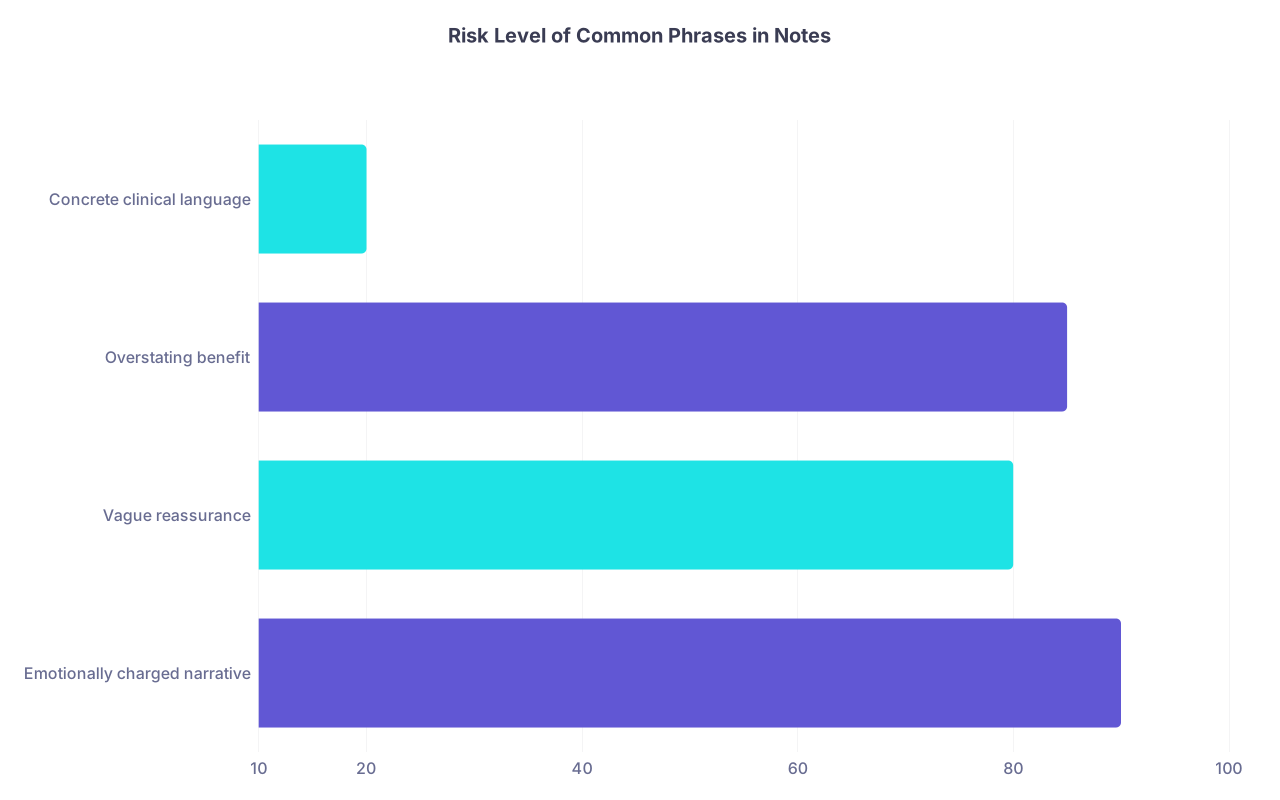
| Category | Value |
|---|---|
| Emotionally charged narrative | 90 |
| Vague reassurance | 80 |
| Overstating benefit | 85 |
| Concrete clinical language | 20 |
Mindfulness With Trainees: Teaching Without Poisoning Their Notes
If you’re teaching students or residents mindfulness‑informed care and you do not train them on documentation, you’re half‑teaching and half‑setting them up to be burned.
I’ve watched interns copy attendings’ spoken language straight into the chart:
Attending in room:
“Try to notice your breathing without judging yourself.”
Intern in note:
“Attending helped patient not judge herself and connect with her inner experience during breathing meditation.”
No. Absolutely not.
You must explicitly tell trainees:
- “What I say in the room is not always what you write in the note.”
- “Translate compassionate, human language into clinical, neutral language.”
- “If you’re not sure whether something sounds like therapy or spiritual counseling, run it by me before you sign it.”

Make them practice rewriting:
Spoken:
“I know this is incredibly painful. You’re doing the best you can.”
Documented:
“Patient expresses significant emotional distress related to X; provided empathic support and normalized coping efforts.”
Spoken:
“Let’s try 3 slow breaths together and see what you notice.”
Documented:
“Introduced brief mindful breathing exercise as anxiety management skill; patient engaged and reported mild reduction in tension.”
This is part of ethical training. If you skip it, you’re teaching them to blur lines and then leaving their names on the note.
EMR Portals: Patients Reading Your “Private” Thoughts
Portals changed everything. You cannot pretend the note is hidden. Patients will read it. Especially the sensitive parts.
Mindfulness patients are often reflective, curious, and very likely to click “view note.”
So think: “If they read this tomorrow at 2 a.m. while anxious, will it help, harm, or confuse?”
Do not:
- Label them “noncompliant” because they prefer mindfulness over meds.
- Minimize their spiritual frame as “odd beliefs” unless you’re clearly describing pathology.
- Describe them as “dramatic,” “overly emotional,” or “dependent” in lazy, non‑DSM language.
Do:
- Frame beliefs in clinically relevant terms: “Strong preference for non‑pharmacologic approaches, including mindfulness and yoga.”
- If you’re concerned about pathology, use clear, professional language: “Content of beliefs not consistent with cultural or spiritual norm, concerning for psychosis (see MSE).”
- Use functional descriptions: “Reliance on mindfulness alone has resulted in missed appointments and worsening symptoms.”

Write like they are reading over your shoulder. Because they are.
FAQ: Charting Mindfulness‑Related Conversations Safely
1. Do I have to document every mindfulness practice I do with a patient?
You don’t need a minute‑by‑minute meditation log. But if you introduce a new skill, spend more than a trivial amount of time, or the patient’s response is clinically relevant (e.g., reduced distress, triggered trauma, changed their view of treatment), then yes, document it briefly. One sentence is often enough: “Introduced brief mindful breathing as coping strategy; patient engaged and reported some benefit.”
2. Can I write that mindfulness helped more than medication if that’s what the patient said?
You can record their perspective without endorsing it as clinical fact. Instead of “Mindfulness is more helpful than meds,” write: “Patient reports perceiving greater benefit from mindfulness practice than from current medication; discussed complementary roles of both and reviewed risks of stopping medication without consultation.” Capture the data point. Do not adopt the opinion.
3. What if a mindfulness conversation brings up suicidal thoughts—how detailed should I be?
You must be clear about the presence or absence of ideation, intent, plan, means, and protective factors, and what you did about it. You should not transcribe every dramatic quote. Example: “Patient reports intermittent passive thoughts that ‘it would be easier not to be here,’ denies plan, intent, or preparation; identifies family and spiritual beliefs as protective. Developed safety plan, provided crisis resources, and scheduled close follow up. Mindfulness discussed as one coping tool within this plan.”
4. Is it safe to mention my own meditation practice in the note?
No need, and usually a bad idea. The note is about the patient, not your biography. If your personal practice is clinically relevant (rare), you can be generic: “Shared that many patients find mindfulness helpful; encouraged patient to explore evidence‑based resources.” Do not write, “I have meditated for 10 years and guided the patient using my lineage’s method.” That centers you and muddies the boundary.
5. How do I document when a patient’s spiritual or mindfulness beliefs seem delusional?
Be precise and respectful. Distinguish between non‑mainstream but coherent spiritual beliefs and truly psychotic content. Example: “Patient reports communicating with spiritual guides and receiving comforting messages; beliefs appear fixed but not distressing or dangerous, and are consistent with their cultural background.” Versus: “Patient reports hearing a commanding voice telling them to harm themselves if they fail to meditate correctly; content is distressing and not consistent with cultural norm, concerning for psychosis. Assessed safety, initiated appropriate treatment and monitoring.” Always link it to risk and function.
Key points:
- The EMR is not your meditation journal. Strip drama; keep clinical substance.
- Document mindfulness as an adjunctive, skills‑based tool—not a spiritual crusade or medication replacement.
- Write every note assuming both the patient and a skeptical lawyer will read it. If it doesn’t hold up to that test, fix it before you sign.