What if you only discover “mindfulness” after your nervous system has already been run through a blender by years of medical training?
That’s the fear, right? Like you missed the window. Everyone else did yoga and journaling and “self-care Sundays” starting M1, and you just…white-knuckled your way through, accumulated sleep debt, trauma, and bitterness. Now you’re wondering if your brain is too fried, too cynical, too burned out for any of this to actually work.
Let me be blunt: no, it’s not too late. But you’re not wrong that it will feel harder and messier than the wellness brochures make it sound.
Let’s walk through this like an actual tired human, not a Pinterest board.
The Ugly Starting Point: “I’m Too Damaged For This”
You know that moment post-call where you’re staring at the wall and you think:
“I’m not stressed. This is just who I am now.”
That’s the scary part. When exhaustion stops feeling like a state and starts feeling like your personality.
So you ask yourself stuff like:
- “If mindfulness works, why didn’t it help the residents who still quit?”
- “Is my brain too conditioned to chaos to tolerate ‘stillness’?”
- “What if slowing down lets all the bad stuff I’ve suppressed finally hit me?”
These aren’t overreactions. They’re valid fears from someone who’s watched colleagues crumble, cry between cases, or secretly Google “non-clinical careers” during noon conference.
Here’s the uncomfortable truth:
Mindfulness is not a magic reset button. It’s not going to undo years of chronic sleep deprivation, moral injury, and institutional nonsense.
But it can change:
- How you relate to your stress
- How fast you recognize you’re sliding into a bad place
- Whether you catch yourself before you completely emotionally flatline
Starting late doesn’t make it useless. It just means you’re starting from a deeper hole than some others. And that’s reality, not failure.
“Did I Permanently Reshape My Brain With Stress?”
This is the nightmare scenario, right? “I’ve trained my brain to be on fire for so long that calm isn’t an option.”
So, let’s be semi-scientific for a second without turning this into a neuro lecture.
Chronic stress does change the brain.
You’ve probably heard:
- Amygdala gets overactive (hello constant threat scanning)
- Prefrontal cortex gets sluggish (so decision fatigue + emotional reactivity)
- Hippocampus takes a hit (memories get weird, emotional processing gets harder)
Years of training basically train your body to live like:
- Any page = threat
- Any email = potential disaster
- Any “Hey, do you have a second?” = you messed something up
Here’s the part people under-appreciate: neuroplasticity does not shut off at 25, or after intern year, or after five years of residency misery. It slows. It doesn’t vanish.
Mindfulness-based interventions have been shown (yes, in actual imaging studies) to:
- Decrease amygdala reactivity
- Strengthen prefrontal networks related to regulation and attention
- Improve connectivity in areas tied to self-awareness
Translation: even if you’ve spent years in “code mode,” your brain is still moldable. It’s just… tired and suspicious. It’s going to resist. You’re going to sit for 60 seconds, feel like you’re crawling out of your skin, and conclude, “See? I can’t do this.”
That reaction isn’t proof it’s too late.
It’s proof your nervous system has been on high alert for a long time.
That’s your starting line.
Why Mindfulness Feels Especially Hard for Medical People
Let me call this out directly: the culture of medicine sets you up to hate mindfulness at first.
You’ve been trained to:
- Move fast
- Anticipate catastrophe
- Suppress your own needs
- Judge your performance constantly
Then someone says:
“Just notice your breath without judging. Just be present.”
You: “Cool, so you want me to temporarily become the exact opposite of what my job has required every single day? Great.”
Of course it feels wrong. Of course it feels inefficient. Of course your brain screams, “This is a waste of time. You should be studying. Or charting. Or doing literally anything else.”
Mindfulness, for you, is not going to start as “peaceful”.
It’s going to start as:
- Agitation
- Boredom
- Guilt (“I don’t deserve rest, I’m behind”)
- Fear (“If I slow down, I’ll fall apart”)
That doesn’t mean you’re broken. It means your system has been wired for survival, not reflection.
You’re not bad at mindfulness.
You’re over-trained in hypervigilance.
Starting Late: What’s Actually Realistic?
You’re not going from: “Scrolling TikTok in the workroom between rapid responses” to “20 minutes of loving-kindness meditation daily, plus yoga at sunrise”
You’re going from: “Always on edge + numb” to “Micro-moments of not being completely hijacked by your thoughts.”
That’s what “success” looks like at first.
So let’s get very concrete. Here’s what a realistic late start might look like for someone already deep in exhaustion.

| Step | Description |
|---|---|
| Step 1 | Realize you feel burned out |
| Step 2 | Try tiny experiment |
| Step 3 | Shorten it and try again |
| Step 4 | Repeat for 1-2 weeks |
| Step 5 | Add one more small practice |
| Step 6 | Notice small changes |
| Step 7 | Decide what is sustainable |
| Step 8 | Tolerable? |
This is not glam. It’s boring. It’s painfully incremental. But that’s what your nervous system will actually tolerate.
Tiny, Non-Cringe Ways to Start (That Don’t Require a Yoga Mat)
Here’s where people usually tune out because they’ve heard “just breathe” a thousand times. So I’ll be specific and a bit ruthless about what’s actually doable during training.
1. 10-Breath Check-In (30–45 seconds)
Where: before logging into the EMR, after a tough patient encounter, or alone in the bathroom.
What you do:
- Inhale normally, exhale normally. No dramatics.
- Count each exhale from 1 to 10.
- When your brain wanders (and it will), you just start back at 1. No self-insults.
Target: once per day for a week. Yes, just once. Start low so you don’t quit.
2. “Hand on Heart, Not a Hallmark Moment” (10–20 seconds)
Where: after getting criticized, making a mistake, or getting a nasty family interaction.
What you do:
- Put your hand on your chest (subtle, under coat is fine).
- Breathe once, and mentally name what you’re feeling in the simplest terms:
“Shame.” “Fear.” “Anger.” “Grief.” - Then silently tell yourself: “This is hard. Of course I feel this way.”
Not toxic positivity. Just acknowledging you’re a human, not a robot.
3. Commute Awareness (2–5 minutes, not the whole drive)
Pick one small “anchor” during your commute:
- The sensation of your hands on the wheel
- The feeling of your back against the seat
- Noticing three things you can see out the window
You’re not aiming for a mystical experience. You’re just yanking your brain out of autopilot for a few minutes.
4. The 30-Second “Ethics Check” Before a Tough Decision
This hits the “medical ethics” part pretty directly.
Before you sign off on something that feels morally gray (dispo you’re uneasy about, another scan you doubt is helpful, a code status discussion you’re rushing), try:
- Pause for 3 slow breaths.
- Ask yourself: “If I weren’t exhausted and overbooked, what would I ideally do here?”
- You may not have the power to fully honor that ideal, but at least you didn’t act purely on autopilot.
That tiny pause is mindfulness tied directly to ethics. It protects your sense of integrity, even in a broken system.
“But What If I Try And It Makes Me Feel Worse?”
This is the part nobody talks about:
Starting mindfulness late, especially after years of stuffing things down, can initially make stuff louder.
Things that can happen:
- Old code situations resurface in your head
- That one patient who died comes back in vivid detail
- You realize how angry you are at attendings, administration, even yourself
- You notice how dead-tired you are… all the time
This can feel like: “Mindfulness broke me.”
It didn’t. It just removed some of the noise that was drowning out what was already there.
If this happens:
Dial down, don’t quit.
Switch from sitting still with thoughts to walking mindfulness, or body-based practices (stretching, feeling feet on the floor). Less head, more sensation.Consider support.
If stuff is flooding in—trauma, grief, panic—this is where a therapist who actually understands medical culture is invaluable. You don’t need to “tough out” the emotional backlog alone.Shorten the window.
Instead of 10 minutes, do 1. Instead of “meditation,” call it a “reset.” Words matter more than we admit.
You’re not fragile for reacting this way. You’re raw. There’s a difference.
Is It “Ethical” To Start Caring About Yourself Late?
Some people honestly feel guilty starting mindfulness “this late.” Like:
- “I should have built better habits before patients depended on me.”
- “Am I selfish for using time to center myself when my patients need me?”
- “Isn’t this just me trying to make my suffering more bearable in a system that’s fundamentally unjust?”
Let me be direct:
Burned-out, numb, resentful physicians are an ethical problem.
You being less reactive, more able to listen fully, less likely to snap or rush or cut corners because you’re mentally fried—that’s not selfish. That’s part of your duty of care.
| Focus Area | Benefit for You | Downstream Effect on Patients |
|---|---|---|
| Emotional reactivity | Fewer blowups, less shame spiral | Calmer, clearer communication |
| Attention | Less autopilot charting | Fewer missed details / safer care |
| Self-compassion | Less paralysis after mistakes | Faster recovery and learning |
| Values clarity | Less moral numbness | More honest, humane conversations |
If your goal is to be an ethical physician, you cannot ignore your own mental state indefinitely and pretend that doesn’t leak all over your clinical decisions.
Self-neglect is not a virtue. It’s a liability.
What If I’m Already Past “Early Burnout” And Into “I Want Out”?
If you’re at the point of:
- Googling “Leaving medicine stories”
- Fantasizing about a non-clinical job daily
- Feeling nothing when good or bad things happen
Then mindfulness is not a “chai latte add-on.”
It’s more like emotional triage.
To be honest, mindfulness here isn’t about “making you love medicine again.” That might not happen. And that’s okay.
Instead, it can help you:
- Get clear on whether you’re staying out of fear, sunk costs, or actual desire
- Notice which parts of your day drain you vs which parts give the tiniest spark
- Make decisions about your future that come from a calmer, less panicked place
You might ultimately leave clinical work. You might drastically scale back. You might switch specialties.
Mindfulness doesn’t dictate that choice.
It helps you not make it while in full-blown survival mode.
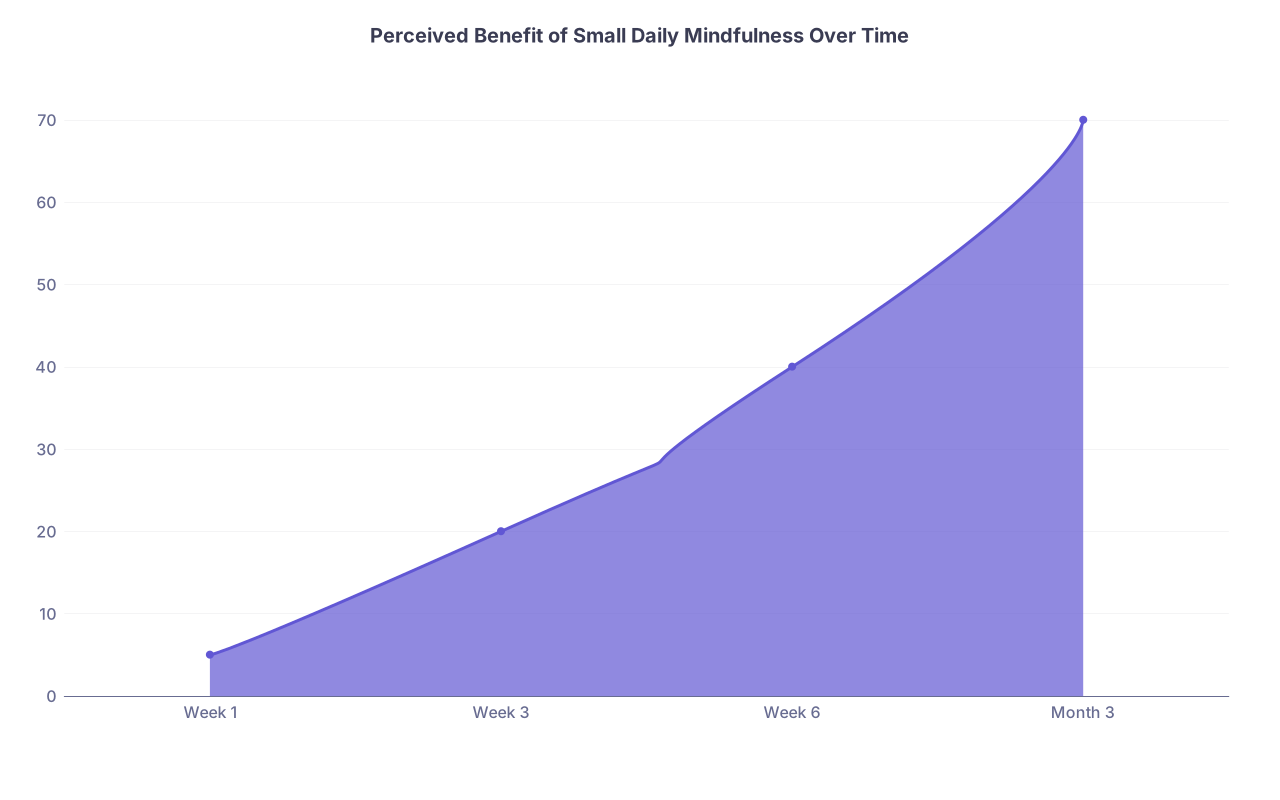
How Long Until This Actually Feels Like It’s Doing Anything?
You want a timeline. Everyone does. Something like: “In 3 weeks, you’ll feel 27% less stressed.”
Reality is a bit more fuzzy, but based on what I’ve seen:
First 1–2 weeks:
Feels awkward. You’ll wonder if you’re doing it wrong. Benefits are microscopic—maybe you catch yourself before snapping once. That’s it.Weeks 3–6 (if you stick to tiny, consistent doses):
- Slightly faster recovery from “bad moment” spirals
- A few flashes of, “Huh, I actually noticed I was anxious while it was happening, not 4 hours later”
- Maybe 1–2 nights you fall asleep a bit easier
Beyond 2–3 months:
- Bigger gap between trigger and your reaction
- Less self-hate after mistakes
- You start voluntarily doing the practices because they feel like relief, not chores
| Category | Value |
|---|---|
| Week 1 | 5 |
| Week 3 | 20 |
| Week 6 | 40 |
| Month 3 | 70 |
The biggest predictor that it will help you is not how “Zen” you feel, but whether you’re willing to keep trying it even when it feels unimpressive.
Mindfulness Without Turning Into a Wellness Stereotype
You’re allowed to hate the aesthetics of wellness culture and still practice mindfulness.
You do not need:
- Crystals
- A fancy app subscription
- A 60-minute morning routine
- Chalkboard signs about “gratitude” in cursive
You need:
- 30–90 seconds, a few times a day
- A willingness to experiment instead of dismissing it on Day 1
- A tiny bit of honesty with yourself about how bad things actually feel internally
Mindfulness for you might look like:
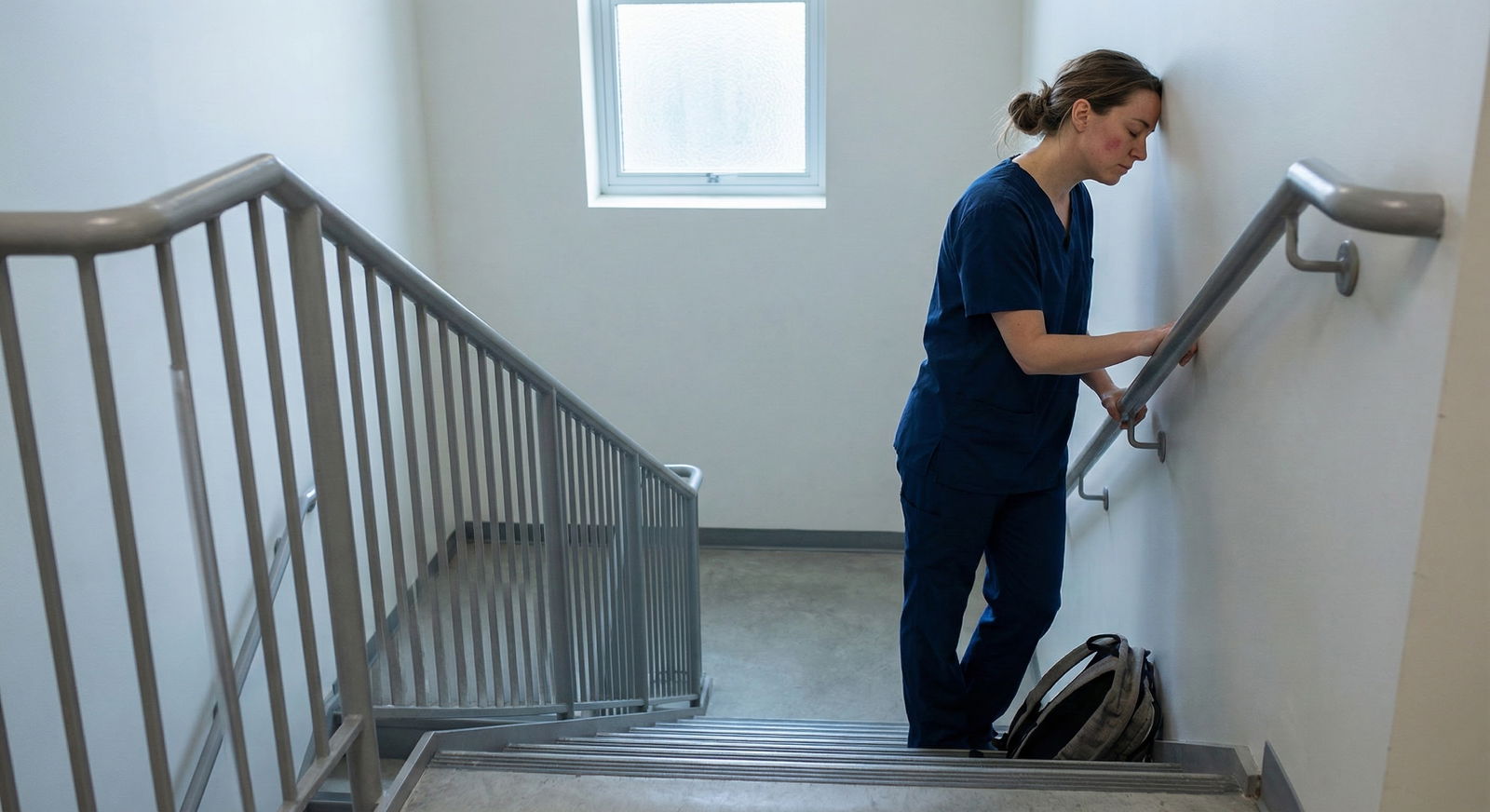
- Standing in the stairwell for 60 seconds between codes, just breathing
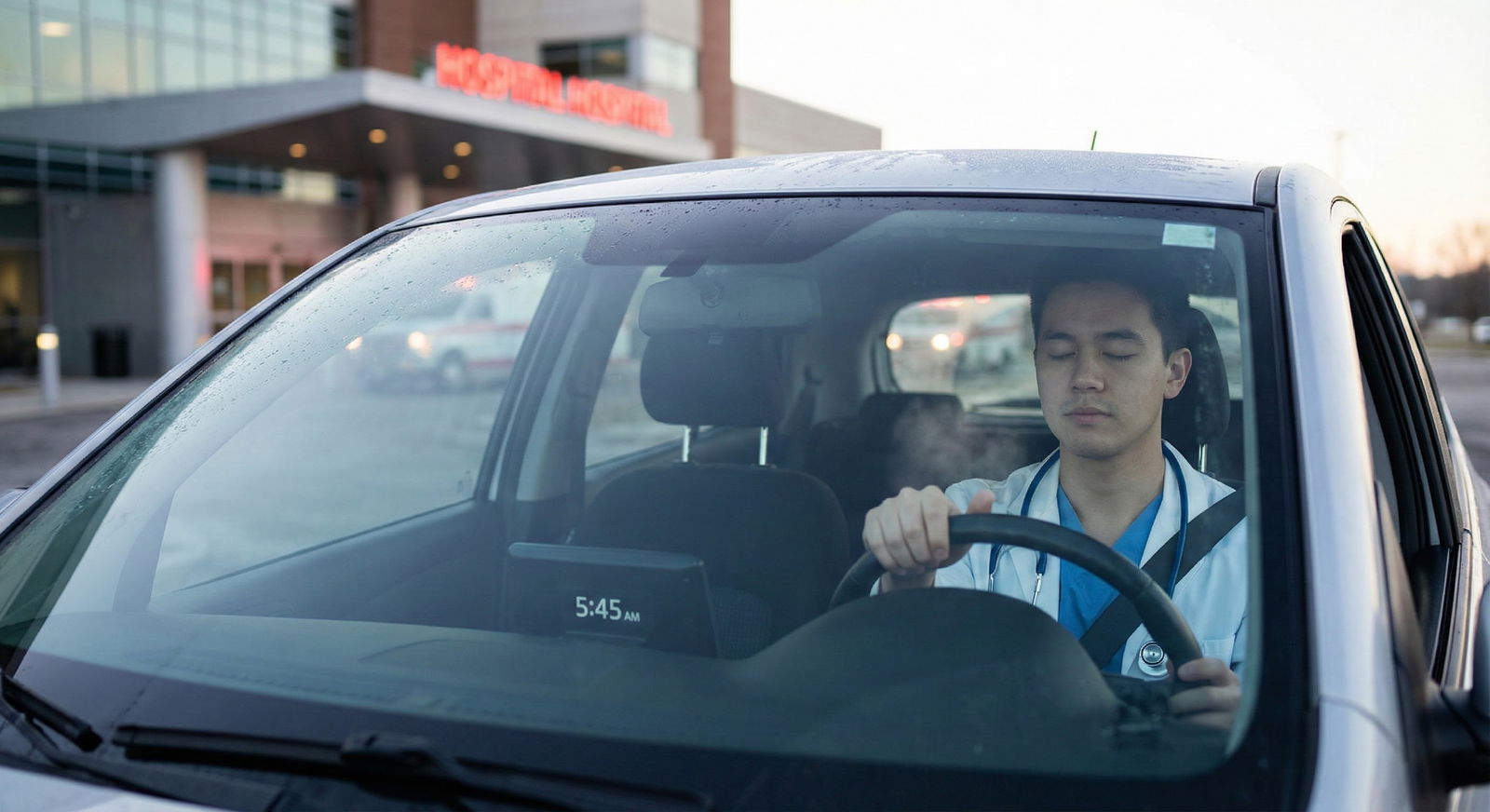
- Sitting in your parked car before going in, hand on the wheel, asking, “Where am I at right now?”
- Pausing before you chart something harsh or rushed and asking, “Is this how I want to show up?”
That counts. More than enough to start.
If You Remember Nothing Else
- It’s not too late. Your brain isn’t “ruined.” It’s wired for survival and suspicion right now. Mindfulness can still reshape it, slowly.
- Starting will not feel good or peaceful at first. It’ll feel weird, annoying, sometimes worse before better. That’s not failure; that’s de-thawing.
- The goal isn’t to become a serene monk. It’s to build enough awareness and space that you stop abandoning yourself in the middle of your own life—and in the middle of your practice.
You’re not behind. You’re just starting from where you actually are: exhausted, skeptical, and still—somehow—hoping for something a little less brutal than the status quo.
That’s enough.
FAQ (Exactly 5 Questions)
1. What if my attention is so shot from training that I literally can’t focus for 10 seconds?
Then don’t start with focusing. Start with noticing. Example: set a timer for 30 seconds and just notice sounds—pager beeps, HVAC noise, footsteps, voices. You’re not trying to “hold” attention. You’re just tagging what’s already there: “beep… footsteps… door.” That still trains awareness.
2. Is using an app (Headspace, Calm, etc.) actually helpful, or just marketing?
Apps are fine as scaffolding, but don’t outsource your success to whether an app “clicks.” If you like guided stuff, pick one 3–5 minute practice and repeat it daily for 2–3 weeks before judging. If you hate voices in your ear, skip them and use simple breath counting or body awareness. No app is mandatory.
3. Can mindfulness replace therapy if I can’t afford or access a therapist right now?
No. If you’re dealing with serious depression, trauma, or active suicidal thoughts, mindfulness is not a substitute for treatment. It can support you—like stabilizing between waves—but it doesn’t replace professional help. If therapy access is a problem, some institutions have free or low-cost services for trainees; it’s worth asking quietly around.
4. What if my program or attendings openly mock “mindfulness” and “wellness”?
Then don’t make it a performance. You don’t need to announce it. Treat it like brushing your teeth—quiet, private hygiene for your mind. You can take 30 seconds in a bathroom stall and nobody has to know. Let them roll their eyes while you quietly try not to lose your mind.
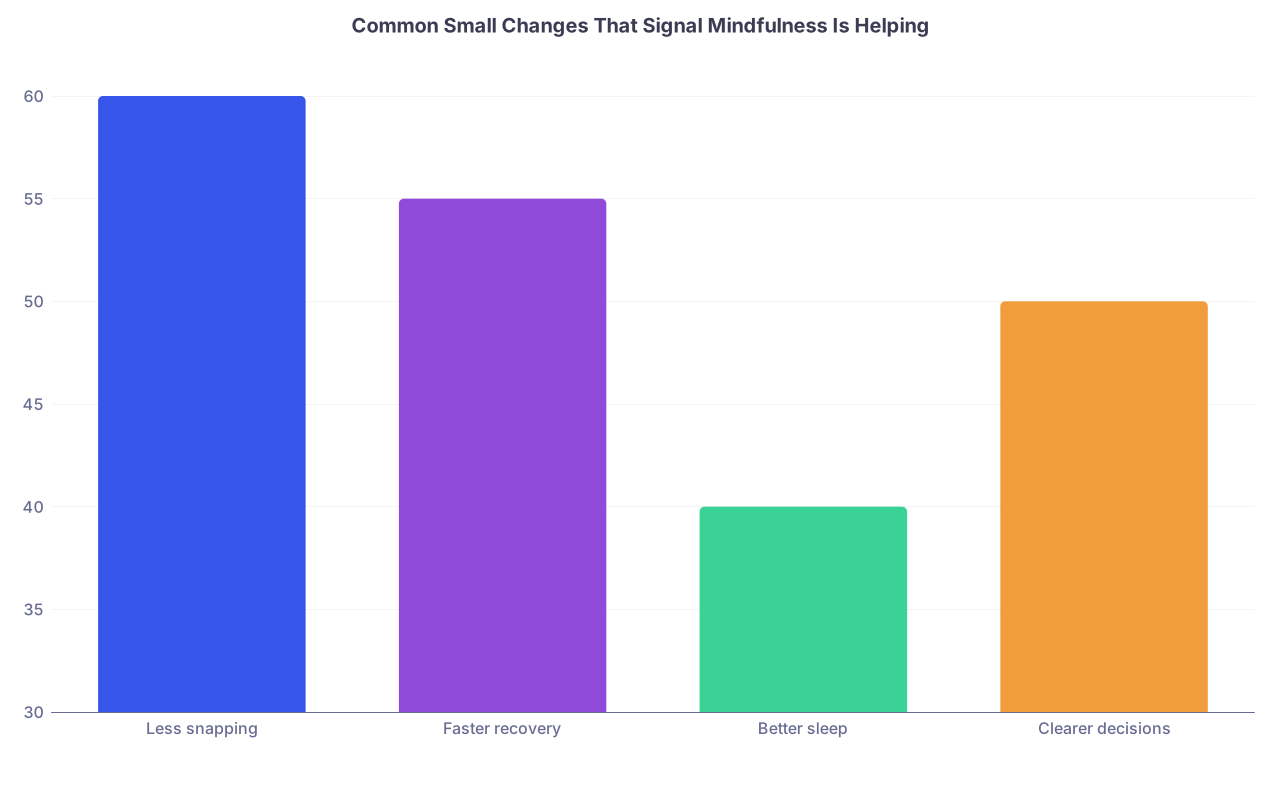
5. How do I know if it’s actually working, or if I’m just convincing myself it is?
Look for behavioral shifts, not mystical calm. Are you slightly less snappy on bad days? Do you recover from shame spirals a bit faster? Do you occasionally catch yourself mid-panic and think, “Oh, I’m really anxious right now,” instead of just being the anxiety? Those small changes are the signal. Not whether you feel calm all the time—nobody in medicine does.
| Category | Value |
|---|---|
| Less snapping | 60 |
| Faster recovery | 55 |
| Better sleep | 40 |
| Clearer decisions | 50 |