
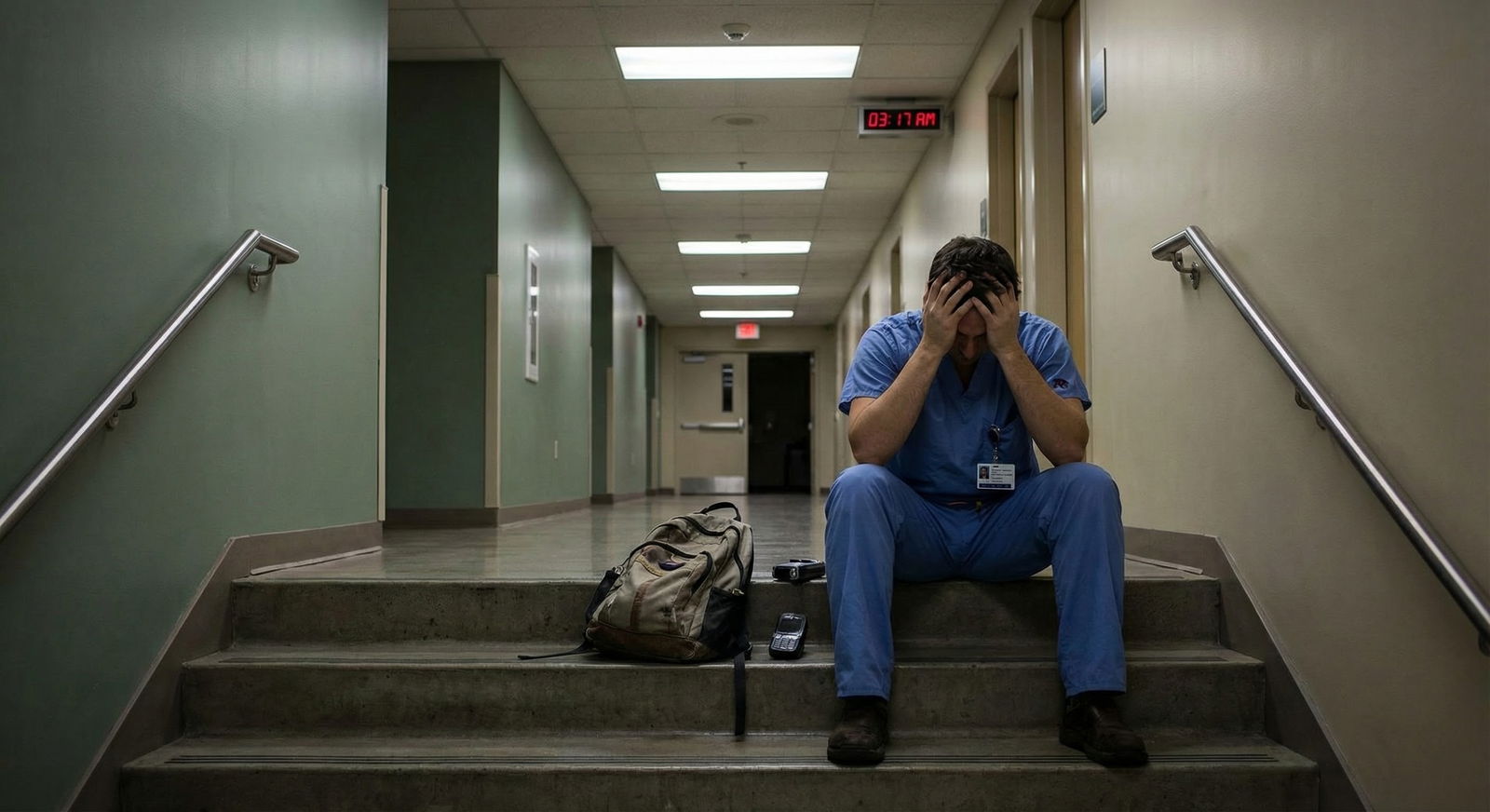
It’s 1:17 a.m. You’re on call. Again. Your eyes hurt, your brain feels like cotton, and some well-meaning faculty member just told you, “Have you tried mindfulness? It really helps with burnout.”
So you did. You downloaded an app. You sat on the floor for 10 minutes, focused on your breath like they said… and you still felt like garbage. Maybe worse, because now you’re exhausted and you feel like a failure at “being mindful.”
And the thought creeps in:
If mindfulness doesn’t work for me… is this just it? Am I doomed to be burned out forever and somehow it’s my fault?
Let me be blunt: no, you’re not doomed. And no, you’re not broken because one strategy—or ten strategies—didn’t magically fix an objectively brutal environment.
But I get why it feels that way.
The Quiet Panic Behind “Mindfulness Didn’t Work”
You try to do everything “right.”
You show up early. You stay late. You’re nice to everyone. You swallow your frustration when an attending snaps at you. You accept the “this is just how training is” speech. You even buy into the “wellness curriculum” and actually attend the forced mindfulness session in the lecture hall while everyone else scrolls.
And then… nothing.
You still wake up dreading your rotation. Your chest tightens when your pager goes off. You feel guilty for not caring more, then guilty for caring at all because caring hurts.
So your brain goes straight to worst-case thinking:
- “Mindfulness is supposed to help burnout. It didn’t help me. So I must be really screwed.”
- “Everyone else seems to benefit. Maybe I’m just not resilient enough.”
- “If I can’t even do breathing right, what does that say about me as a future physician?”
Here’s the truth that gets buried under all the performative “wellness” talk:
Mindfulness is a tool. Not magic. Not a moral test. And definitely not an obligation.
If you tried it and it “didn’t work,” that doesn’t mean you’re stuck. It usually means one (or more) of these things:
- The way it was taught to you was shallow or condescending
- Your expectations of what it’s supposed to do were unrealistic
- Your level of burnout is far beyond what a 10-minute app can touch
- You need different tools first (or instead)
- The system around you is the problem, not your lack of meditation
You’re not failing mindfulness. You’re reacting like a human in an inhuman setup.
Mindfulness Is Being Oversold to Trainees (And It Makes You Feel Broken)
Let me say the quiet part out loud: a lot of “mindfulness in medicine” has become a way to put the responsibility back on you.
You’re drowning in work, charting until midnight, seeing more patients than makes sense, getting evaluated constantly—and the institution rolls out a lunch-time mindfulness seminar with hummus wraps and calls it “addressing burnout.”
So of course, when that doesn’t fix anything, you don’t think:
“Well, that was a superficial intervention that never addressed root causes.”
You think:
“Wow, other people probably feel better after this stuff. Why am I still miserable? Maybe I’m just not cut out for this.”
That’s the trap.
Mindfulness was never meant to fix systemic abuse, unsafe staffing, or toxic culture. It’s not a bandaid for a bullet wound. It was meant as a way to relate differently to your own mind, not to make 28-hour calls feel like a spa day.
So no, you’re not “stuck burned out” if it doesn’t fix everything. You were sold an inflated promise in a broken environment.
Different Forms of “Mindfulness” Hit Differently
There’s also this problem: what you’ve been handed as “mindfulness” in training is often one specific, rigid version—sit still, focus on the breath, no thoughts allowed.
If that doesn’t click, you assume the whole category is useless.
But “mindfulness” is actually a cluster of skills and practices. Some hit harder for medical people than others.
| Type | Time Needed | Good For |
|---|---|---|
| Breath awareness | 1–5 min | Acute stress, pager anxiety |
| Body scan | 5–20 min | Sleep, somatic tension |
| Walking mindfulness | 2–10 min | Between patients |
| Noting thoughts | 2–5 min | Rumination, self-criticism |
| Loving-kindness | 5–15 min | Shame, compassion fatigue |
You might hate sitting meditation but respond pretty strongly to:
- A 3-minute body scan in the on-call room when your back is screaming
- A “noting thoughts” exercise after you get harsh feedback and your brain spirals
- A 5-minute compassion practice directed toward yourself after a bad outcome
If you’ve only tried “close your eyes and follow your breath for 10 minutes” in a noisy apartment while half-dissociating after call… that’s not enough data to declare “mindfulness doesn’t work for me.”
Sometimes it’s the wrong tool for the moment, not the wrong tool for you.
What If I’ve Tried Different Things And I Still Feel Fried?
Okay, but what if you have tried more than one thing?
Maybe you’ve done:
- An 8-week MBSR course
- A couple of apps
- A required session during clerkship
- Some random YouTube guided meditations
And you still feel like your soul is sandpaper.
This is usually the point where the fear spikes: “So there’s something fundamentally wrong with me.”
No. Here’s what’s more likely going on:
You’re not burned out. You’re crispy.
Like, way down the line. Mindfulness is much better as an early warning system than as a late-stage salvage operation. When you’re already at the “I fantasize about quitting and moving to a cabin” stage, it can help maybe 5–10%. Useful, but not enough to feel transformational.You’re mixing up “mindfulness” and “numbing out.”
If every time you sit, you’re so exhausted that you just fall half-asleep or dissociate, your nervous system is saying: “I need rest and safety, not more awareness.”You’re trying to self-treat something that might need professional help.
Anxiety, depression, trauma, moral injury—these are not things you should be expected to fix with an app between consults.The environment keeps re-injuring you.
If your day is basically constant micro-traumas—shaming, fear of failure, moral distress—then mindfulness without boundaries or change is like rinsing a wound you keep walking barefoot on.
If this is you, your next move isn’t “try harder at mindfulness.” It’s change the plan.
Mindfulness As Data, Not Judgment
Here’s a reframe that helped me a lot:
Use your reaction to mindfulness as information, not as a verdict.
If you sit for 5 minutes and feel:
- Waves of hopelessness
- Or nothing at all
- Or extreme anxiety that doesn’t settle
- Or a sense of “this is useless; nothing can help”
That’s not failure. That’s diagnostic.
That’s your system telling you:
“I’m past the point where self-guided tools alone are enough. I need support, boundaries, or an exit ramp from something that’s hurting me.”
It’s like getting a troponin back that’s mildly elevated. You don’t yell at the troponin for not being lower. You ask: what is this number telling me?
Same here. Mindfulness is just one more lab value about your internal state.
Okay, So What Else Is There Besides Mindfulness?
You’re probably worried I’m going to say “go to therapy” and nothing else. I am going to say go to therapy, but not as some moral judgment. Just as a practical, powerful option.
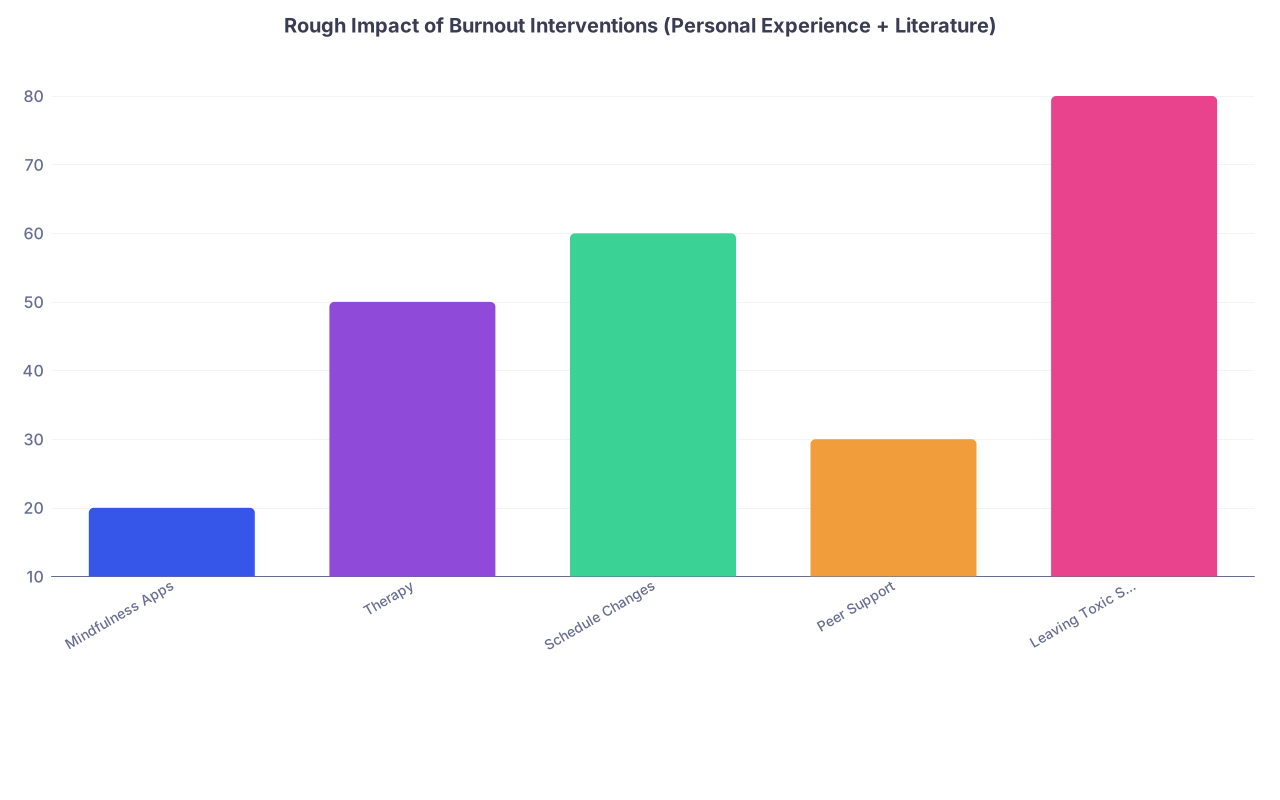
On top of that, there are several other “non-mindfulness” levers that actually matter for burnout.
| Category | Value |
|---|---|
| Mindfulness Apps | 20 |
| Therapy | 50 |
| Schedule Changes | 60 |
| Peer Support | 30 |
| Leaving Toxic Setting | 80 |
Is this precise science? No. But it matches what I see over and over.
The things that tend to move the needle most for severely burned-out trainees:
Schedule or rotation changes
Switching off a notorious malignant service. Asking for a lighter month after crushing ICU. Saying no to “optional” research you secretly dread. These are not character flaws. They’re survival moves.Therapy with someone who gets medicine
Not “just breathe.” Actual work on perfectionism, shame, trauma, imposter syndrome. Someone who doesn’t need you to explain what “pre-rounding” is.Peer support that’s real, not performative
Late-night call room venting where people actually admit how bad it feels. Not the curated “I learned so much from that horrible feedback” nonsense.Boundary setting that feels terrifying but is necessary
Saying, “I can’t safely take more patients right now.” Or emailing to say you need a mental health day. Or—yes, sometimes—changing programs or specialties.
Mindfulness can support all of that. It can make it easier to notice when you’re crossing your own lines, or to pause before you agree to something you’ll regret. But it’s not the whole plan. It was never meant to be.
The Ethics Piece: You Are Not Obligated to Be Infinitely Resilient
Let’s drag ethics into this, because this isn’t just about “coping skills.” It’s about what kind of physician you’re allowed to be.
Training culture quietly feeds you this message:
“If you can’t stay compassionate and effective no matter how many hours you work, maybe you’re not cut out for medicine.”
That’s garbage. Ethically, that’s upside down.
You can’t deliver ethical care if you’re ground into dust. You can’t think clearly, self-reflect, or maintain boundaries with patients if you’re running on fumes and shame.
So if mindfulness doesn’t “fix” your burnout, that’s not evidence that you’re defective. It’s evidence that medicine has a duty of care to you that isn’t being met by telling you to “just be more present.”
You are allowed—ethically allowed—to:
- Need more than internal coping strategies
- Refuse to sacrifice your entire self on the altar of “resilience”
- Take your own suffering seriously, even if patient suffering seems “worse”
If anything, noticing that you’re not okay and acting on it is a form of ethical maturity, not weakness.
How to Experiment Without Blaming Yourself
If you still have a tiny sliver of energy to try again—with less self-judgment this time—here’s what I’d do.
Keep it small. Think “experiments,” not “lifestyle overhaul.”
Pick one of these to play with for a week or two:
Micro check-ins instead of “meditation practice.”
Three times a day, for 30 seconds, pause and name out loud (quietly):
“Body: [tired/tense/numb]. Emotions: [anxious/flat/angry]. Mind: [racing/scattered/blank].”
No fixing. Just naming. Data collection.One compassionate phrase on purpose.
After something goes wrong, instead of your usual “I’m such an idiot,” insert:
“Of course this is hard. Anyone in my position would be struggling.”
Whether you believe it or not is irrelevant at first.Mindful transition between work and home.
Before you enter your place, sit in your car or on the sidewalk for 60 seconds and feel the contact of your body on the seat, your feet on the ground, the air on your face. You just mark: “Work day is ending. Home is starting.” That’s it.
If even that feels like too much, that’s info too. That’s your signal to stop trying to be your own therapist and get actual support.
And if anything you try makes you feel worse? You’re not failing. You’re just finding your edges. That’s useful.

You’re Allowed To Ask Bigger Questions
There’s this other fear underneath all of this:
“What if mindfulness doesn’t work because medicine itself is wrong for me?”
That’s the nuclear thought. The one you probably don’t say out loud.
Here’s what I’ll say: burnout can absolutely distort your sense of what’s possible. Everything feels like “forever” when you’re exhausted. So I don’t trust any big career decisions made at peak depletion.
But. If you’ve been burned out for years, tried multiple supports, advocated for changes, and still feel constantly dead inside… then yeah, it’s honest to ask if something more fundamental needs to change.
Asking that question does not mean you wasted your training. It does not mean you’re weak. It means you’re noticing reality.
Mindfulness might help you hear that question more clearly. Or it might just confirm, over and over, how much pain you’re in.
Either way, that’s not failure. That’s information you can use.
FAQ: The Six Questions I’d Be Too Scared To Ask Out Loud
1. What if I try mindfulness seriously for a while and literally nothing changes?
Then it’s data, not doom. It suggests that your burnout is being driven mostly by external factors (schedule, culture, workload, trauma) rather than just your internal reactivity. At that point, the next step isn’t “try harder internally,” it’s look at external changes: schedule adjustments, talking to program leadership, therapy, maybe a leave of absence. You’re not stuck—you’ve just confirmed you need a different category of help.
2. Does it mean I’m not cut out for medicine if mindfulness doesn’t help me?
No. Being “cut out for medicine” has been romanticized into “able to endure endless harm with a good attitude.” That’s nonsense. If anything, noticing that this hurts and refusing to gaslight yourself into thinking it’s fine is a sign you still have a functioning moral compass. That’s what good physicians need. Not limitless tolerance for suffering.
3. Is it possible that mindfulness actually makes me feel worse—and is that bad?
Yes, it can. When you stop distracting yourself for a second, you might meet all the fear, sadness, and anger you’ve been suppressing to function. That can feel like falling apart. It doesn’t mean mindfulness is bad or you’re bad. It means you might need a safer container—like therapy—to work with what comes up, instead of trying to hold all of it alone at 2 a.m. on a call shift.
4. How do I know if this is just “normal stress” vs real burnout that needs more than apps?
Rough rule: if rest actually restores you and you can still feel occasional joy or meaning, you’re probably in heavy stress territory. If rest doesn’t touch your exhaustion, you feel detached or numb with patients, and you dread work even after a break, that’s burnout. At that point, you deserve more than self-help tools. That’s “bring in reinforcements” territory.
5. Am I being ungrateful or weak if I need time off or schedule changes because I’m burned out?
No. Gratitude doesn’t require self-destruction. You can be grateful for the opportunity to train and still refuse to sacrifice your mental health completely. Weakness is ignoring a failing organ system until it crashes. Strength is intervening early. You’d never call a patient weak for needing treatment instead of just “coping better.”
6. What if I do everything—mindfulness, therapy, boundaries—and I still hate this?
Then that’s a painfully clear answer: the problem isn’t you. It’s the fit. Or the setting. Or the specialty. And you’re allowed to act on that. Maybe that means changing programs, changing fields within medicine, or leaving clinical work eventually. That’s not a defeat; that’s you choosing a life you can actually live in. Mindfulness doesn’t lock you into medicine—it can give you the clarity to walk a different way without lying to yourself.
Bottom Line
You are not stuck burned out because mindfulness hasn’t “worked” for you.
Two things to hold onto:
- Mindfulness is a tool, not a cure-all or a character test. If it doesn’t fix things, that’s information, not a verdict on your worth or resilience.
- When a tool doesn’t work, you don’t blame the user. You change the plan: different practices, real support, system-level changes, and yes, sometimes different paths.
You’re not failing at wellness. You’re a human reacting normally to an abnormal, often brutal system. And that means there are still moves left to make.


