
Most residents leave money on the table every month because they never treat shift differentials as negotiable. That is a mistake.
You are trading nights, weekends, and holidays for patient care and hospital staffing stability. Those hours have market value. If you do not learn to price them and negotiate them, someone else will enjoy the savings created by your silence.
This is not about becoming a cut‑throat mercenary. It is about being a professional who understands that time, fatigue, and risk need to be compensated fairly. You can negotiate shift differentials as a resident. You just have to do it correctly, in the right forum, with the right data, and at the right time.
Let’s walk through a concrete, step‑by‑step protocol.
Step 1: Understand What You Can Actually Negotiate
Before you start talking numbers, you need to know which levers even exist. Residents are not attendings; your leverage and constraints are different.
Know the buckets
There are four main ways your nights/weekends/holidays can be compensated:
Base GME resident salary
- Usually fixed by PGY level and often unchangeable for one individual.
- More commonly addressed via program‑wide or GME‑wide changes, not one‑off deals.
Shift differentials on your standard schedule
- Extra pay per hour or per shift for:
- Nights
- Weekends
- Holidays
- “Late” or “evening” shifts
- Sometimes built into a house‑wide policy; sometimes negotiable within departments or for specific roles (e.g., night float, ICU, ED).
- Extra pay per hour or per shift for:
Moonlighting rates and differentials
- Internal moonlighting within your own institution.
- External moonlighting at other hospitals or clinics.
- These are much more negotiable than your base salary.
Non‑cash benefits tied to off‑hours work
- Meal vouchers.
- Parking reimbursement.
- Ride‑share / taxi home after overnight.
- Extra PTO days for a block of nights.
- “Comp time” built into future rotations.
If you go into a meeting trying to negotiate the wrong thing (like a one‑off higher PGY‑3 base salary), you will lose credibility immediately. Focus where there is actual flexibility: differentials and moonlighting.
Step 2: Get the Local Reality on Paper, Not Hearsay
You cannot negotiate against vibes. You negotiate against documented policies and real numbers.
Gather your documents
Ask—politely but directly—for:
- Current GME resident benefits and compensation booklet or PDF.
- Any HR policy on:
- Shift differentials.
- Night differentials.
- Weekend/holiday pay.
- On‑call and backup call rates.
- Moonlighting policy:
- Internal rate schedules.
- Eligibility by PGY year.
- Limits on hours.
- Union contract, if you are in a unionized program (CIR/SEIU, state union, etc.).
If you “cannot find” these, that is usually because no one has been forced to write them down in years. Push a little:
“Could you send me the written policy or the last GME document that outlines differentials and moonlighting rates? I want to be sure I am quoting things accurately.”
That phrase—“quoting things accurately”—calms admin because it signals you are not just rumor‑driven.
Build a snapshot
Make yourself a simple table of what you find. Something like:
| Category | Current Policy |
|---|---|
| Base salary PGY‑2 | $64,000 |
| Night differential | None |
| Weekend pay | None |
| Holiday pay | Comp day only |
| Internal moonlighting | $85/hour flat, all shifts |
Now you know your starting line.
Step 3: Find Out What the Market Actually Pays
You are not negotiating in a vacuum. You are negotiating against:
- What competing hospitals pay residents and moonlighters.
- What the hospital already pays other staff for off‑hours work.
Benchmark 1: Other residents and moonlighting gigs
Sources:
- Fellow residents in your region.
- Graduated seniors now doing hospitalist or nocturnist work.
- Group chats / alumni channels / specialty‑specific Slack groups.
- Locums companies (for moonlighting rate comparisons).
You want real numbers, not averages from anonymous forums. Examples I have seen:
- Urban academic center internal moonlighting:
- $120/hour nights, $100/hour days.
- Community hospital ED resident moonlighting:
- $150/hour nights, $130/hour days.
- Night float “differential” built into salary:
- $5,000/year extra for residents on a dedicated night float track.
Write down concrete numbers, not “they pay more.”
Benchmark 2: What the hospital pays nurses and allied staff
Hospitals rarely give residents a better deal than nurses. But they hate looking obviously unfair on paper.
Ask or discreetly find out the RN and tech differentials at your institution:
- Night differential.
- Weekend differential.
- Holiday pay (often time‑and‑a‑half or double time).
You may hear numbers like:
- RNs: +$4–$6/hour for evenings, +$8–$10/hour for nights, +$3–$4/hour for weekends, holiday pay 1.5–2×.
Convert that into a model you can reference later:
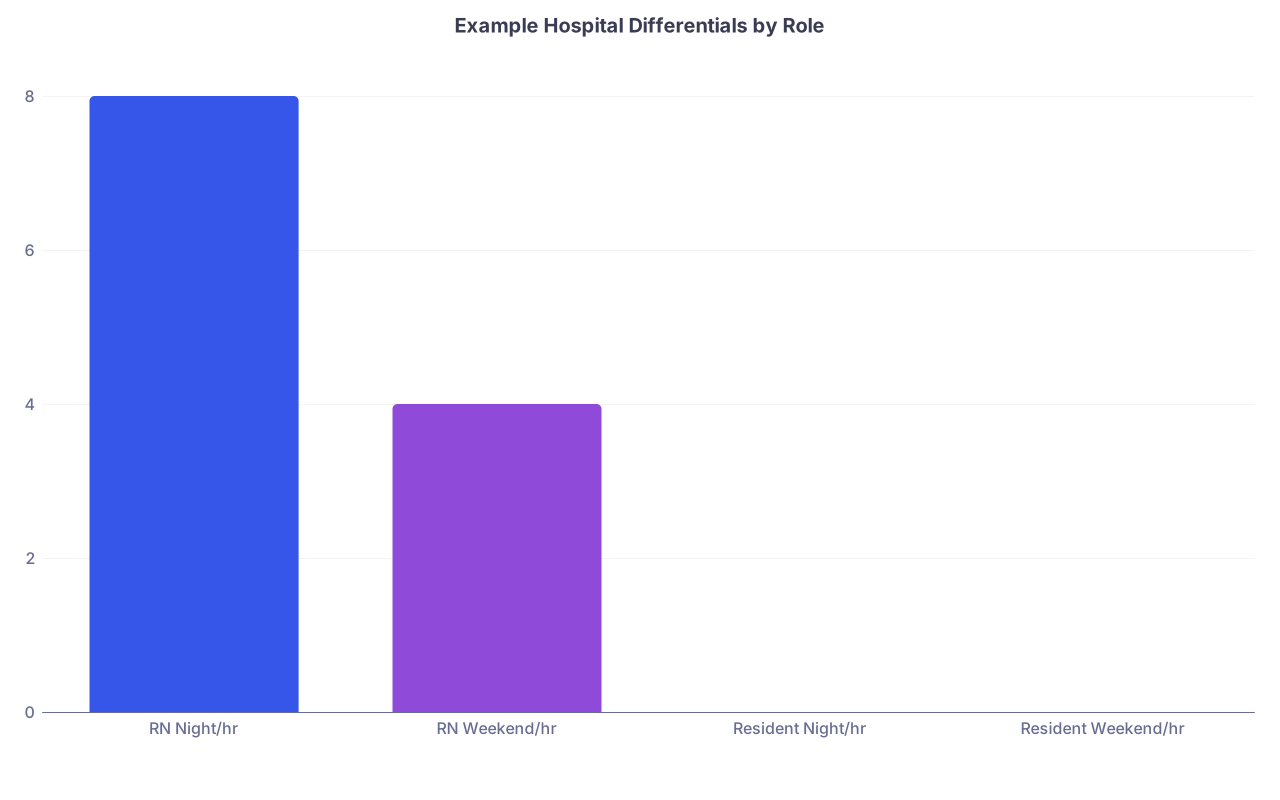
| Category | Value |
|---|---|
| RN Night/hr | 8 |
| RN Weekend/hr | 4 |
| Resident Night/hr | 0 |
| Resident Weekend/hr | 0 |
This visual gap is your leverage. Administrators hate charts like this showing zero on your side.
Step 4: Pick Your Target: Standard Shifts vs Moonlighting
You will not get every lever to move at once. Decide where you want the win.
Scenario A: You want better compensation for scheduled residency nights/weekends
Harder, but not impossible, especially if:
- Your program is expanding your night coverage.
- They are struggling to fill night float or ICU shifts.
- Morale is clearly dropping over night workload.
What is realistic:
- A modest hourly differential (e.g., $5–$10/hour for nights).
- A flat stipend per 2‑ or 4‑week night block.
- An extra PTO day per X number of night shifts.
Scenario B: You want higher moonlighting differentials
Much more flexible, especially if:
- Hospitals are short on coverage.
- They are offering unfilled moonlighting shifts regularly.
- They pay outside locums or NPs more than they pay you.
What is realistic:
- Higher base moonlighting rate for all shifts.
- Tiered rates:
- Example: $100/hour days, $120/hour nights, $130/hour major holidays.
- Premium pay for last‑minute coverage.
If your primary goal is to boost income, moonlighting rate negotiation will usually give you a better return for your effort.
Step 5: Identify Who Actually Has the Power
Residents waste months complaining to the wrong people.
Here is how the power usually breaks down:
Program Director (PD)
- Controls: schedule design, how many nights/weekends, some local perks.
- Influence: can advocate upward for differentials and funding.
- Limitation: often does not directly control pay scales.
Department Chair / Service Line Chief
- Controls: departmental budget, moonlighting rates, coverage models.
- Often the critical decision‑maker for moonlighting differentials.
GME Office / DIO
- Controls: house‑wide pay policies, institutional contracts.
- Important for standardized differentials or union‑related changes.
HR / Finance
- Controls: final sign‑off for pay changes, especially if coded as “premium pay.”
In practice, your path usually looks like:
- Start with your PD (or APD).
- They bring it to Chair or GME.
- Chair/GME works with HR/Finance.
You want to equip your PD and Chair with a clean, reasonable proposal they can carry forward, not a pile of complaints.
Step 6: Build a Concrete, Defensible Proposal
You are not asking for a favor. You are proposing a structured adjustment to align compensation with workload and recruitment needs.
Pick a structure
Use something that is easy to cost out. Examples:
Simple hourly differential
- “$8/hour extra for all hours worked between 7 pm and 7 am.”
- “$5/hour extra for weekend shifts.”
Flat stipend per night block
- “$1,000 additional stipend for a 4‑week dedicated night float block.”
Tiered moonlighting rates by shift type
- Days: $100/hour
- Nights: $120/hour
- Weekends: $125/hour
- Holidays: $140/hour
Non‑cash supplement plus a smaller cash differential
- “$5/hour night differential + one post‑night Uber home up to $30.”
Cost it out yourself
Do their work for them. Rough example:
- PGY‑2 does 20 night shifts/year.
- Each shift is 12 hours.
- Proposed differential: $8/hour.
Annual cost per PGY‑2:
20 shifts × 12 hours × $8 = $1,920
If you have 15 residents doing similar night duty:
15 × $1,920 ≈ $28,800/year
That is a rounding error in a department budget. When you walk in with a number like that, the conversation changes from “No way, that sounds expensive” to “Is $30k a year worth improved recruitment and retention?”
Step 7: Time Your Ask Strategically
Good ideas get rejected if they are brought at bad times.
Best windows:
- Right after a major pain point:
- Several residents quit moonlighting because the pay is poor.
- Nights are chronically uncovered.
- They are begging seniors to pick up extra shifts.
- Before budget cycles:
- Departments build budgets on an annual cycle. Ask 3–6 months before that cycle, not after.
- When recruitment is on fire:
- Programs struggling to fill spots suddenly become very open to “competitive advantage” ideas: differentials are exactly that.
Do not try to negotiate differentials during:
- A major accreditation crisis.
- Active union contract negotiation if you are not part of that team.
- A public scandal or financial meltdown.
You want leadership slightly worried about staffing, not in full‑blown survival mode.
Step 8: Script the Conversation Like a Professional
You need a script, not vibes. Here is a format that works.
1. Open with alignment
“I want to talk about a structured way to improve our night and weekend coverage and make our program more competitive for recruitment.”
This frames you as someone solving their problem, not just chasing cash.
2. Present the gap with data
“Right now, residents receive no additional compensation for nights, weekends, or holidays, even though RNs and NPs here receive differentials for those hours. Moonlighting rates are flat at $85/hour for all shifts, which is significantly below what comparable hospitals in our region pay, especially for nights.”
Then you show a simple one‑pager:
- Current state.
- What other local institutions do.
- What your own hospital pays nurses.
3. Propose a specific solution
“I would like to propose a modest night differential of $8/hour for resident night shifts, and a tiered moonlighting rate of $100/hour for days and $120/hour for nights and weekends. Based on our typical schedules, the annual cost would be about $30,000 across the program.”
Make it embarrassingly reasonable. Let them be pleasantly surprised.
4. Tie it to outcomes they care about
- Reduced sick calls, burnout, and errors.
- Easier recruitment and retention.
- Less reliance on expensive locums or travelers.
“Several of us have stopped volunteering for moonlighting because the pay is not competitive with neighboring hospitals. Improving the differential would help fill those shifts internally at a lower cost than bringing in external coverage.”
5. Ask for a concrete next step
“Could we pilot this structure for one year for internal moonlighting and reassess? And is there a path to bringing a night differential request to GME for the core schedule?”
You are not asking them to “think about it.” You are asking for a process.
Step 9: Use Moonlighting as a Pressure Valve and a Benchmark
Moonlighting is where hospitals are usually the most flexible and the least standardized.
If they resist changing core residency pay, push on moonlighting first. A very common pattern I have seen:
- Internal moonlighting is at $75–$90/hour flat.
- Residents are not taking the shifts.
- Residents show that external gigs pay $110–$150/hour for nights.
- Department bumps internal nights to $110–$125/hour and days to $95–$100/hour.
Once that happens, the internal benchmark shifts. Admin has essentially admitted that your off‑hours time is worth more. That makes a later discussion about core differentials easier.
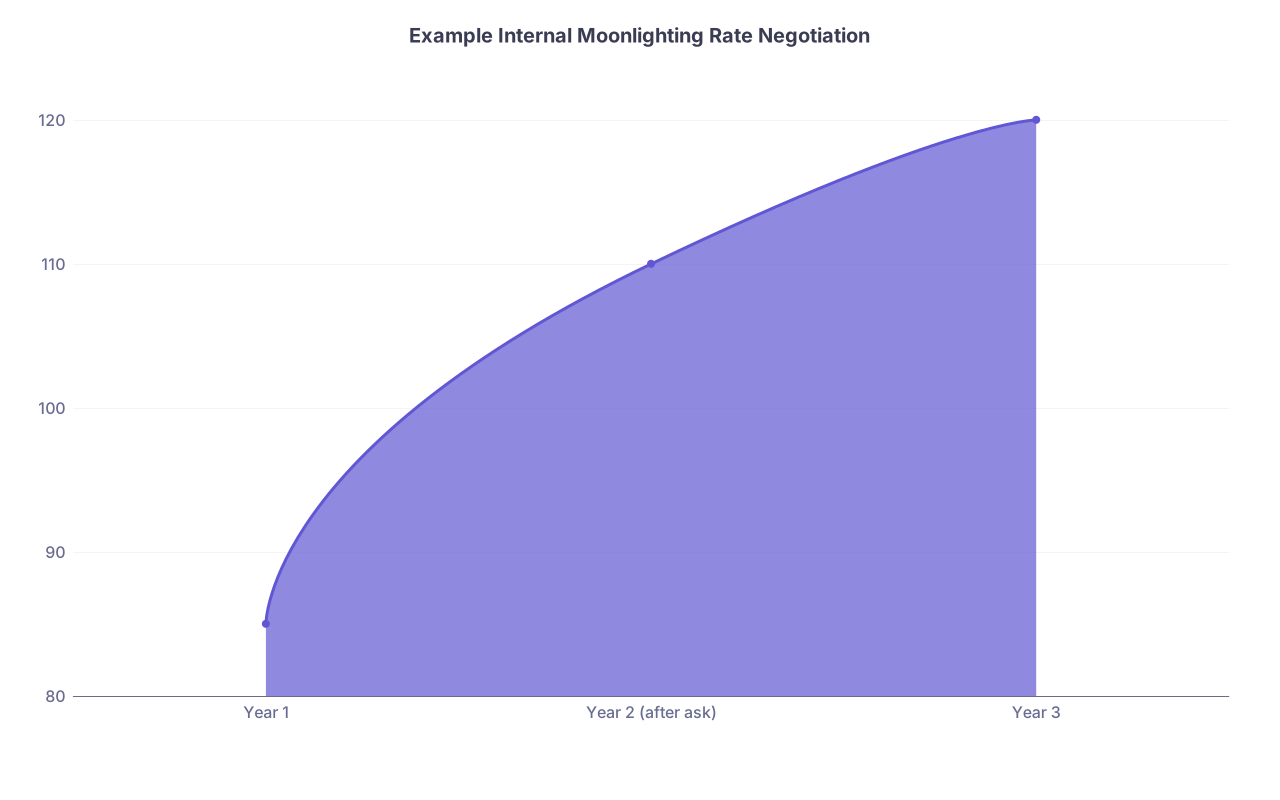
| Category | Value |
|---|---|
| Year 1 | 85 |
| Year 2 (after ask) | 110 |
| Year 3 | 120 |
If you are in a specialty like EM, anesthesia, ICU, or hospitalist‑style IM, moonlighting can easily be where you make the majority of your extra income—and where smart negotiation moves the needle the most.
Step 10: Coordinate, Do Not Freelance
You are usually not the only one annoyed with nights and weekends. Use that.
Get a small, aligned group
Ideal:
- 2–4 residents.
- Different PGY levels if possible.
- At least one senior who is respected by faculty.
You want:
- Consistency of message (no one undercuts the ask).
- Shared data (everyone is quoting the same benchmarks).
- Backup in meetings (you are not the only voice).
Do not do this
- One resident quietly negotiates their own secret night differential.
- Another tells leadership they are “fine with how things are.”
- Third person complains about “unfairness” in public but refuses to show up for actual meetings.
That chaos kills your credibility. Decide on:
- The exact numbers you are asking for.
- Which is the must‑have and which is the nice‑to‑have.
- Who will speak to PD, who will speak if invited to a GME/department meeting.
Step 11: Use Union or House Staff Organization If You Have One
If your hospital is unionized or has a formal house staff association, you have extra tools.
Common dynamics:
- Shift differentials and moonlighting rates are explicitly named in contracts.
- Admin cannot just say “No” and walk away; they must “bargain in good faith.”
- You have access to a professional negotiator who actually enjoys this stuff.
Your steps:
- Bring your data and proposal to the union rep or house staff leadership.
- Ask how similar institutions negotiated their differentials.
- Decide if this goes in:
- Mid‑contract “issues” meetings.
- The next full contract negotiation.
The downside: you lose some speed and individual flexibility. The upside: you gain real leverage and the possibility of house‑wide changes.
Step 12: If They Say No, Pivot—Do Not Sulk
You will not always get the yes on the first attempt. How you respond matters.
Ask why, precisely
Not “we cannot right now.” Push for specifics:
- Budget cycle locked?
- GME policy barrier?
- HR system cannot track resident differentials?
- Concern about “setting a precedent”?
Each of these has a different workaround.
Offer lower‑cost pilots
If they balk at full implementation, propose:
- Pilot only for:
- ICU nights.
- ED coverage.
- A single service with chronic coverage issues.
- Or a temporary differential for 12 months with outcome tracking:
- Fill rate improvement.
- Reduced sick calls.
- Resident satisfaction scores.
Shift the battlefield
If core differential is dead for now:
- Double down on improving moonlighting pay.
- Negotiate non‑cash improvements:
- Free parking for nights.
- Meal stipends or cafeteria vouchers.
- Guaranteed post‑call ride home.
- Push to reduce night/weekend volume if they will not pay more:
- Fewer admissions after midnight.
- Cap on new patients per night resident.
Sometimes the smartest move is to stop trying to win one fight and quietly win three adjacent ones.
Step 13: Protect Yourself When Moonlighting Externally
If external moonlighting is part of your plan, negotiation is simpler but the stakes are higher.
Your checklist:
- Make sure GME approves any external moonlighting.
- Confirm:
- Malpractice coverage (who provides it).
- Documentation system (Epic, Cerner, paper).
- Expected patient volume.
- Any “call” component beyond the shift itself.
Then talk rate.
For most in‑demand specialties, your first counteroffer should not be timid. If they open at $110/hour for nights:
“Most of my colleagues are being offered $130–$150/hour for night coverage in this region. For consistent overnight coverage, I would be comfortable at $140/hour.”
They might counter at $130. Fine. You just increased your annual income by thousands with one sentence.
And if they say no?
Walk. There is almost always another hospital desperate for coverage.
Step 14: Track Your Wins and Use Them Later
Once you get any improvement—however small—do two things:
Document the before/after.
- What were the rates?
- What changed?
- When did it start?
Collect data to prove it worked.
- Moonlighting shifts filled.
- Reduced last‑minute coverage scrambles.
- Fewer calls begging people to come in.
That data lets you:
- Justify increases in the future.
- Hand the playbook to the class behind you.
- Use your results when negotiating your first attending contract.
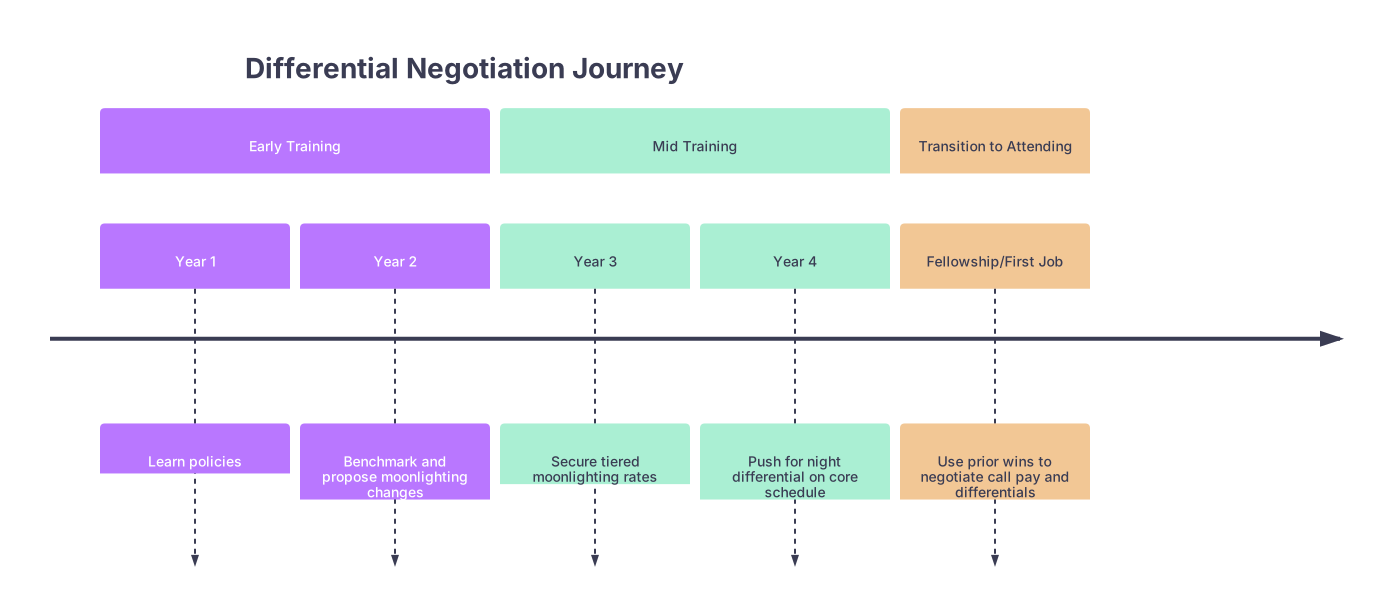
| Period | Event |
|---|---|
| Early Training - Year 1 | Learn policies |
| Early Training - Year 2 | Benchmark and propose moonlighting changes |
| Mid Training - Year 3 | Secure tiered moonlighting rates |
| Mid Training - Year 4 | Push for night differential on core schedule |
| Transition to Attending - Fellowship/First Job | Use prior wins to negotiate call pay and differentials |
You are not just solving a short‑term annoyance. You are learning how to price your time for the rest of your career.
A Quick Example: Putting It All Together
Resident scenario I have seen play out:
- PGY‑3 in IM at a community hospital.
- Internal moonlighting: $85/hour flat, all shifts.
- Nights are brutal, often uncovered.
- RNs making:
- +$8/hour nights
- +$4/hour weekends
- 1.5× on major holidays.
Steps they took:
- Pulled RN differential policy from HR.
- Asked peers at two local hospitals: internal moonlighting $100–$120/hour.
- Calculated cost difference of bumping nights/weekends to $115/hour:
- 600 moonlighting night/weekend hours per year.
- Extra $30/hour × 600 = $18,000/year.
- Met with PD and Chair with a one‑page proposal:
- Days: keep at $85/hour.
- Nights/weekends: $115/hour.
- Framed it as:
- “Cost‑effective alternative to hiring locums.”
- “Direct response to constant struggle to cover nights.”
- Got a “No” initially: “budget cycle closed.”
- Pushed for a 6‑month pilot funded from department discretionary funds.
- Pilot approved, filled nearly all moonlighting shifts. Data showed:
- Full coverage.
- Fewer last‑minute crises.
- At next budget cycle, moonlighting structure made permanent.
Total time from idea to permanent change: about 9–12 months. Worth it.
Visual Summary: Where to Focus Your Energy

| Target Area | Difficulty | Potential Impact | Best Timing |
|---|---|---|---|
| Internal moonlighting rates | Low–Medium | High | Anytime coverage is short |
| Night differential (core) | Medium–High | Medium–High | Before budget cycle |
| Weekend/holiday pay | Medium | Medium | After repeated coverage issues |
| Non‑cash perks (meals, parking) | Low | Low–Medium | Any time |
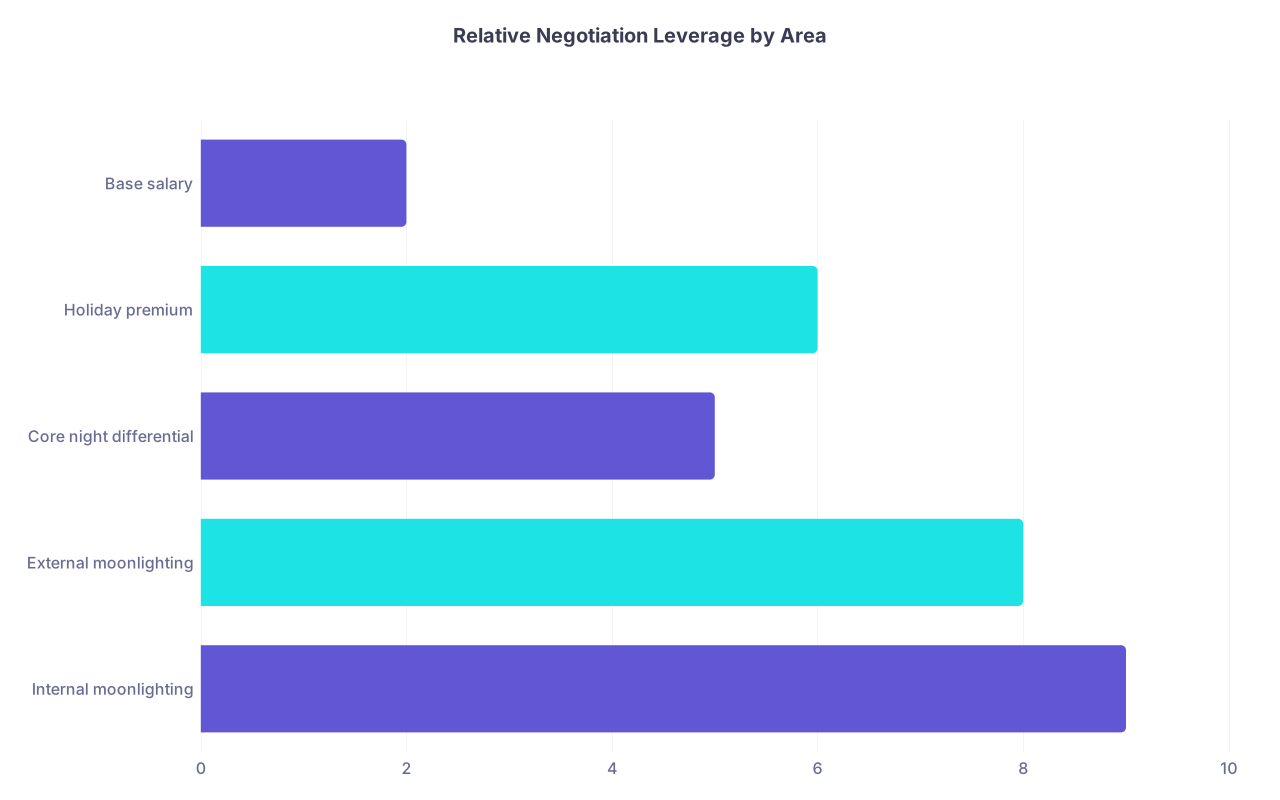
| Category | Value |
|---|---|
| Internal moonlighting | 9 |
| External moonlighting | 8 |
| Core night differential | 5 |
| Holiday premium | 6 |
| Base salary | 2 |

Final Thoughts: What Actually Matters
Let me boil this down to what you should actually do:
Treat differentials like a real contract term, not a taboo topic.
Get the policies, benchmark the market, and speak in concrete numbers. You are not asking for a favor. You are pricing work that is objectively harder and less desirable.Go after the most movable levers first.
Internal moonlighting and non‑cash perks usually move before core salary or house‑wide differentials. Use early wins to build credibility and data.Frame every ask as a solution to their problem.
Coverage, recruitment, burnout, safety. If your proposal makes those measurably better for a low cost, leadership will listen. And if they do not, you will know it is not because you asked wrong—it is because they decided resident time is cheap. Act accordingly in your future job choices.