
The way most students think about away rotations in competitive specialties is wrong.
You’ve been sold a story: “Do three aways, impress everyone, secure the letter, and you’re basically in.” That story is comforting. It’s also dangerously incomplete and, in some cases, flat-out false.
Let’s talk about what actually moves the needle for ortho, derm, plastics, ENT, neurosurgery, urology, rad onc, etc.—and what is just expensive cosplay in another hospital’s scrubs.
Myth #1: “You must do as many aways as possible to match competitive specialties”
This is the most expensive myth in the game.
The common play I see: student interested in ortho or ENT schedules three or four away rotations, burns $8–12k, kills their Step 2 prep, and ends up… pretty much where they started. Sometimes worse.
Here’s what the reality looks like when you strip away the drama.
| Specialty | Common Aways Done | Actually Helpful Range | Notes |
|---|---|---|---|
| Ortho | 2–3 | 1–2 | 3rd often marginal benefit |
| ENT | 2–3 | 1–2 | 1 strong home or away is key |
| Derm | 1–2 | 0–1 | Research often higher yield |
| Plastics | 2–3 | 1–2 | Quality > quantity |
| Neurosurg | 1–2 | 1 | Some match without any away |
Do programs like seeing aways? Often yes. Do they require three? No. For most people:
- The first away = large marginal benefit. It shows interest, gets you one more shot at a strong letter, gets you in front of another PD.
- The second away = sometimes helpful, especially if you have no home program or need another shot at a letter.
- The third away = diminishing returns, and for some applicants, negative returns (burnout, no time for Step 2 or research, more chances to have a mediocre eval somewhere).
Here’s the part programs do not put in their glossy brochures: every extra away is another opportunity to look average, tired, or awkward in a new setting. Programs do remember the student who insisted on staying until midnight “to show dedication” but then made obvious mistakes all day. They talk about it in their meetings.
What actually moves the needle: 1–2 well-chosen, well-executed aways, plus a home rotation done properly. And protecting time for your Step 2 and core performance.
Myth #2: “You need an away at your dream program to match there”
This one sounds intuitive: “If they meet me in person, they’ll love me, and then I’ll match there.”
Sometimes. But the data and the horror stories paint a different picture.
Programs absolutely use their own rotators to identify people to rank highly. But they also use aways to filter out people. You’re not just auditioning; you’re giving them a month of you at your worst: stressed, tired, trying too hard, in a foreign system.
Here’s the risk calculation nobody walks students through clearly:
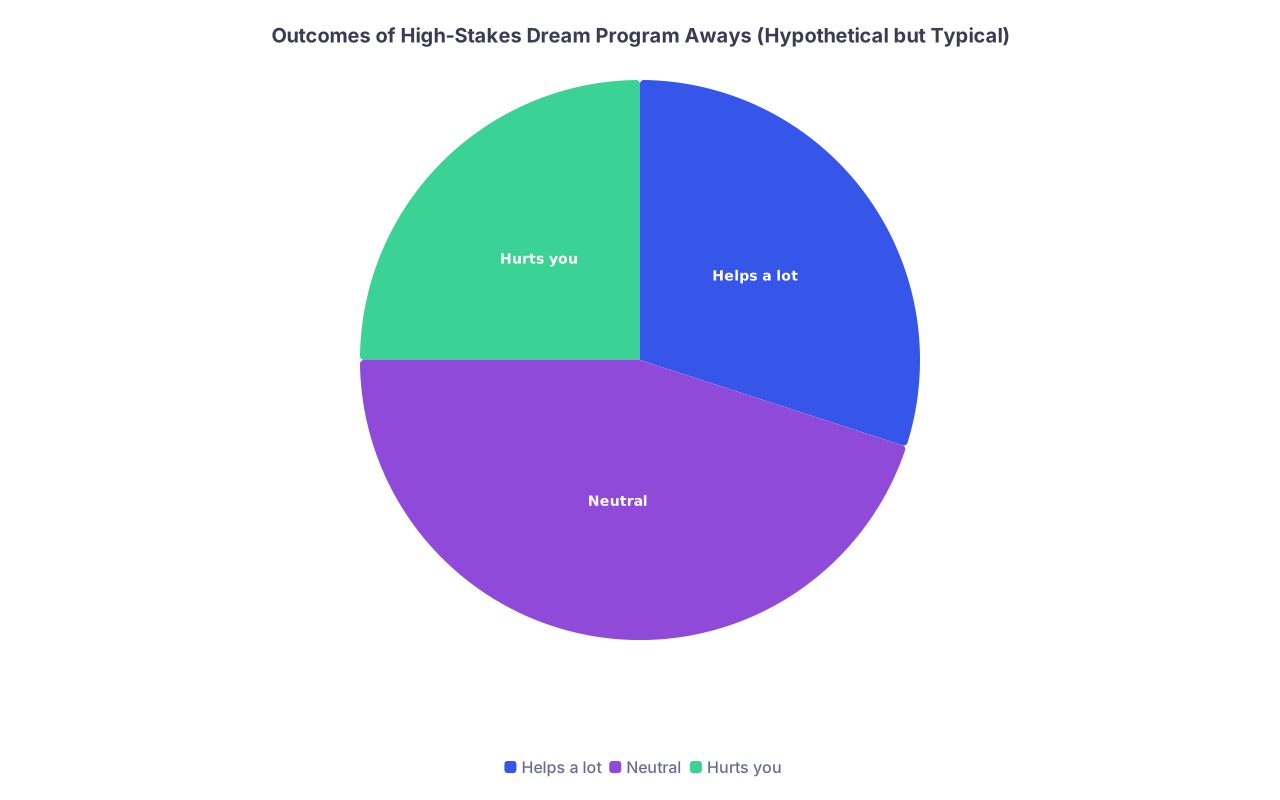
| Category | Value |
|---|---|
| Helps a lot | 30 |
| Neutral | 45 |
| Hurts you | 25 |
Roughly what I’ve actually seen across years of applicants in competitive fields:
- ~30%: The “home run” scenario. You click with the team, get a killer letter, and they rank you to match.
- ~45%: Neutral. You did fine. You’ll get an interview, but you didn’t become their “must have.”
- ~25%: You came off as a bad fit, awkward, or simply underwhelming. You might’ve actually reduced your odds compared to staying mysterious on paper.
If you’re the type who:
- Warms up slowly
- Is anxious in new social environments
- Struggles with confidence early in a rotation
then pinning your hopes on a single, all-or-nothing “dream program” away is a bad bet.
Away at dream program is most likely to help when:
- You already have strong stats and research and are competitive on paper
- You generally do well clinically and adjust quickly
- You can afford to “use” a month there without sacrificing Step 2 timing or critical research
If your app is weaker (low Step 1/2, limited research, no home program), a safer play might be:
- One away at a solid-but-not-ultra-elite program where you can realistically be a top rotator
- Use that strong letter and eval to get broader interview traction, then let your whole app market you—not just one month under a microscope at MegaBrand University.
Myth #3: “A strong away rotation can overcome weak scores”
This one has a tiny grain of truth and a massive pile of wishful thinking.
You’ve heard the story: “So-and-so had a 230 Step 2 and still matched plastics because they crushed their away.” That does happen. Rarely. Usually with other offsetting strengths (insane research, connections, unique background).
Programs in competitive specialties still use scores as a blunt instrument. Even with Step 1 pass/fail, Step 2 and your clinical grades are doing heavy lifting in screening.
Here’s the usual order of magnitude for what shifts the needle in these specialties:
| Factor | Relative Impact | Notes |
|---|---|---|
| Step 2 CK | Very high | First-pass screen at many places |
| Clinical grades | High | Especially surgery/medicine clerkships |
| Research output | Moderate–high | Derm/plastics/rad onc especially |
| Home rotation | High | Crucial for home program chances |
| Best away rotation | Moderate–high | Can help, but rarely magic fix |
| Extra away rotations | Low–moderate | Diminishing returns |
A truly exceptional away can:
- Get you ranked higher than your scores alone would justify
- Convince one program to take a bet on you despite weaker metrics
But it cannot:
- Completely erase a pattern of underperformance across the rest of your record
- Override PD and faculty concerns if they see inconsistency, low Step 2, and no other standout features
The more competitive the field (derm, plastics, ENT, ortho at big-name places), the less likely any single rotation is to fully “rescue” a weak application. If you’re banking on, “I’ll just be the hardest working student and they’ll overlook my 213,” you’re trying to beat the odds with vibes.
What actually helps a weaker-scores applicant:
- Strong Step 2 (if Step 1 was low/pass and you can still take 2 before apps)
- A top 1–2% letter from a known name who will go to bat for you
- Consistent honors in relevant clerkships
- Solid, sustained research output with at least one meaningful role
Away rotations are a multiplier, not a replacement. They multiply what’s already there.
Myth #4: “You have to be ‘on’ 24/7 on away or you’ll blow it”
This myth turns smart students into exhausting caricatures of themselves. The ones who:
- Volunteer for literally everything
- Never sit down
- Answer every question first
- Stay late with no actual purpose
- Hover in the OR like an over-caffeinated shadow
Then they wonder why feedback comes back as “tries hard, but a bit much” or “needs to read the room.”
Here’s what faculty and residents actually care about on away:
- You do your work competently and reliably
- You make the team’s life easier, not harder
- You’re pleasant to be around at 2 pm and at 10 pm
- You show growth over the month
No one is giving you extra points for being exhausted and performative. They do not care that you stayed until 11 pm if:
- You were inefficient all day
- You double-asked questions they answered during rounds
- You made the intern feel like a babysitter
The students who crush aways:
- Show up on time, prepared, rested
- Learn the workflow quickly and anticipate predictable needs
- Ask targeted questions, not constant ones
- Read that night about the cases they scrubbed on and the ones for tomorrow
- Know when to disappear so residents can finish scut and go home
You’re not auditioning for “most eager med student.” You’re auditioning for “future colleague I can tolerate on a 28-hour call.”
Myth #5: “Prestige aways matter more than fit”
Here’s a quiet little secret: a slightly less famous program where you were the clear top student will often help you more than a hyper-elite away where you were anonymous or average.
Everyone chases the same 10–15 “name” places in each specialty. Then they’re shocked when they’re one of 6–8 rotators that month and nobody really remembers them.
I’ve seen:
- A student do an away at a mid-tier ENT program, be the obvious standout, get a glowing letter, and match there over applicants from bigger-name places.
- Another student rotate at a top-5 ortho place, blend in, get a generic letter, and end up with less to show for it than if they’d gone somewhere slightly “less competitive” and dominated.
The letter that moves the needle isn’t from the fanciest zip code. It’s the one that reads like this:
“This is one of the top 5 medical students I’ve worked with in the last decade. I would be thrilled to have them as a resident at our program.”
Not:
“X was enthusiastic, hardworking, and will be an asset to any residency program.”
You can get the first kind of letter at big-name places. It’s just harder because the comparators are strong and they’ve seen a lot of rotators. At some mid-tier programs, you can stand out more easily—and those faculty are often well-known locally or regionally.
So no, the algorithm is not: “Fancy away name → powerful letter → match anywhere.”
The algorithm is: “Program where you actually shine → powerful letter → better odds across your whole list.”
Myth #6: “No away = no chance in competitive specialties”
This one’s simply false.
Reality:
- Some derm applicants match with heavy home exposure and research, but no away
- Some neurosurgery and ortho applicants match at their home program without ever leaving the building
- Students from schools without home programs sometimes build their own equivalent with research, sub-I’s at affiliated sites, and one well-chosen away
Here’s a rough breakdown of what I’ve seen in competitive matches:
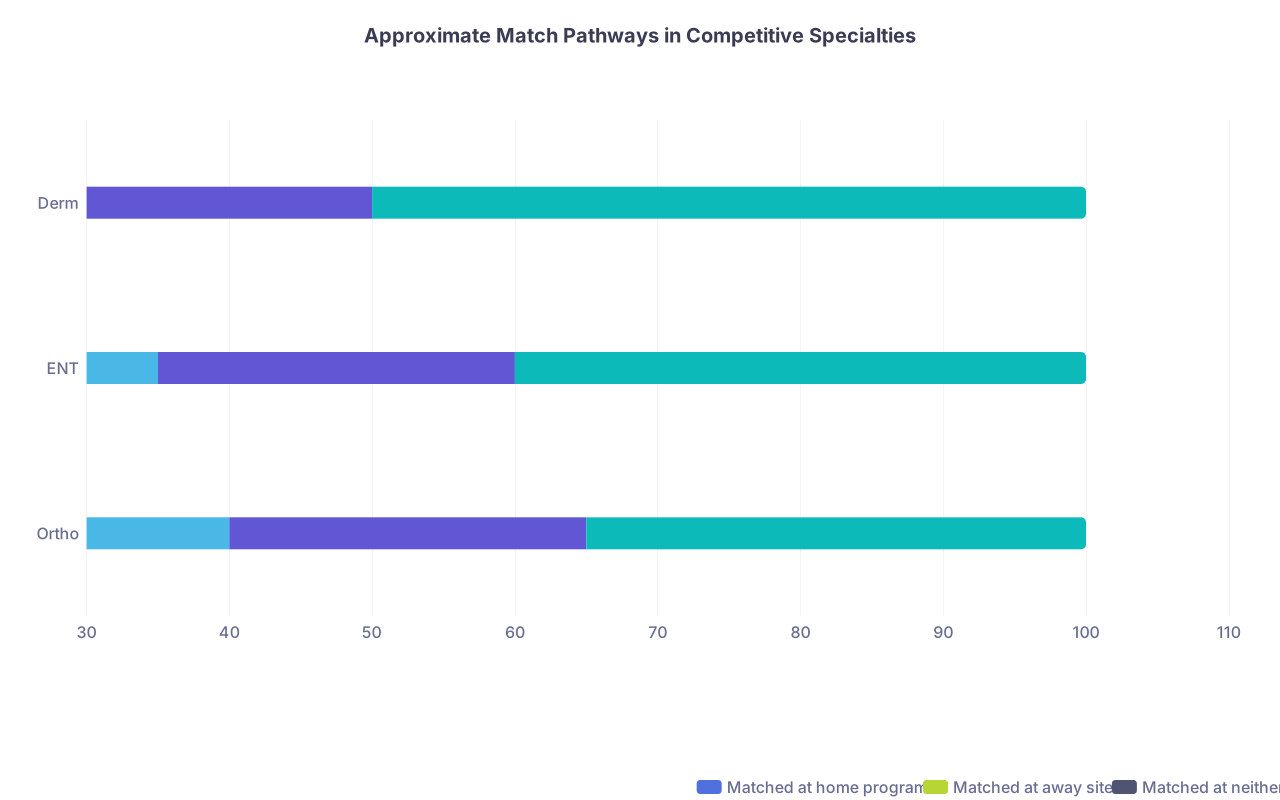
| Category | Matched at home program | Matched at away site | Matched at neither |
|---|---|---|---|
| Ortho | 40 | 25 | 35 |
| ENT | 35 | 25 | 40 |
| Derm | 30 | 20 | 50 |
A sizeable chunk of successful applicants match:
- At their home
- At programs where they never rotated but impressed on paper and at interview
If you truly cannot do aways (financial, health, family constraints), you’re not dead in the water. But you must:
- Maximize your home opportunities (sub-I, electives, research)
- Get at least one or two powerful letters from recognizable people
- Crush Step 2
- Apply broadly and strategically
Aways are common in competitive fields because the market is irrationally competitive, not because you literally cannot match without them.
So… what actually moves the needle?
Let me strip away the mythology.
In competitive specialties, aways help most when:
- You have at least one rotation (home or away) where you are truly outstanding, and someone with a name is willing to say so in writing.
- You use 1–2 aways to:
- Demonstrate genuine interest in the field
- Get a second strong letter
- Possibly connect with a program that ends up ranking you highly
- You don’t let aways cannibalize your:
- Step 2 study time
- Core clerkship performance
- Meaningful research output
They hurt when:
- You over-rotate (3–4 aways), look progressively more tired and less sharp
- You chase only prestige and end up as an average face at a mega-program
- You bank on an away “saving” your weak scores while neglecting other fixable parts of your app
- You behave like a try-hard rather than like a thoughtful, coachable future resident
If one line sticks: Aways are multipliers of your underlying application, not magic reset buttons.
FAQ (Exactly 3 Questions)
1. If I can only afford one away rotation, how should I pick where to go?
Choose a program where:
- You’re realistically competitive on paper (not just your dream brand name),
- There’s a reputation for actually taking rotators,
- You could genuinely see yourself training.
Look at match lists from your school and similar schools to see where students actually end up. Ask your mentors which places treat students well and write strong letters. One highly strategic away beats three vanity rotations.
2. Should I do an away before or after Step 2?
If your Step 1 is pass/low or your academic profile is borderline, protect Step 2 first. A solid Step 2 score does more for you across every program than one earlier away with an unknown outcome. If your Step 1 and clinicals are strong, then an earlier away can be fine. But sacrificing Step 2 prep to add one more month of “auditioning” is usually a bad trade.
3. Is it better to do an away at a place I love in a super competitive city or somewhere I’m more likely to stand out?
If you have the stats and background to be truly competitive at the hyper-competitive place, sure, swing for it. If you’re more middle of the pack for that tier, you’re often better off doing an away where you’re likely to be one of the top 1–2 students that year. Remember: a standout letter from a slightly “less famous” program often carries more weight than a bland letter from a top-5 name.