
It’s late July of your M3 year. You just got your first shelf grade back (not amazing), your Step 1 is Pass, everyone keeps saying “Step 2 is the new Step 1,” and you’re gunning for a competitive specialty: derm, ortho, plastics, ENT, neurosurgery, rad onc, IR, maybe even EM at a top place. You’re trying to answer one question:
Do these programs care more about Step 2 or your clinical grades?
Let me answer it directly, then we’ll break it down.
For the most competitive specialties, Step 2 tends to matter slightly more than clinical grades when we’re talking about getting screened for interviews. But once you’re in the interview pile, strong clinical grades and honors in key rotations become a big differentiator, especially at top-tier programs.
So: Step 2 opens the door. Clinical grades decide how far you walk through it.
Now let’s get specific.
Step 2 vs Clinical Grades: The Short Hierarchy
If you want a mental model for how competitive programs actually use these:
Screening stage (who gets an interview)
Step 2 CK is king here. It’s the easiest hard filter.
Clinical grades matter, but they’re messier and harder to compare across schools.Ranking stage (who they actually want)
Clinical performance, narrative comments, and letters of recommendation start to edge closer to Step 2 in importance. For some programs, they beat Step 2 once you’ve cleared a basic threshold.Red flags and tie-breakers
A low Step 2 with stellar clinical performance can sometimes be rescued.
Stellar Step 2 with mediocre or sketchy clinical grades often raises eyebrows.
So no, it’s not “all Step 2” and it’s not “all clerkships.” But if you force me to pick one as the more decisive metric across most competitive specialties: Step 2.
How Different Competitive Specialties Actually Use Them
Let’s go specialty by specialty. This is where the nuance lives.
| Specialty | Step 2 Weight | Clinical Grades Weight | Notes |
|---|---|---|---|
| Dermatology | Very High | High | Step 2 often used as screen |
| Orthopedic Surg | Very High | High | Surgery honors critical |
| ENT | Very High | High | Core rotation performance |
| Neurosurgery | Very High | Moderate-High | Research also huge |
| Plastic Surg | Very High | High | Away rotation evals crucial |
| IR / Rad | High | High | Medicine/Surgery grades key |
Dermatology
Derm loves numbers. Step 2 is a clean, comparable metric. With Step 1 now Pass/Fail, many derm programs essentially replaced Step 1 with Step 2 CK as their primary screen.
But here’s the derm twist:
Programs have too many 260+ applicants. So what separates them?
- Honors in medicine, surgery, and especially dermatology electives
- Narrative comments like “top 1–2% of students I’ve worked with”
- Strong performance on derm rotations and sub-Is
If you want derm and have to choose where to absolutely crush: Step 2 and your derm-related rotations. But Step 2 is what keeps you out of the instant reject pile.
Orthopedic Surgery
Ortho programs historically loved Step 1. Now? That obsession has shifted to Step 2.
Reality I’ve seen:
- Some big-name ortho programs quietly use rough Step 2 cutoffs (e.g., ~245–250) just to manage volume.
- Honors in surgery is almost expected at competitive places.
- If your Step 2 is good but your surgery rotation comments are lukewarm (“reliable, did what was asked”), you’re in trouble.
So for ortho:
To get an interview: Step 2 carries more weight.
To get ranked high: clinical grades, rotation reputation, and letters matter nearly as much.
ENT, Plastics, Neurosurgery
These three are similar in spirit.
- Step 2: critical for screening; they get flooded with applications.
- Clinical grades: they read them, but specific rotation performance in their field and surgery/medicine matters more than “family medicine: high pass vs honors.”
They care about:
- How you did on your sub-I with them or a similar program
- Whether the attending wrote, “I would rank this student in the top tier of our past residents”
- Whether you looked like a future colleague on rounds, not just someone who tests well
But again: you do not usually reach that stage if your Step 2 is weak.
Why Step 2 Has Become So Powerful
Once Step 1 became Pass/Fail, programs had a problem:
They lost their easiest numeric filter.
So Step 2 became the default.
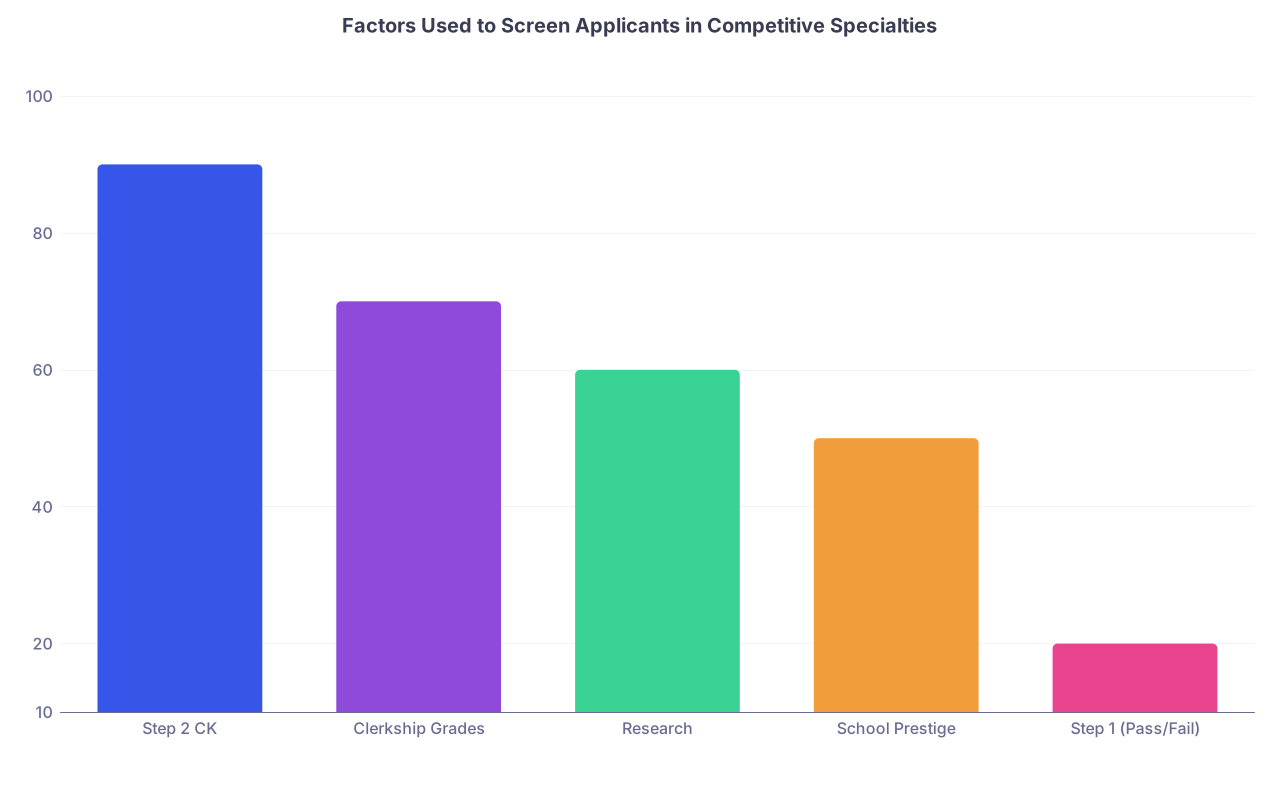
| Category | Value |
|---|---|
| Step 2 CK | 90 |
| Clerkship Grades | 70 |
| Research | 60 |
| School Prestige | 50 |
| Step 1 (Pass/Fail) | 20 |
What Step 2 gives them:
- A standardized, national metric
- Less grade inflation than clerkship evaluations
- Quick cutoffs when they get 500+ applications
Grades, on the other hand:
- Vary wildly between schools
- Depend on local politics, who you worked with, how harsh your clerkship director is
- Are often compressed (half the class gets honors in some places; in others, honors is rare)
Programs know clinical grading is noisy. They trust the narratives and letters more than just “honors” vs “high pass.” Step 2 is simpler to use early in the process.
What Clinical Grades Actually Signal To Programs
Now, do not misread this and blow off clerkships. Terrible idea.
Here’s what clinical performance tells competitive programs:
- Can you function on a team without creating drama?
- Do you work hard without constant supervision or hand-holding?
- Are you teachable, safe, and pleasant enough to share 80 hours a week with?
And more specifically:
- Honors in medicine + strong comments = “This person can handle sick patients.”
- Honors in surgery + strong comments = “This person can handle the OR, the pace, and the culture.”
- Pattern of mostly passes or low passes = “Risky. Either not engaged, unprofessional, or just not that strong clinically.”
The important nuance:
Programs don’t care about every grade equally. For competitive specialties, the heaviest weight is on:
- Internal medicine
- Surgery
- Their own specialty/sub-I
- Possibly neurology or EM, depending on the field
Psych, peds, family med – those matter less unless there’s a red flag or a pattern.
So Which Should You Prioritize Right Now?
Let me give you concrete advice based on where you are.
If you haven’t taken Step 2 yet
You’re gunning for a competitive specialty. Here’s the order:
Protect your Step 2 window.
Do not take it underprepared “just to get it over with.” A mediocre score will haunt you.During core clerkships:
Take clinical work seriously, but don’t obsess over getting honors in every single one if it’s destroying your Step 2 prep bandwidth. You want:- Strong performance in medicine and surgery
- At least solid, non-embarrassing performance in others
- A reasonable base for Step 2 content
6–8 dedicated weeks for Step 2 where you are genuinely studying, not just “kind of reviewing after a 12-hour shift.”
For most competitive specialties, a 250+ on Step 2 with mostly high pass/honors (especially in medicine/surgery) will beat a 235 with perfect honors across the board.
If your Step 2 is already taken and it’s strong
Then you lean hard on clinical performance and letters:
- Crush your sub-Is and audition rotations
- Position yourself to get a “top-tier” letter writer in your specialty
- Treat every day on service like a 4-week interview
Here, clinical grades and narratives can elevate you from “strong on paper” to “we want to work with this person.”
If your Step 2 is weak
You’re not dead in the water, but you’ve lost the easiest way to be noticed.
To compensate:
- Aim for standout clinical narratives: “best student this year,” “functions at intern level,” that sort of language
- Be very smart about your application list (include a wide range of program tiers, consider prelims where applicable)
- Lean on research, home program support, and away rotations
Programs will look closer at your clerkship performance if Step 2 is not impressive. But you’ll also get filtered out more often, especially at top places.
How Programs Weigh These on the Rank List
Once you’ve cleared the interview screen, this is roughly how things shake out at many competitive programs:

| Step | Description |
|---|---|
| Step 1 | Interviewed Applicants |
| Step 2 | Rank Lower or Not At All |
| Step 3 | Middle of List |
| Step 4 | Still Rank but Lower |
| Step 5 | Higher Rank Position |
| Step 6 | Interview Score Strong |
| Step 7 | Letters and Clinical Performance Strong |
| Step 8 | Step 2 Meets Threshold |
Notice:
- Interview and “fit” overshadow both Step 2 and grades at this stage.
- Clinical performance (letters + narratives) becomes more important than the exact Step 2 score, as long as you aren’t way below their usual range.
- A 262 vs 252 Step 2 matters way less here than an enthusiastic letter vs a lukewarm one.
So: Step 2 is the gatekeeper. Clinical grades and performance define your reputation once inside.
Practical Strategy: How To Balance Step 2 and Clerkships
Let’s get tactical.
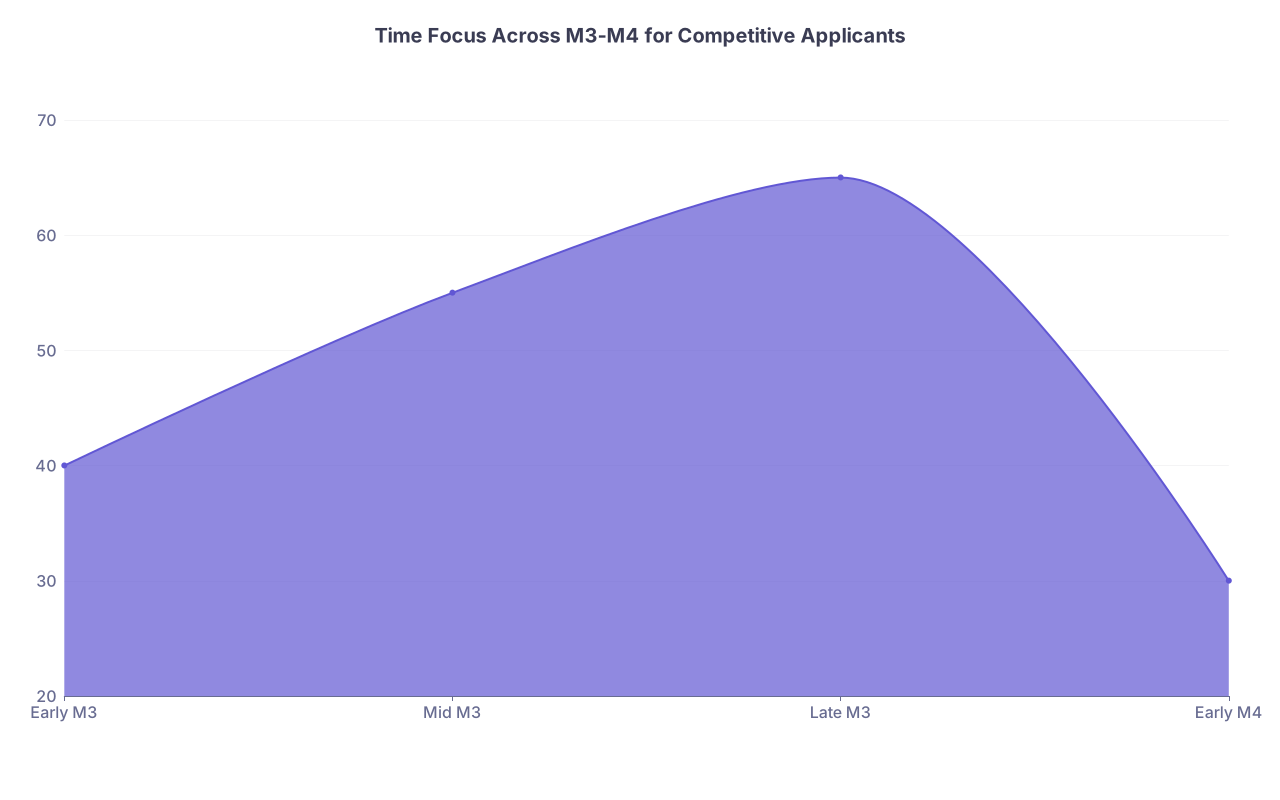
| Category | Value |
|---|---|
| Early M3 | 40 |
| Mid M3 | 55 |
| Late M3 | 65 |
| Early M4 | 30 |
Here’s the move I recommend to most students targeting competitive specialties:
Early M3 – learn how to be a good team member
Focus a bit more on clinical skills, efficiency, and not being dead weight. You’re building the habits that will later show up in evals.Mid to Late M3 – Step 2 + core clerkships
As you get closer to Step 2, start ramping up serious question volume. On lighter rotations, lean hard into UW and NBME-style questions.Late M3 / Early M4 – sub-Is and specialty
By now, Step 2 should either be done or nearly done. Shift your energy to being the best possible sub-I: early, prepared, positive, and useful.
You’re never choosing “Step 2 or clinical grades?” in a vacuum. You’re constantly trading marginal effort. Often, an extra 1–2 hours of high-quality Step 2 study per day during a non-brutal rotation is worth more than obsessing over a tiny bump in a grade band that won’t matter much.
FAQ: Step 2 vs Clinical Grades in Competitive Specialties
1. If I have to choose, should I prioritize Step 2 or honoring every clerkship?
For competitive specialties, prioritize a strong Step 2 score over perfectly honoring every single clerkship. You still need solid clinical performance and at least strong grades in medicine, surgery, and your specialty, but a high Step 2 opens more doors than squeezing out one extra honors in a low-weight rotation.
2. How bad is it if I didn’t honor medicine or surgery?
Not fatal, but it depends. If you have high pass in both medicine and surgery and an average Step 2, that’s a problem for the top-tier competitive programs. If you have a strong Step 2 (say 250+) and at least one honors between medicine/surgery plus great comments, you’re still very viable—especially with strong letters and sub-I performance.
3. Do programs actually read my clerkship comments or just look at grades?
For competitive specialties, yes, they read the comments. Grades alone are too noisy and school-dependent. Phrases like “top student,” “functions at intern level,” and “I would rank this student highly” carry real weight. Evaluations that are bland or vaguely negative hurt you even if the numeric grade looks fine.
4. Should I delay Step 2 to make sure I do well on it, even if that means it’s later in the cycle?
Within reason, yes. A rushed, mediocre Step 2 can hurt your entire application season. You still need it in time for programs to see it before sending interview invites—ideally by early August—but taking it 4–6 weeks later to score significantly higher is usually worth it for competitive specialties.
5. Can stellar clinical grades make up for a weak Step 2 in derm/ortho/ENT/plastics?
They help, but only partially. A weak Step 2 will shut you out of many programs’ initial filters. Stellar grades and letters might keep you in the game at your home program, lower-tier or mid-tier programs, or places that know you personally. But they rarely fully erase the impact of a clearly below-average Step 2 for that specialty.
6. How much do audition/sub-I rotations matter compared to Step 2 and clerkship grades?
For the very competitive fields, sub-Is can matter a lot. A strong sub-I with that program (or a close affiliate) plus an enthusiastic letter can push you up their rank list more than a few extra Step 2 points. But again, you don’t reach that stage without a Step 2 that clears their baseline. Think of Step 2 as the key to the door; your sub-I performance is how you convince them they want you to move in.
Key takeaways:
- For competitive specialties, Step 2 generally matters slightly more than clinical grades for getting interviews.
- Once you’re in the door, clinical performance, narrative comments, and letters matter as much or more than tiny differences in Step 2 scores.
- Aim for a strong Step 2, solid honors in medicine/surgery/your specialty, and standout evaluations on sub-Is. That’s the combination that moves the needle.