
The blunt truth: for many competitive specialties, not doing at least one away rotation will quietly cap your ceiling.
That does not mean everyone must do aways. It does mean you need to treat the decision like a strategic move, not an afterthought. For some specialties, an away is essentially optional PR. For others, it is how you get any serious look outside your home program.
Let’s walk through this like an honest advisor, not a brochure.
Quick Overview: Which Specialties Basically Expect Aways?
Here’s how things actually shake out across competitive fields. Think “strongly expected” vs “nice to have” vs “skip unless specific reason.”
| Specialty | Away Rotation Importance | Typical Number |
|---|---|---|
| Dermatology | Strongly expected | 1–2 |
| Orthopedic Surgery | Strongly expected | 1–3 |
| Neurosurgery | Strongly expected | 2–3 |
| Plastic Surgery (Integrated) | Strongly expected | 1–3 |
| Otolaryngology (ENT) | Strongly expected | 1–2 |
| Radiation Oncology | Helpful, not always required | 1–2 |
If your target is one of those “strongly expected” fields and you are asking, “Do I really need an away?”—you probably already know the answer.
Why Away Rotations Matter So Much (And When They Don’t)
Away rotations (audition electives, sub-Is, visiting electives—same idea) do three core things for you:
- Let programs see you work, not just your numbers.
- Let you “pre-interview” at places that might not otherwise look twice.
- Supply high-impact, specialty-specific letters from recognizable names.
In hyper-competitive specialties, programs are trying to answer three questions:
- Can this person function at the level we need on day one?
- Will they fit our culture and not be a problem at 2 a.m.?
- Do we have any reason to believe they want us specifically?
An away rotation answers all three at once. That is why some specialties lean on them so heavily. But there are exceptions.
Specialty-by-Specialty: Do You Need an Away?
Dermatology
Derm is brutal. Fantastic if you get in, painful if you misplay the strategy.
Away rotation status: effectively expected for most applicants targeting academic or top programs.
You should plan:
- 1 away at a realistic target program.
- Possibly a second away if you lack a home program or are from a lesser-known school.
You especially need an away if:
- You do not have a home derm program.
- Your school’s derm department is tiny or clinically limited.
- You need a high-yield derm letter from a recognizable faculty name.
You might skip or do fewer aways if:
- You have a strong home derm department, they know you well, and you are realistically competitive for them and their peer programs.
- Your Step 2 and research output are already top-tier and you are exhausted from dermatology research years.
But for most derm applicants, at least one away is functionally mandatory if you want breadth in your interviews.
Orthopedic Surgery
Ortho lives on away rotations. The “audition” culture is strong and everyone knows it.
Away rotation status: strongly expected, often 2+ if you can handle it.
Reality on the ground:
- Ortho programs heavily weigh how you performed on your away with them, and to a lesser extent, with peer institutions.
- Residents will remember if you were reliable, coachable, and not a jerk.
- Many applicants match where they rotated or at a program that “knows someone who knows how you were on away.”
You especially need aways if:
- Your home ortho program is small or not highly visible.
- You are trying to break into a higher tier than your home institution’s usual match outcomes.
- You are at a school without an ortho residency.
If you skip aways in ortho, you are essentially telling most programs, “Just judge me on paper.” That is rarely a winning plan.
Neurosurgery
Neurosurgery is small, close-knit, and extremely relationship-driven.
Away rotation status: almost always required unless you are a superstar at a powerhouse home program and planning to stay local.
What actually happens:
- Most neurosurgery applicants do 2–3 away rotations.
- Programs use aways as extended interviews: Can you handle the hours, the stress, the team culture?
- Letters from neurosurgeons who watched you operate and round carry disproportionate weight.
You must do an away if:
- You do not have a home neurosurgery program.
- Your home program is not strong regionally and you want to match outside that small bubble.
- You had an academic hiccup (Step failure, leave of absence) and need an in-person redemption story.
Not doing an away in neurosurgery is almost always a major handicap.
Plastic Surgery (Integrated)
Integrated plastics is small, cutthroat, and obsessed with “fit.”
Away rotation status: strongly expected—aways are a core part of plastics culture.
The pattern:
- Many plastics applicants do 2–3 aways at programs they’d be thrilled to match into.
- Programs rank their away rotators highly if they performed well, because they’ve already seen the fit.
- Research is critical in plastics—but aways let you show you’re not just a lab person, you actually function on service.
You especially need aways if:
- You do not have an integrated plastics program at your home school.
- You are trying to jump “up tier” relative to your home institution.
- You started plastics late and need to show genuine commitment.
Could someone match plastics with no aways? Maybe, with a monster CV and a powerful home institution. That is not most people.
Otolaryngology (ENT)
ENT sits in a middle ground—competitive, small, and tightly networked, but somewhat more varied in how heavily they rely on aways.
Away rotation status: strongly recommended for most, essentially required if you lack a solid home program anchor.
Common pattern:
- 1–2 aways at realistic target programs.
- ENT letters from your aways are often centerpiece items in your ERAS.
- Your behavior on service (how you handle consults, OR, clinic) gets reported up the chain.
You especially need an away if:
- You have no ENT residency at your school.
- Your exposure at home is minimal or limited to community practice.
- You want to match in a specific geographic region where you have no prior ties.
You might get away with no aways if you have a major academic home ENT program, several strong letters there, and are targeting similar-caliber programs in the same network. But that’s not the norm.
Radiation Oncology
Rad Onc is unique: small field, numbers down in recent years, and application behavior shifting.
Away rotation status: helpful but not universally required anymore.
Key dynamics:
- Historically, many applicants did 1–2 aways; now, some match with just a strong home experience plus research.
- Programs still value seeing you on service but are aware of cost and pipeline issues.
- Strong research and solid letters can sometimes replace multiple aways.
You especially benefit from an away if:
- You do not have a home rad onc program.
- You are trying to break into a highly academic cancer center or a specific city.
- Your home exposure is limited and you want to confirm this is actually the right fit for you.
If you have a strong home rad onc department and robust mentorship, one well-chosen away (or even none) can be reasonable. But do not blindly assume you can skip them—talk to recent grads from your school who matched rad onc.
Strategic Questions: Do You Personally Need an Away?
Forget the generic advice. Ask yourself these five questions:
Do I have a home program in my specialty?
- No: You almost certainly need at least one away, usually 2.
- Yes: Keep going.
Is my home program strong, and do they know me well?
- Strong and I’m well known: Away may be for geographic reach and signaling, not survival.
- Weak or barely know me: You need aways to get seen.
Are my numbers in line with the specialty?
- Below average: Aways can help you compensate with performance and letters, but they are not magic.
- At or above average: Aways become leverage to target aspirational programs.
Am I trying to break into a new region or tier?
- Yes: Aways are one of the few clean, accepted ways to do that.
- No: You might be able to minimize aways if you have a solid home base.
What do recent matched grads in my specialty from my school say?
- If they all did aways, assume you probably should too unless objective circumstances changed.
How Many Away Rotations Should I Do?
You do not need to live on planes for half your fourth year. That is how students burn out and tank Step 2 or their sanity.
In most competitive specialties, a reasonable target:
- Dermatology: 1–2
- Ortho: 2 (3 if you have no home program or are lower stats)
- Neurosurgery: 2–3
- Plastics: 2–3
- ENT: 1–2
- Rad Onc: 0–2 (personalized based on home resources)
The goal: enough exposure to signal commitment and get strong letters without blowing up your schedule, finances, or Step 2 timing.
Common Bad Assumptions About Away Rotations
Let me be blunt about a few things I see repeatedly:
“If I do an away, I’ll get an interview there.”
No guarantee. Some programs interview nearly all away rotators; others do not. But your odds without that away might be near zero at reach places.“I had a mediocre away, so I’ve doomed my cycle.”
Not necessarily. A neutral evaluation is not the same as a disaster. Just do not rely on that program.“I cannot afford aways, so I can’t match.”
Wrong. It is harder, yes. But you can be strategic: 1 away at a highest-yield program, heavy use of VSLO filters, travel grants, and target more programs that historically welcome home-only applicants.“I’ll fix my weak application with an away.”
An away can highlight strengths; it does not erase glaring weaknesses. You still need to handle Step 2, research, and letters.
Quick Process: How to Decide Your Away Plan
Here’s a simple planning flow that actually works:

| Step | Description |
|---|---|
| Step 1 | Choose Target Specialty |
| Step 2 | Plan 2 aways minimum |
| Step 3 | Plan 2 aways |
| Step 4 | Plan 1-2 aways, focus on fit |
| Step 5 | Plan 1-2 aways for reach programs |
| Step 6 | Confirm with recent matched grads |
| Step 7 | Home Program? |
| Step 8 | Home Program Strong? |
| Step 9 | Stats Competitive? |
Then reality-check the plan with:
- A mentor in the specialty at your school.
- At least one recent grad who matched your specialty.
- Your Dean’s office or advising office for timing/requirements.
When Is It Reasonable to Skip Away Rotations?
You are not required to play every game the arms race offers. You might reasonably skip or minimize aways if:
- You have a strong, well-known home program in your specialty that loves you and has an excellent match track record.
- Your goals are tightly local/regional and align with where your home department has pull.
- Financial, medical, or family constraints make extensive travel unrealistic—and you discuss this transparently with mentors who then help you adapt (more research, virtual engagement, strong home letters).
But “I just do not feel like the hassle” is not a good reason in a competitive field. Programs are full of people who did make the effort.
Key Takeaways
- In dermatology, orthopedic surgery, neurosurgery, integrated plastics, and ENT, at least one away rotation is functionally expected for most applicants.
- Radiation oncology is more flexible, but an away is often still helpful, especially without a home program.
- Lack of a home program in your specialty almost always means you should plan 2 aways.
- Aways are not decoration. They are extended, high-stakes auditions that can either open doors or confirm fit.
- The exact number and choice of aways should be tailored with real, recent insider advice from people who’ve matched in your specialty.
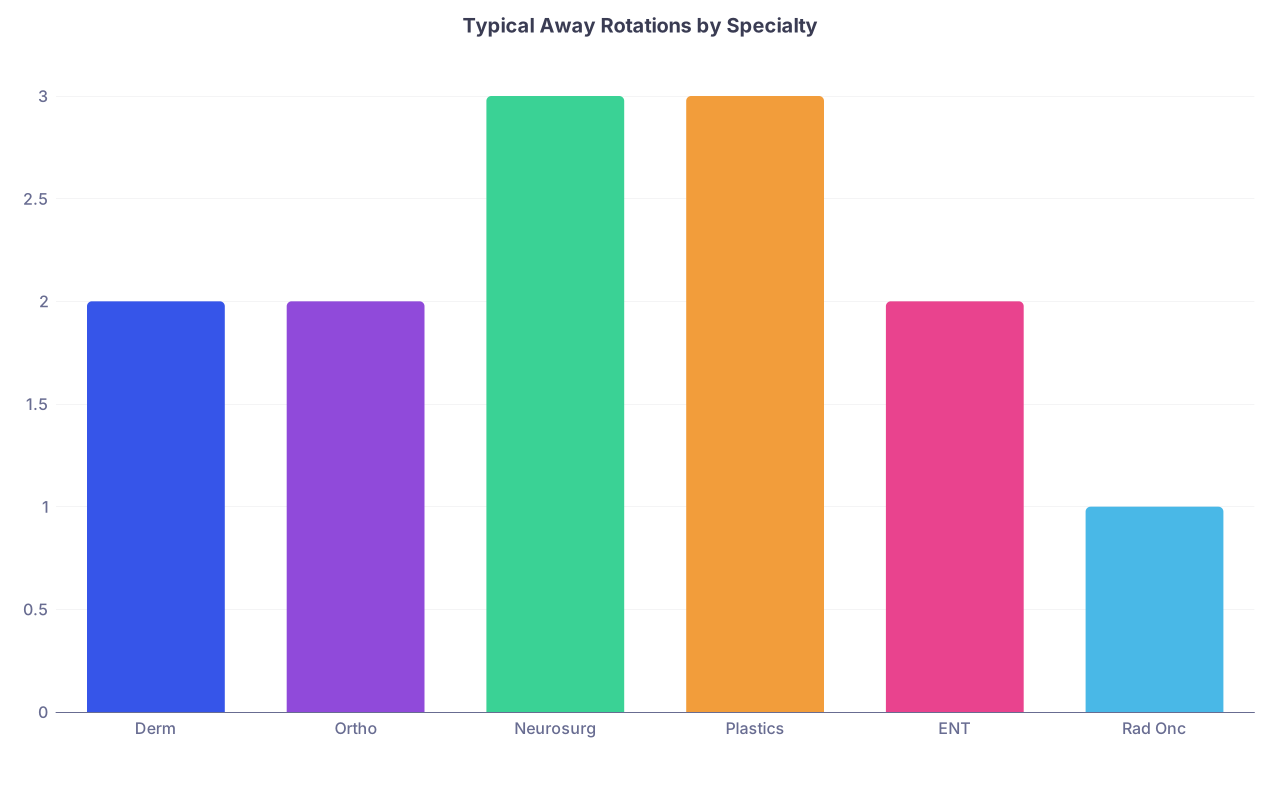
| Category | Value |
|---|---|
| Derm | 2 |
| Ortho | 2 |
| Neurosurg | 3 |
| Plastics | 3 |
| ENT | 2 |
| Rad Onc | 1 |
FAQ: Away Rotations for Competitive Specialties
If I have a home program, can I match top-tier without any away rotation?
Sometimes, but it is risky in the most competitive specialties. If your home program is highly ranked and your application is stellar, you might match at peer programs on paper alone. Most strong applicants still do at least one away to expand options and signal interest to specific programs.When should I schedule my away rotations in fourth year?
Aim for early enough that letters arrive before ERAS submission but not so early that you are unprepared. For most, that means June–September of the application year. Many students do a home sub-I first (April/May) to get comfortable before “auditioning” away.How important are letters from away rotations compared to home letters?
In competitive specialties, away letters can be extremely high yield—especially from well-known faculty at respected programs. But a lukewarm away letter is worse than a strong home letter. You want a mix: at least one home letter from someone who really knows you, plus one strong away or external letter if possible.What if my away rotation goes badly or I get neutral feedback?
Do not ask for a letter from that site. Use the experience as data: maybe that program or region is not the right fit. Focus the rest of your cycle on places where you have stronger support and avoid over-interpreting one rotation as a total disaster unless you seriously misbehaved (in which case, debrief with a trusted mentor immediately).Can I do too many away rotations?
Yes. Once you are at 3+ away months in a single specialty, you start running into fatigue, financial strain, and missed opportunities for Step 2 prep or other important rotations. For most competitive specialties, 2 well-chosen aways is the sweet spot. More is only justifiable in very specific situations (no home program, late decision, weaker stats).How do programs view applicants who could not afford many aways?
Some PDs are sympathetic; some barely think about it. That is reality. You can mitigate this by: choosing one high-yield away, applying for travel grants, building strong home relationships, and making sure your written application is as sharp as possible. If you have major constraints, discuss this with mentors—sometimes they will quietly advocate for you with friends at other institutions.What is the single best next step if I am unsure about doing an away rotation?
Identify three residents or recent grads in your target specialty—ideally from your own school—and ask them exactly where they rotated, how many aways they did, and which ones actually mattered. Then compare their background to yours. That conversation will give you more real guidance than any generic online advice.
Open your calendar and specialty interest list right now. Block 2–3 potential fourth-year months for aways, then send one email today to a faculty mentor or resident in your target field asking, “Given my current stats and goals, how many aways do you think I realistically need, and where?”