
Only 42% of vascular surgery trainees now come through the traditional general surgery → vascular fellowship route.
The rest are taking integrated positions straight out of medical school. Which means you are not just choosing a specialty. You are choosing a track that locks in your training style, your exposure, and arguably your ceiling for certain practice types.
Let me break this down specifically.
The Baseline: What Exactly Are We Comparing?
You are comparing two fundamentally different training architectures that both end with “vascular surgeon” on your badge.
Integrated Vascular (0+5):
Match from medical school into a 5‑year vascular surgery residency. No separate general surgery residency. You are “vascular from day one.”Traditional Path (5+2 or 5+3):
5 years categorical general surgery + 2 (sometimes 3) years vascular surgery fellowship. You match twice: once into gen surg, later into vascular.
Functionally, both produce board‑eligible vascular surgeons. On paper, “equivalent.” In real life, not equivalent at all.
Structure Snapshot
| Feature | Integrated (0+5) | Traditional (5+2) |
|---|---|---|
| Total years | 5 | 7 |
| Entry point | MS4 (NRMP) | MS4 (gen surg) then fellow match |
| Gen surg exposure | Limited, targeted | Full 5-year curriculum |
| Early vascular exposure | High (PGY1 onward) | Low until PGY4–5 |
| Board exams | Vascular only | General + Vascular |
So the real questions are:
- Which route is more competitive today?
- Who actually thrives in each path?
- What are the career and training tradeoffs that nobody spells out on program websites?
Competitiveness: Numbers, Myths, and Where People Get This Wrong
A lot of MS3s say the same thing on surgery rotations:
“I heard integrated vascular is super competitive, like plastics‑level.”
Not accurate. But it is not low‑tier either.
Match Numbers and Relative Competitiveness
Integrated vascular is a small numbers game. That distorts perception.
- Rough order of competitiveness among surgical “advanced” pathways right now:
- Most competitive: Integrated plastics, ENT, neurosurgery
- Upper mid: Ortho, derm, urology
- Mid: Integrated vascular, CT surgery, some gen surg programs
- Lower: Community general surgery, prelim positions
A handful of unfilled integrated vascular spots show up most years. You will not see that in ENT or integrated plastics.
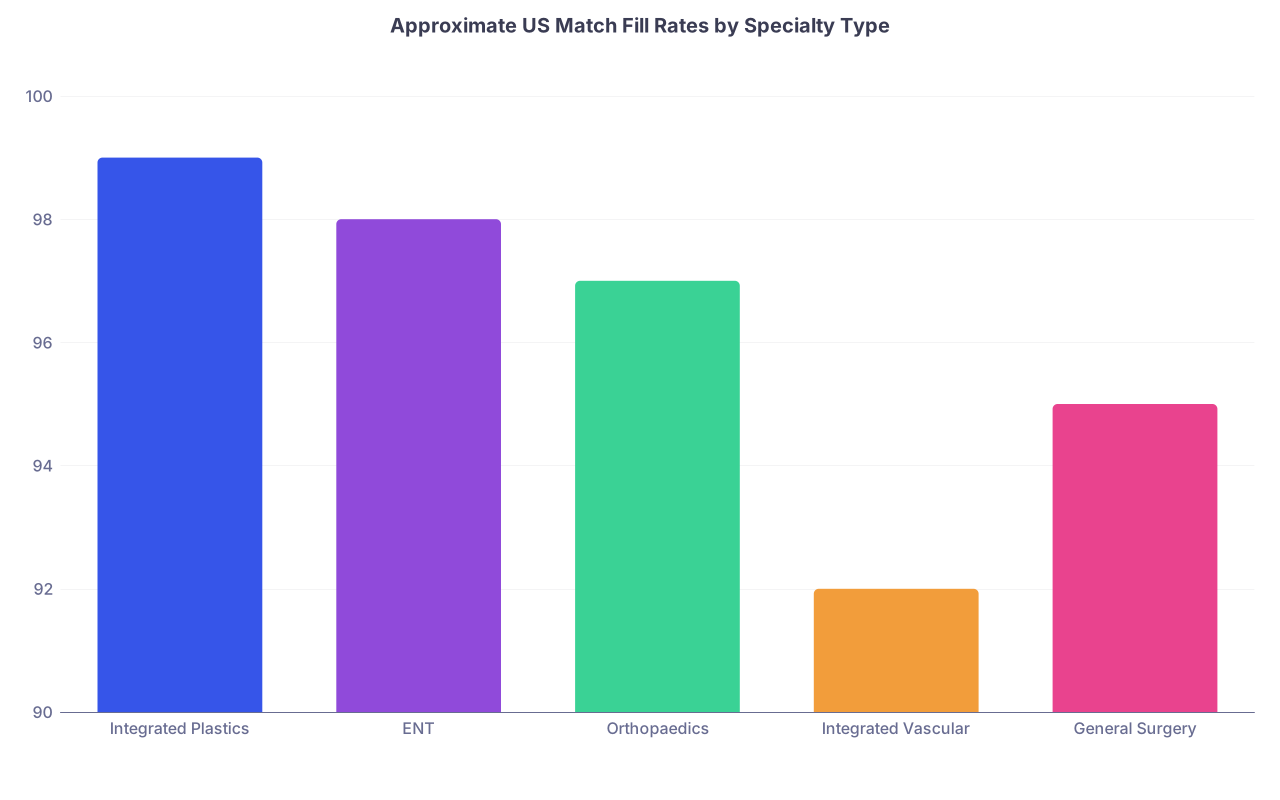
| Category | Value |
|---|---|
| Integrated Plastics | 99 |
| ENT | 98 |
| Orthopaedics | 97 |
| Integrated Vascular | 92 |
| General Surgery | 95 |
This is not a rigorously precise dataset, but it reflects the pattern: integrated vascular is competitive, but not at the absolutely insane level of plastics or ENT.
Applicant Profile: Who Actually Matches Integrated?
The people who match integrated vascular at decent academic programs generally look like this:
- US MD or strong DO
- Step 1 (historically) in the 240s+/strong pass with high shelf scores
- Step 2: typically 245+
- Strong vascular exposure:
- Dedicated vascular research, QI projects, or at least a few posters
- Letters from vascular attendings who actually know them
- Real, demonstrable interest: away rotation at a vascular‑heavy academic surgery department, not just a line in the personal statement
The people who match the traditional route into vascular fellowship:
- Have already proven themselves through 5 years of general surgery
- Usually have strong operative evaluations, not just test scores
- Often have broader research (not always vascular‑specific) but a documented pivot toward vascular in PGY3–4
Strategic Difference
Here is the key competitive difference no one spells out clearly:
- Integrated vascular is competitive at the front end. You are competing as an MS4 with a test score, a thin research portfolio, and two letters.
- Traditional vascular is competitive at the back end. You are competing as a PGY3–4 with operative logs, program director advocacy, and 5 years of real data on whether you show up, operate, and function on a team.
You are either betting on yourself now (integrated) or betting that you will grow into a strong applicant over 5 years (traditional).
Training Experience: How Your Day‑to‑Day Actually Differs
This is where the real divergence happens. Ignore this and you are making a blind decision.
Integrated Vascular: Early Specialization, Narrower Base
In a good 0+5 program, your schedule from PGY1 looks something like this:
- PGY1–2:
- Vascular inpatient service
- Vascular lab and imaging
- Endovascular suite exposure early
- Short, focused off‑service rotations: ICU, cardiology, sometimes interventional radiology, a little trauma
- PGY3–5:
- Heavy endovascular + open vascular
- Complex aortic, limb salvage, dialysis access, carotid, visceral aneurysms
- Minimal (sometimes zero) bread‑and‑butter general surgery like hernias, cholecystectomies, colorectal
So by the time you are PGY3, you are more comfortable with a fem‑pop bypass than with a laparoscopic cholecystectomy. I have seen PGY4 integrated residents who can handle a fenestrated EVAR calmly but look awkward closing an open colectomy.
Is that bad? Depends what you plan to be.
Traditional Path: Broad Base, Later Specialization
A classic categorical general surgery → vascular fellowship route:
- PGY1–3:
- Heavy general surgery: appendectomies, cholecystectomies, hernias, trauma, night float
- Lots of ICU and critical care
- Bread‑and‑butter foregut, colorectal, surgical oncology, maybe minimally invasive exposure
- PGY4–5:
- Some vascular rotations (depending on program)
- Chief experience running a general surgery service
Then:
- Fellowship years:
- Almost entirely vascular: complex open and endovascular, vascular access, carotid, aneurysm work, peripheral disease, etc.
You graduate with a fundamentally different “feel” for the abdomen, acute care surgery, and complex reoperations. You can also scrub in and genuinely contribute on nonvascular cases if your practice environment expects it.
Practical Training Tradeoff
Bluntly:
- Integrated vascular = highly focused vascular operator, somewhat shallower in general surgery.
- Traditional vascular = broad surgeon with vascular subspecialty, generally stronger at open abdominal surgery beyond vessels.
In academic vascular‑dominant environments, the integrated graduate does very well. In a small community where you are the “only surgeon in town” covering general call plus vascular? The traditional route often feels more natural.
Career Outcomes and Flexibility: What You Can Actually Do With Each Path
This is where people underestimate the downstream consequences of locking in early.
Flexibility to Change Your Mind
If you commit to a 0+5 integrated vascular spot and halfway through PGY2 you realize you hate chronic limb salvage and dialysis access?
You have a problem.
- There is no automatic back‑up “general surgery board eligibility.”
- You may be able to laterally transfer into a general surgery program if someone has an open spot, but that is not guaranteed.
Compare that with the traditional route:
- You match categorical general surgery.
- You can:
- Stay general surgery
- Apply vascular fellowship
- Pivot to surg onc, trauma/critical care, MIS, etc.

| Step | Description |
|---|---|
| Step 1 | MS4 |
| Step 2 | Integrated Vascular |
| Step 3 | General Surgery |
| Step 4 | Vascular Surgeon Only |
| Step 5 | Vascular |
| Step 6 | Other Surgical Field |
| Step 7 | General Surgeon |
| Step 8 | Integrated Vascular 0+5? |
| Step 9 | Choose Fellowship |
If you are not 100% sure you want vascular, an integrated spot is a bad bet. Not unwise. Just risky.
Credentialing and Perception
On paper, once you are board‑certified, hospital privileging does not formally distinguish 0+5 vs 5+2 in a big way. But perception among senior surgeons does.
- Older generation academic vascular surgeons often came from the 5+2 route. Some quietly believe those graduates have better open skills.
- A few chairmen have told residents outright: “I like integrated vascular for pure endovascular aortic work and high‑volume vascular centers, but in a community setting I still lean toward the traditional pathway.”
This bias is softening as more 0+5 graduates populate faculty positions. But it still exists.
Practice Settings: Who Fits Where?
If you tell me your likely future practice, I can tell you which route generally fits better.
Academic, high‑volume vascular center, lots of endovascular
Example: Cleveland Clinic, Mayo, big university hospitals.
Both routes fine. Integrated may actually have an edge in endovascular case volume and lab comfort. They live there.Hybrid practice: some open vascular, some gen surg, community hospital
Traditional 5+2 fits more naturally. You are credentialed as “the vascular person,” but everyone still expects you to handle bowel obstruction and a perforated ulcer at 2 a.m.Trauma/critical care interest + vascular
Traditional pathway again. You build a strong trauma/ICU foundation first; you can end up being the go‑to trauma/vascular hybrid at many academic centers.
None of this is ironclad. I have seen integrated grads who are excellent in community hybrid roles. But it takes more deliberate effort to fill the general surgery gaps.
Lifestyle, Burnout, and the Subtle Training Culture Differences
Everyone asks about work hours. Wrong question. The difference is not the total hours. It is what those hours feel like.
Integrated: Identity and Pressure Earlier
In 0+5 programs, you carry the label “vascular” from day one, even as an intern. That has effects:
- Attendings expect longitudinal growth in vascular thinking
“You are not just a surgery intern, you are a future vascular surgeon. Why did you not think about graft infection?” - You are often the “vascular brain” on ICU or cardiology rotations
- You feel pressure to perform on dedicated vascular services much earlier than a gen surg resident rotating in for 2 months
This can be motivating. It can also be exhausting. When you flop on a case early, it feels like a commentary on your whole future in the field.
Traditional: Broader Identity, Later Commitment
General surgery residents have a shared misery. You are not defined yet.
- You are “surgery” for 3–4 years before you are “vascular‑bound.”
- A bad month on colorectal does not feel existential if you plan to do vascular.
- You do not need to be the vascular expert as a PGY2. You just need to be a competent surgery resident.
The flip side: early PGY years can feel less connected to your eventual vascular identity. Some people find that frustrating.
Burnout Profiles
I have seen both:
- Integrated residents burn out by PGY3 because they realize they picked a narrow, high‑acuity, high‑complication specialty too early.
- Traditional residents burn out in PGY2–3 after endless general surgery nights, then rediscover motivation when they finally land in a vascular fellowship where the pathology genuinely interests them.
If you are the type who needs to feel aligned with your ultimate specialty early on to stay engaged, integrated can help. If you need room to explore and mature, traditional is safer.
Case Exposure: What You Actually Get To Operate On
You need to be very concrete about this. “Great vascular training” is meaningless unless you know what that translates to in cases.
Integrated 0+5: Vascular Density and Endovascular Heavy
The typical integrated graduate case log in a strong academic center:
- Very high numbers of:
- Endovascular interventions (PAD, EVAR/TEVAR, dialysis access interventions)
- AV access creation and revisions
- Infrainguinal bypasses and hybrid procedures
- Good numbers of:
- Carotid endarterectomy
- Aorto‑iliac open reconstructions (varies by institution depending on how aneurysm work has shifted to endo)
What they may have less of:
- Nonvascular laparotomies
- Complex bowel surgery, reoperative abdomen
- Very broad contaminated field experience compared to general surgeons
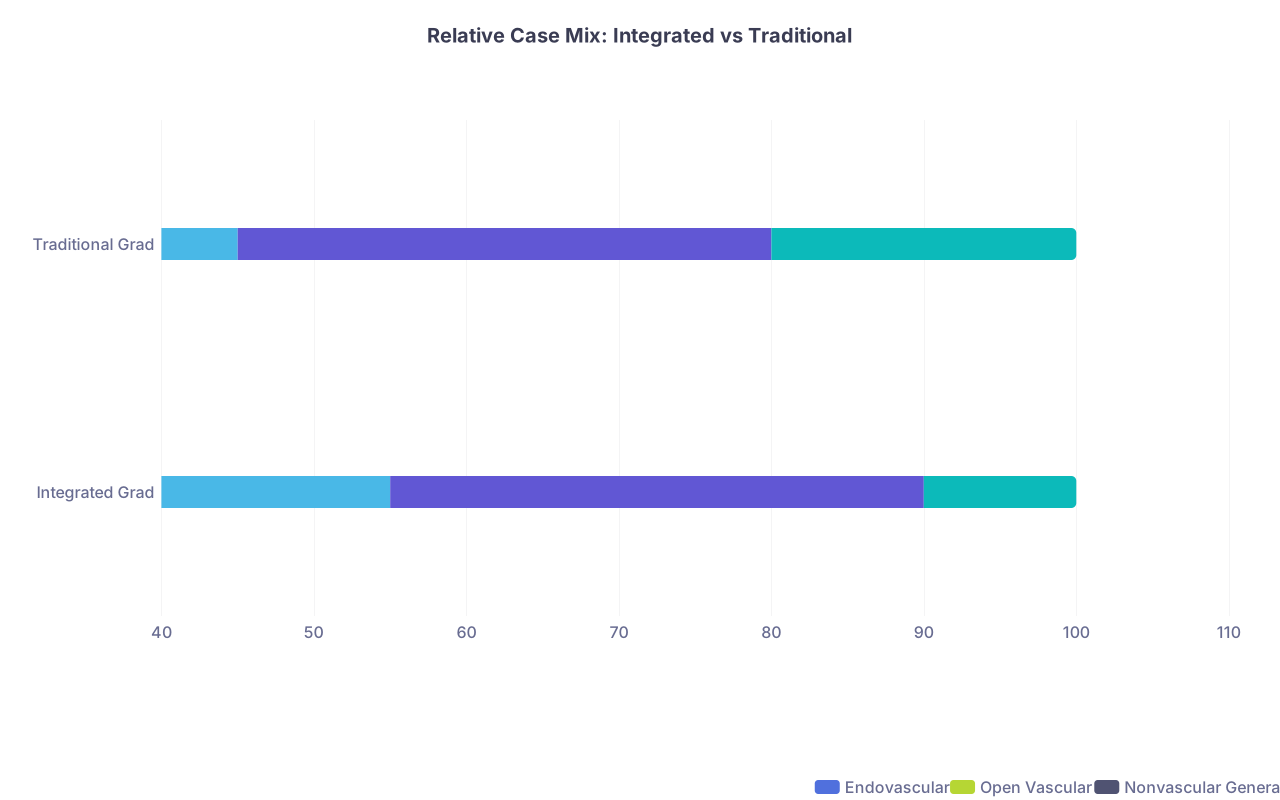
| Category | Endovascular | Open Vascular | Nonvascular General |
|---|---|---|---|
| Integrated Grad | 55 | 35 | 10 |
| Traditional Grad | 45 | 35 | 20 |
Again, approximate profile, not literal log numbers. The point is the distribution.
Traditional 5+2: Total Volume Over 7 Years
By the time a 5+2 graduate finishes:
- They have:
- 5 years of all‑comers general surgery cases (HPB, colorectal, trauma, foregut, etc.)
- 2 years of intense vascular specialization
Their vascular case volume in fellowship is often similar to an integrated resident’s senior years. But they carry an extra bank of general surgery muscle memory.
Where the integrated path can occasionally win:
- Some 0+5 programs have structured, progressive vascular exposure from PGY2 onward, giving them 5 full years to marinate in vascular‑specific patient selection, clinic, and complication management.
It is not just number of cases; it is the time horizon you spend in a single disease ecosystem.
Competitiveness Within Training: How You Stack Up Next To Peers
This part is under‑discussed and affects your day‑to‑day more than you think.
As an Integrated Resident on Mixed Services
On general surgery rotations, integrated vascular residents sometimes get treated like visiting subspecialty track interns:
- You may or may not be given priority for major general surgery cases
- You might be shielded from some night call or trauma so you can spend more time on vascular
- Other residents occasionally resent this balance
On vascular services, though:
- You are the long‑game investment.
- Faculty track you from PGY1 and groom you toward their model of a vascular surgeon.
- You may get more deliberate progressive responsibility in endovascular cases than a 1‑year fellow rotating through.
As a Traditional Fellow
By the time you hit vascular fellowship:
- You are at the top of the food chain in the OR hierarchy.
- You can walk into any case with general surgery trainees and contribute meaningfully from day one.
- Attendings trust you with critical parts of open cases much faster because you already know how to manage a belly, a retroperitoneum, a bleeding anastomosis.
The tradeoff: your endovascular learning curve is often steeper and more compressed into 2 years. Some fellows struggle with this if their gen surg program had little IR/endo exposure.
How Program Type Skews The Equation
Not every 0+5 or 5+2 position is created equal. The culture of the host department matters.
Programs With Both Integrated and Fellowship Positions
Places like Michigan, UCSF, or other big academic vascular divisions often run both training tracks.
Pattern I have seen:
- Integrated residents:
- Start earlier with vascular
- Get more continuity in clinic and lab
- Fellows:
- Often dominate the biggest, riskiest open cases
- Are viewed as the “senior decision makers” earlier in the year
If you end up in such a program, you will not be comparing integrated vs traditional “abstractly.” You will be comparing yourself daily against someone who came up the other route.
Programs With Only Integrated or Only Fellowship
- Programs that only have an integrated track:
- Often build the entire educational structure around 0+5 residents.
- You will not be competing with fellows for cases.
- Programs that only have a 5+2 fellowship:
- Usually live within a strong general surgery department that values broad surgical training.
- The fellowship is built assuming you already have polished open skills.
If you are risk‑averse and want maximal certainty that you will get a coherent educational experience, single‑track programs (only 0+5, or only 5+2) are often less politically messy for trainees.
How To Decide: Matching the Path to Your Actual Profile
Let me be direct. Here is who I would push toward each route.
You Are a Strong Candidate, Already Sure of Vascular
You should strongly consider integrated 0+5 if:
- You have:
- Solid exam performance (not necessarily genius‑level, but comfortably above average)
- Real, consistent vascular interest (research, shadowing, letters)
- You like:
- The idea of being “vascular from day one”
- Heavy endovascular and complex limb salvage
- High‑acuity, high‑complication medicine over long follow‑up
And:
- You are comfortable taking on long‑term identity risk: if you change your mind, extraction is messy.
You Are Interested in Vascular, But Not 100% Locked In
You will almost always be better served by traditional 5+2 if:
- You could see yourself happy in:
- Trauma/critical care
- HPB or surgical oncology
- Acute care surgery
- You value:
- Broad operative competence
- The option to work in smaller or rural settings comfortably
- The chance to mature clinically before you choose a niche
This is not cowardice. It is strategic. Plenty of stellar vascular surgeons came to that decision in PGY3 after truly sampling the rest of surgery.
You Are Worried About Competitiveness
A lot of MS3s quietly think:
“I might not be competitive for integrated vascular, but I can sneak into gen surg then try for vascular later.”
Reality:
- Strong general surgery programs that feed into vascular fellowships are also competitive.
- If your application is weak across the board, you will struggle in both routes.
But there is a nuance:
- The bar for “reasonably strong categorical gen surg resident” is slightly lower than “top integrated vascular MS4 applicant.”
- Some people absolutely grow into excellent vascular candidates after 3 years of hard work and clinical growth. They were not there as MS4s.
So if your current CV is shaky but your work ethic is real, traditional is the more forgiving path.
A Simple Decision Framework
To make this concrete, ask yourself three questions and answer honestly:
On a scale of 1–10, how certain am I I want to be a vascular surgeon and nothing else?
- 9–10 → Integrated is reasonable.
- 5–8 → Traditional is safer.
- <5 → You have no business locking into 0+5.
What practice setting do I realistically see myself in?
- Large academic vascular center → either path.
- Community, on‑call for general and vascular → traditional better.
- Rural or small city with minimal backup → you want every bit of broad training you can get.
How much do I value broad general surgical identity versus subspecialty identity?
- If you like the idea of “I can operate on anything in the abdomen” → traditional.
- If you prefer “I am the vascular person, period” → integrated.
Answer those without self‑delusion and you will usually know which direction you should lean.
Key points to carry forward:
- Integrated vascular is front‑loaded in competitiveness and specialization; traditional is back‑loaded in both.
- 0+5 gives you earlier, denser vascular exposure but a narrower general surgery base; 5+2 gives broad surgical identity first, vascular focus second.
- Your certainty about vascular, your likely practice setting, and your risk tolerance for early commitment should drive this choice far more than prestige or hearsay.