The biggest mistake students make with ophthalmology is treating the SF Match like ERAS with an earlier deadline. It is not. The timing, the culture, and the expectations are different enough that if you apply “normal” Match logic, you will quietly sink.
Let me break this down specifically.
1. SF Match vs NRMP: What Actually Changes Your Strategy
Before you do anything else, stop thinking in March. Your “Match Day” for ophtho is January. That single shift pulls the entire application calendar forward.
| Feature | SF Match Ophthalmology | NRMP (Most Specialties) |
|---|---|---|
| Match Day | Early January | Mid March |
| Application Platform | SF Match Central App | ERAS |
| Application Opens | Typically July | Mid September |
| Interview Season Peak | Sept–Nov | Nov–Jan |
| Rank List Deadline | Early / Mid December | Late Feb / Early Mar |
If you are a rising M4 and you are just “getting serious” about ophtho in July, you are late. Not dead. But late.
Key consequences of the early match:
- You must have letters and your “ophtho story” essentially ready by the end of your third year.
- You cannot rely on late M4 rotations to fix a weak application.
- Step 2 timing is tighter if you need it to rescue a mediocre Step 1.
Timeline Reality Check
Here is the rough structure you are dealing with for a “normal” M3 → M4 applicant:
- January–May of M3: Core clerkships; first real exposure to ophtho for many students.
- April–June of M3: Decide if you are truly committing to ophthalmology.
- May–August (before M4 officially starts or early M4): Home ophtho rotation and at least one away.
- July: SF Match application opens.
- August–October: Interviews start; many programs are essentially done interviewing by mid‑November.
- Early December: Rank list due.
- Early January: Match Day (and if you do not match, you now have 2+ months to pivot before NRMP).
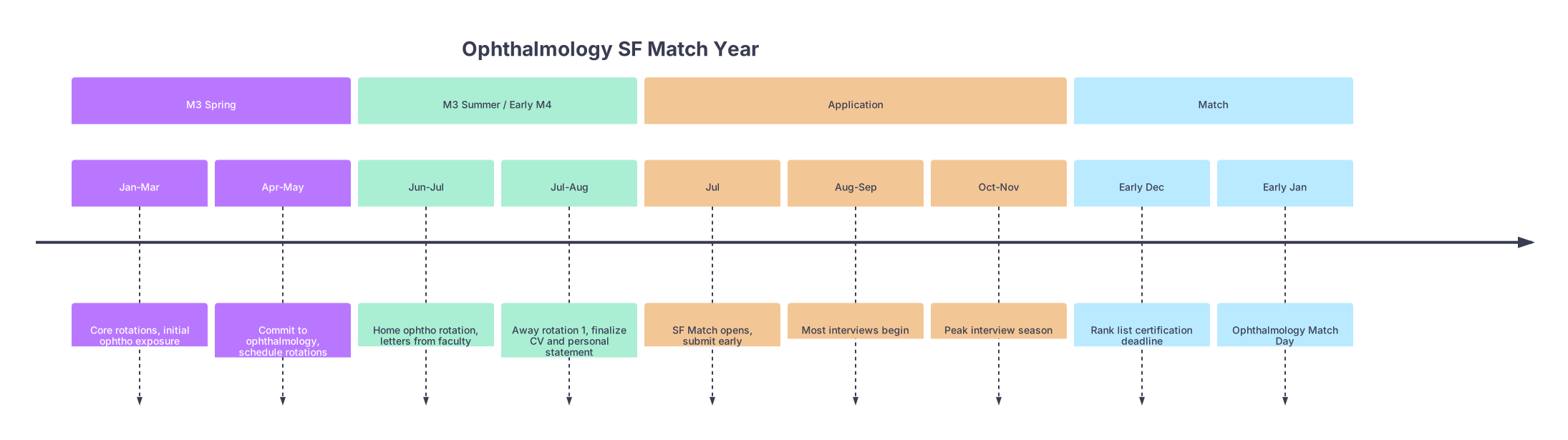
| Period | Event |
|---|---|
| M3 Spring - Jan-Mar | Core rotations, initial ophtho exposure |
| M3 Spring - Apr-May | Commit to ophthalmology, schedule rotations |
| M3 Summer / Early M4 - Jun-Jul | Home ophtho rotation, letters from faculty |
| M3 Summer / Early M4 - Jul-Aug | Away rotation 1, finalize CV and personal statement |
| Application - Jul | SF Match opens, submit early |
| Application - Aug-Sep | Most interviews begin |
| Application - Oct-Nov | Peak interview season |
| Match - Early Dec | Rank list certification deadline |
| Match - Early Jan | Ophthalmology Match Day |
If this looks compressed, that is because it is. Which is why “I’ll just see how things go” is catastrophic in ophtho.
2. Building an Ophtho-Ready CV by End of M3
You do not need a Nobel prize or 10 ophtho papers. You do need coherence.
Programs are scanning for one thing: does your trajectory look like someone who has actually been serious about ophthalmology for a while, or like someone who panicked in May?
The Non-Negotiables
By the end of M3, a realistic ophtho applicant should usually have:
- Strong core performance:
- Mostly Honors / High Pass in major clerkships (medicine, surgery).
- No unexplained major red flags in professionalism or evaluations.
- Step exams:
- Strong Step 2 if Step 1 is pass/fail or weak.
- And yes, ophtho still cares about numbers even with Step 1 pass/fail. Pretending otherwise is naïve.
- Meaningful ophthalmology exposure:
- At least a home ophthalmology elective or longitudinal clinic exposure.
- Tangible evidence of interest: ophtho interest group, shadowing, resident‑run teaching sessions, etc.
- At least one ophthalmology research or scholarly project:
- Could be a retrospective chart review, case report, QI targeted at eye clinic, or basic science if your school has it.
- Does not have to be published yet, but must be real enough to discuss intelligently.
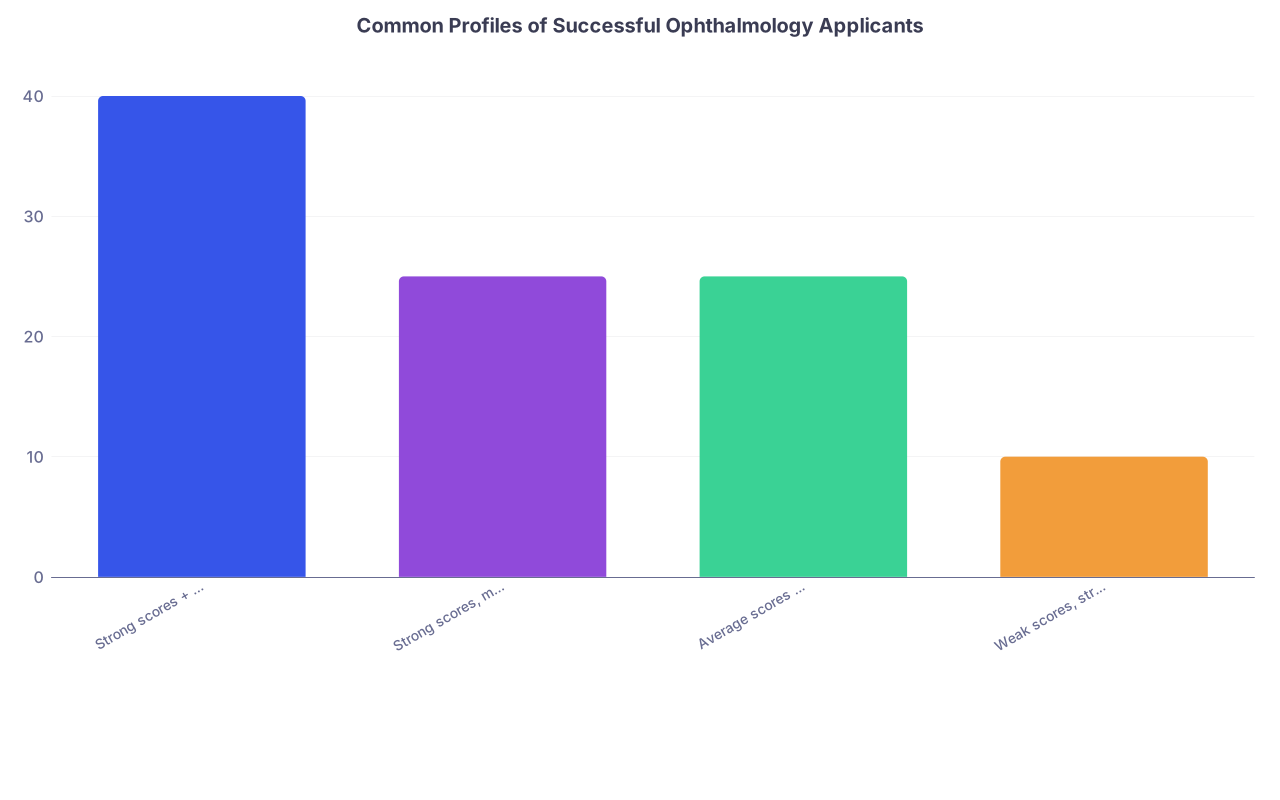
| Category | Value |
|---|---|
| Strong scores + research | 40 |
| Strong scores, minimal research | 25 |
| Average scores + strong ophtho depth | 25 |
| Weak scores, strong research | 10 |
The “average scores + strong ophtho depth” group is where a lot of realistic applicants live. Scores help, but coherent commitment helps more than students think.
Research: How Much Is Enough?
I have seen people match with:
- 0 ophtho pubs, but a credible ongoing project and very strong clinical performance.
- 10+ pubs and still struggle because they were awkward, had poor letters, or clearly used ophtho as a “backup derm”.
Your target:
- 1–3 ophthalmology-related projects that you can speak about clearly.
- At least 1 in collaboration with someone at your home or target program (letter potential).
- If your school has no ophtho department: find regional mentors, virtual projects, or multi‑institutional chart reviews. It is harder, but I have seen it done.
What matters more than raw count is depth: did you actually do the work, know the methods, and understand why the question matters to patient care?
3. Rotations and Aways: Currency of the SF Match
Away rotations matter more in ophthalmology than in many fields, because of the early match and the small community. They are part audition, part prolonged interview, part reference check.
You cannot treat them like random electives.
Home Ophtho Rotation: Your Foundation
The home rotation should usually be your first real ophtho month. You want:
- A substantial, structured experience (clinic + OR + resident teaching).
- To impress the residents and faculty enough to:
- Get at least one strong ophthalmology letter.
- Get honest feedback about your competitiveness and which tier of programs makes sense.
If your school does not have a home ophtho program:
- You must use your first away almost as a “home” rotation.
- Be upfront with that program about your situation; many are supportive of students without a home ophtho department.
How Many Away Rotations?
Typical pattern for a serious applicant:
- 1 home ophtho rotation.
- 1–2 away rotations at realistic potential programs.
Going beyond 2 aways becomes diminishing returns for most people. You need time to:
- Finish your application.
- Go to interviews.
- Not burn out.
Pick aways with a strategy:
- At least one at a program in the geographic region where you genuinely want to live.
- At least one at a program where your stats are aligned (not just “dream” places).
How to Actually Perform Well on an Ophtho Rotation
This is where people either separate themselves, or quietly get filtered out.
On ophtho rotations, faculty and residents are watching for:
- Coachability. Do you learn from feedback rapidly or repeat the same mistakes all month?
- Work ethic without desperation. Show up early, read, help. But do not be the student who tries to scrub into every single case and annoys the OR staff.
- Genuine curiosity about ophthalmology, not generic “I love surgery” lines.
Practical tips that consistently help:
- Before day 1, know basic exam skills cold on paper: visual acuity, pupils (RAPD), confrontation fields, EOMs, slit lamp basics, tonometry concepts.
- Read a simple ophtho primer (eg, Basic Ophthalmology by AAO or a thin review book) and be able to discuss:
- Cataract basics
- Glaucoma fundamentals
- Diabetic retinopathy staging
- Macular degeneration
- Ask residents: “What do strong students here do differently?” Then do those things.
4. SF Match Mechanics: Application, Letters, and Nuances
The SF Match platform itself is clunky. That is fine. The nuance is not the website; it is how programs read what you put into it.
Application Timing: Submit Early, Not Perfect
Because interviews start as early as August for some programs, a September application is not “on time.” It is late.
Your goal:
- Aim to have your SF Match application submitted in the first 2–3 weeks after it opens.
- Do not wait for a marginal CV improvement at the cost of losing early‑review status.
Typical components you must have ready by July:
- CV and experiences fully updated.
- Personal statement (ophtho‑specific).
- Letters of recommendation requested and ideally uploaded or nearly done.
- Step scores and transcripts available.
Letters of Recommendation: The Real Currency
Ophthalmology is small, and letters are not all equal. This is the harsh reality.
Ideal letter mix:
- 2 ophthalmology letters:
- At least one from your home (or “adopted home”) program.
- Preferably 1 from a well‑known faculty or program director, but only if they actually know you well.
- 1 non‑ophtho clinical letter:
- From medicine or surgery, showing that you are a solid, reliable clinician.
Programs read between the lines. Generic letters kill applications. Phrases like “hard-working, pleasant, punctual” without any strong comparative language are basically neutral. You want:
- Specifics: “She independently reviewed and presented complex retina cases at fellow level.”
- Comparisons: “Top 5% of students I have worked with in 15 years.”
- Advocacy: “I will be disappointed if she is not a resident at our or a similar caliber program.”
You get those letters by:
- Giving faculty concrete stories to reference (cases, projects).
- Sitting down and saying, “Do you feel you can write a strong letter for my ophthalmology application?” and accepting that if the answer is hedged, you find someone else.
Personal Statement: Ophtho-Specific, Not Generic Surgery
The personal statement in ophtho is less about poetry and more about plausibility.
You must answer basically three questions:
- Why ophthalmology specifically, not just “I like procedures”?
- What have you actually done that supports this interest?
- What kind of ophthalmologist do you realistically see yourself becoming and what type of program fits that?
Patterns that work:
- A concrete formative experience (patient or rotation) tied to a broader, credible interest.
- Evidence: actual rotations, research, mentorship, skills.
- A modest but clear sense of future direction (e.g., strong interest in retina or comprehensive in underserved settings).
Patterns that do not work:
- Overly dramatic “I cried in the OR and knew this was my calling” stories with no supporting track record.
- Thin essays with buzzwords: “I am passionate about research, advocacy, and global ophthalmology” when your CV shows zero research, advocacy, or global anything.
5. Interview Season: Reading Ophtho Culture Correctly
Ophthalmology interviews are not as formal as some specialties, but do not be fooled. Their relaxed tone hides very deliberate assessment.
When Do Interviews Happen?
For most programs:
- Early programs: Late August / September.
- Most programs: October–early November.
- Stragglers: Late November/early December.
You have less time to “warm up” or improve mid‑season. Your first few interviews may be at top programs. That means:
- Practice realistically before the season starts.
- Do at least 2–3 mock interviews (faculty, career office, or trusted residents).
What They Are Actually Probing
Interviewers are quietly sorting you into buckets:
- Will this person function safely in our OR and clinic?
- Will residents like working with this person at 2 a.m. during call?
- Does this applicant have the capacity and curiosity to keep up with rapid advances (imaging, surgical techniques)?
- Do they fit our program’s culture and needs (research-heavy vs community‑oriented, heavy trauma vs mostly cataract)?
Common ophtho questions that you should have crisp answers for:
- Why ophthalmology and when did you commit to it?
- Tell me about a challenging patient encounter, ideally in an eye clinic or similar setting.
- Describe a research project or academic experience and your specific role.
- How do you handle fine motor tasks / stress in the OR environment?
- Where do you see yourself in 10 years in ophthalmology?
And then the deceptively simple one: “What questions do you have for us?” If you ask something that is clearly answered on their website, you look unprepared. Have program‑specific questions about:
- Resident autonomy in the OR.
- Call structure and trauma exposure.
- Access to subspecialty clinics (peds, neuro‑oph, uveitis).
- Support for research or global experiences if that genuinely matches your CV.
Signaling and Post-Interview Communication
There is no official “signal” system in SF Match like some NRMP specialties have tried, but the community is small enough that:
- Your aways function as de facto signals.
- Well‑timed, thoughtful post‑interview emails can matter at some programs.
Reality:
- Some programs explicitly say “No post‑interview communication will affect rank order.” Respect it.
- Others will quietly note your professionalism, clarity, and genuine interest in a short, specific thank‑you.
Do not:
- Play games with “You are my number one” emails to multiple programs.
- Badger coordinators for “feedback.”
- Try to fish for rank order hints. That burns social capital.
6. Ranking Strategy: How the SF Match Algorithm Treats You
The SF Match algorithm is applicant‑favorable, conceptually similar to NRMP: you should rank programs in your true order of preference, not where you “think you have a shot.”
Where people mess this up is not the math. It is the psychology.
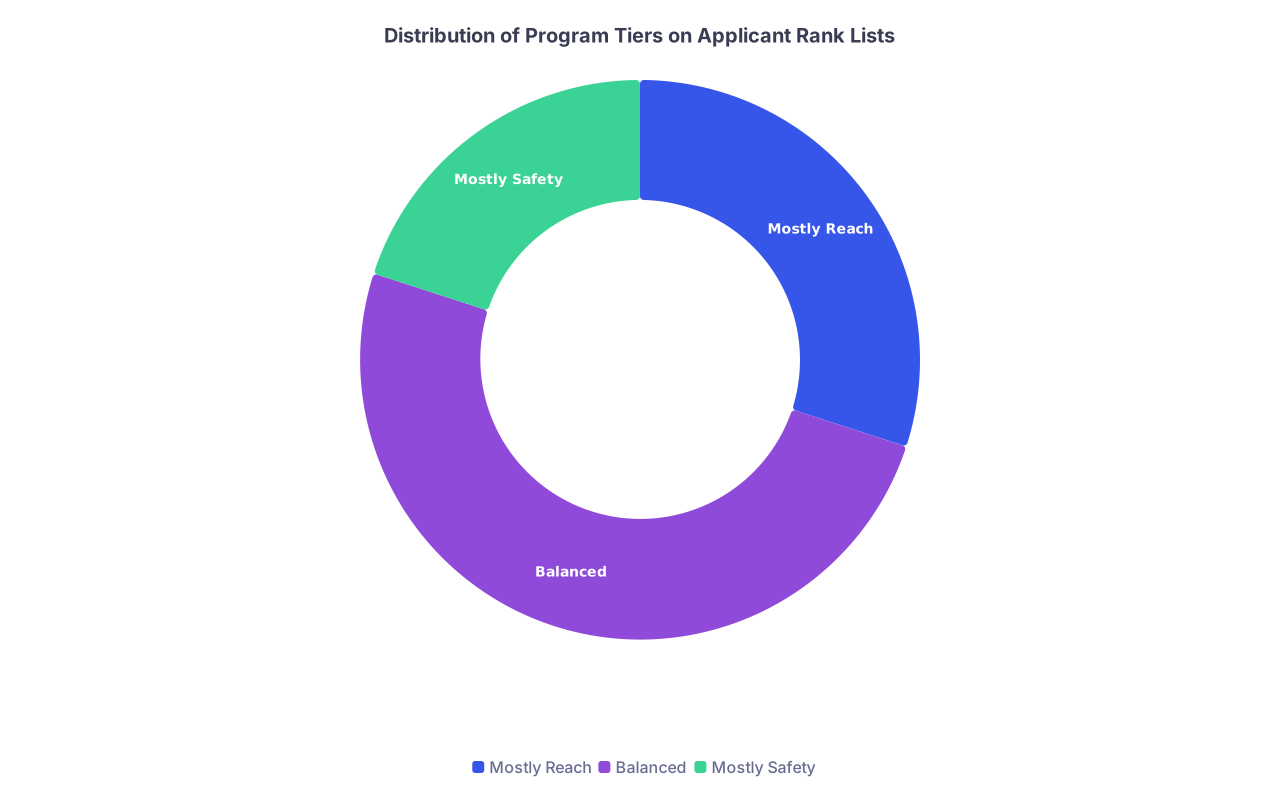
| Category | Value |
|---|---|
| Mostly Reach | 30 |
| Balanced | 50 |
| Mostly Safety | 20 |
Building a Rational Rank List
You need three categories in reality, even if you do not label them that way:
- Reach programs:
- Highly academic, top‑10‑type places, often research heavy.
- You go here if your scores, research, and letters are clearly strong.
- Mid‑range realistic programs:
- Solid academics, good surgical numbers, typical resident profile close to yours.
- These should be the bulk of your list.
- Safer options:
- Less research heavy, sometimes smaller or newer programs.
- They still train competent ophthalmologists, and some are hidden gems surgically.
Where people blow up:
- Only ranking 5–7 programs because “those are the ones I liked.”
- Overweighting prestige and underweighting place where they actually clicked with residents and faculty.
- Assuming their excellent application guarantees a top program when ophtho is still small numbers and randomness applies.
You want:
- Every interview that you would actually attend as a resident should go on the rank list.
- True preference order. You lose nothing by ranking a “reach” #1 if you liked it best.
Couples Match? Slightly Tricky
If you are couples matching with another early match specialty (rare) or a regular NRMP specialty (more common), you must untangle:
- What happens if you match ophtho in January but your partner does not match where they hoped in March?
- Are you both willing to prioritize your ophtho match city, or theirs?
SF Match does not have an integrated couples match with NRMP. This means your “coupling” is entirely planning and honest conversation, not algorithmic.
7. Backup Planning and Not Matching: Harsh but Fixable
You need a backup plan before you submit your SF Match application. Not after a bad email in January.
Realistic backup structures:
- Primary plan: Ophthalmology (SF Match).
- Backup A: Apply to a realistic NRMP specialty in September with a parallel ERAS application (medicine, prelim surgery, transitional year).
- Backup B: Ophthalmology research year with re‑application, plus possibly a prelim year.
Your choice depends on:
- How borderline your application is at baseline.
- Whether you would actually be happy practicing your backup specialty if ophtho does not work out even after one re‑try.
If you do not match:
- Contact your home ophtho faculty / mentor immediately. Do not vanish.
- Debrief honestly: Was it scores, letters, interview style, school reputation, or something else?
- Decide quickly whether you are:
- Reapplying with a dedicated research / enrichment year, or
- Fully pivoting to an NRMP specialty you can live with.
A focused research year with strong mentorship and substantive output has salvaged many borderline ophtho applicants on the second try. But only when:
- They fixed whatever was weak (Step 2 score, clinical gaps, lack of letters).
- They did not just add 10 case reports with no real mentorship or clinical growth.
8. Putting It All Together: A Concrete Action Plan
Let me make this painfully clear with a scenario.
You are a rising M4 in May:
- Step 1: Pass.
- Step 2: Pending (scheduled July).
- Clerkships: Mostly Honors/High Pass, one Pass in surgery.
- Experiences: One ophtho elective in January M3, one ongoing small chart review, member of the ophtho interest group.
- You “decide” on ophtho in April.
Here is what you do, step by step:
- Immediately schedule:
- Home ophtho month June.
- One away ophtho month July or August at a realistic program.
- During home month:
- Identify 2 faculty who might write strong letters.
- Push that chart review toward an abstract or poster.
- Ask residents where recent grads have matched and what is realistic.
- Study hard and take Step 2 in July with a goal to beat the average ophtho applicant.
- Draft a personal statement in June, refine with input from one ophtho faculty in July.
- Request letters by end of your home rotation, with explicit timelines (“SF Match opens in July, can you submit by early August?”).
- Submit SF Match application as early as you can once it opens in July, even if one letter is still pending (you can add it later).
- Use July/August away rotation as both:
- A long interview, and
- A reality check about where on the spectrum of programs you fit.
- Once interviews start:
- Treat the first 1–2 as practice but still take them seriously.
- Take notes after each interview about:
- Resident culture.
- Surgical volume.
- Where graduates go.
- Build a rank list that reflects:
- Your genuine preferences.
- Enough programs in the mid and safety bands to avoid the “3‑program rank list” disaster.
That is how you actually operationalize an “ophthalmology early match strategy.” Not just “I will apply and hope.”
FAQ (Exactly 6 Questions)
1. How many ophthalmology programs should I apply to through SF Match?
Most U.S. allopathic applicants targeting ophtho apply to roughly 60–80 programs, especially from non‑top‑tier schools or without exceptional research. Very strong applicants from well‑known schools with strong ophtho departments sometimes apply to fewer (40–50), but if you are asking this question, you probably are not in that ultra‑secure group. Over‑applying is safer than under‑applying in such a small, early match specialty.
2. Do I absolutely need ophthalmology research to match?
No, but it strongly helps, particularly for academic and higher‑tier programs. One or two substantial ophtho‑related projects (even if not yet published) show you have engaged with the field beyond a single rotation. That said, I have seen applicants match with no ophtho research when they had excellent clinical performance, strong letters, and meaningful ophtho exposure. Research is not mandatory, but in 2026 it is increasingly expected.
3. When should I take Step 2 if I am applying ophthalmology through SF Match?
Ideally by late June or early July of the application year so your score is available when programs begin screening. If your Step 1 was mediocre or just pass, a strong Step 2 taken early is critical. Taking Step 2 in September or later undermines your application; programs may not see the score before offering or declining interviews.
4. How late is too late to decide on ophthalmology?
If you first seriously consider ophtho after August of M3, you are behind. If you decide in early M4, you are significantly behind and will have to compress rotations, letters, and application prep. Some students still match from a “late” decision, but they usually have strong fundamentals (scores, clerkship grades) and hustle hard on rotations and mentorship. Beyond that, you may need to consider a research year and applying the following cycle.
5. How important are away rotations for ophtho compared with other specialties?
They are very important. In a small specialty with an early match, aways function as extended, high‑stakes interviews and de facto “signals” of your interest. Many programs match at least one or two of their rotator students each year. You do not need 4–5 aways (that is overkill), but 1–2 well‑chosen aways plus a strong home rotation are near‑essential unless you are at a top program with an extremely strong in‑house match record.
6. What should I do if my school does not have an ophthalmology department?
You must be more deliberate. Identify nearby or regional programs and arrange an early “away” that functions as your home rotation. Email program directors or medical student coordinators explaining your situation, and seek a faculty mentor at that site. You should also prioritize at least one research or scholarly project via that program or a remote collaboration. Programs understand the “no home ophtho” issue, but they expect you to compensate with clear initiative in seeking mentorship and exposure.
Key takeaways:
- SF Match compresses your entire ophthalmology application timeline; you must look ophtho‑ready by the end of M3, not mid‑M4.
- Strong letters from ophthalmology faculty and performance on home/away rotations are the real differentiators in a small, early match field.
- Rank aggressively by true preference, build a rational backup plan, and stop treating ophtho like a standard March match. It is not.