You’re not crazy: missing a competitive match on the first try can feel like your entire future just exploded.
Let me say the uncomfortable thing out loud: people do fail to match into derm, ortho, plastics, neurosurgery, ENT, urology, ophtho, rad onc, etc. On the first try. Some on the second. Some never match them at all.
But it’s also true that your career isn’t over, and your life isn’t ruined, even if it feels like that right now.
Let’s walk through this like we’re sitting in an empty call room at 1 a.m., and you’re asking: “What if I don’t match? Then what?”
Because that’s the real question: not “Will I be okay?” but “What does ‘okay’ actually look like?”
How Bad Is Not Matching a Competitive Specialty… Really?
Here’s the brutal, grown-up truth: not matching your dream specialty hurts, but it’s not a career death sentence. It’s a pivot point.
Look at the numbers first, because our brains love to catastrophize with zero data.
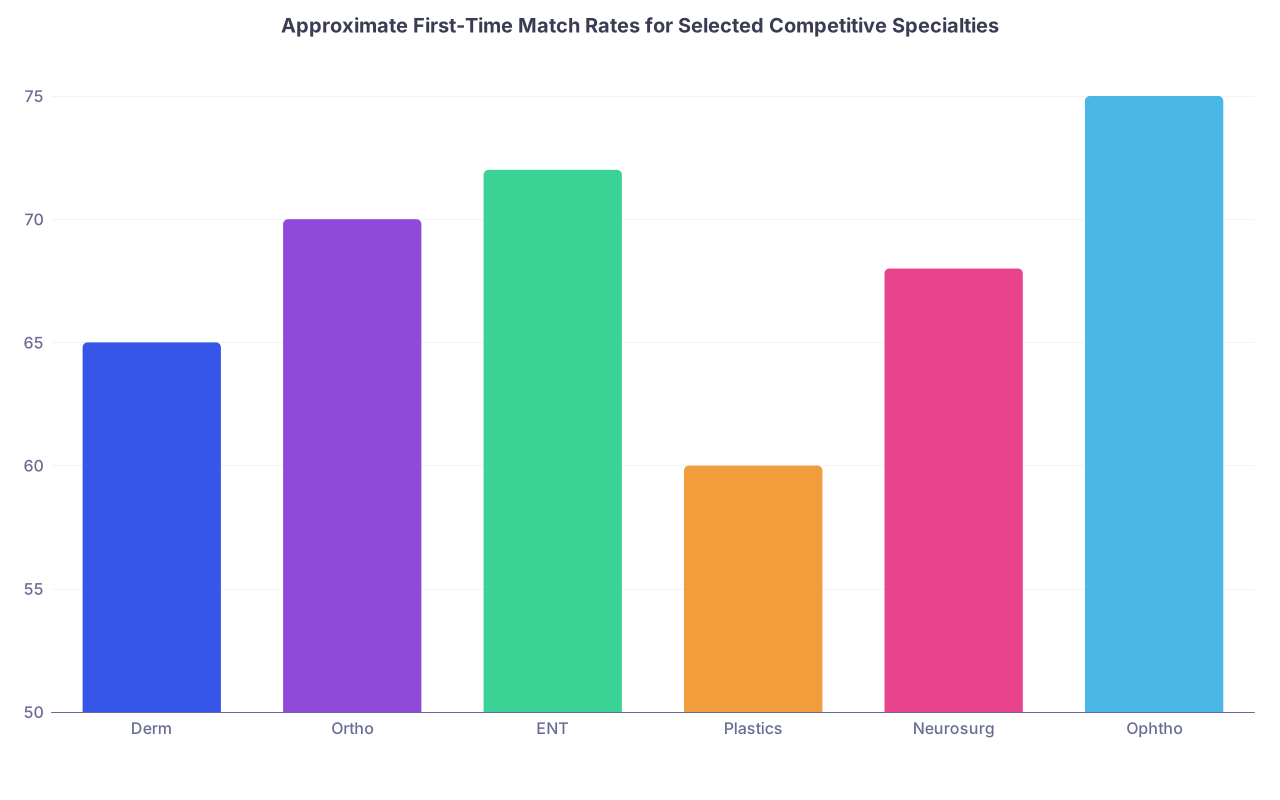
| Category | Value |
|---|---|
| Derm | 65 |
| Ortho | 70 |
| ENT | 72 |
| Plastics | 60 |
| Neurosurg | 68 |
| Ophtho | 75 |
Those are rough ballparks, but here’s what they mean:
- A non-trivial chunk of very strong applicants won’t match their first choice on the first try.
- Many of them are people like you: decent Step scores, some research, okay letters, not disasters.
- Most of those people do not end up unemployed or permanently lost. They end up in:
- The same specialty on a second attempt
- A different but still good specialty
- A path they didn’t plan that turns out… not terrible, sometimes great
The part no one tells you: the day you don’t match feels like the end. The year after, it feels like a plot twist. Five years later, most people are just… doctors living their lives.
But your brain is stuck on the worst-case scenario: “What if I never get derm/ortho/ENT/etc and everything I did was for nothing?” So let’s pick that apart instead of pretending it’s irrational.
Immediate Fallout: What Actually Happens If You Don’t Match
I know your mind is jumping to “I’ll be homeless with 300k debt.” Take a breath.
Here’s the real sequence if you don’t match into your competitive specialty:
You find out on Monday of Match Week (or earlier for specialties with separate matches like ophtho/urology). Either:
- You fully didn’t match anywhere, or
- You matched a preliminary year but not an advanced spot
You enter SOAP (if in NRMP):
- You apply to unfilled positions (often prelim medicine, prelim surgery, transitional year, sometimes categorical IM/FM/peds)
- You scramble, call programs, send emails, have rushed interviews
- You may end up in:
- A prelim year with the intent to reapply
- A categorical spot in a different specialty
- Or, worst-case, no spot at all
If you end up with nothing:
- You have a forced gap year (or more)
- Options: research position, prelim the next year, MPH/MBA, lab job, working as a scribe, etc.
- You re-strategize your entire career plan
It’s messy. It’s painful. It’s humiliating if you let it be. But it is also survivable.
The key piece that matters long-term is what you do with the first year after that disappointment. That’s where futures fork.
Path 1: Reapplying to the Same Competitive Specialty
This is the fantasy scenario your brain clings to: “I’ll just come back stronger and match next year.” Sometimes that works. Sometimes it doesn’t.
Reapplying is realistic if:
- You weren’t a disaster candidate. Examples:
- US MD, Step 2 > 240, some research, average letters, but weak signals (few away rotations, late decision, no strong mentors)
- Or IMG/DO with solid scores, real research, but limited network
- There’s a clear, fixable story about why you missed:
- Applied too late
- Not enough programs
- Weak letters from key rotations
- Poor Step 2 or no Step 2 at time of application
- No real dedicated research time in a research-heavy field
Reapplying is risky if:
- You were significantly below the typical metrics for that field and nothing big is changing
- You don’t have a plan to dramatically improve your application (not just “more time” but “different signal”)
- You’re unwilling to consider a different specialty even if you fail again
Here’s what a serious reapplication year usually looks like (for, say, derm, ortho, ENT, plastics):
You’re basically signing up for:
- 1–2 years of:
- Research in that specialty (often full-time, maybe unpaid or poorly paid)
- More rotations with the same department
- Stronger letters and advocacy
- Re-applying to an even longer list of programs
I’ve seen people reapply and match on the second try. I’ve also seen people pour two years into research, reapply, and still not match. Then they’re older, more burned out, more bitter, and now changing specialties from a weaker position.
So yeah, reapplying can 100% work. But you can’t treat it like a gentle do-over. It has to be a calculated risk with a very honest look at your actual competitiveness.
Path 2: Doing a Different Residency, Then Subspecializing Back Toward Your Interest
This is the path nobody talks about when you’re a med student because it sounds like “giving up.” It’s not. It’s being strategic.
You want ortho but don’t match? Some people go:
- Categorical general surgery
- Then sports medicine fellowship (if they pivot to FM or PM&R)
- Or hand surgery via plastics/ortho later if available
You want derm but don’t match?
- Go into internal medicine or family medicine
- Do a strong procedural-heavy path
- Do aesthetic medicine, complex medical derm in primary care, or even a cosmetics-focused practice if legal in your area
You want neurosurgery but don’t match?
- Enter neurology, interventional neurology, neurocritical care
- Or do radiology and interventional/neurointerventional radiology
Is it the same as the original dream? No. Let’s not pretend.
Is it a “failed life”? Also no. You still:
- Become an attending
- Treat complex patients related to your interest
- Have income stability and identity as a physician
- Can still build a very fulfilling niche career
This path is right for people who:
- Don’t want to gamble 1–2+ extra years on a maybe
- Are okay mourning the exact title (“I’m not an orthopaedic surgeon”) but keeping aspects of the content (sports, procedures, musculoskeletal care)
- Value stability, moving forward, and not living in application limbo
Path 3: Pivoting Completely to Another Specialty
This is the nightmare scenario in your head: “What if I end up in internal medicine or family med or psych when I wanted [insert competitive specialty]?”
Here’s the uncomfortable truth: a lot of people end up here. Sometimes by SOAP panic. Sometimes by intentional reapplication into a less competitive field.
And after the ego pain fades, many do just fine. Some end up happier than their friends in the fields they thought they wanted.
Think of:
- The derm hopeful who ends up in psychiatry and realizes they actually love complex mood disorders more than they loved rashes
- The neurosurgery aspirant who chooses anesthesia and ends up loving the shared OR environment, procedures, and lifestyle
- The ortho applicant who goes into EM and still does reductions, procedural sedation, trauma work—but with shifts and no clinic
This isn’t me sugarcoating. I’ve heard this out of actual attendings’ mouths:
“I cried when I didn’t match ENT. I sulked through intern year in general surgery. Now I’m a colorectal surgeon and honestly I love my life. I haven’t thought about ENT in years except as a funny fact about my past.”
“I wanted derm, didn’t match twice. Matched FM. I do women’s health, procedures, aesthetics in an outpatient clinic. I make great money, I see patients I like, I go home by 5. It’s not what I pictured, but I’m not suffering.”
You’re allowed to hate that idea right now. You’re allowed to grieve. But you also need to know: “Plan B” doesn’t automatically mean “miserable forever.”
Money, Status, and the Fear of Being “Lesser”
Let’s be honest about the gross stuff in your brain:
- “If I don’t match a competitive specialty, I’ll make way less money.”
- “People will know I ‘failed.’”
- “I’ll always feel like the reject.”
Some reality:
| Specialty Tier | Typical Range (USD) |
|---|---|
| Ultra-competitive surgical (ortho, plastics, neurosurg) | $600k–$1M+ |
| Competitive procedural (derm, rads, GI, cards) | $450k–$800k |
| Core hospital-based (anesthesia, EM, critical care) | $350k–$600k |
| Primary care / psych / peds | $230k–$350k |
| Outlier high-earning primary care setups | $350k–$600k |
Yes, some specialties statistically earn more. But:
You are not matching a salary number. You are matching a life.
- Higher salary with 80-hour weeks and chronic litigation risk vs.
- Lower salary but better control, location, flexibility
Within any specialty, your actual earnings will vary wildly:
- Location (rural vs coastal city)
- Employed vs private practice vs partnership
- Procedures, call coverage, side gigs, admin roles
And about the status thing: your med school peers will care for ~3 days after Match. Then they drown in their own residencies. Patients do not care what you didn’t match. They care if you listen, if you help, if you know your stuff.
The “I failed” label lives mostly in your own head. It slowly fades as:
- You show up to a new residency
- People treat you like a colleague, not an exam score
- You get decent at actual doctoring instead of collecting CV lines
How to Think About “Future You” If You Don’t Match
Picture two versions of you, five years from now:
- You who did not match competitive specialty, re-applied twice, still no match, then grudgingly went elsewhere.
- You who didn’t match, took one honest look, pivoted once, and went all-in on the new path.
Which one is more bitter? Which one is more tired?
Sometimes the brave move is not doubling down. Sometimes the brave move is stopping the sunk-cost madness and choosing something you can actually build a stable life in.
If you don’t match on the first try, your job is not to cling to the original dream at all costs. Your job is to:
- Get brutally honest feedback on your application from people inside the field (not just your classmates or generic dean’s office)
- Decide if reapplication meaningfully changes your odds or just prolongs the pain
- Decide what you value more:
- Exact specialty name?
- Or lifestyle, geography, family, mental health, and a certain style of practice?
You’re allowed to choose either. But choose consciously.
If You’re Still Pre-Match and Spiraling
If you haven’t even applied yet and you’re already rehearsing disaster scenarios, do something actually useful with that anxiety.
Use it to:
- Get real advising early: Not “You’re smart, you’ll be fine,” but, “Your Step is 232 and you want derm; here’s what that means practically.”
- Build backup tiers intentionally:
- Tier A: dream competitive specialty
- Tier B: somewhat competitive related specialties that you could see yourself in
- Tier C: realistic “I could build a good life here” specialties
- Be honest about how much time/energy/money you’re willing to gamble.
Are you willing to:- Do 1–2 years of low-paid research?
- Move anywhere in the country?
- Live in uncertainty for multiple cycles?
Or would you rather lock in a solid but less “prestigious” path and move forward?
The mistake I see over and over: people pick a competitive field like a personality label, not a risk-reward decision. Then when the system behaves exactly like a competitive system, they’re shocked.
Tiny Script for Your Brain on Match Week
If the worst happens and you don’t match your competitive specialty (or at all), your brain will go nuclear.
Have a script ready. Literally write it down.
Something like:
- “This is not the career I planned, but it’s not the end of my career.”
- “I will still be a doctor. The exact route is changing, not the destination of being useful.”
- “Tons of good attendings around me did not match their first choice. I just don’t know who they are.”
- “My worth is not equal to the competitiveness of my specialty.”
You will not believe these statements at first. Say them anyway. You’re not trying to erase the pain. You’re just trying to stop your brain from making it permanent.
FAQ (Exactly 5 Questions)
1. If I don’t match a competitive specialty on the first try, is it even worth reapplying?
Sometimes yes, sometimes absolutely not. It depends on how far you are from a typical matched applicant. If you’re close—solid scores, decent research, but weak signal or strategy—then a focused year of research, stronger letters, and applying broadly can make sense. If you’re significantly below average for that field and nothing massive is going to change (like no Step retake, no major new research, no new strong advocates), reapplying is more like buying an expensive lottery ticket. You need brutal feedback from insiders before deciding.
2. Will programs judge me forever for not matching the first time?
Not in the way your brain imagines. Programs care more about what you did with the setback than the fact it happened. If they see: “Didn’t match → took a research year → got great letters → became known to our department → improved scores/experiences,” that reads as persistence, not failure. What does scare them is aimless flailing: random jobs, no clear growth, or desperation applications to 10 different specialties with no story.
3. If I switch to another specialty, can I ever go back to my original dream field?
Directly? Rarely. Indirectly? Sometimes. A straight jump from, say, FM PGY-2 to derm PGY-1 is very unlikely. But people do adjacent pivots: surgery to plastics, IM to cards, FM to sports medicine, neuro to interventional. Once you start a categorical residency, your best move is usually to build the best possible life within that sphere (subspecialty, niche practice, procedures) instead of endlessly trying to escape back to your original fantasy.
4. Is it better to SOAP into anything than risk being unmatched and taking a research year?
Not always. SOAPing impulsively into a specialty you genuinely hate just to “not be unmatched” can trap you in a miserable residency with no exit that doesn’t look worse later. On the other hand, SOAPing into a realistic backup you can live with is often better than another uncertain year. If your dream specialty is ultra-competitive and your chances on reapply are slim, taking a strong SOAP categorical spot in something you can tolerate long-term might be the smartest move. It’s a short, chaotic window, so having your priority list pre-decided is critical.
5. Will I always feel like a failure if I don’t end up in my original competitive specialty?
No, but you may feel that way for a while. The grief over “the life I thought I’d have” is real. For most people, it eases once you’re actually doing doctor things—taking care of patients, getting better at your craft, being part of a team. Your identity shifts from “the person who didn’t match ortho” to “the ICU doc everyone calls for the sickest patients” or “the psych attending patients trust.” The specialty name matters a lot in med school. In real life, the day-to-day experience and your relationships matter much more.
Key takeaways:
- Not matching a competitive specialty on the first try is painful, but it’s a pivot point, not a permanent verdict on your worth.
- You have multiple viable futures—reapply smartly, pivot adjacent, or choose a different specialty and build a good life there.
- Your long-term happiness will come far more from how you respond to this setback than from the exact name of the specialty on your badge.