
The first 90 days of intern year will quietly decide half your future opportunities. Not your Step scores. Not your CV. How you handle people in this window.
This is where reputations harden. “Reliable.” “Flaky.” “Smart but disorganized.” “Great team player.” Those labels show up in emails you’ll never see and phone calls you’ll never hear. Your job in the first three months is to control that narrative.
So let’s walk this like a true timeline. Day 1 to Day 90. Who you should meet, what you should say, and when you should say it.
Big Picture: What You’re Actually Building in 90 Days
Before we slice this into weeks, you need the target.
In the first 3 months you should be aiming for:
- 3–5 attendings who know your name, your work style, and would vouch for you.
- 2–3 senior residents who see you as “one of the reliable ones.”
- 1–2 faculty who could become long-term mentors.
- A sense among nurses and staff that you’re respectful, reachable, and not arrogant.
- Your name associated with at least one “extra” (research, QI, committee, teaching).
If you hit those, you’ve done more for your career than any extra PubMed line you might have squeezed in.
Here’s how to time it.
Days 1–7: Orientation Week – Set Your Social Foundation
Week 1 is not about impressing people with your medical knowledge. It is about three words: calm, coachable, kind.
At this point you should:
Build your intern cohort ties—fast
These people will save you at 3 a.m.
- Learn every intern’s name by the end of orientation.
- Sit with different people at every session.
- When someone complains (they will), don’t pile on. Say something like, “Yeah, it’s a lot. At least we’re all in it together.” Neutral but bonding.
- Create or join the group chat if it doesn’t exist yet.
Introduce yourself to chiefs and program leadership
You do not need a 20‑minute conversation. You need presence.
Script for chiefs:
- “Hi, I’m [Name], one of the new interns. I’m excited to be here. If there’s anything you think interns often mess up early, I’d love to avoid it.”
- Then shut up and listen. Chiefs remember the interns who ask how not to be a problem.
Script for PD/APDs:
- “I just wanted to say thank you again for the opportunity. I’m really interested in [X interest, even if not fully formed], and I’m looking forward to learning the system here.”
Make yourself known to your coordinator
Your program coordinator is your unofficial air traffic control.
- Go introduce yourself in person.
- “I know you’re the one keeping this place running. If there’s anything I can do to make your life easier—forms, deadlines—please tell me early. I don’t want to be the problem child.”
- Then actually meet deadlines. That’s networking too.
Start learning names outside of physicians
- Ward clerks, unit secretaries, charge nurses, case managers.
- Use their name the second time you talk: “Thanks, Maria, that helps a lot.”
- People work harder for someone who sees them.
At this stage, your checklist is simple:
- Know all intern names.
- Chiefs know your face and name.
- PD has had one brief positive interaction with you.
- Coordinator sees you as polite and on top of things.
- You’ve learned at least 5 non-physician staff names.
Days 8–30: Month 1 – Prove You’re Safe and Reliable
Month 1 isn’t the time to angle for research with the division chief. You’re building your brand: safe, prepared, not dramatic.
At this point you should:
Win over your first senior resident
Your first senior will talk about you. To everyone.
- Show up early. Not “on time.” Early.
- Ask upfront: “How do you like to run the team? Anything interns do that makes your life harder that I should avoid?”
- End the first week with: “Anything I can do differently to make the team run smoother?”
That question alone separates you from half your class.
Establish a basic “networking script” with attendings
You don’t need to be charming. You need to be intentional.
Early in the rotation (day 1–2):
- “I’m [Name], one of the interns. I’m especially interested in [broad area: gen med, cards, EM, not ‘PGY-5 cardiothoracic fellow in 2030’]. I’m mainly focused right now on getting efficient and being safe.”
End of week 1:
- “If you ever see anything I could be doing better—presentation style, notes, clinical reasoning—I’d appreciate the feedback.”
That second line is gold. It brands you as coachable, which attendings love.
Start mapping the social structure of your program
Every program has informal power centers.
Watch:
- Which attendings do chiefs quote?
- Whose name comes up in “Oh, you should talk to Dr. X about research/QI/fellowship?”
- Which residents are clearly respected by nurses?
Make a running list. Those are your priority connections later.
Do one small, visible “extra mile” move per week
Examples:
- Offer to stay 15–20 minutes to help with late discharges when your work is done.
- Volunteer to present a short teaching case to your team.
- Ask your senior, “Can I help pre-round on a couple of your patients if you’re slammed?”
Important: Check with your senior before “volunteering” for anything that creates more work for others.
Protect your reputation with nursing and staff
Word spreads faster through nursing than through the physician group, and it spreads harder.
Non-negotiables:
- Answer your pager.
- If you are delayed: “I’m tied up with a sick patient. I will be there in 5–10 minutes. Is it okay to wait, or does this sound urgent enough to pull me now?”
- Don’t ever say, “That’s not my patient,” as your first line. Start with, “What’s going on?” then triage.
At the end of Month 1, your networking status should look like:
| Area | Goal Status |
|---|---|
| Senior residents | 1–2 seniors trust you |
| Attendings | 2–3 know your name/face |
| Non-physician staff | A few nurses like working with you |
| Leadership | Coordinator and chiefs see you as low-drama |
Month 2 (Days 31–60): Turn Contacts into Advocates
By now, people have an early “take” on you. Month 2 is where you convert that from “seems fine” to “this one is solid.”
At this point you should:
Identify 2–3 potential long-term mentors
You’re not asking for formal mentorship yet. You are testing fit.
Ideal early mentor traits:
- Approachable on rounds.
- Gives actual teaching, not just orders.
- Has a track record (other residents say, “They really helped me with fellowship/career planning”).
Your move after a good week with one of them:
- “I’ve really appreciated working with you this week. Once I’m a bit more settled, would it be okay if I set up a quick meeting to ask your advice about [fellowship interest/research/career direction]?”
They almost always say yes. Log it. Follow up in Month 3.
Start showing your interests—lightly
You don’t need your life plan nailed down. But people can’t connect you to opportunities if they don’t know your direction.
When appropriate:
- “I’m leaning toward [cards, EM, hospitalist, undecided but thinking X/Y]. I’m mostly trying to get a broad base this year, but if you know anyone doing interesting work in that area, I’d love to hear about it.”
That line invites them to say, “Actually, you should talk to Dr. Z…”
Write the name down. That’s a lead.Do one “intentional coffee” per week
Starting in Month 2, schedule a low-stakes 15–20 minute coffee or hallway chat weekly with one person who matters:
Rotate between:
- A senior resident you respect.
- A chief.
- An attending you liked on a prior week.
- A fellow in a field you’re considering.
What you talk about:
- Ask them how they chose their path.
- Ask what they wish interns knew earlier.
- Ask who they think are the best teachers/mentors in the department.
Then you say: “This is really helpful—thanks for taking the time.”
That’s it. Do not immediately ask for a letter, project, or favor. That’s how you build actual relationships.Get on the radar for one project
Not ten. One.
Sources:
- That attending who mentioned they were doing a QI project on readmissions.
- The fellow who groaned about “needing someone to help with chart review.”
- The chief running a curriculum or wellness initiative.
Your line:
- “If you’re still looking for a junior person to help with [project], I’d be interested—something manageable with intern hours, but I’d like to start getting involved.”
Key phrase: “manageable with intern hours.” Shows self-awareness and prevents overcommitting.
Solidify relationships with nurses and staff on your main rotation sites
Ask honestly:
- “Who are the residents you like working with the most? What do they do differently?”
You’ll hear very repeatable things:
- “They answer pages.”
- “They don’t talk down to us.”
- “They update families.”
Then… actually do those things. That’s practical networking.
Here’s how your network should be expanding over the first two months:
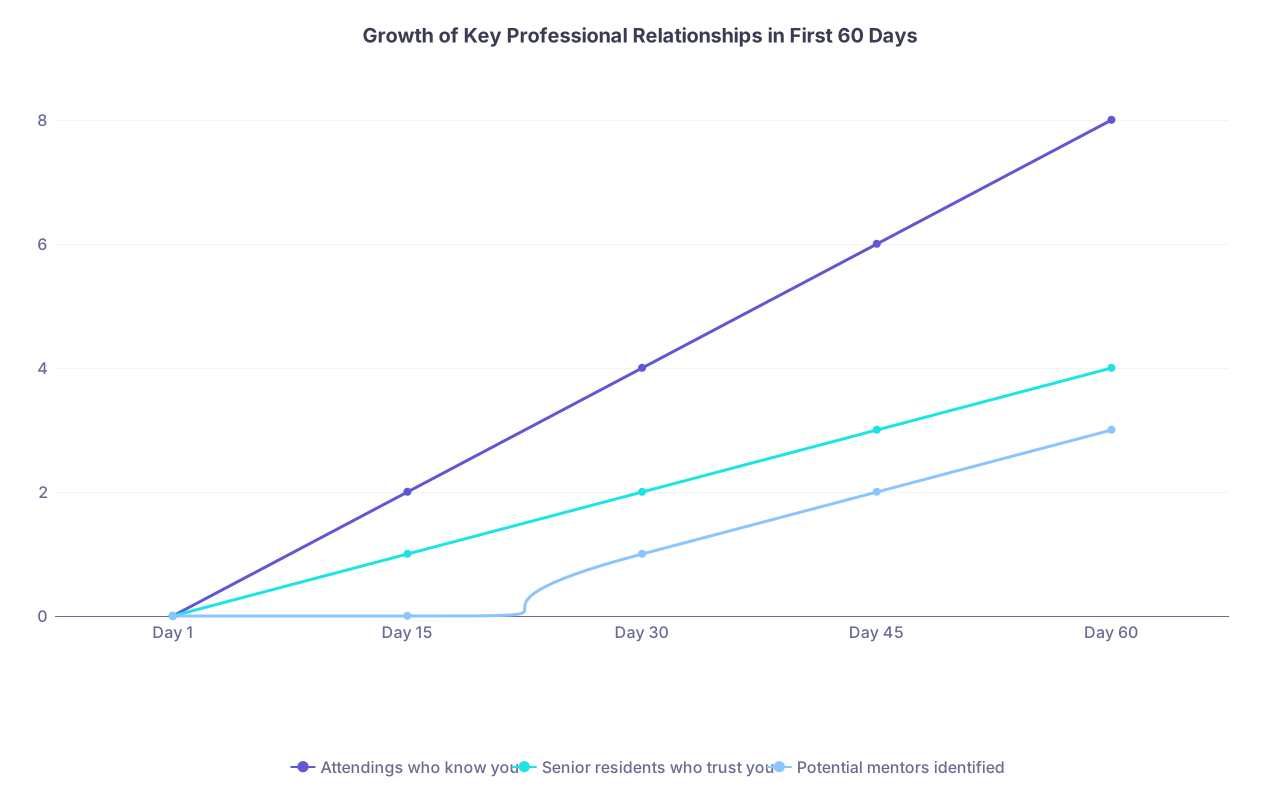
| Category | Attendings who know you | Senior residents who trust you | Potential mentors identified |
|---|---|---|---|
| Day 1 | 0 | 0 | 0 |
| Day 15 | 2 | 1 | 0 |
| Day 30 | 4 | 2 | 1 |
| Day 45 | 6 | 3 | 2 |
| Day 60 | 8 | 4 | 3 |
By day 60, you want those lines going up. Steadily. Not explosively.
Month 3 (Days 61–90): Lock In Mentors and Future Options
Month 3 is where you start formalizing what’s been informal so far. You’re not “just surviving” anymore; you’re shaping your trajectory.
At this point you should:
Convert 1–2 “good attendings” into actual mentors
Pick the ones who:
- Gave you specific positive feedback.
- Seemed invested in teaching.
- Are aligned with your general interest area (or are known connectors).
Send a short email:
- “Dr. [X], I really appreciated working with you on [rotation] and your feedback on [presentation/notes]. I’m early in intern year and still figuring out my longer-term path, but I’d really value your advice. Would you be open to a 20–30 minute meeting sometime this month to talk about career planning and ways to make the most of residency here?”
During the meeting:
- Share your interests and uncertainties honestly.
- Ask:
- “If I’m interested in [X], what should I be doing this year to set myself up well?”
- “Are there particular people here you think I should get to know?”
- “Do you recommend any early projects or committees that are actually worthwhile?”
If it feels right at the end:
- “If it’s okay with you, I’d love to check in once in a while as things evolve. Would you be open to being a bit of an ongoing mentor for me?”
Deepen your relationship with at least one chief
Chiefs are gatekeepers. They hear about every opportunity, every complaint, and every letter request.
Catch one after conference or via a short email:
- “Do you have 10–15 minutes sometime this month? I’d love your perspective on how I’m doing so far and what I could focus on to be a strong resident here.”
In that conversation:
- Ask, “If I keep doing what I’m doing, where do you see me in a year? Anything I should change?”
- Ask, “If I want to be competitive for [fellowship/academic hospitalist/community job], when do people usually start lining things up here?”
Chiefs remember the interns who seek feedback early, not three months before fellowship applications.
Stabilize your “extra” commitments
At this point, you should have:
- 1 concrete project (QI, small research role, education initiative).
- 1 small recurring role (e.g., helping with morning report once a month, residency wellness thing, or education for med students).
Make sure:
- The workload fits your bandwidth.
- At least one visible person (attending/chief) knows you’re involved.
That’s how networking turns into reputation: “Oh yeah, they helped with the sepsis order set project,” or “They’ve been working with Dr. Y on that transitions of care thing.”
Start thinking—quietly—about letters and future plans
You’re not asking for letters yet. But you are taking notes on who might write later.
Ask yourself after each rotation:
- Did this attending see my work enough to write about it?
- Did we have at least one or two deeper conversations?
- Do they seem supportive of my interests?
Keep a running list with:
- Names.
- Rotations/dates.
- One concrete thing they complimented you on (“good with families,” “organized presentations,” “solid clinical reasoning”).
This will save you when you’re writing those awkward reminder emails in a year.
Make sure your name means something specific
By the end of 90 days, you want people to attach a word to you. Preferably one of these:
- Reliable.
- Calm.
- Hard worker.
- Great with patients/families.
- Team player.
Ask a trusted senior or co-intern off the record:
- “If you had to describe me in 2–3 words to someone who hasn’t worked with me, what would you say?”
If it’s not what you want, you’ve got early warning. Adjust now, not PGY-3.
Here’s a high-level view of how your first 90 days should flow:
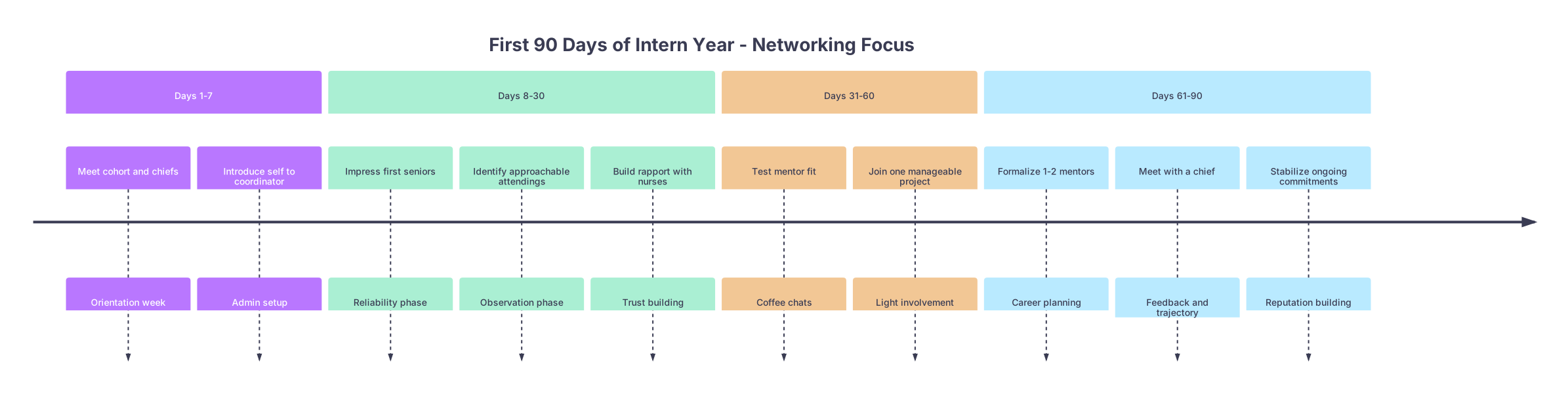
| Period | Event |
|---|---|
| Days 1-7 - Meet cohort and chiefs | Orientation week |
| Days 1-7 - Introduce self to coordinator | Admin setup |
| Days 8-30 - Impress first seniors | Reliability phase |
| Days 8-30 - Identify approachable attendings | Observation phase |
| Days 8-30 - Build rapport with nurses | Trust building |
| Days 31-60 - Test mentor fit | Coffee chats |
| Days 31-60 - Join one manageable project | Light involvement |
| Days 61-90 - Formalize 1-2 mentors | Career planning |
| Days 61-90 - Meet with a chief | Feedback and trajectory |
| Days 61-90 - Stabilize ongoing commitments | Reputation building |
Daily and Weekly Micro-Habits That Quietly Build Your Network
The big moves matter, but the small, repeated behaviors are what actually build your name.
Daily (takes under 10 minutes total)
At this point each day you should:
- Greet your team and nurses by name.
- Thank at least one person explicitly for something concrete:
- “Thanks for catching that low BP before it crashed.”
- “I appreciate you walking me through that admission.”
- Reply to at least one non-urgent message thoughtfully (not just “k”)—especially from seniors, chiefs, or attendings.
- Jot one networking note:
- “Dr. X likes concise plans.”
- “Charge nurse on 7E is the real fixer for disposition issues.”
Weekly (15–30 minutes once a week)
Once a week you should:
Do a quick review:
- Who did I work well with this week?
- Did I thank them?
- Is this someone I should talk to again later?
Send 1–2 short, sincere follow-ups:
- “Thanks again for your teaching on [X] this week—I’ve already used it twice.”
- “Appreciate how you helped me think through that [case] the other night.”
Plan the next week’s “one intentional conversation”:
- A coffee with a senior.
- A 10-minute debrief with an attending after sign-out.
- A quick, “Can I ask your advice sometime next week?” touch with a fellow.
Networking Landmines in the First 90 Days
A few things I’ve watched interns do that quietly wreck their reputation fast:
Trying to angle for letters in July.
You’ve known this attending for 6 days. Relax.Name-dropping future fellowship constantly.
Saying “I’m probably going to do cardiology” on day 3 annoys more people than it impresses. Let your work talk first.Being nice to attendings and dismissive to nurses.
Nurses talk. So do unit clerks. And yes, it gets back to leadership.Oversharing about how much you “hate” certain rotations or services.
You’re complaining about someone’s life’s work. Word travels.Ghosting on early project offers.
Saying “yes” then disappearing is worse than never having volunteered.
If you’re unsure whether something is a good idea, ask a trusted senior: “Would this make me look ambitious or annoying?” They usually know.
Visual: Your Networking Focus by Month
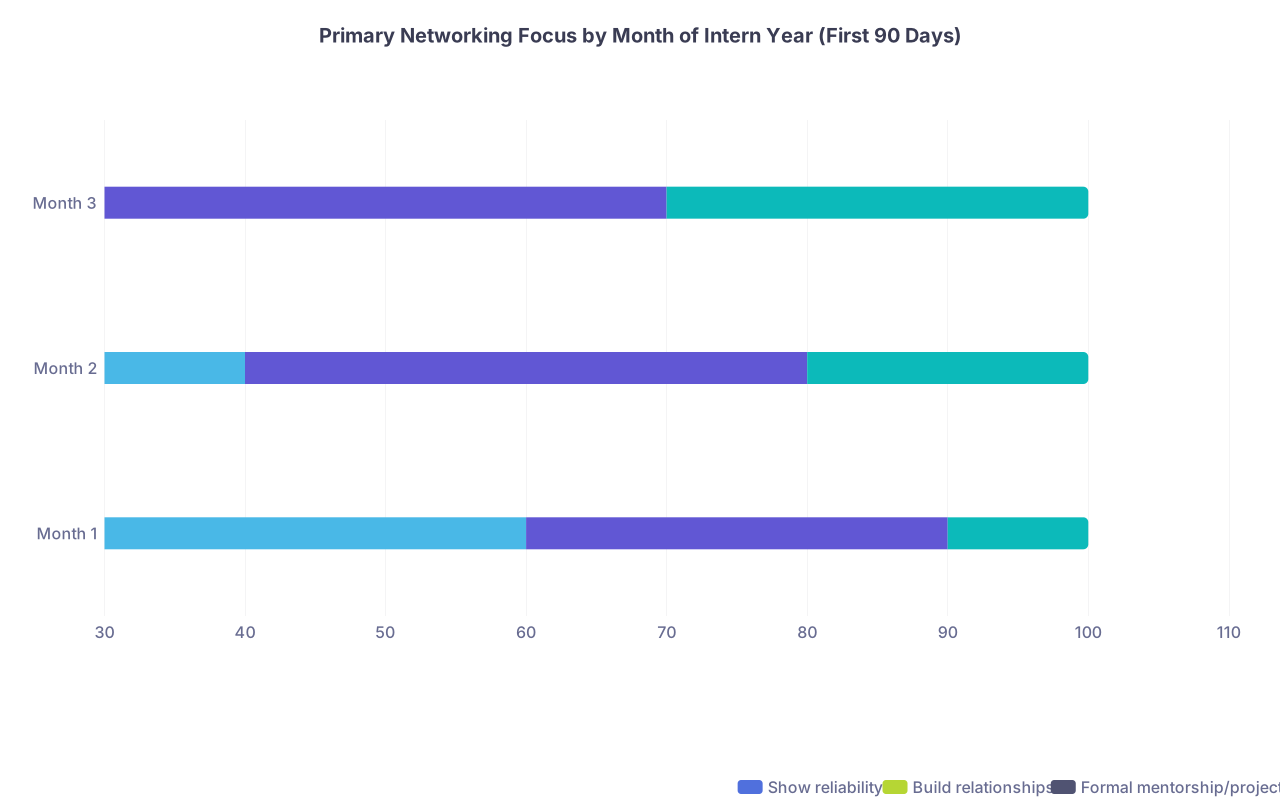
| Category | Show reliability | Build relationships | Formal mentorship/projects |
|---|---|---|---|
| Month 1 | 60 | 30 | 10 |
| Month 2 | 40 | 40 | 20 |
| Month 3 | 30 | 40 | 30 |
You’re shifting gradually from “Prove I’m safe” to “Build durable connections” to “Lock in mentors and opportunities.”
Final 90-Day Checklist
By Day 90, you should be able to check off most of this:
- 3–5 attendings know you by name and would say you’re solid.
- 2–3 senior residents trust you and would want you on their team.
- 1–2 faculty are tentatively acting as mentors (or at least advisors).
- You’re involved in exactly 1–2 manageable non-clinical projects.
- Nurses on at least one primary unit like working with you.
- Chiefs have a neutral-to-positive impression and at least one has given you feedback.
- You have a note (even if it’s in your phone) listing potential future letter writers.
If you’re not there yet, that’s not failure. It’s a signal. Adjust, don’t spiral.
Key Takeaways
- The first 90 days are about reputation more than raw performance—“reliable and coachable” beats “brilliant but chaotic” every time.
- Move in phases: Month 1 prove you’re safe, Month 2 build real relationships, Month 3 formalize mentors and one or two projects.
- Small, consistent behaviors—learning names, asking for feedback, following through—are the backbone of networking in medicine, not forced small talk or early letter requests.