
The usual “network more” advice in medicine is useless because it ignores the calendar.
You’re busy. Clinics, consults, call, notes, maybe kids, maybe research. “Just reach out to people” is how you burn out and then ghost everyone. The only way networking works long-term in medicine is if it’s structured like your call schedule—predictable, repeatable, and realistic.
Here’s how to build weekly networking touchpoints that run on rails, not on your willpower.
Step 0: Set Your Weekly Bandwidth (Before You Talk to Anyone)
At this point you should decide how much networking you can actually sustain every week. Not what you wish you could do. What survives post-call brain and 60-hour weeks.
Use this simple rule:
You get 60–90 minutes per week. Max. Anything beyond that is a short sprint, not a sustainable baseline.
Break those minutes into time blocks:
- 1 “deep” block (30–45 minutes):
- writing a thoughtful email
- Zoom/phone conversation
- editing your CV and sending it to a new mentor
- 2–3 “micro” blocks (10–15 minutes each):
- quick check-in texts
- LinkedIn / email replies
- sending a paper or resource you discussed
- commenting on someone’s update
If you’re more visual, here’s how that might look:
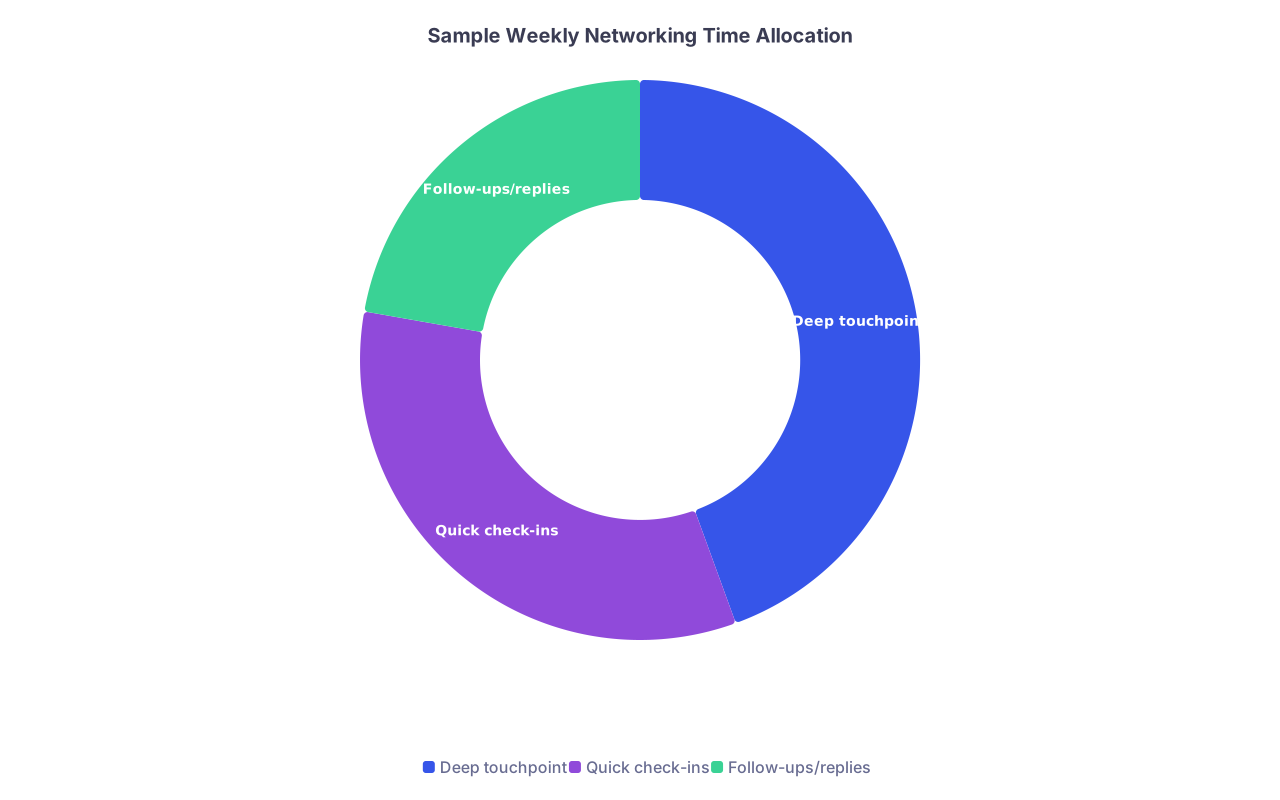
| Category | Value |
|---|---|
| Deep touchpoint | 40 |
| Quick check-ins | 30 |
| Follow-ups/replies | 20 |
Lock this in first. This is your networking budget. You don’t overspend it. If you’re on ICU or Q3 call, you may drop to:
- 1 deep block (30 min every other week)
- 1–2 micro blocks (10 min)
That’s still better than your old pattern of “network like crazy for 2 weeks → disappear for 3 months.”
Step 1: Build a Weekly Skeleton (Same Time, Every Week)
At this point you should anchor networking to specific recurring times in your week. Same way rounds and sign-out are fixed.
Pick:
- 1 protected time on a lighter day (for most: Friday afternoon, Sunday evening, or an admin half-day)
- 2–3 micro slots where you reliably have 10 minutes (post-call morning, commute on train, lunch once a week)
A sample structure:
- Sunday night (30–45 min) – Planning + 1 deeper touchpoint
- Wednesday lunch (10–15 min) – Quick check-in #1
- Friday commute or evening (10–15 min) – Quick check-in #2 or replies
Now let’s lay that out explicitly.
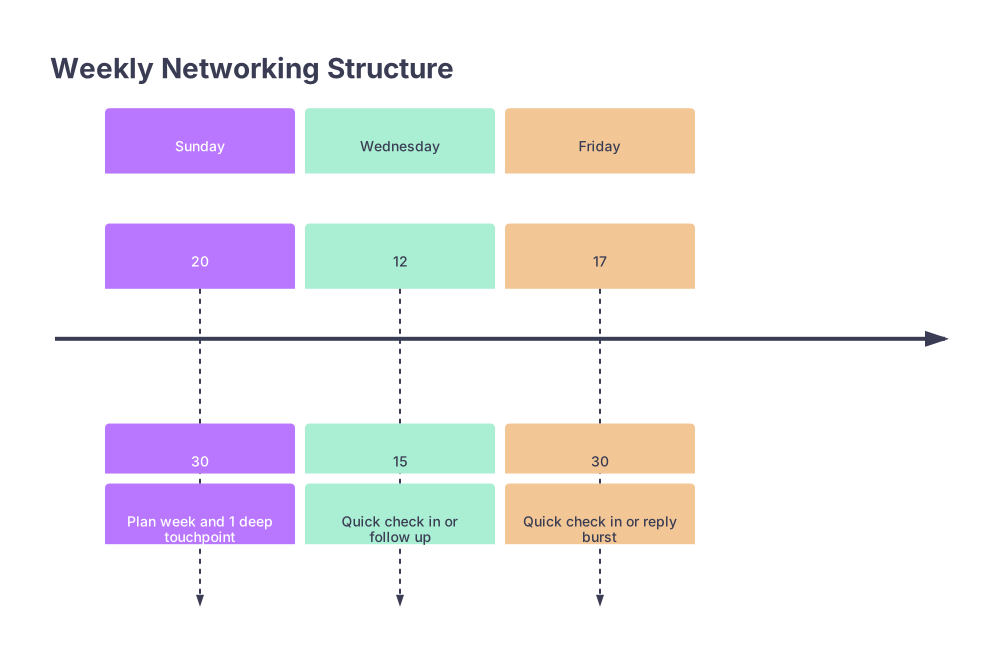
| Period | Event |
|---|---|
| Sunday - 20 | 30 |
| Wednesday - 12 | 15 |
| Friday - 17 | 30 |
These are appointments with your future career. You don’t casually cancel them. You can reschedule them within the week, but you treat them like a clinic session.
If you’re on rotation blocks, adjust your baseline per rotation, not per day:
- Heavier month (e.g., inpatient nights, ICU):
- 1 deep touchpoint every other week
- 1 quick check-in weekly
- Lighter month (elective, research):
- 1–2 deep touchpoints per week
- 2–3 micro touchpoints per week
Step 2: Define Networking “Categories” So You’re Not Random
At this point you should decide what types of relationships you’re maintaining, so every week you’re not starting from zero thinking, “Who should I email?”
You want a balanced networking portfolio:
| Category | Typical Examples |
|---|---|
| Internal | Attendings, chiefs, service line |
| Cross-site | People at other hospitals |
| Academic | Researchers, program directors |
| Peer network | Co-residents, fellows, alumni |
| Future-facing | Industry, digital health, policy |
Your weekly touchpoints should rotate across these categories instead of just spamming people in your own department.
A simple 4-week rotation for your deep touchpoint:
- Week 1 – Internal: attending in your department
- Week 2 – Academic: potential collaborator or researcher
- Week 3 – Cross-site or alumni: someone at another institution
- Week 4 – Future-facing: industry, policy, health tech contact
Your quick touchpoints can be lighter and more opportunistic—peers, ongoing projects, people you already know.
Step 3: The Week-By-Week System (First 8 Weeks)
Now we structure this like a progressive training plan. At this point you should treat the first 8 weeks as your pilot phase.
Week 1: Baseline and List-Building
Sunday (Deep block – 45 min)
- Make a target list of 20–30 people you’d realistically like to keep in orbit over the next 6–12 months:
- 5–8 internal attendings/chiefs
- 5–8 academic/research people
- 5–8 external / alumni / future-facing contacts
- Tag each person with:
- category (internal, academic, etc.)
- priority (A = crucial, B = helpful, C = nice to know)
- cadence (monthly, quarterly, twice a year)
You can use a simple spreadsheet or a note app—keep it primitive or you’ll procrastinate “building the system” instead of using it.
Midweek (10–15 min)
- Send 1–2 very low-stakes check-ins to people you already know well:
- “Saw this paper and thought of our conversation about X”
- “Quick update: starting cardiology next month; would love to loop back in the fall”
Friday (10–15 min)
- Respond to any replies
- Capture notes: “Talked about X, wants to connect again after fellowship interview season.”
You are not yet doing cold outreach. You’re warming up the muscles.
Week 2: First Intentional Deep Touchpoint
At this point you should schedule one real conversation.
Sunday (30–45 min)
- Pick 1 priority A contact from your list (ideally internal or an alum).
- Draft and send a focused, respectful email:
- Who you are,
- how you know them (or your link),
- why you’re reaching out now,
- a specific small ask (15–20 minutes, 2–3 questions).
Schedule the conversation for Week 3 or 4.
Midweek (10–15 min)
- Send 1 quick “maintenance” touchpoint:
- peer, co-resident, or junior you mentor
- brief congratulations, quick update, or offer of help
Friday (10–15 min)
- File replies
- Pick next week’s “deep person”
Weeks 3–4: Install the Pattern
At this point your goal isn’t volume. It’s rhythm.
For each week:
Sunday (30–45 min):
- Prepare for any scheduled conversation:
- skim their recent papers or LinkedIn
- write 3 bullet-point questions
- Or send 1 deeper email / invite for a future week.
- Prepare for any scheduled conversation:
Midweek (10–15 min):
- 1–2 micro touchpoints:
- a short “update since we last spoke”
- forwarding an article related to what you discussed
- quick congrats (new position, paper, award)
- 1–2 micro touchpoints:
Friday (10–15 min):
- Reply to messages that came in
- Log bullet notes from any calls this week
- Pick who you’ll reach out to next Sunday
By the end of Week 4 you should have:
- 1–2 completed deeper conversations
- 4–8 quick touchpoints sent
- A simple, living list of contacts with notes and next-touch dates
This is where most people quit. You don’t, because your system is light.
Weeks 5–8: Layering in Future-Facing Contacts
Now that your cadence exists, at this point you should expand into the “future of medicine” side—digital health, policy, industry, innovation.
Every other week (e.g., Weeks 5 and 7):
Your Sunday deep block is dedicated to one future-facing contact:
- Example targets:
- physician in a digital health startup
- medical director at a device/pharma company
- clinician working in AI, telehealth, or value-based care
- someone in your specialty who’s moved into policy or admin
Your email is not “I want a job.” It’s:
- who you are
- why their career path is interesting to you
- 2–3 specific things you’re curious about
- clear request: 15–20 minutes, at their convenience
Your midweek micro blocks:
- 1 quick check-in with an existing contact
- 1 follow-up if someone from Weeks 1–4 never replied (after at least 10–14 days, very gentle nudge)
By the end of Week 8, if you’ve stayed inside your time budget, you won’t feel burned out. You’ll feel… mildly surprised how much happened with so little weekly time.
Day-by-Day Micro-Structure (What You Actually Do Each Day)
Now let’s zoom in. At this point you should have clear daily actions on your networking days so you don’t waste time thinking.
Your Sunday Evening Block (30–45 min)
5 minutes – Review your list
- Who did you talk to last week?
- Any urgent follow-up? (interview advice, letter timing, ongoing project)
10–20 minutes – One deeper touchpoint
- Either:
- draft a thoughtful email, or
- prep for a scheduled call (questions, CV, their work).
- Either:
10–20 minutes – Planning
- Decide:
- 1–2 people for quick check-ins this week
- 1 target for next week’s deep touchpoint
- Drop tiny calendar blocks:
- “Wed 12:15 – text/email X”
- “Fri 17:10 – reply to networking emails”
- Decide:
That’s it. Then you’re done.

Your Midweek Micro Block (10–15 min)
Script this so it takes zero brainpower.
A typical 15-minute pattern:
- Minute 1–3: Open your list and email/text
- Minute 4–8: Send 1 quick check-in
- “Hi Dr X, quick update since we spoke in October: I’m starting cardiology in July and would still love to stay involved in outcomes projects. No action needed, just an update and thanks again for your guidance.”
- Minute 9–12: Send 1 opportunistic note
- reply to someone’s LinkedIn / X post
- congratulate on a grant or appointment
- share a link you genuinely think they’d like
- Minute 13–15: Log what you sent
Done. Close the tab.
Your Friday Micro Block (10–15 min)
This is your “clean up and close the loop” slot.
- Reply to any messages that require more than 30 seconds
- Move anything that needs real time to next Sunday’s deep block
- Add 1–2 bullet notes to your log:
- “Dr Y suggested reaching out again in June about telehealth roles.”
- “Z is moving to industry; wants to stay in touch.”
How to Avoid Burnout While Still Being Visible
You’re in medicine; burnout risk is non-trivial. Here’s where people blow themselves up and how to avoid it.
1. Cap the Number of New People Per Month
At this point you should limit yourself to 2–4 brand-new contacts per month. The rest of your time goes to maintaining existing relationships.
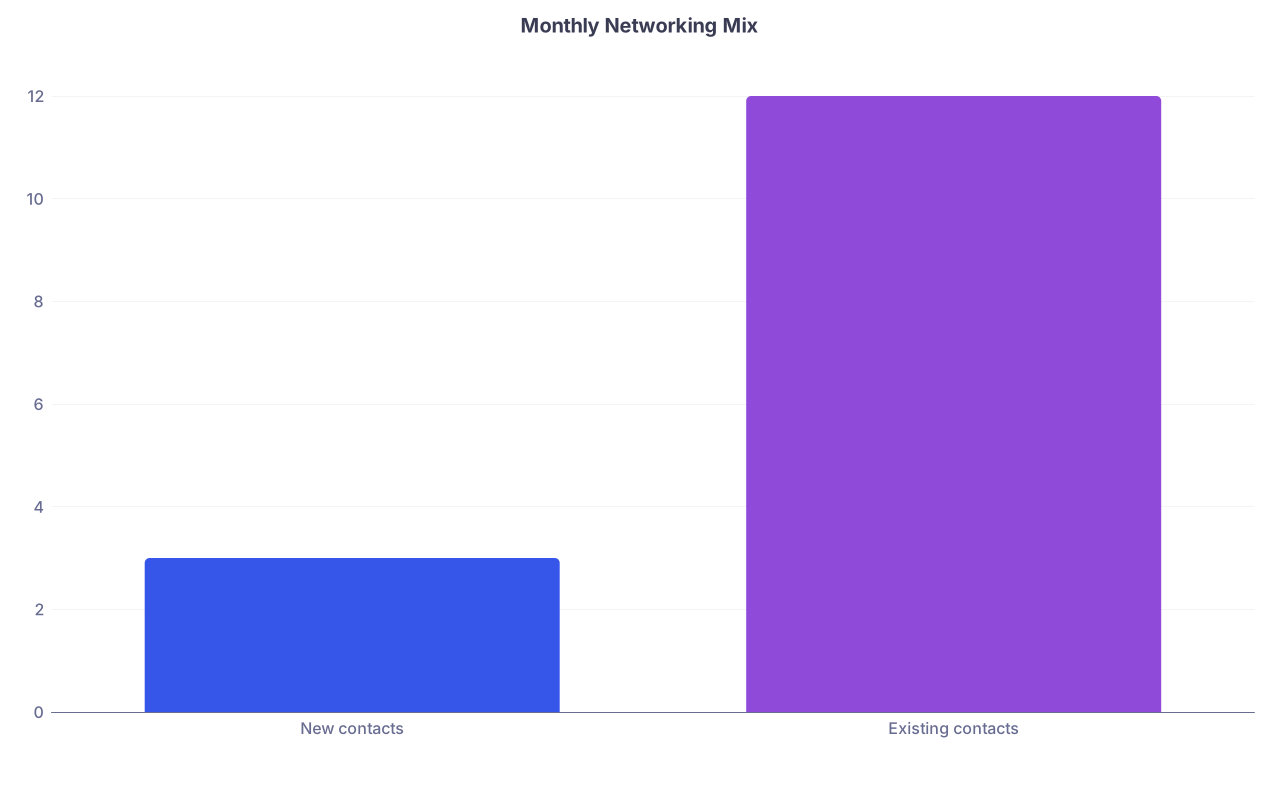
| Category | Value |
|---|---|
| New contacts | 3 |
| Existing contacts | 12 |
Why this matters:
Talking to 3 new people and maintaining 10 existing connections beats blasting 12 strangers and never following up.
2. Use Seasons, Not Constant Hustle
Medicine runs on rotation blocks and academic years. So should your networking.
I’ve seen this work well:
High-intensity seasons (2–3 months/year):
- Pre-applying or interviewing for residency/fellowship
- Exploring a transition (e.g., to industry or a new institution)
- Networking time: up to 2 hours/week temporarily
Maintenance seasons (rest of the year):
- Your baseline 60–90 minutes/week
- Mostly quick touchpoints, occasional deeper conversations
Use your lighter rotations (electives, ambulatory, research) as networking sprints. Then drop back to your sustainable baseline in heavier months.
3. Pre-Define Your “No”
At this point you should know what you’re NOT doing, so you don’t guilt-spiral.
Examples:
- You’re not:
- answering lengthy “can you review my entire application” emails from strangers
- doing more than one informational call per week
- joining every committee someone suggests
Use a simple rule: If it doesn’t fit inside your pre-set weekly block, it either moves to a later week or you say no.
Tools and Tiny Systems That Keep You Sane
You do not need a full CRM. You do need something.
Minimal setup that actually works:
Capture tool:
- 1 Google Sheet or Notion page with:
- Name
- Role/location
- Category (internal, academic, etc.)
- Last contact date
- Next contact date
- Notes
- 1 Google Sheet or Notion page with:
Calendar anchors:
- Recurring “Networking – Deep” block
- Recurring “Networking – Quick” block
Two templates:
- 1 template email for a first outreach
- 1 template for a gentle follow-up

If you like visuals, you can even sketch your monthly cadence.
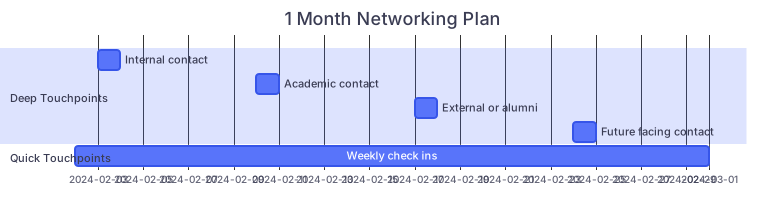
| Task | Details |
|---|---|
| Deep Touchpoints: Internal contact | a1, 2024-02-03, 1d |
| Deep Touchpoints: Academic contact | a2, 2024-02-10, 1d |
| Deep Touchpoints: External or alumni | a3, 2024-02-17, 1d |
| Deep Touchpoints: Future facing contact | a4, 2024-02-24, 1d |
| Quick Touchpoints: Weekly check ins | b1, 2024-02-02, 28d |
Bringing It All Together: What This Looks Like After 6 Months
If you follow this weekly structure without overdoing it, here’s what typically happens by Month 6:
- You’ve had ~15–20 deeper conversations, most of which turned into real advocates or future collaborators.
- You’ve sent 50–70 micro touchpoints, which keeps you “present” without being annoying.
- When you suddenly need advice (job, fellowship, pivot to industry), you’re not emailing strangers. You’re asking people who actually remember you.
And you did it inside one hour a week.

Key takeaways:
- Treat networking like a standing clinic, not a side hobby: fixed weekly blocks, small and sustainable.
- Rotate across clear relationship categories and cap new contacts so you don’t fry yourself.
- Use simple tools and a 6–8 week pilot to lock in your rhythm—then let compounding do the work.