
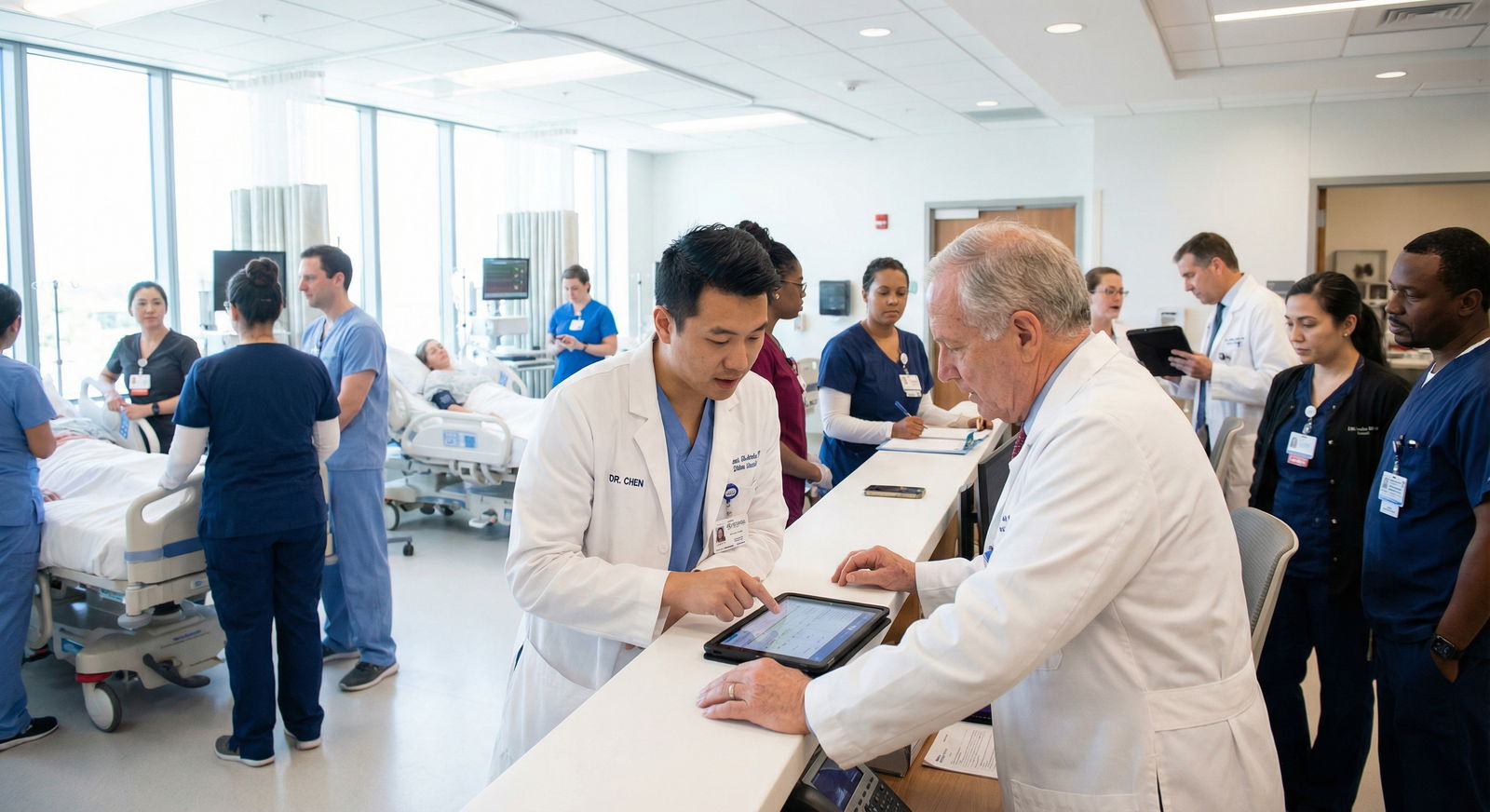
The harsh truth: if you are an international graduate with zero local contacts, your medical career in that country is basically on pause until you fix that.
Not improved. Not “enhanced.” Paused.
The good news? You do not need 500 contacts. You need the right first 10 people. And you need to approach them in the right order, with a clear ask each time.
This is the playbook.
The ground rules before you meet anyone
If you are an IMG with no local network, you’re starting cold. Fine. But you cannot show up unprepared and expect busy people to invest in you.
Before we talk about the 10 people, get these basics straight:
- A clean 1-page CV in the local format (US-style for US, UK-style for UK, etc.).
- A 3–4 sentence “introduction pitch” about who you are and what you’re trying to do.
- A realistic target for the next 12–18 months (examples: “secure 2–3 US clinical observerships,” “move into a research coordinator role,” “prepare for residency application in internal medicine”).
Your intro pitch should sound something like:
“I’m a physician trained in India, graduated in 2021, with clinical experience in internal medicine and some cardiology research. I’ve just moved to [city] and I’m working toward [US/UK/Canada/wherever] training in internal medicine. My main focus this year is [ex: gaining local clinical exposure and building references]. I’d really value your perspective on how to do that here.”
Memorize it. Then adjust slightly depending on who you’re talking to.
The first 10 people to meet (in this order)
1. The local IMG who is 3–5 years ahead of you
If you skip this person, you’ll waste months.
You want someone who:
- Trained in your home country (or another low-/middle-income country)
- Is now in residency, research, or an attending role in your new country
- Is in your specialty of interest, or at least close (IM, FM, psych, etc.)
How to find them:
- Look up hospital residents on the program website; scan for foreign-sounding names or your medical school name
- LinkedIn: search “International Medical Graduate [City/Hospital]”
- Facebook/WhatsApp/Telegram IMG groups for your country-to-destination pathway
What to write (short and direct):
“Dear Dr. [Name],
I’m an international medical graduate from [country], recently moved to [city], working toward [goal – e.g., internal medicine residency]. I saw that you trained at [their med school/home country] and are now at [hospital].
Would you be open to a brief 15–20 minute call or coffee so I can learn how you approached clinical experience and networking here? I’m not asking for any recommendation or position — just honest advice on where to start.
Best,
[Your Name]”
What to ask them:
- “How did you first get any local experience here?”
- “If you were me, what would you do in the next 3 months?”
- “Who were the 1–2 people who changed things for you?”
- “Are there any local IMG or specialty groups I should join?”
Your “ask” at the end:
- “Is there one person you’d feel comfortable introducing me to, who might be open to having a similar conversation?”
That referral is your first real bridge.
2. The hospital education office / medical education coordinator
You need to stop guessing what’s allowed and start hearing it from the people who handle forms, clearances, and policies.
This person may be called:
- Graduate medical education coordinator
- Medical education office staff
- Postgraduate dean’s office assistant
- Medical student/trainee coordinator
Why they matter:
- They know which departments accept observers or volunteers
- They know what HR will and will not approve
- They often have lists of interested attendings who like teaching and mentoring
How to approach:
- Check hospital website → Education → Medical Students / Residents section
- Call or email the main number: “Could you connect me with the medical education office, please?”
Email example:
“Hello [Name if you have it],
My name is [Your Name]. I’m a foreign-trained physician recently relocated to [city]. I am currently preparing for [USMLE/PLAB/etc.] and am exploring opportunities for observership, shadowing, or research involvement at [Hospital].
Could you advise whether your institution has any formal or informal pathways for international graduates to gain supervised exposure? I’m happy to provide my CV and any required documentation.
Thank you for any guidance,
[Your Name]”
What to ask in a meeting or call:
- “Which departments are usually more open to observers / volunteers?”
- “What are the mandatory steps for someone like me? (vaccines, background check, forms, etc.)”
- “Do you know any attendings who regularly host IMGs?”
Your ask:
- “Would you mind if I follow up in 2 weeks if I haven’t heard back from any departments?”
- If they mention specific attendings: “Would it be appropriate to email them directly and mention that you suggested I reach out?”
3. The specialty-specific IMG or resident in your target field
Now we narrow it. If you want internal medicine, you don’t just want any doctor. You want someone in IM, at a program or hospital you can reach physically or remotely.
Why they matter:
- They know which attendings like teaching
- They know how foreigners are perceived in that specialty locally
- They often know about low-profile research or QI projects that never get advertised
How to find them:
- Program websites → Resident list
- LinkedIn search “Internal Medicine Resident [Hospital Name]”
- Ask person #1 or #2: “Is there a resident in internal medicine you think would be open to talking with me?”
What to ask:
- “Which attendings here are most supportive of IMGs?”
- “Do your attendings ever take observers or research volunteers?”
- “If I want to be useful and not just shadow, what skills or tasks are actually helpful to teams here?”
Ask at the end:
- “If it’s not too much, would you be comfortable introducing me to one attending who might be open to having an IMG observer or research helper?”
Do not ask for a letter of recommendation. Not yet. That’s how you kill the relationship before it starts.
4. The administrative assistant to a department chair or key attending
You want the gatekeeper. Because gatekeepers control calendars.
There’s usually:
- Department chair’s assistant
- Clinic administrator
- Practice manager
Why they matter:
- They decide if your email gets read or buried
- They can suggest quieter clinics or attendings more open to observers
- They know practical details like clinic days, times, locations
How to find them:
- Department webpage: “Contact us” → often lists an admin
- Call the main hospital number and ask for “[Department] administrative office”
Email them like this:
“Hello [Name],
My name is [Your Name]. I’m an international medical graduate now based in [city], preparing for [exam/goal]. I’m seeking short-term observership or shadowing opportunities in [specialty] to better understand local practice and to prepare for future training applications.
I realize Dr. [Chair/Attending] has a very full schedule, so I wanted to first ask you: is there an established process or preferred way for international graduates to request observership within your department?
I’d be grateful for any guidance and happy to send my CV or any required forms.
Best regards,
[Your Name]”
You’re not asking them to “convince” the chair. You’re asking for the process. That’s respectful, and more likely to get a response.
5. The hospital volunteer services coordinator
If you cannot get in as a doctor, get in as a human being who shows up, helps, and becomes familiar.
This could be:
- Volunteer coordinator
- Community engagement office
- Patient services coordinator
Why they matter:
- They can give you a legitimate badge
- They put you physically inside the system where people get used to seeing your face
- You learn how the hospital functions and meet nurses, allied health, admin staff
You won’t be doing clinical work. Fine. But you’ll be present.
Ask them:
- “Which roles allow me to be consistently in one clinic or unit, rather than scattered events?”
- “Can I request a specific department or clinic where I might learn about patient flow and communication?”
Your strategy:
- Show up regularly
- Be early, reliable, and low-maintenance
- Use that exposure to meet the next types of people on this list
6. The research coordinator in a department that publishes a lot
If you can’t get clinical exposure first, research or QI is often the back door.
Look for:
- Departments with lots of PubMed hits at that institution
- Research centers or institutes linked to the hospital
- Titles like “Clinical research coordinator,” “Research manager,” “Lab manager”
Search:
- “[Hospital Name] clinical research coordinator internal medicine”
- “Research assistant [Department] [Hospital/University]”
Email template:
“Dear [Name],
I’m a foreign-trained physician recently relocated to [city], with strong interest in [field – e.g., cardiology outcomes research]. I’m currently preparing for [exam/goal] and hoping to gain research experience in the local system.
I noticed that your group has published in [specific area – show you actually looked them up]. I’d be very interested in learning whether there might be any scope for a volunteer role such as data collection, chart review, or basic analysis, even for a few hours per week.
I can share my CV and be very flexible with timing.
Best,
[Your Name]”
Your ask:
- Something small: “Is there a low-skill, time-consuming task you need help with that I could do under supervision?”
- Do not ask to be a co-author on day one. Earn it.
Once you’re useful, research coordinators often introduce you to PIs and attendings. That’s your next level network.
7. The nurse manager or charge nurse in a clinic or unit
Physicians are not the only way in. Sometimes they’re actually the worst first move.
Nurses know:
- Which doctors are kind, patient, and used to learners
- Who gets angry with “extra people” in the room
- How the team really works, not how it’s supposed to work on paper
How to meet them:
- Through your volunteer work
- While you’re in the hospital for anything (education office, research, etc.): introduce yourself properly
- Ask someone: “Could you point me toward the nurse manager or charge nurse for this area?”
What to say:
“Hi, I’m [Name]. I’m a physician from [country], now here in [city] working toward [goal]. I’m not practicing locally yet – I’m mainly trying to understand how care is delivered here and where I might fit in the future.
I’d really value your insight about how things work on this unit and how someone like me can be helpful without getting in the way.”
Ask them:
- “Are there particular physicians here who are more open to having observers or learners?”
- “From your point of view, what makes an observer helpful vs. annoying?”
- “Is there anything I can do, even non-clinical, that supports the team when I’m present?”
When nurses like you, they will vouch for you when you’re physically present. That matters more than you think.
8. The community/ethnic physician who shares your background
This is the doctor who:
- Speaks your language
- Has your passport or origin country
- Usually runs a clinic serving your community
They may not be academic. Don’t dismiss them. These physicians often:
- Understand your struggles instantly
- Are more emotionally invested in helping you
- May know other IMGs or academic contacts they can connect you with
How to find them:
- Google: “[Your language] doctor [city]”
- Community Facebook groups
- Ask any local cultural or religious center: “Do you know any doctors from [country] practicing around here?”
What to say:
“Dr. [Name], I’m also from [country] and recently moved to [city]. I’m a [specialty of training or general physician] working toward [goal].
I’d be extremely grateful for 20–30 minutes of your time, even briefly by phone, to understand how you transitioned your career here and what realistic paths exist for someone like me today.”
They may not get you into a university hospital. But they may:
- Offer part-time work (if legally possible)
- Introduce you to someone in a larger system
- Help you not lose your mind from isolation
9. The exam-preparation tutor, course instructor, or senior student
Sounds minor. It’s not. These people see patterns.
If you’re preparing for USMLE, PLAB, MCCQE, AMC, etc., the course instructors and top-performing students:
- Know who’s serious vs. who’s drifting
- Often know about observerships, externships, research gigs that previous students did
- Can tell you what’s realistic with your scores, timeline, and background
How to use them properly:
- Don’t just ask “What should I do?” That’s lazy.
- Ask: “Given my [scores/years since graduation/gaps], which 2–3 strategies have you seen work for people similar to me?”
You want specific paths:
- “Two people in your situation joined as research volunteers at [Hospital] first…”
- “I’ve seen people like you apply to community programs in [regions] and then later move to [X].”
If you find one high-scoring IMG 1–2 years ahead of you, treat their experience like a mini-case study. Not a blueprint, but a strong reference point.
10. The attending physician who eventually becomes your “anchor”
This is not actually the first person you meet. They’re the person all the previous steps were building toward.
Your “anchor attending” is:
- The one who allows you to observe regularly, or
- The one who brings you onto a research/QI project, or
- The one who eventually writes you a serious, detailed reference letter
You’ll probably reach them by:
- Introduction from a resident (person #3)
- Suggestion from the education office (person #2)
- Connection via a research coordinator (person #6)
- Patient, persistent, polite emailing with admin help (person #4)
When you meet them, your pitch changes slightly:
“Dr. [Name], thank you for meeting me.
I’m a physician trained in [country], now in [city] preparing for [goal]. I’ve spoken with [resident/research coordinator/education office] and they suggested you might sometimes be open to having international graduates observe or assist with [clinic / research].
My main goal is to understand local practice, contribute meaningfully where I can, and earn strong, honest evaluations over time. If you think there’s any way I can be useful without creating extra work, I would take that very seriously.”
Your mindset: You’re there to reduce friction, not add it.
Show up early. Read the chart beforehand (if allowed). Never interrupt in front of patients. Ask questions after clinic, not during the busiest hour. Offer help with low-level but necessary tasks (printing patient instructions, organizing notes, etc., as permitted).
That’s how you turn “a contact” into “someone who actually cares about what happens to you.”
How these 10 people fit together
Here’s the structure you’re building, whether you realize it or not:

| Step | Description |
|---|---|
| Step 1 | Local IMG mentor |
| Step 2 | Education office |
| Step 3 | Specialty IMG or resident |
| Step 4 | Admin assistant |
| Step 5 | Volunteer coordinator |
| Step 6 | Research coordinator |
| Step 7 | Nurse manager |
| Step 8 | Community physician |
| Step 9 | Exam tutor or senior student |
| Step 10 | Anchor attending |
You’re not randomly “networking.” You’re strategically building a funnel that leads to 1–2 anchor attendings who can give you:
- Real experience
- Real feedback
- Real letters
That’s what moves the needle.
How long this should take (if you’re serious)
If you treat this like a side hobby, it will drag on for a year.
If you treat it like your current full-time job, you can often get momentum in 6–10 weeks.
Rough benchmark:
| Timeframe | Reasonable Goal |
|---|---|
| Weeks 1–2 | Speak with 2–3 IMGs and education office |
| Weeks 3–4 | Secure volunteer role or research talk |
| Weeks 5–8 | Get into regular clinic or research work |
| Weeks 9–12 | Anchor attending relationship emerging |
This is not guaranteed. But if you’re 6 months in with zero roles, zero regular presence, and zero meaningful conversations, something in your approach is off. Usually:
- Your emails are too long or vague
- You’re waiting for perfect opportunities instead of saying yes to imperfect ones
- You’re sending 2 emails a week instead of 10–15
Common ways IMGs sabotage this process
Let me be blunt about a few patterns I see all the time.
Asking for letters in the first or second meeting
You haven’t shown any work. You want them to stake their reputation on a stranger. That’s not ambition. That’s entitlement.Treating every contact like a job gatekeeper
Every message sounds like: “Can you give me observership/position/letter?”Instead, start with: “Can you help me understand how people in my situation usually get started here?”
Being invisible after the first conversation
People say “Keep me posted” and you don’t. In 3 months they forget you. You should have a light, professional follow-up rhythm:- After a helpful meeting: “Thank you, here’s what I’m going to do next.”
- 4–6 weeks later: “Quick update, I did X and Y; your advice was crucial.”
Hiding your reality
If you’re 8 years out of med school with gaps, say it calmly and own it. People can only help you if they know the real constraints.
FAQ (exactly 4 questions)
1. What if nobody replies to my emails?
Then your volume or your message is wrong. Send more, shorter, sharper emails. Aim for:
- 10–15 targeted emails per week
- 3–4 lines each, with a clear, small ask (15–20 minute call or basic guidance) Also use multiple channels: email + LinkedIn + phone calls to main hospital numbers asking for the right office.
2. Is it better to get research or observership first?
Whichever you can get first that puts you physically or regularly in one system. In many competitive cities, research is more accessible than clinical observerships. In smaller community hospitals, observerships might be easier. Take whichever door opens, then build from there.
3. Should I pay for observership programs or externships?
Paid observership programs from universities can help, especially if you’re truly starting from zero and have no time to build organic contacts. But they’re expensive and not magical. I’d only consider them if:
- You’ve tried serious networking for 3–4 months, and
- The program is affiliated with a real teaching hospital, and
- Past participants have actually matched into something remotely similar to your goals.
4. How many of these 10 people do I need to actually meet?
All, eventually. But the critical minimum is:
- One local IMG mentor
- One person in the education/administrative side
- One research or volunteer contact
- One anchor attending
The others make everything smoother and faster. Think of it as building redundancy. If one connection dries up, others keep your progress moving. With these foundations in place, you’re not just “in a new country”; you’re actually starting to operate inside its medical system. The next phase is leveraging that presence into real training or stable roles—but that’s a story for another day.


