
The biggest myth in medical school networking is that you can “catch up later.” You cannot. By the time you realize who you should know, your classmates who quietly started in MS1 already have letters, projects, and mentors.
Here is the year‑by‑year, month‑by‑month networking roadmap you should have been handed at orientation.
Big Picture: Who You Are Building Around You
Before we slice this by year, understand the end goal. By February of MS4, you want a living network that looks roughly like this:
| Role Type | Approx. Number | Primary Purpose |
|---|---|---|
| Attendings (mentors) | 3–5 | Letters, career guidance |
| Residents/Fellows | 8–12 | Informal intel, advocacy |
| Faculty Researchers | 2–3 | Projects, publications |
| Deans/Advisors | 1–2 | Institutional support |
| Peers (other schools) | 10–15 | Away rotations, jobs, intel |
You do not “network” with all of these people at once. You layer them in, deliberately, over four years.
MS1: Foundation Year – Learn Names, Not Angles
Your job in MS1 is simple: stop being invisible. You are not asking for letters. You are building familiarity and trust.
MS1, August–October: First 10 Weeks – Learn the Ecosystem
At this point you should:
- Map the players:
- Course directors for each block
- Office of Student Affairs staff
- Research office / MD–PhD leadership
- Specialty interest group faculty advisors
Go to orientation and first interest group meetings with a plan:
- Meet 3 people at each event:
- 1 faculty or dean
- 1 MS2 or MS3
- 1 classmate you did not already know
Concrete moves in the first 2 months:
Introduce yourself to your assigned advisor
Email template you can send in week 2–3:Subject: MS1 advisee introduction
Dear Dr. [Name],
My name is [Name], I am an MS1 and one of your advisees. I would appreciate 20–30 minutes sometime this month to briefly introduce myself and hear any advice you have for getting the most out of MS1.
Thank you for your time,
[Name]You are not asking for anything beyond a first conversation.
Target 1–2 course directors
- Ask one thoughtful question in person during or after small group
- Follow up once over email later in the block with a short “thank you” or clarifying question
- Goal: face + name recognition, not “please give me research”
Meet the MS2s in your specialty‑curious area
- Join 1–2 interest groups only (surgery, peds, EM, whatever you think might stick)
- Go to their first event and stay 10 minutes after to chat with officers
- Get 2–3 names of residents or attendings “who like having students around”
By October, you should know:
- The first name of at least:
- 3 faculty who’d recognize you
- 3 MS2s you could text for old notes or advice
If you cannot list those, you are behind. Fix it before exams take over.
MS1, November–February: Quiet Build – Residents and Research
This is when most MS1s disappear into Anki and anatomy lab. You will not.
At this point you should:
Have coffee with 1–2 residents per month
Where to find them:
- Interest group panels (note names of anyone who seems normal and approachable)
- Teaching residents from anatomy, clinical skills, or physical exam labs
- Friends’ upper‑year siblings / partners who are residents
Ask for:
- “How did you choose your specialty?”
- “What should MS1s actually do to set themselves up without burning out?”
- 1–2 program pointers: “Who at this institution really mentors students?”
Light‑touch exploration of research mentors
If you care about a competitive specialty, delay is a mistake.
Steps, spaced over 8–10 weeks, not one frantic weekend:
- Week 1–2: Browse your school’s faculty directory and PubMed for 5–7 names in your area of interest
- Week 3–4: Ask MS2s which of those are “student friendly”
- Week 5–6: Send 2–3 concise emails, never more than that at once
- Week 7–10: Do 2–3 20‑minute Zooms or hallway chats
Your email should not be a generic “I am passionate about research.” Cut that.
Instead:
I read your recent paper on [very short node: ‘blunt liver trauma outcomes in older adults’]. I am an MS1 interested in learning basic research skills and contributing in a small, reliable way.
If you are working with any students this year and see a fit for a motivated beginner, I would value the opportunity to help.
By February, aim for:
- 1 faculty who has said, “Yes, we can find something for you this spring or summer”
- Or a clear “no/too busy” so you can move on
Start a small “network log”
Nothing fancy. One page (spreadsheet or note) with:
- Name / role
- Where you met
- Date of last contact
- One detail to remember (“loves climbing,” “works nights in ED,” “hates long emails”)
This becomes gold by MS3 when names blur together.
MS1, March–June: Pre‑Summer – Lock One Anchor Mentor
At this point you should:
- Decide on one primary summer mentor (clinical, research, or both)
- Stop “exploring” indefinitely
Steps, over 8–10 weeks:
March – confirm summer plans
- If you have a research mentor: lock dates, expectations, weekly meeting time
- If you are doing a clinical shadowing program: identify the attending(s) you will see most and introduce yourself by email before it starts
April–May – deepen with 2 people, not 20
- Ask your summer mentor:
- “Who else on your team do you think I should get to know while I am working with you?”
- This is how you get fellows and senior residents in the mix
- Ask your summer mentor:
June – start summer on day 1 with intent
First week with your mentor, say explicitly:I am hoping this summer to not only contribute to the project, but also to learn how people in your field think about career decisions. If there are residents or fellows you recommend I talk to, I would really appreciate an introduction.
You have now set the expectation that this is mentorship, not just free labor.
MS2: Strategic Year – Turn Familiar Faces into Advocates
USMLE/boards dominate MS2, and people love using that as an excuse to stop networking. That is short‑sighted.
Your goal in MS2 is to convert loose ties into real advocates.
MS2, July–October: Early MS2 – Solidify 2–3 Key Faculty
At this point you should:
- Identify 2–3 faculty who could plausibly write a strong letter for you by the end of MS3
- Strengthen your relationship with each, one at a time
You already know who these people probably are:
- Summer research mentor
- An advisor you clicked with
- A course director or small‑group leader you see repeatedly
Your moves across 3–4 months:
Schedule 1 dedicated “career chat” with each
Send something like:
I have really appreciated working with you this past [semester/summer/block], and I am starting to think more concretely about career paths. Would you have 20–30 minutes sometime in the next month for me to ask your advice about MS3 rotations and exploring [field]?
During the meeting:
- Ask how they ended up in their specialty
- Ask what distinguishes strong students in their eyes
- Ask: “If I stay interested in this field, what would you recommend I do during MS3?”
Become reliably visible, not clingy
Over the semester:
- Email them 1–2 short updates:
- “Quick update: the abstract we discussed got accepted…”
- “I am starting to think about rotation order; your comment about X stuck with me.”
- Stop. Do not send weekly essays.
- Email them 1–2 short updates:
Deepen 2–3 resident connections
- Find one resident who worked closely with you in the summer or on a project
- Invite them for a quick coffee near the hospital between their shifts
- Ask them frankly:
- “Which attendings at this institution are known for really going to bat for students?”
- “Who should I try to work with on my first clinical rotations?”
Write those names down.
MS2, November–February: High‑Yield Exam Focus – Low‑Effort Maintenance
When you enter dedicated board study, your networking shifts to maintenance mode.
At this point you should:
- Touch base with key mentors every 8–12 weeks with:
- 3–4 sentence update
- One specific question if you have one
- Genuine, short thanks
Example:
Brief update as MS2 wraps up – I am starting dedicated study for Step and planning to put [specialty A and B] at the top of my exploration list for MS3. I appreciated your earlier advice about prioritizing strong evaluations on early rotations, and I would be interested to hear if you have any thoughts about rotation order when we get closer.
You are reminding them you exist, where you are headed, and that you respect their time.
Do not:
- Ask for letters now
- Ask them to read your personal statement (you do not have one yet)
MS2, March–June: Pre‑Clerkship – Line Up MS3 Allies
This is where most students totally wing it. Bad idea.
At this point you should:
Talk to 2–3 MS4s who matched in fields you are considering
Target:
- 1 “high flyer” who matched at a name‑brand program
- 1 “solid” student who matched at your home program or a similar one
Ask them:
- Which attendings gave them their best letters
- Which services are truly student‑friendly
- Who you should absolutely try to work with on your core rotations
Email 1–2 clerkship directors
For the first two rotations you will do, send:
I am starting your [internal medicine/surgery/etc.] clerkship in [month]. I have heard very positive things about the learning environment on your service.
I am interested in doing my best work on this first rotation; if there are any resources or expectations you recommend I review ahead of time, I would be grateful for your guidance.
This is not brown‑nosing. It is professionalism. And it plants your name in their mind before evaluations start.
MS3: Clerkship Year – This Is When Networking Actually Counts
Titles and brochures aside, MS3 is your audition year. Letters, narratives, advocate attendings — you build them now, on the wards.
The mistake is thinking networking is separate from clinical work. It is not. Your best connections come from doing the work well, then following through.
MS3, Each Rotation: 4‑ to 8‑Week Micro‑Timeline
Use this basic structure on every core rotation.
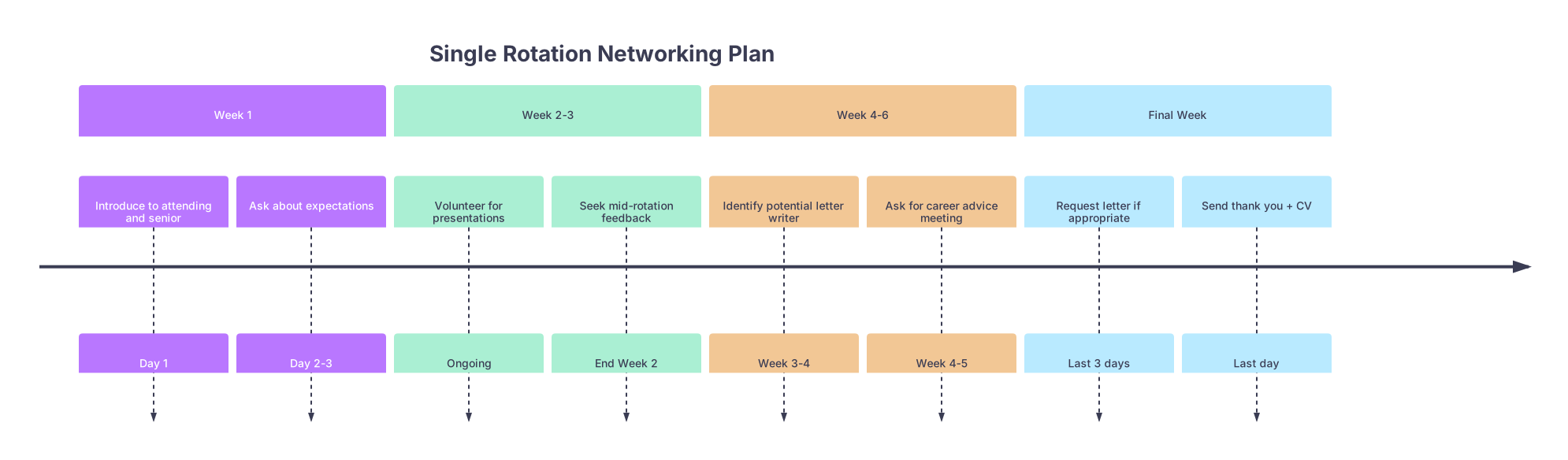
| Period | Event |
|---|---|
| Week 1 - Introduce to attending and senior | Day 1 |
| Week 1 - Ask about expectations | Day 2-3 |
| Week 2-3 - Volunteer for presentations | Ongoing |
| Week 2-3 - Seek mid-rotation feedback | End Week 2 |
| Week 4-6 - Identify potential letter writer | Week 3-4 |
| Week 4-6 - Ask for career advice meeting | Week 4-5 |
| Final Week - Request letter if appropriate | Last 3 days |
| Final Week - Send thank you + CV | Last day |
Week 1: Signal Intent and Professionalism
At this point you should:
- Introduce yourself to your attending and senior resident with one line beyond your name:
- “I am [Name], MS3, very interested in learning general medicine and improving my presentation skills this month.”
- Ask early:
- “How do you prefer presentations?”
- “What do strong students do differently on this rotation?”
You are not yet asking for mentorship. You are establishing that you take the rotation seriously.
Week 2–3: Perform, Then Ask for Feedback
Volunteer for:
- 1 short topic presentation
- 1 extra patient if volume allows
End of Week 2, say:
I would really appreciate any feedback on how I am doing so far and what I could improve before the end of the rotation.
This does two things:
- Shows maturity
- Gives you time to correct course before evaluations and potential letters
Week 3–4: Identify 1–2 Potential Letter Writers
Signs someone is a good target:
- They have seen you multiple times (not a one‑off consult)
- They comment on specific things you do well (“Your notes are clear,” “You connect well with patients”)
- They teach even when not required
At this point you should:
Ask for a quick meeting framed as career advice, not “give me a letter”:
I have really appreciated working with you these past few weeks and learning your approach to [field]. I am starting to think seriously about [specialty] as a career and would value 15–20 minutes of your advice if you have time in the next week.
In the meeting:
- Ask about:
- Training path
- What they look for in residents
- Whether they think your interests and strengths align with this field
If the conversation goes well, you can close with:
If I do decide to apply in [specialty], I hope that if I continue to work hard and improve over the rest of the rotation, you might feel comfortable writing on my behalf.
Now they are watching you with this in mind.
Final Week: Letter Requests and Follow‑Through
If they have seen consistent, strong work:
At this point you should:
Ask directly, in person if possible:
I have really valued working with you this month and your feedback has been very helpful. I am planning to apply in [specialty], and I wanted to ask if you would feel comfortable writing a strong letter of recommendation for me when the time comes.
Use the word “strong.” If they hesitate, thank them and move on.
- Follow with an email that day:
- Attach CV
- 3–4 bullet points of things you hope they might highlight (based on their feedback)
- Remind them of specific patients or projects that show your work
You repeat this pattern on multiple rotations, but you do not hoard letter writers. 3–4 really strong letters beat 7 lukewarm ones.
MS3, Throughout the Year: Residents Are Your Intel Network
Parallel to attendings, you should:
- Identify 1–2 residents per rotation who:
- Are approachable
- Give you honest feedback
- Talk about programs and fellowship stuff casually
At this point you should:
- Ask each of them:
- “Which programs did you look at for residency?”
- “Which attendings here are known to mentor students/ residents well?”
- “Would you be comfortable if I reached out in a few months with questions about programs?”
Add them to your log. Send one update email later in the year:
I am putting together a rough list of programs in [specialty], and I remembered your comments about [Program X]. When you have a moment sometime in the next month, I would appreciate any quick thoughts about places you think are particularly strong for students with my interests in [X/Y].
Residents will give you more honest program intel than almost anyone else.
MS4: Conversion Year – Turn Connections into Outcomes
By early MS4, the game changes. Your network now has to function: letters submitted, doors opened, questions answered quickly.
MS4, April–June (Early MS4 / Late MS3 in some schools): Pre‑ERAS Consolidation
At this point you should:
Meet with your 2–3 primary faculty mentors
Agenda:
- Confirm they are still comfortable writing/ updating letters
- Ask frankly:
- “Given what you have seen of me, what tier of programs do you think is realistic?”
- “Are there specific faculty at other institutions you would be comfortable emailing on my behalf?”
Map programs to people
Open a spreadsheet and for each program you are eyeing, list:
- Do you know anyone there?
- Do your mentors know anyone there?
- Do residents you know have friends or co‑residents there?
Your goal is not nepotism. It is avoiding total cold applications when a warm introduction is possible.
Plan away rotations (if relevant)
Ask mentors and residents:
- Which programs actually use aways to recruit, and which just use them as free labor
- Which services at those programs are good or miserable for students
You should finish this phase with:
- 3–4 confirmed letter writers
- A prelim list of programs, tagged with “connection strength”
MS4, July–September: Application Season – Targeted Reaches
Now your networking is extremely tactical.
At this point you should:
Send pre‑application “heads‑up” emails where appropriate
If your mentor offers to reach out to someone at a program, make it easy:
- Provide them with:
- Your CV
- 2–3 bullet points of major strengths
- The exact program and why it fits you
If you have a direct mild connection (met someone at a conference, did a visiting lecture), you can write:
We met briefly at [event] when you spoke about [topic]. I am an MS4 at [School] applying in [specialty] this year. I was very impressed by your description of the training environment at [Program], especially [specific detail].
I wanted to briefly introduce myself as I am planning to apply to your program and would be grateful for any general advice you have for someone with my interests in [X/Y].
You are not asking them to “put in a good word.” You are reminding them you exist.
- Provide them with:
During away rotations: treat every day as a month of MS3 compressed
Condensed version of the earlier rotation timeline:
- Week 1: learn names, expectations, culture
- Week 2: overperform, ask for mid‑rotation feedback
- Week 3: identify 1 potential letter writer and 1 resident ally
- Last days: request letter only if you truly shined
Away rotation letters are overrated when the work is mediocre. Under‑ask unless you were clearly a standout.
Post‑ERAS: keep mentors updated at key milestones
- When you submit ERAS: brief email to main mentors with your final list
- When interview invites start: one mid‑season update with where you have interviews
- If you are very interested in a specific program with a connection: ask mentors if an advocacy email would be appropriate after you have an interview
MS4, October–February: Interviews and Rank List – Last‑Mile Guidance
At this point you should:
Use your resident network aggressively but respectfully
Before each interview:
- Text/email any resident you know at that program:
- “I am interviewing at your program on [date]. Any quick tips or things I should understand about the culture before I visit?”
- Ask them after the interview:
- “Does what I saw match your real experience?”
- Text/email any resident you know at that program:
Lean on 1–2 mentors for rank list sanity checks
Send them:
- Your intended rank list
- 2–3 sentences on why you like the top 5–7
- Ask where they would shuffle based on:
- Training quality
- Your specific goals
- Long‑term opportunities
You are not outsourcing the decision. You are calibrating.
Close the loop after Match Day
Last move that students skip:
- Email every major mentor, letter writer, and helpful resident to:
- Thank them specifically
- Tell them where you matched
- Acknowledge their role in getting you there
This is not just politeness. It keeps the door open for fellowships, jobs, and future collaborations.
- Email every major mentor, letter writer, and helpful resident to:
Visualizing How Your Network Should Grow
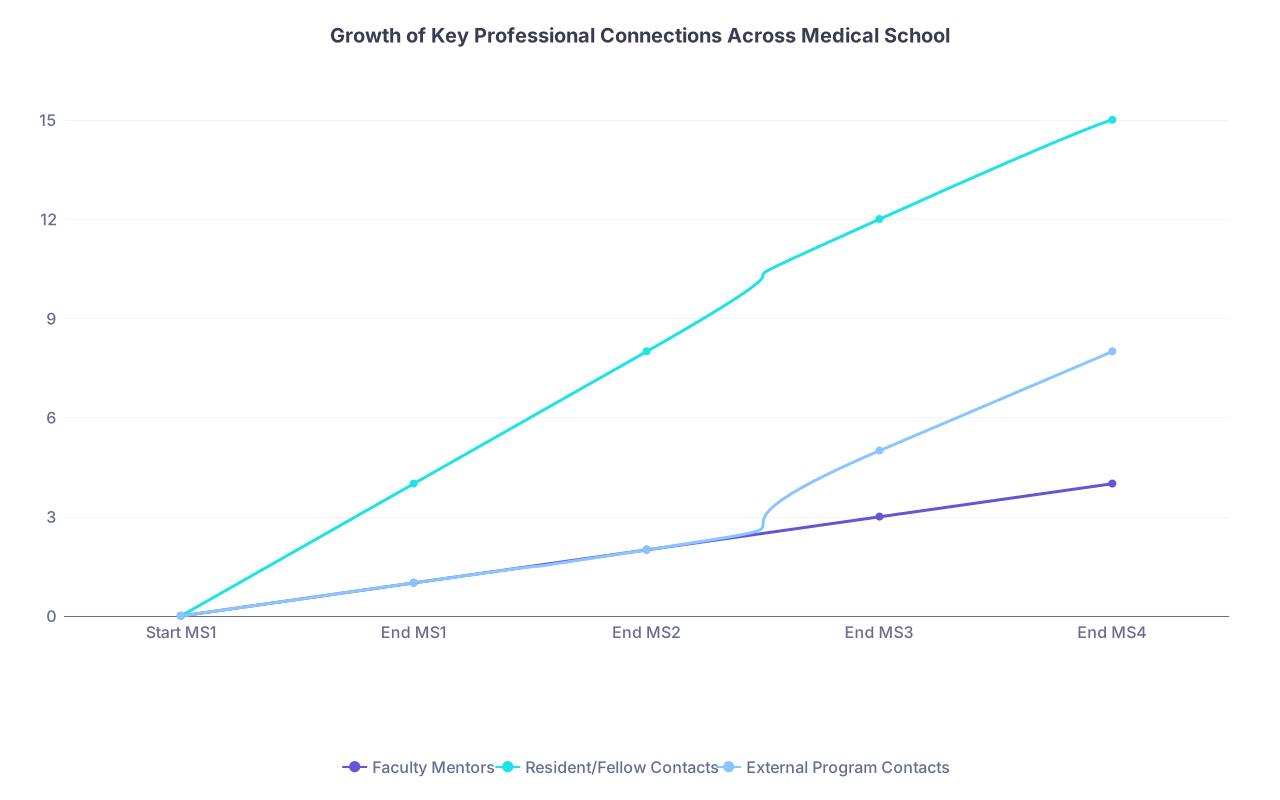
| Category | Faculty Mentors | Resident/Fellow Contacts | External Program Contacts |
|---|---|---|---|
| Start MS1 | 0 | 0 | 0 |
| End MS1 | 1 | 4 | 1 |
| End MS2 | 2 | 8 | 2 |
| End MS3 | 3 | 12 | 5 |
| End MS4 | 4 | 15 | 8 |
And a quick sense of where the effort goes each year:
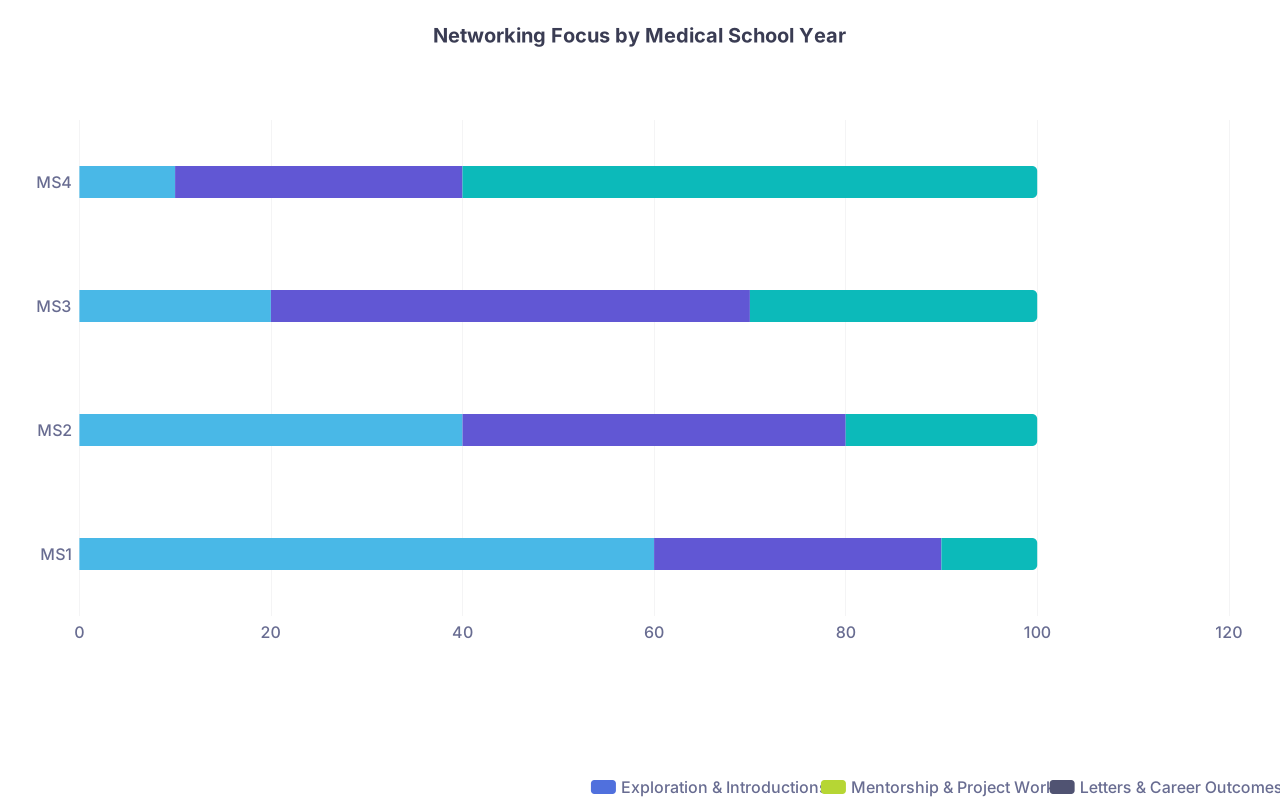
| Category | Exploration & Introductions | Mentorship & Project Work | Letters & Career Outcomes |
|---|---|---|---|
| MS1 | 60 | 30 | 10 |
| MS2 | 40 | 40 | 20 |
| MS3 | 20 | 50 | 30 |
| MS4 | 10 | 30 | 60 |
Quick Checklist by Year
By end of MS1, you should have:
- 1 summer mentor (research or clinical)
- 3 faculty who recognize your name and face
- 3–5 residents you can email casual career questions
By end of MS2, you should have:
- 2–3 faculty who are plausible future letter writers
- A clear idea which 1–2 specialties you are seriously exploring
- Initial intel on which rotations and attendings are student‑friendly
By end of MS3, you should have:
- 3–4 confirmed strong letter writers
- Residents in your chosen specialty at your home institution who know you by name and story
- A short list of programs aligned with your mentors’ advice
By end of MS4, you should have:
- A rank list vetted by at least one trusted mentor
- A set of relationships you plan to carry into residency and beyond

Final Takeaways
- Networking in medicine is not last‑minute; it is built month by month from MS1.
- The core moves are simple: show up, do real work, ask for feedback, then follow up with purpose.
- By MS4, your network should not be theoretical. It should be writing for you, advising you, and opening doors you cannot open alone.