
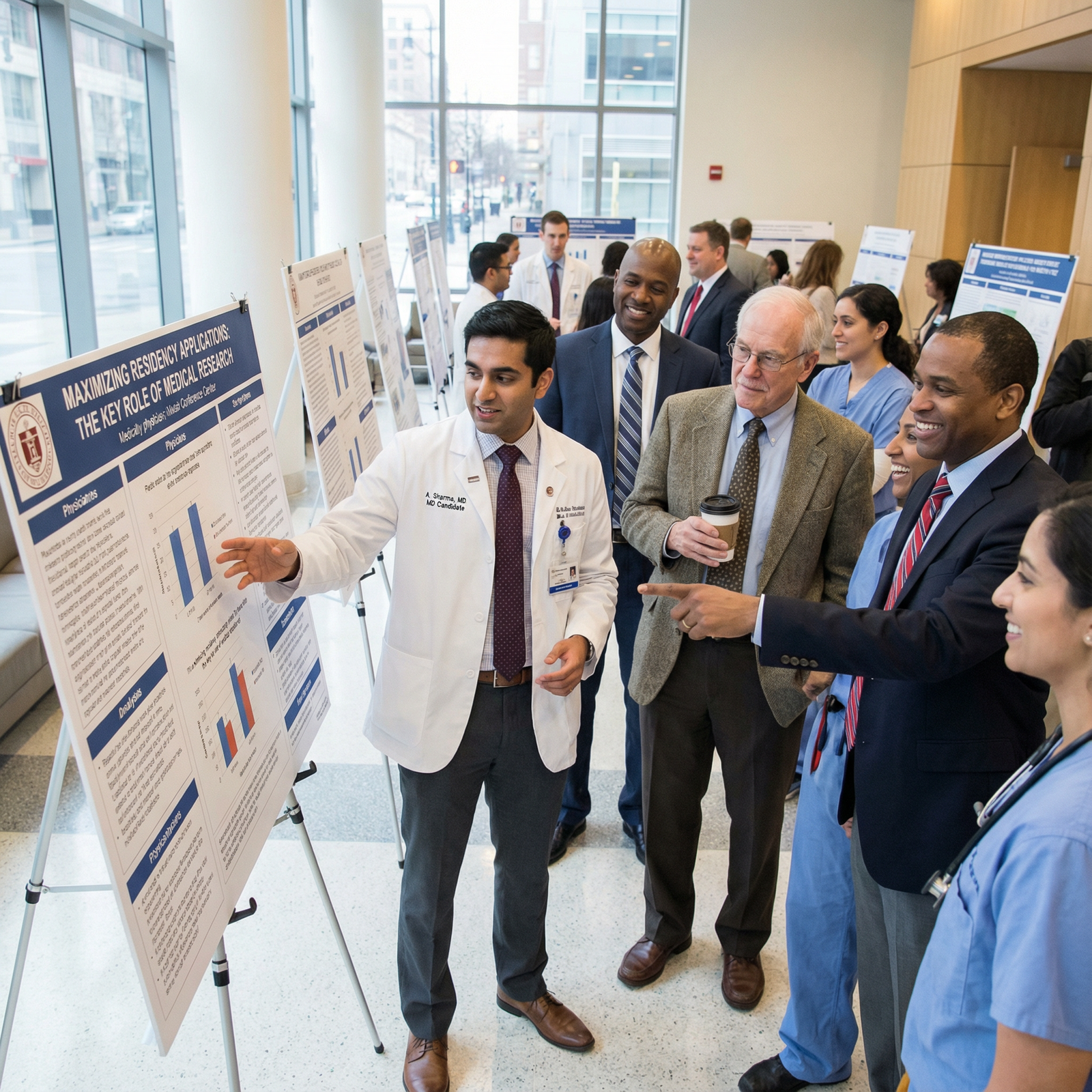
The riskiest part of taking a research year isn’t your CV. It’s your network quietly forgetting you exist.
You step off the wards, move across the country for a big-name lab, and suddenly the residents and attendings who used to see you daily… don’t see you at all. Out of sight, out of mind is very real in medicine, especially when people are busy and turnover is constant.
You’re not just doing a research year. You’re doing a research year away from your home institution. Different hospital. Different bad coffee. Different hallway gossip. That means you have to work twice as hard to preserve one thing: your home network.
Here’s how to do it without being annoying, awkward, or forgotten.
1. Get Your Home-Base House in Order Before You Leave
If you’re already gone, skip to the next section—but if you’re still at home, this is where people screw up.
You need a deliberate exit plan from your home institution. Not a ghosting.
A. Lock in your “core circle”
Identify 5–12 people at your home institution who actually know you and could matter later. Think:
- 1–3 attendings in your target field
- 1–2 residents (ideally seniors or chiefs) who liked working with you
- 1 mentor-level person (research or career)
- 1 admin/coordination person (clerkship coordinator, program coordinator, research office)
Write their names down. This is your “core circle.” You are going to stay on their radar all year, on purpose.
| Role | Ideal Number | Examples |
|---|---|---|
| Specialty Attendings | 1–3 | Dr. Smith (Cards), Dr. Hu |
| Residents/Fellows | 1–2 | Senior from your sub-I |
| Career/Research Mentor | 1–2 | Physician-scientist, PI |
| Admin/Coordinator | 1 | Clerkship or program coord |
B. Have explicit “I’m leaving, but I’ll be back” conversations
You don’t quietly vanish.
You say things like:
- “I’m going to be at [away institution] this year working with Dr. X on [topic]. I’m planning to apply [specialty] back here as one of my top choices and I’d really like to stay in touch.”
- “You’ve been an important mentor for me. Would it be okay if I email you updates every couple of months and maybe schedule a check-in once a quarter?”
Get verbal buy-in that staying in touch is welcome. People are much more receptive if you set this expectation while they still see your face.
C. Clarify future needs before you go
If you’re taking the research year between M3 and M4 or before applying to residency, you’re going to need:
- Letters of recommendation
- Maybe a home sub-I rotation later
- Possibly a home research or QI project to “return” to
Ask bluntly:
- “Would you be open to writing me a strong letter when the time comes, if I keep you updated on what I’m doing?”
- “If I wanted to do an acting internship when I come back, when should I reach out to you?”
Get timelines. Get preferences. Write them down.
2. Build a Simple, Sustainable System (Not Vibes-Based Networking)
If your “plan to keep in touch” is “I’ll reach out when it feels right,” you will fail. You’ll be tired, busy, in a new place, and months will evaporate.
You need a system.
A. Create a tracking doc
Nothing fancy. Use Notion, Google Sheets, or even a note on your phone.
Columns:
- Name
- Role (attending, resident, admin, mentor)
- Institution (home/away)
- Last contact (date)
- Next planned contact (month)
- Preferred channel (email, text, Zoom, in-person when back)
- Notes (projects, personal details, any future commitments)
Set a recurring monthly reminder to open this document. That’s it. One small habit.
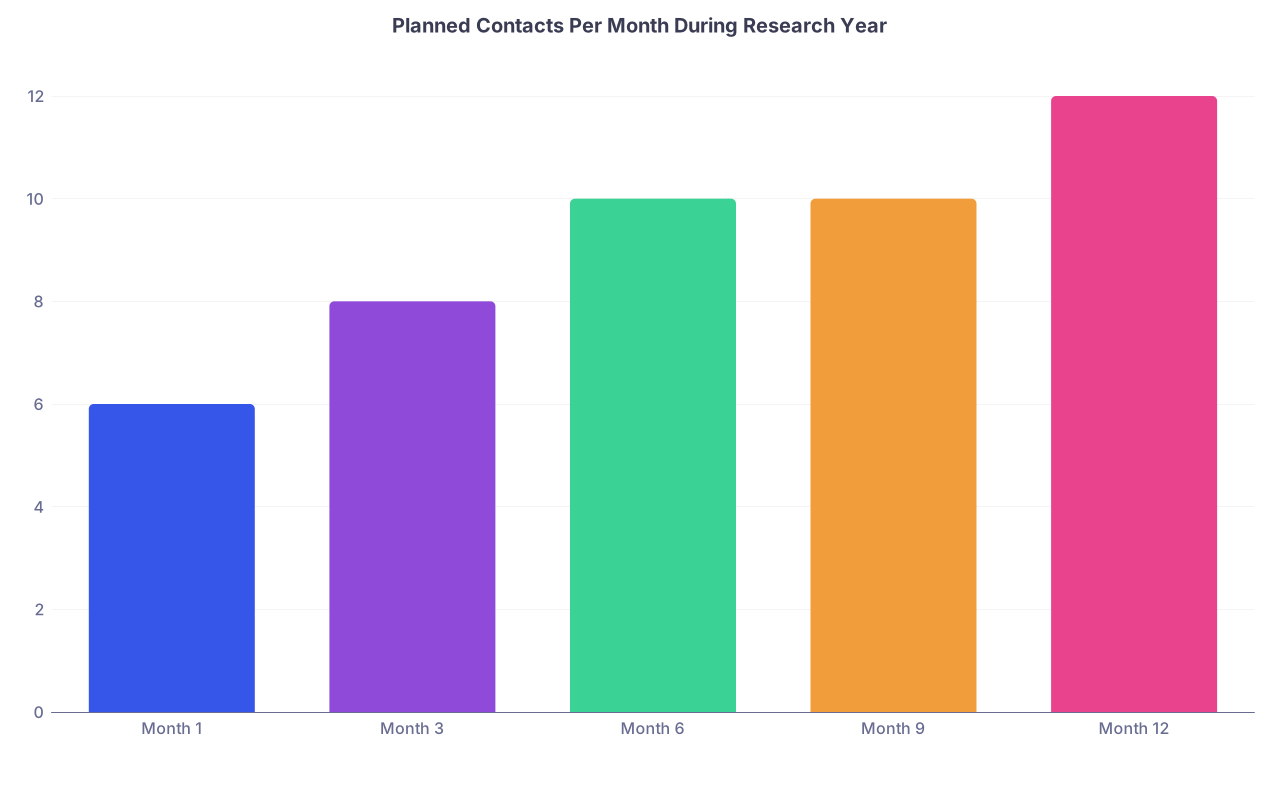
| Category | Value |
|---|---|
| Month 1 | 6 |
| Month 3 | 8 |
| Month 6 | 10 |
| Month 9 | 10 |
| Month 12 | 12 |
B. Decide on a contact cadence
For your core circle at the home institution, aim roughly for:
- Mentors: every 2–3 months (plus as-needed for big updates)
- Key attendings who may write letters: every 3–4 months
- Residents: every 3–4 months (or more if you’re genuinely friends)
- Coordinators/admin: only when there’s a concrete reason (scheduling, logistics, updates)
Use this as a guideline, not a prison. If you just had a great Zoom call with your mentor, you don’t need another email two weeks later.
3. How to Reach Out Without Being Awkward or Needy
Most students don’t maintain networks because they don’t know what to say that isn’t cringe. So here’s the playbook.
A. Use the “quick update + tiny ask” format
Keep it short. Professionals are slammed. Your email might get read in the elevator between cases.
A clean structure:
- Warm greeting + brief personal hook
- One or two concrete updates
- One small, non-annoying ask (or none)
- Gratitude and future anchor
Example to a home attending:
Subject: Quick update from my research year
Dear Dr. Patel,
I hope you’ve been well and that the new interns are settling in. I wanted to send a quick update from my research year in Boston.
I’ve been working with Dr. Lee in the heart failure group on a retrospective study of advanced therapies in patients with [brief detail]. We just submitted an abstract to AHA and are working on the manuscript now.
I’m still planning to apply to cardiology and would love to stay in touch. If you’re open to it, I’d be grateful to schedule a brief Zoom check-in sometime in the next 1–2 months to get your advice on how to position this year when I come back.
Thank you again for your support so far – your guidance on my M3 rotation was a big part of why I chose this path.
Best,
[Name]
Short. Respectful. Not begging for anything unreasonable.
B. Send “event-based” updates
Use natural triggers to reach out:
- Abstract accepted
- Paper submitted or accepted
- Poster or oral at a national meeting
- You present at your away institution’s grand rounds or conference
- You decide on a specific specialty or program preference
Each of those is an excuse to send a 4–6 sentence note to your home mentors:
- “Wanted to share a quick update and thank you again for encouraging me to pursue research.”
- “Your advice last year actually helped shape this project.”
That line matters. People remember when you connect your progress to their earlier investment in you.

C. Keep residents in the loop like normal humans
With residents, you can be more casual, especially if they’re closer to your age.
Text or email like:
“Hey [Name]! Quick update from my research year – we just got an abstract into AHA on our LVAD project. Hope the new interns aren’t too brutal. Let me know if you ever want to hop on Zoom and complain about work and I’ll tell you about how I forgot how to write notes.”
They can become your internal champions when it’s time for sub-I scheduling or when programs ask, “Anyone know this student?”
4. Use Your Away Institution to Strengthen, Not Replace, Your Home Network
Dangerous mindset: “I’m at [fancy place]. My home program doesn’t matter anymore.”
Wrong. Unless you’re 100% certain you’ll never apply there, you still want their support. Your away mentors and your home mentors should reinforce each other, not compete.
A. Ask away mentors to connect back to your home
Example script:
“My home institution is [X], and I’m planning to apply back there as one of my top choices. Would you be comfortable mentioning my work here if you ever interact with faculty from there, or if they reach out?”
Many academic physicians know each other. Conferences, committees, Zoom working groups. Let them casually name-drop you.
B. Show home mentors you’re using their earlier advice
An email like:
“I remember you told me to find projects that could realistically finish in a year and not chase huge prospective trials. That was exactly right – the studies I’m working on now are all retrospective or secondary analyses, and they’re actually moving.”
This reminds them: you listen, you execute, you’re coachable. That’s exactly what people want to see in someone they’ll vouch for.
5. Prevent “Who Are You Again?” When You Come Back
Your return to the home institution is a re-onboarding, not just a casual “Hey, I’m back.”
You want people saying, “Oh good, you’re back,” not “Were you a student here?”
A. Start warming things up 2–3 months before returning
Send “I’m heading back soon” emails:
“I’ll be returning to [Home Institution] in July to start my M4 rotations. Would it be okay if I reached out then to discuss sub-I timing and any opportunities to get involved with ongoing projects?”
To potential letter writers:
“I’m back on the wards in July and hoping to schedule an acting internship in [specialty] in August or September. I’d appreciate any advice on which services would be best to work with you and the team.”
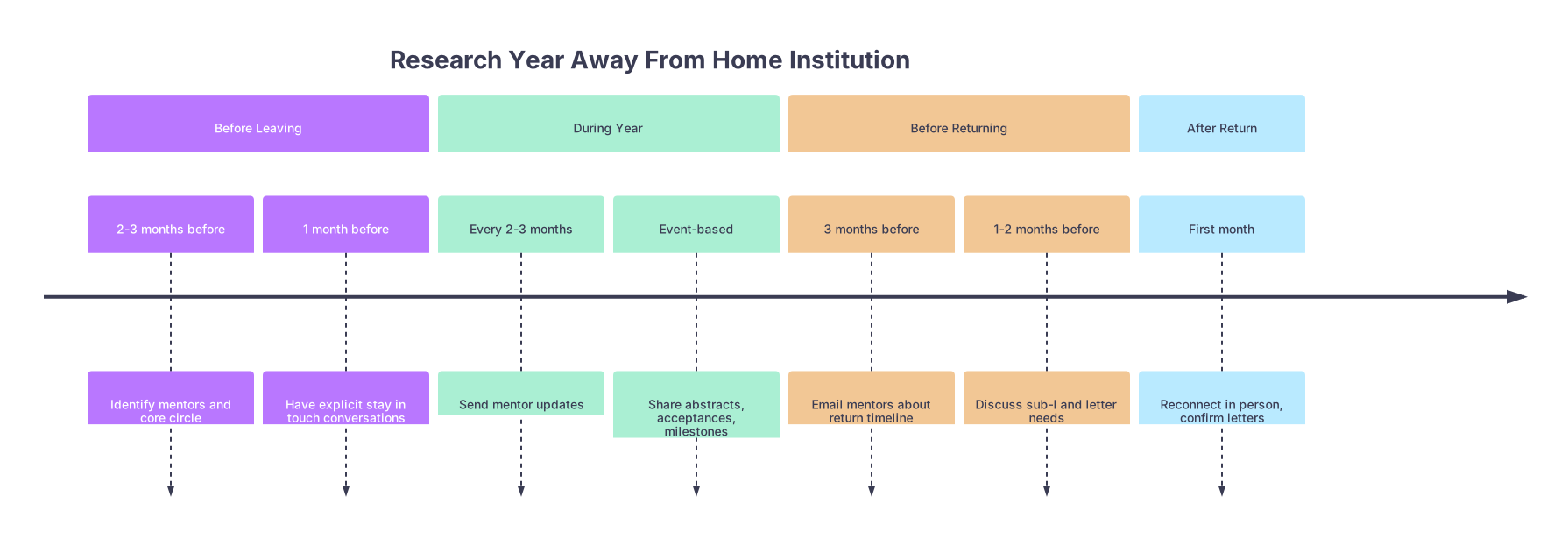
| Period | Event |
|---|---|
| Before Leaving - 2-3 months before | Identify mentors and core circle |
| Before Leaving - 1 month before | Have explicit stay in touch conversations |
| During Year - Every 2-3 months | Send mentor updates |
| During Year - Event-based | Share abstracts, acceptances, milestones |
| Before Returning - 3 months before | Email mentors about return timeline |
| Before Returning - 1-2 months before | Discuss sub-I and letter needs |
| After Return - First month | Reconnect in person, confirm letters |
B. Book early, in-person re-contact
Once you’re physically back:
- Ask to meet your main mentor for 15–20 minutes in person
- Swing by resident workrooms where people you know are
- Physically show up at a conference where your department gathers (M&M, grand rounds, divisional conference)
Script:
“Just wanted to say hi now that I’m back and thank you again for supporting my research year. I’d love to hear what’s new with the department and get your perspective on my next steps.”
Face time matters. Even 5 minutes in the hallway resets “out of sight, out of mind.”
6. Avoid the Two Big Mistakes: Overdoing It and Dropping Off
Let me be blunt. I’ve seen both extremes:
- The student who emails every three weeks with nothing to say
- The student who disappears for 11 months then shows up asking for a letter “next week”
Both are bad.
A. Signs you’re overdoing it
- You’ve sent three emails in six weeks and none were in response to something they asked you to do
- Your update could be summarized as “Still working on the same project, not much new”
- You feel like you’re performing productivity instead of sharing meaningful milestones
If that’s you: slow down. Consolidate small updates. Wait until you have something real:
- Abstract accepted
- Submission done
- New responsibility (leading project, mentoring a junior student)
- Concrete decision (specialty, region, type of program)
B. Signs you’re dropping off the map
- You can’t remember the last time you spoke with your main mentor
- 6+ months have gone by with no contact with key letter writers
- You feel low-key embarrassed about emailing because “it’s been so long”
If that’s you: send the “honest restart” email. No drama, no long apology.
“I realized it’s been a while since I last checked in – the year has gone quickly. I wanted to share a quick update and thank you again for encouraging me to pursue this path.”
Then give a clear, concise summary and a forward-looking note.

7. Use Conferences to Connect Both Worlds
If your research year leads to conference presentations, conferences are prime networking leverage. Not just for your away institution. For your home one too.
A. Tell both sides you’ll be there
- Email home mentors: “I’ll be at [Conference] presenting on [topic]. Will you or anyone from [home department] be attending?”
- Tell away mentors: “My home mentor is Dr. X in [city]. If you ever cross paths at the meeting, I’d be happy to introduce myself if you’re both open to that.”
If your home and away mentors meet in person and both say good things about you, that’s gold.
B. Use posters and talks as excuses to reconnect
Before or after your presentation, send a quick message:
“I’m presenting our [topic] poster on Saturday at 2 pm (Board C-15). If you’re at the meeting, I’d be honored if you stopped by – but if not, I’m happy to send the poster PDF after.”
Then send the PDF and a 3-sentence summary afterward for those who couldn’t come.
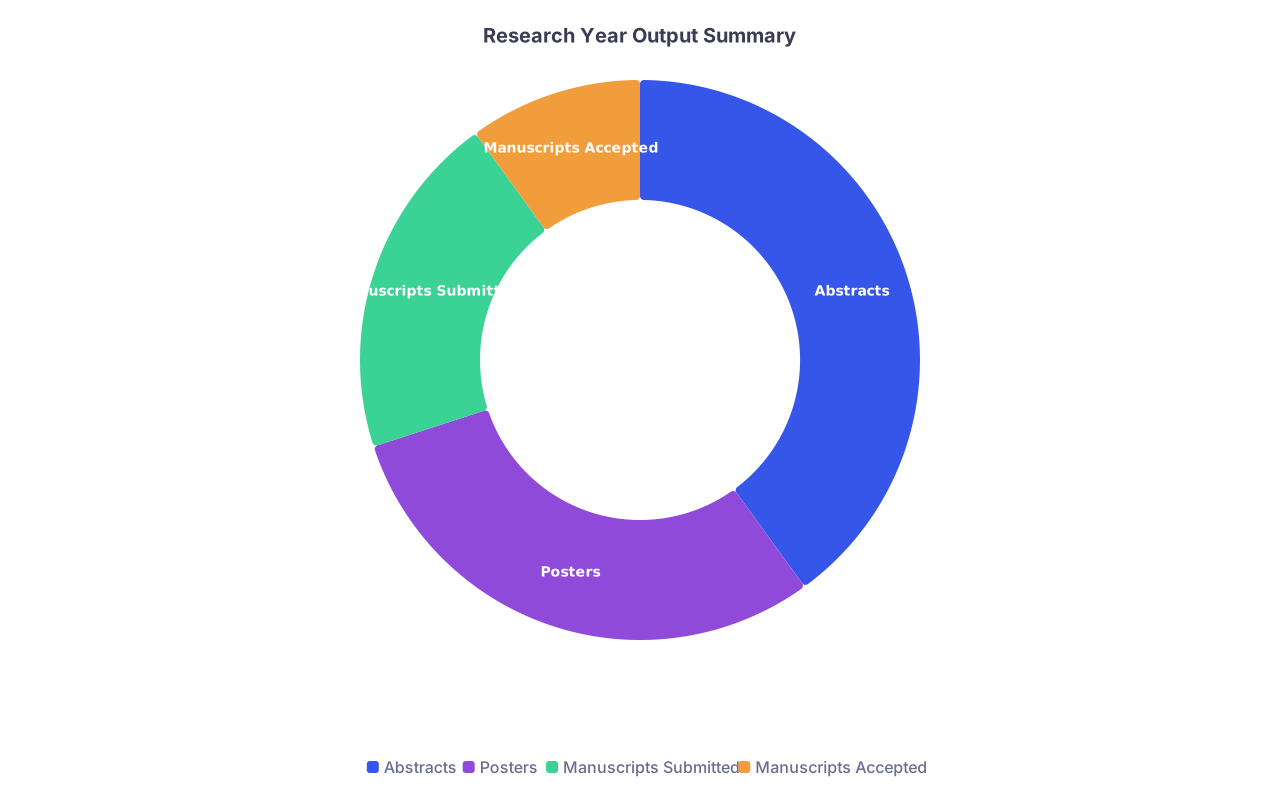
| Category | Value |
|---|---|
| Abstracts | 4 |
| Posters | 3 |
| Manuscripts Submitted | 2 |
| Manuscripts Accepted | 1 |
8. Protecting Your Reputation While You’re Gone
One hidden risk: stuff happens at your home institution while you’re away. New leadership, new rumors, new narratives. You don’t want your name floating around as “that student who disappeared” or “not really engaged anymore.”
So you actively guard your reputation.
A. Keep at least one “eyes-on-the-ground” ally
Pick:
- A resident
- Another student a year behind you
- Or a junior attending you get along with
Stay in touch with them like you would a friend:
- “How are things on the wards?”
- “Any major changes in the [specialty] department?”
- “Anything I should know before I come back?”
You’re looking for landmines: new chair with different priorities, new sub-I structure, earlier letter deadlines, etc.
B. Make sure your name pops up positively
When your away PI says, “Need any good students from your home place?” you want your residents/attendings to say: “Yeah, [Your Name] is strong and really engaged, even while away.”
That only happens if they remember your face, your work ethic, and your updates. That’s network preservation in practice.

9. Quick Templates You Can Steal
Use these as plug-and-play and adjust to your voice.
A. First check-in after starting research year (Month 1–2)
Subject: Quick update from my research year at [Institution]
Dear Dr. [Name],
I hope you are doing well and that the new academic year is off to a smooth start. I wanted to send a brief update now that I’ve settled into my research year in [City].
I’m working with Dr. [PI] on [1–2 line description]. So far, I’ve been focusing on [data collection / protocol development / preliminary analysis] and learning a lot about [specific skill or content].
I’m still planning to apply in [specialty], with [Home Institution] very high on my list. I’d be grateful to stay in touch and get your advice as the year progresses. If you’d be open to a brief Zoom check-in at some point this fall, I’d really appreciate it.
Thank you again for your support – your guidance during [rotation / project] helped me feel confident taking this step.
Best regards,
[Name]
B. Event-based update after abstract acceptance
Subject: Update – [Conference] abstract acceptance
Dear Dr. [Name],
I wanted to share a quick update from my research year. Our project on [short title] was accepted as a [poster/oral] presentation at [Conference] this [month]. I’ll be presenting the data on [brief key finding].
Your earlier advice to focus on projects with realistic timelines was a big reason I pursued this study design, and it has made the year very productive.
I’ll make sure to send you the poster/manuscript once it is finalized.
Thank you again for your ongoing support,
[Name]
FAQ (Exactly 5 Questions)
1. How many people do I realistically need to keep in close contact with from my home institution?
Not twenty. You’ll burn out. Aim for 5–12, depending on your situation. At minimum: two solid attendings in your target field (potential letter writers), one primary mentor, one resident ally, and one key admin/coordination contact. Everyone else can be “occasional touch” rather than regular updates.
2. What if my home institution isn’t where I want to match—do I still need to preserve that network?
Yes. First, plans change. Second, those people still control your MSPE, transcripts, and often your formal letters. They can quietly help or quietly hurt. Third, many faculty have national connections. A strong home mentor can call a program somewhere else and say, “This student is excellent; you should look closely at their file.” That phone call is sometimes worth more than another PubMed ID.
3. How do I ask someone to write a letter when I’ve been away all year?
You do not pop up out of nowhere. You’ve been sending periodic updates, so the ask doesn’t feel random. When it’s time, send:
- A reminder of how you worked together (“We worked together on my M3 [rotation] and you supervised me on [specific service]”),
- A brief summary of your research year highlights,
- A direct but respectful ask: “Would you feel comfortable writing a strong letter of recommendation for my residency application?” Include your CV, draft personal statement, and any relevant project summaries.
4. I’m introverted and this all feels like “bothering” people. How do I get over that?
You’re not selling timeshares. You’re updating professional mentors on progress they helped shape. Most faculty like hearing that their advice mattered and that their students are doing well. The key is brevity and substance: don’t send long, empty emails. Send short, meaningful ones tied to real progress. If someone truly doesn’t want updates, they’ll signal that by being terse or nonresponsive—and then you redirect your energy elsewhere.
5. What if I’ve already gone 8–10 months with almost no contact—am I screwed?
You’re not screwed, but you’ve made it harder. Do an honest reset: pick your top 3–5 must-preserve relationships and send a concise, humble update. Acknowledge the gap lightly (“The year has moved faster than I expected”), give a real summary of what you’ve done, and clearly state what’s next (“I’ll be returning in July and planning to apply in [specialty]”). Then follow through with better cadence going forward. People forgive distance if you show up prepared, respectful, and with real work to show.
With these systems and scripts in place, your research year doesn’t have to cost you your home base. You’ll come back not as a stranger who disappeared, but as the student who went away, leveled up, and stayed connected.
You’ll need that foundation when it’s time to turn this research year into interviews, letters, and real opportunities. That’s the next situation to handle—but we’ll tackle that another day.


