
Are you actually safer choosing a 30‑year‑old residency program… or are you just buying nostalgia and a glossy alumni list?
Let me go straight at the myth:
“New residency = under-resourced, chaotic, glorified service job with no teaching.”
You’ve heard it from fourth-years, Reddit threads, and that one bitter fellow who “would never risk their career on a new program.”
Some of that fear is justified. A lot of it is lazy thinking.
The truth is more uncomfortable: new programs are high‑variance, not automatically under‑resourced. Some are absolute train wrecks. Some are absurdly well-resourced compared to legacy programs that are coasting on reputation while running on fumes.
You’re not choosing between “old = safe” and “new = dangerous.” You’re choosing between specific institutions with specific incentives, budgets, and oversight pressures.
Let’s pull apart the myth using what actually exists: ACGME data, CMS funding rules, and real-world patterns from recent boom years in residency expansion.
The Money Myth: “New Programs Have No Funding”
The most common story you’ll hear:
“New residencies are broke. They don’t have grants yet. You’ll be doing scut with no resources.”
That sounds intuitive. It’s also often backwards.
How GME money actually works
In the US, Medicare (CMS) is the main driver of Graduate Medical Education (GME) funding. Two big buckets:
- Direct GME (DGME): pays for resident salaries, benefits, some faculty time, admin.
- Indirect GME (IME): adjustment to hospital payments for being a teaching hospital (complexity, inefficiencies, etc.).
The kicker: hospitals get their resident cap “set” during their first 5 years of training residents in a new program or newly teaching hospital. That window becomes their permanent cap.
Translation: hospital leadership knows those early residency years are financially strategic. They are highly incentivized to:
- Fill positions
- Keep accreditation
- Grow to the desired cap
- Not blow the first site visit
So many new programs are not starving. They’re being treated as strategic investments by the C-suite.
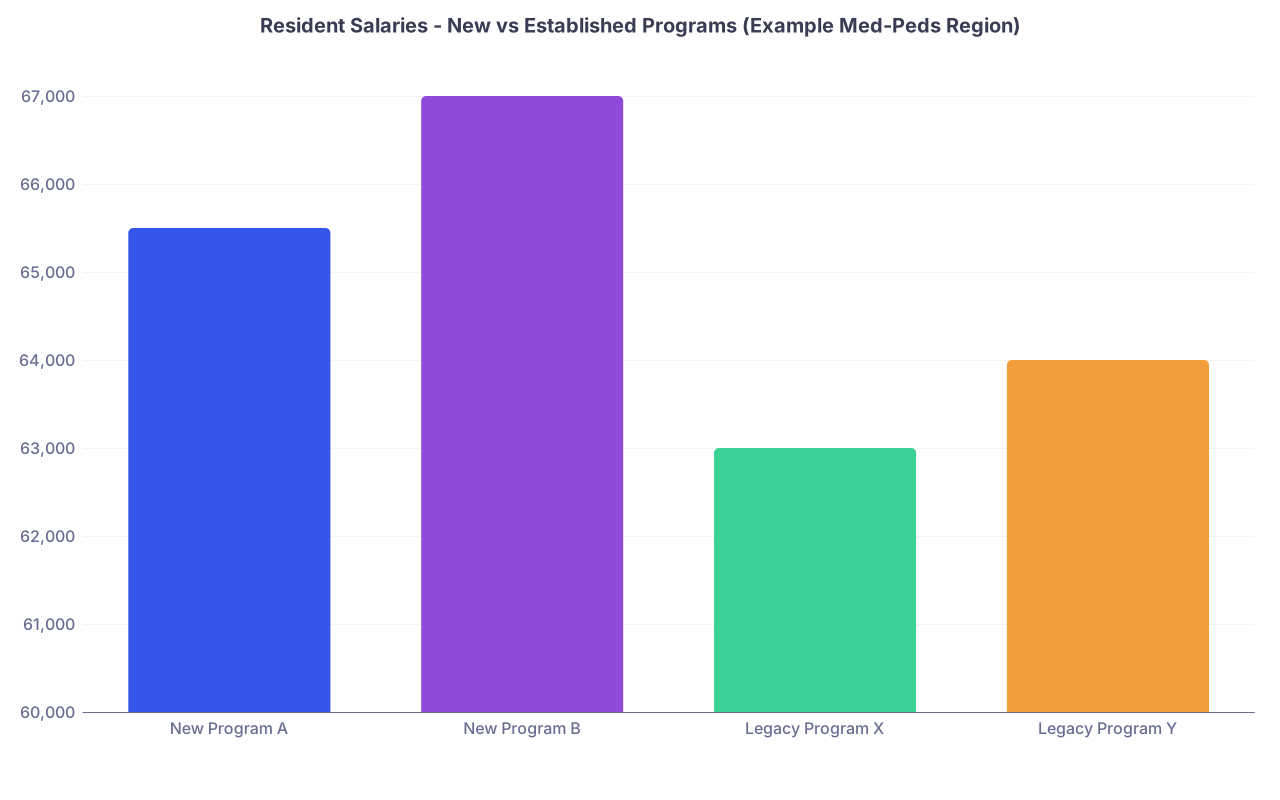
| Category | Value |
|---|---|
| New Program A | 65500 |
| New Program B | 67000 |
| Legacy Program X | 63000 |
| Legacy Program Y | 64000 |
I’ve seen this pattern repeatedly: the shiny new program offers higher PGY‑1 salaries, better relocation assistance, and newer call rooms than the “big name” program down the road that hasn’t meaningfully updated benefits in a decade.
Are there underfunded new programs? Absolutely. Especially:
- In small community hospitals with chronic financial distress
- Where leadership wants residents as cheap labor, not long‑term investment
- In systems already slashing budgets everywhere
But the default is not “new = unfunded.” It’s “new = leveraged to secure long‑term GME money.”
Resources: Tangible vs. Intangible
“Resources” is a vague word. So break it out.
Tangible resources where new programs may be better
Physical space and gear
New programs often trigger:- New resident lounges, call rooms, workrooms
- Dedicated conference spaces with AV equipment
- More computers, updated EMR setups, better badge access
The embarrassing truth: some legacy programs are still working out of call rooms that look like a 1990s dorm basement. No windows, one broken recliner, and a “no food in here” sign yellowed with age.
Simulation and procedures
Hospitals opening new residencies often brag about:- Brand-new simulation centers
- Task trainers, ultrasound machines
- Structured sim curricula to impress ACGME
A lot of older programs have sim centers that exist… on paper. In practice, residents barely get protected time to use them.
Curriculum infrastructure
New programs must submit very explicit didactic and assessment plans to get initial accreditation. Early on, that can mean:- Actually protected didactic time
- Intentionally designed rotations (not “we’ve always done it this way”)
- Clear milestone‑based evaluation structures
Over time, some programs ossify. New programs, at least at the start, are usually under a microscope and behave accordingly.
Intangible resources where new programs may struggle
This is where the myth has a real foothold.
Culture and norms
Legacy programs have something new ones do not: institutional muscle memory. Everyone knows:- Who to page for what
- How to escalate safely
- Which attendings are teachers vs. billers
- Which services traditionally protect education
New programs are building all of that from scratch. You’ll feel the rough edges. Confused nurses. Unsure consultants. Faculty still figuring out expectations.
Political power in the hospital
A 40‑year-old residency has:- Program directors embedded in leadership
- Former chiefs now department chairs
- Graduates all over the system
New programs do not. If the ED wants to dump, if surgery wants to off-load admissions, if admin wants to crank productivity—there’s less entrenched resistance. Political capital takes time.
Breadth of subspecialty and mentorship
Old programs tend to have:- Established research pipelines
- A track record of sending residents into every fellowship imaginable
- Alumni in competitive fields who actually pick up the phone
New programs may have none of that yet. Or only in 1–2 subspecialties where early champions exist.
So no, “resource-poor” is not automatically about money or physical stuff. It’s often about institutional maturity and political weight.
Accreditation Data: Are New Programs Actually Unsafe or Underperforming?
Let’s lean on something objective: accreditation status.
ACGME doesn’t publish a big red “this program is chaos” stamp, but they do publish accreditation actions. And they are especially watchful with new programs in their first few years.
New programs start with “Initial Accreditation.” After several years and site visits, they can move to “Continued Accreditation” or receive warnings/probation if things are bad.
| Year of Program | ACGME Status | What It Usually Means |
|---|---|---|
| 1–2 | Initial Accreditation | Under close scrutiny, building systems |
| 3–5 | Continued - with warning | Problems identified, must fix |
| 4–7 | Continued Accreditation | Systems mature, stable structure |
Patterns I’ve seen in new vs. old programs:
Some shiny new programs get Early Warning because:
- They over-hire residents for their volume
- They underdeliver on didactics
- Faculty development is an afterthought
Some very established programs quietly sit on Continued with Warning for years due to:
- Violations in duty hours
- Toxic culture and harassment issues
- Systemic non-compliance with supervision or education standards
The point: accreditation problems are not unique to new programs. They’re just more visible and more frequently corrected early on.
ACGME is far more likely to shut down or force changes in a brand‑new disaster than in a “name brand” program with powerful institutional allies.
So, is there more risk in a brand‑new PGY‑1 class at a program just approved last week? Yes. But that risk isn’t because ACGME ignores them. It’s because the program hasn’t had a chance to fix its blind spots yet.
The Faculty Variable: Where New Programs Truly Live or Die
If you remember nothing else, remember this: the age of the program matters less than the intentions and autonomy of the core faculty.
New program with:
- PD who actually has protected time and authority
- APDs who care about teaching more than RVUs
- A chair who believes residents are not “cheap labor”
…can be fantastic within a year or two.
Old program with:
- Burned‑out PD with no real power
- Attending culture of “residents exist to pre‑round and pre‑chart”
- Admin obsessed with “productivity metrics”
…can be more under‑resourced (educationally) than any new program.

Watch for red flags at new programs:
- Faculty constantly saying “We’re still figuring that out” about core things: evaluations, rotation goals, feedback structures.
- PD who cannot clearly describe:
- How they protect didactic time
- How they handle struggling residents
- How many FTEs (percent protected time) they actually have
- Heavy reliance on locums or part-time faculty with no teaching track record.
Watch for green flags:
- Faculty with prior teaching experience at strong programs who chose to build something new.
- Clear, specific answers about:
- Clinic structure
- Rotation design
- How they’ll help you get fellowship letters
- Openness about current weaknesses and what they’re doing this year to fix them.
New program leaders who pretend everything is perfect are more dangerous than those honest about growing pains.
Workload and Scut: Are New Residents Just Warm Bodies?
Let’s address the other nightmare scenario: “You’ll be doing all the work because there’s no infrastructure.”
Sometimes that’s true. But again, not universally.
Why new programs can be more humane
To get and keep accreditation, new programs must:
- Prove compliance with duty hours
- Show supervision structures on paper and in practice
- Document that residents actually get education, not just labor
ACGME reviewers are not shy about clamping down on early programs using residents as warm bodies. When they visit in the first few years, they check:
- Conference attendance vs. clinical expectations
- Case logs
- Resident surveys about workload and wellness
Meanwhile, some old programs run on inertia:
- “We’ve always done Q4 call on that service”
- “We never cancel clinic for didactics; just work around it”
- “Night float is brutal but everyone survived”
Nobody’s rewriting their culture in year 27 unless something goes catastrophically wrong.
Where new programs can be worse
Still, there are genuine risk zones where “under-resourced” is accurate:
- Hospital depended heavily on hospitalists/NPs/PAs before. Leadership now subtly shifts work onto residents without increasing overnight staffing.
- ED and surgical services are thrilled to “finally have residents” and dump admissions indiscriminately.
- No established night float or cross‑coverage system. You’re the experimental subject while they figure it out.
This is where your questions on interview day matter more than the program’s age:
- “Who covered these patients before residents existed, and how has that changed?”
- “How do you handle sick patients overnight?”
- “How many attendings are in-house vs. home call at night?”
If they dodge those questions, you’re not under‑resourced because the program is new. You’re under‑resourced because leadership is opportunistic.
Fellowship and Job Prospects: Are You Penalized for Being First?
Another loud myth: “Fellowships won’t take you seriously from a new program.”
Reality: fellowships care about:
- Your letters (who wrote them and what they say)
- Your performance and evaluations
- Your research or scholarly activity if it matters in that field
- How previous residents from your program performed, over time
So the first few classes at a completely new residency are taking on some uncertainty. No way around that. But you’re not invisible.
I’ve watched first‑class grads from brand‑new programs match into:
- Cards, GI, Heme/Onc from new IM programs
- Critical care from new anesthesia residencies
- Competitive fellowships from community-based programs that “aren’t supposed to match there”
Why? Because:
- Their PD and faculty came from respected institutions and picked up the phone.
- They had tailored projects (QIs, case reports, small trials) with strong mentorship.
- Their performance spoke louder than the age of the program.
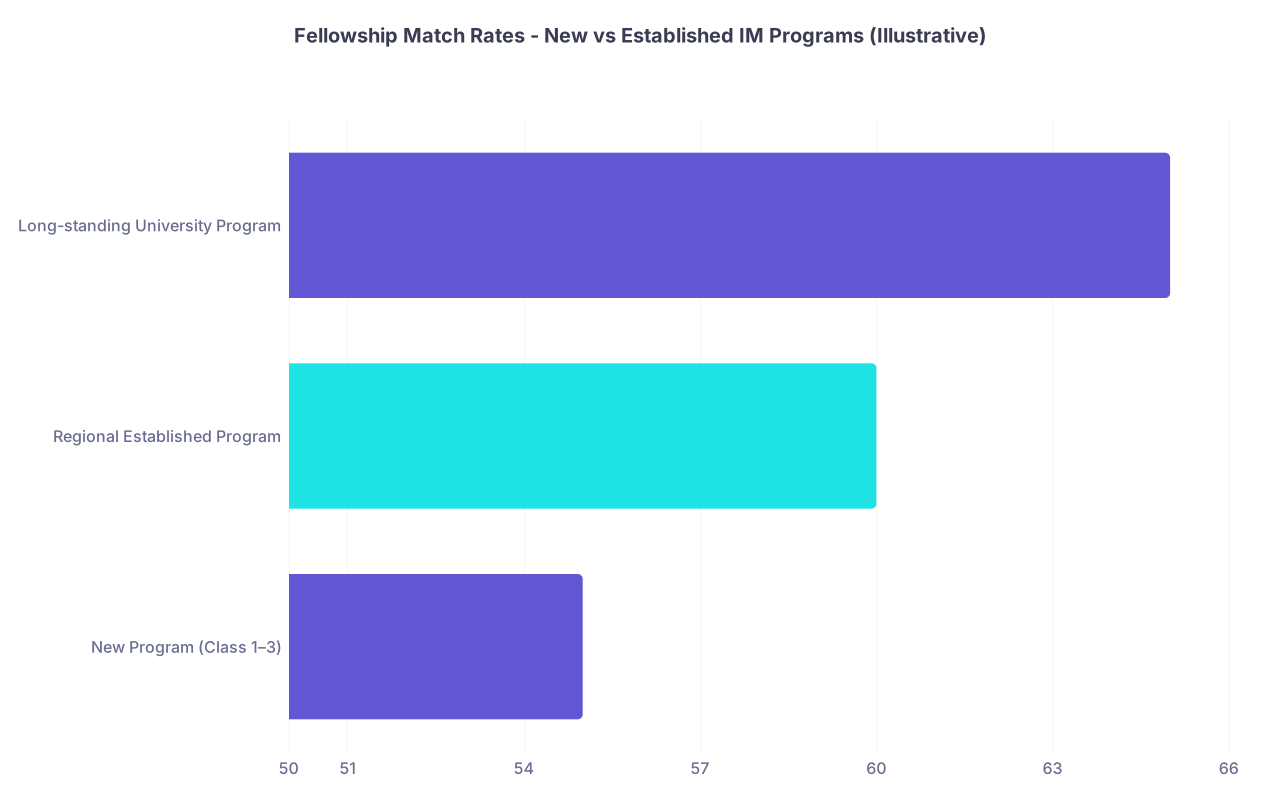
| Category | Value |
|---|---|
| New Program (Class 1–3) | 55 |
| Regional Established Program | 60 |
| Long-standing University Program | 65 |
You’ll notice the spread isn’t massive. For mid-tier programs, age explains far less than:
- Geography
- Hospital volume and complexity
- Faculty networks
- Your own hustle
Yes, if you want ultra‑competitive derm or plastics from a tiny brand‑new community program, you’re making your life harder. But this is about specialty competitiveness, not “new = under‑resourced.”
How to Actually Evaluate a New Program (Without Lazy Bias)
Here’s the contrarian punchline: the more you repeat “new programs are under-resourced,” the more likely you are to end up in an old, coasting, genuinely under-resourced program that hides behind its name.
You should judge a new residency by:
Leadership track record
Where did the PD and core faculty train and teach previously? Did they produce strong graduates elsewhere? Do they still have connections?Transparency about data
Are they willing to show:- Clinic volumes
- Inpatient census expectations
- Call schedules
- Current ACGME survey themes (without spin)?
Institutional investment
Not words. Actual moves:- Protected time and salary for PD/APDs
- Funded chief residents (not unpaid “senior residents”)
- Sponsored conference travel, exam funding, sim center access

Reaction to tough questions
Ask directly:- “What went wrong last year, and what did you change?”
- “What are the 2–3 weakest parts of your program right now?”
- “Have any residents left the program? Why?”
Programs that can answer this calmly? More likely to be safe, new or old.
How nurses and non-physician staff talk about residents
On interview day or away rotations, listen in the hall:- “Residents are helpful but still learning the system” is normal.
- “Residents slow us down; we preferred before” is a red flag.
- Genuine collaboration beats fancy brochures.

| Step | Description |
|---|---|
| Step 1 | Considering New Program |
| Step 2 | High Risk - Avoid |
| Step 3 | Medium Risk - Proceed Cautiously |
| Step 4 | Lower Risk - Judge like any other program |
| Step 5 | Leadership has strong track record |
| Step 6 | Transparent about weaknesses |
| Step 7 | Institution shows real investment |
The Real Tradeoff: Risk, Agency, and Identity
Here’s the uncomfortable truth no one tells you:
Choosing a new residency is partly a personality question.
- If you need structure, predictability, and a huge alumni network already built out, a new program may feel miserable even if it’s well-resourced.
- If you like influence, adaptability, and being part of the group that shapes culture, a well‑run new program can give you more agency than any blue‑blood program ever will.
New programs are not automatically under-resourced. They’re under-proven.
That’s different. And much more interesting.
Because in medicine’s future—more hospitals, more programs, more distributed care—being able to tell the difference between “new and dangerous” and “new and high‑potential” will matter more than whether a logo looks good on your white coat.

Years from now, you won’t brag about whether your program was “new” or “old.” You’ll remember whether you had people who taught you well, protected you when it mattered, and gave you room to grow. Focus on that, not the birth year of the residency.