
The biggest mistake new programs make with milestones is treating them as paperwork instead of the spine of each Match season.
If you are starting or growing a residency, the new ACGME milestone frameworks are not optional background noise. They quietly dictate:
- How many residents you can reasonably train
- Which applicants you should rank
- How you must structure rotations and evaluations
- And when your program will get hammered (or praised) in accreditation reviews
I am going to walk you through how each Match season is reshaped by updated milestones—chronologically. Year by year. Month by month. What you should be doing before, during, and after each Match to stay ahead instead of scrambling during the next ACGME site visit.
Big Picture: How New Milestones Reshape Your Multi‑Year Timeline
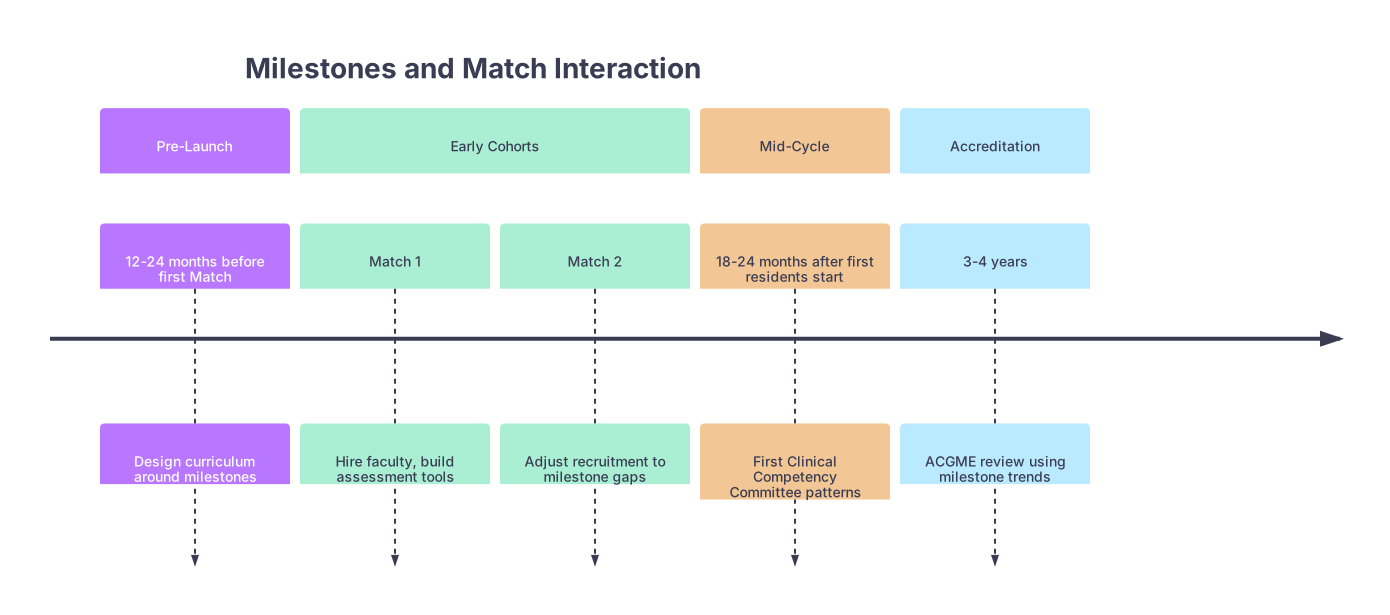
Before we zoom into specific months, you need the multi‑year arc. Milestones work on a 3–4 year rhythm that overlays the Match cycle.
| Period | Event |
|---|---|
| Pre-Launch - 12-24 months before first Match | Design curriculum around milestones |
| Early Cohorts - Match 1 | Hire faculty, build assessment tools |
| Early Cohorts - Match 2 | Adjust recruitment to milestone gaps |
| Mid-Cycle - 18-24 months after first residents start | First Clinical Competency Committee patterns |
| Accreditation - 3-4 years | ACGME review using milestone trends |
At this stage, your mindset should shift:
- From “How do we fill our spots?”
- To “How do we prove, cohort by cohort, that residents progress through milestones predictably and safely?”
The new milestones (Milestones 2.0, subspecialty‑specific updates, EPAs integration) increase that pressure. They demand:
- Cleaner data
- Earlier remediation
- More deliberate recruitment
So let us walk the timeline.
18–24 Months Before Your First Match: Designing Around Milestones
At this point you should stop thinking about rotations first and start with competencies.
Months −24 to −18: Map Competencies, Not Just Rotations
You should:
- Pull the exact ACGME milestone set for your specialty
- Highlight every Level 1 and Level 2 descriptor
- Ask: “Can a PGY‑1/PGY‑2 in our context realistically hit these based on the rotations we plan?”
Typical discovery here:
You realize your shiny subspecialty elective plan looks impressive, but you are weak on core EPAs or basics (handoffs, acute care, interprofessional communication).
Concrete actions:
- Build a matrix where rows = rotations and columns = milestone subcompetencies.
- Force each rotation to “own” 3–5 specific subcompetencies for direct assessment. Not 15. Not 1.
| Rotation | Primary Subcompetencies Covered |
|---|---|
| Inpatient Ward | Patient Care 1, PC 2, ICS 1 |
| ICU | PC 3, SBP 2, PBLI 1 |
| Clinic | PC 5, ICS 2, PROF 1 |
| Night Float | PC 4, ICS 3, SBP 3 |
At this point you should lock in:
- Your core rotation structure
- Milestone‑linked learning objectives for each rotation
- A preliminary evaluation form aligned word‑for‑word with milestone language
If your faculty do not see those milestone phrases early, you will pay for it during your first Clinical Competency Committee (CCC) meeting.
Months −18 to −12: Build Assessment Infrastructure
New milestone frameworks hate vague “meets expectations” evaluations. ACGME reviewers now expect:
- Direct observation tools
- Entrustment language
- Narrative comments tied to specific subcompetencies
Your jobs in this window:
Select or build:
- Mini‑CEX forms
- Procedure logs tied to milestones (not random tallies)
- 360 evaluations for ICS/PROF
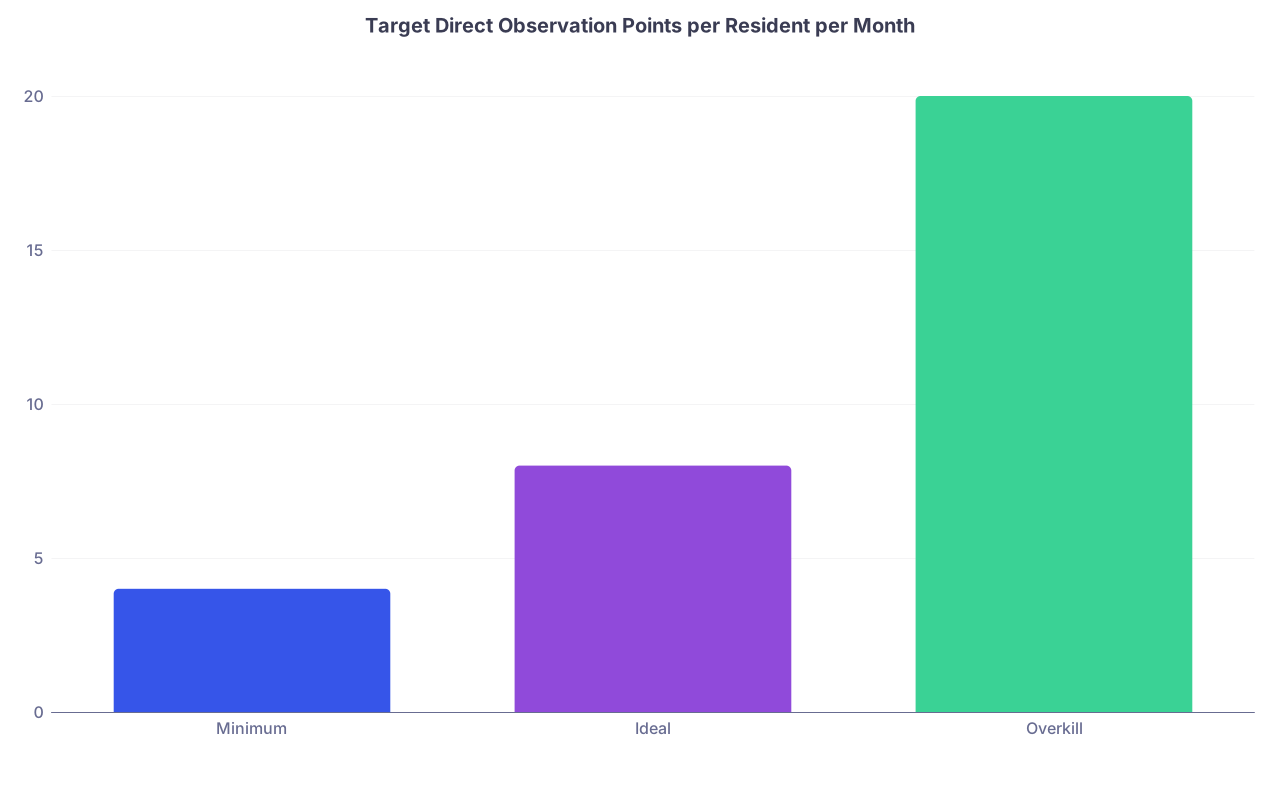
Decide how many data points per resident per rotation you want before CCC. Aim low but consistent.
| Category | Value |
|---|---|
| Minimum | 4 |
| Ideal | 8 |
| Overkill | 20 |
At this point you should:
- Train at least a core group of faculty to use milestone language. One lunch talk is not training. You need repeated calibration: “What does Level 2 in patient care actually look like on our wards?”
- Write your first CCC charter. Roles, timing, how often you will meet, and what data you will review.
9–12 Months Before Each Match: Recruiting With Milestones in Mind
Now you are in the ERAS season. New milestones change how you should think about applicants.
June–August (Pre‑ERAS Opening)
At this point you should:
Define what a strong PGY‑1 Level 1 resident looks like in your program, mapped to milestones:
- Clinical exposure thresholds
- Communication maturity
- Professionalism red flags you will not tolerate
Translate this into:
- Your website language
- “What we are looking for” blurb
- Interview questions that probe specific milestone‑related behaviors (handoffs, feedback response, managing uncertainty)
September–January: Application Review and Interviews
Programs that ignore milestones during selection end up with:
- Residents who are impressive on paper but misaligned with your actual training environment
- Massive remediation rates in PGY‑1 and PGY‑2
- Ugly milestone curves at accreditation time
During this window you should:
Add a milestone‑aligned score domain to your applicant rubric. For example:
- “Readiness for Level 1 patient care”
- “Evidence of professionalism under stress”
- “Responsiveness to feedback / growth trajectory”
Coach interviewers to ask:
- “Tell me about a time you received difficult feedback on a clinical skill. What changed afterward?”
- “Describe your most complex handoff situation as a student. What went well, what did not?”
Flag borderline professionalism or communication behaviors aggressively. New milestone expectations make it much harder to hide these issues later.
At this point, your rank list meetings should explicitly ask:
- “Will this person likely achieve Level 1/early Level 2 in core competencies by mid‑PGY‑1 in our environment?”
Not just: “Did we like them?”
Match Year 1: Your First Cohort Under the New Milestones
This is where most new programs underestimate the workload. The milestones are no longer theoretical.
March (Match Results)
Match Day: you now know your first real test group.
That same month you should:
- Re‑review your milestone–rotation matrix against the actual backgrounds of the matched residents.
- Identify predicted gaps:
- Weak clinical exposure → more deliberate supervision in early rotations
- Research‑heavy class → weaker practical skills day 1
Plan targeted early support instead of waiting for the first CCC to “discover” predictable weaknesses.
July–September (PGY‑1 Quarter 1)
At this point you should prioritize data flow, not “perfect teaching.”
Your goals:
Secure at least:
- 2–4 direct observations per month per resident
- 1 structured attending evaluation per rotation
- Early professionalism / communication feedback from nursing / staff
Hold a CCC-lite check‑in after 3–4 months:
- Not full milestone scoring yet
- But early flagging of:
- Residents at clear Level 1 across domains
- Residents struggling in PC/ICS/PROF
| Category | Value |
|---|---|
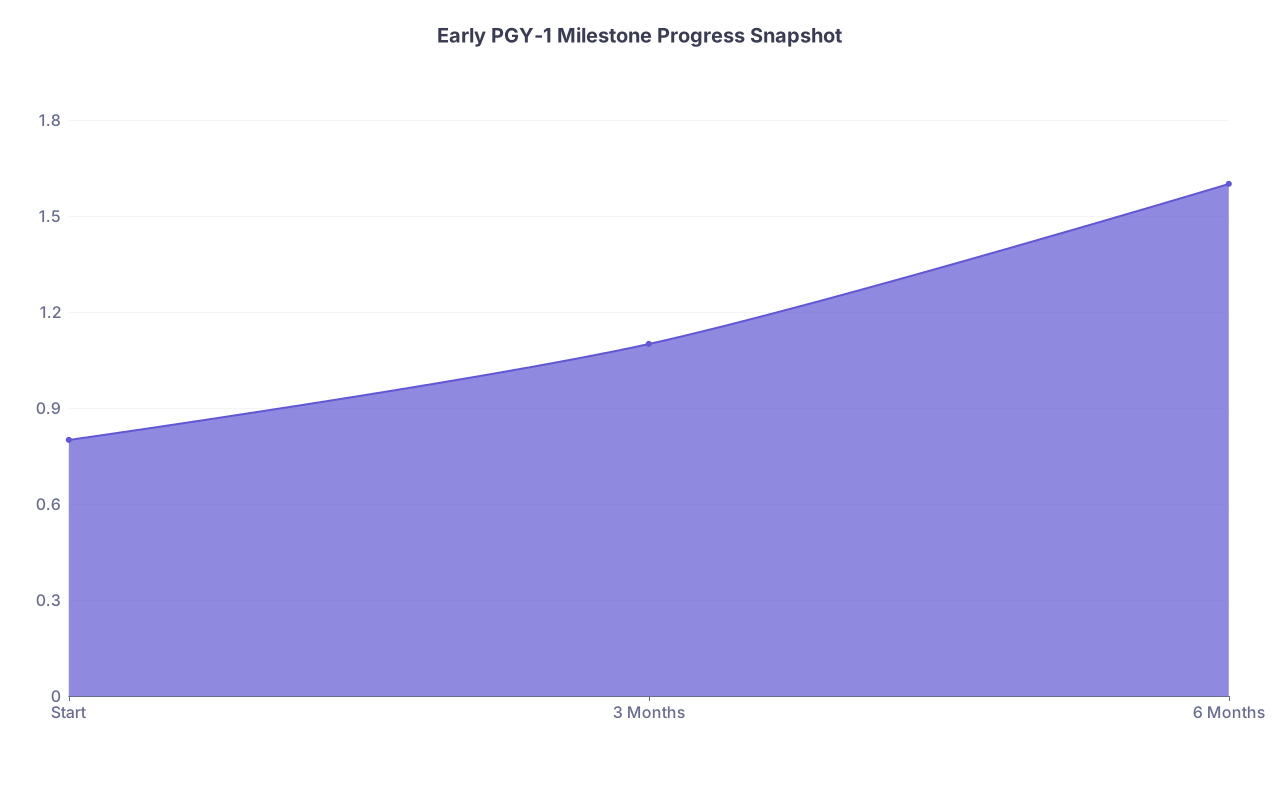
| Start | 0.8 |
| 3 Months | 1.1 |
| 6 Months | 1.6 |
If you wait until the official semiannual reporting to realize someone is at 0.5 in professionalism, you are late.
October–December: First Formal CCC and Milestone Reporting
This is the painful meeting where every crack in your processes shows.
At this point you must:
Run your first full CCC meeting with:
- All rotation evaluations
- Direct observation summaries
- Any remediation notes
- Resident self‑evaluations (optional but helpful to see gaps in insight)
Assign milestone levels honestly. Avoid the temptation to bump everyone to Level 2 “because they are good.” ACGME reviewers can see unrealistic curves across the national comparison data.
Common pattern I have seen in new programs:
- Everyone gets Level 2 in ICS and PROF first cycle “because they are nice and no one complained.”
- But there is no documentation of feedback on communication, no 360s, and no narratives.
That does not hold up in an accreditation review.
Match Year 2: Adjusting Recruitment and Curriculum Based on Actual Data
Now you have real milestone curves from Cohort 1. This Match season should incorporate those lessons immediately.
January–March (Before Rank List Submission for Second Match)
You should sit down with:
- CCC chair
- Program director
- Core faculty
And review:
- Where Cohort 1 is underperforming relative to expected level
- Which competencies are systematically weak (not individual outliers)
Then ask:
- “Do we need a different kind of applicant?”
- “Do we need to adjust early rotations?”
- “Do we need to change how we supervise or evaluate?”
Example:
- Your PGY‑1s are consistently at 0.8–1.0 in Systems‑Based Practice and Practice‑Based Learning at 6 months.
- That likely means your QI curriculum is window dressing with no real ownership, and your feedback culture is weak.
This second Match you should:
- Update your recruitment messaging:
- Explicitly mention QI expectations, feedback culture, and longitudinal projects.
- Adjust interview questions:
- Ask about prior QI, systems thinking, error disclosure experiences.
Years 3–4: How Milestones Drive Accreditation Outcomes
By your third and fourth Match seasons, the milestone data become the backbone of your ACGME story.
Year 3: Trend Lines and Remediation Patterns
At this point you should:
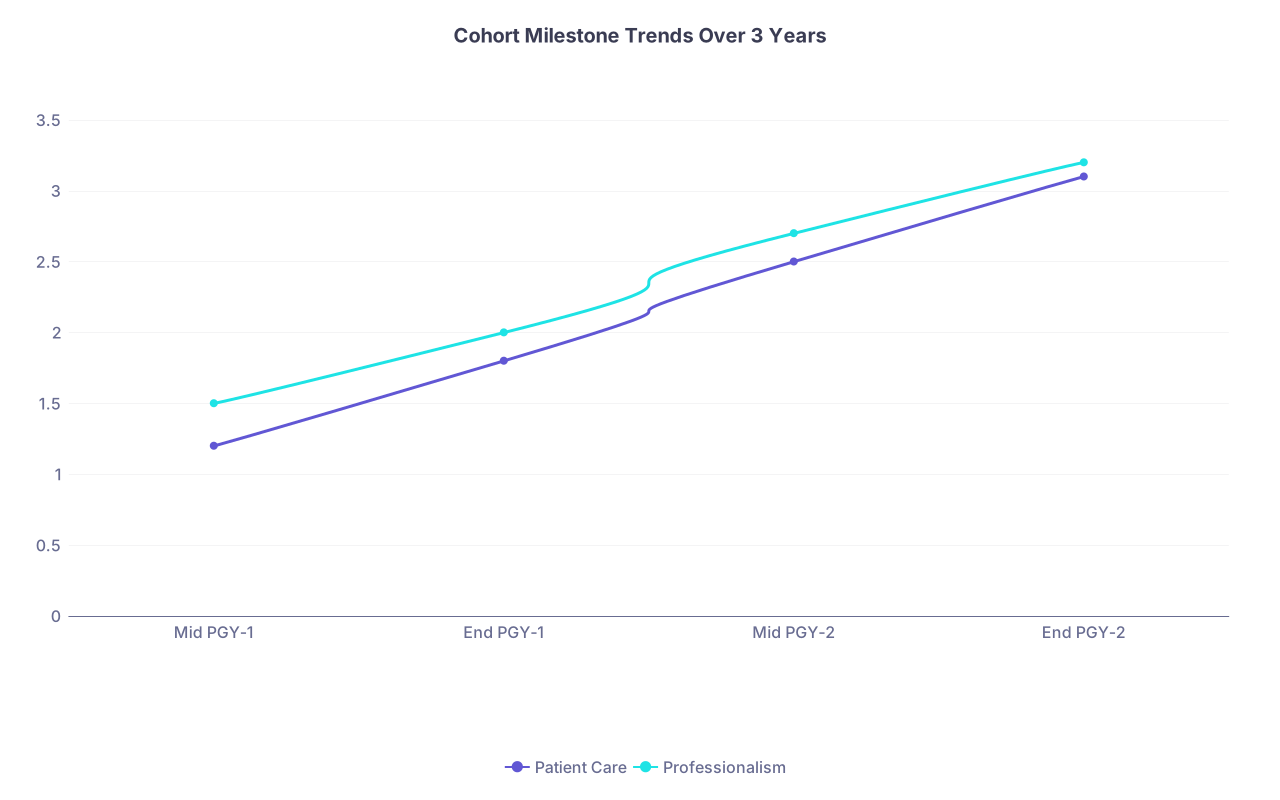
- Generate trend graphs for each cohort:
- Patient Care
- Medical Knowledge
- ICS
- Professionalism
- PBLI
- SBP
| Category | Patient Care | Professionalism |
|---|---|---|
| Mid PGY-1 | 1.2 | 1.5 |
| End PGY-1 | 1.8 | 2 |
| Mid PGY-2 | 2.5 | 2.7 |
| End PGY-2 | 3.1 | 3.2 |
You want:
- Gradual, believable slope
- No wild jumps after a remediation plan that has zero documentation
- No cohort where everyone magically hits Level 4 in all domains by graduation
Your CCC documentation should clearly show:
- Early identification of struggling residents
- Specific, time‑bound remediation plans
- Whether they improved or not
ACGME and RRC members are now used to reading milestone curves. They can see through fantasy numbers quickly.
Year 4: Site Visit / Focused Review Risk
If your trends are flat, erratic, or wildly inflated, this is when you feel it.
At this point you should:
Do a mock milestone review:
- Ask an external faculty (or GME office) to look at:
- Your curves
- Your CCC minutes
- Your remediation documentation
- Ask an external faculty (or GME office) to look at:
Compare your program against national specialty data where available. If your PGY‑1s are at Level 3 when the national median is 1.5, there is a credibility problem.
Remember: for new programs, the combination of:
- New milestones
- First few cohorts
- Limited graduation data
Puts you under a microscope. The Match seasons during those years either:
- Build a reputation: “This program trains and assesses well.”
- Or trigger ongoing RRC skepticism.
How Milestones Influence Each Match Season, Condensed
To summarize practically—here is how new milestone frameworks change what you should be doing during each specific Match season year-by-year:
| Program Year | Match Season Priority |
|---|---|
| Pre-Match 1 | Design curriculum, build assessments |
| Match 1 | Recruit for Level 1 readiness |
| Match 2 | Adjust for Cohort 1 milestone gaps |
| Match 3 | Show trend lines, tighten remediation |
| Match 4+ | Use milestone story to market the program |
And more concretely:
Every September–January (interviews):
- Update questions + rubric based on last year’s milestone pain points.
Every February (rank list):
- Ask explicitly: “Will this person thrive given what our milestone data say about our environment?”
Every March–June (post‑Match, pre‑start):
- Map your incoming class’s background against anticipated milestone challenges. Plan orientation and early rotations accordingly.
Every October–December (CCC + reporting):
- Use your current milestone data to set the narrative for next cycle’s recruiting and website messaging.
Quick Visual: Where Milestones Hit Your Calendar Hardest
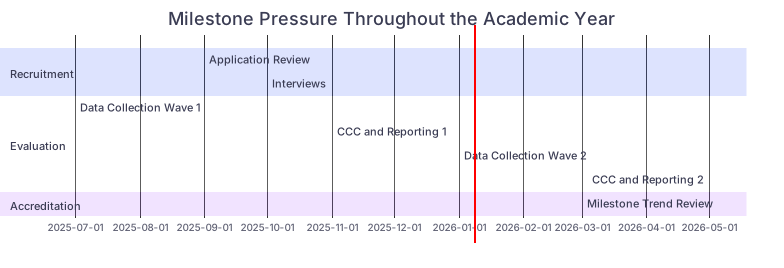
| Task | Details |
|---|---|
| Recruitment: Application Review | a1, 2025-09-01, 3m |
| Recruitment: Interviews | a2, 2025-10-01, 3m |
| Evaluation: Data Collection Wave 1 | b1, 2025-07-01, 4m |
| Evaluation: CCC and Reporting 1 | b2, 2025-11-01, 1m |
| Evaluation: Data Collection Wave 2 | b3, 2026-01-01, 4m |
| Evaluation: CCC and Reporting 2 | b4, 2026-05-01, 1m |
| Accreditation: Milestone Trend Review | c1, 2026-03-01, 3m |
At each of those points, you should be asking:
“What do our current milestone numbers tell us about the residents we should recruit next, the curriculum we must adjust now, and the documentation we need for accreditation later?”
Common Mistakes New Programs Make With Milestones Across Match Seasons

I keep seeing the same patterns:
Treating milestones as semiannual chores, not continuous data.
Then using them for nothing except the ACGME portal.Recruiting “star” students who do not fit your actual training environment.
Milestones then expose the mismatch in PGY‑1.Padding milestone levels to avoid hard conversations.
This feels kind in the moment and looks terrible in a site visit.CCC meetings with no structure, no minutes, no rationale.
ACGME now expects a clear method, not back‑of‑the‑napkin impressions.
If you fix these four early, each Match season becomes easier, not harder.
FAQ (Exactly 4 Questions)
1. How often should a new program realistically hold CCC meetings in the first two years?
For new programs under updated milestones, I recommend three times per year for the first two cohorts:
- Early fall (light, diagnostic review)
- Winter (formal reporting)
- Late spring (promotion and remediation planning)
You are not changing ACGME reporting frequency, you are just not waiting six months to notice a resident at risk. Document all three meetings with minutes and rationale.
2. Should we ever tell applicants that our milestone data influenced how we recruit?
Yes, in a controlled way. It actually makes you look serious and self‑aware. For example:
- “Our graduates have historically been very strong clinically, so we now place extra emphasis on applicants who show interest in QI and systems work to match our updated milestones in SBP and PBLI.”
Do not mention specific internal weaknesses by name. But you can and should convey that you use your milestone experience to shape your educational priorities.
3. What is the red flag in milestone data that most often triggers RRC concern?
Two things in combination:
- Highly inflated, flat milestone curves (everyone Level 3–4 throughout)
- Zero documented remediation or formal concerns over several years
That pairing screams “we are not using milestones honestly.” Isolated low performance is not what gets you in trouble; it is pretending everything is perfect without evidence of evaluation rigor.
4. We are a new program with limited faculty. How can we realistically gather enough milestone data?
You do not need thousands of data points. You need consistent, interpretable ones. For a small new program:
- Require each attending to complete one structured direct observation per week on one resident
- Use brief, targeted tools (2–3 minute forms) on phones or tablets
- Standardize rotation evaluations so every resident has at least one robust assessment per month
Consistency beats volume. A thin but reliable dataset with clear narrative comments is far better than a bloated, incoherent pile of checkboxes.
Open your last CCC report (or your draft template if you are pre‑launch) and pick one competency that caused the most confusion or argument. Today, rewrite the rotation objectives and evaluation questions for that competency so they mirror the exact ACGME milestone language—then plan how you will explain that change to your faculty before the next Match season starts.