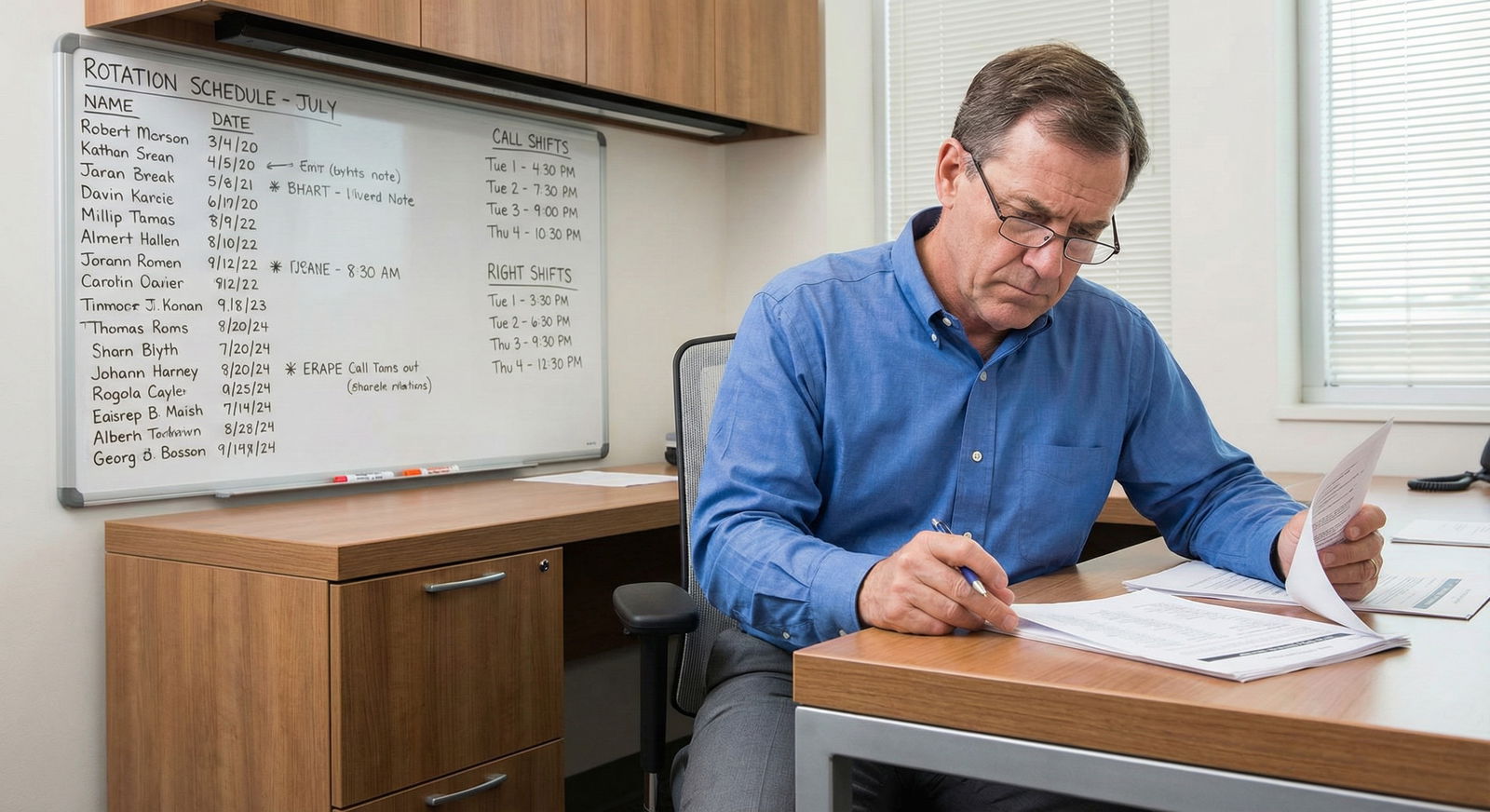
It is the week your new residency program is officially approved and your institution just told GME: “We will participate in the next NRMP Match.” No residents. No prior track record. No one in the country has ever rotated with you as a resident because you do not exist yet.
You are staring at a calendar thinking: “The Match is X months away… what exactly should we be doing this month?”
This is where most new programs either get disciplined or get lost. You are going to be judged in one cycle on what established programs refined over a decade. So you cannot afford vague plans.
Below is a month‑by‑month roadmap from announcement through Match Day for a brand‑new residency program’s first match cycle. I will anchor to an internal medicine–style timeline, but this applies to most ACGME programs that match via NRMP.
I will assume:
- Program announces participation about 12 months before its first PGY‑1 start date.
- ERAS opens for applicants in June.
- Applicants can submit in early September.
- Programs get applications and start reviewing mid‑September.
- Rank lists are due in late February.
- Match Day is mid‑March.
- Residents start July 1.
Adjust by a month if your institution shifts slightly, but keep the sequence.
Months 0–2 After Announcement: Foundation and Non‑Negotiables
At this point you should stop thinking like a “future program” and act like an existing one. The clock is running.
Month 0 (Announcement Month): Lock the Skeleton
At this point you should:
Confirm accreditation and positions in writing
- ACGME initial accreditation letter on file.
- NRMP program registration in progress.
- Number of approved positions (e.g., 6 categorical IM slots) confirmed.
- Funding and FTEs signed off by the DIO and CFO, not just “verbally supportive.”
Define your identity in one page You need a coherent answer to “What is this program?” before you build a website or talk to applicants.
Draft a one‑page document that covers:
- Program type and size (e.g., “Community‑based, 6 residents per year, strong inpatient exposure, limited research but growing ties to nearby university”).
- Clinical strengths (e.g., high‑volume ED, strong ICU, large underserved population).
- Clear geographic and lifestyle pitch.
- Honest weaknesses (e.g., no fellowship on site yet, new evaluation systems, evolving didactics).
Appoint a small, real leadership team Not just names on paper. Actual humans you can get in a room every week:
- PD
- APD(s)
- Program Coordinator
- Core faculty leads (inpatient, continuity clinic, subspecialty liaison)
At this point you should schedule:
- Weekly 60–90 minute standing meeting labelled “First Match Cycle Build.”
Build a rough year view
Print a 12‑month calendar. Write these anchors first:
- ERAS opens (June)
- Applicant submissions (September)
- Interview months (October–January)
- Rank deadline (February)
- Match Day (March)
- PGY‑1 start (July)
Then pencil in:
- “Website live” deadline (no later than May).
- “Interview format finalized” (August).
- “Orientation week defined” (December–January).
You are not polishing branding yet. You are making sure you are a real program on paper and on the calendar.
Month 1: Curriculum and Rotation Map
At this point you should make your training year visible.
Create a PGY‑1 rotation grid For a 6‑resident class, draft a full year block schedule:
- Inpatient wards
- ICU
- Night float
- Emergency medicine
- Ambulatory / continuity clinic
- Required subspecialties (cards, GI, etc.)
- Elective blocks
Do it at the team level first (e.g., “3 residents on wards per block”) then fit the individual slots.
Confirm training sites and agreements
- Each required ACGME experience mapped to:
- Site
- Service
- Supervising faculty
- Affiliation agreements either executed or in legal review with clear deadlines.
- Each required ACGME experience mapped to:
Define your call model and duty hour philosophy You will be asked about this in every interview.
- How you handle nights (night float? traditional call?)
- Weekend coverage model
- How you enforce duty hours (actual tools, not “we will monitor”).
Outline didactic structure At this point you should have:
- Weekly conference schedule (e.g., M/W/F noon conference, Tuesday grand rounds, Thursday morning report).
- Minimum expectations for faculty participation.
Get this into a 2–3 page “Internal Curriculum Draft.” You will repurpose it for website and recruitment materials.
Month 2: Branding, Website, and Core Story
You will live or die in the first cycle on two things:
- Your website.
- Your story when students ask, “Why would I gamble on a new program?”
At this point you should:
Lock in your non‑negotiable messages Three or four points you repeat everywhere:
- Example: “High‑volume hands‑on experience.”
- “Close mentorship, small program.”
- “Opportunity to build culture from day one.”
- “Strong preparation for hospitalist / primary care / fellowship X.”
Design your program website content Do not wait for marketing to “get to it.” Write the content yourself and hand it to them.
Minimum pages:
- Overview / Mission
- Curriculum and rotations (with sample schedule block)
- Faculty list with short bios and photos
- Program leadership with real statements about why they built the program
- Clinical sites with photos and volume stats
- Salary/benefits (ideally with GME‑wide table)
- FAQ for new programs (addressing common fears: accreditation, supervision, procedure volume)
Get honest about weaknesses You must address the “first class anxiety”:
- State clearly that the program has full initial ACGME accreditation and NRMP participation.
- Explain how you will support residents without senior residents (e.g., strong hospitalist presence, faculty in‑house at night, tighter attending coverage).
- List early leadership opportunities for the first class (chief roles, curriculum committees).
If your website is not in active development by the end of Month 2, you are already behind.
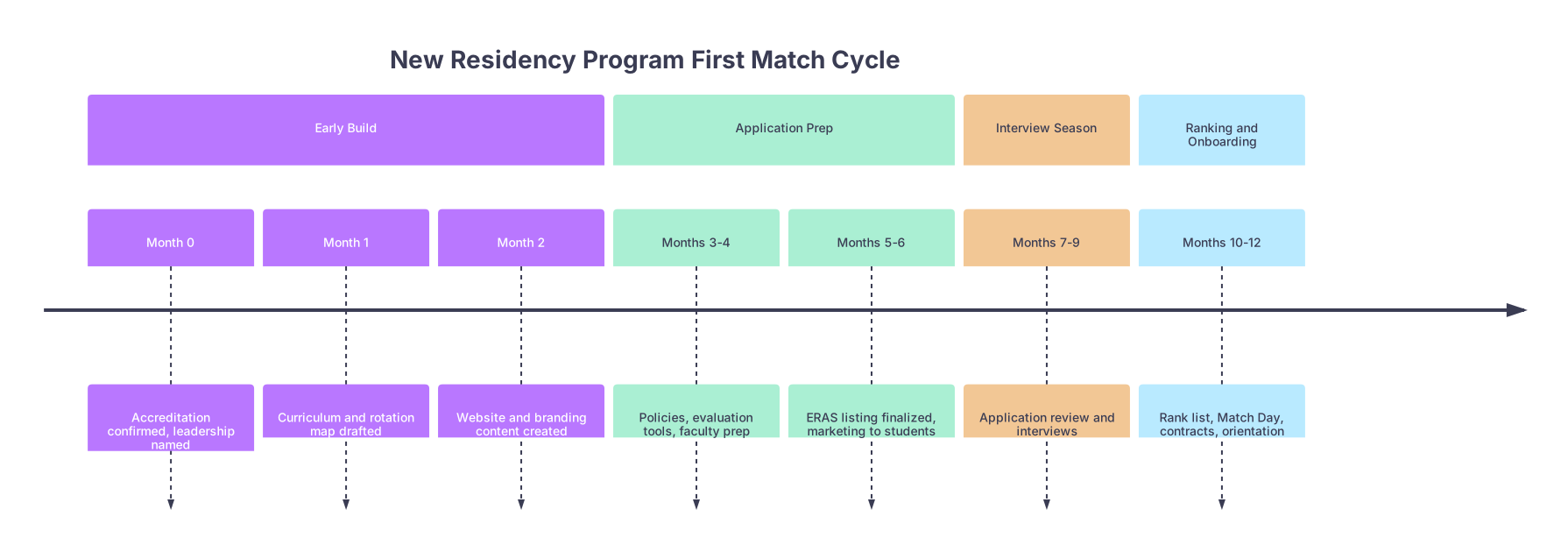
| Period | Event |
|---|---|
| Early Build - Month 0 | Accreditation confirmed, leadership named |
| Early Build - Month 1 | Curriculum and rotation map drafted |
| Early Build - Month 2 | Website and branding content created |
| Application Prep - Months 3-4 | Policies, evaluation tools, faculty prep |
| Application Prep - Months 5-6 | ERAS listing finalized, marketing to students |
| Interview Season - Months 7-9 | Application review and interviews |
| Ranking and Onboarding - Months 10-12 | Rank list, Match Day, contracts, orientation |
Months 3–4: Systems, Policies, and Faculty Reality Check
The shiny part is the website. The painful part is infrastructure. This is where new programs either mature or expose their chaos.
Month 3: Policies and Evaluation System
At this point you should:
Decide your evaluation platform and build forms
- Choose the system (MedHub, New Innovations, eValue, etc.).
- Create:
- End‑of‑rotation evaluations (of residents, faculty, and rotations).
- Milestones mapping.
- Direct observation tools (mini‑CEX, procedure logs).
You want to say to applicants: “Our evaluation tools are built and piloted.”
Draft key policies Minimum:
- Duty hours
- Supervision policy
- Moonlighting (yes/no and under what conditions)
- Leave policies (vacation, sick, parental, educational)
- Fatigue mitigation
- Clinical and educational work hour monitoring and remediation policies
You do not need every policy perfected, but the high‑risk ones must be real, in writing, and aligned with institutional GME policies.
Resident support structures
- Define wellness offerings (counseling, protected time, retreats).
- Identify an ombudsperson or independent mentor outside the program.
- Set up processes for anonymous reporting.
Month 4: Faculty Engagement and Recruitment Pitch Rehearsal
Applicants can feel instantly when faculty do not know the script.
At this point you should:
Hold a faculty development retreat (even half‑day) Agenda:
- Program mission and key messages.
- How to talk about being a new program honestly.
- Expectations for teaching, feedback, documentation.
- Interview training (behavioral questions, what you can and cannot ask).
Create your “why us / why now” deck A simple 10–15 slide deck that:
- Introduces the program.
- Shows sample schedules.
- Lists key clinical strengths.
- Outlines research or QI opportunities.
- Explains how the first cohort will help shape culture.
This becomes:
- Your virtual interview day intro.
- Content for visiting student sessions.
- Basis for handouts at fairs.
Pilot your story Present to:
- Current residents in other programs at your institution.
- Fourth‑year students rotating with your department.
- Hospital administration.
Ask them directly: “If you were applying, what sounds reassuring? What sounds vague or frightening?”
If they cannot repeat your top three program strengths without the slides, your message is not ready.
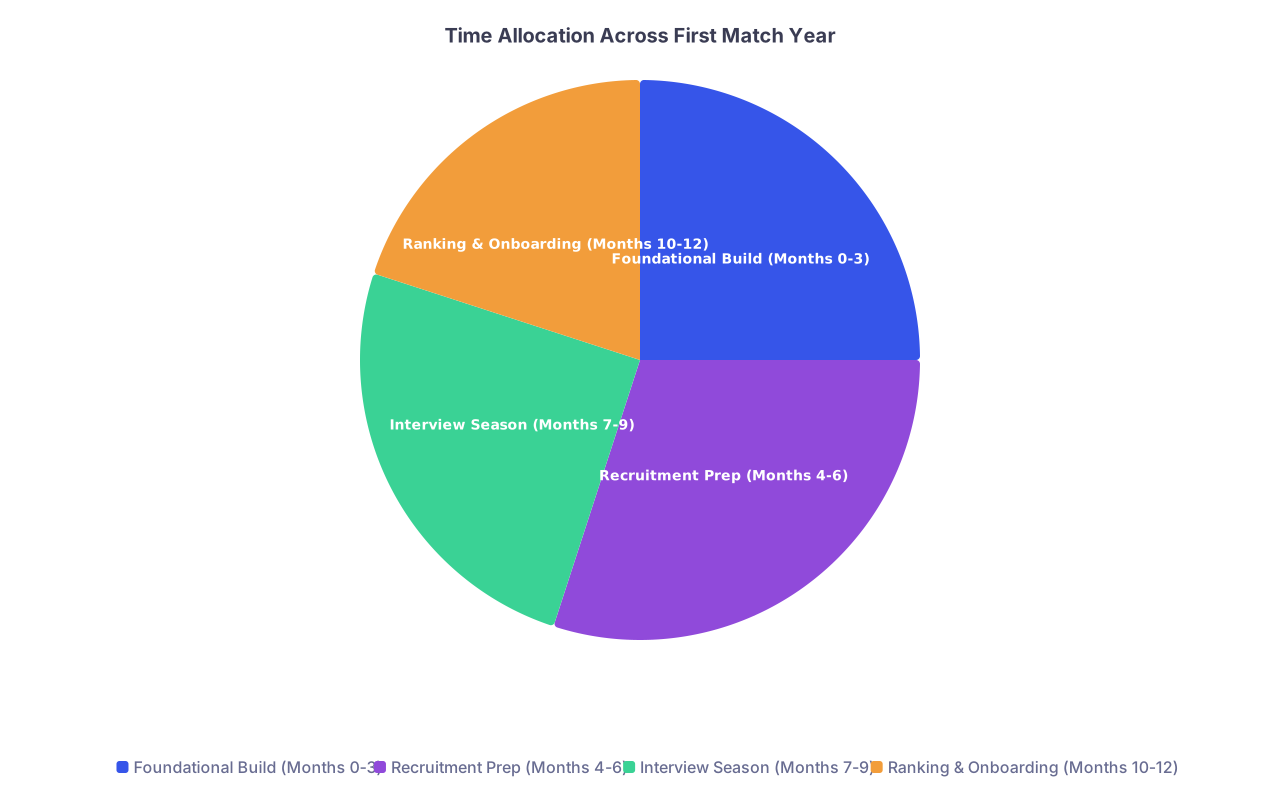
| Category | Value |
|---|---|
| Foundational Build (Months 0-3) | 25 |
| Recruitment Prep (Months 4-6) | 30 |
| Interview Season (Months 7-9) | 25 |
| Ranking & Onboarding (Months 10-12) | 20 |
Months 5–6: ERAS Presence, Applicant Visibility, and Logistics
By now, clinical work and administration are filling your days. The risk is that recruitment tasks get “fit in later.” That is how you end up scrambling in September.
Month 5: ERAS and Online Presence Finalization
At this point you should:
Complete your ERAS Program Information Forms
- Positions offered, tracks (categorical, prelim, etc.).
- USMLE/COMLEX expectations (even if flexible, have a range you plan to target).
- Visa policies (be explicit – this is a major filter for many applicants).
- Contact information that is actually monitored.
Make sure your website is live and not embarrassing Minimum checks:
- All “coming soon” placeholders removed.
- Photos are real, professional, and current.
- Links work.
- Curriculum page contains at least:
- Block diagram.
- Call schedule description.
- Didactics schedule.
Build your social media presence (if you will use it)
- One or two channels only (e.g., Twitter/X and Instagram).
- Post:
- Faculty intros.
- Photos of clinical areas.
- Short posts about your mission and patient population.
- Stay away from gimmicks. Applicants can see which programs are trying too hard.
Month 6: Direct Outreach to Students
This is where you move from “we exist” to “we are on your radar.”
At this point you should:
Engage your institution’s medical students
- Host an info session specifically about the new program.
- Offer informal Q&A with PD and APD.
- Invite interested students to rotate if possible (sub‑I, electives).
Reach out regionally
- Email deans or clerkship directors at nearby medical schools:
- Brief intro.
- One‑page fact sheet about the program.
- Invitation to send interested students for rotations or virtual sessions.
- Participate in any regional residency fairs.
- Email deans or clerkship directors at nearby medical schools:
Finalize interview season logistics
Decide on:
- Virtual vs in‑person vs hybrid interviews.
- Number of interview days per week and total days.
- Number of applicants per day.
Build a rough capacity table:
Example Interview Capacity Plan Parameter Value Positions available 6 Target interview offers 90 Expected interview rate 75% (attend) Interview days 12 Applicants per day 6–8 You want to know now whether your plan can realistically yield a solid rank list.
Months 7–9: Application Review and Interview Execution
At this point you should stop “planning” interviews. You are executing them. The worst thing a new program can do is improvise mid‑season.
Month 7 (September): Application Filters and Early Review
Set and communicate your screening strategy
- Define numeric or categorical thresholds:
- Example: Aim for initial review of all applicants above USMLE Step 2 CK 220, with exceptions for strong non‑numeric features.
- Clarify red flags:
- Multiple failures.
- Major professionalism issues.
This does not mean you rigidly reject below‑threshold applications, but you need an efficient first pass.
- Define numeric or categorical thresholds:
Assign reviewers and quotas
- Divide applications among:
- PD
- APDs
- Core faculty
- Use a simple scoring rubric (e.g., 1–5) on:
- Academic performance.
- Clinical experiences.
- Fit with program mission.
- Unique contributions (language skills, background, prior careers).
Set hard weekly goals: “Each reviewer will score 30 applications per week” etc.
- Divide applications among:
Send the first wave of interview invitations Do not wait to “look at everything.” Strong applicants will already be scheduling by late September.
At this point you should:
- Send invites to your clear top tier as soon as you identify them.
- Keep some slots reserved for later‑season gems.
Month 8–9 (Oct–Nov–Dec): Interview Days and Real-Time Adjustments
This is your public face. Applicants will remember details you never thought about.
At this point you should:
Run a consistent interview day structure Example:
- 15–20 minute program overview by PD (live, not pre‑recorded).
- 2–3 one‑on‑one interviews (20–30 minutes each).
- Virtual hospital tour or photo/slide tour if in‑person is not feasible.
- Resident panel – here is your problem: you have no current residents.
How to handle the lack of residents:
- Use current fellows or senior residents from other programs in your institution to talk about culture and teaching climate.
- Be explicit: “You will be our first class; here is what that means.”
Capture structured impressions immediately
- Interviewers complete a brief evaluation form within 24 hours:
- Overall impression score.
- Comments on strengths/concerns.
- Central list updated at least weekly.
- Interviewers complete a brief evaluation form within 24 hours:
Monitor invite‑to‑acceptance rates Watch for:
- If many applicants decline or cancel, you are overshooting or late.
- Adjust:
- Send additional invites from your “hold” list.
- Reconsider your positioning or communication.
Keep communication clean and responsive
- Coordinator responds to applicant emails within 1 business day.
- Clear instructions for technology, timing, and expectations.
By the end of Month 9 you should have interviewed most of your planned cohort, with a few days left for late‑season or special candidates (Couples Match, SOAP‑concerned applicants, etc.).
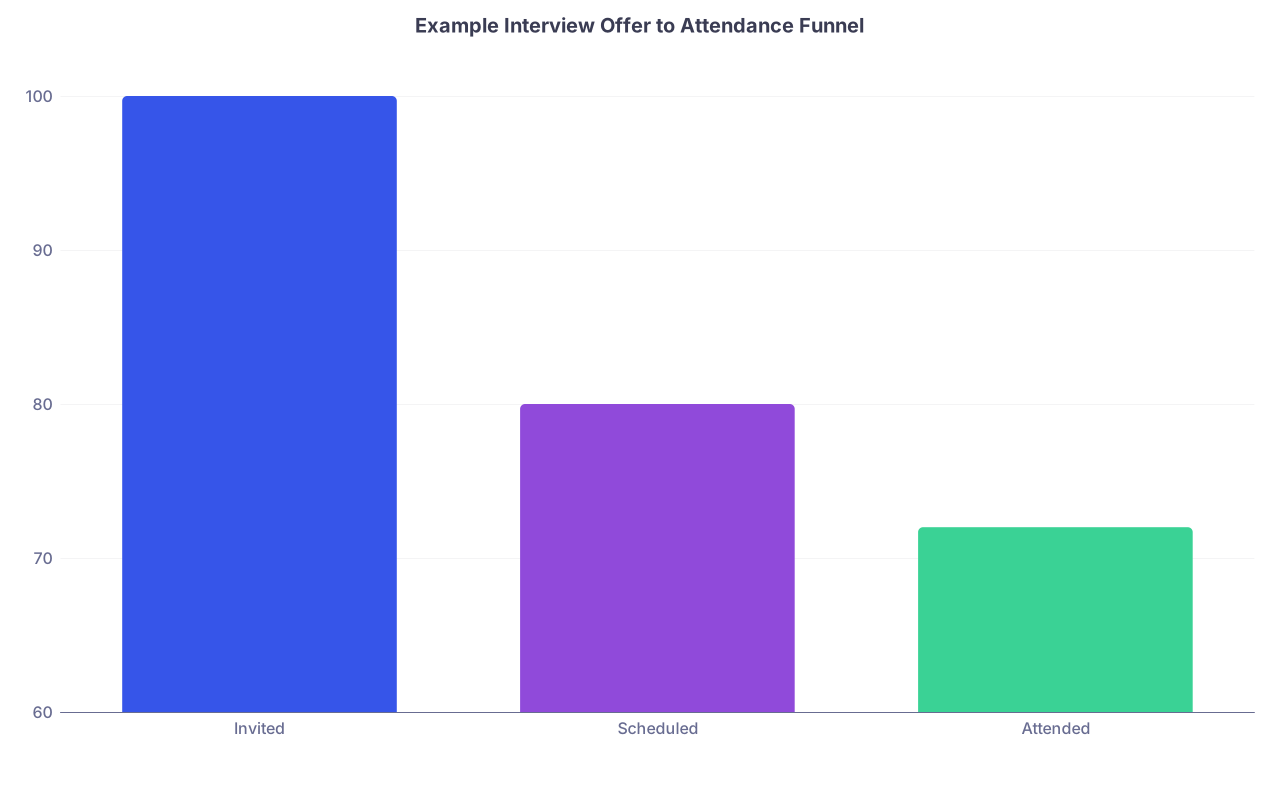
| Category | Value |
|---|---|
| Invited | 100 |
| Scheduled | 80 |
| Attended | 72 |
Months 10–12: Ranking, Contracts, and Onboarding the First Class
Now you are moving from “selling the program” to “standing behind the promises you made.” This part separates serious programs from shiny brochures.
Month 10 (January): Rank List Building and Final Interviews
At this point you should:
Hold at least two formal ranking meetings
Pre‑meeting:
- Review scoring distribution.
- Identify clear “do not rank” cases.
- Flag possible top‑tier candidates.
Main meeting:
- Discuss top 30–40 for a 6‑position program in detail.
- Review interview notes and file as you go.
Have a clear philosophy:
- Are you emphasizing fit and maturity, given the new program context?
- Are you giving additional weight to applicants who clearly understand what “first class” means?
Close the interview season deliberately
- Do not keep “open‑ended” maybe slots.
- Send polite closure emails once interview season ends:
- To those not invited.
- To those interviewed, thanking them and reminding them of NRMP rules (no promises, no coercion).
Refine your top list after brief reflection Give yourself a few days between the first draft and final rank order. revisit:
- Red flags.
- Balance of career interests (you do not want all fellowship‑only or all hospitalist‑only).
Month 11 (February–early March): Final Rank Submission and Match Prep
At this point you should:
Submit the rank list before the last minute
- Double‑check:
- Program identifiers.
- Positions offered match ACGME and financial approvals.
- Confirm with DIO and GME office that everything is aligned.
- Double‑check:
Prepare for both possible outcomes: full match and partial match
- Draft internal SOPs for:
- If you fill all positions.
- If you partially fill and must use SOAP.
- Clarify who makes SOAP decisions and how quickly.
- Draft internal SOPs for:
Start building the onboarding checklist Even before you know who matched, define the process:
- Credentialing steps (license, DEA, hospital privileges).
- Occupational health clearances.
- Required documentation deadlines.
Month 12 (Match Month and Beyond): From Names on a Screen to Real Residents
Match Week arrives. This is where a lot of programs exhale too early.
At this point you should:
Execute Match Week professionally
- Monday: Learn if you filled. If not, engage SOAP according to your pre‑defined plan.
- Thursday (or official Match Day):
- Send a warm, specific welcome email to matched residents.
- Include:
- Congratulations.
- Brief overview of next steps and timeline.
- Contact info for coordinator and PD.
Move immediately into onboarding Within 1–2 weeks you should:
- Send official offer letters/contracts via your GME system.
- Provide a clear orientation timeline:
- Key dates (orientation week, EMR training, BLS/ACLS).
- Share:
- Sample schedule for PGY‑1 year.
- Housing and relocation resources.
- Introduction to mentorship structure.
Solidify early culture and feedback loops Remember: this first class will define you.
- Schedule:
- Quarterly town hall meetings with residents and leadership.
- Regular one‑on‑one meetings between PD and each intern.
- Create:
- A resident advisory group from the first class to help refine curriculum, schedule, and wellness initiatives.
- Schedule:
Post‑Match reflection Within a month of Match Day, meet as leadership and brutally review:
- Did you meet your interview and ranking goals?
- Applicant feedback themes.
- Website and communication gaps.
- What you will change for the second cycle.
Your Concrete Next Step Today
Right now, open a blank document and title it: “First Match Cycle Master Timeline – [Program Name].”
Create 12 headings, one for each month from now until your first PGY‑1 start date. Under just the next two months, write 3–5 specific actions from this guide that you have not done yet.
Then schedule a standing weekly leadership meeting for the next 8 weeks with that document as the agenda. If it is not on the calendar, it will not happen.