
The romanticized idea that you can “do it all” postpartum on nights is nonsense. You’re doing damage control, not chasing perfection.
If you’re postpartum or breastfeeding on night shift in residency, you are in survival mode. Not “optimize your wellness” mode. Survival. The goal is very simple: keep you functional, keep the baby fed, and get through this rotation without breaking. That’s it.
Let me walk you through how to actually do that — on the ground, with pagers going off, attendings watching, and your body still recovering from pregnancy.
1. Before You Start Nights: Non‑Negotiable Setup
If you’re reading this before you start a night block, good. This is where you can save yourself the most pain.
Get brutally clear on your priorities
You cannot optimize all of these at once:
- Ideal milk supply
- Perfect performance at work
- Flawless parenting and partner time
- Your own sleep and mental health
You get to heavily prioritize two, keep one “good enough,” and let one be imperfect for this block. And yes, that may mean:
- Accepting some formula
- Accepting you will not be “star resident” this month
- Accepting the house will be a disaster
Pick now, or you’ll feel like you’re failing at everything later.
Lock down your pumping rights and logistics
Residency programs and hospitals love vague “we support breastfeeding” language. That means nothing unless you convert it into an actual plan.
Do this in writing before your night block:
- Email your chief and program coordinator:
- Tell them you’re breastfeeding/pumping
- State that you’ll need pumping breaks roughly every 3–4 hours
- Ask where the lactation rooms are, and what the process is to access them at night
- Confirm with GME if there’s an institutional lactation policy (most big hospitals have one; it’s just buried)
Then, make it specific:
- “On nights, I’ll need 20 minutes to pump around 11 pm and 3 am. During that time I can still be reached by pager for urgent issues and will arrange cross‑coverage for any active stat tasks.”
You’re not asking permission. You’re telling them your medical need and how you’ll handle patient care.
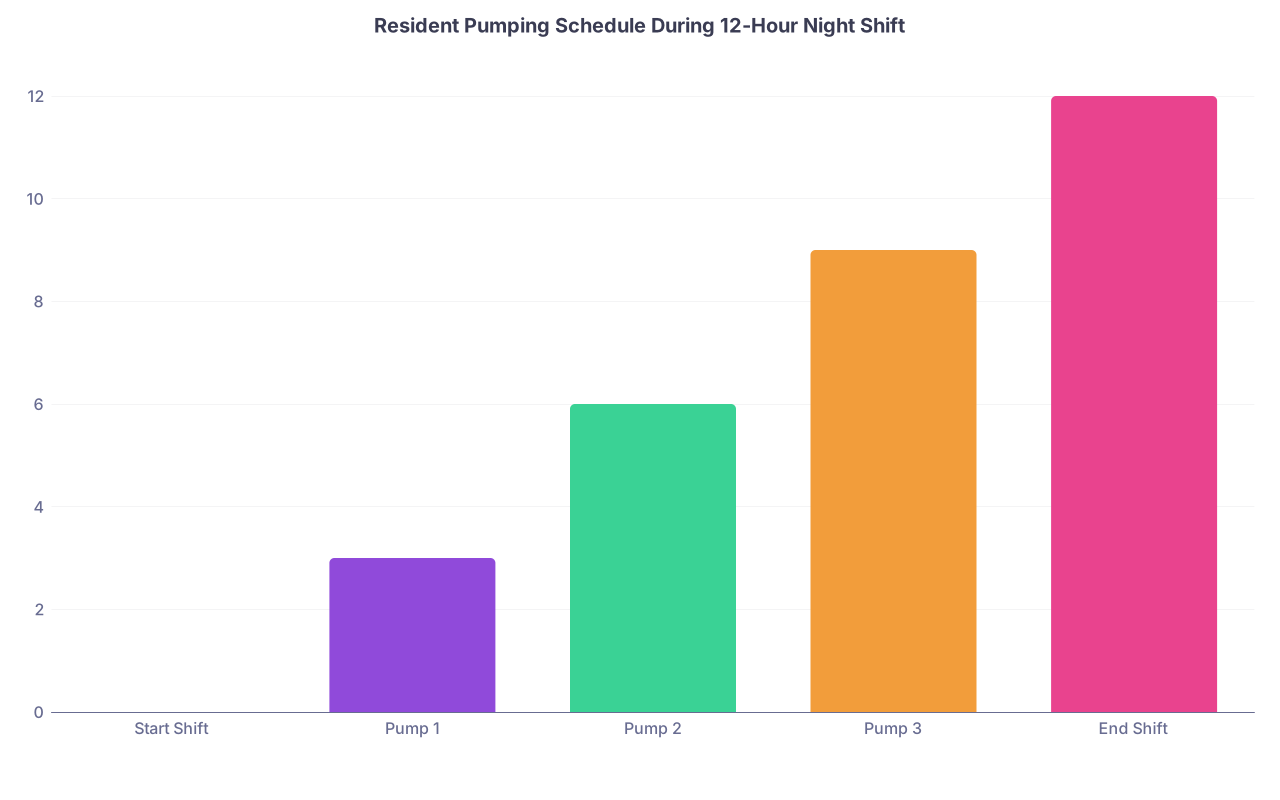
| Category | Value |
|---|---|
| Start Shift | 0 |
| Pump 1 | 3 |
| Pump 2 | 6 |
| Pump 3 | 9 |
| End Shift | 12 |
Build a real pumping kit for nights
Day-shift tricks often fall apart at 3 am. Night shift is about redundancy and speed.
Bare minimum kit:
- Double electric pump (hospital‑grade if your supply is fragile)
- Extra pump parts (a full second set)
- At least 4 bottles or milk bags per shift
- Battery pack or pump with battery (outlets disappear when you need them)
- Small insulated bag + ice packs
- Wipes for quick cleaning when you truly cannot wash
- Labeling tape and marker
Optional but smart:
- Hands‑free pumping bra
- Wearable pump for those “I literally can’t leave the unit” nights
Stash a backup emergency set at the hospital (even if it lives in your locker or call room): old pump, cheap bra, one bottle, some bags. The night you forget your main kit, that backup will save your mental health.
Coordinate with your support system like it’s a military operation
If you have a partner or caregiver, you need explicit plans. Not vibes. Plans.
Cover these:
- Who handles nights with the baby while you’re working?
- Who is on baby duty when you get home so you can sleep a first uninterrupted block?
- If baby is bottle‑fed at night, where are bottles prepped, how are they cleaned, and who’s responsible?
Write it on a whiteboard in your kitchen if you must. Exhausted people do not do well with assumptions.
2. Structuring a Night Shift While Breastfeeding
Now you’re on nights. Let’s talk about how to get through one 12‑hour shift without missing pumps or falling apart.
A realistic pump schedule on nights
You don’t need perfect 3‑hour spacing. You need “good enough so you don’t tank your supply or get mastitis.”
For a 7 pm–7 am shift, a workable pattern:
- Pump right before leaving home (~6 pm)
- Pump around 10–11 pm
- Pump around 2–3 am
- Optional light pump or hand expression around 5–6 am if you’re very full
- Feed or pump again once home (~8 am)
That usually gives you 3–4 milk removals during the shift + feedings at home. If your baby is very young (<3 months) or your supply is sensitive, you may need closer to every 3 hours.
Do not chase your baby’s exact feeding schedule while on nights. You just need consistent removal so your body doesn’t think it’s time to wean.
How to actually leave the unit to pump without getting destroyed
Here’s where most residents struggle — not physiology, but politics and logistics.
Step-by-step strategy:
At the start of the shift, tell the senior:
“I’m pumping tonight so I’ll need ~20 minutes around 11 and 3. I’ll keep my pager on for emergencies and before I go I’ll check that there’s no pending stat stuff.”Before each pump:
- Clear any active orders, calls, or stat pages
- Tell the senior/other resident: “I’m stepping away to pump for about 20. Pager is on; call me for anything urgent.”
Keep your pump time lean:
- Use a hands‑free bra so you can quickly chart, answer messages, or review labs while pumping
- Aim for 15–20 minutes, not 35–40
That combination — proactive communication + short but consistent pumps — is usually tolerated, even in malignant environments. If someone rolls their eyes, that’s their problem. You’re doing what your body medically requires.
3. Sleep, Circadian Chaos, and Your Milk Supply
Night shift wrecks circadian rhythm. That hits mood, cognition, and milk production. You can’t fix it, but you can blunt the damage.
One simple rule: protect one solid sleep block
Postpartum residents try to “be present” with the baby, end up snatching 90 minutes here and there, and then wonder why they’re hallucinating by night 4.
You need one protected 4–5 hour block every “day,” even if everything else is chaos.
Typical pattern if you work 7 pm–7 am:
- Get home at 7:30–8:00 am
- Feed baby or pump
- Sleep 9 am–1 pm (protected block; partner or caregiver handles baby)
- Short nap later if possible (4–5 pm)
If daytime pumping wakes you every 2 hours, your nights will be unsafe. It is okay to cluster feed the baby when you’re home and let someone else bottle‑feed once during your core sleep block.

Protecting supply under sleep deprivation
Things that actually matter:
- Drink more water than you think you need — set one bottle by the pump, one by the computer
- Eat actual food within the first 2–3 hours of your shift: protein + carbs + fat (not just vending machine sugar)
- Pump roughly every 3–4 hours, even if slightly shorter sessions
What you can stop obsessing about:
- Perfect pumping intervals
- Fancy lactation cookies and teas fixing a fundamentally insane schedule
- Matching output to baby’s exact intake every 24 hours
If your supply dips a bit during nights and rebounds after, that is normal. What prevents a sustained crash is consistency, not perfection.
4. When Reality Hits: You Cannot Keep Up With Baby’s Intake
Here’s the part nobody wants to say out loud: many breastfeeding residents on nights do not pump enough to fully cover all bottles. That does not make you a bad parent. It makes you human.
Short-term strategy when you’re not pumping enough
You’ve got a few levers:
Increase milk removal slightly on days off
- Add one extra pump or feed session in the morning on off days
- Avoid the temptation to use every off day to “catch up on life” and skip feeds
Accept some formula or donor milk
- Decide on a clear rule with your partner: e.g.,
- “If there’s not at least X ounces in the fridge at bedtime, we’ll use formula for the 2 am bottle.”
- This prevents nightly arguments and quiet resentment
- Decide on a clear rule with your partner: e.g.,
Lower the mental bar
- Feeding your baby some breast milk during this insane schedule is a win
- You do not need to martyr yourself to exclusive breastfeeding at the cost of your safety and sanity
| Strategy | Pros | Cons |
|---|---|---|
| Exclusive Pumping | Full control, trackable | High time burden, more stress |
| Mixed Breast/Formula | Flexible, less pressure | Requires mental adjustment |
| Mostly Formula | More sleep, less pumping | Lower milk supply over time |
How to handle the guilt (because it will show up)
You will hear:
- “Have you tried power pumping?”
- “If you drink more water…”
- “I pumped at work and never had an issue.”
People love to give opinions without your schedule, your rotation, or your recovery status.
Anchor yourself in three facts:
- You are providing medical care while physically recovering from pregnancy.
- Any amount of breast milk is beneficial — but a safe, stable parent is more important.
- Formula is not failure. It is a tool.
If a lactation consultant or coworker gives advice that ignores your night shifts or workload, discard it. Advice that doesn’t account for your reality is useless.
5. Managing Your Body: Pain, Bleeding, Mood, and Mastitis
You’re not just sleep‑deprived and pumping. You’re postpartum. Your body is not done healing.
Bleeding and physical recovery on nights
If you’re only a few weeks postpartum:
- Heavy lifting all night + no rest can increase bleeding
- Plan for more pads than you think you need at work
- If bleeding suddenly worsens or you’re soaking a pad an hour, you’re not “being weak” — you’re potentially unsafe. Call your OB.
You are allowed to say to your chief or attending:
“I just delivered X weeks ago and I’m concerned about my bleeding. I need to step away briefly / be seen.”
That’s not drama. That’s medical judgment.
Mastitis: catch it early
Redness on the breast, localized pain, flu‑ish feeling, or fever during a night shift? Do not power through and see how you feel tomorrow. That’s how you end up in the ED.
At the first hint:
- Pump or hand express more thoroughly on that side
- Apply warm compress briefly before pumping, cold after
- Hydrate and take ibuprofen/acetaminophen if you can
- If you develop fever or worsening pain, get evaluated and started on antibiotics — yes, even during your shift
You cannot safely care for patients while septic. Do not wait.
6. Protecting Your Job While Protecting Your Child
Residency culture sometimes frames basic medical needs as “weakness.” You have to be strategic.
How to talk to attendings and seniors
Use language they understand: medical necessity, patient safety, workflow.
Instead of:
- “I need to pump; is that okay?”
Try:
- “I’m breastfeeding and medically need to pump about every 3–4 hours. Each session takes about 20 minutes. I’ll keep my pager on and coordinate coverage so patient care is not interrupted.”
If someone pushes back with, “We’re really busy; can you go longer between pumps?” you can say:
- “If I skip multiple pumping sessions, I risk mastitis and decreased milk supply. I’m happy to flex the exact times based on patient acuity, but I do need to go at least twice this shift.”
You’re not dramatic. You’re stating physiology.

| Step | Description |
|---|---|
| Step 1 | Need to Pump |
| Step 2 | Inform Senior |
| Step 3 | Pump with adjusted timing |
| Step 4 | Clarify medical need |
| Step 5 | Escalate to chief or GME |
| Step 6 | Senior supportive |
| Step 7 | Still resistant |
Know when to escalate
Patterns that justify going up the chain:
- You are repeatedly denied pumping time
- You’re mocked or punished for needing to pump
- Your schedule is structured in a way that makes pumping physically impossible
In that case:
- Document dates, times, and specific comments
- Email your chief or program director factually:
- “On X date during night shift at Y time, I requested to step away for 20 minutes to pump. I was told no because…. I am concerned this conflicts with hospital lactation policy.”
You’re not being petty. You’re enforcing policy so you don’t end up sick.
7. Practical Hacks That Actually Help on Nights
This is the stuff that residents quietly share in call rooms at 2 am.
Fast, realistic food and hydration
You are not meal‑prepping six balanced containers during this rotation.
Do this instead:
- Keep shelf‑stable protein at work: nuts, jerky, protein bars, shelf‑stable milk
- Pre‑pack one decent meal per shift (sandwich/wrap + fruit + something salty)
- Set a rule: you drink at least half your water bottle every time you pump
Simple. Not perfect. It works.
, Unplanned Vending](https://cdn.residencyadvisor.com/images/articles_svg/chart-resident-night-shift-energy-sources-8261.svg "Resident Night Shift Energy Sources")
| Category | Value |
|---|---|
| Protein/Real Food | 35 |
| Snacks | 25 |
| [Caffeine](https://residencyadvisor.com/resources/night-shift-survival/the-worst-ways-to-use-caffeine-on-nights-backed-by-sleep-science) | 30 |
| Unplanned Vending | 10 |
Clothes and comfort
- Wear a nursing‑friendly bra under your scrubs (clips or zip‑front)
- Layer a thin tank under your scrub top so you’re not half‑naked in a cold call room
- Keep a small blanket or hoodie at work; night pumping rooms are often freezing
Mental tricks to get through the rotation
- Count down in shifts, not weeks. “4 down, 8 to go” is more tolerable than “three more weeks of this.”
- Decide in advance: during this block, you are allowed to let certain things go — social life, perfectly answered texts, folded laundry.
- Have one tiny thing you look forward to each shift: a podcast episode while pumping, a specific snack, a 5‑minute walk outside at dawn.
It doesn’t fix the situation. It just makes it less soul‑crushing.

8. When You’re Done With Nights: Recovery and Reset
The first few days off nights when you’re postpartum and breastfeeding can feel chaotic. You’re swinging your body back to days while your baby still expects something like a normal pattern.
Gentle reset rather than whiplash
- Don’t try to fix your entire schedule in 24 hours
- Start by anchoring two things:
- A consistent bedtime for you (even if later than ideal)
- Cluster feeding or pumping during your more awake times to reassure your supply
If your supply dipped:
- Add one extra morning pump session for a week
- Skin‑to‑skin with baby when possible
- Extra hydration and one decent meal a day — again, not complicated
If after 2–3 weeks you’re still struggling with low output and it bothers you, then consider talking with a lactation consultant. During the rotation you don’t need a hobby; you need to survive.

FAQ (Exactly 4 Questions)
1. What if my co-residents or attendings act annoyed every time I go to pump?
Treat pumping as a medical necessity, not a hobby. Communicate proactively at the start of the shift, be efficient with your time, and keep your pager on for true emergencies. If you’re still met with hostility or denial of breaks, document it and escalate to your chief, program director, or GME. This is not you being “high-maintenance”; it’s them ignoring policy and physiology.
2. Is it even realistic to exclusively breastfeed while on night shift in residency?
Sometimes yes, often no. It depends on your supply, your baby’s age, your rotation intensity, and your support at home. Many residents end up doing mixed feeding — breast milk plus formula — especially during heavy rotations. That is not failure. Trying to force exclusivity at the expense of your sleep, safety, and mental health is a bad trade. Mixed feeding for a tough block is a very reasonable survival strategy.
3. How do I avoid tanking my milk supply when my sleep is terrible?
You won’t keep it perfect, but you can prevent a major crash by: pumping roughly every 3–4 hours on shift, getting one protected 4–5 hour sleep block during the day, staying decently hydrated, and adding one extra feed or pump session on off days if you can. Short, consistent effort matters more than long, heroic power‑pumping sessions you can’t sustain.
4. When should I seriously consider stopping breastfeeding or pumping because of night shift?
You should at least consider weaning or partial weaning if: you’re repeatedly getting mastitis or clogged ducts, you’re unsafe at work from extreme exhaustion, you’re experiencing worsening postpartum depression or anxiety tied to feeding stress, or your home life is collapsing under the strain. Stopping or reducing breastfeeding is not a moral failure; it’s a medical and personal decision. Your baby needs you healthy and present more than they need exclusive breast milk.
Key points: treat breastfeeding on nights as a medical and logistical problem, not a moral referendum. Protect one decent sleep block and a few consistent pumps instead of chasing perfection. And use every tool available — formula, policy, backup gear, and blunt communication — to get you and your baby through this rotation in one piece.