The worst decision you can make about a funded PhD offer during residency is to drift into it because “it’s free” and “everyone says it’s a great opportunity.”
If you are a clinical resident and you’ve just been offered a funded PhD slot, you’re at a fork in the road that will shape the next decade of your life. You do not treat that lightly. But you also don’t romanticize it.
This is the step‑by‑step way to decide, from someone who has watched residents thrive with a PhD and others quietly regret losing three to five prime years of their life.
1. Get Clear on the Exact Situation You’re In
Before you start philosophizing about “academic careers,” you need the concrete details. Most residents skip this and just think: “Fully funded = good.” That is lazy thinking.
You need answers in writing to at least these:
| Factor | Option A | Option B |
|---|---|---|
| PhD timing | During residency | Between residency & fellowship |
| Duration | 3 years | 4–5+ years |
| Funding | Full stipend + tuition | Partial / uncertain |
| Job security | Guaranteed return slot | No formal guarantee |
| Research fit | Strong mentor & topic | Vague / misaligned |
Ask:
Structure:
- Is this an integrated research pathway (ABIM Research Pathway, PSTP, etc.), or a regular PhD program you’re pausing residency for?
- Will your clinical time be reduced, or fully stopped during the PhD?
- Are you returning to the same residency program and PGY year afterward?
Time:
- Expected time to degree? 3 years vs “3–5 years” are not the same.
- Are there hard limits from the residency board or funding body?
Money:
- What’s the stipend? Compare it to your current resident salary.
- Benefits: health insurance, retirement contributions, vacation.
- Any obligation to pay back if you leave the PhD early?
Security and guarantees:
- Is your residency spot guaranteed in writing when you return? Same PGY level? Same visa support if applicable?
- Are board eligibility timelines protected with your specialty board?
Fit:
- Do you already have a PI/mentor agreed on?
- What’s their track record: PhD completion rate, publications with trainees, grant funding?
If you don’t have clear written answers, you’re deciding in fog. Email the program director and PhD program coordinator today and get specifics. Vague “we usually…” answers are a red flag.
2. Be Brutally Honest About Why You’re Even Considering This
Residents say all kinds of things out loud:
- “I want to be competitive for top fellowships.”
- “I love research.”
- “This is a rare opportunity.”
What I hear privately, in offices after hours, is different:
- “I’m burned out and this seems like an escape from wards.”
- “I’m scared my CV isn’t good enough for academics.”
- “Everyone else in my program is doing research and I feel behind.”
- “I don’t know what else to do with my career.”
None of those are solid primary reasons to commit to a 3–5 year PhD.
Do this exercise. On a blank page, make three short lists:
- Real reasons I’m excited by this PhD
- Real reasons I’m scared to say no
- Things I’m trying to avoid by saying yes
If your “excited” list is vague (e.g., “research is interesting”) and your “avoidance” list is long (e.g., “burnout, clinical stress, uncertainty”), then you are not choosing the PhD. You’re choosing to hide in it.
That’s how people end up five years older, with a thesis they barely care about, and no clear career edge.
You should only seriously lean toward “yes” if at least one of these is true:
- You already love research enough that you do it on top of 60–80 hour weeks.
- You can clearly see yourself in a career that is at least 50% research long-term.
- You are aiming for a path where formal PhD training is a real asset, not just a nice bullet (e.g., physician‑scientist in basic or translational science, health services research leader, certain global health or epidemiology careers).
3. Understand What the PhD Really Buys You (And What It Doesn’t)
People wildly overestimate what “MD + PhD” on paper automatically does.
Here’s the more honest version.
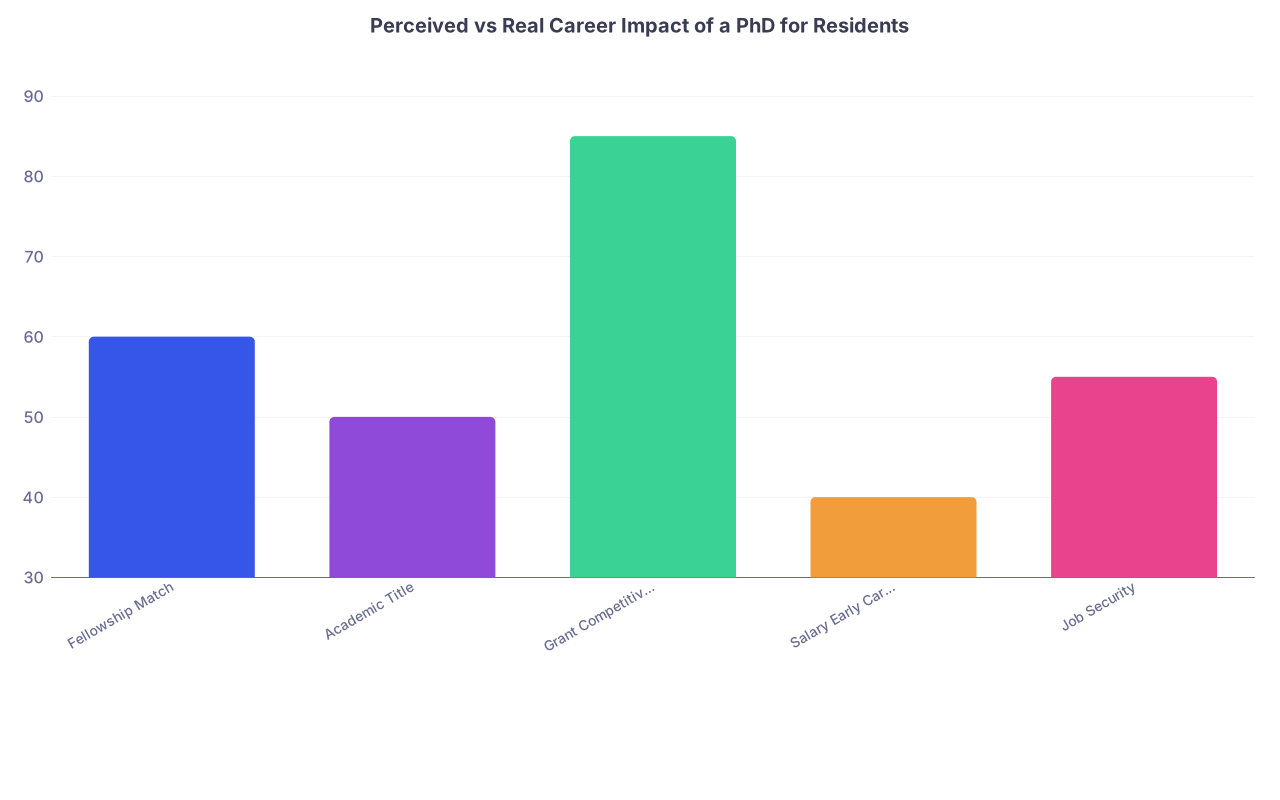
| Category | Value |
|---|---|
| Fellowship Match | 60 |
| Academic Title | 50 |
| Grant Competitiveness | 85 |
| Salary Early Career | 40 |
| Job Security | 55 |
(Think of these numbers as relative impact out of 100, not exact metrics.)
What a PhD CAN realistically give you as a resident:
- Deep methods expertise: Statistics, trial design, bench skills, qualitative methods, etc. This is real and valuable if you actually like using them.
- Credibility as a scientist: Especially in basic/translational fields and some outcomes/epi spaces. Reviewers and PIs will take you more seriously.
- Time to build a serious research track record: First‑author papers, grants, networks, maybe a K‑type path later.
- Clearer identity as a physician‑scientist: That brand matters in academic medicine.
What it does NOT automatically give you:
- A guarantee of an academic job. There are unemployed or under‑employed MD‑PhDs.
- A higher attending salary in most clinical jobs. Private practice does not pay you extra for a PhD.
- Protection from burnout. Academic medicine can be brutal in its own way: constant grant pressure, soft money, endless reviews.
- Automatic fellowship acceptance. It helps, but strong clinical performance, letters, and existing research productivity may matter more.
If you’re mostly interested in clinical education, QI, administration, or community practice, then a funded PhD is often overkill. A good research year, a master’s (MPH, MSCE, MSc), or focused projects can be more efficient.
4. Compare the Two Concrete Futures Side by Side
This is where people finally see what’s really at stake. Not abstract “careers.” Actual years of your life.
Create two timelines:
- Path A: You say yes to the PhD.
- Path B: You stay on the standard residency → fellowship (if applicable) → attending path.
Let’s assume you’re PGY2 IM, age 28, offered a 3‑year funded PhD integrated with research pathway, then reduced clinical training.
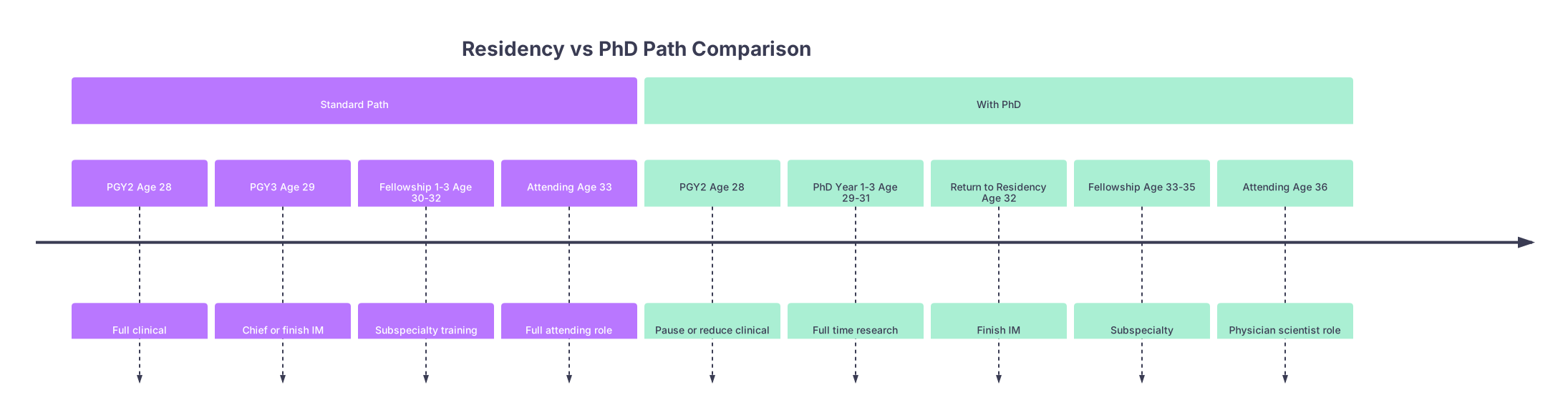
| Period | Event |
|---|---|
| Standard Path - PGY2 Age 28 | Full clinical |
| Standard Path - PGY3 Age 29 | Chief or finish IM |
| Standard Path - Fellowship 1-3 Age 30-32 | Subspecialty training |
| Standard Path - Attending Age 33 | Full attending role |
| With PhD - PGY2 Age 28 | Pause or reduce clinical |
| With PhD - PhD Year 1-3 Age 29-31 | Full time research |
| With PhD - Return to Residency Age 32 | Finish IM |
| With PhD - Fellowship Age 33-35 | Subspecialty |
| With PhD - Attending Age 36 | Physician scientist role |
Now ask yourself:
- How do I feel about being an attending at 33 vs 36? Financially? Personally? Family-wise?
- Would I actually use the 3‑year PhD to build a research portfolio that changes my trajectory, or would a focused 1‑2 year research fellowship or masters accomplish 80% of the same thing?
- Am I okay watching my co-residents become attendings and out-earn me while I’m still in training? Some people are fine with that. Others quietly resent it.
Do not gloss over those feelings. They matter.
5. Assess Your Reality Outside the Hospital (Money, Family, Visa, Life)
Too many residents make “purely academic” decisions divorced from their actual lives, then pay for it later.
Here’s what must be weighed:
Money
- Resident salary vs PhD stipend:
- If your PhD stipend is significantly lower, can you actually afford your rent/loans/life in your city?
- How many extra years of lower income does this add before you hit attending pay?
- Loans:
- Are your loans in deferment, income‑based repayment, or something weird that might change during a non‑clinical PhD period?
- Talk to your loan servicer, not just your co-resident with “vibes.”
A rough thought experiment:
If the PhD delays your attending salary by 3 years, and your eventual attending salary is, say, $250k/year, that’s $750k of gross income shifted later. It’s not pure loss (your career may be different and potentially higher‑earning in academics long term), but you should not pretend this is financially neutral.
Family and personal life
- Kids now or likely soon? PhD years can be more flexible than residency, or not, depending on lab culture. I’ve seen it cut both ways.
- Partner’s career: Are they locked to a city? Will the PhD change your geographical flexibility for fellowship and jobs?
- Burnout level: If you are already on the edge, a PhD can feel like relief at first but bring its own stressors: failed experiments, pressure to publish, isolation.
Visa/immigration
If you’re on a visa, this gets complicated quickly:
- Does the PhD program sponsor your current or a different visa?
- Will your time in non‑clinical status affect waiver options (for J1) or pathways to permanent residency?
- Does your specialty board limit maximum time between medical school graduation, residency, and board eligibility?
For visa issues, do not rely on your PD alone. Talk to an actual immigration lawyer who understands physicians.
6. Understand the Politics and Culture of Your Specific Program
The same “funded PhD slot” can be gold in one institution and a trap in another.
Questions to ask diplomatically (and quietly) to people already in or recently out of that pathway:
- How many residents start the PhD vs how many actually finish?
- Do people publish well and get good positions afterward? (Ask for specific names, not stories.)
- How supportive is the department when you’re in research mode? Are you still being pulled for random clinical coverage?
- Do returning physician‑scientist residents feel respected or sidelined when they come back?
Talking strictly to leadership will give you the polished brochure version. You need the “whisper network” version. Ask PGY4–5s, chief residents, recent grads.
If you keep hearing: “Yeah, technically it’s there, but it’s kind of a mess,” that’s your cue to walk away unless you are extremely self‑directed and willing to fight for your training.
7. Alternatives You Should Seriously Consider
People think the choice is “take the PhD or lose the chance to do serious research.” That’s false.
Depending on your specialty and goals, you might be better served by:
- A dedicated 1–2 year research fellowship (without a PhD) between residency and fellowship.
- A structured research track with protected time during residency or fellowship (PSTP, ABIM research pathway, etc.) that doesn’t require a full PhD.
- A master’s degree (MPH, MS, MSc, MHS, MEd) that gives you methods training without a five‑year experiment.
- Intensive mentored research with a strong PI plus courses in biostats/epidemiology/qualitative methods, without a formal degree at all.
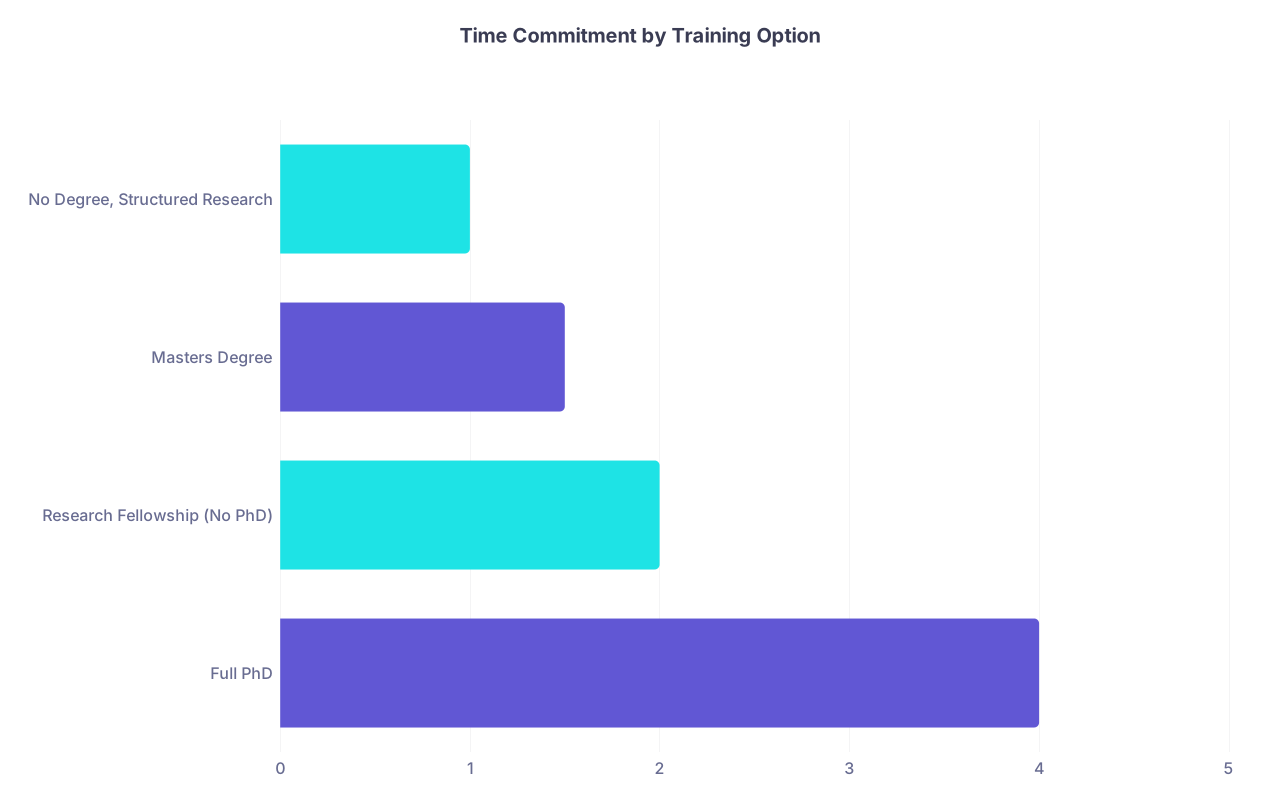
| Category | Value |
|---|---|
| Full PhD | 4 |
| Research Fellowship (No PhD) | 2 |
| Masters Degree | 1.5 |
| No Degree, Structured Research | 1 |
If you primarily want:
- Fellowship competitiveness: Often, a consistent record of quality projects and strong letters beats a PhD with mediocre output.
- Skills in statistics, QI, education research: A targeted masters and good mentors might be more efficient.
- A taste of research: You absolutely do not need a full PhD for that.
The PhD makes the most sense if you are aiming at high‑end, grant‑funded research as a core part of your identity, not an add‑on.
8. How to Pressure‑Test Your Decision Before You Commit
Here’s a practical three‑day stress test to see if you’re serious about the PhD or just attracted to the idea.
Day 1: Talk to three people who did it
- One who loved their MD‑PhD path and is now a successful physician‑scientist.
- One who did a PhD during or around residency and is neutral about it.
- One who considered it and walked away.
Ask all three:
- “What’s one thing you did not understand before starting that you wish you had?”
- “If I were your sibling, with my situation, would you tell me to do it?”
- “What did you actually do day-to-day during the PhD?”
Day 2: Shadow your potential future
If you can, spend half a day in the lab or research group of the PI you’d likely work with. Watch:
- How the PI interacts with trainees.
- How often people are there late.
- Whether people look engaged or just trapped.
If that half‑day bores you or drains you, imagine three to five years of it.
Day 3: Write your “future CV” for both paths
Make two one‑page pretend CVs, five to seven years from now:
- Path A: You did the PhD.
- Path B: You didn’t.
Include:
- Job title
- Clinical role
- Research/teaching activities
- Grant or project types
- Rough numbers of publications
- Personal life basics: location, family state, etc. (you can be approximate)
If Path A doesn’t clearly look and feel more aligned with who you want to be, that’s telling.
9. Making the Call: When You Should Say Yes vs No
Let me be blunt.
You should strongly consider saying YES if most of these are true:
- You already spend your limited free time chasing research ideas because you like it, not because you “should.”
- You have at least one potential mentor with a serious track record and a clear project niche you care about.
- The structure is solid: guaranteed return to residency, board eligibility protected, funding stable, realistic 3–4 year timeline.
- You’re okay with delaying attending life and money for several years because the work itself excites you.
- You can articulate a future where your main identity is “physician‑scientist” or “research‑heavy academic clinician,” not “full‑time clinician who also does a little research.”
You should seriously lean NO if:
- Your main drive is fear: fear of not matching top fellowship, fear of not being “academic enough,” fear of general career uncertainty.
- You’re exhausted and just want relief from clinical grind. You might just need a vacation or a more humane rotation schedule.
- There’s no specific mentor or research area that lights you up; you just like being a high achiever.
- The program’s track record is weak or chaotic, with many half‑finished PhDs and frustrated trainees.
- You actually see yourself in full‑time or majority clinical work, maybe with QI, leadership, or teaching, and research is secondary.
And here’s the uncomfortable truth: saying no to a funded PhD does not mean you’re “less than” academically. It might mean you actually understand what kind of career you want better than your peers.
10. How to Communicate Your Decision Without Burning Bridges
Once you’ve decided, you still have to say it out loud to people with power.
If you’re saying YES:
- Email both your PD and the PhD program lead:
- Confirm in writing: structure, duration, funding, your return to residency, and any conditions.
- Schedule a formal planning meeting to map your timeline.
- Ask explicitly about expectations: publications, courses, teaching, committee work.
If you’re saying NO:
You want to decline clearly but keep doors open for future research opportunities.
Example script to your PD or the research director:
“I’ve thought hard about the funded PhD slot and I’m grateful for the offer. After looking at my long‑term goals and personal situation, I don’t think a full PhD is the right fit for me right now. I’m still very interested in being involved in research during residency and possibly through a shorter research fellowship or masters in the future. I’d really value your advice on how to build a strong research profile within that framework.”
That tells them: you’re serious, not flaky, and still engaged.
Do not over‑justify. Long, tortured explanations invite debate. You are allowed to choose the career that fits your life.
Your Next Step Today
Do one concrete thing right now:
Open a blank document and write two paragraphs, no more than 200 words each:
- Why I would say YES to this funded PhD.
- Why I would say NO to this funded PhD.
Then read both out loud to yourself.
If one of them clearly sounds more like you—and more like the life you want—trust that. And if it doesn’t, you’re not ready to decide; book meetings this week with your PD, a potential mentor, and one resident who took a similar path and get the missing information before you commit.