
The way most students compare MD and PhD money is wrong—and dangerously so.
You’re not just choosing a degree. You’re choosing a financial structure that will shape your 20s, 30s, sometimes your entire career. And people routinely blow this decision because they evaluate stipends and debt in lazy, short‑sighted ways.
Let me walk you through the wrong ways first—because that’s where most people get trapped.
1. The Single Biggest Mistake: Staring at Stipends, Ignoring Time
Everyone loves the “free” PhD or MSTP (MD/PhD) pitch.
- “You get paid to go to school.”
- “You won’t have any loans.”
- “You’ll come out ahead.”
This is how you get talked into a 7–9 year detour without ever running the numbers properly.
The trap: Comparing annual stipend vs annual tuition
You look at:
- PhD stipend: say $34,000/year, tuition covered
- MD cost: say $65,000 tuition + $25,000 living = $90,000/year, all via loans
So your brain screams: “I gain $34k vs lose $90k each year. PhD wins by $124k/year!”
That’s the wrong comparison. You’re missing the key variable: time.
Let’s say:
- PhD: 6 years of $34k → $204,000 total pre‑tax income
- MD: 4 years of loans, then you start residency at ~28–30
Those “extra” years in a PhD have an opportunity cost. You’re not in residency. You’re not earning attending wages. You’re delaying the highest earning decades of your life.
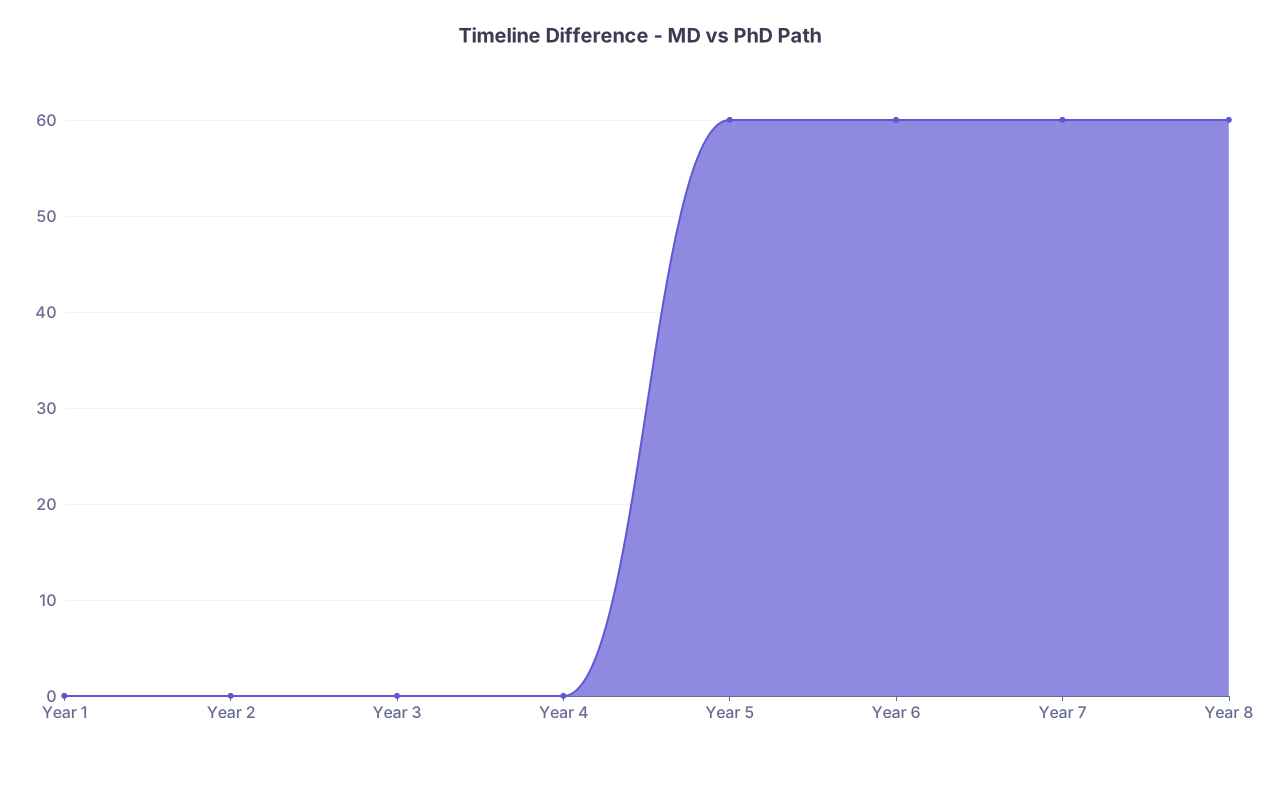
| Category | Value |
|---|---|
| Year 1 | 0 |
| Year 2 | 0 |
| Year 3 | 0 |
| Year 4 | 0 |
| Year 5 | 60 |
| Year 6 | 60 |
| Year 7 | 60 |
| Year 8 | 60 |
Quick and dirty (example numbers, but directionally right):
MD‑only:
- Age 22–26: med school → $0 income, ~$350k loans
- Age 26–29: residency/fellowship → ~$65k–75k/year
- Age 30+: attending → $220k–400k+ depending on specialty
PhD → then maybe MD or not:
- Age 22–28 or 30: PhD → $30–40k/year
- Then maybe postdoc at $60–70k, then faculty job at $100–150k (if you land one)
- Or transition later to MD, pushing clinical income even further out
Those PhD years are not “neutral.” They are lost years of higher earning potential.
Do not compare:
- $34k vs $0
You should compare:
- 6 years at $34k vs 6 years of:
- 4 med school years (debt), followed by
- 2 residency years with $65–75k salary and serious career momentum
If that sentence made your head hurt, good. This is exactly the part people skip.
2. Pretending a Stipend Is Equal to a Job Salary
Another major mistake: looking at a PhD stipend and thinking, “$36k/year isn’t bad for a grad student.”
Sure. Until you realize how thin that money actually is after taxes, location, and no real benefits compared to proper employment.
Here’s how students misjudge this:
- They treat $36k in Boston like it’s $36k in a low‑COL city
- They forget health insurance costs, fees, and mandatory university charges
- They ignore that raises are usually token (1–3%/year, if that)
- They confuse “enough to survive” with “financially smart for 6–8 years”
| Item | Amount (Annual, Example City) |
|---|---|
| Stipend (gross) | $36,000 |
| Federal/State taxes | -$5,000 |
| Net take-home | ~$31,000 |
| Rent + utilities | -$15,000 |
| Food | -$5,000 |
| Transport/phone/internet | -$3,000 |
| Remaining (all else) | ~$8,000 |
That $8,000 has to cover:
- Clothing
- Travel to conferences or home
- Emergencies
- Maybe saving a token amount
You don’t build financial security on a stipend. You tread water and hope nothing big goes wrong.
The mistake isn’t doing a PhD with a modest stipend. The mistake is telling yourself:
- “I’m getting paid to go to school, so I’m better off than the MD going into debt.”
You’re not “better off.” You’re trading debt now for lost income and compounding later.
3. Ignoring How Debt Actually Behaves Over Time
People wildly underestimate how debt functions in an MD path and overestimate how “debt‑free” a PhD path makes them.
The lazy thought process looks like this:
- MD: “I’ll be $300–400k in debt. That’s terrible.”
- PhD: “No debt. I’m safe.”
That’s incomplete at best, misleading at worst.
The wrong way: Looking only at principal
You see:
- MD: $350k loans
- PhD: $0 loans
You stop there. You don’t ask:
- How fast can an attending pay down $350k if they’re smart for 5–7 years?
- What will that same period look like for a PhD‑only scientist at $90–130k (if they get a TT job at all)?
- What interest options (IDR, PSLF, refinancing) exist in the MD route?
- How much retirement savings are being delayed on the PhD route?
Here’s the brutal truth: a lot of MDs who live reasonably for 5–10 years post‑training can wipe out their student debt and then enjoy 20–30+ years of high income.
Meanwhile, many PhDs:
- Start saving for retirement later
- Struggle with job instability
- May end up in lower‑paying roles than they expected
- Still need to fund housing, kids, and life with a much smaller income base
The mistake is treating:
- MD = “eternal debt prison”
- PhD = “clean slate”
That’s fantasy. MD debt is large, yes. But it’s backed by a high, relatively stable earning potential in most specialties. PhD “no debt” is not backed by equivalent earning power or stability.
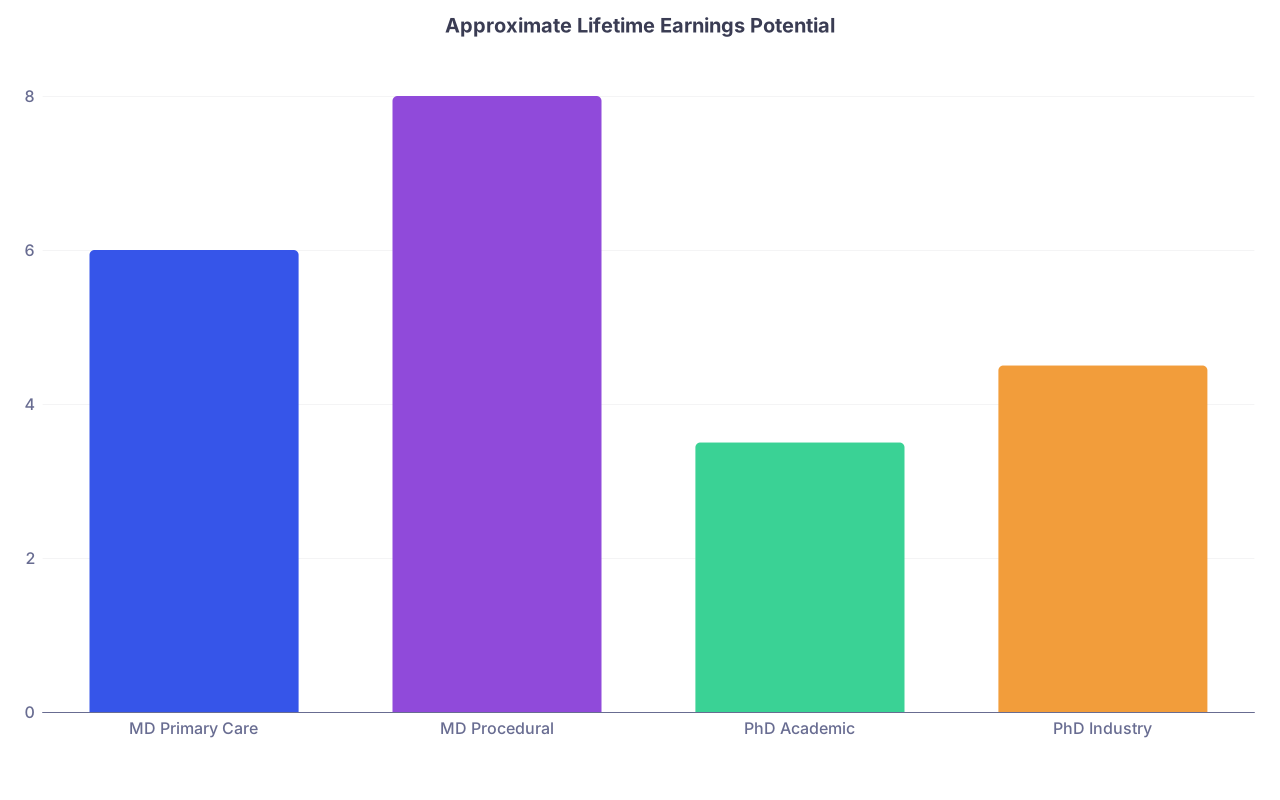
| Category | Value |
|---|---|
| MD Primary Care | 6 |
| MD Procedural | 8 |
| PhD Academic | 3.5 |
| PhD Industry | 4.5 |
(Values are rough millions over a career, not precise. Direction matters more than digits.)
4. Being Blind to Career Fit and Forcing the Math to Justify Ego
Another subtle disaster: using money math to justify a degree you want for ego reasons.
I’ve seen it play out like this:
Student who loves research but is scared of clinical responsibility says:
- “The PhD is smarter financially because I won’t have debt.”
Student who hates research but feels guilty “wasting their MCAT score”:
- “MD is smarter because PhDs are poor and the professor track is dying.”
Both are rationalizing. They start with what they emotionally want, then weaponize partial financial arguments to defend it.
The mistake: you twist the stipend/debt numbers to bless a choice that doesn’t match your day‑to‑day preferred work.
If you loathe long bench days, failed experiments, and grant writing?
- I don’t care how “free” the PhD is. You’re buying misery with a stipend.
If you hate sick people, complicated human emotions, and on‑call life?
- I don’t care how “high earning” the MD is. You’re buying burnout with a loan package.
Money should support a career fit decision, not substitute for it.
5. Ignoring Location, Cost of Living, and Stipend Fine Print
Another classic move: treating all stipends as equal and all debt as equal.
They aren’t.
Mistakes I see constantly:
- Comparing a $36k PhD stipend in San Francisco to a $36k stipend in Indianapolis as if they’re identical
- Forgetting that some programs:
- Add “fees” that quietly eat $1–3k/year
- Offer subsidized vs unsubsidized health insurance
- Have summer funding gaps or “teaching required” strings attached
And on the MD side:
- Ignoring cheaper state schools because the shiny private school gave a small scholarship
- Not noticing that some MD programs:
- Are in areas with very low rent
- Have strong in‑state tuition protections
- Offer meaningful need‑based aid
| City/Path | Stipend/Salary | COL Index* | Effective Feel |
|---|---|---|---|
| PhD in SF | $40,000 | 180 | Very tight |
| PhD in Midwest | $34,000 | 95 | Manageable |
| MD Loans (Midwest) | $0 income | 95 | Debt but lower living costs |
*COL Index: 100 = average US
If you’re not adjusting stipends and later salaries for cost of living, you’re comparing cartoons, not real options.
6. Overvaluing “Prestige Stipends” and Underestimating Burnout Risk
One more financial mirage: the “elite program glow.”
Students say things like:
- “This top‑10 PhD program offers $39k and says their grads get great jobs.”
- “This MSTP offers full tuition + stipend, it would be stupid to say no.”
Here’s what often goes unsaid:
That “top‑10” may have:
- Horrible PI cultures where 6–7 years is considered “fast”
- A norm of weekend/evening work that makes side income impossible
- Zero protections if your advisor’s funding dries up
That MSTP may:
- Push you toward a narrow physician‑scientist track you don’t actually want
- Double your training time before real attending income
- Leave you spread so thin between clinic and lab that you burn out early
The mistake is letting:
- “Fully funded”
- “Prestigious”
- “Top‑tier research environment”
override all other signals:
- Attrition rates
- Time to degree
- PI reputation for burning students
- Alumni placement in jobs you actually want
Money attached to a toxic or misaligned environment is a trap, not a gift.
7. Forgetting How Taxes, Benefits, and Retirement Work
Another quiet mistake: you treat all income as equal “money coming in.” It isn’t.
PhD stipend:
- Often no retirement match
- Limited or student‑style health insurance
- Sometimes no FICA contributions (affects Social Security eligibility later)
- Minimal ability to save/invest
MD resident salary:
- Actual employee status
- Retirement account options (even if small)
- More robust health benefits
- Better disability coverage
Attending physician salary:
- Real retirement contributions
- Equity possibilities in private practice
- Capacity to invest aggressively for compounding
If you compare only:
- “$36k stipend vs $0 in med school”
you’re erasing:
- 401(k)/403(b) matches
- Health and disability protections
- Social Security quarters earned
- Investing years
That stuff compounds. Quietly. For decades.
A PhD path that delays those benefits by 6–8 years is not “free.” It’s just silently expensive instead of visibly expensive.
8. Treating MD vs PhD as a Pure Financial Optimization Problem
This is the meta‑mistake.
You act like you’re choosing between:
- Stock A: MD
- Stock B: PhD
And your only job is to maximize net present value.
Here’s the truth:
If you genuinely want to be primarily a clinician:
A pure PhD for the “free stipend” is almost always a financial and professional misfire.If you genuinely want to be a full‑time researcher:
Going MD‑only for the income, then resenting clinical work while doing minimal research, is a waste of time and money.If you want to be a physician‑scientist (and really mean it):
MD/PhD can be fantastic—but only if you understand it’s a long, demanding path with opportunity cost bigger than just “extra years of school.”
The money analysis should filter out obviously bad moves, not dictate everything:
- If doing an MD would put you into debt levels you cannot handle even with responsible attending income (e.g., brutal private loans at double‑digit interest, terrible financial literacy, no backup): that’s a red flag.
- If doing a PhD locks you into a field with awful job outcomes and you’re already lukewarm on it: that’s a red flag.
You’re not picking a stock. You’re picking a life pattern.
9. A Better Way to Compare (Without Doing a Full MBA)
Let me give you a stripped‑down, “don’t be reckless” checklist.
When comparing MD vs PhD vs MD/PhD, do NOT:
- Compare annual numbers only. Always expand to at least 10–15 years.
- Ignore time to independent earning. That’s the backbone of your calculation.
- Pretend stipends equal salaries. They don’t. Look at:
- COL
- Benefits
- Ability to save
- Treat “no debt” as automatically superior. Ask, “No debt but also what income?”
- Let prestige override fit, culture, and exit opportunities.
Instead, at minimum:
Sketch a rough timeline for each path:
- Age X–Y: student/stipend/loans
- Age Y–Z: trainee (resident, postdoc, etc.)
- Age Z+: stable income
Assign:
- Realistic income ranges at each phase
- Ballpark loan totals (for MD)
- Realistic time‑to‑degree (not brochure fantasy)
Then ask a blunt question:
“If everything goes normally—not perfectly, not horribly—can I live with the financial profile of this path for 10–15 years and the day‑to‑day work it leads to?”
If the answer is “I hate the work, but the math looks good,” or “I like the work, but the math is catastrophic,” you’re headed toward regret.
FAQ: How Not to Evaluate Stipends and Debt in MD vs PhD Decisions
1. Is it a mistake to choose a PhD mainly to avoid MD debt?
Yes. If your core interest is clinical medicine and you’re using a PhD to dodge loans, you’re solving the wrong problem. You’re sacrificing decades of clinical work you might actually enjoy—and much higher lifetime earning—just to feel better in your 20s. Fix your financial literacy and school choice, not your entire career.
2. Is an MD always financially superior to a PhD?
No, but for most students who actually want to be clinicians, the MD path has a much stronger financial upside despite the scary loan number. The PhD can make sense financially if: you love research, choose a field with real industry demand, and don’t chain yourself to low‑paying, unstable academic roles for 15 years.
3. Are MD/PhD (MSTP) programs a “free MD” and therefore a no‑brainer?
That’s the myth. The reality: you trade 3–5 extra years of training, delay attending income, and commit to a dual‑role career that not everyone enjoys long term. If you don’t genuinely want to do serious research as a physician‑scientist, a “free MD” via MSTP is a very expensive mistake in time and opportunity.
4. How big of a mistake is it to ignore cost of living when looking at stipends?
Huge. A $36k stipend in a high‑COL city can feel suffocating, while a $32k stipend in a lower‑COL area can actually be survivable. The same goes for resident and attending salaries. Always adjust mentally for rent, taxes, and local expenses—or you’re comparing fiction.
5. What’s the simplest way to avoid financial mistakes in this decision?
Do a 15‑minute sanity check for each path: write down (1) years in training, (2) approximate income each year, (3) total MD debt, and (4) realistic first stable salary. If any path looks like “long training, low income, and I’m not even excited about the work,” that’s your red flag. Walk away.
Key takeaways:
- Don’t fixate on stipends or loan totals in isolation; the timing and size of future income matter more.
- “No debt” is not automatically a win, and “big debt” is not automatically a loss—context, career fit, and opportunity cost decide that.
- If the numbers are driving you toward a path you already know you won’t enjoy, the math isn’t saving you. It’s just dressing up a bad decision.