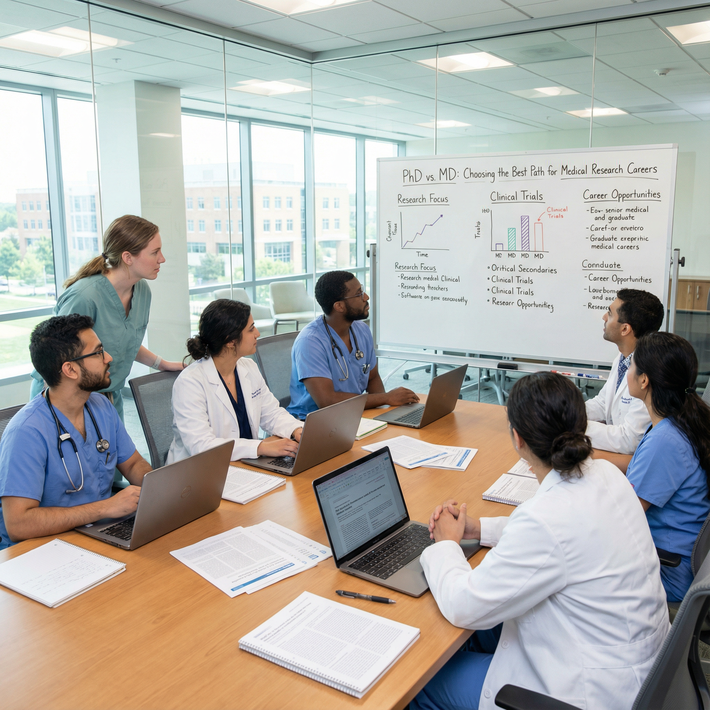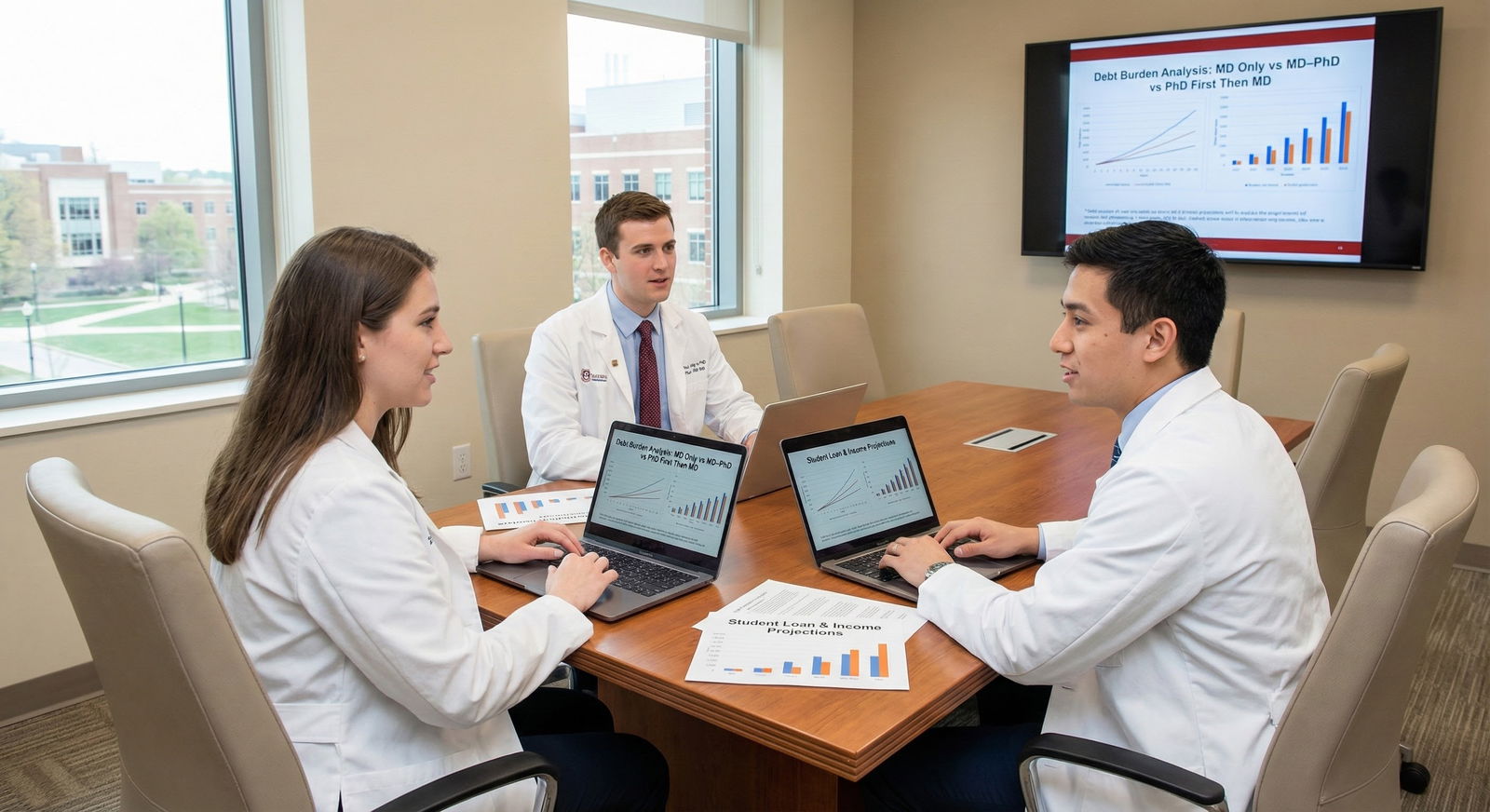
The biggest myth for international PhDs is this: “My doctorate and research will fast‑track me into US medical training.” It will not. If you want US MD training, you’re basically starting over in a rigid system that does not care how many papers you have.
But. You do have advantages if you play this right.
This is a playbook for a very specific person: you already have (or are finishing) a PhD outside the US, you’re serious about clinical medicine, and you want to move into US MD training—either full medical school or some hybrid path that leads to residency and clinical work.
If that’s you, here’s how to think, decide, and execute.
1. First, be brutally clear on what you actually want
There are three very different goals that get mixed up:
- “I want to practice medicine in the US as a physician.”
- “I want to do clinical research and have some patient-facing role, but not necessarily full independent practice.”
- “I want to be a physician-scientist (MD + PhD style life) in the US academic system.”
Those goals produce very different plans.
Let me be direct:
- If you want to practice independently and sign orders: you need to complete US medical training or its accepted equivalent (either US MD/DO or ECFMG-certified international MD plus US residency).
- If you mainly want research with some clinical flavor: you may not need an MD at all. You might need:
- A strong research/clinical trial portfolio
- A faculty appointment
- Possibly limited, supervised clinical roles depending on your degree (psychology, pharm, etc.)
- If you want the full physician-scientist profile: you are looking at med school + residency + protected research time. Best-case: MD or MD/PhD at a research-heavy US institution.
So before you do anything else, answer this in a sentence:
“In 10 years, I want my day-to-day to be mostly: [clinic / wards / OR / lab / clinical trials / admin].”
Write that down. If “clinic/wards/OR” isn’t at least half the answer, an MD may be an overkill and a bad use of years.
2. Figure out where your current credentials actually land in the US system
The US doesn’t really care what your business card says. It cares what your degree type is in its framework.
You need to classify yourself:
| Your Background | How US Medical System Sees You |
|---|---|
| International MD + PhD | IMG physician with extra research strength |
| International non-medical PhD (e.g. Bio, Chem) | Researcher; not a physician |
| International clinical doctorate (e.g. PharmD, DPT) | Allied health; not an MD |
| International MD (no PhD) | IMG physician |
| US PhD (no medical degree) | Research faculty / scientist pipeline |
If you:
Already have an MD from outside the US:
Your path is ECFMG → USMLE → residency (Match). You usually do not go back to US MD school. The MD is your primary entry ticket; the PhD is a booster.Only have a PhD (no MD):
In the eyes of the US medical system, you’re not a physician. If you want to be one, that means:- Applying to US MD or DO programs (or possibly Caribbean, with big caveats)
- Completing full med school + residency
Do not assume your PhD in “Medical Sciences” or “Clinical Pharmacology” will shortcut this. It won’t.
3. Core decision: med school vs leveraging your PhD
Path A: You do US medical school (MD or DO)
This is the “rip the band-aid off” route. You accept you’re starting over and go full in.
This makes sense if:
- You’re under ~35–38 and willing to commit another 7–10+ years.
- You want substantial direct patient contact and responsibility, not just token clinic time.
- You want the credibility and flexibility of being a US-trained physician.
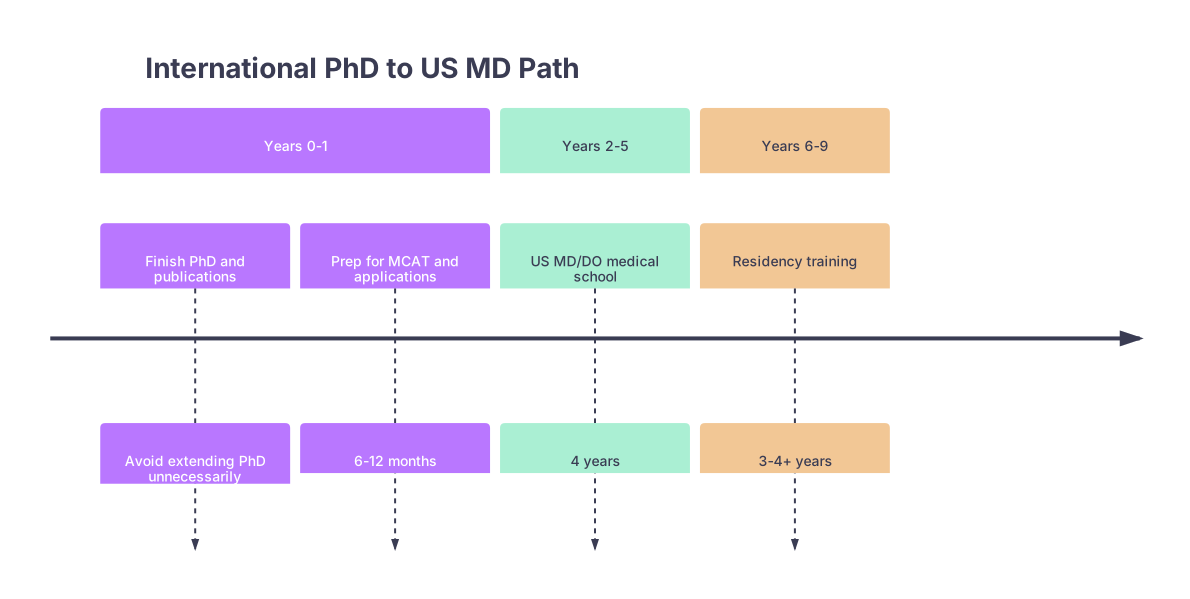
Timeline snapshot (for a 30-year-old PhD finisher):
| Period | Event |
|---|---|
| Years 0-1 - Finish PhD and publications | Avoid extending PhD unnecessarily |
| Years 0-1 - Prep for MCAT and applications | 6-12 months |
| Years 2-5 - US MD/DO medical school | 4 years |
| Years 6-9 - Residency training | 3-4+ years |
Path B: You do not do med school; you leverage your PhD
You stay on the research/clinical research/adjacent side.
You might:
- Become a clinical research faculty at an academic medical center.
- Run clinical trials, work closely with physicians, maybe even co-lead translational projects.
- Later pick up limited clinical certifications depending on field (e.g., genetic counseling, some psychology fields, etc.).
This path is underrated and usually gives you a faster route to:
- A visa
- A US academic appointment
- Publications, grants, reputation
Without giving up a decade to retrain.
If your main frustration is “I want more impact on patient care” and not “I must personally manage patients,” then path B is often smarter.
4. If you’re PhD-only and choosing US MD: exact playbook
Assume you’re an international PhD in, say, molecular biology in Germany, finishing in 12–18 months, and you want US MD training.
Here’s what you actually do.
Step 1: Clean up your academic profile
US med schools care about:
- Undergrad GPA (converted to US system via WES or internal tools)
- Science coursework (chem, physics, bio, orgo, math)
- MCAT
- Clinical exposure
Your PhD impresses some committees, but only after the basics clear.
Actions:
- Get all your transcripts translated and ready.
- Run them through a credential evaluation (WES or similar) if schools suggest it.
- Confirm you have the prerequisites (1 year each of:
- General chemistry with lab
- Organic chemistry with lab
- Biology with lab
- Physics
- Math / statistics (varies)
- English (varies)
If you’re missing these, you need:
- A post-bacc (formal or informal) in the US or at least structured coursework somewhere that will be taken seriously.
Step 2: Heavy lift – the MCAT
Your PhD does not exempt you from the MCAT.
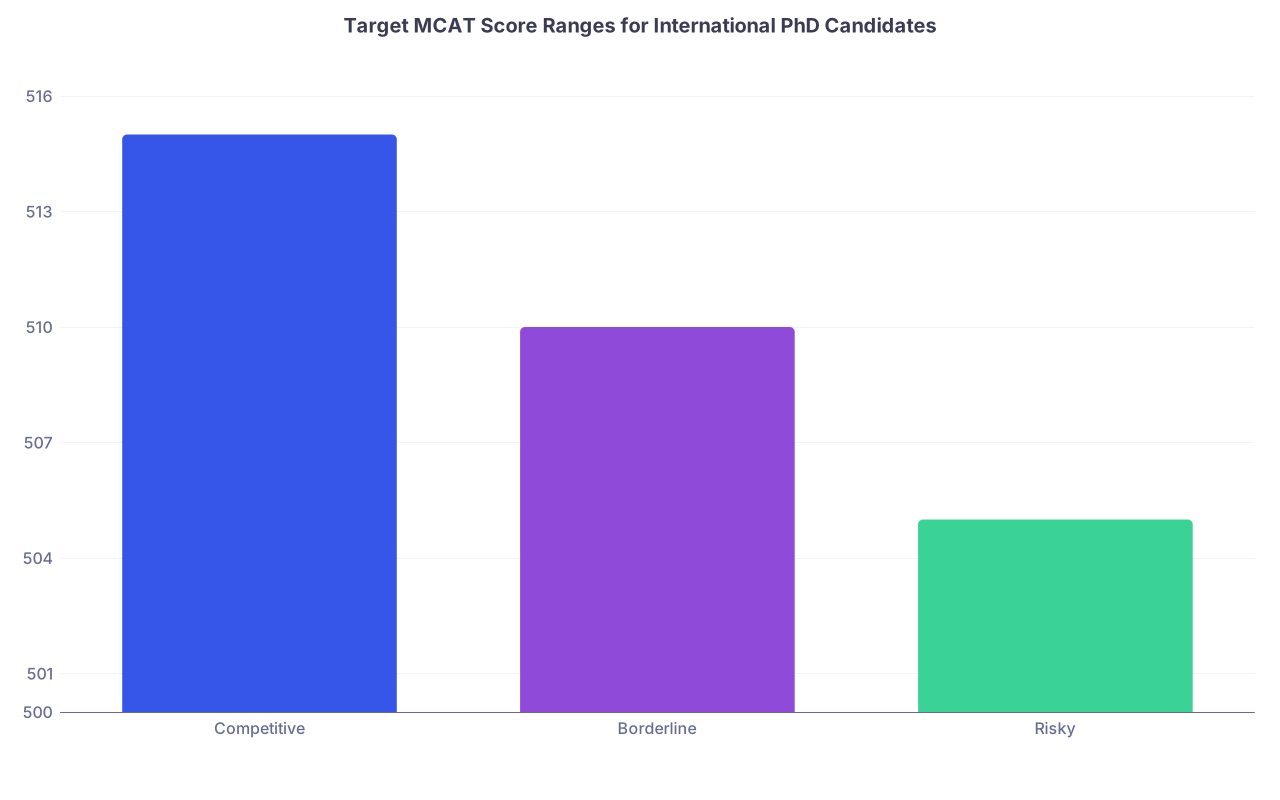
What I’ve seen: international PhDs underestimate this exam badly. They think, “I published in Nature, this can’t be that hard.” Then they score 506 and get screened out by most MD programs.
You want at least 515+ if you’re aiming for US MD as an older, international, career-changer applicant. Not because 510 is “bad,” but because you’re a non-standard risk for schools and higher stats reduce that risk.
Plan:
- 6–12 months of dedicated prep, balanced with PhD finishing.
- Treat it as a project, not a side hobby.
| Category | Value |
|---|---|
| Competitive | 515 |
| Borderline | 510 |
| Risky | 505 |
Step 3: Build US-style clinical and shadowing experience
US med schools are suspicious of applications with zero real exposure to US healthcare.
You need:
- Shadowing of US physicians (ideally 40–100+ hours).
- Some clinical volunteering:
- Free clinics
- Hospice
- ER volunteer
- Scribing (if you can get a visa that allows work)
If you’re still abroad, this is harder. You might:
- Do a short US visit (tour of institutions, shadowing lined up via contacts).
- Start with volunteering in your own country while planning a US trip later.
The key is: you must be able to show you’re not naive about clinical life and US healthcare realities.
Step 4: Decide MD vs DO and school type
You’ll likely be most competitive at:
- Mid-tier US MD schools that value research (e.g., many state schools, some privates).
- DO schools if your GPA/MCAT are slightly weaker but your story is strong.
Be strategic:
| School Type | Pros | Cons |
|---|---|---|
| Top 20 MD | Love research; MD/PhD vibe fits you | Extremely competitive; visas more complex |
| Mid-tier MD | Reasonable shot with strong stats | Some are cautious about older students |
| DO schools | More flexible on stats and background | Slightly less research-heavy environments |
| Caribbean MD | Fast acceptance possible | High risk for residency matching |
Do not touch Caribbean schools unless you fully understand the match risk and have exhausted US options.
Step 5: Personal statement and narrative
Your biggest weapon is your story—if you don’t botch it.
Common mistake: turning the personal statement into a research proposal or a CV in prose.
What you must show:
- You understand clinical work is very different from research.
- You’re not running to medicine because your academic job market is bad.
- There were real patient-centered reasons you shifted, not just “I like science.”
Concrete moves:
- Anchor the essay in 1–2 patient or clinical stories, even if from shadowing or volunteering.
- Weave in how your PhD:
- Gave you comfort with uncertainty.
- Taught you to think systematically.
- Showed you the limits of bench science without clinical translation.
5. If you already have an international MD + PhD
Totally different ballgame.
You don’t go back to med school. Your path is:
- ECFMG Certification
- USMLE Step 1, Step 2 CK (Step 3 later, often during or after residency)
- US clinical experience (observerships, externships)
- ERAS application → Match
Where your PhD actually helps:
- Academic internal medicine, neurology, psychiatry, pathology, radiation oncology, some surgical subspecialties that value research.
- Programs that have physician-scientist tracks (PSTPs).
Where it doesn’t help much:
- Community programs that just want service coverage.
- Highly competitive surgical fields if your USMLE scores are mediocre.
You should think less about “Do I need US MD training?” and more about:
- “Am I targeting research-heavy residencies that want me long term?”
- “Can I align my publications with the specialty I’m aiming for?”
6. Visa, licensing, and institutional realities you can’t ignore
The bureaucratic side kills a lot of well-intended plans.
Visa: F-1 vs J-1 vs H-1B
If you go to US med school:
- You’re likely on an F-1 student visa.
- After graduation, residency often uses a J-1 (via ECFMG) or H-1B depending on the institution and scores.
If you go straight into residency as an international MD:
- Most IMGs end up on J-1 visas.
- H-1Bs are possible but more limited and require Step 3 early.
If you come as research faculty on a PhD base:
- You’ll usually be J-1 Research Scholar or H-1B.
- This is often easier than med school visas, frankly.
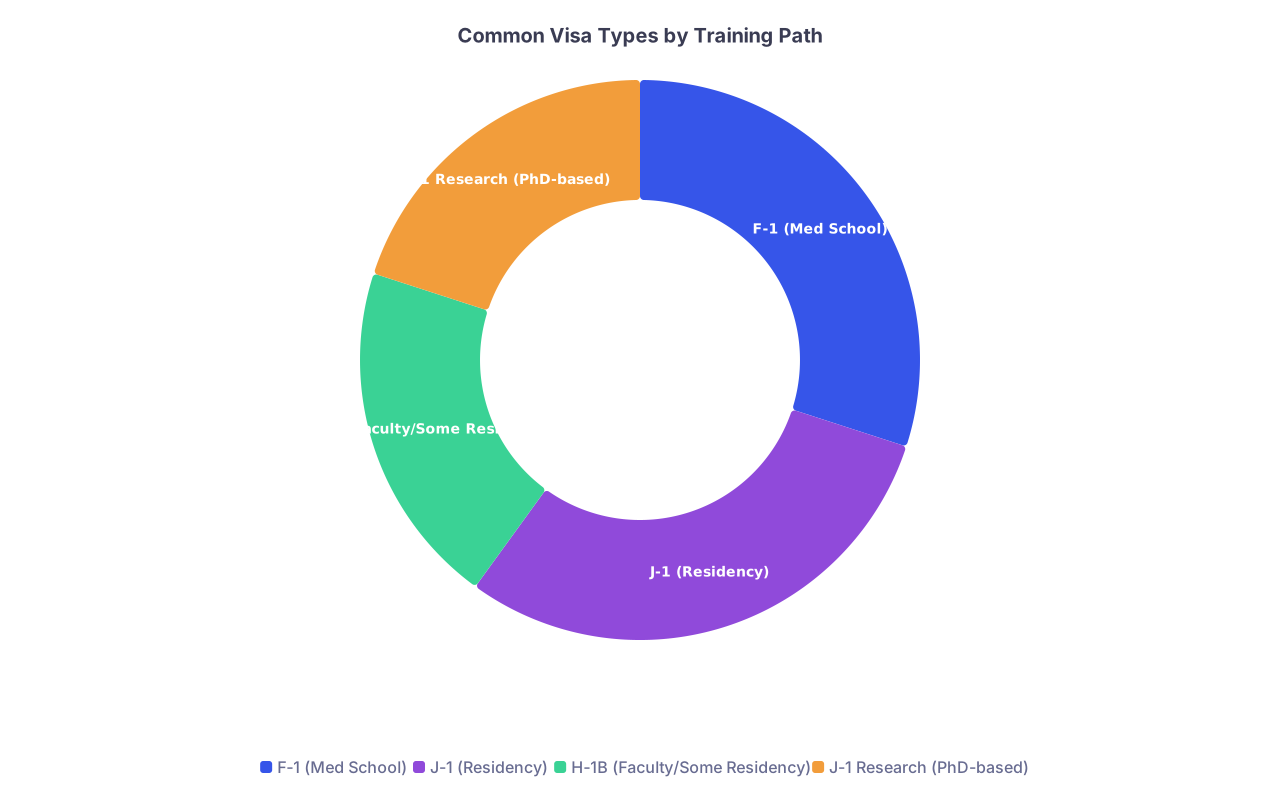
| Category | Value |
|---|---|
| F-1 (Med School) | 30 |
| J-1 (Residency) | 30 |
| H-1B (Faculty/Some Residency) | 20 |
| J-1 Research (PhD-based) | 20 |
You need to think through:
- Are you willing to accept J-1 waiver obligations later (e.g., working in underserved areas)?
- Does your long-term plan involve green card / permanent settlement?
Don’t ignore this until the end—it shapes which programs you can/will apply to.
7. Where your PhD is a genuine asset vs a distraction
Your PhD helps you in three specific ways:
Admissions optics
You look capable of graduate-level work. Committees at research-heavy schools like that.Scholarship and funding
Some med schools love PhDs because they enhance their research profile.
At a few places, it can even help with internal scholarships.Long-term career
Once in residency or faculty, your publications and grant potential matter a lot.
Where it hurts or at least complicates things:
- Age bias. Programs don’t say it officially, but a 40-year-old M1 is evaluated differently than a 24-year-old.
- “Will you leave?” fear. They’re wary that you’ll prioritize research and drop out of demanding clinical tracks.
- Over-intellectualizing. Some committees smell “doesn’t actually like people, just ideas.”
Your job in every essay and interview:
- Lean into your people-facing experiences.
- Show that you understand the grind: nights, weekends, sick patients, paperwork.
- Make your PhD support that story, not overshadow it.
8. Tactical planning: timelines and milestones
If you’re serious, you need a 3–8 year macro plan, not vibes.
Here’s a simple layout for a PhD-only candidate aiming for US MD:

| Step | Description |
|---|---|
| Step 1 | Now - Assess goals |
| Step 2 | Check prerequisites and GPA |
| Step 3 | Plan/post-bacc coursework if needed |
| Step 4 | 6-12 months MCAT prep |
| Step 5 | Apply AMCAS/AACOMAS |
| Step 6 | Interview season |
| Step 7 | Matriculate to med school |
And rough ages/years (adjust to your reality):
| Age | Stage |
|---|---|
| 28–32 | Finish PhD, start MCAT prep |
| 29–34 | Apply to US med schools |
| 30–35 | Start med school (M1) |
| 34–39 | Graduate med school |
| 37–44 | Finish residency |
You must be okay with those numbers. If seeing “finish residency at 42” makes you sick, reconsider.
9. Red flags and situations where you probably should not pursue US MD
I’m going to be blunt. You probably should not do US MD if:
- You’re already mid–40s and just starting to think about it.
- Your academic record is weak (low undergrad GPA, poor standardized test history).
- You hate bureaucracy and long training hierarchies.
- You mainly want title/status, not the job itself.
You might instead:
- Double down on your PhD expertise.
- Get into clinical research leadership at a big US academic center.
- Build a niche as “the scientist who makes clinical trials actually work,” which can be extremely impactful.
If you ignore this section and push ahead anyway, fine—it’s your life. But do it with eyes open.
10. How to actually start: first 90 days
Concrete 3-month plan if you’re serious and reading this today:
Month 1:
- Write that single sentence: “In 10 years I want my day-to-day to be mostly: ___.”
- Gather all transcripts and syllabi from undergrad and grad school.
- Map which US med school prerequisites you have and what’s missing.
Month 2:
- Register for a MCAT date 6–12 months out.
- Pick a prep plan and schedule out weekly study hours.
- Start contacting:
- US physicians (email, LinkedIn, alumni networks) about shadowing.
- Med school admissions offices with specific questions about international PhD credentials.
Month 3:
- Decide Path A (US MD) vs Path B (no med school, leverage PhD).
- If Path A:
- Plan post-bacc or needed coursework.
- Create a school list (MD and DO) with realistic tiers.
- If Path B:
- Identify 10–20 US institutions where your research fits.
- Start emailing PIs about postdoc / instructor / research positions.
Do not spend 12 more months “researching your options” without action. That’s just procrastination with better branding.
Key takeaways
- Your international PhD does not shortcut US MD training; you’re either doing full med school or leveraging your PhD in non-physician roles.
- Decide early: do you truly want the daily life of a clinician, or would a strong research/clinical research career scratch the itch without a decade of retraining?
- If you commit to US MD, treat it as a serious project: fix prerequisites, crush the MCAT, get US clinical exposure, and build a narrative where your PhD amplifies—not replaces—your case to become a physician.