
The worst career mistake MD‑PhDs make is negotiating like they are “lucky to be here” instead of realizing they are the most expensive asset on the floor.
You are not a standard hire. You are two careers in one body. If you negotiate your first job like a generic MD or a generic PhD, you will lock yourself into years of frustration, burnout, and missed opportunities.
Let me show you how to do this correctly.
Step 1: Decide What You Are Actually Selling
You cannot negotiate effectively until you are brutally clear on what you are selling and what the institution thinks it is buying.
For an MD‑PhD (or MD with heavy research, or PhD with heavy clinical integration), there are usually three archetypes:
- Clinically dominant with research on the side
- Research dominant with some clinical
- True split physician‑scientist (the unicorn everyone talks about and rarely supports correctly)
If you skip this step, you will get a job description that sounds great and a contract that quietly contradicts it.
Do this first:
- Write down your target breakdown (not what sounds noble; what you actually want):
- Clinical time (% of effort, e.g., 60%)
- Research time (%)
- Teaching/admin (%)
- Translate that into days per week.
For example:- 60% clinical = 3 days/week in clinic or OR or wards
- 30% research = 1.5 days/week
- 10% other = 0.5 day/week
- Rank your non‑negotiables (top 3 only):
- Protected research time?
- Start‑up funds?
- Lab space?
- Protected non‑clinical FTE written into the contract?
- Mentorship / track to promotion?
If your answer is, “I want to do 50/50 and I value everything equally,” you have already lost. You must choose clear priorities.
Step 2: Understand How You Actually Make or Lose Them Money
You will negotiate from a position of strength if you understand their financial calculus better than the person on the other side of the table.
Here is the real picture:
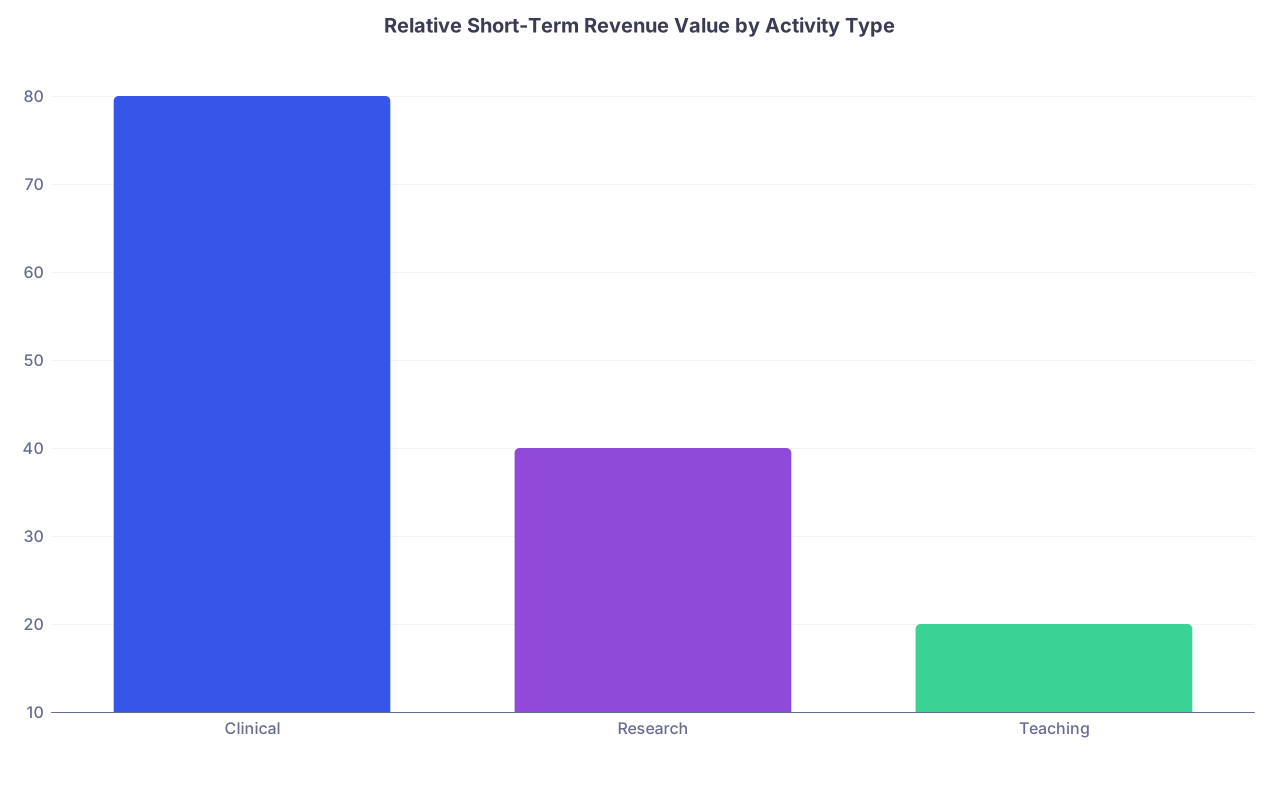
- Clinical time = immediate cash and RVUs.
- Research time = delayed, uncertain revenue, but prestige, grants, indirects, and recruitment value.
- Teaching = necessary but poorly funded; often a cost center.
| Category | Value |
|---|---|
| Clinical | 80 |
| Research | 40 |
| Teaching | 20 |
The actual numbers change by institution, but the relative direction does not.
To negotiate well:
Get specific about RVU expectations.
- Ask explicitly: “What is the expected annual RVU target for someone at 1.0 clinical FTE in this division?”
- Then: “At 0.6 clinical FTE, what is the expected RVU target?”
If they say, “We expect full‑time RVUs regardless,” that is a red flag.
Quantify your research value.
- Existing grants (K, R, foundation)
- Your likelihood of major grant funding in 3–5 years (based on track record)
- Hot field? High institutional priority area (e.g., AI in medicine, immuno‑oncology, health equity, big data)?
Departments invest in where they think indirects and prestige will flow.
Bring numbers, not vibes.
- “In my fellowship, I averaged X RVUs with 0.6 clinical FTE.”
- “Over the past Y years, I have brought in $Z in grant funding (or co‑authored N high‑impact papers in [specific journals]).”
You are demonstrating that you understand how your time translates into money and reputation for them. That changes the entire tone of negotiation.
Step 3: Decode the Offer Before You Argue About It
Most MD‑PhD job offers look better on paper than they feel 12 months later. The trap is in the details.
Ask for the following in writing:
| Category | What You Must Clarify |
|---|---|
| FTE & Effort Split | Exact % clinical, research, teaching/admin |
| RVU Expectations | Target for your % clinical FTE |
| Protected Time | Days per week, shielded from clinical duties |
| Start-up Package | Dollar amount, duration, allowable uses |
| Space & Resources | Lab/office space, staff support, cores access |
Do not trust “norms” or verbal reassurances. If it is not on paper, it is ephemeral.
Scrutinize these five areas:
FTE language.
- Better: “0.7 clinical FTE, 0.3 research FTE”
- Worse: “Full‑time faculty; expectation of significant research engagement.”
Protected time.
- Better: “Two full days per week on‑site protected research time, no regular patient care duties scheduled on those days, for three years.”
- Worse: “Approximately 30% time for research.”
RVU or clinical volume expectations.
- Are they adjusted to your clinical FTE?
- Are there penalties or salary withholds for under‑performance?
-
- Clinician‑educator vs. physician‑scientist vs. tenure track.
- What counts as “productivity” and how are mixed roles evaluated?
Start‑up and resource specifics.
- Dollar amount
- Duration (2 years vs. 5 years is a huge difference)
- What it can pay for (personnel, equipment, pilot data, statisticians, etc.)
If the draft offer is vague on these, your negotiation goal is simple: convert vague promises into precise commitments.
Step 4: Anchor Your Ask Around a Coherent Role
MD‑PhDs get into trouble when they piecemeal negotiate:
- “Can I have a bit more start‑up?”
- “Also more protected time?”
- “Also higher salary?”
That looks scattered and self‑serving. The department will resist.
Instead, you present a coherent role narrative, then negotiate the package that makes that role realistic.
Example:
“What I am looking for is a physician‑scientist role with 50% clinical and 50% research effort, focusing on early‑phase oncology trials. That means two non‑clinical days per week fully protected for trial design, regulatory work, and grant writing, plus one flex day that can be split. To be successful in that role, I will need:
– Clear 0.5 clinical FTE with RVU targets scaled accordingly
– Start‑up funding over three years to support a research coordinator and data analyst
– Commitment that I will not have routine inpatient weeks that cannibalize those research days.”
You are selling a package: a role that delivers something they want (program growth, grants, prestige) and a realistic structure to achieve it.
Use similar structure for other archetypes:
If you are clinical‑heavy with research on the side:
Emphasize your ability to generate high clinical revenue and champion translational or QI projects, but you need at least 10–20% structured non‑clinical time.If you are research‑dominant:
Emphasize your grant‑getting track record and how minimal clinical time makes you a better long‑term asset. Then protect that with explicit caps on clinical days.
Step 5: Negotiate the Five Big Levers (Not Just Salary)
Everyone fixates on base salary. MD‑PhDs should be far more aggressive about non‑salary items. That is where your dual training actually gets leveraged.
The five big levers:
Protected Time (Number One for MD‑PhDs)
- Ask in days per week over defined years.
- Example: “Two protected research days per week for three years, with no routine patient care or standing meetings scheduled during that time.”
- Add a clause that any temporary increase in clinical duties gets matched with a time‑limited duration and/or compensation.
Start‑Up Package
Think in categories, not just a lump sum:- Salary support for a research coordinator
- Partial support for a technician or analyst
- Pilot funds for data collection or small trials
- Equipment / core facility credits
- Statistical and regulatory support
Reasonable ask ranges vary wildly, but I have seen:
- Junior MD‑PhD in cancer center: $300k–$800k over 3–5 years
- Clinically heavy investigator: $100k–$300k
You justify this by tying each dollar to outputs:
- “This coordinator allows me to open and enroll in X early‑phase trials.”
- “These pilot funds will generate data for an R01‑level proposal in Y timeframe.”
Clinical Load & RVU Targets
Non‑negotiated RVUs will quietly destroy your research.You want:
- RVU target scaled linearly (or even a bit less) with your clinical FTE
- Clarity on what happens if you fall short (mentorship vs. punishment)
- Explicit caps on:
- Number of clinics per week
- Inpatient weeks
- Call expectations
Promotion Path & Mentorship
This is not fluff. Your future leverage depends on it.Negotiate:
- Clear appointment on a track that fits your goals (tenure, physician‑scientist, research track)
- A written mentorship plan:
- Primary research mentor
- Clinical mentor
- Chair/vice‑chair specifically responsible for career development check‑ins
- Annual review criteria that recognize both clinical and research contributions.
Salary & Incentives
Yes, you still negotiate salary.Gather data:
- AAMC benchmarks
- MGMA data
- Internal ranges if you can get them (people talk; listen)
Your leverage points:
- Existing grant funding
- Scarce skill set (e.g., surgical subspecialty + basic science lab in a hot area)
- Competing offers (this changes everything)
Do not be shy about asking:
- “Given my dual training and existing K‑award, I believe a starting salary at the 60–70th percentile of AAMC for my specialty and rank is appropriate, with RVU expectations aligned to my 0.6 clinical FTE.”
Step 6: Time Your Negotiation Like a Professional, Not a Trainee
The process timing matters more than most trainees realize.
Here is the basic flow you want:

| Step | Description |
|---|---|
| Step 1 | Initial Interest |
| Step 2 | Informal Conversations |
| Step 3 | Site Visit and Talk |
| Step 4 | Verbal Interest From Chair |
| Step 5 | Request Draft Offer |
| Step 6 | Detailed Review and Questions |
| Step 7 | Formal Counterproposal |
| Step 8 | Negotiation Rounds |
| Step 9 | Final Written Agreement |
Key timing rules:
Do not negotiate hard details before they are actually invested in you.
Wait until after:- They have brought you for a visit
- You have given a talk
- The chair or division chief has said, “We would like to recruit you.”
Ask for the draft offer before you make substantial counterproposals.
You need to see their starting point in writing.Take 3–7 days for review; respond with structured questions first.
Example email:- “Thank you for sending this. I am very excited about the possibility of joining your division. I have a few clarifying questions about FTE distribution, RVU expectations, and start‑up support before sending a formal response…”
Only then send a coherent, written counterproposal.
One document. Clear bullet points. No rambling.
Step 7: Use a Written Counterproposal That Sounds Like a Colleague, Not a Beggar
Most early‑career MD‑PhDs write terrible negotiation emails. Too apologetic. Too vague.
You want to sound like a future partner.
Structure your counterproposal like this:
- Opening paragraph: appreciation + restated enthusiasm + core role definition
- Section 1: Effort distribution and clinical expectations
- Section 2: Research support (protected time, start‑up, space)
- Section 3: Compensation & incentives
- Closing paragraph: invitation to discuss and flexibility
Example language (adapt for your details):
“Based on our conversations and the draft offer, I am very enthusiastic about the opportunity to build a translational immunology program within your division. To be successful in this role, I believe the following adjustments would align my effort with shared goals:
Effort Distribution and Clinical Responsibilities
– Appointment at 0.6 clinical FTE and 0.4 research FTE.
– Two full research days per week protected from routine clinical duties for the first three years.
– RVU target scaled proportionally from the standard full‑time target for this division, with understanding that major grant submissions are part of my productivity.Research Support
– Start‑up package of $400,000 over four years, to support a research coordinator, technician, and pilot studies.
– Dedicated wet lab space of approximately 400 sq ft with access to flow cytometry and genomics cores.Compensation
– Base salary at [X], which corresponds to approximately the [Y]th percentile for assistant professors in [specialty] with academic affiliations, reflecting my dual MD‑PhD training and ongoing K‑award support.I am very open to discussing how best to structure these elements to fit departmental norms. My goal is to ensure that the role we design sets us up for strong clinical performance and competitive R01‑level funding within the next several years.”
You are not begging. You are designing a business arrangement.
Step 8: Do Not Let “Dual Hat” Tasks Eat Your Research Life
MD‑PhDs are magnets for “special projects”:
- “Can you help us build this new program?”
- “We need someone with your background to lead this committee.”
- “You would be perfect to run this cross‑department initiative.”
These sound flattering. They quietly erase your research.
Protect yourself by:
Routing new roles through your FTE conversation.
Default response:- “This sounds interesting. How would this be reflected in my FTE and clinical/research expectations?”
Insisting major responsibilities come with reallocated time or resources.
- “If I were to lead this initiative, I would need 10% FTE protected, with an adjustment to clinical load and RVU targets.”
Saying no early in your appointment.
The first 3–5 years are for:- Getting your grants
- Building your lab/program
- Achieving promotion criteria
Do not dilute that with endless “you’d be perfect for this” tasks.
Step 9: Academic vs Industry vs Hybrid – Play Them Intelligently
Not every MD‑PhD is going into academic medicine, but the negotiation logic is similar everywhere.
Academic medical center vs industry vs hybrid positions each treat your dual training differently:
| Job Type | Main Value You Offer | Top Negotiation Focus |
|---|---|---|
| Academic Clinician-Scientist | Grants + RVUs + prestige | Protected time, start-up, RVUs |
| Industry (Biotech/Pharma) | Scientific leadership + clinical insight | Title, equity, research scope |
| Hybrid (Academic + Industry) | Network + translation bridge | Conflict mgmt, IP, time allocation |
Academic
You negotiate time and infrastructure. They sell you on prestige and mission. You push back with productivity and long‑term funding potential.
Industry
You negotiate role, scope, comp, and sometimes equity, not just salary. In many cases, your MD‑PhD lets you step into higher‑level roles faster (Medical Director, Translational Lead).
Protect yourself by asking:
- “What does success look like at 12 and 24 months?”
- “What percentage of my time is actual science vs internal politics or vendor management?”
Hybrid
If you are juggling an academic appointment with industry collaborations, you must lock down:
- Conflict of interest rules
- IP ownership
- How much of your time is protected from the clinical machine
Do not let side industry work patch over a fundamentally broken academic role. Fix the base job first.
Step 10: Know When to Walk Away
Sometimes the answer is simple: the deal is bad.
Patterns that justify walking:
- They will not write protected time into the contract.
- RVU expectations are “full‑time” despite non‑clinical FTE.
- Start‑up is token (“$25k should be enough to get you started”).
- No clear track for promotion that fits a dual role.
- They respond to your structured ask with defensiveness or vague platitudes.
You are not a desperate applicant. You are an expensive, long‑term capital investment. If one institution does not see that, another might.
Having even one other serious option—academic or industry—multiplies your bargaining power.
Quick Reality Check: Common MD‑PhD Negotiation Mistakes

I have seen the same errors repeated:
- Accepting vague “protected time” language without days or duration
- Assuming a friendly chair equals long‑term protection (chairs leave)
- Ignoring RVU expectations because “they said it would be reasonable”
- Over‑emphasizing title and under‑emphasizing resources
- Negotiating like a trainee asking for a favor instead of a colleague crafting a deal
Do not repeat them.
A Concrete 12-Month Plan for Your First Year
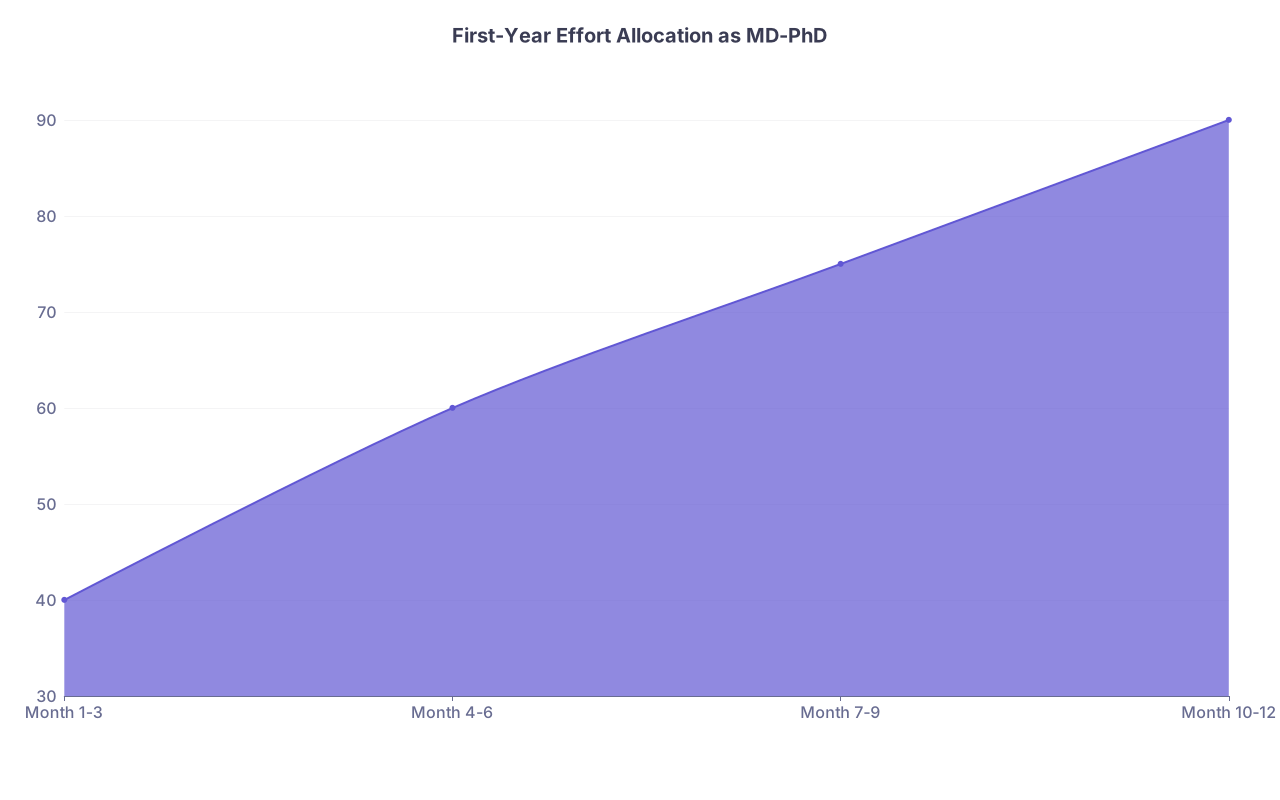
Once you sign, you are not done. Your leverage drops but does not disappear. Use the first year strategically.
| Category | Value |
|---|---|
| Month 1-3 | 40 |
| Month 4-6 | 60 |
| Month 7-9 | 75 |
| Month 10-12 | 90 |
Think of that as your ramp‑up on real productivity (not hours).
Your first year action plan:
Month 0–2: Lock your schedule.
- Make sure your “protected days” are actually blocked in the system.
- Push back on any creep immediately.
Month 1–6: Generate visible wins.
- Submit at least one major grant application (even if it is a stretch).
- Open or lead at least one clear research project, trial, or initiative.
- Get on the calendar with your chair/mentor every 3 months.
Month 6–12: Adjust and solidify.
- If clinical load has crept up, bring data and revisit.
- If promised support staff have not materialized, escalate gently but firmly.
- Start talking about medium‑term goals (promotion, larger grants, leadership roles).
Use these months to prove that your negotiated structure works. That makes future asks much easier.
Visualizing Your Ideal Role Before You Negotiate
If you cannot see your week, you cannot defend it.

| Step | Description |
|---|---|
| Step 1 | Mon - Clinic |
| Step 2 | Tue - Clinic |
| Step 3 | Wed - Research Day |
| Step 4 | Thu - Clinic |
| Step 5 | Fri - Research Admin and Writing |
Fill in your own version:
- How many clinics?
- Any inpatient weeks? How many per year?
- Which days are sacred research days?
- Where do you put teaching?
If the proposed job cannot produce a coherent weekly map that matches your goals, the job is wrong or the negotiation is incomplete.
Your Next Step Today
Open a blank document and do three things:
- Write your ideal 3‑year effort split (clinical %, research %, everything else).
- Outline your weekly schedule that matches those percentages.
- Draft three bullet points describing the role narrative you want to pitch (what you build, what you bring, what you need).
That one page becomes the backbone of your entire negotiation. Without it, you are just reacting to whatever they offer.