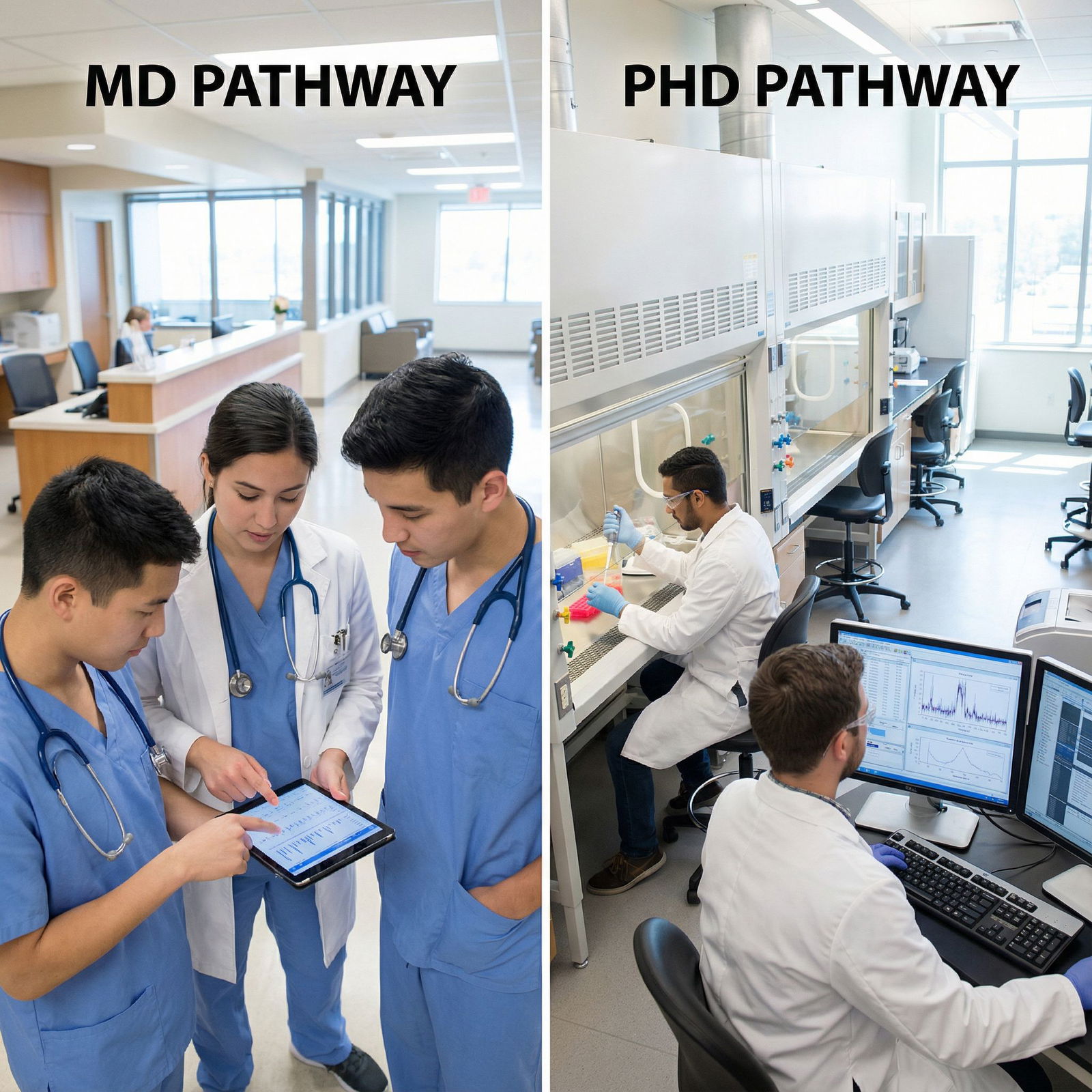
The uncomfortable truth is this: for most clinical roles, many program directors would rather take an average MD over a stellar PhD trying to pivot into the clinical world.
You will not hear that at faculty town halls. You will not see it in glossy “interprofessional education” brochures. But behind closed doors, when service coverage and patient outcomes are on the line, the bias shows up fast.
Let me walk you through what actually drives that preference, how decisions are made in the rooms you are not in, and where a PhD really can compete—if you know the game you’re playing.
What Program Directors Are Actually Optimizing For
Forget the public talking points about “interdisciplinary excellence” and “training the next generation of clinician-scientists.” Those lines are for LCME, ACGME, and donors.
On the ground, program directors in clinical departments are usually optimizing for two brutal constraints:
- Patient care throughput – clinics covered, wards staffed, RVUs generated, call schedules filled.
- Accreditation and regulatory safety – no ACGME citations, no lawsuits, no catastrophic clinical errors.
Everything else—research, education, interprofessional collaboration—is secondary. Important, yes. But secondary.
From that lens, here’s why MDs get default preference for clinical roles:
- MD training is built around decision-making under risk with direct legal responsibility.
- MDs are credentialed in a way that integrates cleanly with hospital privileging and billing.
- MDs are predictably socialized into the culture of “owning” patients.
PhDs, even brilliant ones, usually are not.
A program director once said this in a meeting when a non-physician candidate was proposed for an advanced clinical educator role:
“Look, when a case blows up at 2 a.m., I want someone whose default is ‘this is my patient,’ not ‘this is my project.’”
That comment wasn’t about intelligence. It was about liability and mindset.
Training Pathways: Why MDs Are “Plug-and-Play” in Clinical Systems
This is the first big misconception PhDs have when they eye clinical-facing positions.
You might think: “I know more physiology than most of these residents, my stats are better, my publications are stronger. Why am I not competitive for this role?”
Because you’re competing in the wrong metric.
How PDs see MD training
They see:
- Thousands of supervised clinical hours in real-time decision-making: admissions at midnight, crashing patients, ambiguous labs, messy family dynamics.
- Graduated responsibility: intern year fear, senior year leadership, chief year orchestration.
- Regulatory alignment: MD → residency → board eligibility → hospital privileges → billing.
In most clinical departments, they can hire an MD, onboard them into an attending or advanced practice track, and know exactly what they are and are not allowed to do on day one. The malpractice carrier knows too. So does the credentialing office.
How PDs see PhD training (for clinical roles)
Even if they respect the scholarship, they see:
- Minimal or zero direct patient care training.
- No formal responsibility for individual patients, diagnoses, or prescriptions.
- Massive variability in exposure (some PhDs sat in tumor boards; others never stepped into a clinic).
To a program director needing someone to supervise residents on the wards or run a service line, this is a nonstarter. It’s not about intelligence; it’s about clinical liability and system fit.
That’s why even clinically adjacent PhD roles usually get quietly restricted:
- “You can teach the pathophys small group, but you can’t supervise the inpatient consult rotation.”
- “You can help with the quality improvement curriculum, but you’re not the attending of record.”
If you’re a PhD expecting to walk into a role that looks—and bills—like an MD’s role, you will run into a wall of resistance. Often unstated, but very real.
The Economics No One Likes to Admit
Follow the money and the preference makes even more sense.
For MDs in clinical roles, program directors can justify salary with RVUs, call coverage, procedures, supervision of billable care. They can walk into a dean’s or chair’s office and say, “This FTE covers X clinic sessions, Y call nights, and Z RVUs.”
With PhDs, even clinically involved ones, the story is often murkier:
- No independent billing for most clinical acts.
- Limited ability to “cover” service in the way MDs do.
- Often soft money expectations (grants, educational funding) that are inherently unstable.
That does not mean PhDs are cheaper. Frequently they are riskier financially.
I’ve seen this exact thing happen in a major academic medical center: The department hired a PhD with strong clinical trial and QI experience into a “clinical scholar” role. Year one went fine. Year three, the Chair looked at the budget and asked in an exec committee meeting: “Who’s actually paying for their time? They can’t bill, and we’re not getting indirects from their grants yet.”
Translation: “Why am I funding this FTE when I could hire another MD who covers call and generates RVUs?”
You can imagine which future protected lines got cut first.
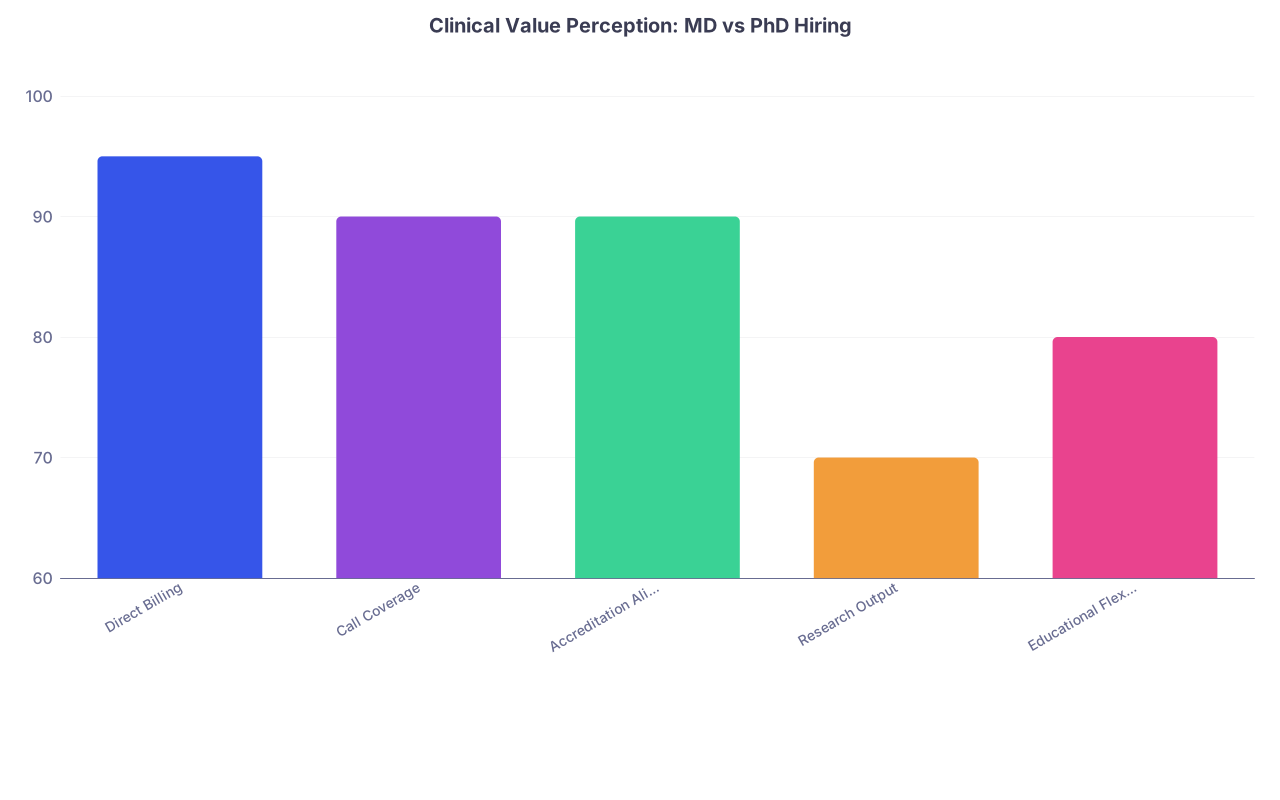
| Category | Value |
|---|---|
| Direct Billing | 95 |
| Call Coverage | 90 |
| Accreditation Alignment | 90 |
| Research Output | 70 |
| Educational Flexibility | 80 |
That chart is not about actual value; it’s about perceived value inside leadership meetings. And perception is what drives who gets hired into what.
Legibility to Accrediting Bodies and Other Power Structures
Here’s another ugly insider truth: program directors are constantly paranoid about ACGME, LCME, Joint Commission, state boards, and malpractice insurers.
They like things that are easily explainable and defensible:
- “This attending is board-certified in internal medicine and supervises the inpatient medicine team.” Everyone understands that.
- “This PhD with expertise in clinical outcomes research is supervising residents in a clinical decision-making course and co-signing certain notes.” Now you’re asking for questions, audits, and potential headaches.
Most PDs will simply refuse to take that risk. They’ve seen what a single weird complaint can trigger.
So you see PhDs shunted into:
- Pre-clinical teaching
- Simulation center roles (not as the “attending of record”)
- QI and safety offices
- Curriculum development, assessment, and learning analytics
All valuable. But deliberately separated from final clinical authority.
Even when a PhD genuinely understands the clinical context as well as an MD, the paper trail does not. And when something goes wrong, paper trails matter more than reality.
A PD once told a candidate, off the record:
“If it’s about who’s ‘best qualified’ to teach this, you win. If it’s about who creates the least accreditation and legal friction, you lose. And I answer to the people who care about the second, not the first.”
That’s the calculus.
Cultural Bias: The “Real Doctor” Problem
Let’s talk culture. Because it’s far more powerful than people admit.
In many clinical departments, there’s a quiet but pervasive belief: You’re not a real doctor unless you take care of patients.
This isn’t written down anywhere. It shows up in eye-rolls, who’s invited to hallway consults, who residents casually refer to as “Dr. X” vs by first name, who’s looped into crucial chats.
PhDs feel this fast. Especially those who:
- Sit in clinical conference rooms
- Teach residents
- Contribute to tumor boards, M&M, QI committees
I’ve watched a PhD expert in health services research present a brilliant analysis in a morbidity and mortality conference. Afterward, in the hallway, an attending muttered: “Nice model, but they’ve never actually had to decide whether to discharge someone like that at 1 a.m.”
That’s the cultural gap. And it bleeds into hiring.
When PDs think of “clinical leadership,” they default to MDs because:
- Residents instinctively defer to someone they believe has done their job.
- Other attendings are more willing to accept directives from “one of us.”
- Hospital leadership expects MD names attached to clinical decisions.
None of that is fair to PhDs with deep domain knowledge. But it is real.
If you’re a PhD stepping toward clinical spaces, you must understand you’re stepping into a culture where clinical experience isn’t just a skill—it’s a badge of legitimacy. Lacking that badge will cap what roles people are willing to give you.
How This Plays Out in Specific Roles
Not all roles are equal. Some are almost impossible for PhDs to get in clinical departments; others are absolutely accessible if you position yourself correctly.
| Role Type | Preferred Background |
|---|---|
| Clinical Service Line Director | MD |
| Residency Program Director | MD |
| Clerkship Director (Core) | Mostly MD |
| Pre-clinical Course Director | MD or PhD |
| Simulation Center Medical Lead | MD |
| Simulation Education Director | PhD or MD |
| QI / Patient Safety Scientist | PhD or MD |
Roles where MDs almost always win
- Service line director (ICU, ED, cardiology, etc.): These are deeply tied to billing, credentialing, and legal responsibility. PhDs are essentially locked out.
- Residency program director for core clinical specialties: ACGME expectations, board certification, and resident culture strongly tilt this MD. PhDs might be associate directors at best, and even that’s rare.
- Clerkship director for core inpatient rotations: Same story—MDs carry the final clinical authority.
Roles where PhDs can genuinely compete
- Pre-clinical course director (physiology, pharmacology, pathophys, epidemiology): Many places prefer PhDs here, especially if you understand medical culture and can work with multiple clinical co-teachers.
- Simulation education director (non-medical director line): Running scenarios, designing curricula, debriefing, assessment—this can be PhD territory, especially with med ed training.
- QI/safety research or evaluation roles: If you speak both statistics and clinical language, PDs and chairs will quietly rely on you to make their outcomes look better and their interventions defensible.
The trick is knowing which side of the fence a job actually sits on: clinical authority vs clinical education/analysis. The more it smells like final responsibility for patients, the more the preference hardens toward MDs.
Where PhDs Have Leverage Program Directors secretly respect
Now the good news. There are ways PhDs can become indispensable in clinical departments, and some PDs will bend rules for people who uniquely solve problems they care about.
Faculty who do at least one of these well get very different treatment:
Make the PD’s metrics look good
If you’re the person who can rigorously evaluate curriculum changes, reduce remediation rates, improve board pass rates, or show improved quality metrics with publishable data, you become an asset, not a favor hire.Translate between clinical chaos and structured improvement
Most clinicians are terrible at turning “this rotation sucks” into a coherent, evidence-based plan. If you can listen to their complaints and hand back a practical, implementable, and measurable improvement strategy, PDs will quietly call you before they call central med ed.Bring in funding or prestige that leadership understands
Not all grants are created equal in a chair’s mind. Clinically relevant implementation grants, patient safety funding, or high-visibility educational innovation awards carry real weight. If your presence brings in this kind of capital, resistance drops fast.
I’ve watched a sharp PhD health psychologist get basically written into every new clinical initiative in a department because she:
- Built the department’s first meaningful wellbeing program with actual outcomes data.
- Co-authored multiple successful education and QI grants with the PD.
- Quietly coached residents through research projects that made the program look strong to ACGME reviewers.
Was she ever going to be called “clinical director” of anything? No. But when cuts came, her line wasn’t touched. In fact, they expanded her role.
That’s what leverage looks like for a PhD in clinical land.
How MDs with PhD-level Skills Get a Different Response
This is the part that stings a bit if you’re a pure PhD.
When an MD picks up skills that look like yours—advanced statistics, implementation science, education research—the system treats them like unicorns.
- MD with serious QI and methods chops? Program director material.
- MD who publishes med ed research and understands CBME, milestones, assessment? Clerkship or residency leadership almost on demand.
- MD who can lead both a service and a serious clinical research program? Shortlisted for vice chair.
They get both badges: clinical legitimacy + scholarly credibility. You get one.
So a PD looking at two candidates for a clinically adjacent leadership role will almost always choose:
- MD with some med ed or research training over
- PhD with deep med ed or research training
Even if your scholarly portfolio is better on paper.
Is that fair? No. Is it rational in their risk equation? From where they sit, yes.
If you’re a PhD, the worst move you can make is pretending this asymmetry doesn’t exist. The smartest move is to design your career so you’re competing where your strengths actually matter more than your lack of the MD.
Strategy for PhDs Who Still Want to Be Clinically Embedded
If you’re a PhD and you want to work in clinical departments instead of basic science or public health, you need to be tactical, not idealistic.
A few hard-learned principles:
- Do not chase roles defined by clinical authority or billing. You will lose. Repeatedly.
- Attach yourself to problems clinical leaders care about but don’t know how to fix. Remediation, burnout, QI evaluation, learner assessment, outcomes tracking.
- Get fluent in clinical language and workflow. Sit in on rounds, shadow clinics, attend M&M and grand rounds consistently. Become the PhD who actually “gets” how their day works.
- Be visibly low-friction to PDs. No one wants another person who creates meetings, committees, or resistance. You want the reputation of: “When we involve them, stuff actually gets easier.”
You won’t turn yourself into an MD. But you can become the person PDs choose to bring into key initiatives, which is where meaningful influence lives.