

Last week, a new hospitalist texted me from the parking lot, still in her scrubs. “They just sent the offer. I want to ask about call and tail coverage, but I’m scared they’ll pull it. Is that… a thing?” She’d just finished nights, exhausted, clutching a contract that could define the next five years of her life—and she was more afraid of asking questions than working another 14-hour shift.
If you’re reading this, I’m guessing you know that exact stomach-drop feeling. The “If I push back, they’ll think I’m difficult and rescind the offer” spiral. The “What if they punish me or quietly blacklist me?” voice that gets louder at 2 a.m.
Let’s talk about that fear head‑on. No fluff. Can employers retaliate against you for negotiating your physician contract—or even just asking questions? What’s real, what’s anxiety, and what’s actually a major red flag?
First: Are You Even “Allowed” To Negotiate?
Short answer: yes. Longer, more honest answer: yes—but the culture around you may make it feel like you’re committing a crime.
Most physician employment offers are expected to involve some negotiation. Large systems, private groups, academic centers—they all build that into the process. They might not like it when you ask for more money or fewer calls, but they expect it.
The problem is residency trains you to be the exact opposite of a negotiator. You’re taught to be “a team player,” not rock the boat, say yes to terrible shifts, and be grateful for whatever you’re given. Then suddenly, in PGY‑3 or PGY‑4, you’re supposed to transform into someone who can calmly discuss wRVUs and restrictive covenants like a businessperson.
So your brain goes: “If I ask for anything, I’ll get punished.”
Here’s what I’ve actually seen happen:
- Residents get offers, say “Thank you so much, I had a few questions about X, Y, Z,” and the employer… just answers and sometimes adjusts.
- Some employers hold firm and say no. Mild pushback. No punishment.
- Rarely, an employer reacts badly—defensive, annoyed, or makes veiled comments like, “We want people who are here for the mission, not the money.”
That last category? That’s where your fear lives. And honestly, that’s where some real red flags live too.
But just asking questions? Just saying, “Could we discuss the call schedule / base salary / non‑compete?” That alone is normal. If an employer treats that as betrayal, that’s not you being difficult. That’s them being a problem.
What Does “Retaliation” Actually Look Like in This Context?
Retaliation isn’t always dramatic. It’s not always, “You negotiated, so we’re firing you.” Sometimes it’s more subtle, which is exactly why anxious people like us latch onto it.
Here are the main forms people worry about:
- They’ll rescind the offer if I negotiate.
- They’ll keep the offer but quietly punish me—worse schedule, no support, bad evals.
- They’ll tell other employers I’m “difficult” or “greedy.”
- If I’m already employed and try to renegotiate or push back, they’ll cut my hours, tank my bonus, or make my life miserable.
And under all of that is the deeper fear: “If I act like I have options, I’ll lose everything I have.”
Let me separate out reality from worst‑case catastrophizing.
Can They Pull the Offer Just Because You Negotiated?
Technically? Yes. Anyone can pull an offer at-will until it’s signed—and often even after, depending on state law and contract terms.
But do they usually? No. Not for normal, respectful negotiation.
Most of the time, offer rescission happens in a few situations:
- You ask for something wildly out of line with the market and refuse to budge, and they have other candidates.
- You come across as arrogant, rude, or contemptuous in how you negotiate.
- They were lukewarm about you in the first place and use negotiations as an excuse.
- There are internal changes—budget freeze, leadership shift, dropped service line—and negotiation just happens to overlap.
The part no one tells you: if an employer will yank an offer just because you asked a few reasonable questions, that’s a bullet dodged, not a loss.
I’ve seen people get offers "pulled" after asking basic questions like:
- “Can I see the actual call schedule structure?”
- “Can we clarify how RVUs are calculated and what’s considered clinical time?”
- “Could we discuss the length or radius of the non‑compete?”
If that level of inquiry makes them defensive or hostile, imagine what it’ll be like when you ask for coverage on your 7th consecutive weekend or want to cut back to 0.8 FTE for childcare.
Yes, losing an offer hurts. But being trapped in a toxic practice where asking anything is “disloyal” hurts way more. For years.
What If They “Punish” You Quietly?
Here’s the darker fear: “Okay, maybe they won’t rescind the offer. But what if they remember I negotiated and then I get the worst shifts, the worst patients, the lowest support?”
This is where your brain tries to time‑travel into hypothetical misery.
A few reality checks:
Once you’re employed, retaliation for protected things (e.g., reporting discrimination, whistleblowing) is likely illegal. Negotiation itself isn’t exactly “protected activity” in that sense, but obvious punishment just for asking about your contract would expose them as a liability nightmare if they’re a big system.
What actually influences your schedule and day‑to‑day more often?
- RVU productivity games
- Seniority
- Internal cliques and politics
- How desperate they are for coverage
- Whether leadership views you as “reasonable,” which does include how you talk about your needs
If you negotiate like a human: “Here’s what I was hoping for, here’s why, totally understand if we can’t get all the way there,” you’re not branding yourself as a problem.
If they do seem vindictive—petty assignment changes right after you sign, weird comments about you “liking to negotiate”—that’s not your fault. That’s the culture you just walked into. And in that case, the negotiation wasn’t the cause; it was just the first time they showed you who they really are.
Could They Trash Your Reputation for Negotiating?
This one feels extra scary because medicine is such a small world. You imagine some medical director calling every hospital in a 100‑mile radius saying, “Don’t hire them—they asked about call coverage.”
Here’s the unromantic truth: most employers are way too busy to go on a revenge tour over basic negotiation. They move on to the next candidate.
What does get around sometimes?
- “They no‑showed their interview.”
- “They accepted and then backed out last minute without explanation.”
- “They were pretty rude to staff or admin.”
- “They tried to completely rewrite the contract to something we’ve never done for anyone.”
Notice what’s missing: “They asked if we cover malpractice tail” or “They requested 10k more in base.”
If an employer actually tells another hospital you’re “difficult” solely because you asked reasonable questions, that employer just revealed more about themselves than about you. That kind of gossip says “we expect blind obedience” louder than anything else.
You can’t control what people say behind your back, but you can absolutely control whether your side of the story would sound rational and professional if anyone ever saw your emails.
What About Negotiating When You’re Already Employed?
This is the part that really twists your stomach: you’re already in the job. You want to change your FTE, adjust call, renegotiate pay, or push back on unfair policies—and you’re scared they’ll retaliate.
Here the risk is a little more real, not in a horror‑movie way, but in a “this can affect your daily life” way.
Employers do sometimes:
- Make your schedule worse if you’re seen as “complaining”
- Reduce admin time or bonuses
- Freeze raises
- Subtly pressure you to leave instead of adjusting your contract
That doesn’t mean you should never ask. It means you need strategy.
You anchor your ask to shared goals: patient care, sustainability, retention. You frame it as: “I want to stay here long term. To do that, I need X. Is there a path to that here?” Not: “I demand this or I’m out.” (Even if that’s how you feel inside.)
If their response to a calm, data‑based conversation is to punish you? That’s your sign. You can quietly start planning your exit with your head held high. They’re the problem.
How To Lower the Real Risk (Without Letting Anxiety Run the Show)
You can’t get the risk down to zero. Medicine doesn’t work like that. But you can get it out of the danger zone where your entire career feels like it’s hanging by a thread every time you negotiate.
A few practical guardrails:
Use email to your advantage.
Be polite, brief, and professional on paper. “Thank you for the offer. I’m very excited about the opportunity. I had a few questions about [specifics]. Would it be possible to discuss…” This is hard to spin as you being “difficult.”Ask questions before making demands.
Instead of, “I need 300k,” try, “Could you share how this base salary was determined and what the typical range is for someone with my experience?” You might get what you want without ever sounding adversarial.Know what’s standard in your specialty and region.
Talk to co‑fellows, senior residents, or attendings who recently signed. Not just the one unicorn who got an insane private practice deal. Get a sense of the normal range so your asks don’t sound delusional.Run it by a physician contract attorney.
I’m not saying this as a formal legal plug. I’m saying: they’ve seen hundreds of these, and they know what freaks out employers and what doesn’t. They’ll also tell you when your fear is justified.Watch their reaction as data.
The way they respond to your first negotiation says a lot about what it’ll be like to work there. Calm, transparent, willing to explain? Greenish flag. Defensive, guilt‑trippy, “We thought you were a team player”? Enormous red flag.
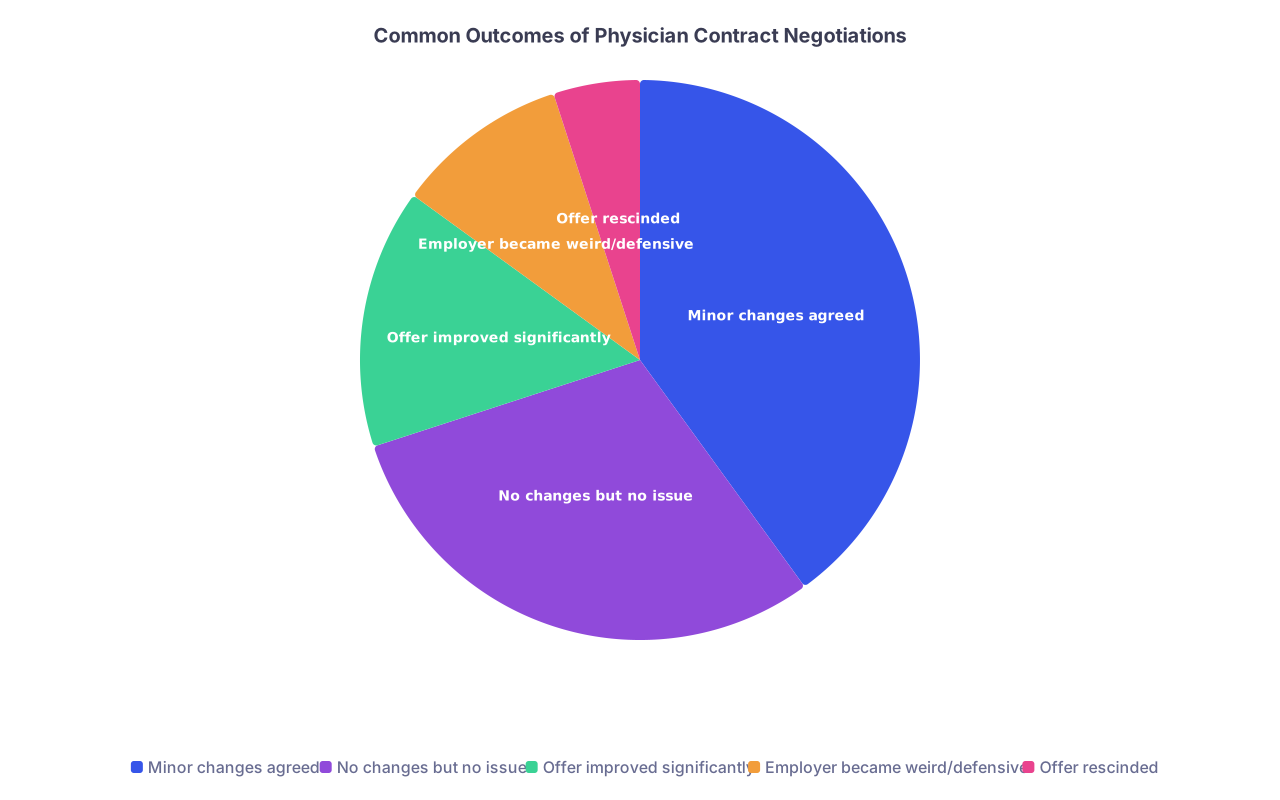
| Category | Value |
|---|---|
| Minor changes agreed | 40 |
| No changes but no issue | 30 |
| Offer improved significantly | 15 |
| Employer became weird/defensive | 10 |
| Offer rescinded | 5 |
Red Flags That Do Justify Your Fear
Let me be blunt: there are situations where your fear isn’t just anxiety—it’s your gut screaming at you.
Some examples I’ve seen or heard almost verbatim:
- “We don’t really like people who negotiate. It shows they’re not committed.”
- “No one else has ever questioned our non‑compete.” (Said with annoyance, not openness.)
- “If money is that important to you, maybe this isn’t the right culture.”
- “We’re taking a chance on you as a new grad; you should just trust us.”
Or behavior like:
- Refusing to send you the full contract in writing before you verbally commit.
- Pushing you to make a decision in 24–48 hours “or the offer goes away.”
- Getting cold, delayed, or passive‑aggressive immediately after you ask basic clarifying questions.
Those aren’t you “over‑reacting.” Those are warnings that you’re dealing with control issues, not a normal business negotiation.
And if they’re this edgy now—during recruitment, when they’re on their best behavior—imagine them during a conflict about scheduling, leave, or quality metrics after you’re locked in.

| Step | Description |
|---|---|
| Step 1 | Receive Offer |
| Step 2 | Review Terms |
| Step 3 | Ask Questions |
| Step 4 | Proceed to Negotiate |
| Step 5 | Major Red Flag |
| Step 6 | Sign Contract |
| Step 7 | Consider Walking Away |
| Step 8 | Employer Response |
| Step 9 | Reach Acceptable Terms |
Distinguishing Anxiety From Actual Danger
Your brain loves all‑or‑nothing thinking: either you never ask for anything and you’re “safe,” or you ask once and the world collapses.
Reality is more annoying and nuanced.
You’re probably safe if:
- You’re polite, clear, and realistic in your asks.
- You focus on 2–4 key priorities, not trying to rewrite the whole contract.
- You don’t issue ultimatums out of nowhere.
- They respond professionally, even if they say no to some items.
You should worry (for real) if:
- They guilt‑trip you for wanting clarity about things that impact your license, livelihood, or family.
- They suggest “other candidates” wouldn’t have these questions.
- They link your right to understand your own contract with your worthiness as a physician or team member.
Your anxious brain tells you: “If I negotiate, I might lose this job and then I’ll never get another one, and I’ll have wasted all of residency.”
The more honest version is: “If I negotiate, there’s a small chance this particular job falls through, but there’s a much bigger chance I protect myself from a job that would chew me up.”
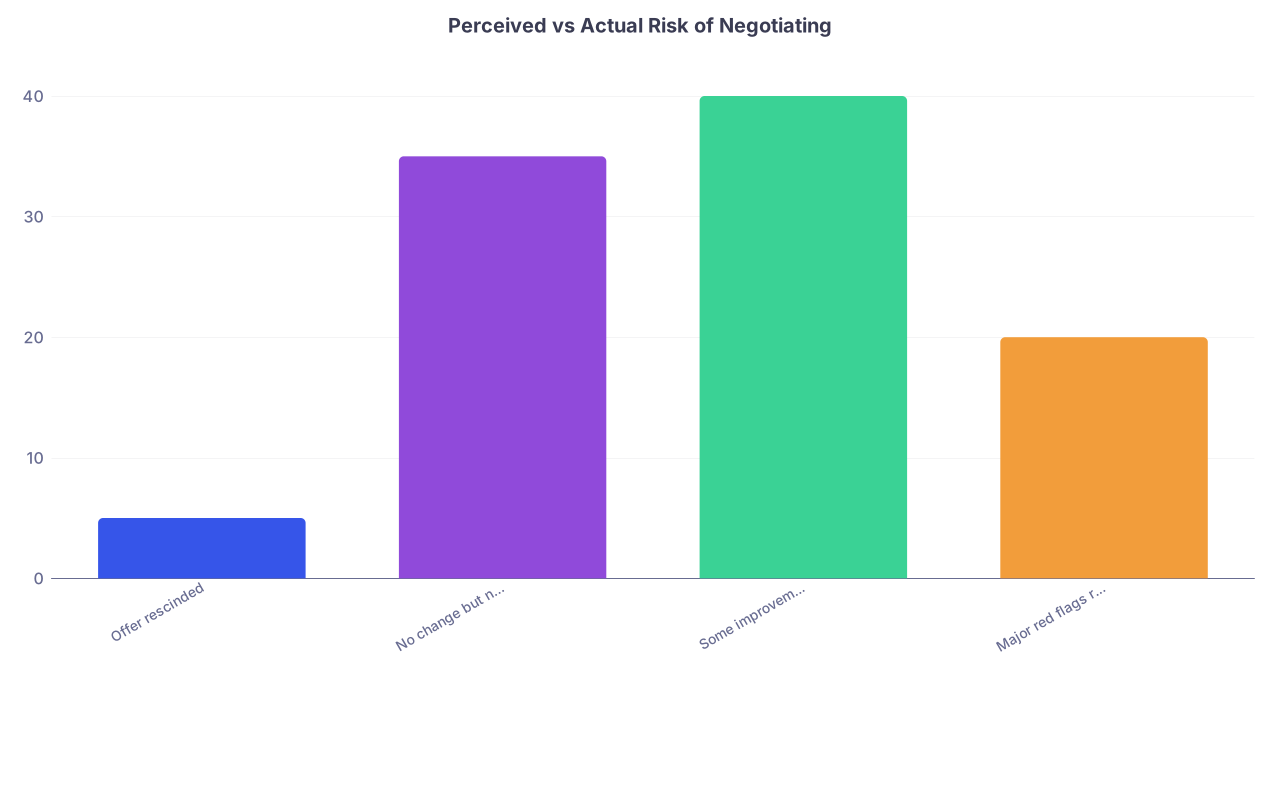
| Category | Value |
|---|---|
| Offer rescinded | 5 |
| No change but no harm | 35 |
| Some improvement | 40 |
| Major red flags revealed | 20 |
What If You’re Already in Too Deep?
You might be reading this thinking, “Cool. Except I already signed something I hate because I was too scared to negotiate, and now I’m stuck.”
You’re not as stuck as you feel.
You can:
- Review your contract and locate the term length and termination clauses. Most have a “without cause” termination with 60–180 days’ notice.
- Start looking early for your next job, this time with your eyes wide open.
- Learn from this first contract and treat it like an expensive, painful course in “how the job market actually works.”
No one tells you this, but a ton of physicians treat their first job as a stepping stone, not forever. That doesn’t mean you have to be flaky. It means you’re allowed to realize, “This didn’t fit. I need better.” You’re allowed to leave.
| Situation | Healthy Employer Response | Toxic Employer Response |
|---|---|---|
| You ask about non-compete | Explains terms, may adjust radius or duration | Acts offended you even asked |
| You request salary review | Shares benchmarks, maybe counters | Implies you are greedy or disloyal |
| You ask for schedule details | Provides sample schedule, expectations | Dodges specifics, pressures quick signing |
| You want attorney review | Encourages you to understand terms | Warns that lawyers 'complicate things' |

The One Thing I Want You to Remember
You’re not being unreasonable for wanting to understand and shape the contract that controls your time, income, and future. You’re not “ungrateful” for wanting a life outside the hospital. You’re not “difficult” for asking to see the details.
Yes, technically, an employer can decide not to move forward if they don’t like that you negotiated. But an employer who punishes you just for negotiating your physician contract isn’t saving you from yourself. They’re telling you who they are.
Three things to keep in your head when the fear spikes:
- Negotiation is normal for physician jobs; blind acceptance is what’s abnormal.
- How they react to reasonable questions is a preview of how they’ll treat you when you’re vulnerable and already on payroll.
- Losing a job because you protected yourself feels awful in the moment, but staying in a bad one costs you far more—time, sanity, and options.
You’re not asking for anything outrageous. You’re asking not to walk into the rest of your life with your eyes closed. That’s not rebellion. That’s self‑preservation. And you’re allowed.


