

It’s 11:30 p.m. You’re post-call tired but scrolling through that first-attending contract again, stuck on one line: “Claims-made professional liability coverage provided. Tail coverage responsibility: physician.”
Your stomach drops.
You open a new tab and type: “How much does malpractice tail cost?” and you see numbers like $40,000… $80,000… more. You imagine getting sued three years after you leave a job you already hated, with a lawyer letter landing in your mailbox and your old employer saying, “Good luck, not our problem.”
That’s the headspace we’re in. So let’s stay there and actually walk through how this works, because the truth is: tail coverage is one of the easiest places for young physicians to get quietly screwed in their first contract.
The core nightmare: what tail is actually protecting you from
Let me strip the jargon.
Malpractice insurance comes in two main flavors:
- Occurrence
- Claims-made
If you have occurrence, every event that happened while you were covered is permanently covered, even if someone sues you years later. You can leave the job, move across the country, doesn’t matter. The policy follows the date of the incident, not when the claim is filed. No tail needed.
If you have claims-made, the policy only covers claims filed while the policy is active. So if you worked 2025–2028, and someone sues you in 2030 for something that happened in 2026, but your 2025–2028 policy is no longer active? You’re naked. That’s where tail coverage comes in.
Tail is basically: “Please continue to cover claims that arise in the future for care I provided while I was working for you.”
Without tail, your nightmare scenario is actually real:
- You leave a job.
- Your employer stops paying premiums.
- A patient from 2 years ago sues you now.
- There’s no active policy to catch it.
- You, personally, are the target.
Tail closes that gap.
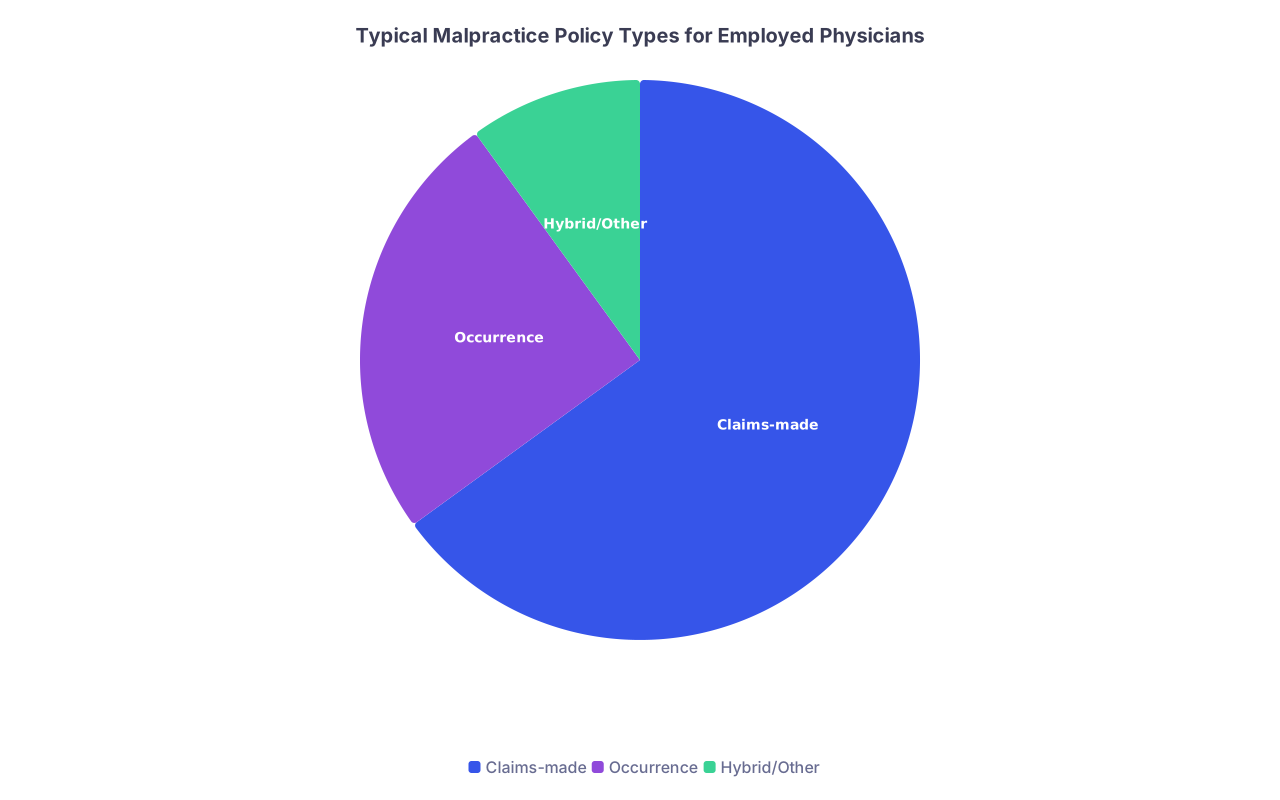
| Category | Value |
|---|---|
| Claims-made | 65 |
| Occurrence | 25 |
| Hybrid/Other | 10 |
How tail coverage really works (without the sugarcoating)
Here’s what actually happens behind the scenes with a claims-made policy:
During your job
Your employer pays “step-up” premiums. Early years are cheaper, then go up as your “exposure” grows. By year 4 or 5, it’s at the “mature” rate.When you leave
The active claims-made policy would normally just stop. No more coverage for new claims. Patients can still sue, but there’s no live policy to respond.Tail gets offered
Your malpractice carrier or your employer’s broker offers an optional tail endorsement. One-time, usually non-cancellable, often non-refundable.You pay once, it lasts years
It’s typically a single lump sum that gives coverage for:- A fixed period (e.g., 5–7 years), or
- Unlimited duration (often called “unlimited tail,” which is what you actually want).
Coverage scope
Tail doesn’t cover new work you do at your next job. It only covers old acts you did under the former employer’s policy. It’s like freezing protection for the past.
How much does tail actually cost? The part that makes you panic
Rough numbers (and yes, I’ve seen these in actual offers, not just Google):
Tail is usually somewhere around 150–250% of the mature annual premium.
So if your annual malpractice premium for a mature claims-made policy is:
- $8,000 → tail might be $12,000–$20,000
- $18,000 → tail might be $27,000–$45,000
- $30,000 → tail might be $45,000–$75,000
High-risk specialties (OB/GYN, neurosurgery, some surgical subspecialties) can see truly ugly tail numbers.
| Specialty | Mature Annual Premium | Estimated Tail (150–225%) |
|---|---|---|
| Family Med | $8,000 | $12,000–$18,000 |
| Hospitalist | $10,000 | $15,000–$22,500 |
| General Surgery | $25,000 | $37,500–$56,000 |
| OB/GYN | $40,000 | $60,000–$90,000 |
| EM (busy urban) | $20,000 | $30,000–$45,000 |
You see the problem. You’re just starting your attending life, still paying off loans, maybe moving states, and quietly your contract has language that essentially says:
“If you ever leave us, you may owe $50,000 cash. Due now.”
Not in 12 installments. Not on a payment plan. Often: “You must purchase tail coverage within X days of termination.”
This is why people freak out about tail.
The dangerous tiny clause in your contract: who pays for tail?
This is the single most important part for you as a new attending:
Who is contractually responsible for buying tail?
You’ll see variations like:
- “Employer shall provide claims-made coverage. Physician shall be responsible for any tail coverage upon termination of employment.”
- “Employer shall pay for tail coverage in the event of termination by Employer without cause or Physician termination for cause. In all other instances, tail shall be Physician’s responsibility.”
- “Employer shall pay 50% of tail coverage; Physician shall pay 50%.”
Translation, in plain language:
If you:
- Get fired for cause → you probably pay all tail.
- Resign voluntarily → probably you pay all tail, unless negotiated otherwise.
- Get non-renewed or laid off without cause → you might get the employer to pay, if the contract says so.
This is where you need to stop being “grateful to have an offer” and start being slightly cynical. Because I’ve seen young attendings sign contracts where:
- Salary looks decent.
- Sign-on bonus is $10k, relocation $7k.
- But hidden: they’re on the hook for $60k tail if they leave within 3 years.
That’s not a job. That’s a financial trap.

Claims-made vs occurrence: can you escape the tail problem completely?
Yes, sometimes. But there’s always a tradeoff.
Occurrence coverage:
- No tail needed.
- Every incident that occurs while the policy is active is covered forever.
- If you leave, you just… leave. No tail bill.
But: occurrence premiums are usually higher per year. So many employers avoid them, especially large hospital systems and groups—they prefer claims-made with a cheaper annual premium and then push tail onto you.
Still, some jobs (peds, outpatient primary care, some hospital-employed roles) do offer occurrence-based policies. If you’re someone who:
- Wants flexibility to leave in 1–2 years if it’s toxic
- Hates surprise big bills
Then an occurrence policy or employer-paid tail is worth actual money to you.
The trap: some employers quietly say “we offer occurrence” but it’s a claims-made with tail prepaid or some hybrid thing. You need it spelled out:
- Is the policy truly occurrence?
- If it’s claims-made, is tail not your problem—meaning fully employer-paid, in all circumstances, including if you resign?
You need that in writing. Not in a verbal reassurance. In the actual contract.
What if you get sued after you switch jobs?
This is one people obsess over, and honestly, they’re right to.
Scenario:
- You work for Hospital A from 2025–2028. Claims-made policy.
- You leave. Start at Group B in 2029, new malpractice policy there.
- In 2030, a patient from 2027 sues you.
Who covers you?
- Your new employer? No. Their policy covers work done for them, not previous jobs.
- Your old employer? Maybe, if they bought tail or extended coverage. But if they made you buy tail and you didn’t… you’re exposed.
- Your tail policy (if you bought it)? Yes. That’s the whole point. Your tail (an extension of the old policy) responds.
This is exactly why “I’ll just risk it and not buy tail” is not a brave move. It’s reckless. One lawsuit can end you financially, even if you ultimately win.
Can your new job pick up your tail? “Nose” coverage and other weird terms
Occasionally a new employer will say something like: “We’ll cover your prior acts.”
This can look like:
- “Prior acts coverage”
- “Nose coverage”
- “Retroactive coverage to [date]”
Here’s what that really is: instead of you buying a tail on your old job, your new claims-made policy starts today but is written to also cover previous work back to a past date.
This can be a legit solution if:
- The new employer is actually paying the higher premium.
- The retroactive date truly covers your entire prior period.
- The policy language is clear and in writing.
Huge risk: if there’s a gap in coverage (you moonlighted, you did locums, you switched groups more than once), you might still need a partial tail or separate coverage. Also, if your new employer later downgrades coverage, cancels you, or you leave again, you may end up having to buy tail anyway—from a bigger block of years.
The worst-case scenarios (and how to blunt them in your contract)
Let’s just acknowledge the ugly versions:
You join a toxic private group. After 18 months you’re miserable and want out. Contract says:
- You owe 90 days notice
- You owe repayment of sign-on bonus if you leave before 2 years
- You are 100% responsible for tail
You’re staring at:
- Moving costs
- Lost income between jobs
- Sign-on repayment
- Plus $40–60k of tail
So you stay in a bad, possibly unsafe environment because you literally can’t afford to leave. That’s how these clauses trap people.
You get fired “for cause” over something petty or political. Contract says if you’re terminated for cause, you pay tail. Being labeled “for cause” suddenly has a huge financial impact.
Your employer changes carriers or policy structure, and suddenly the tail cost jumps unexpectedly. You’re still contractually responsible.
How do you blunt this?
You negotiate now, when you still have leverage and no sunk costs.

| Step | Description |
|---|---|
| Step 1 | Review Offer |
| Step 2 | No Tail Needed |
| Step 3 | Check Tail Clause |
| Step 4 | Lower Financial Risk |
| Step 5 | High Financial Risk |
| Step 6 | Moderate Risk |
| Step 7 | Negotiate Employer Share or Cap |
| Step 8 | Confirm In Writing |
| Step 9 | Policy Type |
| Step 10 | Who Pays Tail |
What to actually negotiate (yes, even as a new grad)
You don’t need to be a hardcore contract lawyer, but you do need to be specific. Things to target:
Employer pays tail in all circumstances
Best case. Language like:
“Employer shall be solely responsible for the cost of any tail coverage upon termination of this Agreement, regardless of the reason for termination.”Employer pays tail if they terminate without cause or non-renew
Middle ground. Protects you if they decide to let you go, but you may still owe tail if you resign.Shared tail, with a cap
Example: “Employer pays 50% of tail; Physician responsibility capped at $15,000.”
At least you’re not staring down a $60k bomb.Forgiveness over time
“For each full year of employment completed, Employer shall assume 25% of the tail obligation, up to 100% after 4 years.”
So if you stay 4 years, you leave with no tail bill. If you leave at 2 years, you owe half. Not perfect. But better than full exposure.Occurrence coverage instead of claims-made
Even with a slightly lower salary or fewer other perks, this can be a solid trade if it saves you a future $40k surprise.Language about proof of coverage
Require the employer to:- Maintain coverage of at least X/$Y limits
- Provide you proof of tail purchase upon termination if they claim they’re paying for it
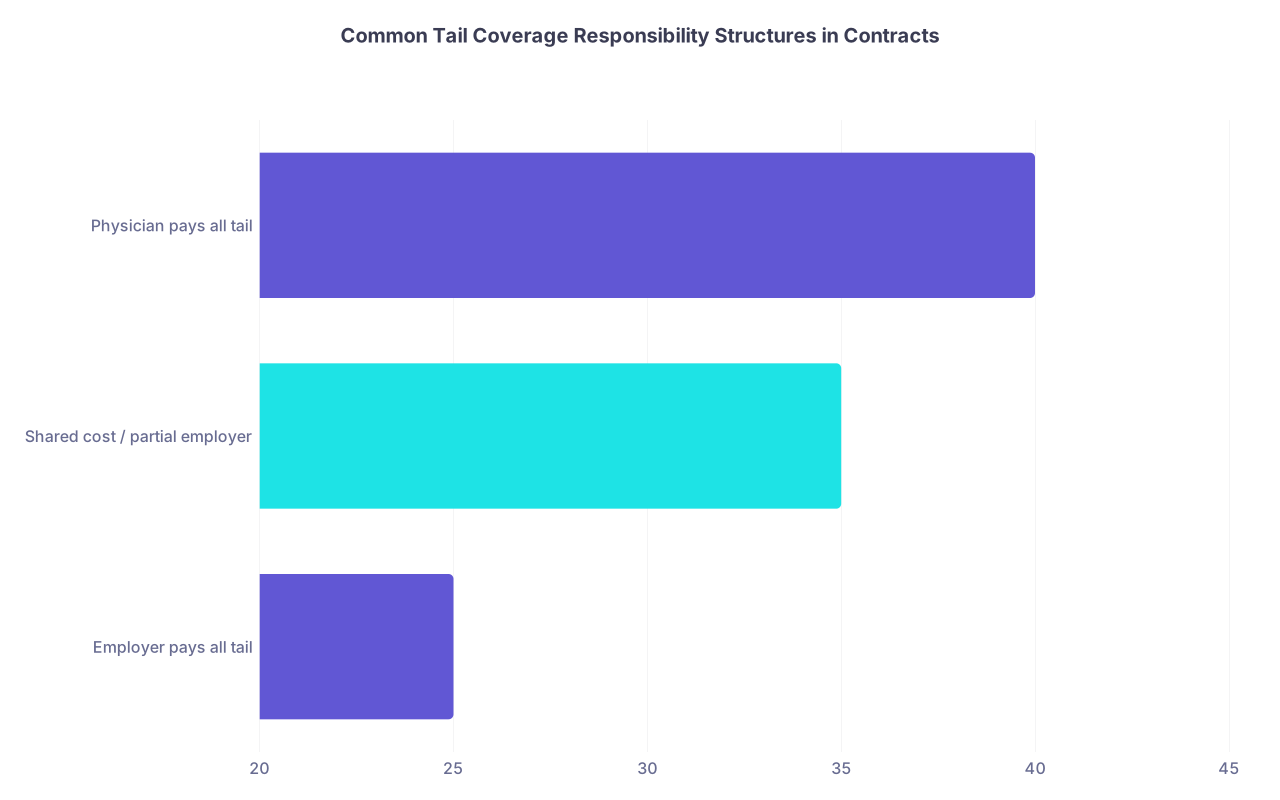
| Category | Value |
|---|---|
| Employer pays all tail | 25 |
| Shared cost / partial employer | 35 |
| Physician pays all tail | 40 |
If an employer absolutely refuses to budge on tail and you’re in a high-risk specialty, that’s a data point. It doesn’t necessarily mean “never take the job,” but it does mean you should factor that future liability into:
- Your salary negotiations
- Signing bonus expectations
- How quickly you plan to leave if red flags show up
How to stop spiraling and actually assess your risk
You’re going to catastrophize this (I did too), but some perspective:
- Most physicians will never be personally bankrupted by a malpractice claim.
- Tail doesn’t make you sue-proof; it just makes sure you have a defense and policy limits behind you.
- The real financial disaster is not “getting sued.” It’s “getting sued with no coverage.”
During contract review, do this:
- Ask for the current annual premium for your seat. Not vague, actual number.
- Ask what tail is currently estimated at with their carrier. Get a ballpark.
- Plug that into your mental math. If it’s $25k? Manageable with savings and planning. If it’s $80k? That’s a legit financial grenade.

Also, strongly consider a physician contract attorney or a consulting group that actually understands malpractice language. Honestly, they’re not overkill here. One clause about tail can be worth more than your entire first-year salary difference between two offers.
Quick mental checklist before you sign anything
Ask yourself:
- Is the malpractice policy claims-made or occurrence?
- If claims-made, who pays tail, exactly, in each type of termination?
- What is the estimated tail cost for my specialty based on current premiums?
- Is there any forgiveness, cap, or shared cost language?
- Could I afford the worst-case tail bill if I had to leave in 1–2 years?
- Is the job so good that I’d accept this risk—or should I push harder or walk?

Bottom line
Three things to remember so you can at least sleep a little tonight:
- Tail coverage is not abstract. It’s a potentially huge, very real bill tied to your ability to leave a job safely.
- Claims-made vs occurrence isn’t trivia; it’s the difference between “walk away clean” and “owe $50,000 when you resign.”
- You absolutely can and should negotiate tail responsibility—who pays, how much, and under what conditions—before you sign, not when you’re desperate to leave.
You’re not overthinking this. The people who don’t think about tail at all are the ones who get burned.


