

The worst part isn’t that you signed a bad contract.
The worst part is the pit in your stomach that says, “I’ve ruined my career and there’s no way out.”
You haven’t. But I know it feels like you have.
Let’s walk through this like someone who’s already made the “mistake,” because frankly, a ton of physicians have. They just don’t talk about it at grand rounds.
First: You’re Not Trapped Forever (Even If It Feels Like It)
Everyone tells you “don’t sign anything without a lawyer” and then… you do. Because you’re exhausted, you’re post-residency, you’re broke, they gave you a start date and a pen, and maybe there was a signing bonus dangling in front of you.
Then you actually read the contract. Or worse—you don’t read it, you live it.
Things you might be freaking out about right now:
- A 2–3 year initial term with auto-renewal
- A non-compete that basically blocks half your state
- A repayment clause on your signing bonus or relocation if you leave “early”
- Ridiculous RVU or productivity targets that don’t match reality
- Call schedule that “wasn’t like this when you interviewed”
- A termination clause that feels like: they can dump you for almost any reason, but you’re stuck
Here’s the key point that your anxiety doesn’t want to believe:
Most “bad” contracts are annoying, costly, and stressful. Very few are actually inescapable life sentences.
You might not be able to make it perfect—but you almost always have options to:
- Reduce the damage
- Get out strategically
- Or renegotiate from a position that doesn’t tank your future
Step 1: Figure Out How Bad It Actually Is (Not How Bad It Feels)
Before spiraling into “I’ll never work again,” you need facts. Not vibes.
Print the contract. Grab a pen. Go somewhere you won’t be interrupted.
You’re looking for:
Term & Renewal
- What’s the initial term? 1 year? 3 years?
- Does it auto-renew? How? Is it automatic unless you give notice?
Termination Clauses
- “Without cause” termination:
- Can you terminate without cause? With how much notice (30/60/90/180 days)?
- Can they terminate you without cause?
- “For cause” termination:
- What counts as “cause”? Vague stuff like “unprofessional conduct” or “failure to meet productivity expectations”? That’s a red flag.
- “Without cause” termination:
Non-Compete (Restrictive Covenants)
- Radius (5 miles? 25 miles? Whole county?)
- Duration (1 year? 2 years? longer?)
- Scope (just your specialty? any clinical work? telehealth?)
Repayment Obligations
- Signing bonus clawback
- Relocation repayment
- Student loan “forgiveness” tied to staying X years
- Are these prorated or all-or-nothing?
Compensation Structure
- Base salary vs RVU/collections
- Is the comp model even achievable for your specialty and market?
- Any mid-term review or renegotiation language?
Don’t guess. Don’t assume the worst or the best. Highlight every part that makes your stomach drop.
You are not deciding anything yet. You’re diagnosing the damage.
Step 2: Learn the Escape Hatches Built Into Most Contracts
Here’s the thing: many contracts feel “ironclad” but have holes you can crawl through if you know where to look.
The big ones:
1. Without-Cause Termination
This is usually buried in the middle somewhere: “You may terminate this Agreement without cause upon [90] days written notice…”
If you have that clause, you already have a way out. It might be painful. It might cost you money. But you’re not chained there forever.
Timeline example:
- Today: miserable, burned out, hating the job
- Tomorrow: you give 90-day notice
- During those 90 days: you line up a new position, figure out non-compete issues, and plan the exit
It’s not instant relief, but it’s a clear path.
2. Employer Breach (Quietly Powerful)
If the employer is violating the contract—underpaying, not providing promised support staff, overloading call beyond what’s written—you may have legal leverage.
This usually looks like:
- They promised X clinic days, you’re doing much more
- Stark/anti-kickback issues with how they structure referrals or comp
- Unsafe staffing that contradicts policies
This is where a physician contract attorney actually matters. There’s a big difference between: “I hate my job” vs “My employer is in breach, and I can document it.”
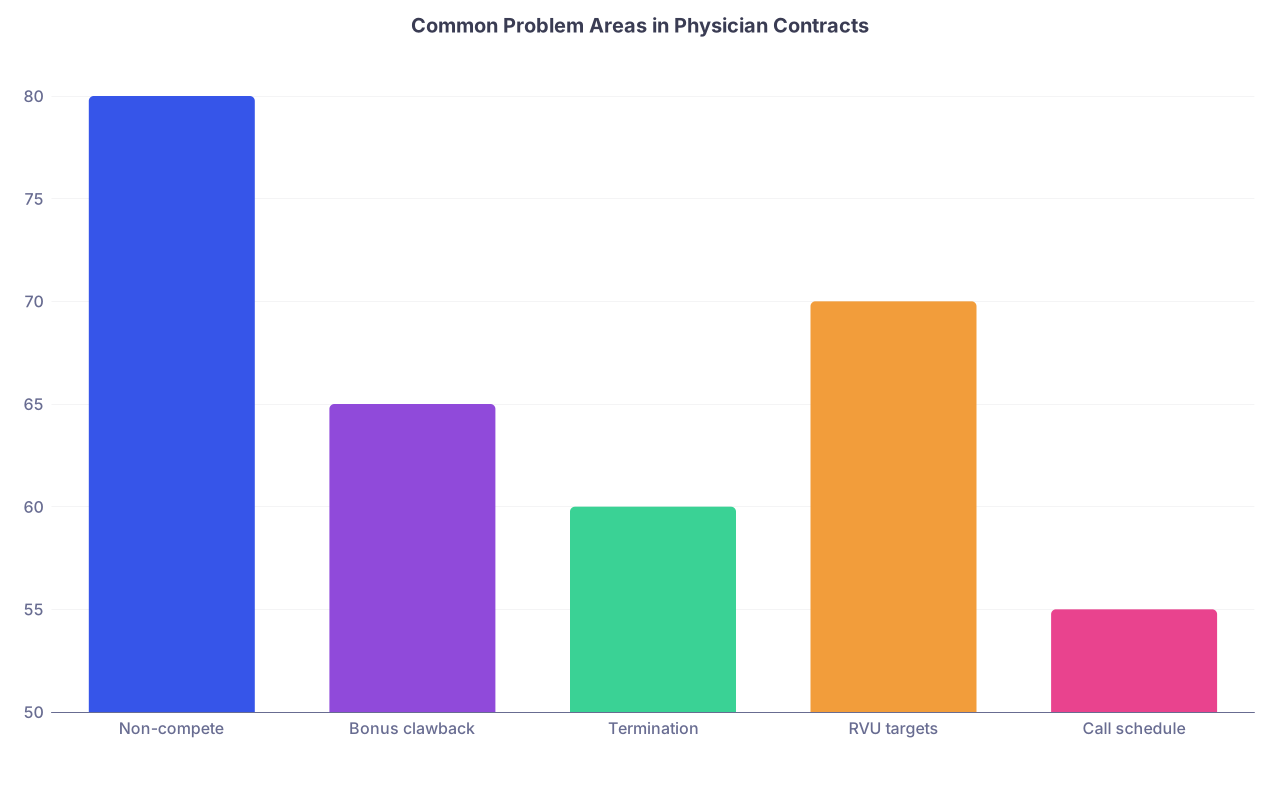
| Category | Value |
|---|---|
| Non-compete | 80 |
| Bonus clawback | 65 |
| Termination | 60 |
| RVU targets | 70 |
| Call schedule | 55 |
3. State Law Limits on Non-Competes
Depending on where you’re working, the non-compete might be:
- Fully enforceable
- Partially enforceable but can be narrowed by a court
- Basically dead-on-arrival for physicians (a few states are going this way)
You absolutely cannot guess this. You need someone who actually knows your state’s employment and healthcare contract law. Not Google. Not your co-resident’s cousin who once went to law school.
But I’ve seen non-competes that look terrifying on paper quietly fall apart when challenged or negotiated.
Step 3: Separate “This Sucks” From “This Is Career-Ending”
Your brain is probably lumping everything together as one giant catastrophe. Let’s split it.
You probably have a mix of:
Emotional problems:
- You feel misled
- You hate the culture
- You’re burned out
- You’re embarrassed you signed it
Financial problems:
- You’re underpaid
- RVU thresholds are unrealistic
- You owe $20–40k if you leave early
- Moving again will cost real money
Legal/structural problems:
- Aggressive non-compete
- Harsh clawbacks
- One-sided termination language
- Arbitration clauses that seem sketchy
Emotional problems are real, but they’re different from “I literally can’t work in my specialty anywhere nearby for two years.”
You need to know which category you’re in:
- “I hate this but can survive 12–18 months while I plan a smart exit”
vs - “Staying here will wreck my health and I need to get out even if it’s messy”
That answer will drive how aggressive you should be.
Step 4: Talk to a Real Physician Contract Attorney (Not Optional)
If you’re already signed and scared, this is where most doctors try to save money.
“I already messed up, what’s the point now?”
Or, “I don’t want to spend $500 just to be told ‘you’re screwed.’”
I’ve seen that exact thinking cost people tens of thousands of dollars and years of their life.
What a good physician contract attorney can actually do at this stage:
- Tell you exactly how enforceable your non-compete likely is in your state
- Point out leverage you didn’t realize you had (like employer breaches or regulatory risks)
- Help you plan an exit strategy that minimizes clawbacks and penalties
- Draft a professional, non-emotional proposal for contract modification or mutual separation
- Give you realistic odds: “If you fight this, here’s what might happen”
| Situation | Get Attorney Help? |
|---|---|
| Non-compete blocks local jobs | Yes |
| Owed money if you leave early | Yes |
| Mild annoyance with schedule | Maybe |
| Unsafe or illegal practices | Yes |
| You just “don’t like it” but can tolerate | Optional |
Is it annoying to pay for this? Yes.
Is it less annoying than staying stuck for 2–3 years or writing a $30k check you didn’t need to? Also yes.
Step 5: Renegotiation Is Not Just for New Contracts
This is the part a lot of doctors don’t believe.
You can renegotiate even after signing. Is it guaranteed to work? Absolutely not. Is it impossible? No.
When renegotiation is more realistic:
- You’re producing well (or at least not losing them money)
- They struggle to recruit in your specialty/market
- Call coverage is thin and you’re a key part of their schedule
- You’ve been there 6–12+ months and aren’t brand new
You don’t go in saying:
“This contract is unfair and I demand you change it or I walk.”
You go in with:
- Data: your RVU/collections, patient volume, wait list, call coverage
- Framing: “I want to build something sustainable here for the long term, and here’s what I’d need…”
Specific things you might ask for:
- Narrowing the non-compete radius or duration
- Making bonus/relocation clawbacks prorated instead of all-or-nothing
- Adjusting call expectations to match what was verbally promised
- Moving up a compensation review instead of waiting 2–3 years
- Adding a mutual without-cause termination if only they currently have that option
I’ve seen physicians get mid-contract changes, especially in smaller groups and hospital-employed roles where losing a doc means huge recruitment headaches.
Will everyone say yes? No. But you’re not powerless just because you signed.

| Step | Description |
|---|---|
| Step 1 | Realize Contract Is Bad |
| Step 2 | Review Contract Carefully |
| Step 3 | Identify Key Problems |
| Step 4 | Consult Physician Attorney |
| Step 5 | Use Termination Clause |
| Step 6 | Request Renegotiation |
| Step 7 | Find New Job |
| Step 8 | Stay or Leave? |
Step 6: If You Decide to Leave, Leave Strategically (Not Emotionally)
Here’s where anxiety likes to push you into extremes:
- “I have to quit tomorrow, I can’t take one more day”
or - “I guess I’m stuck for 3 years, there’s no way out”
The healthy middle is ugly and uncomfortable, but it’s usually best:
Plan the exit. Then execute.
That usually means:
Figure out:
- Your non-compete radius and duration
- Any repayment obligations and exact dollar amounts
- The notice period for without-cause termination
Map your options:
- Can you work outside the radius but still commute?
- Can you switch to a different employer type (academic vs private vs telehealth) that works around your non-compete scope?
- Can you negotiate down or waive part of the clawback in exchange for adequate notice or helping recruit your replacement?
Time your moves:
- Apply for new jobs quietly before you give notice
- Line up malpractice tail coverage if it’s your responsibility
- Save aggressively for a few months to cushion any gap
I’ve seen people eat a $10–15k clawback because staying one more year would have cost them far more in lost income, delayed career moves, and mental health.
And I’ve seen people wait out the tail end of a bad contract while using that time to set up a much better next step.
This is math plus values. There’s no one correct answer.
Step 7: Protect Future You From This Happening Again
I know you’re probably thinking: “I’m never signing anything again without reading every word.”
You won’t. You’ll be tired and rushed next time too. So build in safety nets now:
Decide your hard no’s:
- Non-competes longer than 1 year? Hard no.
- Radius more than X miles from where you actually want to live? Hard no.
- No mutual without-cause termination? Major red flag.
Budget for legal review in every future contract. Period.
Put “contract review” as a mental line item in your job transition budget next to moving costs.Keep a running file of:
- Promises made during interviews
- Call schedules discussed
- Compensation targets they talked about
Those things can help later if reality doesn’t match what was said.
The goal isn’t to never feel anxious about contracts again. The goal is to never be this blind-sided again.
FAQ (Exactly 4 Questions)
1. What if my non-compete is huge and I literally can’t work anywhere nearby?
First, don’t assume “huge” means “enforceable.”
A good attorney can tell you how your state treats physician non-competes. Some states strictly limit them. Some will “blue-pencil” (narrow) overbroad clauses. Also, non-competes usually apply to a specific geography and type of work. You might be able to work in academics, telemedicine, urgent care, or a different subspecialty lane while the clock runs out. Worst-case scenario: you may have to move or commute for a year or two. Painful? Yes. End of your career? No.
2. I already took a big signing bonus. Am I stuck until I’ve “worked it off”?
Not automatically. Look at the exact language. Is repayment prorated (decreases each month/year) or all-or-nothing if you leave before X date? Sometimes employers will negotiate this if you give plenty of notice, help with transition, or if they’d secretly rather not keep you in a toxic situation either. An attorney can sometimes use other contract issues as leverage to soften or waive parts of a clawback. But you need to see the real numbers and not let the idea of a clawback scare you more than the actual cost.
3. Will trying to renegotiate make them mad and get me fired?
If you storm in making demands and threats, yes, you can tank the relationship. If you approach it as: “I want this to be sustainable long term; here are specific changes that would make that possible,” most reasonable employers will at least listen. Especially if you’re productive and they’d have trouble replacing you. The risk isn’t zero—nothing is—but quietly suffering for years “to not rock the boat” is also a risk. A good lawyer or mentor can help you script that conversation so you don’t sound confrontational.
4. What if I can’t afford an attorney right now?
I get it. Post-residency income doesn’t magically erase loans and moving costs. But compare: a $400–$800 review vs losing tens of thousands in bad compensation, clawbacks, or extra years in a setting that limits your career growth. If cash flow is truly impossible, look for: shortened consultations (some attorneys do 30–60 minute focused sessions), state medical societies that offer discounted or referred legal services, or even legal clinics in academic centers. At bare minimum, don’t make big moves—like resigning or refusing to follow a clause—without at least one brief, targeted legal consult.
Here’s the next step you can take today:
Print your contract, sit down with a highlighter, and mark three things in different colors—termination clauses, non-compete language, and any repayment obligations. Once you’ve done that, you’ll know exactly what to show a physician contract attorney instead of just saying, “I think I signed something terrible.”


