

You’ve just told your spouse, “I think I’m taking this job.” The recruiter is “so excited you’re joining the team.” You might even have tentatively picked a start date. But you have not signed. And now something feels off.
Here’s what you’re really asking: Is it acceptable—ethically, professionally, practically—to walk away from a physician offer you almost accepted? And if yes, when is it clearly okay, when is it a gray area, and when are you playing with fire?
Let’s go straight at that.
The Core Rule: Unsigned = Not Obligated (But Not consequence-free)
If you have not signed the contract, you are not legally bound. Full stop.
Hospitals and groups know this. They do it to you all the time: “We’re very interested” → then silence. “We’re planning to expand next year” → expansion canceled. So no, you’re not doing anything illegal by backing out before you sign.
But “legal” and “smart” are different things. Your decisions still impact:
- Your reputation
- Your relationship with that system/recruiter
- Your own stress, move, and financial planning
So the question is not “Can I back out?” It’s “When is it smart and defensible to back out?”
Clear Green Lights: When It’s Absolutely Okay to Walk Away
There are situations where I’d advise you to walk, and not feel bad about it.
1. The Written Contract Doesn’t Match What You Were Promised
Verbal promises mean nothing if they’re not on paper. If any of these change in the contract:
- Base salary or guarantee period is lower/shorter than discussed
- Call schedule is heavier than promised (“1:4” becomes “1:3 plus backup”)
- Clinic support, staffing, or scribe coverage is materially worse
- Partnership track goes from “2 years” to “up to 5 years, at partner discretion”
That’s a legitimate reason to step back.
Here’s what you say:
“The written terms do not match what we discussed, and I’m not comfortable moving forward on this basis. I’m going to withdraw from this offer.”
No long explanation. No apologizing for expecting people to honor their word.
2. Major Life Circumstances Change
You or your spouse get sick. A parent suddenly needs significant caregiving. Your partner gets an offer across the country that makes way more sense for your family.
Life changed; your decision can too.
Programs and employers do this calculation for themselves. You’re allowed to do it for you.
Keep it simple:
“A family situation has changed in a way I did not anticipate, and I need to withdraw from this opportunity.”
You do not owe details. “Family situation” is a complete sentence.
3. You Uncover Serious Cultural or Ethical Red Flags
This is the big one physicians underestimate.
If after the “yes, I’m very interested” stage you see:
- Pressure to churn RVUs at the expense of safety or ethics
- Leadership openly disparaging staff or other physicians
- Dishonesty about quality metrics, wait lists, or patient load
- “We don’t like doctors who question orders from admin” energy
Walk.
Your future self will send you a thank-you card. A toxic environment is not something you can “power through for a year.” Those jobs chew people up.
“Based on what I’ve learned about the position and practice culture, I do not think this is the right fit for me, so I’m going to step back.”
That’s all you need.
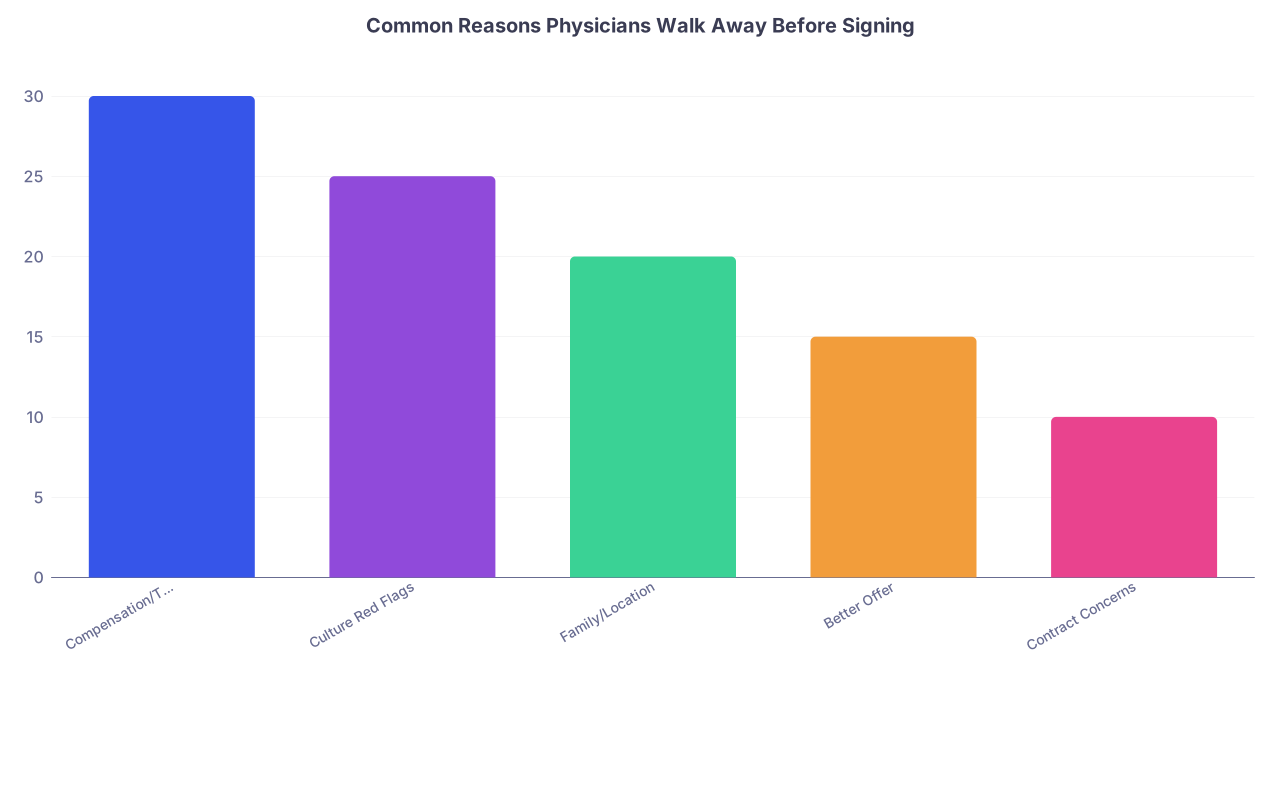
| Category | Value |
|---|---|
| Compensation/Terms Change | 30 |
| Culture Red Flags | 25 |
| Family/Location | 20 |
| Better Offer | 15 |
| Contract Concerns | 10 |
Yellow Lights: It’s Okay, But Handle Carefully
There’s a middle bucket where backing out is acceptable, but you need to be more intentional about how you do it, because this is where you can burn bridges if you’re sloppy.
4. You Receive a Clearly Better Offer After Verbally Saying “Yes”
This happens constantly.
You tell Hospital A, “I’d like to move forward,” but don’t sign yet. Two weeks later, Group B calls with:
- $60k higher base
- Reasonable call
- Better location for your spouse’s job
- Actual MA support vs “you’ll share one MA with three docs”
Are you allowed to change your mind? Yes.
Is it messy? Also yes.
What I recommend:
- Do not string both along “just in case.” Decide quickly.
- When you decide for B, call A. Not email. Call.
- Be honest but not detailed:
“I really appreciate your time and the offer. I’ve received another opportunity that’s a significantly better fit for my family and long-term goals, so I’m going to withdraw from this position.”
They’ll be annoyed. Recruiters may act offended. They’ll get over it. They place dozens of people a year. You’re one of many.
What you do not do: ghost, stall for months, or sign with both thinking you’ll “figure it out later.”
5. You Finally Read the Contract Carefully And Don’t Like What You See
Common late-stage “oh no” items:
- Non-compete that would box you out of the entire metro area
- Termination clause where they can drop you without cause on 60 days’ notice
- Compensation formula that basically guarantees RVU pressure with no ramp
- Malpractice tail coverage not provided when everyone else in the region covers it
You’re allowed to say:
“After reviewing the contract in detail and talking with counsel, I’m not comfortable with several of the terms. I don’t think we’ll be able to get to something that works for both of us, so I’m going to step away.”
If they suddenly become flexible, sure, you can negotiate. But do not let their urgency override your instincts. If they’re cagey about fixing obviously bad terms now, they’ll be worse once you’re on payroll.
6. The Location or Commute Becomes a Dealbreaker
Sometimes the more you sit with a location, the more the reality sets in.
- The “45-minute commute” is really 75 minutes at 7:30 a.m.
- Your spouse toured the city and hated it.
- Schools, cost of living, or housing availability look very different in person.
That’s a valid reason. Employers know location is a main driver.
Keep it short:
“After more time exploring the area and discussing it with my family, I do not think this location is going to be sustainable for us long term. I’m going to withdraw from the offer.”

Red Lights: When Walking Away Is Risky or Flat-Out Dumb
Let me be blunt. There are scenarios where backing out might not break any laws, but it can absolutely wreck your reputation, especially in smaller markets or tight-knit specialties.
7. After You’ve Signed the Contract (But Haven’t Started)
Different situation. Once you sign, you’re in legal territory.
You might still walk away, but now you’re dealing with:
- Possible breach-of-contract claim
- Repayment of signing bonus or relocation money
- Legal costs and nasty letters
- A very upset employer who knows other people in your niche
Sometimes, life events justify it. Sometimes you can negotiate a release. But don’t casually sign “to hold the spot” while you keep shopping. That’s how you end up in court or on someone’s blacklist.
If you already signed and need out, this becomes a lawyer conversation, not a DIY negotiation.
8. You Back Out at the Last Second for Trivial Reasons
Example: It’s July. You’re supposed to start August 1. Credentialing is done. They’ve announced you to the community. You walk away because:
- “I just feel like I need more time to travel.”
- “I kind of want to move to a slightly trendier neighborhood in another city.”
- “I got nervous about working full-time.”
That’s not a career move; that’s impulsive. And word travels.
If a reason would sound flaky to a colleague you respect, it’s probably going to sound flaky to the employer. That doesn’t mean you must stay, but expect fallout.
| Situation | Category |
|---|---|
| Contract terms differ from verbal promises | Reasonable |
| Major family/health change | Reasonable |
| Serious culture/ethics red flags discovered | Reasonable |
| Better offer before signing | Reasonable |
| Trying to exit after signing | Risky |
| Backing out last minute for trivial reasons | Risky |
How to Back Out Professionally (Step-by-Step)
You can do the right thing for you and not behave like a jerk. Here’s the clean way.
Step 1: Decide Quickly, Then Stop Waffling
Dragging this out is what causes most of the drama. Once you know you’re out, act within a couple of days. Not weeks.
Step 2: Use the Right Medium
Order of respect:
- Phone call
- Follow-up email summary
Do not text. Do not ghost. Do not just send a one-line email and disappear.
Step 3: Script It Once, Then Stick to the Script
You don’t need a novel. You need 3 elements:
- Brief appreciation
- Clear statement you’re not moving forward
- Short, non-defensive reason
Sample script you can literally use:
“Dr. Smith, thank you again for the time you and the team have spent with me. After a lot of thought, I’ve decided not to move forward with the position. Another opportunity arose that’s a better fit for my family and long-term goals, so I’m going to withdraw from this offer. I appreciate your understanding and wish the group the best.”
They may push. “What did they offer? Can we match?” Decide beforehand if you’re open to that. If not:
“I’ve made my decision and I’m going to stick with it.”
That’s it. No more details.
Step 4: Follow Up in Writing
One short email afterward:
“As discussed by phone, I’m formally withdrawing from consideration for the [Specialty] position. Thank you again for your time and the opportunity.”
That closes the loop and creates a record in case there’s confusion later.

| Step | Description |
|---|---|
| Step 1 | Unsure About Offer |
| Step 2 | Talk to Lawyer |
| Step 3 | Decide Quickly |
| Step 4 | Likely Stay or Negotiate |
| Step 5 | Call Employer and Withdraw |
| Step 6 | Send Confirmation Email |
| Step 7 | Signed Contract |
| Step 8 | Major Concern? |
How This Plays Out in Different Markets
Context matters.
Big metro, large health system, common specialty (e.g., hospitalist, outpatient IM, FM):
Backing out before signing is usually a blip on the radar. Annoying to them, survivable for you.Small town, only hospital for 60 miles, niche specialty (e.g., neurosurg, neonatology):
Your name will be remembered. Does that mean you must stay in a bad situation? No. But you factor that into your decision.Academic vs private:
Academic departments sometimes have longer memories and tighter networks. Private groups might be more transactional but more sensitive to disruptions because each hire matters more.
Point is: don’t catastrophize, but don’t pretend context doesn’t exist either.
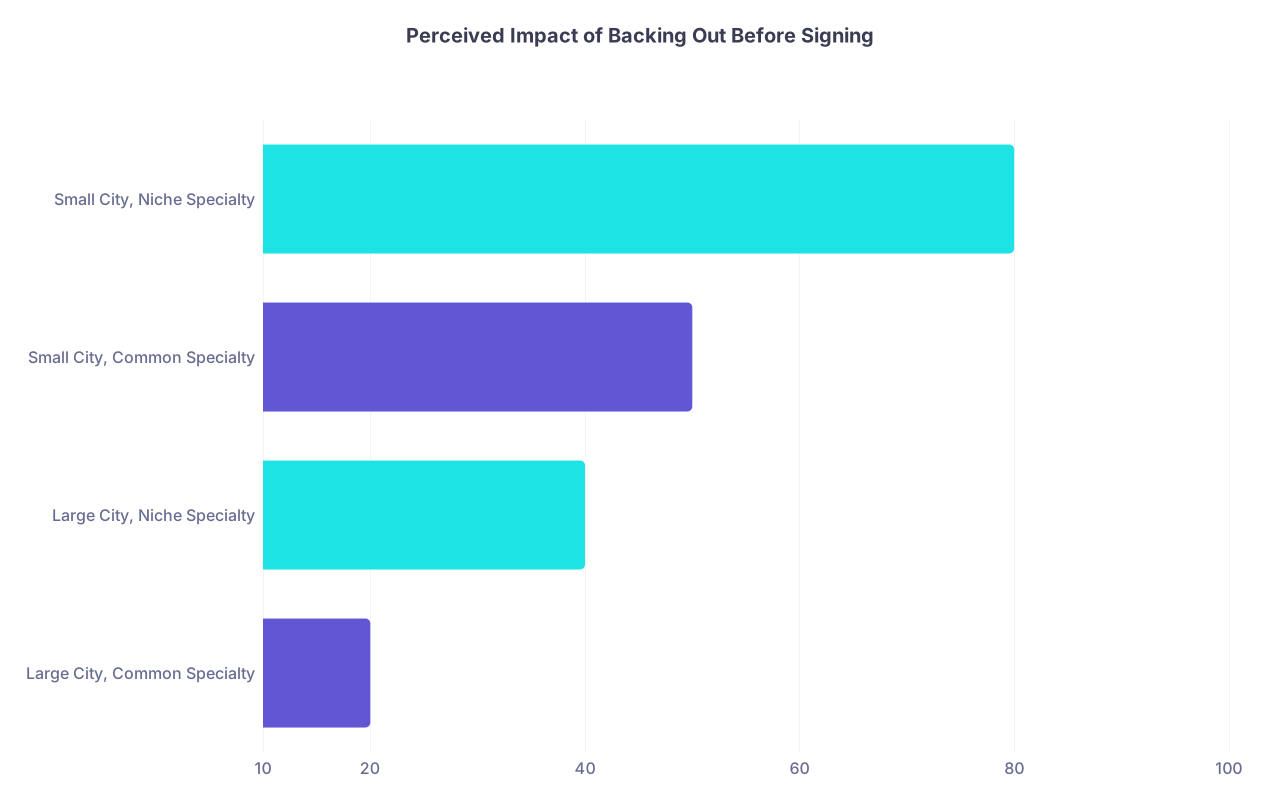
| Category | Value |
|---|---|
| Large City, Common Specialty | 20 |
| Large City, Niche Specialty | 40 |
| Small City, Common Specialty | 50 |
| Small City, Niche Specialty | 80 |
When You’re Just Scared vs When Your Instincts Are Right
This is the last subtlety.
Not every feeling of “I’m nervous” means “this job is wrong.” Sometimes you’re just transitioning from trainee to attending. That feels uncomfortable no matter where you go.
Check yourself with these questions:
- Are my concerns specific and concrete (non-compete, RVUs, toxic leadership) or vague (“What if I hate it?”)?
- Would I feel better about this exact job if there were no other offers out there?
- Have I gotten independent eyes on the contract (lawyer, mentor) who are concerned too?
If your concerns are specific, grounded, and echoed by others, walking away is probably wise. If your main “issue” is that a shinier offer appeared 48 hours later, then yes, you can still choose the better one—but own that you’re making a self-interested move and handle it maturely.
FAQ: Walking Away From a Physician Offer
1. Is a verbal acceptance of a job offer legally binding for physicians?
Generally, no. In most cases, the enforceable agreement is the signed written contract, not your “yes” on the phone. But a verbal acceptance does create an expectation, and breaking it repeatedly or casually can hurt your reputation. Legal risk is low before signing; reputational risk depends on how and when you back out.
2. How late is “too late” to back out before signing?
Legally, you can walk any time before signing. Practically, the closer you are to the planned start date, the worse it looks. If they’ve already credentialed you, announced your arrival, and built schedules around you, backing out a month before your start is going to sting. If you know you’re out, do it as far in advance as you can.
3. Do I have to tell them I got a better offer?
No. You can say, “I’ve decided not to move forward; another opportunity is a better fit.” You don’t owe specifics on salary, location, or details. Sometimes sharing that it’s another opportunity (not just vague “personal reasons”) actually convinces them this isn’t salvageable and ends the pressure.
4. Could backing out keep me from getting hired in that system or region later?
Possibly, especially in smaller markets. A burned chair or CMO can quietly block you from re-entering a system. That said, backing out once, early, for a clear reason is rarely fatal. Chronic flakiness and last-second exits are what really damage you.
5. Should I negotiate first or just walk if terms look bad?
If the main problem is specific contract terms—but the job otherwise feels right—negotiate first. Ask clearly for changes to non-compete, termination, compensation structure, or tail coverage. If they’re rigid or dismissive, then you walk. If the problem is deeper (ethics, culture, leadership), negotiation is usually lipstick on a pig; just leave.
6. Do I need a physician contract lawyer before I decide to walk away?
You do not need one to decide you hate the culture or location. But if your hesitation is about contract terms—non-compete, termination, bonus clawbacks, malpractice—pay for a real physician contract review. It’s a small investment compared to the cost of being stuck in a bad deal or trying to escape one later.
Key points to walk away with:
- If you have not signed, you’re not locked in—but how you back out still matters.
- Walking away is absolutely justified for mismatched terms, major life changes, or clear red flags.
- Decide quickly, communicate directly, and protect both your long-term career and your sanity.


