

The biggest mistake physicians make with contracts is simple: they call an attorney too late, then expect a miracle.
You do not bring in a contract attorney the day before you sign. You build them into your job search timeline like you’d schedule your Step exams or your board recertification.
Here’s exactly when, in what order, and for which decisions you should loop in a contract attorney from PGY-3 through your first year in practice.
Big-Picture Timeline: Where the Attorney Fits
At this point, let’s zoom out and map your whole job search year. Then we’ll drill into each phase week-by-week.
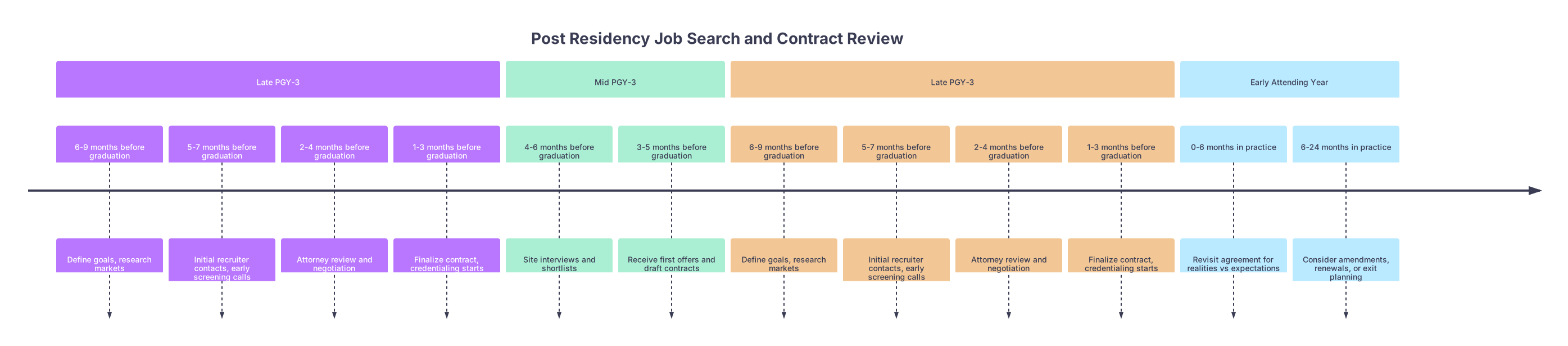
| Period | Event |
|---|---|
| Late PGY-3 - 6-9 months before graduation | Define goals, research markets |
| Late PGY-3 - 5-7 months before graduation | Initial recruiter contacts, early screening calls |
| Mid PGY-3 - 4-6 months before graduation | Site interviews and shortlists |
| Mid PGY-3 - 3-5 months before graduation | Receive first offers and draft contracts |
| Late PGY-3 - 2-4 months before graduation | Attorney review and negotiation |
| Late PGY-3 - 1-3 months before graduation | Finalize contract, credentialing starts |
| Early Attending Year - 0-6 months in practice | Revisit agreement for realities vs expectations |
| Early Attending Year - 6-24 months in practice | Consider amendments, renewals, or exit planning |
That’s the skeleton. Now let’s walk it chronologically with clear “loop in an attorney here” flags.
6–9 Months Before Graduation: Quiet Prep, No Attorney Yet
Timeframe: Roughly September–November of your PGY-3 year (or final year of fellowship).
Primary goals:
- Figure out what you actually want:
- Academic vs community
- Large system vs private group vs locums
- Geographic must-haves vs nice-to-haves
- Understand your market:
- Typical salary ranges
- Common bonus structures
- Call expectations in your specialty
At this point you should…
- Talk to senior residents/fellows who just signed contracts. Ask:
- “What do you regret not negotiating?”
- “Did you use a contract attorney? When?”
- Start a simple spreadsheet for offers (current and future) with columns for:
- Base pay
- RVU or productivity expectations
- Call pay
- Noncompete radius/length
- Termination notice
You do not need an attorney yet. You’re just learning the terrain.
5–7 Months Before Graduation: Recruiters & First Conversations
Timeframe: November–January.
You’re taking recruiter calls, filling out interest forms, maybe one or two low-stakes Zooms with department chairs or practice leaders.
At this point you should…
- Screen for obvious deal-breakers before you waste time or pay a lawyer to review junk:
- Location you’d never accept
- Insane call burden (1:2, Q3 with no call pay)
- Clearly under-market salary
- Start saving PDFs/emails of any “we typically offer…” details. Those are mini promises you’ll want your attorney to see later.
When to start thinking about an attorney (but not hiring yet)
Loop in a contract attorney conceptually here. As in:
- Make a shortlist of 2–3 attorneys who do physician contracts in your state and specialty.
- Compare their fee structures.
| Model | What It Looks Like |
|---|---|
| Flat review only | $500–$1,200 for read + written memo |
| Review + call | $800–$1,800 for memo + 30–60 min call |
| Full negotiation | $1,500–$3,500+ to negotiate for you |
You should:
- Ask colleagues for names. Ignore attorneys who “do a little bit of everything.” You want someone who sees physician contracts all day.
- Email the top 1–2:
“I’m finishing IM residency in June, expect first contracts around February. What’s your turnaround time for review, and do you have fixed-fee packages?”
You’re not paying them yet. You’re building your bench so you’re not scrambling later.
4–6 Months Before Graduation: Site Visits & Shortlist – Light Attorney Input Optional
Timeframe: January–March.
You’re flying out for on-site interviews, seeing the ORs/clinics, doing dinners with partners.
You still probably don’t have a formal contract in hand. Maybe a “summary of terms” or informal email.
At this point you should…
- Narrow to a serious shortlist of 2–4 places.
- Start tracking:
- Culture and red flags (“We all pick up extra shifts, it’s just how we do things”)
- How realistic the volume expectations sound
- Whether partners avoid talking about compensation structure
Where a brief attorney touch can help
Optional but smart: a 30-minute paid consult with your chosen attorney before contracts arrive.
Use that time to:
- Ask: “What are the 3–5 landmines in contracts for [your specialty] in [your state]?”
- For example, noncompetes in dermatology vs hospitalists vs anesthesiology.
- Clarify: “I’m okay with lower salary for better schedule” or “I care most about partnership track and buy-in terms.”
This shapes the lens they’ll use when reviewing your eventual offers. It also keeps you from being stunned when they later say, “You should walk from this.”
3–5 Months Before Graduation: First Offers Arrive – ATTORNEY PHASE 1
Timeframe: February–April.
This is the first hard “call the attorney now” checkpoint.
You’ll typically see:
- A formal offer letter
- Or straight to a full employment agreement (15–40 pages)
Do not do this (common error)
- You get an offer letter.
- You think, “This looks fine, I’ll sign it and have the attorney review the final contract later.”
- The contract shows up baked with all the same bad terms. Now it’s politically harder to change, because you already “agreed.”
At this point you should…
The first time you get any written terms that feel “real”:
Pause. Do not verbally accept anything yet.
Say:
“Thank you, this looks promising. I’d like to review the terms and discuss with my contract attorney. I’ll get back to you within 1–2 weeks.”Send the document to your attorney immediately:
- Offer letter
- Draft contract
- Any side letters or bonus plan descriptions
Ask for a turnaround time:
- Reasonable: 3–7 business days.
- If they’re quoting 3+ weeks and you’re under time pressure, that’s a problem. You should have asked this months ago (this is why we prep early).
What your attorney should do in this phase
- Issue spotting: noncompete scope, termination clauses, call pay, tail coverage, RVU thresholds, partnership language, vague “as determined by employer” wording.
- Contextualizing: “This is fair for your region and specialty” vs “This is 15–20% below market and call is abusive.”
- Strategizing: Which hills are worth dying on.
This is not the time to have them wordsmith minor clauses. It’s triage and leverage assessment.
2–4 Months Before Graduation: Counteroffers & Real Negotiation – ATTORNEY PHASE 2
Timeframe: March–May.
Now you’re going back and forth with one or two top choices. This is where timing matters.
You have two main approaches:
- Attorney as coach (most common for first job)
- Attorney as direct negotiator (more common when you have strong leverage, or a complicated situation)
Attorney as coach (you speak, they script)
At this point you should…
Have your attorney create a prioritized issue list:
- Tier 1: Deal-breakers (noncompete too strict, no tail coverage, terrible termination terms)
- Tier 2: Strong wants (base pay, RVU rate, call comp, bonus structure)
- Tier 3: Nice-to-have clarifications (CME funds, admin time, work-from-home tele days)
Role-play or outline your next conversation with the recruiter / chair:
- “I’m comfortable with the overall opportunity, but I do have several concerns:
- The noncompete radius of 50 miles is too broad; I’d like to see that at 10–15 miles.
- The with-cause termination language is very broad; can we tie it to clear, objective triggers?
- Call is listed as ‘equally shared,’ but there’s no cap; can we specify current call frequency?”
- “I’m comfortable with the overall opportunity, but I do have several concerns:
Ask your attorney for exact language changes:
- You send back redlines or a bullet list, not vague “can you make this better?” notes.
Attorney as direct negotiator
Sometimes you want the attorney front and center:
- Complex partnership/ownership structures in private groups
- Multi-entity hospital system contracts
- You’ve already had awkward conversations and need to reset tone
If you choose this:
At this point you should…
- Introduce the attorney explicitly:
“I’ve engaged a physician contract attorney who will help with the legal aspects of the agreement. I remain very interested; they’ll simply help us tighten language and clarify expectations.” - Let your attorney:
- Send formal redlines
- Join a negotiation call (on mute, then you debrief)
- Or, if the employer is used to it, speak directly with their legal/HR
This takes some of the “difficult” tone off you, which can help preserve relationships.
1–3 Months Before Graduation: Finalization & Pre-Start Clean-Up – ATTORNEY PHASE 3
Timeframe: April–June.
You’re trying to sign, start credentialing, and lock down moving plans. Pressure is high. This is where people rush and miss glaring problems.
At this point you should…
- Get your “final” version back from employer.
- Do not assume changes you verbally agreed on made it into the document.
- Send that exact PDF/Word file for final attorney review.
- Very specifically: “Please confirm all previously discussed changes are accurately incorporated and flag any new language.”
- Make sure the attorney checks:
- Start date vs credentialing reality
- Bonus formulas match what you were told in email or conversation
- Any “policies and procedures” referenced aren’t black holes that can change your job overnight
Hard rule
Do not sign until your contract attorney clears that last version. I’ve seen last-minute revisions mysteriously “restore” a broader noncompete or adjust a bonus term.
You’re tired. They’re not.
First 0–6 Months in Practice: Reality Check – Optional Attorney Consult
You’re working as an attending. The honeymoon period is either real or already fading.
Signals you may need to loop your attorney back in:
- Your actual schedule is wildly different from what you understood.
- Call frequency is double what was implied.
- Compensation formulas are suddenly being interpreted differently.
- Administration is asking you to sign “policy acknowledgements” that effectively modify your contract.
At this point you should…
- Pull out the contract and your attorney’s original memo.
- Book a short follow-up consult (30–60 minutes):
- “Here’s what’s actually happening. Does this violate or stretch the agreement? Do I have any leverage?”
This is not whining. It’s strategic:
- You’ll get clarity: Is this annoying-but-legal or actually a breach?
- You’ll hear options: document concerns, request written clarification, or quietly plan an exit.
6–24 Months In: Amendments, Renewals, or Exit – ATTORNEY PHASE 4
By now you might be:
- Up for partnership
- Offered a revised compensation model
- Considering a move closer to family
- Burned out and done with this group
Here’s where your original attorney can save you from a second round of regret.
Partnership or ownership track
If there’s a buy-in or new shareholder agreement:
At this point you should…
- Treat it like a brand-new job search:
- Send the partnership documents for full review.
- Ask bluntly: “Is this a real partnership or glorified senior employee status with risk?”
- Have your attorney explain:
- Capital contributions
- Buy-out formulas if you leave
- How call, admin work, and decision rights actually change (or don’t)
Planning an exit
If you’re eyeing other jobs:
At this point you should…
- Book a “Can I leave without getting sued or screwed?” consult:
- Noncompete radius and duration
- Notice requirements
- Repayment obligations (signing bonus, relocation, retention bonuses)
- Tail coverage costs and who’s on the hook
This should happen 3–12 months before you actually plan to leave. Not after you’ve accepted a competing offer in the same neighborhood.
When You Must Have a Contract Attorney (Non-Negotiable Moments)
Some physicians still try to “save money” by skipping legal review. That’s like skipping imaging on a complex trauma to save radiation.
Here are the absolute musts:
| Stage | Attorney Needed? |
|---|---|
| Early job exploration | Optional |
| First written offer/term sheet | Yes – Phase 1 review |
| First full contract draft | Yes – Phase 1–2 |
| Before signing any version | Yes – Phase 3 check |
| Major amendment/partnership docs | Yes – Phase 4 review |
| Planning to leave/switch employers | Strongly recommended |
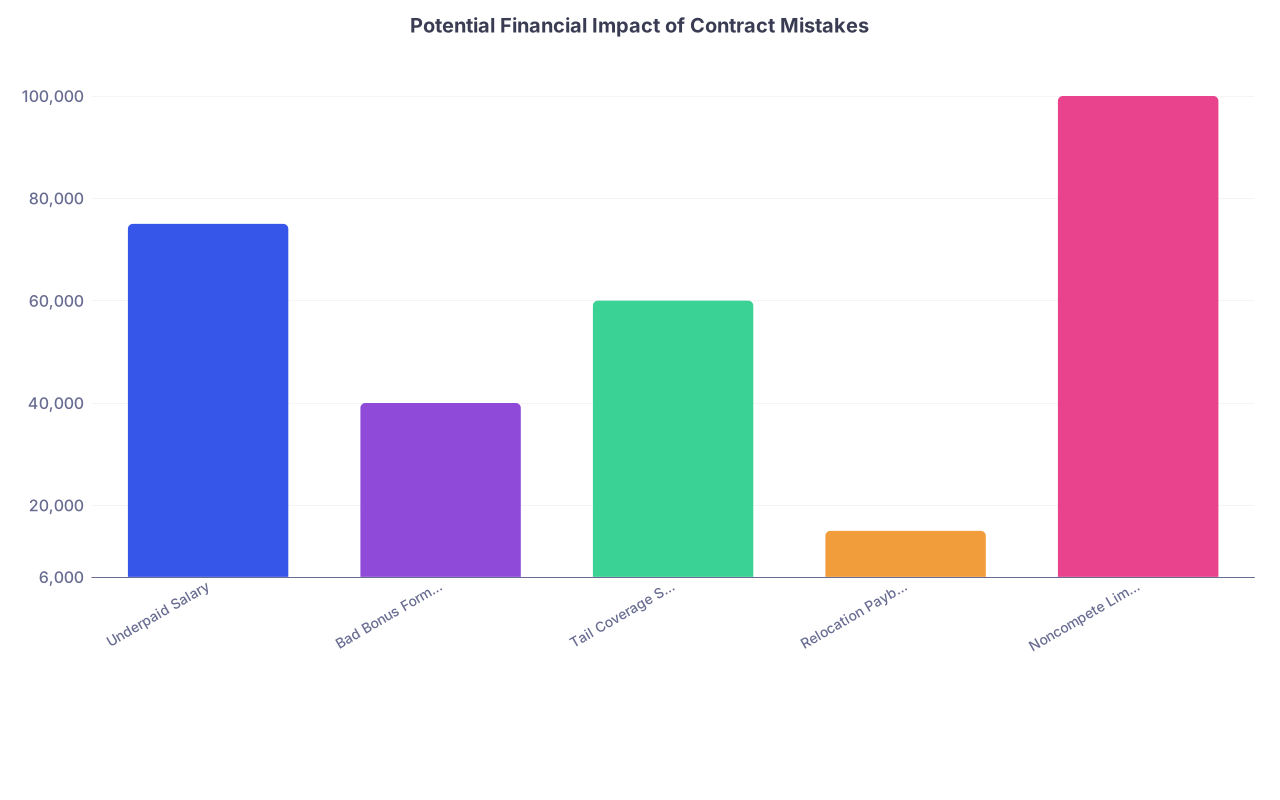
And here’s why this matters financially:
| Category | Value |
|---|---|
| Underpaid Salary | 75000 |
| Bad Bonus Formula | 40000 |
| Tail Coverage Surprise | 60000 |
| Relocation Payback | 15000 |
| Noncompete Limits | 100000 |
Those are not theoretical numbers. I’ve seen under-market pay, mandatory tail, and blocked job switches cost physicians 5–6 figures. Over years, sometimes 7.
Red Flags You Should Call an Attorney Immediately
Some situations are so toxic you skip straight to “get legal help now.”
At any point in your timeline, if you see:
- Pressure to sign today or “this week only”
- “We don’t change this contract for anyone”
- Noncompete that covers entire metro areas or whole states
- Vague language like “as determined solely by employer” for major items (comp plan, call, location)
- Threats about rescinding the offer if you involve an attorney
At this point you should…
- Step back.
- Send everything you have to your attorney.
- Be prepared to walk.
No reasonable employer rescinds offers just because you want a professional to review your legal commitments.
Putting It All Together: Your Contract-Attorney Timeline
Let me give you a clean, chronological checklist you can literally copy into your calendar.

9–6 months before graduation
- Clarify job goals & geography
- Research market norms
- Collect 2–3 names of physician contract attorneys
7–5 months before graduation
- Start recruiter calls and early interviews
- Narrow attorney list, email to confirm fees and turnaround times
6–4 months before graduation
- Do site visits
- Optional: brief strategy consult with chosen attorney to learn key pitfalls for your specialty/state
5–3 months before graduation
- First offers or draft contracts arrive
- Send any written offer/terms to attorney – Phase 1 review
- Get issue-spotting memo and prioritize your negotiation strategy
4–2 months before graduation
- Active negotiation with top choice(s) – Phase 2
- Either:
- You negotiate with attorney guidance
- Or attorney negotiates/redlines directly
- Confirm any agreed changes in writing
2–1 months before graduation
- Receive “final” contract draft
- Send to attorney for Phase 3 verification: ensure all changes are accurately included
- Sign only after that final clearance
0–6 months in practice
- Compare lived reality to contract expectations
- If there’s a major mismatch, schedule a brief consult and ask if this is a breach or just bad culture
6–24 months in practice
- For amendments, partnership, or exit planning, go back to the same attorney for Phase 4:
- Review new ownership documents or new offers
- Analyze noncompete and repayment risks before you move
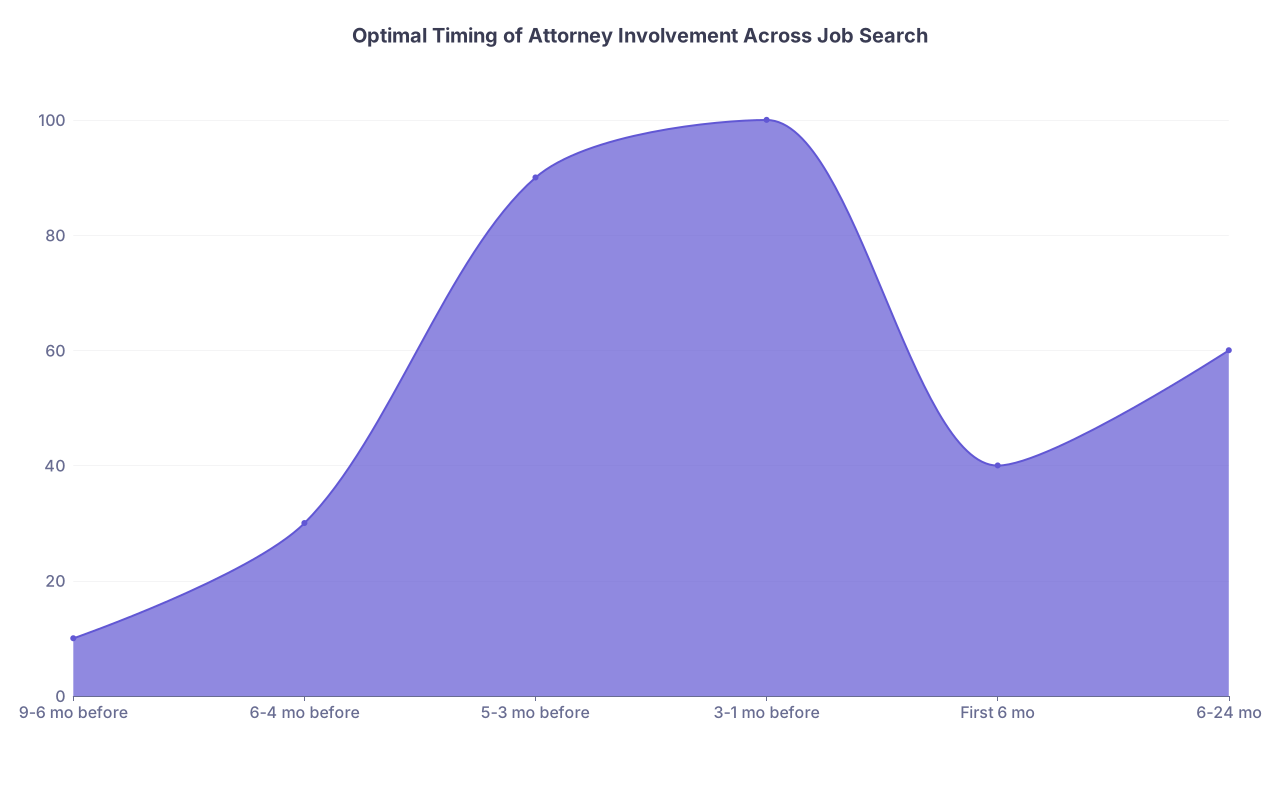
| Category | Value |
|---|---|
| 9-6 mo before | 10 |
| 6-4 mo before | 30 |
| 5-3 mo before | 90 |
| 3-1 mo before | 100 |
| First 6 mo | 40 |
| 6-24 mo | 60 |
(Where 0 = not important, 100 = absolutely critical.)
Final Takeaways
- Loop in a contract attorney the moment you get your first real written terms, not after you’ve already informally agreed.
- Build the attorney into your entire timeline: strategy early, review at first draft, guidance during negotiation, and a final check before you sign.
- Reuse that same attorney for partnership changes and exit planning; contracts do not stop mattering once you start your job—sometimes that’s when they matter most.


