

The worst thing you can do in the first 72 hours after a physician offer is say “yes” too fast.
Hour 0–1: The Moment You Receive the Offer
At this point you should slow everything down.
Whether it’s a call from the recruiter, an email from the chair, or a PDF from HR:
Thank them and pause the process
- Say something like:
- “Thank you, I’m really excited about this. I’d like to review the details carefully. When do you need a response by?”
- Do not:
- Verbally accept
- Start negotiating on the phone
- Get pressured into “we just need a verbal yes”
- Say something like:
Get the offer in writing (if you only got it verbally)
- If they give you numbers over the phone:
- “This sounds promising. Could you send me the full offer and contract in writing so I can review it?”
- If they give you numbers over the phone:
Record the key timing info Write this down immediately:
- Date and time of offer
- Exact response deadline (and who said it)
- Mode of communication (email / phone / in person)
- Contact person for questions
You’re setting the clock. Now we build your 72‑hour plan around that.
Hour 1–6: Initial Triage, Not Deep Reading
At this point you should do a quick pass, not a deep dive.
You’re looking for deal-breakers, timing pressure, and missing pieces.
Save and organize everything
- Create a folder right now:
Job Offers / [Institution Name] / [Specialty] / [Year]
- Save:
- Offer letter
- Draft contract/employment agreement
- Any attached compensation or RVU schedules
- Benefits summary
- Rename files clearly:
OfferLetter_HospitalName_Date.pdf, etc.
- Create a folder right now:
Do a 10–15 minute skim—not a line-by-line read Focus on:
- Base compensation
- Bonus language (sign‑on, productivity, quality)
- Term length (1 year, 3 years, etc.)
- Non-compete / restrictive covenant section
- Call responsibilities
- Location(s) of work
You’re not deciding if you love it yet. You’re flagging what needs attention.
- Write down your gut reactions
On a single sheet (or Note on your phone), list:- “Wow, that’s better than expected” items
- “That seems off” items
- Questions that jump out (even if naive)
This gut list is often more honest than what you’ll rationalize later.
Hour 6–12: Lock in Your Support Team
At this point you should get experts on your side. Not your co-resident who “heard something” from a friend.
- Find and contact a physician contract attorney
You want someone who:
- Does physician/APP contracts all day, not general business law
- Knows your state’s laws (or the state where the job is)
- Ideally knows your specialty dynamics (e.g., EM vs derm vs hospitalist)
Actions in this window:
- Ask for 2–3 names:
- Senior residents/fellows who just signed
- Attendings you trust
- Your specialty society or state medical society
- Email or call with:
- The offer letter (attach)
- A short note:
- What specialty you’re in
- Type of employer (hospital, private group, academic)
- When they need a response by
- Ask:
- “Can you review this and speak with me within the next 48 hours?”
- Block out time on your calendar
In the next 3 days you need protected time:
- 60–90 minutes for your detailed review
- 30–60 minutes with the attorney
- 30 minutes to prepare negotiation points
- 15–30 minutes for the first negotiation call/email
Put these on your calendar now, before clinics, calls, and sign‑outs swallow your life.
- Inform family/partner—but do not crowdsource legal advice
It’s fine to say:
- “I got an offer from X in Y city. I’m having a contract attorney look it over.” Don’t:
- Get into “my cousin the dentist said…” territory
- Let a partner pressure you to accept instantly because of location or salary alone
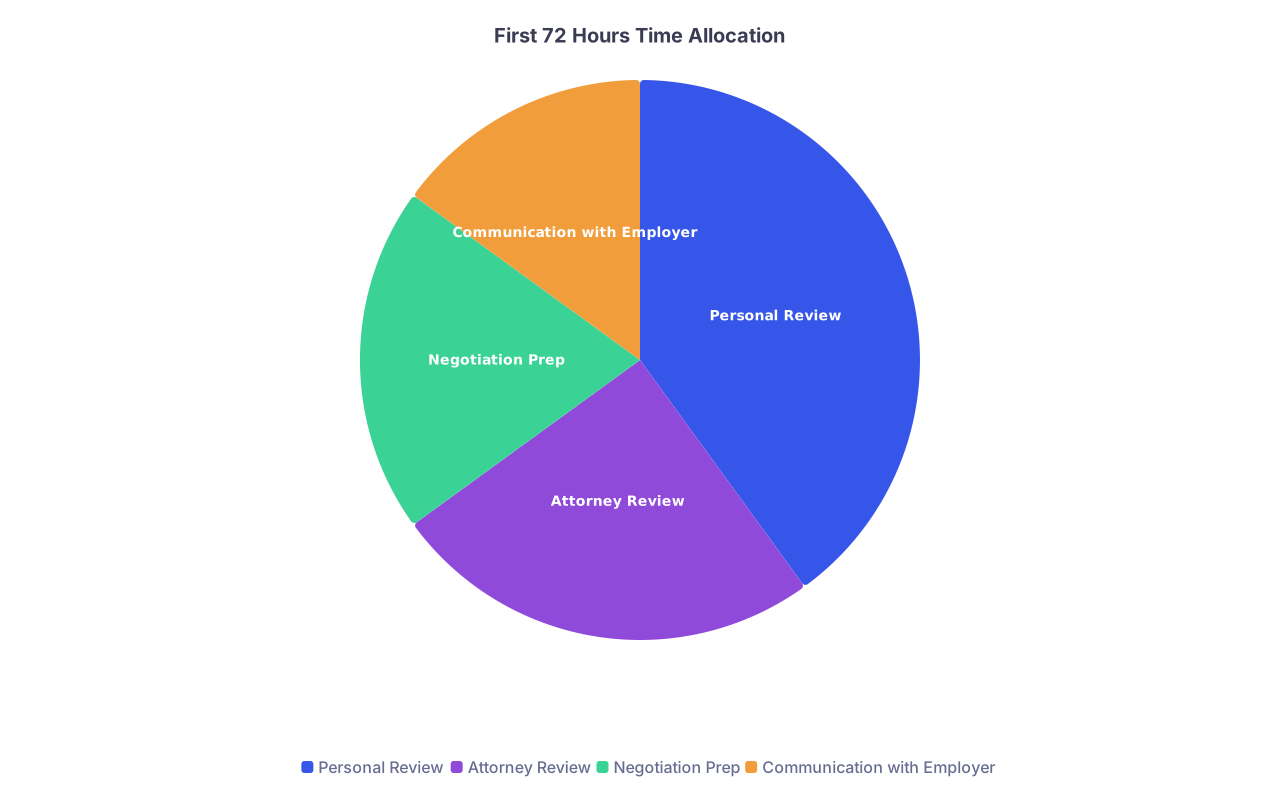
| Category | Value |
|---|---|
| Personal Review | 40 |
| Attorney Review | 25 |
| Negotiation Prep | 20 |
| Communication with Employer | 15 |
Hour 12–24: Your First Real Read-Through
At this point you should do a structured, solo review. No distractions, no rushing between patients.
Step 1: Set up your tools (15 minutes)
Have:
- Printed contract and offer letter or tablet with stylus
- Highlighter (two colors: “bad/unclear” vs “good/important”)
- Notebook or digital doc titled:
Questions and Red Flags – [Hospital Name] - Basic compensation benchmarks for your specialty (MGMA, specialty society survey, or even credible online aggregates if that’s all you have)
Step 2: First pass—mark, don’t solve (45–60 minutes)
Read through from start to finish and mark:
- Anything you don’t understand fully
If you’d hesitate to explain it to a co-resident, highlight it. - Anything that sounds restrictive
Non‑compete, moonlighting restrictions, outside activities, IP. - Anything that feels low or vague
“Productivity bonus at employer’s discretion” is vague. That’s a problem.
Common sections to flag:
- Term and renewal
- Termination (with cause / without cause, notice periods)
- Compensation:
- Base salary
- RVU thresholds
- Conversion factors
- “Market adjustments”
- Call and work hours
- Location(s) of service
- Malpractice coverage and tail
- Non-compete / non-solicitation
- Bonuses:
- Sign-on
- Relocation
- Loan repayment
- Benefits:
- CME
- Vacation/PTO
- Health, retirement
Do not get bogged down trying to interpret every clause yourself. The goal is: highlight + list questions.
Step 3: Build your “Issue List” (30–45 minutes)
Now synthesize. Open your Questions and Red Flags doc and create sections like:
- Compensation
- Schedule/Call
- Non-compete / Restrictive covenants
- Termination
- Malpractice
- Location/Duties
- Bonus/Relocation
- Other
Under each, list:
- Page/section reference
- Short description
- Your concern or question
Example:
- Compensation
- Sec 3.2 – RVU bonus threshold 7,000/year. Typical for new hospitalists? Seems high vs MGMA median.
- Sec 3.4 – “Compensation may be adjusted at employer’s discretion.” No floor or process specified. Too loose?
This document becomes the backbone of your conversation with your attorney and your negotiation.
Hour 24–36: Attorney Review and Strategy Shaping
At this point you should turn your raw notes into a strategy with a professional.
Step 1: Send materials before the call
Send to your contract attorney:
- The offer letter and full contract
- Your
Questions and Red Flagsdoc - Your response deadline
- One paragraph about your situation:
- Your PGY year, fellowship status
- Other offers or interviews (general, no need for exact numbers)
- Your top 3 priorities (e.g., location, schedule, salary, visa, loan repayment)
Step 2: Have a focused call (30–60 minutes)
On the call, aim for:
- Global risk assessment (5–10 minutes)
Ask directly:
- “On a scale from 1–10, how concerning is this contract overall for a new attending in my position?”
- “If this were your kid finishing fellowship, what would you tell them about this offer?”
You want blunt, not sugar‑coated.
Key sections review (20–30 minutes) Walk through:
- Non-compete:
- Radius
- Duration
- Scope (all clinical work vs just your specialty vs specific practice sites)
- Termination:
- Without cause notice period
- What happens to sign-on, relocation, and bonuses if you leave early
- Malpractice:
- Claims‑made vs occurrence
- Who pays for tail and under what conditions
- Compensation:
- Is base competitive?
- Are RVU/bonus thresholds realistic for your specialty/region?
- Any “poison pill” clauses?
- Non-compete:
Negotiation targets (10–15 minutes) By the end, you should have:
- 3–5 high‑priority items to negotiate
- 3–5 secondary items (nice-to-have)
- A sense of what’s unreasonable to push on for this employer type
Good attorneys will also tell you:
- “This system never moves on non-competes, but we can soften X and Y.”
- “Your base is actually strong; the real issue is the RVU threshold.”
- “This relocation payback clause is brutal. That must change.”

Hour 36–48: Clarify Your Priorities and BATNA
At this point you should decide what you actually want and what you’ll walk away from.
Step 1: Rank your priorities (30 minutes)
On a single page, force yourself to rank:
- Location (specific city/region)
- Compensation (total realistic year 1–3 income)
- Schedule/lifestyle (nights/weekends/ICU time/OR time)
- Future options (non-compete, termination, tail)
- Academic vs community vs private
- Visa/immigration issues (if relevant)
- Loan repayment or PSLF eligibility
Write them in order, 1–7, for this stage of your life. Be honest.
Then, map each priority to contract issues:
- If schedule is #1:
- Call expectations
- Weekend coverage
- Clinic session numbers
- If future options is #1:
- Non-compete
- Tail coverage
- Without‑cause termination and payback provisions
Step 2: Define your BATNA (Best Alternative To a Negotiated Agreement)
Your BATNA is not theoretical. It’s concrete. Ask:
- Do you have:
- Another offer in hand?
- Ongoing interviews?
- The option to extend training (chief year, extra fellowship)?
- The ability to wait 3–6 months?
On paper, write:
- “If this offer disappeared tomorrow, my realistic next best option is: __________.”
That sentence guides how hard you can push.
| Factor | Offer A (Current) | Offer B (Potential) |
|---|---|---|
| Base Salary | $260k | $240k |
| Non-Compete | 20 miles, 2 years | 10 miles, 1 year |
| Tail Coverage | Physician pays | Employer pays |
| Call Schedule | 1:4 | 1:6 |
| Sign-On Bonus | $25k | $10k |
Hour 48–60: Prepare Your Negotiation Package
At this point you should convert concerns into specific, reasonable asks.
Step 1: Create a one-page “Negotiation Summary”
Structure it like this:
Gratitude and enthusiasm
- “I’m very excited about the opportunity to join X as a Y. I appreciate the offer and wanted to discuss a few contract details.”
Top 3–5 requested changes (in order)
- Non-compete:
- Current: 25 miles, 2 years, all clinical work
- Request: 10 miles, 1 year, limited to [specialty] within the health system
- Tail coverage:
- Current: Physician pays full tail if leaving within 3 years
- Request: Employer pays tail if terminated without cause or if physician leaves after 3 years of service
- Base/Bonus:
- Current: Base $240k, RVU bonus threshold 7,500
- Request: Base $260k or RVU threshold lowered to 6,000 for first 2 years
- Non-compete:
Secondary items (if needed)
- Extra CME days or dollars
- Slightly more PTO
- Clarified call cap per month
Keep the language calm and specific. No emotional essays.
Step 2: Decide on your communication method
You have two main paths for the first negotiating move:
Email first, then call
- Pros: Clear record, time to craft language
- Good when:
- You’re dealing with a recruiter/HR
- You want the attorney to review your wording
Call first, then follow with email
- Pros: Relationship‑building, nuance
- Good when:
- You have rapport with the division chief
- It’s a smaller group practice
Often the sweet spot: a short, polite email asking to schedule a call to discuss a few contract details, with your response deadline in mind.
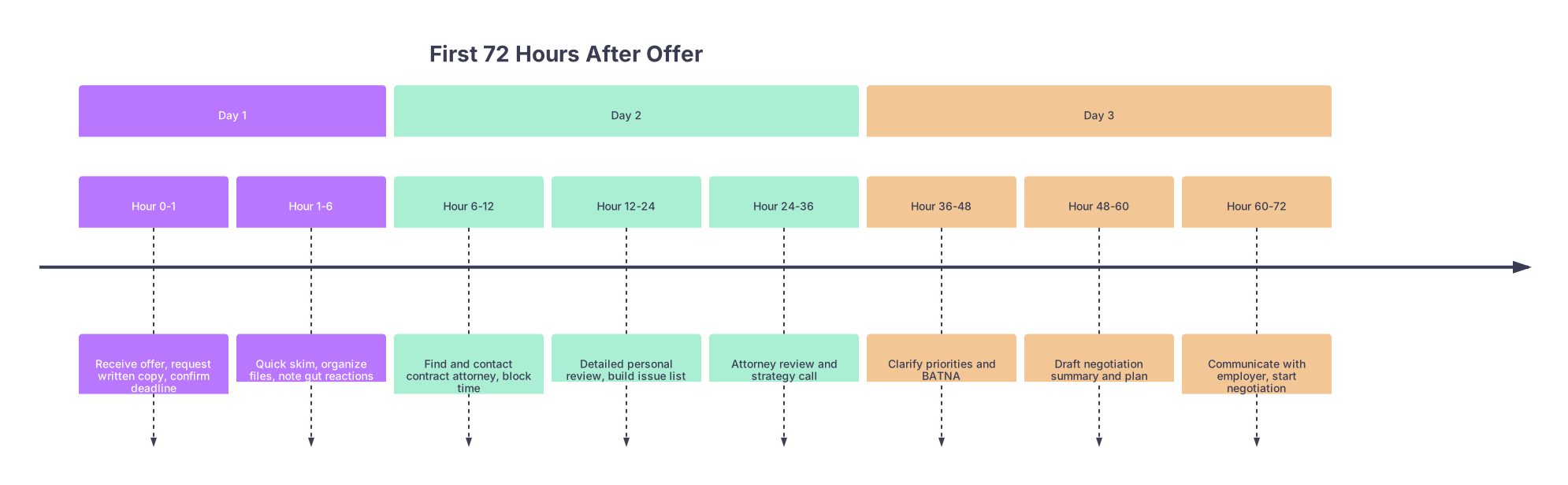
| Period | Event |
|---|---|
| Day 1 - Hour 0-1 | Receive offer, request written copy, confirm deadline |
| Day 1 - Hour 1-6 | Quick skim, organize files, note gut reactions |
| Day 2 - Hour 6-12 | Find and contact contract attorney, block time |
| Day 2 - Hour 12-24 | Detailed personal review, build issue list |
| Day 2 - Hour 24-36 | Attorney review and strategy call |
| Day 3 - Hour 36-48 | Clarify priorities and BATNA |
| Day 3 - Hour 48-60 | Draft negotiation summary and plan |
| Day 3 - Hour 60-72 | Communicate with employer, start negotiation |
Hour 60–72: First Negotiation Contact With Employer
At this point you should actually open your mouth (or hit send). Thinking about negotiation forever doesn’t move the needle.
Step 1: Confirm timing and respect their deadline
If your response deadline is tight (e.g., 72 hours from offer):
- Email something like:
- “I’ve reviewed the offer and am very interested. I have a few contract questions I’d like to discuss. Are you available for a brief call within the next day? If needed, I’m happy to extend the decision timeline by a few days so we can address these.”
That last line matters. You’re signaling seriousness and requesting space.
Step 2: Run the first negotiation call (15–30 minutes)
On the call, follow this rough script:
Open with enthusiasm
- “I really appreciate the offer. I enjoyed meeting the team and I can see myself here.”
Frame the negotiation
- “I had a physician contract attorney review the agreement with me, and I wanted to walk through a few items that are important for me to be able to sign confidently.”
Go through 3–5 main points
- One at a time:
- Briefly state the current language
- State your proposed change
- Give a short rationale (fairness, market norm, alignment with long‑term commitment)
Example:
- “Right now the non‑compete is 25 miles for 2 years, covering all clinical work. Given that this is my first job in the region and my partner works nearby, I’d like to request 10 miles for 1 year, limited to [specialty] work. My understanding is that’s more typical for comparable positions.”
- One at a time:
Stay quiet after you ask
- Let them respond
- Don’t negotiate against yourself by talking nonstop
Take notes on every response
- “Can change,” “maybe,” “absolutely not,” “need to ask legal/administration”
Step 3: Follow up in writing
After the call, send a short recap email:
- Thank them for their time
- Bullet what you discussed and any tentatively agreed changes
- Note what’s pending review
- Confirm expected next steps and timing
You’re creating a paper trail and preventing “misremembered” concessions.

Special Situations Within the First 72 Hours
A few edge cases I’ve seen blow up careers when mishandled.
Case 1: You already said “yes” verbally on the call
Do not panic. But also, do not ignore it.
Within 24 hours:
- Send an email:
- “Thank you again for the offer. I’m excited about the opportunity. I’d like to review the written contract with a physician contract attorney before I give my final acceptance, just to ensure everything is clear. Could you please send the full agreement when convenient?”
- Verbal “yes” is not the same as signing a contract. You still negotiate.
Case 2: Exploding offer—24-hour deadline
This is usually a control tactic. It’s also a red flag.
Within the first few hours:
- Respond:
- “I’m very interested in this position. To make a responsible decision, I’ll need a short period to have the contract reviewed. Would you be able to extend the deadline to [72 hours / early next week]?”
- If they absolutely refuse to extend by even 24–48 hours?
- That tells you a lot about their culture. I’ve told residents bluntly: that’s often not an employer you want.
Case 3: You have multiple offers or active interviews
Do not start a bidding war like you’re haggling over a used car.
In the first 72 hours:
- Be honest but vague:
- “I’m fortunate to be in late‑stage discussions with a couple of other groups. I remain very interested in your position. My plan is to complete contract review and then make a decision within [X] days.”
- Your leverage goes up, but your need for clarity and professionalism does too.
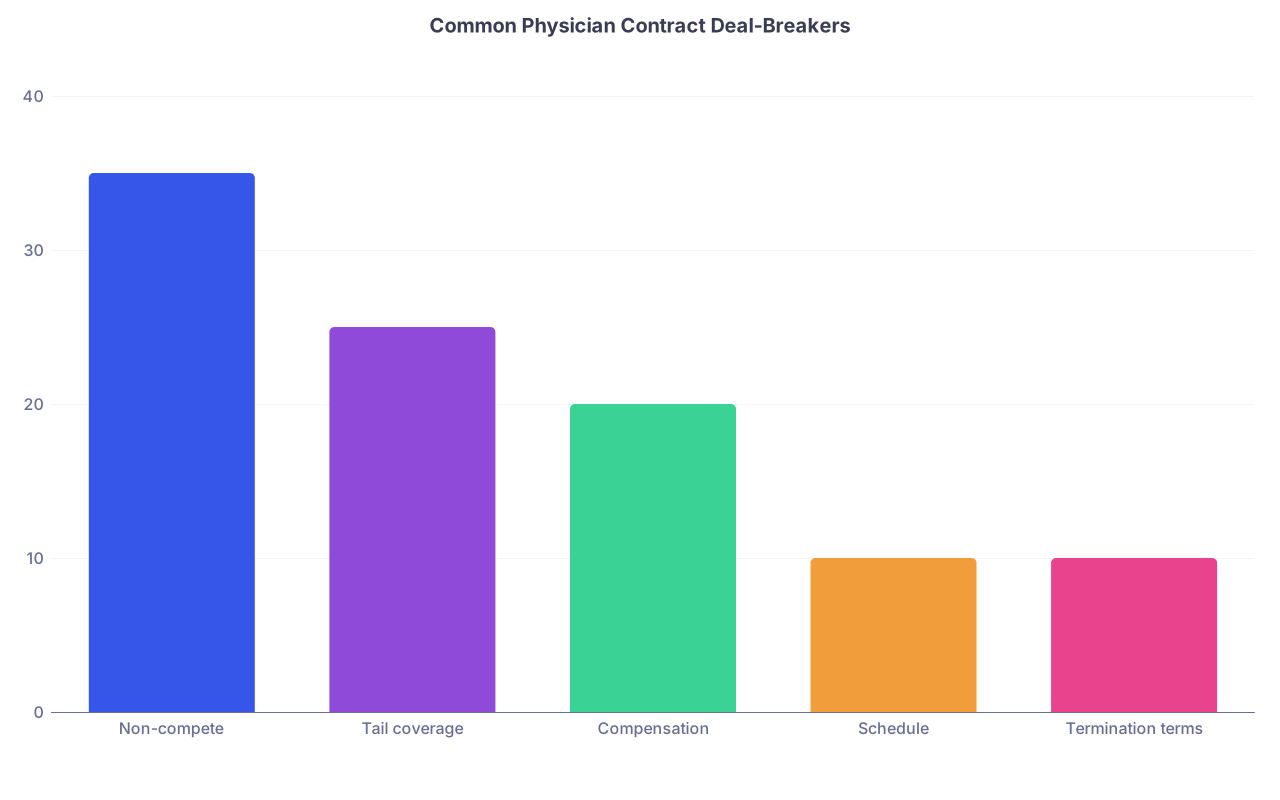
| Category | Value |
|---|---|
| Non-compete | 35 |
| Tail coverage | 25 |
| Compensation | 20 |
| Schedule | 10 |
| Termination terms | 10 |
The Quiet Rule Under All 72 Hours
There’s one rule that runs underneath everything I just laid out:
Never let their urgency become your emergency.
Hospitals will keep seeing patients. Groups will keep billing. You only sign your first attending contract once.
Your job in the first 72 hours isn’t to lock in the job at all costs. It’s to:
- Slow down the decision
- Get expert eyes on the paper
- Clarify what you actually care about
- Make 3–5 smart, targeted asks
- Start the relationship as a professional who values their time and their future, not as a desperate trainee
Today, before you forget any of this, go do one concrete thing:
Create a folder on your laptop titled Physician Job Offers and inside it, start a blank document called My Non-Negotiables and Red Flags. When that offer lands, you won’t be starting from zero—you’ll be executing a plan.


