

Most physicians underestimate how long contract negotiations really take—and they pay for it in stress and bad decisions.
You are not buying a car. You are negotiating the document that will control your income, schedule, non‑compete, malpractice risk, and autonomy for years. That process does not wrap up in a weekend.
Let me walk you through what actually happens, week by week, so you can set expectations before you sign anything.
Big-Picture Timeline: How Long Negotiations Really Take
At this point, you need a realistic frame of reference.
From “I like this job” to “fully signed contract,” expect:
- Fast, simple situations: 3–4 weeks
- Typical employed position (hospital / large group): 6–10 weeks
- Complex deals (partnership track, buy‑in, relocation, J‑1 issues): 2–4+ months
Here is the overview timeline you should have in your head:
| Phase | Usual Duration |
|---|---|
| Verbal offer to draft contract | 1–3 weeks |
| First attorney review | 3–10 days |
| Round 1 negotiation | 1–2 weeks |
| Round 2–3 negotiation | 2–4 weeks |
| Final clean-up & signatures | 3–7 days |
And visually:
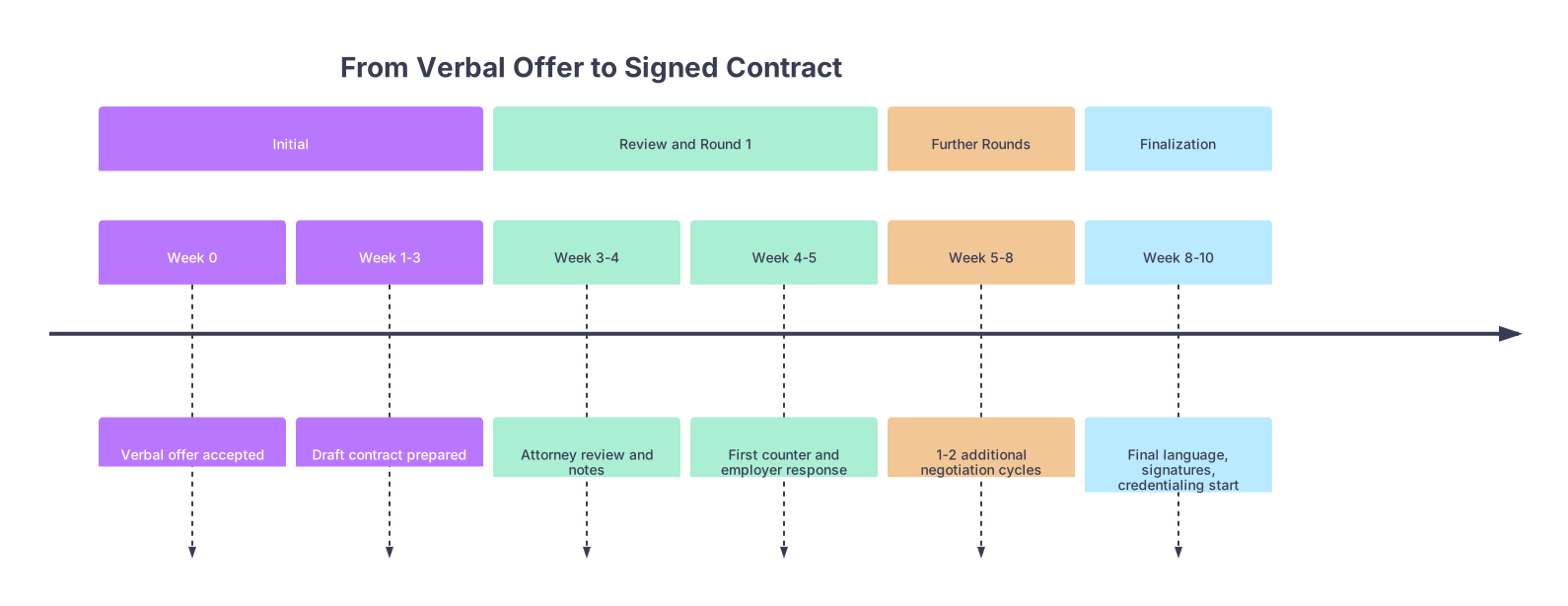
| Period | Event |
|---|---|
| Initial - Week 0 | Verbal offer accepted |
| Initial - Week 1-3 | Draft contract prepared |
| Review and Round 1 - Week 3-4 | Attorney review and notes |
| Review and Round 1 - Week 4-5 | First counter and employer response |
| Further Rounds - Week 5-8 | 1-2 additional negotiation cycles |
| Finalization - Week 8-10 | Final language, signatures, credentialing start |
At this point you should notice something: if you are graduating June 30, you cannot start this process in May and expect a smooth July 1 start.
3–6 Months Before Graduation: Laying the Groundwork
You are not negotiating yet, but you are setting the conditions for a sane timeline later.
Month −6 to −4: Clarify your non‑negotiables
At this point you should:
- Define your red lines:
- Max acceptable non‑compete radius and duration
- Minimum base salary or total comp range
- Call expectations you will not accept
- Geographic requirements (schools, spouse’s job, family)
- Decide how urgently you must start:
- Are you OK starting 1–2 months later for a better job?
- Or do you absolutely need income immediately after graduation?
The urgency question drives how aggressively you push and how long you can let negotiations run.
Month −4 to −3: Build your “contract response team”
This is where most physicians cause delays—by scrambling for help after the contract lands.
At this point you should:
- Identify 1–2 contract attorneys who:
- Do physician employment contracts weekly, not once a year
- Know your state’s non‑compete and malpractice environment
- Have clear turnaround times and flat fees
- Confirm:
- Typical time for an initial review
- How many rounds of edits are included
- Whether they are available in your peak window (Jan–June for residents)
- Set up a document system:
- Separate email folder and cloud folder for contracts
- A running “deal terms” document where you summarize offers side by side
If you do this now, you can send the contract out for review the same day you receive it. That easily saves 1–2 weeks.
From Verbal Offer to First Draft: 1–3 Weeks
The clock really starts here.
Week 0: Verbal Offer Accepted
You interview. You like them. They like you. They call with the offer.
At this point you should:
- Lock down the key business terms in writing (email is fine):
- Base salary / guarantee
- Bonus structure (wRVU, collections, quality, etc.)
- Call expectations
- Partnership track / timeline if applicable
- Vacation / CME time and budget
- Sign‑on bonus and any clawbacks
- Ask directly:
- “When should I expect the written contract?”
- “Who is the point of contact for contract questions—HR, recruiter, or legal?”
If they are vague or slow to move from verbal to written, that is data. Busy legal departments are normal. Chronic disorganization is not.
Week 1–3: Waiting for the Draft
Behind the scenes, the employer is:
- Pulling an old contract template
- Tweaking salary, schedule, and specifics for you
- Sometimes waiting on admin or legal sign‑off
At this point you should:
- Follow up at the 7–10 day mark if you have heard nothing:
- Short email: “Just checking on timing for the draft; I want to be sure I leave enough time for review before graduation.”
- Keep interviewing elsewhere unless you are 100% certain:
- I have seen too many residents stop searching, then watch the “done deal” evaporate.
As soon as the contract arrives, do not sit on it for a week. That stall is entirely under your control.
Week 3–4: First Attorney Review and Your Internal Pass
This is where people either stay on track or lose a month.
Day 0–1 After Receiving the Contract
At this point you should:
- Skim the whole thing once yourself:
- Flag anything that surprises you based on the verbal offer
- Mark areas you do not understand at all (restrictive covenants, tail coverage, termination language)
- Send it to your attorney the same day:
- Subject line with “Graduation June 30 – target start August 1” so they see your timeline
Do not wait for a free afternoon that never comes. Send it, then read it more carefully while they work.
Days 2–10: Attorney Review
Typical first‑pass timelines:
- Quick review with high‑level comments: 3–5 business days
- Detailed mark‑up and call: 5–10 business days
While waiting, at this point you should:
- Build your personal priority list:
- Rank what matters most: non‑compete, schedule, comp, malpractice, partnership
- Prepare questions for the attorney call:
- “Is this non‑compete standard for our region?”
- “What scenarios would make me owe money back?”
- “How easy is it to get out if the job is toxic?”
When the attorney feedback comes back, do not forward the entire redline to the employer. That is how you turn a straightforward negotiation into trench warfare.
Week 4–6: Round 1 Negotiation
This is the most important phase. You set the tone here.
Step 1: Consolidate and Strategize (2–3 days)
At this point you should:
- Have a 30–60 minute call with your attorney:
- Identify 3–6 “must change” items
- Identify 3–5 “would be nice” items
- Decide what you are willing to trade (ex: less salary for no non‑compete? Better CME for slightly more call?)
- Translate legalese into a clear ask memo for the employer:
- Bullet points, not tracked‑changes legal markup
- Example:
- “Non‑compete: request reduction from 25 miles for 3 years to 10 miles for 1 year.”
- “Termination without cause: request 60 days’ notice rather than 120, to allow flexibility if the position is not a good fit.”
Expect this prep to take 1–2 evenings. Worth it.
Step 2: Send Your First Counter (Day 0 of Round 1)
At this point you should:
- Email your main contact (recruiter or HR), not generic legal:
- Attach a clean copy of the contract plus a separate PDF or email with your bullet‑point requested changes
- Use language that keeps the relationship positive:
- “I am very interested in the position and want to be sure the agreement reflects what we discussed. Here are the key areas I hope we can adjust.”
Step 3: Employer Internal Review (5–14 days)
This feels slow. It is still normal.
Behind the scenes:
- HR passes your requests to legal, compliance, and department leadership
- They categorize into:
- “Standard change, fine”
- “We will not budge”
- “Needs higher‑level approval”
At this point you should:
- Wait 5–7 business days, then follow up if no response:
- “Checking if my requested changes reached legal and whether there is an estimated timeline for feedback.”
- Resist the urge to “just sign and be done” because you are tired. This is where people accept punitive non‑competes and painful call obligations.
Week 6–8: Round 2 (and Maybe Round 3)
This is where deals either close or drag.
Round 2: Employer Counter Back to You
You typically receive:
- Either a redlined contract or
- A summary email: “We can agree to A and B, but not C; here is why.”
At this point you should:
- Compare their response against your priority list:
- Did they fix your top 2–3 issues?
- Or did they cave only on minor items like CME money and ignore termination and non‑compete?
- Send the new version to your attorney with very targeted questions:
- “Anything here that is a dealbreaker now?”
- “Do you recommend pushing again on X, or accepting?”
Turnaround here is usually faster (2–5 days) if your attorney is organized.
Decision Fork: Push, Accept, or Walk
By week 7–8, you usually face one of three situations:
You got 70–80% of what you needed.
- At this point you should strongly consider accepting and moving on.
- Perfect contracts do not exist, especially in big systems.
They refused on crucial issues (e.g., 50‑mile non‑compete, 2‑year term with no without‑cause termination, tail coverage entirely on you).
- At this point you should:
- Decide whether this is truly a red line or just uncomfortable
- Keep at least one alternative opportunity alive
- At this point you should:
They are slow and non‑responsive.
- Two weeks of silence after Round 2? Not a good sign.
- At this point you should:
- Send a direct but polite deadline:
“Given my graduation timing and need to finalize malpractice and licensure, I will need to make a decision about this position by [date]. I want to be sure we have time to finalize the agreement if we move forward.”
- Send a direct but polite deadline:
Round 3 (If Needed): Final Push (1–2 weeks)
Use Round 3 only for:
- Clarifying misunderstood points
- A very small number of crucial items you are not willing to accept as‑is
At this point you should:
- Avoid reopening settled issues
- Have your attorney focus on cleaning up language, not reinventing the deal
If Round 3 drags more than 2 weeks, something else is going on inside the organization—budget issues, leadership changes, politics. You cannot fix that with better wording.
Final 7–10 Days: Clean‑Up and Signing
The deal is essentially done. Do not rush the last 5%.
Day 0–3: Final Review
You receive what they call the “final version.”
At this point you should:
- Confirm that:
- Every change you agreed on is actually in the document
- Old language is not accidentally (or “accidentally”) reinserted
- Spot‑check critical sections:
- Compensation exhibit
- Non‑compete / other restrictive covenants
- Termination and notice requirements
- Malpractice and tail coverage
- Any repayment obligations (sign‑on, relocation, student loan help)
If something is off, this is not “being difficult.” This is basic competence. Get it fixed.
Day 3–7: Signature Logistics
Once the language matches what you agreed:
At this point you should:
- Ask for the fully executed copy (signed by both parties) for your records
- Save:
- PDF in at least two locations
- Key dates in your calendar:
- Start date
- End of any guarantee period
- End of any bonus repayment obligations
- Non‑compete expiration date
Only now is it real. I have seen physicians move for a job based on a partially signed contract that later “could not be approved.”
Overlapping Timelines: Licensure, Credentialing, and Start Date
You cannot look at contract negotiation in a vacuum. Other processes run in parallel and take just as long.
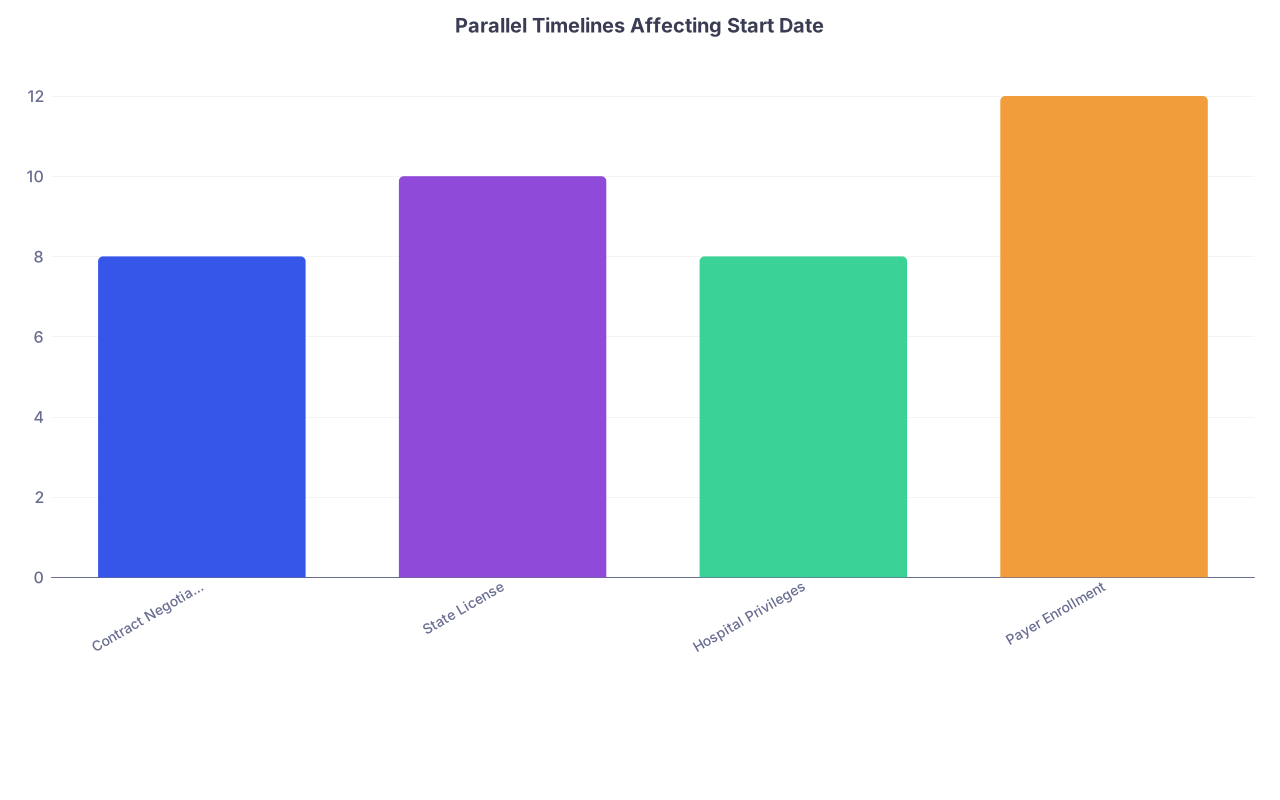
| Category | Value |
|---|---|
| Contract Negotiation | 8 |
| State License | 10 |
| Hospital Privileges | 8 |
| Payer Enrollment | 12 |
Numbers above are in weeks and conservative.
At this point you should:
- Realize that a signed contract by March–April is ideal for a July 1–August 1 start, especially if:
- You are changing states
- You are joining a hospital‑based specialty
- Push back gently if an employer says:
- “We need you to start July 1, but our legal team will not get to the contract for another month.”
Translation: they have not connected their own dots.
- “We need you to start July 1, but our legal team will not get to the contract for another month.”
Red Flags Based on Time, Not Just Content
Timeline behavior tells you a lot about an employer’s culture. Pay attention.
At this point you should be wary if:
- They consistently miss every timeline they themselves set
- You get different promises verbally than what appears on paper, repeatedly
- Legal or admin insist:
- “We never change this for anyone” for clauses that are routinely negotiable elsewhere (for example, non‑compete geography, repayment terms)
- They try to rush you:
- “We need this signed in 48 hours or the offer is gone.”
A legitimate employer will:
- Give you reasonable time to review (1–2 weeks)
- Engage with your reasonable concerns
- Understand that new physicians need legal guidance
If the time pressure feels wildly disproportionate, that is a control tactic, not a scheduling need.
A Sample Month‑by‑Month Plan for PGY‑3 / Final Year
To make this painfully concrete, here is how I tell graduating residents to structure it:
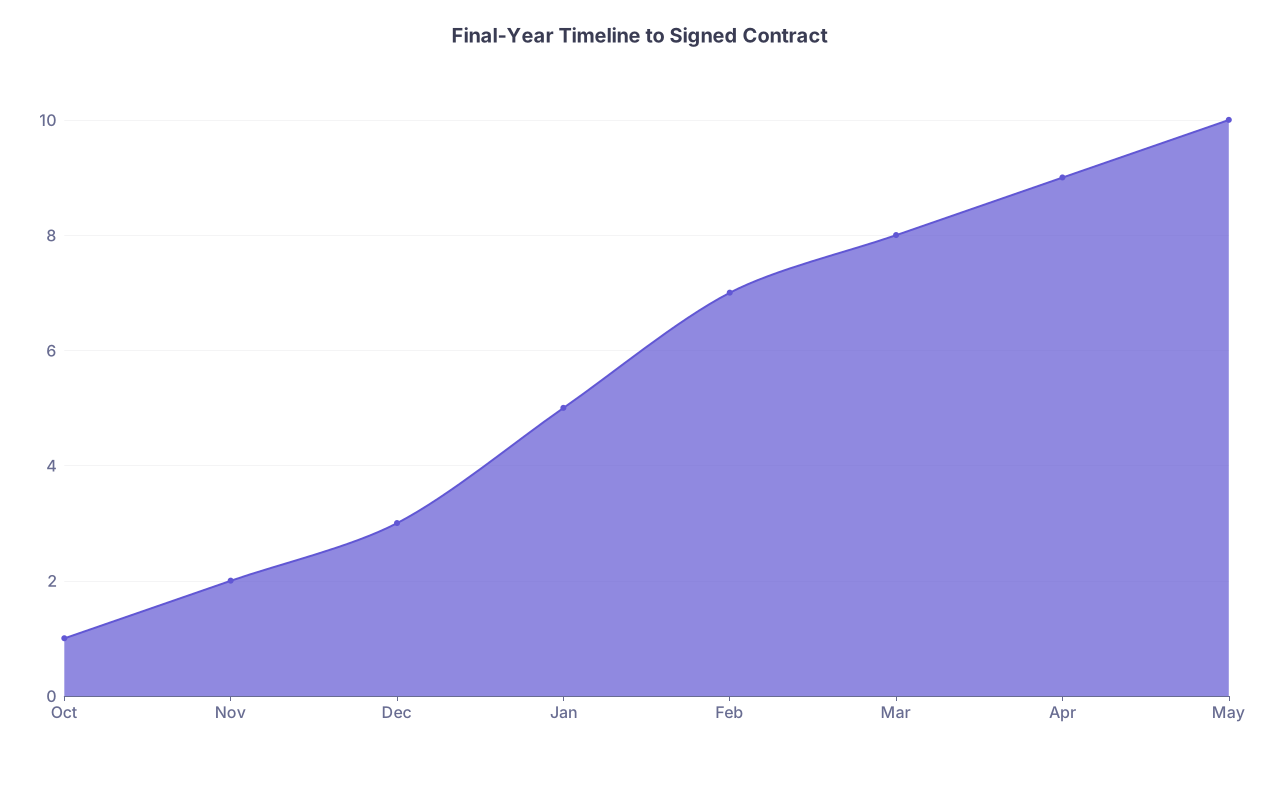
| Category | Value |
|---|---|
| Oct | 1 |
| Nov | 2 |
| Dec | 3 |
| Jan | 5 |
| Feb | 7 |
| Mar | 8 |
| Apr | 9 |
| May | 10 |
The “values” here are just relative progress, not weeks.
October–November
- Define non‑negotiables
- Identify 1–2 contract attorneys
- Start exploratory interviews
December–January
- Serious interviews
- Verbal offers for early movers
- First contracts may arrive late January
February–March
- Majority of residents get written contracts
- First and second negotiation rounds
- Ideal window to finalize an August start
April–May
- Latecomers scramble
- Some accept weaker terms because licensure and visas are on fire
- Negotiation leverage quietly drops
If you slide all of this 2–3 months later, you compress everything against graduation and lose options. That is how people end up in terrible first jobs they leave in under a year.
Final Checklist: At Each Stage, What You Should Be Doing
To close this out, here is your “at this point you should…” summary across the whole process.

Before you even see a contract
- Have a clear idea of your non‑negotiables
- Line up a contract attorney and confirm turnaround times
When you accept a verbal offer
- Get key business terms in writing
- Ask for a specific timeframe for receiving the draft
When the draft arrives
- Send it to your attorney within 24 hours
- Read it yourself and list your top concerns
During Round 1 negotiation
- Prioritize 3–6 key changes
- Communicate asks in plain English, not just redlines
- Follow up at 7–10 days if you hear nothing
During Round 2–3
- Decide what is truly worth a second push
- Set an internal drop‑dead date that aligns with licensure and credentialing
- Keep at least one alternative option alive if possible
At finalization
- Verify every promised change is in the final text
- Save the fully executed agreement and calendar critical dates
Key Takeaways
- Realistic duration: From verbal offer to signed physician contract usually takes 6–10 weeks, not a weekend. Plan accordingly.
- Your actions matter: Fast forwarding to your attorney, prioritizing changes, and following up at 7–10 day intervals can easily save you several weeks.
- Timeline is data: How an employer behaves over those weeks—delays, pressure, responsiveness—tells you as much about the job as the salary number on page one.


