

The most dangerous moment in your first attending job isn’t your first day on the wards. It’s the 10 minutes when you say “That sounds great, I accept” before you’ve seen the contract.
You’re not just accepting a job. You’re locking yourself into years of compensation, call, RVU pressure, and non‑compete clauses. So you treat the time from verbal offer to signed agreement like a procedure: stepwise, methodical, and on a clear timeline.
Below is the timeline I’d follow — week by week and, when it matters, day by day — from verbal offer to signed physician contract.
Stage 0: The Verbal Offer (Day 0–2)
At this point you should slow down your mouth and speed up your note‑taking.
The call comes from the department chair, recruiter, or practice leader. They say they’re excited. They say “we’d love to have you.” They may throw numbers around.
Your job on that call:
Get concrete details. Ask, calmly and directly:
- Base salary and any guarantee period
- Bonus structure (RVUs? quality? collections?)
- Expected clinical hours and call responsibilities
- Practice location(s) and primary site
- Start date expectations
- Partnership track (if private group): timeline, buy‑in estimate
Do NOT accept on the spot. You say something like:
- “This sounds promising. I’m very interested. I’d like to see the written offer and contract so I can review the details carefully.”
- That’s it. Enthusiastic, but non‑committal.
Set an expectation for next steps.
- “When should I expect the written offer and draft contract?”
- “Will I receive a term sheet first or the full agreement?”
You want them to move this to email. Verbal enthusiasm is cheap. Written terms are real.
At this point, you should:
- Write down everything they said, immediately after hanging up.
- Email a brief thank‑you and summary: “As discussed, base salary X, call Y, start Z…” to create a written record.
Stage 1: The Offer Letter / Term Sheet (Days 2–10)
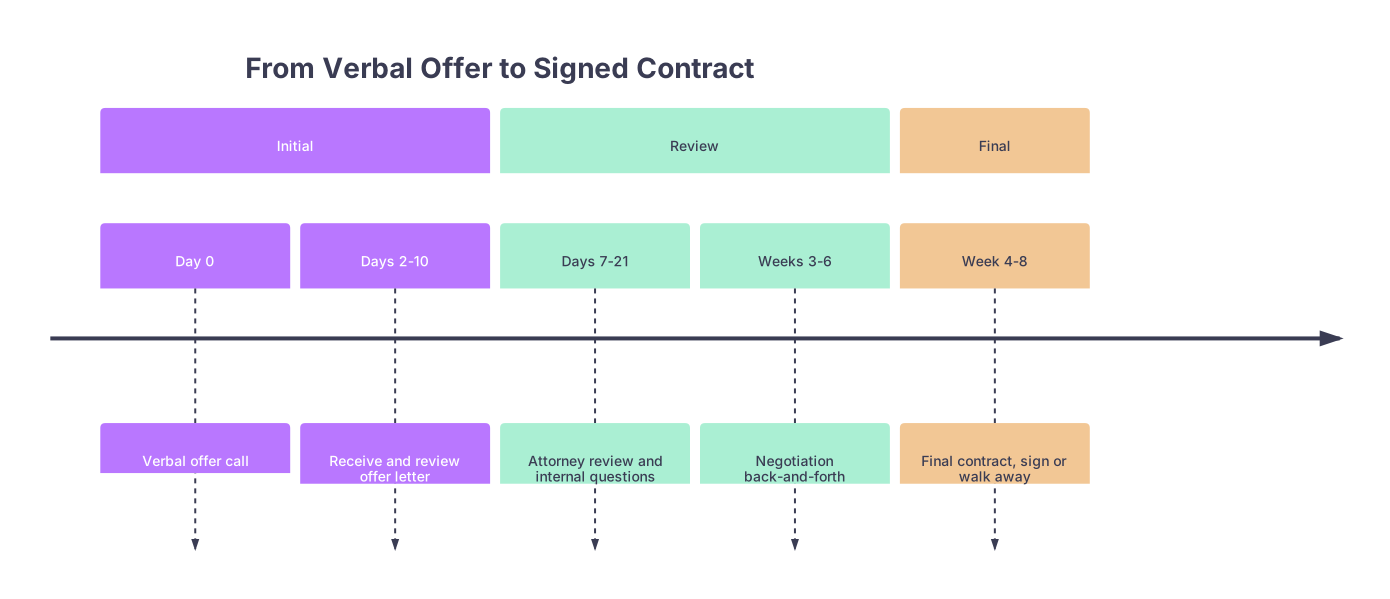
| Period | Event |
|---|---|
| Initial - Day 0 | Verbal offer call |
| Initial - Days 2-10 | Receive and review offer letter |
| Review - Days 7-21 | Attorney review and internal questions |
| Review - Weeks 3-6 | Negotiation back-and-forth |
| Final - Week 4-8 | Final contract, sign or walk away |
The first document you usually see is not the full contract. It’s an offer letter or “term sheet” — 1–4 pages.
At this point you should treat the term sheet like a skeleton of the contract. If you hate the skeleton, the body will be worse.
Within 24–48 hours of receiving the term sheet
You:
- Read it once straight through. No highlighter. Just absorb.
- Read it again and mark:
- Compensation details (base, bonuses, guarantee length)
- Call expectations and weekend/holiday coverage
- Any mention of non‑compete or restrictive covenant
- Duration of initial term (1 year? 3 years? automatic renewal?)
- Tail coverage responsibility (who pays if you leave?)
Then you compare to your market expectations.
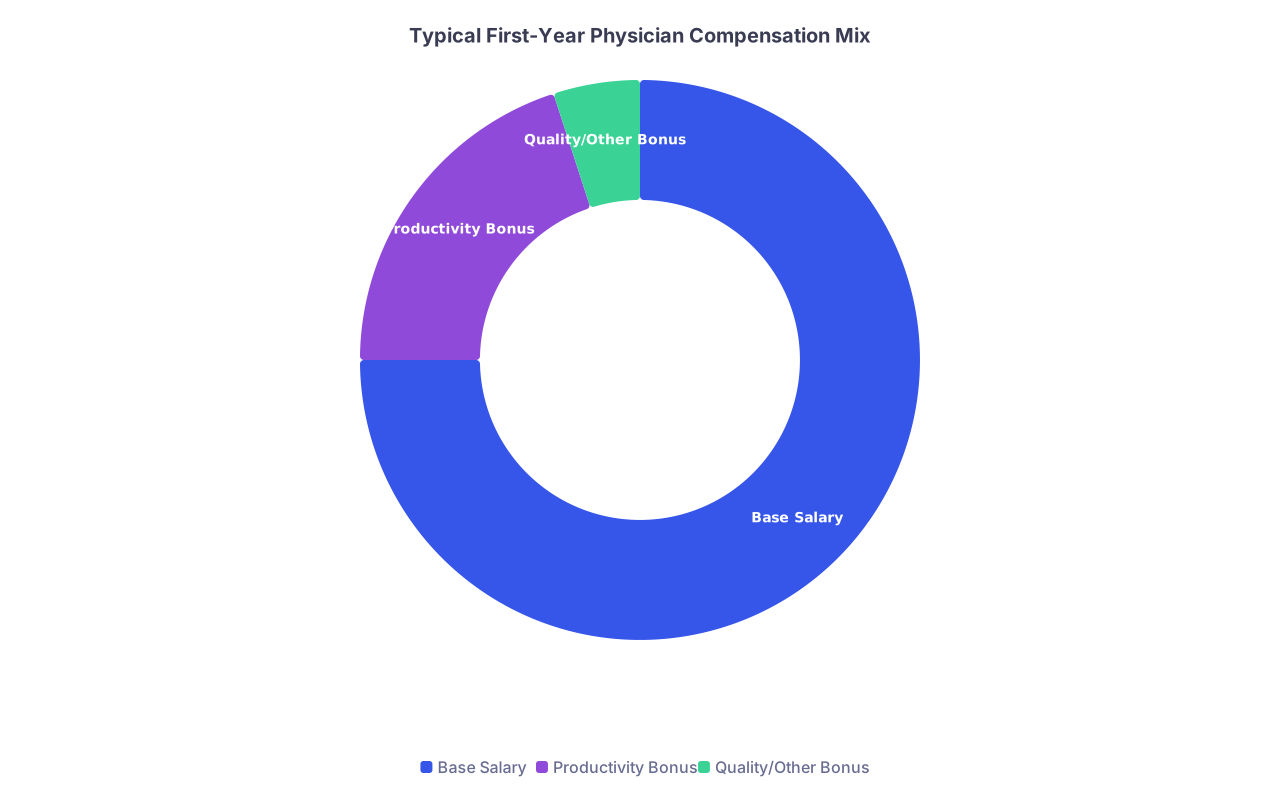
| Category | Value |
|---|---|
| Base Salary | 75 |
| Productivity Bonus | 20 |
| Quality/Other Bonus | 5 |
If the structure is wildly off (e.g., 0.7 FTE pay for full‑time call, brutal non‑compete across the entire state), you do not wait for the full contract to start pushing back.
Within 2–3 days of reviewing the term sheet, you should:
Send a focused question email. Something like:
- “Can you clarify how RVU thresholds are set?”
- “Can you share the non‑compete language and geographic scope?”
- “Is tail coverage provided or shared?”
Ask for the full contract.
- “I’d like to review the full employment agreement with counsel. When can I expect that draft?”
Start compiling your “must‑fix” list. Examples:
- Non‑compete too broad
- No tail coverage
- Unreasonable call schedule
- Opaque bonus formula
If the term sheet is acceptable but you’re not in love with a few points, don’t negotiate hard yet. Save the real pushes for the contract stage, when you see the actual language.
Stage 2: Getting the Full Contract & Lining Up Review (Week 1–2)
At this point you should pause everything until you have the actual document. Verbal promises mean nothing if the contract says otherwise.
Timeline target
- Full contract in your inbox: ideally within 1 week of the term sheet.
- Your review and initial notes: 3–5 days after receipt.
- Attorney review: usually 7–10 days total from your request.
If they drag their feet sending the contract for weeks, that’s a data point about how they operate.
Day 1–3 after receiving contract: Your own deep read
You go through in this order (yes, this order):
Termination clauses
- Without cause notice period (60–180 days is standard; 30 is aggressive for you)
- With cause definitions (vague “unprofessional behavior” is a red flag)
Non‑compete / restrictive covenant
- Radius (e.g., 10–20 miles vs. entire region)
- Duration (12–24 months)
- Scope (any practice of medicine vs. your specialty vs. employer locations)
Malpractice & tail coverage
- Claims-made vs occurrence
- Who pays tail and under what circumstances
Compensation structure
- Base pay, bonus, RVU conversion factor
- How “productivity” is measured and adjusted
- Any clawbacks or penalties for leaving early
Schedule and call
- Expected clinic days, OR time, admin time
- Weekend, holiday, and night call rotation
- Expectations for outreach clinics or satellite sites
You highlight, flag, and start a running list:
- “Dealbreaker if not adjusted”
- “Prefer change but can live with”
- “Need clarification only”
By Day 3–5: Engage a physician contract attorney
Do not crowdsource this on Facebook groups. You want someone who:
- Reviews physician contracts regularly
- Knows your state law (especially for non‑competes)
- Has no financial relationship with the employer
You send:
- Term sheet
- Full contract
- Your notes and questions (numbered list; make it easy for them)
At this point you should explicitly tell the employer:
“I’ve received the contract and am having it reviewed. I expect to get back to you with questions or proposed changes in about 2 weeks.”
This buys you time and signals you take this seriously.
Stage 3: Attorney Review & Strategy (Week 2–3)

The worst use of an attorney is sending them the contract the night before you need to sign. You’re paying them for strategy, not last‑minute panic.
Typical attorney review timeline
- Days 1–4: Attorney reads and marks up contract.
- Days 5–7: You meet (phone/Zoom) for 60–90 minutes to review key issues.
- Days 7–10: You decide what to actually push on and how hard.
Here’s how to use that time well.
Before the meeting
You send your attorney:
- Your career goals for this job (e.g., stay 2–3 years vs long‑term home)
- Any competing offers or benchmarks you have
- Your red lines (e.g., “I will not sign a contract where I pay full tail if I’m terminated without cause.”)
During the meeting
At this point, you should be ruthless about priorities.
You ask the attorney to:
- Identify legal risks (non‑compete enforceability, weird termination triggers, indemnification).
- Identify financial traps (RVU targets that no one hits, obscure repayment obligations, partnership that never actually happens).
- Rank issues into:
- Must change
- Should change
- Nice to have
You also ask them to help you phrase requests realistically. There’s a difference between:
- “Delete non‑compete entirely” (often a non‑starter)
- “Limit non‑compete to 10 miles from primary site and 12 months”
You walk out of this step with:
- A written list (yes, actually written) of 5–10 specific changes you’ll request.
- A sense of where the employer has likely flexibility.
Stage 4: First Counter & Clarification (Week 3–4)
At this point you should consolidate, then communicate. You get one clean first impression as a negotiator. Don’t waste it with 12 scattered emails.
Within 2–3 days after attorney review
You send a single, organized email to HR/recruiter or the practice leader. Something like:
- Start with appreciation and interest.
- Then list your concerns in bullets or numbered form.
Structure it like this:
Non‑compete
- “Current: 2 years, 50 miles from any employer facility.”
- “Request: 12 months, 10 miles from my primary practice location only.”
Tail coverage
- “Current: Physician pays 100% of tail in all circumstances.”
- “Request: Employer pays tail if I am terminated without cause or if I complete initial 3‑year term.”
Without‑cause termination
- “Current: 180‑day notice.”
- “Request: 90‑day notice to allow flexibility if circumstances change.”
Call schedule
- “Current: Every 3rd night and every 3rd weekend, no mention of compensation.”
- “Request: Clarify maximum call expectations and add specific compensation for extra call.”
You’re not whining. You’re proposing edits.
You also ask for a call to discuss, usually within 5–7 days.
Stage 5: The Back‑and‑Forth (Weeks 4–6)
| Contract Item | Often Flexible | Sometimes | Rarely Flexible |
|---|---|---|---|
| Base salary amount | ✅ | ✅ (in big systems) | |
| Bonus structure | ✅ | ||
| Non-compete radius | ✅ | ||
| Non-compete duration | ✅ | ||
| Tail coverage share | ✅ | ||
| Call schedule details | ✅ |
This is where people either get what they need or roll over. The employer will usually:
- Agree to some items immediately.
- Counter on others.
- Refuse a few.
Week 4: First response from employer
You review their response carefully:
- Did they actually edit the contract or just verbally reassure you?
- Are changes reflected in redline form (track changes) or is this a “new clean draft” with hidden edits? You want redlines.
At this point you should:
Confirm all agreed changes appear in writing.
- Do not rely on emails that contradict the contract.
- If something is promised in email, insist it’s added to the agreement.
Re‑assess your remaining issues.
- If 2–3 true dealbreakers remain, decide whether to push further or walk.
Weeks 4–5: Second round (if needed)
You might have 1 more round of focused asks. For example:
- They agreed to shorten the non‑compete but kept the tail fully on you.
- They clarified call but still have a 180‑day notice.
You decide what’s worth one more shot. You send a short follow‑up:
“Thank you for the revisions. This addresses many of my concerns. I have two remaining items I’d like to revisit…”
Then you list just those two. Show good faith. Pick your battles.
Stage 6: Decision Week – Sign or Walk (Weeks 6–8)

There’s a point where you have to stop tweaking commas and decide if this is your job or not.
By now, you usually have:
- 2–3 contract versions.
- At least one call with HR or leadership.
- A sense of whether they respect your boundaries or just want a warm body.
At this point you should do a 3‑column check
On a blank page, write:
- Column 1: What got fixed or agreed to
- Column 2: What didn’t change but you can live with
- Column 3: Red flags that remain
Examples for Column 3:
- Non‑compete still 50 miles when your spouse’s job is in the same city.
- Full tail cost on you even if they terminate you without cause.
- RVU targets that are unrealistic based on what current physicians have quietly told you.
If Column 3 has anything that would make you resentful the day you sign, you do not sign “just to get it over with.”
Final review (1–3 days)
Before signing:
- Re‑read the actual final contract in full. No skipping.
- Confirm:
- Correct start date
- Any sign‑on bonuses and repayment terms
- Relocation terms and what happens if you leave early
- Partnership track details are explicit (not “to be determined”)
- Check for “surprise” additions:
- New arbitration clauses
- Changed CME or PTO language
- Quietly re‑widened non‑compete
If you’re satisfied, you sign — ideally within the timeframe they requested (often 7–14 days). But never sooner than you’re comfortable.
If you’re not satisfied and they refuse to budge on true dealbreakers, you walk. I’ve seen physicians sign something they hated because they were tired of the process. Two years later they were paying $80k in tail to escape.
Micro‑Timeline: From Offer to Signature (Ideal vs Reality)
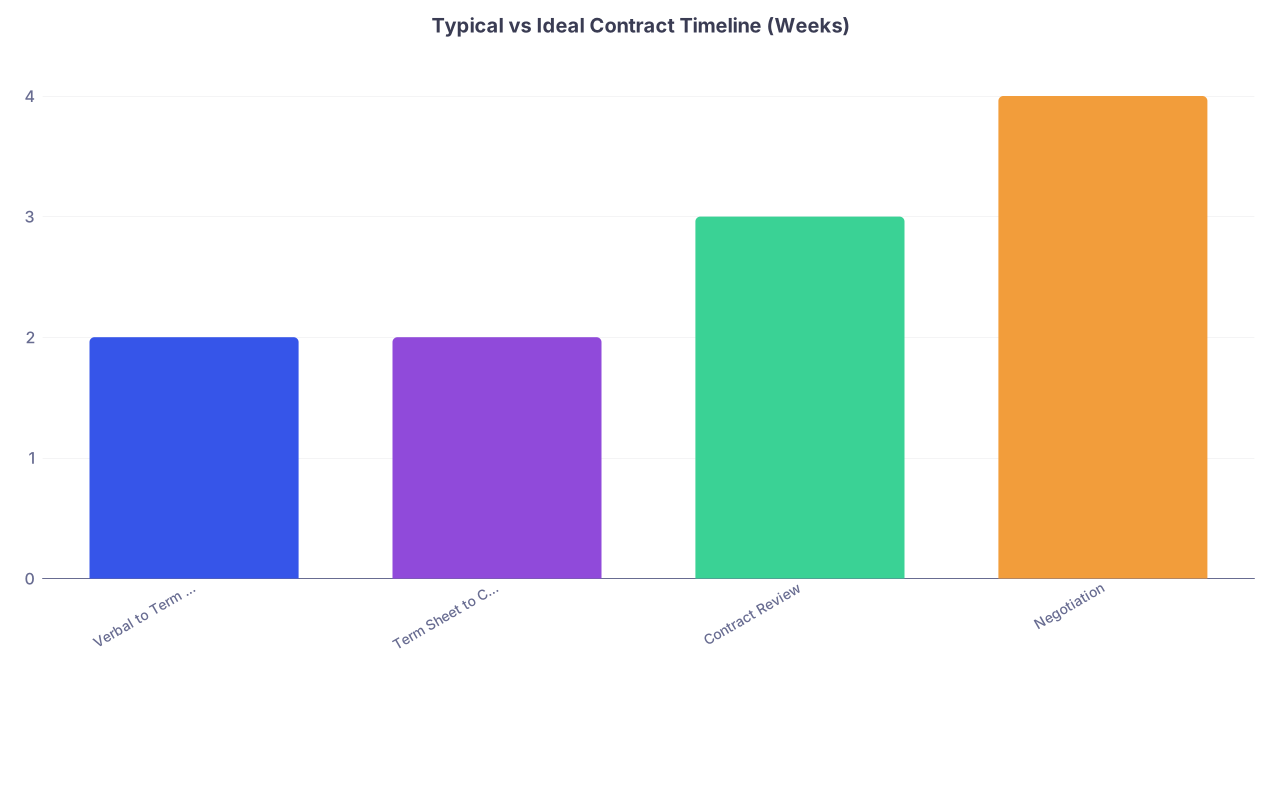
| Category | Value |
|---|---|
| Verbal to Term Sheet | 2 |
| Term Sheet to Contract | 2 |
| Contract Review | 3 |
| Negotiation | 4 |
Here’s how the whole thing should look if you’re doing it right.
Week 0
- Verbal offer call
- You request written term sheet + contract timeline
Week 1
- Receive term sheet
- 2–3 days: You review, list questions, and ask for full contract
- Employer confirms they’re drafting
Week 2
- Receive full contract
- 3–5 days: Your deep read and note‑taking
- You engage attorney, send documents
Week 3
- Attorney reviews and meets with you
- You finalize your asks and send first structured counter email
Week 4
- Employer replies with redlined contract or detailed response
- You review; if needed, brief attorney follow‑up
- You send focused second round on 1–3 items (optional)
Weeks 5–6
- Final contract draft issued
- 1–3 days: Final review, confirm all agreed changes included
- Decision: Sign or decline
If you compress this into 1–2 weeks, you’re rushing. If it drags beyond 8–10 weeks, either the employer is disorganized or you’re stuck in perfectionism.
Red‑Flag Timelines: When to Be Suspicious
Some timing patterns are themselves a warning sign.
At this point, you should seriously reconsider if:
- They took a month to send you any written document after the verbal offer.
- They refuse redlines and will only send “clean” new versions, making it hard to track changes.
- They say, “Don’t worry about that; we’d never enforce it,” but refuse to update the language.
- They pressure you with artificial deadlines: “We need this signed in 48 hours or we’ll move on.”
Your response to pressure should be consistent:
“I’m very interested in this position and want to make sure I can commit long term. I won’t be able to sign until I’ve completed an appropriate review and I’m comfortable with the agreement.”
If that’s a problem for them, better to find out now.
After Signing: Quiet Final Checks (Next 1–2 Weeks)
You’ve signed. You’re done, right? Almost.
At this point you should:
- Request a fully executed copy with all signatures and keep 2–3 digital backups.
- Calendar:
- Start date
- Any bonus/relocation vesting dates
- Notice periods for termination
- Confirm logistics:
- Credentialing timeline
- Malpractice coverage start date
- Any licensure or DEA steps they’re handling vs you

You also keep your own notes about what was said and promised. If leadership changes before you start, those notes are sometimes the only institutional memory of what you were told.
Key Takeaways
- Treat the time from verbal offer to signature as a 6–8 week project, not a 3‑day formality. You need space for review, negotiation, and reflection.
- Concentrate your asks into 1–2 organized rounds, focused on non‑compete, termination, malpractice/tail, and realistic compensation/call — not cosmetic edits.
- Never sign a contract you’d resent on Day 1. If serious red flags remain after good‑faith negotiation, walking away now is cheaper than buying your way out later.


