
The fear that real estate will ruin you as a resident is not crazy—it’s exactly how a lot of physicians do get wrecked.
Let me say it bluntly: the wrong property at the wrong time, with your debt load, can absolutely sink you. But the right decision—often “do nothing yet”—can quietly save you six figures and years of stress.
You’re not paranoid. You’re just early to the reality check.
First, name the monster: what’s actually scaring you?
You’re probably running all of these at 3 a.m.:
- “I’m already $300k–$600k in the hole. Adding a mortgage sounds insane.”
- “If I don’t buy now, am I throwing away rent and missing ‘the market’?”
- “What if rates go up, prices go up, and I’m permanently priced out?”
- “What if I buy and then can’t sell when I move for fellowship/attending job?”
- “What if I become that horror story PGY-3 who can’t match into fellowship because I’m stuck with a house I can’t afford?”
You’re not just asking, “Is real estate good or bad?”
You’re asking, “Can one dumb housing decision lock me into a miserable financial life?”
Short answer: A single overleveraged purchase in residency can absolutely wreck your flexibility. I’ve seen it. Co-residents crying in workrooms over underwater houses. People commuting an hour because they can’t afford to sell.
But that also means a single avoided bad decision can be one of the best financial moves of your life.
The brutal math: why residents are so vulnerable
Let’s put some structure on the chaos. You’re not crazy—residents are in the worst position to take big real estate risks.
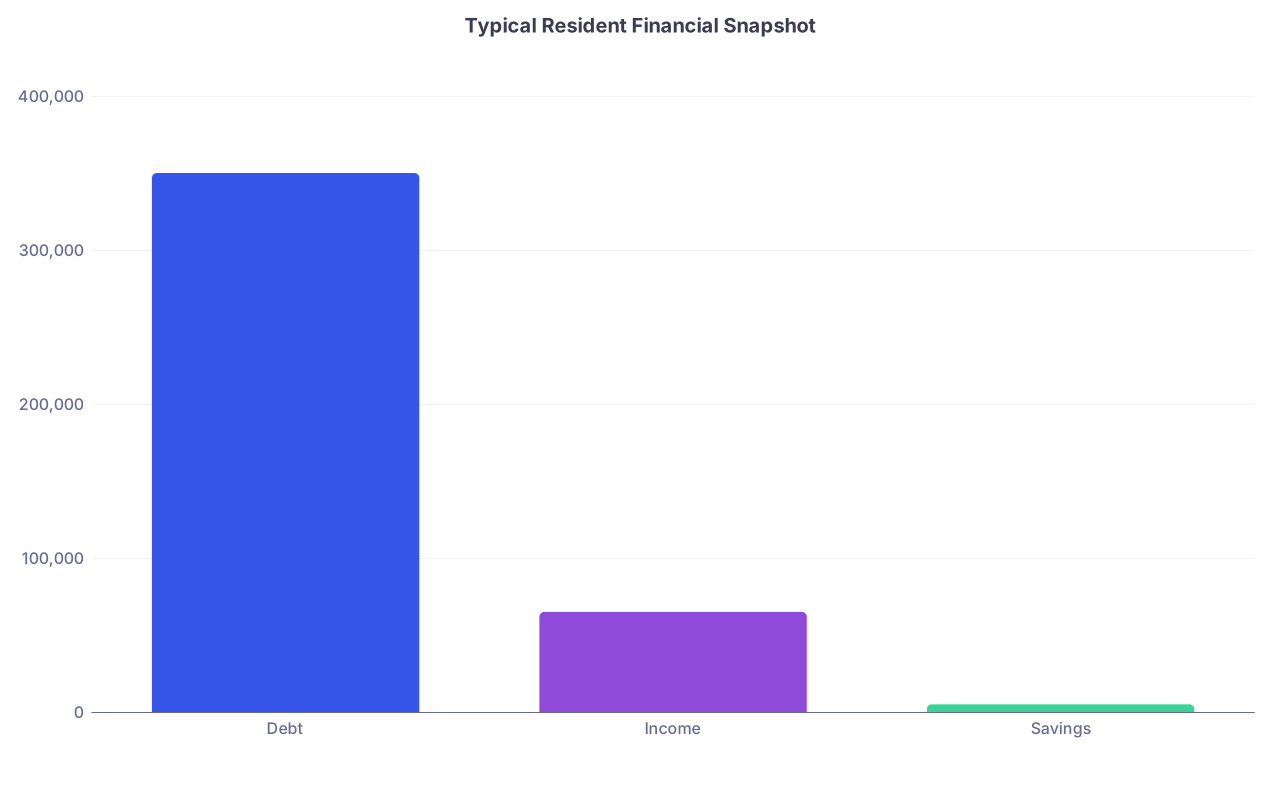
| Category | Value |
|---|---|
| Debt | 350000 |
| Income | 65000 |
| Savings | 5000 |
Typical reality:
- Student loans: $250k–$600k+, often at 5–8%
- PGY-1 salary: roughly $60k–$75k before taxes
- Take-home: maybe $3,500–$4,500/month after taxes, retirement, etc.
- Emergency fund: lol (maybe one month of expenses if that)
Now layer in:
- Moving again in 3–7 years for fellowship or first attending job
- Insane schedule → limited time/energy to manage repairs, tenants, or anything complex
- Totally unpredictable life changes: partner moves, family, fellowship vs hospitalist vs locums
That combination—low free cash flow, high leverage, short time horizon—is exactly what makes people lose money in real estate.
Real estate rewards:
- Long time horizon
- Stable income
- Patience
- Cash reserves
You have…basically none of those in residency. So yeah, it feels like a setup. Because it kind of is.
The three big ways real estate can sink a resident
Let’s just lay out the nightmare scenarios you’re secretly spiraling about.
1. The “doctor mortgage” trap
You’ve probably heard about physician loans: 0–5% down, no PMI, flexible on student debt. Sounds like a gift. It’s not. It’s a loaded weapon.
Typical story:
- Bank: “We’ll approve you for $600k!”
- You: “I make $70k.”
- Also you: “But I’m going to make $300k+…so maybe it’s fine?”
- Reality: Your payment is massive now, when you have resident income, not attending income.
On a $600k home with 0–5% down, by the time you factor mortgage, property taxes, insurance, maintenance, and utilities, you can easily be looking at $4,000–$4,500/month outflow.
You’re making, what, $4,000/month take-home?
See the issue?
You’re house-poor before you even start. Then the car dies. A family emergency happens. You want to couple-match into fellowship across the country. Now what?
2. The “I’ll just rent it out later” fantasy
This one is everywhere:
“I’ll live in it for residency, then turn it into a rental when I move.”
I’m not saying it can’t ever work. I’m saying people wildly underestimate the details.
You’re betting on:
- The house still being in decent shape when you leave
- Rents being high enough to cover mortgage, taxes, insurance, maintenance, vacancy, management
- No long vacancies, nightmare tenants, or expensive repairs at the worst possible time
- Your next city not requiring a big cash outlay to buy again while your money is trapped in property #1
What I’ve seen instead:
- Residents move out and realize they’re $300–$800/month negative cash flow as “landlords”
- Roof suddenly needs $10k
- Air conditioning dies in July
- They’re on a night float rotation while managing a broken water heater 800 miles away
3. The illiquidity chokehold
Stocks? You can sell those in 10 seconds.
House? Best-case scenario:
- List
- Showings
- Inspections
- Repairs or concessions
- Appraisal
- Buyer financing
- Maybe 30–60 days later: sold
Worst-case:
- You list
- Crickets
- Price drop
- More crickets
- You’re boarding a flight to your new job with a house still sitting on Zillow, bleeding money
This is where people start making desperate decisions—draining savings, stacking credit card debt, taking personal loans—to bridge the gap.
That’s the “sink me” moment.
Renting vs buying in residency: what actually makes sense?
Let’s be super concrete. Strip out the emotion and run the logic.
| Option | Flexibility | Risk Level | Time Required | Typical Best Use |
|---|---|---|---|---|
| Rent | Very High | Low | Minimal | Most residents |
| Buy primary residence | Low | High | Moderate | Long, stable programs |
| House hack (roommates) | Medium | Medium | Moderate | Frugal, stable residents |
| Out-of-state rental | Very Low | Very High | High | Rarely good in residency |
Honestly? For the vast majority of residents, renting is the smartest, most financially sound move:
- You keep flexibility to move for fellowship/attending jobs
- You avoid surprise $10k+ home repairs
- You don’t waste time project-managing a property when you should be sleeping or studying or just existing
Buying can make sense in residency only when these are true:
- You’re in a 5+ year program (or residency + fellowship in the same city)
- You’re extremely confident you’ll stay put
- The total monthly cost (mortgage + all housing expenses) is no more than what you’d reasonably rent for
- You’d be okay if the house lost value or was hard to sell when you leave
- You have cash savings for:
- 3–6 months of living expenses
- 1–2% of home value per year for maintenance
If that doesn’t sound like you, that’s your answer.
Will waiting “ruin” your chance to build wealth with real estate?
This is the quiet panic:
“If I don’t buy now, when prices are ‘only’ this high, am I screwed forever?”
Let’s talk about that.
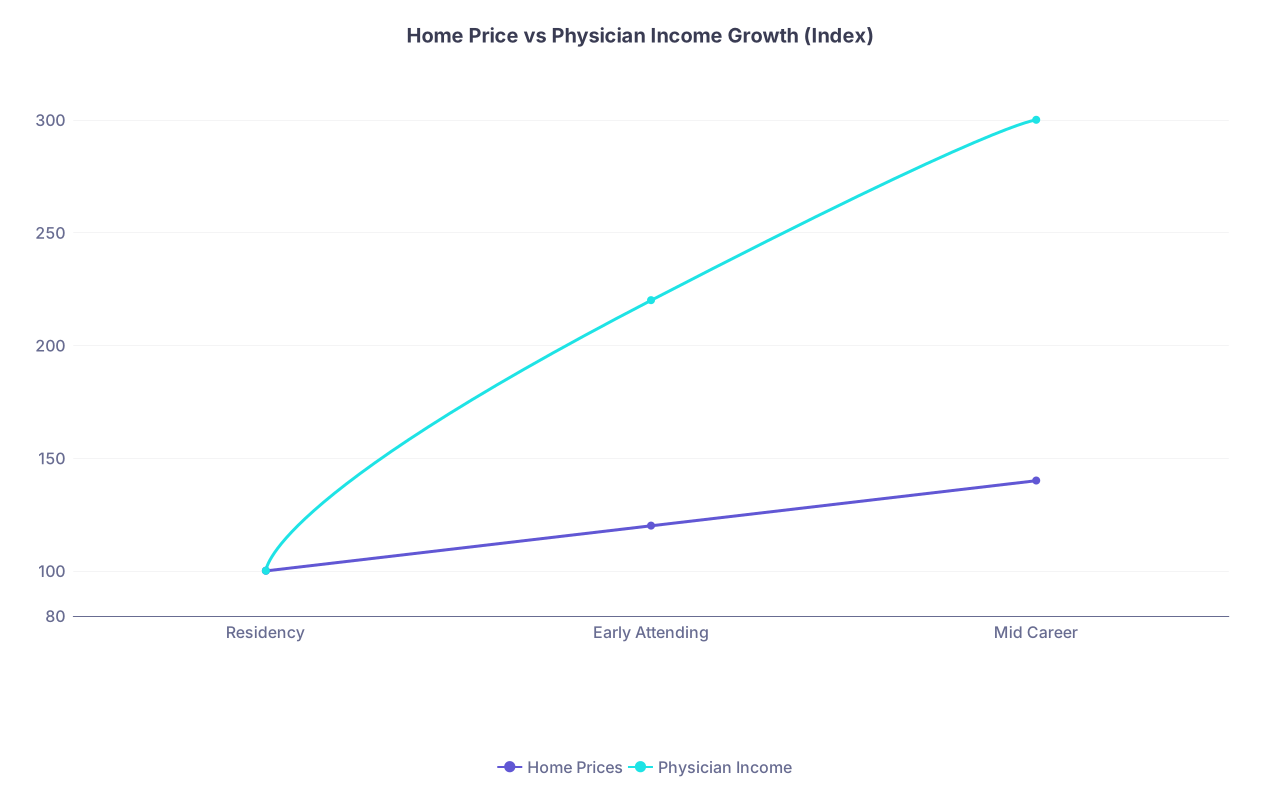
| Category | Home Prices | Physician Income |
|---|---|---|
| Residency | 100 | 100 |
| Early Attending | 120 | 220 |
| Mid Career | 140 | 300 |
What usually happens:
- Yes, prices and rates move around over a few years
- But your income jumps dramatically once you finish training
- Your savings rate explodes when you’re not making $65k anymore
- You can buy later with:
- A real down payment
- An emergency fund
- The option to choose your long-term city, not your temporary residency match
Real estate investing is not some once-in-a-lifetime train you either jump on in PGY-1 or miss forever. That’s marketing, not reality.
You can absolutely:
- Rent in residency
- Clean up your debt structure
- Build a small emergency fund
- Learn about real estate from the sidelines
- Then buy your personal home or first rental when you have attending money, time, and stability
I’ve seen attendings start at age 35–40 and still build multi-property portfolios. They were fine. Actually, they were often better off because they avoided all the early-career disasters.
How to keep real estate from sinking you (even if you do buy)
Maybe you’re in a long residency. Maybe your partner has stable income. Maybe housing is unusually cheap where you matched.
Here’s how you keep this from wrecking you.
1. Cap your housing costs ruthlessly
Don’t let a bank decide what you can “afford.” Their job is to lend, not to protect your sanity.
As a rough rule: total housing (mortgage, taxes, insurance, utilities, HOA if any) should be at or below what a normal, reasonable rental in your area would cost for your stage of life.
If rent for a decent apartment is $1,800/month, and you’re about to talk yourself into $3,200/month mortgage “because I’m investing in equity,” stop. You’re not investing. You’re gambling.
2. Assume it might lose value and be hard to sell
Before you sign:
Ask yourself:
“If this house is worth 10% less when I leave, and it takes 4–6 months to sell, can I survive that without panic?”
If the answer is “God no,” you’re too tight.
3. Do not count on “future you” to bail out “present you”
A lot of residents mentally do this:
“I’ll just suck it up now, then when I’m an attending I’ll throw money at all my mistakes.”
That’s how you become an attending with:
- Student loans
- A too-big house
- A rental that barely breaks even (or loses money)
- Burnout
- A marriage under strain
Future you doesn’t exist yet. Present you is the only you that has to live this.
If you want to invest in real estate long-term, but not drown right now
You don’t have to ignore real estate for five years. You just have to stop trying to sprint in concrete shoes.
Here’s how to play it safer:
- Rent your home during residency
- Use this time to:
- Learn how mortgages, taxes, and cash flow actually work
- Read a few serious books on real estate investing (not TikTok threads)
- Follow physician-finance folks who show numbers not just vibes
- Build basic financial muscles: budgeting, saving, understanding your loans
- Maybe, maybe consider a very conservative “house hack”:
- You rent or buy a modest place and have roommates (with all the social pros/cons)
- Extra cash helps offset your housing costs
- But don’t buy a monster duplex banking on it making you rich—you’re not a full-time landlord
You’re allowed to be interested and curious without committing huge dollars right now.
The quiet truth nobody tells residents
Your biggest financial risk in residency is not “missing out” on real estate. It’s overextending yourself when you have:
- High fixed debt
- Low income
- No time
- No safety net
The residents who stay afloat usually do incredibly boring things:
- Rent modestly
- Drive paid-off or cheap cars
- Don’t buy houses they can’t comfortably support on a resident salary
- Push the “fancy life” decision to attendinghood
And then—shocker—they have options. They can:
- Choose academic vs private vs locums based on interest, not just paycheck
- Move to lower cost-of-living areas if they want
- Buy an attending home once instead of panic-selling resident home #1
- Start real estate investing with actual cash flow, not vibes
A quick gut-check framework for you
If you’re still stuck in your head, run this like a checklist.

| Step | Description |
|---|---|
| Step 1 | Thinking about buying in residency |
| Step 2 | Rent - buying too risky |
| Step 3 | Buying may be reasonable - proceed cautiously |
| Step 4 | Staying 5 plus years in same city |
| Step 5 | Have 3-6 months expenses saved |
| Step 6 | Total housing cost same or less than rent |
| Step 7 | Okay if house loses value or hard to sell |
If you fail any step, renting is almost certainly the better move.
FAQs (the “I’m spiraling at midnight” edition)
1. If I rent all of residency, am I just throwing money away?
No. You’re buying flexibility, sleep, and downside protection. Rent isn’t “wasted” any more than car insurance is “wasted” if you don’t crash. As a resident, the cost of a bad housing decision is way higher than the cost of rent.
2. Should I use a doctor mortgage in residency if I really want to buy?
I’d be very cautious. Doctor loans encourage you to put almost nothing down and buy at the top of your “approval.” That’s a terrible combo with resident income. If you must use one, only buy a home that you could still comfortably afford as if you had a traditional 20% down mortgage and a normal lender limit—not whatever fantasy limit the bank throws at you.
3. What about buying a small condo just to “get started” in real estate?
Condo = HOA fees + rules + less control + sometimes weak appreciation. On a resident salary, a small condo can still become a big anchor, especially when you move. If your main goal is “learning,” you can get 90% of the education from books, numbers, and other people’s experiences without locking yourself into a rigid, expensive commitment.
4. Is it crazy to think about out-of-state rental investing during residency?
For almost everyone in training? Yeah, it’s too much. Long-distance landlording, analyzing markets, managing property managers, understanding local rules—that’s a whole second job. You already have one very intense job. It’s not that you’re not capable. It’s that your bandwidth and margin for error are tiny right now.
5. What if my partner makes good money—does that change things?
It can, but it’s still risky if you structure everything assuming that income lasts forever. Job loss, illness, relationship changes—all real. If with either of your incomes gone you’d be in deep trouble with the mortgage, you’re overextended. Two incomes should give you safety, not permission to max out to the edge.
6. I feel behind because classmates are already buying houses and talking about “equity.” Am I messing up by staying conservative?
No. You’re seeing the highlight reel, not the spreadsheet. Equity is meaningless if it comes with constant stress, no cash buffer, and the risk of being stuck with a property you can’t sell. The residents who quietly rent, save, and avoid financial anchors are often the attendings who look “lucky” later. It’s not luck. It’s patience.
Open whatever housing listing you’ve been obsessing over and ask yourself one brutal question:
“If I stay a renter this whole residency, does anything truly bad happen to my long-term financial life?”
If the honest answer is “no, I just feel behind or impatient,” close the tab and go get some sleep.