
Your resident salary is not the problem. Your lack of a system is.
Residents buy condos, screw up the finances, then spend 5 years complaining that real estate is “too risky.” The truth is simpler and harsher: they never ran the numbers like an investor. They bought like a tired PGY-2 scrolling Zillow at 1 a.m.
You can absolutely buy an investment condo on a resident salary. But only if you treat it like a business decision, not a lifestyle purchase.
Here is the blueprint. Step-by-step. Numbers, thresholds, and rules that keep you out of trouble.
1. Start With Reality: What Your Resident Budget Can Actually Handle
Let me be blunt: most residents overestimate what they can afford, and underestimate risk. Banks are happy to help you do both.
You need a hard framework.
A realistic resident budget snapshot
Typical ranges (adjust to your city, but the ratios hold):
| Category | Monthly Amount | % of Take-Home (Approx) |
|---|---|---|
| Take-home pay | $3,800–$4,500 | 100% |
| Rent / housing | $900–$1,600 | 25–35% |
| Utilities + internet | $150–$250 | 4–6% |
| Food (groceries + out) | $400–$600 | 10–15% |
| Transportation | $200–$400 | 5–9% |
| Insurance (non-health) | $100–$200 | 3–5% |
| Misc / lifestyle | $400–$700 | 10–15% |
| Minimum loan payments | $200–$400 | 5–9% |
| Potential savings | $300–$600 | 7–15% |
The only number that really matters for this project: how much “free cash flow” you can reasonably devote to real estate every month without wrecking your life.
Target:
- You want at least $300–$500/month available to support:
- Reserves (cash buffer)
- Occasional negative cash flow
- Condo association surprises
- Closing and start-up costs amortized mentally
If you cannot find $300/month in your budget after being honest, you are not ready to buy yet. You are in “prepare and save” phase.
Quick cash-flow stress test
Take your current budget:
- Write down:
- Monthly take-home pay
- Average 3-month spending in each category (pull statements, do not guess)
- Add a line: “Real estate buffer” = $300/month.
- If your total spending + $300 > income, you are not buying this year. You are cutting spending or increasing income (moonlighting, tutoring, side shifts) until that gap exists.
No buffer, no condo. That simple.
2. Define the Investment, Not the Fantasy
Most residents think “I want to stop renting and build equity.” That is not an investment strategy. That is marketing language from lenders.
Your first decision: Is this a hybrid (you live in it, then rent it) or pure rental (you never live there)?
Option A: Live-in-then-rent condo (most residents)
This is the common path:
- You buy a small condo near your hospital.
- You live there during residency.
- You keep it as a rental when you leave (or sell if it underperforms).
Why this works better for residents:
- You may qualify for owner-occupied loans (better rates, lower down payment).
- You are already paying rent somewhere; you can redirect that money.
- It helps your lifestyle (shorter commute, quieter space) while building an asset.
Option B: Pure rental (you stay in current housing)
Less common but sometimes smarter in brutal high-cost cities:
- You cannot afford to buy near your hospital.
- You buy in a cheaper submarket or even in another state with better numbers.
- You hire professional property management from day one.
If you are in San Francisco/Boston/NYC and thinking of buying a $750k “starter condo” on a PGY-2 salary—stop. You are not buying there as an investment. You are buying there as lifestyle, and that is fine, but own it.
3. The Hard Math: How Much Condo Can You Really Afford?
Forget what the bank says you are “approved” for. They are not on the hook when your HOA decides to levy a $10,000 special assessment for the roof.
You need your own stricter rules.
Key ratios that protect you
There are two debt-to-income ratios you must understand:
- Front-end DTI (housing only)
- Target: ≤ 30% of gross income to your primary residence costs
- Back-end DTI (all debts)
- Target: ≤ 45% of gross for all recurring debts (student loans, car, credit cards, mortgages)
Most banks will happily go above this. You should not.
Example: PGY-2 making $64,000
Assume:
- Gross: $64,000 / year (~$5,333/month)
- After-tax: ~$4,000/month (varies by state, but close enough)
Your personal safety limits:
- Max total housing (mortgage + taxes + insurance + HOA) as owner-occupied:
- 30% of gross → ~$1,600/month
- Max total debt (all loans + condo loan) as investor:
- 45% of gross → ~$2,400/month
If your student loans are $300/month and you have a $200/month car payment, that is $500. That leaves ~$1,900/month safely for housing-related debt. But that does not mean you should spend it all.
Back into a price target using simple rules
For an owner-occupied condo:
- Take your comfortable monthly total housing budget (e.g., $1,400–$1,600).
- Subtract:
- Estimated HOA: $250–$400
- Property taxes: rough rule 1–1.5% of property value per year ÷ 12
- Insurance: $50–$100/month
Let us run a concrete example.
Example scenario
- Target total housing: $1,500/month
- HOA: $300
- Insurance: $75
- Property tax rate: 1.2% per year
You have:
- $1,500 – $300 – $75 = $1,125 left for principal + interest + property tax portion.
Property tax monthly at 1.2%:
- Each $100,000 in price → $100,000 × 0.012 / 12 ≈ $100/month
If you buy a $250,000 condo:
- Property tax: ~$250/month
- Now P+I budget: $1,125 – 250 = $875
At current rates (say ~6.5% 30-year fixed; this changes but we need a benchmark):
- A $200,000 loan at 6.5% → P+I ≈ $1,264/month → too high
- So $250,000 is not possible under that $1,500 cap.
Work backwards:
- Use an online mortgage calculator with:
- P+I target: ~$600–$700
- 6.5% rate, 30 years
- You land around ~$110,000–$130,000 loan size.
Add your down payment (say 5–10%):
- 10% down on $140,000 = $14,000 down, $126,000 loan
- That roughly hits your budget once you re-add tax + HOA + insurance.
So for that PGY-2 with these assumptions, a realistic condo price is ~$130,000–$160,000.
Not $250K. Not $400K. That is the uncomfortable truth.
If your city does not have anything remotely decent under $300K, that is a giant red flag for buying during residency there.
4. Investment Screening: Turn a Condo Listing into a Pro Forma
You are not buying granite countertops. You are buying a future stream of rent payments.
You need a simple, repeatable way to screen deals.
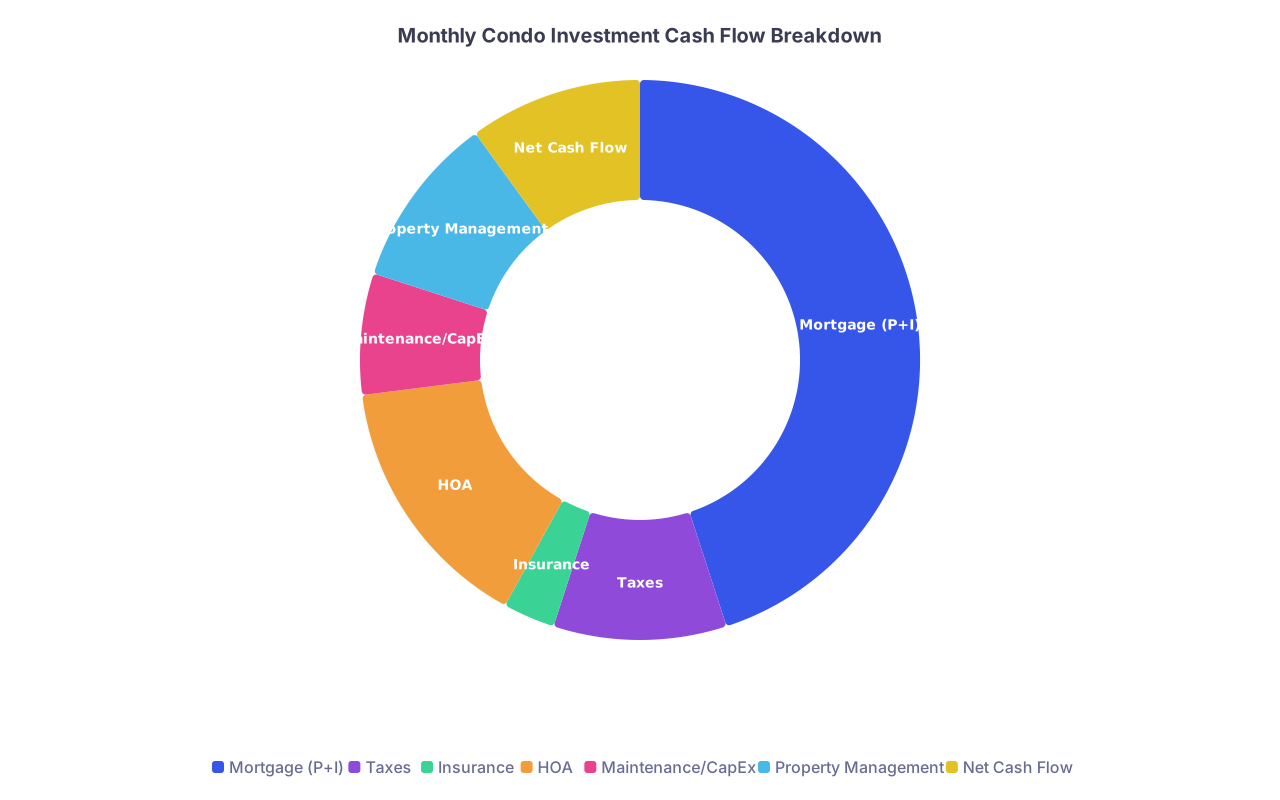
| Category | Value |
|---|---|
| Mortgage (P+I) | 45 |
| Taxes | 10 |
| Insurance | 3 |
| HOA | 15 |
| Maintenance/CapEx | 7 |
| Property Management | 10 |
| Net Cash Flow | 10 |
Step 1: Estimate realistic rent
Look at:
- Zillow, Apartments.com, Craigslist, HotPads
- Focus on:
- Same building / same complex if possible
- Same beds/baths, parking situation, and condition
- Do not use the highest rent listed. Use the middle of 3–5 similar units.
If similar units are renting for $1,450–$1,650, use $1,500 for planning. Do not “hope” you will get the top number. That is amateur behavior.
Step 2: Build a conservative monthly expense stack
Your monthly expenses for the condo will include:
- Mortgage (principal + interest)
- Property taxes
- Insurance (landlord policy when rented, HO-6 if condo)
- HOA dues
- Variable costs (budget as rules-of-thumb):
- Maintenance: 5–8% of rent
- Capital expenditures (roof, HVAC, big systems): 5–8% of rent
- Vacancy: 5–8% of rent
- Property management (if used): 8–10% of rent
If you self-manage initially, still budget the management cost. Future-you as an attending will probably hand this off. The property must work as a real investment, not just because you are willing to be a cheap handyman at 10 p.m. after a night shift.
Step 3: Run the cash flow
Here is a real-feeling example, structured cleanly.
| Item | Monthly Amount |
|---|---|
| Expected rent | $1,500 |
| Mortgage (P+I) | $750 |
| Property taxes | $150 |
| Insurance | $50 |
| HOA | $250 |
| Maintenance (7% of rent) | $105 |
| CapEx (7% of rent) | $105 |
| Vacancy (5% of rent) | $75 |
| Property management (8%) | $120 |
| **Total expenses** | **$1,605** |
| **Net monthly cash flow** | **–$105** |
This is what most resident condos look like once you stop lying to yourself. Slightly negative or barely breakeven.
Here is the rule:
- As a resident, I am willing to tolerate up to ~$100–$200/month negative cash flow if:
- The building is financially sound.
- The location has strong long-term demand.
- I can comfortably support the delta from my budget.
- I am getting something else of value (short commute, safe area, own parking).
If you are looking at –$300 or worse per month in a mediocre building, walk away. You are subsidizing someone else’s building at the expense of your future self.
5. Reserves: The Part Everyone Skips Until They Get Burned
You will not get taken out by your monthly payment. You will get taken out by the surprise.
The water heater that dies. The special assessment. The tenant who stops paying and drags you into court.
Minimum reserve structure for a resident landlord
I use a three-layer approach with residents:
- Personal emergency fund
- 3 months of personal expenses separate from real estate
- Real estate emergency account
- 3–6 months of condo expenses (all-in: mortgage + HOA + etc.)
- “Oh no” buffer on a credit line
- A low-rate credit card or LOC you never touch except for true emergency
Example:
- Condo PITI+HOA+buffers (everything): $1,600/month
- Real estate emergency target: $1,600 × 3–6 → $4,800–$9,600
- Personal emergency fund (say your life costs $3,000/month): $9,000
Total cash before you buy: roughly $15,000–$20,000 between down payment, closing costs, and reserves is usually the bare minimum for a safe small condo.
Yes, that is a lot on a resident salary. Which is exactly why you should not rush.
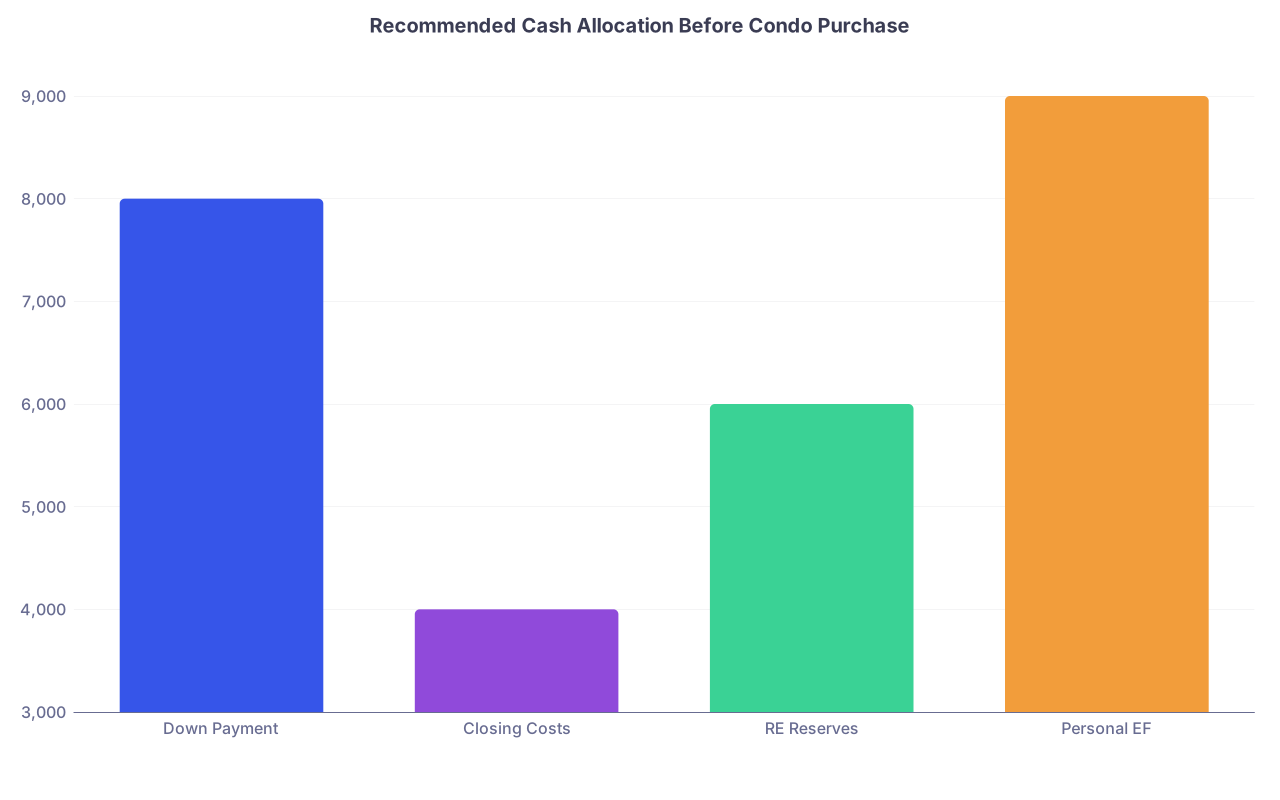
| Category | Value |
|---|---|
| Down Payment | 8000 |
| Closing Costs | 4000 |
| RE Reserves | 6000 |
| Personal EF | 9000 |
6. Legal and Risk: How Not to Get Sued or Bankrupt
You are not just buying a box with walls. You are buying into:
- A legal structure (condominium association)
- A set of bylaws that can completely destroy your “investment” if you ignore them
This is the part residents skip. Then they learn about “special assessments” the hard way.
Absolutely mandatory condo due diligence
Before you even think about closing, you or your attorney must review:
- Condo bylaws & CC&Rs
- Are rentals allowed?
- Any rental caps (e.g., max 20% of units can be rented)?
- Minimum lease length (e.g., no rentals under 6 or 12 months)?
- Pet policies (your future tenants will care)
- HOA financials
- Current budget
- Reserve study (if available)
- Amount in reserves per unit (low reserves = future assessments)
- Delinquency rate on dues (too many non-payers = risk)
- Recent and upcoming projects
- Roof, elevators, parking structure, plumbing stacks
- Any voted or discussed special assessments
If the board refuses to share financials or acts shady, walk.
I have seen residents buy into pretty buildings with $0 in reserves and then eat a $12,000 special assessment 18 months later. That is several months of your salary gone.
Ownership structure: Personal name vs LLC
You are in training. You are not Warren Buffett. Keep it simple:
- In most cases, for a single condo:
- Buying in your personal name is fine, with robust insurance.
- Make sure you have:
- Landlord policy with adequate liability (aim for $500k+).
- Umbrella insurance ($1–2M) stacked on top of your auto/home.
- An LLC may:
- Complicate lending.
- Raise rates or require commercial loans.
- Not provide much extra protection if you are personally guaranteeing the loan.
If your attending future includes multiple properties, you can restructure later. For your first condo, focus on:
- Clean contracts.
- Good insurance.
- Clear tenant screening and a written lease reviewed by a local lawyer.
7. How to Actually Execute This Without Wrecking Your Training
Residents do not have time. If your plan requires you to become a part-time property manager / construction manager / paralegal, it will fail.
So you need a process with as few moving parts as possible.

| Step | Description |
|---|---|
| Step 1 | Decide Strategy |
| Step 2 | Set Budget and Reserves |
| Step 3 | Get Preapproved |
| Step 4 | Screen Neighborhoods |
| Step 5 | Analyze Deals |
| Step 6 | Make Offer |
| Step 7 | Inspect and Review HOA |
| Step 8 | Close and Set Up Systems |
| Step 9 | Move In or Place Tenant |
| Step 10 | Numbers Work? |
| Step 11 | Still Solid? |
Step-by-step execution checklist
Clarify your phase
- PGY-1 or early PGY-2: usually save + learn.
- Later PGY-2/PGY-3 with some savings: plan + preapproval.
- Final year or fellow with stable location: actively buy.
-
- Talk to:
- A physician mortgage lender (for owner-occupied options).
- A conventional lender (for investment loan comparisons).
- Ask them:
- “What is my maximum purchase price if I cap my payment at $X/month total PITI+HOA?”
- Do not let them anchor you to their maximum. You anchor them.
- Talk to:
Narrow geography ruthlessly
- Pick 1–2 neighborhoods:
- Near hospital or easy transit.
- High renter demand (lots of multifamily, young professionals).
- Stable or improving, not speculative.
- Pick 1–2 neighborhoods:
Build your deal analyzer (simple spreadsheet)
- Columns:
- Price
- Down payment
- Loan amount
- Interest rate
- P+I
- Taxes
- Insurance
- HOA
- Rent (conservative)
- Maintenance %
- CapEx %
- Vacancy %
- Management %
- Net cash flow
- Lock in your % assumptions so you are not “cheating” them deal by deal.
- Columns:
Evaluate 10–20 listings on paper before stepping into a single unit
- You want repetition. You want pattern recognition.
- Once you see 10–20 pro formas, you know what a good deal looks like in your market.
Then, and only then, engage a real estate agent
- Not your cousin’s friend who “does real estate on the side.”
- Someone who:
- Works frequently with small investors.
- Understands condo associations and their pitfalls.
- Is not offended when you walk from deals that do not pencil.
Offer discipline
- Before every offer:
- Freeze your assumptions.
- Set a maximum price that preserves your target cash flow.
- Do not go above it. Losing a deal is better than inheriting a bad one.
- Before every offer:
8. The Resident Landlord Playbook: Once You Own It
Closing is not the finish line. It is the start of another job: property owner.
You need systems that run while you are on a 28-hour call.
Decide early: self-manage vs property manager
Be honest about:
- Your schedule.
- Your temperament for tenant conflict.
- Your ability to handle basic repairs coordination.
If you self-manage:
- Use:
- Online rent collection (Avail, Apartments.com, Cozy, etc.).
- A written, state-specific lease (preferably attorney-reviewed once).
- A clear, consistent screening process:
- Income multiple (3x rent is common).
- Credit check.
- Background check.
- Landlord references.
- Set firm policies:
- Late fees.
- No partial payments if they lead to chronic delinquency.
- Clear criteria for eviction processes (and know your local laws).
If you use a manager (strongly consider this if you are in a tough program):
- Expect:
- 8–10% of monthly rent for management.
- One month’s rent for tenant placement (sometimes).
- Interview at least 2–3 firms.
- Ask:
- “What is your average days-on-market for similar units?”
- “How do you handle after-hours emergencies?”
- “Can I see a sample owner statement?”
You are trading some cash flow for sanity and time. As a resident, that is often a smart trade.
9. Understand the Exit Before You Enter
Every investment should have a defined exit strategy. For your first condo, you really have three:
Keep and rent it out when you leave residency
- Works if:
- It cash flows or is very close to breakeven.
- HOA and building are healthy.
- You have or can get good management.
- Works if:
Sell at the end of residency / fellowship
- Works if:
- You used owner-occupied financing.
- The market gave you some appreciation.
- You do not want to be a long-distance landlord.
- Works if:
Sell earlier if the building starts to rot financially
- If:
- Rising delinquencies.
- Constant special assessments.
- Deferred maintenance everywhere.
- You cut your losses. Pride is expensive.
- If:
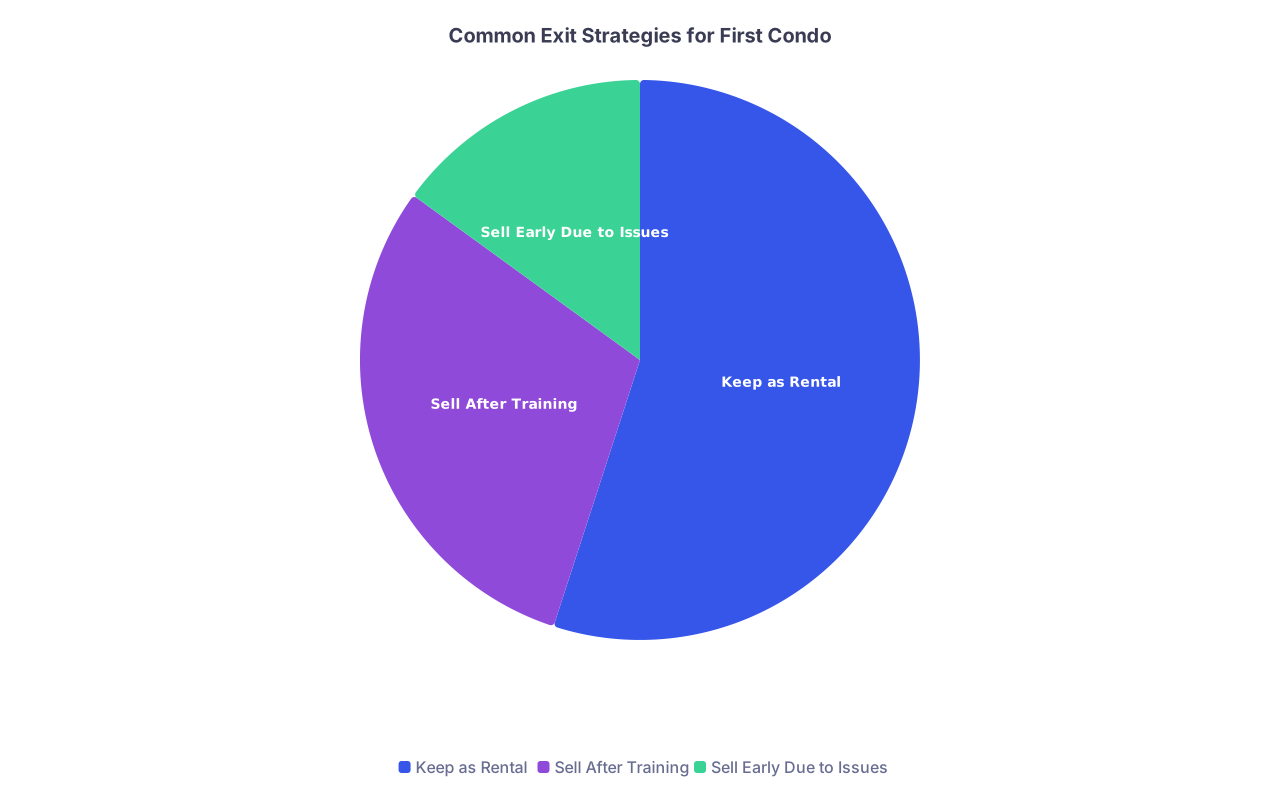
| Category | Value |
|---|---|
| Keep as Rental | 55 |
| Sell After Training | 30 |
| Sell Early Due to Issues | 15 |
Your decision will change as your attending salary arrives and your portfolio evolves. But you should still buy with one default path in mind:
- “My default plan is to: [keep as rental / sell in 4–5 years]. This dictates what I prioritize now (cash flow vs appreciation vs super-prime location).”
10. A Compact Blueprint You Can Actually Follow
Let me consolidate this into a simple, no-excuses blueprint.

Phase 1: Prep (3–12 months)
- Clean your budget until you have:
- $300–$500/month of free cash flow
- A plan to build:
- Personal emergency fund (3 months)
- Real estate reserves (target 3–6 months condo expenses)
- Study:
- Basic real estate math: cash flow, cap rate, DTI, reserves.
- Your local condo market (price ranges and rents).
- Save aggressively. Forget fancy vacations for one year.
Phase 2: Design the box
- Define:
- Max monthly housing payment (PITI+HOA) that fits your budget.
- Max tolerable negative cash flow (if any), e.g., $100–$150/month.
- Based on that, back into:
- Target purchase price range.
- Down payment goal.
Phase 3: Deal hunting and due diligence
- Get preapproved with clear constraints.
- Build your spreadsheet and evaluate 10–20 hypothetical deals.
- Narrow to 1–2 neighborhoods.
- Work with a competent agent and:
- Analyze real listings.
- Offer only when the numbers work.
- For any accepted offer:
- Do inspection.
- Review HOA docs, bylaws, reserves.
- Walk if the building is financially shaky, even if you “love” the unit.
Phase 4: Own like a professional
- Set up:
- Separate bank account for the property.
- Online rent collection.
- A simple system for:
- Tracking income and expenses.
- Setting aside monthly reserves.
- Decide on management approach:
- Self-manage with structure.
- Or hire a manager and accept lower cash flow but more sanity.
- Review annually:
- Is the building still solid?
- Does rent cover expenses with your reserve contributions?
- Does the unit still fit your long-term goals?
Final Takeaways
You can make your first condo a solid investment on a resident salary if you:
- Set hard financial constraints (monthly payment caps, reserves, and DTI limits) and ignore what the bank says you “qualify” for.
- Treat it like a business decision: run real pro formas, underwrite the HOA as seriously as the unit, and never skip reserves.
- Build systems so the property can function on autopilot while you are in the hospital—online rent, clear leases, and either disciplined self-management or a good property manager.
Do that, and your “resident condo” stops being a risky vanity purchase and becomes exactly what you want: the first brick in a physician real estate portfolio that actually works.