
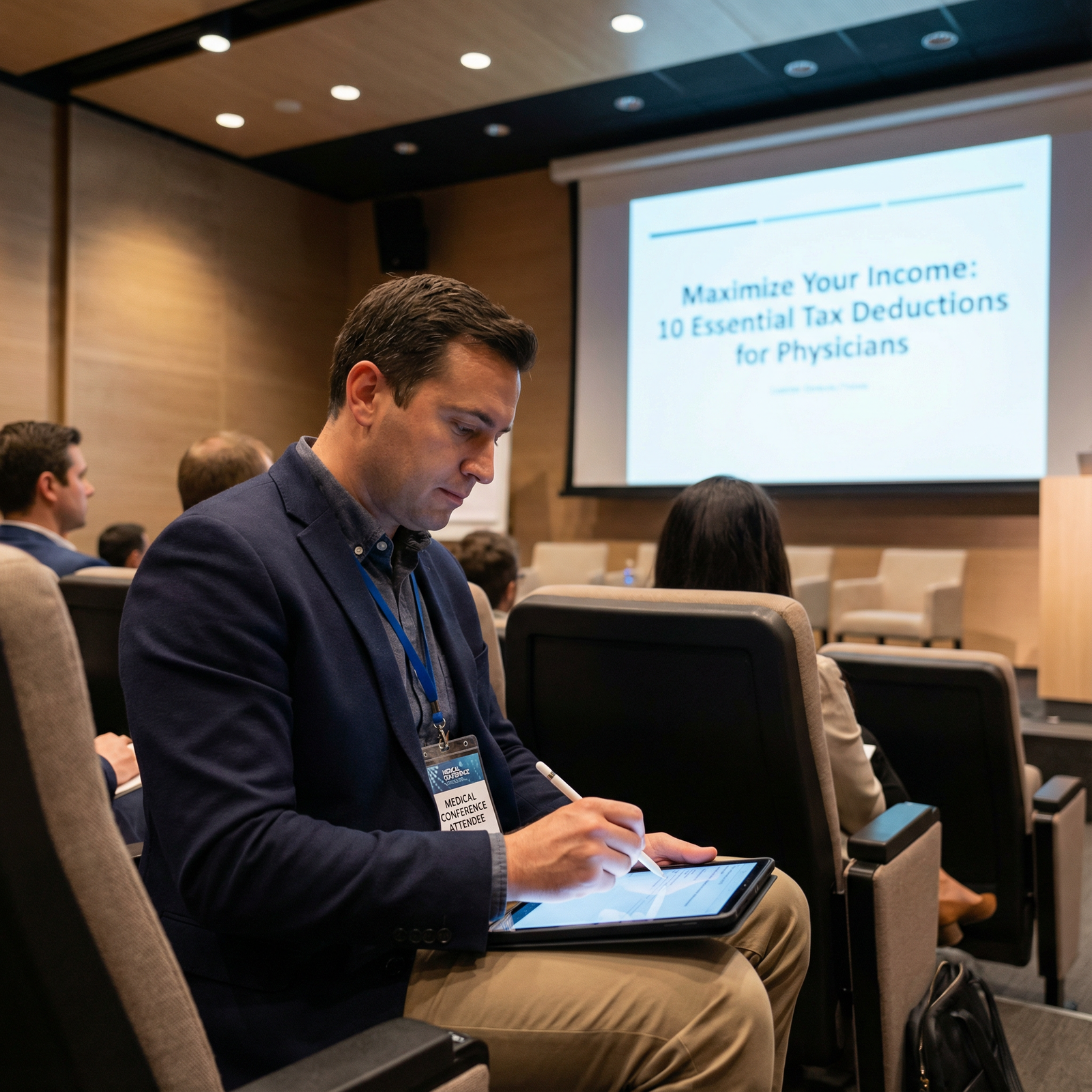
It’s a Tuesday night at 8:45 p.m. Clinic ran late. You finally signed the last note. The residents are gone, the med students are already at the bar, and you’re still in your office staring at an email from HR:
“Reminder: Please complete your open enrollment elections.”
They’re nudging you to pick an HSA vs FSA and adjust your 403(b) deferral. You sigh, click “max out,” and feel like you did the responsible thing.
You didn’t. Not at the level attendings around you are playing.
Because upstairs, the program director you think of as “old guard” is doing something very different. He’s on a Zoom call with his CPA and attorney finalizing a defined benefit plan and a management company agreement. None of that shows up in the “benefits” slide you saw at orientation. You won’t hear it mentioned in faculty meeting. But it is absolutely happening.
Let me walk you through what actually goes on once people hit attending level and especially when they become program directors, division chiefs, or department vice-chairs. The quiet tax moves. The things they structure once and then barely think about again while the savings quietly compound for decades.
The First Shift: From “Employee Mindset” To “Mini Enterprise”
Residents think in W-2. Attending physicians who stay naïve keep thinking in W-2. The smart ones switch to “enterprise” thinking the minute they have real income and any control at all over how it’s earned.
Here’s the unspoken truth: most academic physicians and program directors look like straight W-2 employees on the surface, but once they’re established, they start carving out income streams that are not treated like vanilla salary.
You’ll see this over and over:
- Base salary, W-2 through the hospital or university
- “Extra” income routed through a side entity they control
That second bucket is where they quietly do their tax work.
The transition usually happens 2–5 years into attending life. They’ve gotten through boards, kids, house purchase. They notice their tax bill is six figures. That’s the pain point where they finally call an actual physician-focused CPA or a tax attorney. And the answer they get is not “increase your 403(b) contribution.” It’s “you need a business.”
Not a cute Etsy business. A real, formal entity that captures any non-core salary activities: speaking, consulting, expert witness work, medical directorships at outside facilities, industry advisory boards, CME teaching, and sometimes “administrative stipends” that can legally be paid outside the main payroll.
The end result: they turn themselves from “employee only” into “hybrid employee–business owner.” That’s the inflection point.
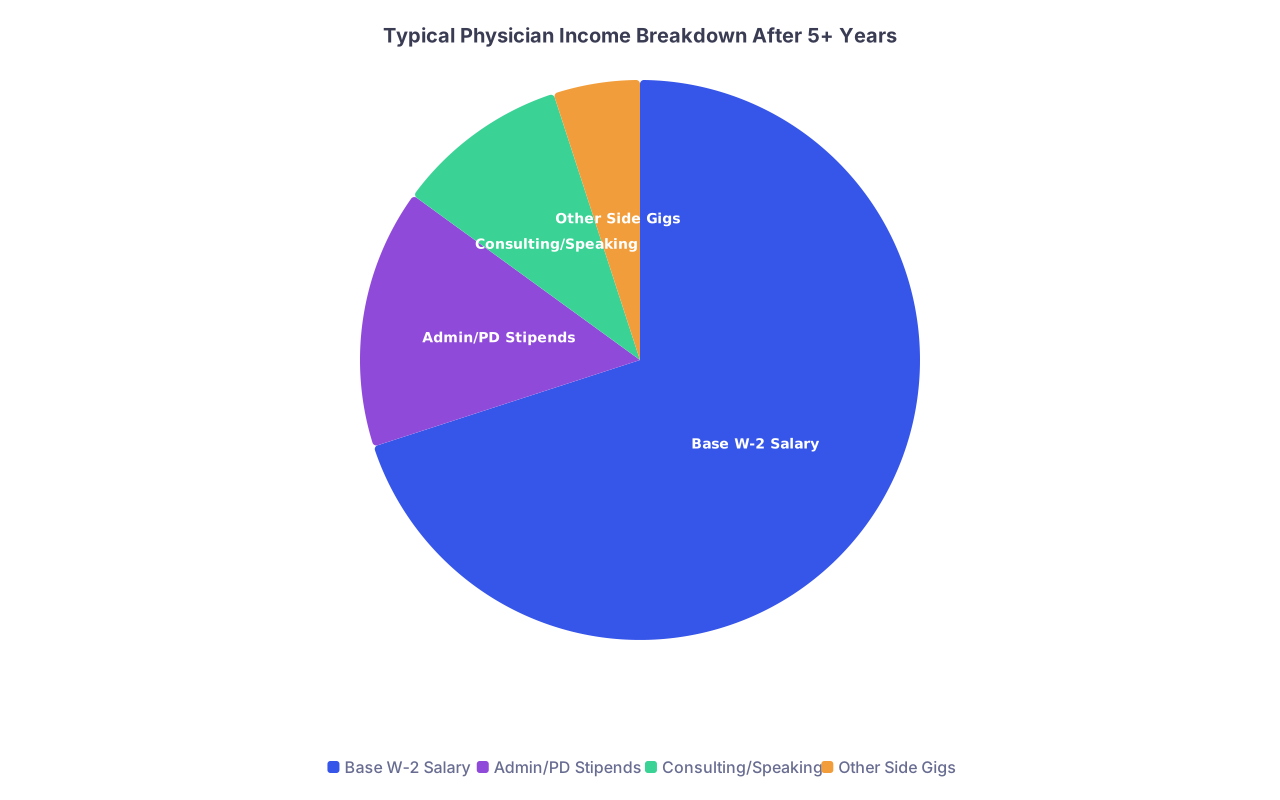
| Category | Value |
|---|---|
| Base W-2 Salary | 70 |
| Admin/PD Stipends | 15 |
| Consulting/Speaking | 10 |
| Other Side Gigs | 5 |
The Entity You Never See But They All Have
Ask around directly and most attendings will downplay it: “Oh, I have an LLC for a little consulting.” That line is almost a cliché.
What they do with that LLC (or S-corp) matters a lot more than the label.
Here’s how it actually works behind the scenes:
They get a program director stipend, or a medical director contract at a rehab facility, or consulting income from a device company. The hospital prefers to just throw that on your W-2. Simple, payroll handles it, everybody happy.
The PD who knows what they’re doing pushes back, politely, and says:
“Can you pay that under a separate professional services agreement to my entity instead?”
Legal checks whether that’s allowed under conflict-of-interest and institutional policy. If it’s clean, the money starts going to their company. Now several levers appear that do not exist for pure W-2:
- Ability to take legitimate business expenses above the line
- Potential to use an S-corp to reduce self-employment tax on a portion of profit
- Access to solo 401(k) / defined benefit plans on top of employer 403(b)/401(a)
- Cleaner separation for liability and contract negotiation
No, this doesn’t magically make taxes disappear. But in high-income brackets, being able to strip $50–150k of income out of W-2 and into an entity with business deductions and its own retirement plan is a completely different game.
And the hospital? They don’t talk about it. HR will never bring it up. Because as far as they’re concerned, that’s “your” issue; they want the simplest payroll model.
S-Corp vs LLC: What They Actually Use
Most physicians create an LLC taxed as an S-corp once the numbers justify it. Under roughly $50–70k/year of net profit, the S-corp arbitrage (lower payroll tax on distributions) doesn’t move the needle enough to justify payroll complexity. Once they’re pulling six figures through it? Different story.
You’ll hear variants of this quietly over coffee:
“Yeah, I run the consulting and the chair RFF through my S-corp, pay myself a modest salary and then distributions. CPA handles the rest.”
That “chair RFF” (random faculty fund, research funds, admin stipends, etc.) is the money you’re blending into your W-2 while paying full freight on every dollar.
Retirement Stacking: The Move No One Explains at Orientation
Residents learn one script: “Max your 403(b).”
Attendings who stay on autopilot stop there. The ones who wake up realize there is zero rule saying you can only have one qualified plan. There are rules about:
- Per-employer limits
- Per-plan limits
- Overall defined contribution and defined benefit caps
But if you’re both an employee and a business owner, the door opens.
The classic quiet play:
- Max 403(b) and/or 401(a) through the academic employer
- Then set up a solo 401(k) for the outside entity income
If they have substantial external earnings, they may layer a defined benefit (cash balance) plan on top of that.
| Plan Type | Source | Typical Annual Contribution |
|---|---|---|
| 403(b) Employee Deferral | Hospital/University | $23k–$30k+ (age dependent) |
| 401(a) / 403(b) Employer | Hospital/University | 5–10% of salary |
| Solo 401(k) (Employer Side) | Side Entity | Up to ~20% of net profits |
| Cash Balance / DB Plan | Side Entity | $50k–$250k+ |
I’ve seen a mid-career program director at a large Midwestern academic center deferring ~$70k/year into the institutional 403(b)/401(a) combo, plus dropping another $120k into a cash balance plan via his S-corp tied to consulting and speaking. Total sheltered: close to $200k per year. Publicly, all anyone sees is “faculty with a 403(b).”
No one is mentioning the second stack in faculty orientation, for a reason: it only applies to the people who deliberately engineer additional income through separate entities. It’s not “plug and play.”
HSA, FSA, and the Health-Expense Shell Game
This is one of the smaller moves, but it’s still real money when done correctly.
On the surface, faculty see an HSA vs FSA slide, shrug, click something, move on.
The more sophisticated attendings do something different:
They run the family’s high-deductible health plan and HSA through the employment side (because that’s where the group deal is best), then they deliberately coordinate that with the entity. The business reimburses:
- CME travel that’s genuinely mixed with family trips
- Part of a home office used for telehealth or academic work
- Tech used across clinical, teaching, and admin duties
Then they leave HSA funds invested, not spent. HSA invested for 20+ years is basically a stealth IRA with triple tax advantage: pre-tax in, tax-free growth, tax-free out for medical.
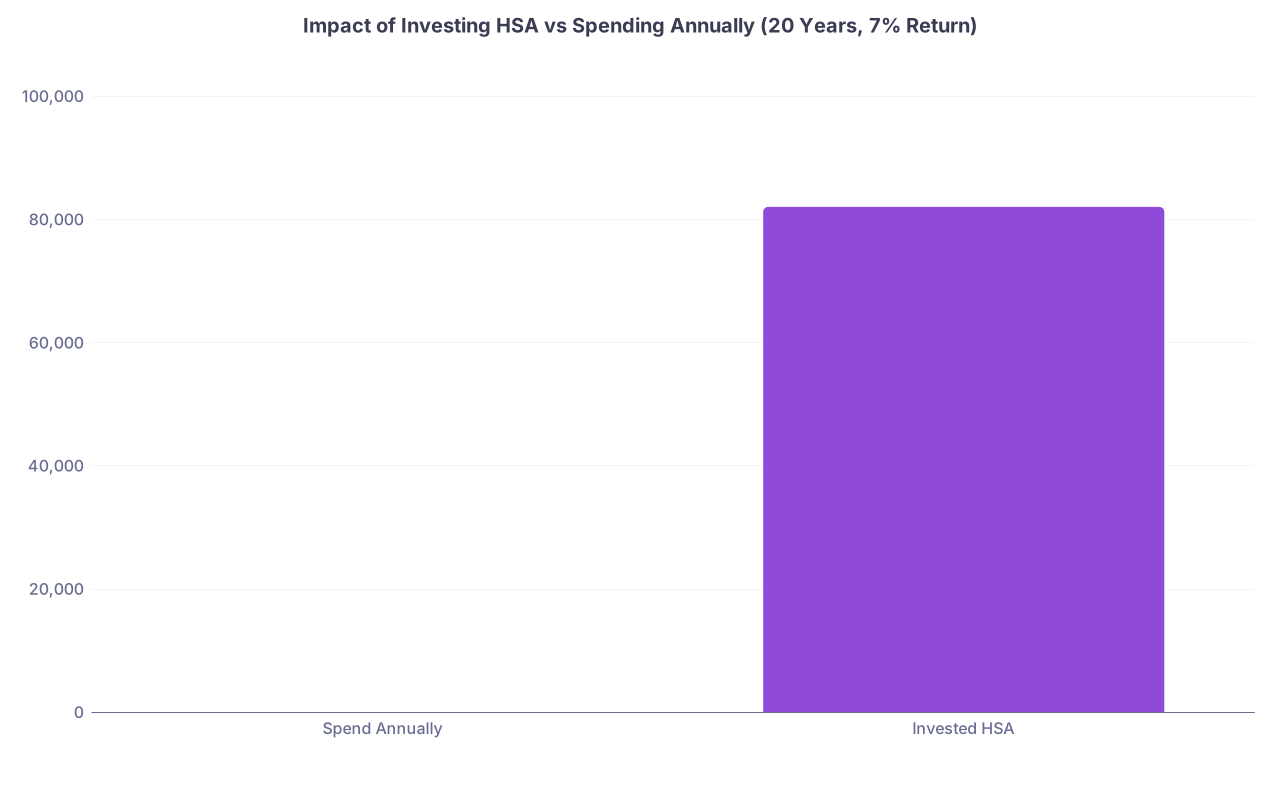
| Category | Value |
|---|---|
| Spend Annually | 0 |
| Invested HSA | 82000 |
A lot of academic attendings treat the HSA like a slightly better FSA. The savvy ones treat it like a long-term tax weapon, and use the entity to offload other “gray zone” work expenses so they do not tap the HSA at all.
Carve-Outs and “Reclassifying” Work
Here’s a pattern no resident ever sees unless they’re very nosy.
A program director or division chief is doing:
- CME talks
- Regional or national lectures
- Serving on advisory boards
- Helping an EMR vendor as an “expert user”
- Medical directorship at a SNF, detox, or imaging center
That work often starts as “part of your job” in vague terms. Over time, some of those relationships turn into paid roles. When that happens, the smart PDs do everything they can to ensure those checks do not get routed through the big employer.
That way, it’s not just more W-2. It’s outside income. Outside income can be negotiated, structured, and reclassified. Some of it can be legitimately 1099.
The non-savvy younger faculty just nod when the university says, “We’ll just add that to your salary as an administrative stipend.” That decision alone probably costs them five or six figures over the next decade in missed deductions and lost retirement contribution space.
The essence of the behind-the-scenes tax move is simple: whenever new income appears, ask, “Can this be paid to my entity instead of through payroll?“ The answer is not always yes. Compliance, Stark, Anti-Kickback, university conflict-of-interest rules all matter. But it’s asked. Quietly. Persistently. And often, the answer ends up being yes with the right paperwork.
Real Estate: The “Office” You Don’t Know They Own
Some of the more aggressive program directors and long-time attendings slide into the real estate play, particularly those with any outpatient footprint.
You know that off-campus continuity clinic space, or affiliated specialty clinic, or ASC where the attendings love to work one day a week? Every so often, that shell LLC that owns the building is… them.
They:
- Buy or syndicate into the building that houses an outpatient clinic or imaging center
- Negotiate for the hospital or group to be the main tenant
- Collect rental income, much of which is sheltered by depreciation and operating expenses
Depreciation is the key. On paper, the building loses value. In reality, the equity increases and they pocket the spread. That depreciation often offsets a big chunk of the rental income, producing what looks like low- or no-tax income for years.

You don’t see that on their CV. You don’t see it in the residency handbook. But I’ve sat in meetings where a PD casually mentions, “Yeah, we’re planning an expansion, I’ll talk to the building partners about build-out costs.” Translation: part of your RVUs are quietly feeding their real estate returns.
Not every PD does this. But the ones who understand tax leverage and want semi-passive income absolutely look for these deals. And the tax code is heavily tilted in their favor if they structure it right.
The Management Company Trick
This one’s quieter but becoming more common, especially in private groups where leaders wear academic titles but function like business owners.
A senior attending or PD sets up a management company. That entity:
- Contracts with the physician group or hospital for “administrative services”
- Handles scheduling, IT coordination, recruiting, quality projects
- Sometimes runs ancillary services like scribe programs
Money flows from the group to the management company. The management company then:
- Pays staff
- Pays for systems and overhead
- Retains profit, which is taxed with far more flexibility than W-2
This is how someone can be “just a program director” on paper but also quietly controlling a cash-flowing company that handles admin tasks for multiple sites.
Tax angle: that management company can:
- Deduct a wide range of legitimate business expenses
- Establish robust retirement plans
- Potentially pay family members for real work (bookkeeping, media, operations) in lower tax brackets
It’s a different universe from your “single paycheck plus maybe a 457(b)” setup.
Family on Payroll: The Legal Version, Not the TikTok Fantasy
You’ve probably seen the cringe “pay your 7-year-old $12k as a model for your business” advice floating online. Most of that is nonsense, especially for physicians who are walking audit magnets.
But in the real world, plenty of senior attendings—especially PDs and division chiefs with legitimate side entities—do pay family members for actual work:
- Spouse running books, billing, or HR for the entity
- Adult child handling social media, editing lectures, maintaining websites
- Relative managing event logistics for CME or speaking
The tax difference is simple: income shifts from the 37% bracket attending to a 12–24% bracket family member, and the business deducts the wage as an expense.
Nobody boasts about this at grand rounds. But when you meet the “practice manager” at a small consulting LLC tied to a PD? Half the time that’s a spouse with genuine functional responsibilities who also happens to be key to the tax strategy.
Asset Protection Blended With Tax Planning
You’ll hear the phrase “just get good malpractice coverage” a lot. What you don’t hear is the quiet restructuring that starts happening when physicians move into PD or leadership roles and their total net worth creeps into seven figures.
They start aligning tax moves and asset protection:
- Moving taxable investments into entities or trusts that are harder to reach
- Holding certain assets in the lower-earning spouse’s name if they’re not in medicine
- Using retirement accounts and HSAs aggressively because those are often highly protected under state law
Tax savings and asset protection are not the same thing, but the planning overlaps. The same entity that allows them to run consulting income and deduct expenses is also one layer between a lawsuit and their personal assets.

| Step | Description |
|---|---|
| Step 1 | Resident - Single W2 |
| Step 2 | New Attending - W2 Plus Basic 403b |
| Step 3 | Mid Career - Side Entity for Consulting |
| Step 4 | Senior PD - Entity Plus Real Estate |
| Step 5 | Leadership - Entities, DB Plans, Asset Protection |
The residents see the white coat and the “Professor of Medicine” title. They don’t see the web of LLCs and the fact that almost all of the attending’s personal investments are in retirement accounts, HSAs, and partially shielded real estate.
What You Should Copy – And What You Shouldn’t
Let me be blunt: copying the structure without the income is dumb.
If you’re a brand-new attending with zero outside revenue, forming an LLC taxed as an S-corp and running your life through it is not sophisticated. It’s a mess. You’re still a W-2. You’ll just layer complexity on top of a tax return that doesn’t justify it.
Here’s what the program directors and senior attendings actually did first:
They built value outside their job. Their tax planning followed the money, not the other way around.
They:
- Became the person people asked to speak at CME, chair committees, and advise on projects
- Took on medical directorships that had external contractual value
- Developed niche expertise that vendors and other systems were willing to pay for
Only then did it make sense to spin up entities, retirement stacks, real estate plays, and management companies.
So no, you don’t start with the S-corp. You start by refusing to be “just a cog” and intentionally building skills and relationships that produce non-salary income. Then, when your 1099 side is consistently $50–100k+, you hire a real physician-centric CPA and say:
“I’ve reached this level. What’s the right structure? What have you seen other physicians do that I’m not doing?”
That is exactly how many of the PDs you admire got into the game.

The Biggest Secret: Nobody Is Going To Teach You This
Academic centers will happily run you through faculty development on:
- Giving feedback
- Remediation plans
- Milestones and ACGME requirements
They will not run you through:
- How to structure outside income
- How to use entities to layer retirement plans
- How to evaluate owning vs renting your clinic building
- How senior people are quietly moving money off their W-2
Not because it’s forbidden. Because it’s not their job. And frankly, most chairs and PDs are relieved that junior faculty don’t ask too many questions. Simpler HR. Less negotiation.
You’ll need to learn this the way they did:
- By talking to the 1–2 attendings who are open about it
- By hiring professionals who see behind the curtain at dozens of physicians, not just you
- By recognizing that “max your 403(b) and invest in index funds” is the starting line for physician tax planning, not the finish line
Once you understand that, the little clues start to make sense. The offhand remark about “my S-corp.” The “property we own across town.” The PD who somehow funds fully loaded 529 plans for three kids and still maxes every retirement account. None of that happens on a single salary and a 403(b) alone.

Here’s what you should walk away with:
- The tax game changes the minute you stop being “pure W-2” and start treating yourself as a small enterprise. That shift is intentional.
- Program directors and senior attendings quietly route outside income through entities, layer retirement plans, and use real estate and management companies to turn highly taxed salary into far more efficient long-term wealth.
- None of this shows up in orientation, and no one will hand it to you. You either stay in the default lane and overpay for 30 years, or you start asking the right uncomfortable questions and build the same structures they did—once your income justifies it.


